
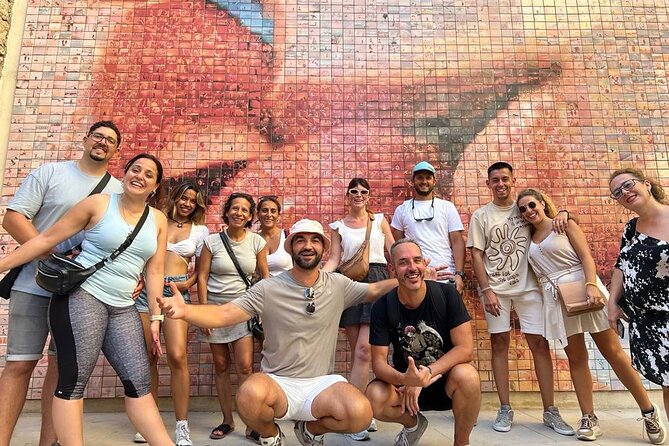
REVIEW · SAGRADA FAMILIA TOURS
Barcelona: Sagrada Familia, Modernism and Gothic Quarter
Barcelona rewards curious walkers. This three-hour tour links Gaudí’s Sagrada Familia and Modernist architecture with the Roman ruins and narrow lanes of the Gothic Quarter, giving you a useful first look at several parts of the city. I especially like the local guides, including Anastasia, Nuria, Caio, Christian, Christina, and Leo, who are praised for clear stories and friendly help. I also like the small historic sites that many first-time visitors miss.
The main catch is important: you do not enter the Sagrada Familia. You see it from outside and hear its story, while admission to the basilica is not included. Confusing this point could turn an otherwise enjoyable walking tour into a very expensive disappointment.
Key points to know before booking
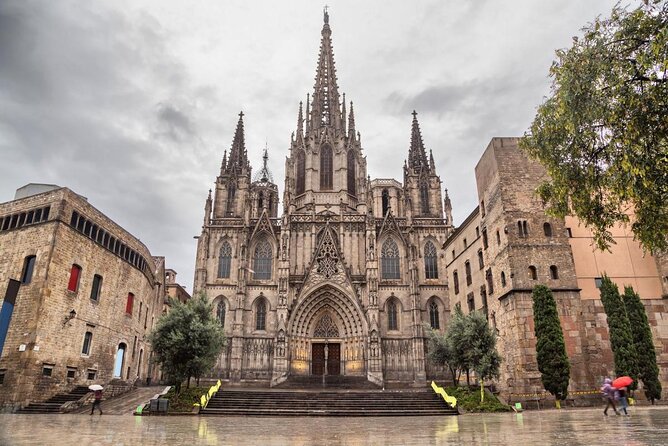
- The Sagrada Familia is an exterior stop: You learn about Gaudí, the cathedral’s details, and its meaning, but there is no entry ticket.
- The tour ends in Plaça del Rei: You begin near the Sagrada Familia and finish in the Gothic Quarter, so plan your next stop from the old city.
- Roman Barcelona is part of the route: Casa de l’Ardiaca and the Temple d’August add ancient history to the Modernist focus.
- Guides are the strongest feature: Anastasia, Nuria, Caio, Christian, Christina, and Leo receive praise for enthusiasm, stories, and answers to questions.
- It is a brisk three hours: You cover many locations with little built-in downtime, so wear comfortable shoes and use a restroom first.
- The group can include up to 20 people: That is small enough for a personal feel, though street noise can make it hard to hear at some stops.
What this Barcelona tour is really designed to do
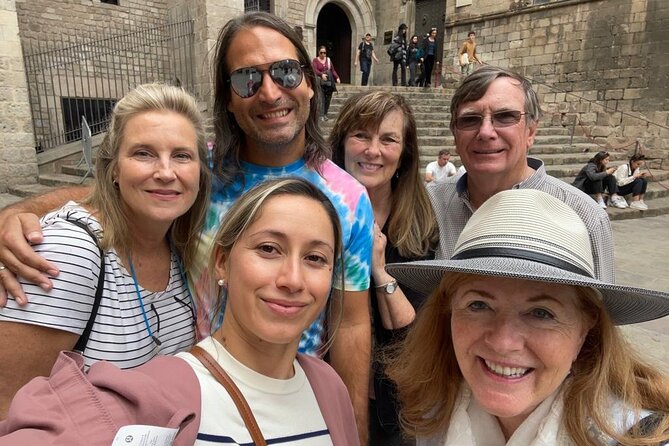
Think of this experience as a guided orientation walk, not a Sagrada Familia admission visit. It brings together three parts of Barcelona that can feel disconnected when explored alone: Gaudí’s Modernism, the central city around Plaça de Catalunya, and the older streets of the Gothic Quarter.
The route starts at Av. de Gaudí, 2, near the Sagrada Familia, and finishes at Plaça del Rei in Ciutat Vella. That north-to-south progression works well. You begin with Barcelona’s most famous architectural symbol, then move through the central avenues before ending among Roman remains, medieval buildings, and royal history.
The guide’s role matters here. These are not simply photo stops. You hear about Gaudí’s ideas, the meaning of architectural details, the development of Passeig de Gràcia, and the people who shaped Barcelona’s Modernist period. Later, the subject shifts to the Roman Empire, the Crown of Aragon, and the winding structure of the Gothic Quarter.
I would choose this tour early in a Barcelona visit. It gives you names, dates, and places to return to. It also helps you decide which buildings deserve a longer visit on your own.
More Sagrada Familia tours in Barcelona:
- Barcelona: Sagrada Familia, Modernism, and Old Town Tour
★ 4.7 · 1,621 reviews - Sagrada Familia & Gaudi Tour Private or Small Group with Tickets
★ 4.5 · 1,188 reviews - Complete Gaudi Tour: Casa Batllo, Park Guell & Sagrada Familia
★ 5.0 · 1,152 reviews
Starting at the Sagrada Familia without going inside
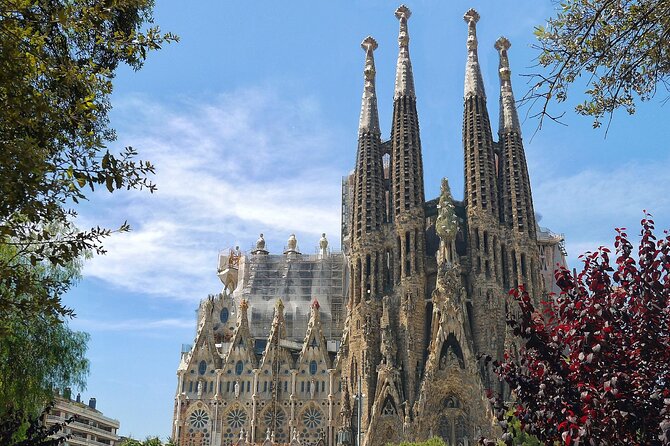
The first section spends about 45 minutes on the history of the Sagrada Familia and Antoni Gaudí. This is the longest single stop, which makes sense. Even from outside, the basilica gives you plenty to examine: sculpted surfaces, towers, religious symbols, and the unusual shapes that make the building unlike any other church in Barcelona.
Your guide explains the stories and meanings behind the details. That can be useful because the exterior can feel overwhelming at first. There is so much to look at that a good explanation helps you focus on what you are seeing rather than simply taking another photograph.
Still, you need to set your expectations correctly. The tour passes by the Sagrada Familia but does not provide entry. Admission is specifically excluded, and the tour description makes this clear in several places. If you want to see the interior, you must arrange that separately.
This distinction is the single most important buying decision. Several poor experiences came from people expecting to enter the basilica. Some felt misled, while others gave the tour high marks once they understood it was an outdoor explanation. I would not book this experience as your only Sagrada Familia visit. I would book it if you already have, or plan to arrange, a separate interior ticket.
The meeting point near Av. de Gaudí is practical, but look carefully for the exact instructions sent to you. Contact information and meeting details may arrive through WhatsApp. Keep notifications on and check the phone attached to the booking.
Passeig de Gràcia and the Modernist city
The next portion turns toward Passeig de Gràcia, Barcelona’s best-known avenue for grand Modernist architecture. About 15 minutes are devoted to its history and to the avenue’s role in the city.
You then stop at several Modernist buildings for roughly 15 minutes each. The guide explains the architect’s vision at one striking work, then discusses art, chocolate, and the history connected with another building. A further stop focuses on the designer behind a richly detailed façade.
The itinerary does not identify every building by name, so you should think of this as a guided exterior survey rather than a series of interior visits. You will see, hear about, and photograph important façades, but the included access is concentrated later in the Gothic Quarter.
That approach suits you if you want to understand how Barcelona became a center of Modernist design. It is less suitable if you want long, quiet visits inside each building. Fifteen minutes goes quickly once the guide has gathered the group and explained the architecture.
The best part is the storytelling. Caio is praised for explaining Gaudí and his contemporaries through memorable stories, while Christian and Christina receive strong marks for historical detail and enthusiasm. A guide such as Leo is especially useful if you enjoy a passionate explanation rather than a dry list of dates.
A short pause near Plaça de Catalunya
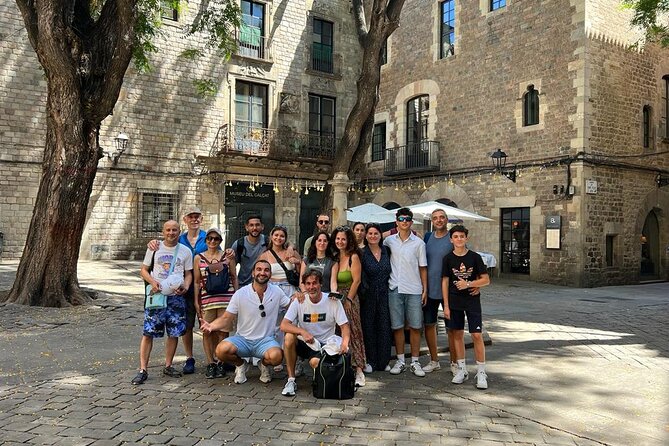
The route includes a ten-minute break near Plaça de Catalunya, Barcelona’s largest square. This is a useful reset between the Modernist avenues and the old city.
Do not expect a long café stop. Ten minutes is enough to catch your breath, check directions, or take a quick drink if you already have one. The schedule is fairly tight, and one account describes the tour as informative but short on breaks.
I recommend using a restroom before the tour begins. The route covers a lot of ground, and the schedule does not appear to include a proper restroom break. This is a small point, but it matters during a three-hour walking tour, especially in warm weather or with children.
The movement between districts may include a metro ride. One positive account specifically enjoyed using the metro for the first time and seeing how local residents move around. Metro tickets are not included, so bring money or a transport pass if your guide uses public transit during the route.
More Gothic Quarter walks in Barcelona:
- Ramblas, Old Town, Gothic and Gaudi Architecture Walking Tour
★ 5.0 · 723 reviews - Barcelona 1.5h Private Old Town, Gothic & Ramblas Walking Tour
★ 5.0 · 318 reviews - Gothic Quarter & Gaudí’s Treasures Small-Group Tour
★ 4.9 · 65 reviews - Barcelona in One Day: Gaudí, Gothic Quarter &Tapas (Private Tour)
★ 5.0 · 18 reviews
Entering the older city at Casa de l’Ardiaca
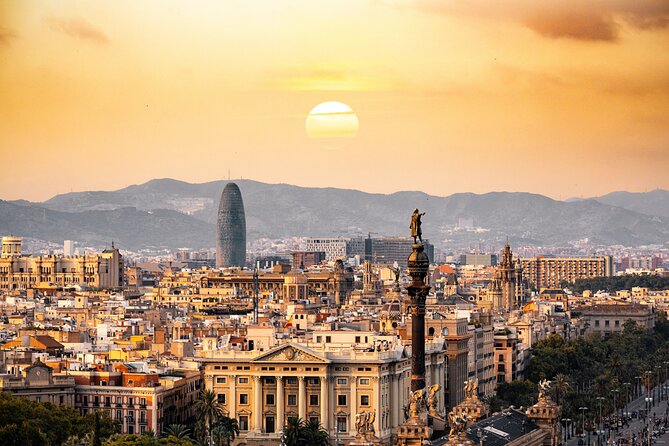
Casa de l’Ardiaca is one of the included entry points and offers a change of pace after the open avenues. The visit lasts about ten minutes, but the building is presented as a kind of time capsule.
The appeal here is not size. It is the layering of Barcelona’s past. You move from Gaudí’s forward-looking designs into a place shaped by older institutions and older building traditions. The guide’s explanation gives the stop more meaning than a quick photograph would.
Because the visit is short, listen closely at the beginning. You may not have time to wander at length or return to details later. The building works best as part of the larger story: Barcelona was not rebuilt from scratch for Modernism. New architecture grew around Roman, medieval, and civic structures that were already there.
Roman Barcelona at the Temple d’August
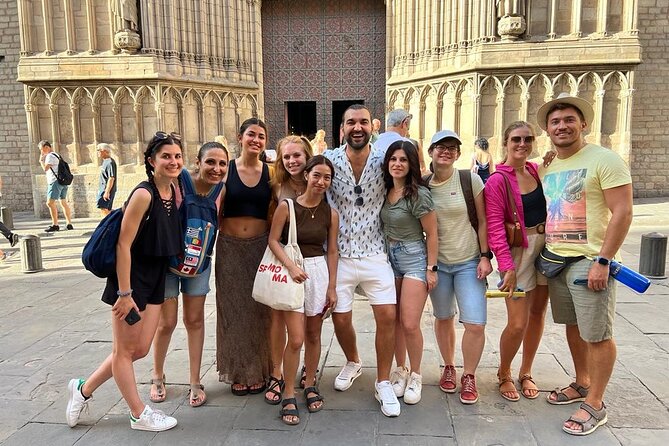
The MUHBA Temple d’August is another included site. The visit lasts about five minutes, so this is a compact historical stop rather than a museum visit with time for extensive exploration.
The temple takes you back to the Roman Empire and reminds you that Barcelona’s oldest story is hidden inside its later streets. That contrast is one of the pleasures of the route. Within a short walk, you move from Gaudí’s sculptural forms to the remains of a Roman religious building.
A guide is particularly valuable here because Roman ruins can be easy to overlook. Without context, you may see columns and stone. With a clear explanation, the site becomes evidence of the city’s early political and religious life.
Five minutes is enough for orientation, but not for a slow archaeological visit. If ancient history is your main interest, you may want more time at Barcelona’s history museum after the tour ends.
The General Archive and Barcelona’s royal past
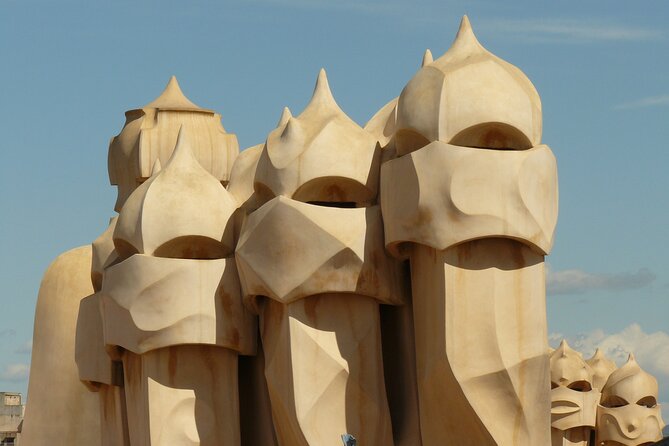
The General Archive of the Crown of Aragon adds a different layer of history. The guide explains the Crown of Aragon and the major events connected with this location. The stop lasts about ten minutes.
This section broadens the tour beyond architecture. You are no longer just looking at façades and ruins. You are hearing how power, government, and regional identity shaped the city and its wider territory.
The setting is described as surprising, which is part of its appeal. You may not expect such an important historical institution in the middle of the Gothic Quarter. The guide helps connect the building to the larger story of Barcelona and the Crown of Aragon.
This is also where a strong guide can make a real difference. Christina is praised for her command of Barcelona’s past, while Christian is noted for combining facts with stories and answering questions. Those skills are useful when the subject becomes less immediately visual.
Finishing in Plaça del Rei
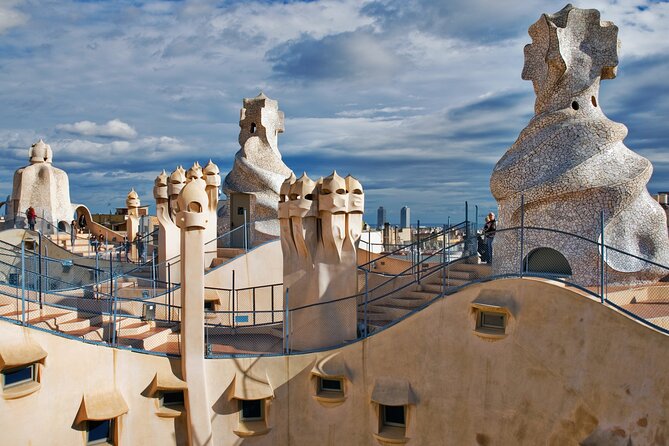
The final stop is Plaça del Rei, where the tour ends in front of the History Museum of Barcelona. The square gives the route a fitting finish. After Gaudí, Modernism, Roman remains, and civic history, you end in one of the Gothic Quarter’s most atmospheric historic spaces.
The location is also practical. You can continue to the museum, explore nearby lanes, or make your own way toward another part of Ciutat Vella. But do not assume you will be returned to the starting point. One person found the finish confusing and spent time trying to locate the right plaza and transport connection afterward.
I would save the end point in your phone before the tour begins. If you plan to catch a bus, metro, or hop-on hop-off service afterward, allow extra time to get your bearings. The tour ends at Plaça del Rei, not at the Sagrada Familia.
Guide quality and group experience
The guide is the heart of this experience. Anastasia receives especially warm praise for her explanations of the Sagrada Familia, the old city, government buildings, and local dining suggestions. Nuria is appreciated for using visual aids and offering extra ideas for Barcelona. Caio is described as an excellent history teacher, and Christian is praised for lively stories and patient answers.
Christina is another strong name to watch for. Her explanations of Barcelona’s past are repeatedly described as passionate and well informed. Leo also receives high marks for enthusiasm, even though the lack of Sagrada Familia entry lowered the overall impression for one participant.
The group limit is 20 people. That is manageable for a city walk, but sound can still be an issue. At the Sagrada Familia, traffic and construction noise may make it hard to hear, and no earphones are provided. Stay close to the guide and move toward the front when the group stops.
The walking pace can also be brisk. One person felt the guide moved too quickly and did not always check that everyone was keeping up. Another account describes a separation caused by a restroom problem and unclear meeting instructions. Keep your phone charged, stay aware of the meeting point, and tell the guide if you need a moment.
Is $56.75 a fair price?
At $56.75 per person, the value depends almost entirely on what you expect. The price is reasonable for a three-hour guided overview with several included historic entries and a local guide who adds context to places you could otherwise pass without noticing.
It is not a good value if you think you are buying a Sagrada Familia ticket. You are not. You are paying for explanation, organization, and access to smaller historic sites, while the basilica interior remains a separate expense.
The tour may save you planning time. In three hours, you cover Modernist architecture, Plaça de Catalunya, the Gothic Quarter, Casa de l’Ardiaca, the Temple d’August, the General Archive, and Plaça del Rei. Reaching all of those places alone would require research and careful navigation.
I see the price as fair for a first visit, especially if you value a guide’s stories. If you are comfortable reading about architecture and history on your own, a self-guided walk will cost less. If you want the Sagrada Familia interior, budget separately and do not count this tour as that admission.
Who should book this walk?
I would recommend it to a first-time visitor who wants a broad introduction to Barcelona in one morning or afternoon. It works well for someone who wants both Gaudí and the Gothic Quarter instead of spending the entire day in one district.
It also suits you if you enjoy history explained on the street. The route moves from Roman Barcelona to medieval institutions, royal power, and Modernist architecture, giving you a useful framework for later sightseeing.
I would be cautious about booking it for anyone with limited walking ability, since a moderate fitness level is required and the pace may be quick. It may also frustrate visitors who want long breaks, quiet interior visits, or a relaxed photography schedule.
Most of all, book it only after accepting the Sagrada Familia limitation. The tour’s strong points are the guide, the range of neighborhoods, and the smaller historical stops. The basilica is the opening subject, not the final destination inside it.
Final verdict
This is a lively, useful introduction to Barcelona, with especially strong guiding and a smart route from Gaudí to Roman and medieval Barcelona. Anastasia, Nuria, Caio, Christian, Christina, and Leo are all praised for making the history engaging rather than mechanical.
I would book it for context and orientation, not for Sagrada Familia admission. Keep your phone available for WhatsApp messages, wear comfortable shoes, use the restroom first, and remember that you finish at Plaça del Rei. If you do those things, the tour offers solid value and a practical first look at Barcelona’s many layers.
FAQ
Does the tour go inside the Sagrada Familia?
No. The tour passes by the Sagrada Familia and explains its history, Gaudí, and architectural details, but entry to the basilica is not included.
How long does the tour last?
The experience lasts approximately three hours.
Where does the tour begin?
It begins at Av. de Gaudí, 2, in the L’Eixample district of Barcelona.
Where does the tour end?
The tour ends at Plaça del Rei in Ciutat Vella, directly in front of the History Museum of Barcelona.
Is admission to Casa de l’Ardiaca included?
Yes. Casa de l’Ardiaca is listed as an included stop with admission included.
Is admission to the Temple d’August included?
Yes. The MUHBA Temple d’August is an included stop with admission included.
Are metro tickets included?
No. Metro tickets are not included in the tour price.
Is the tour offered in multiple languages?
Yes. A multilingual professional guide is included.
How large can the group be?
The maximum group size is 20 people.
What happens if you cancel?
You can receive a full refund if you cancel at least 24 hours before the experience begins. Cancellations or changes made within 24 hours are not refunded.
Just added in Barcelona
- Self-Guided Audio Tour-The Surrealist Barcelona of Dalí and Gaudí★ 3.5 · 8 reviews
- Visit to the Modernist houses of the Americans★ 5.0 · 2 reviews
- Roman & Gotic & Gaudi in Barcelona: private walking tour★ 4.5 · 2 reviews
- Barcelona Gaudi Tour: Sagrada Familia, Casa Batllo & Casa Mila★ 5.0 · 4 reviews
- Barcelona Street Escape: Gaudi and the Hidden Treasure★ 5.0 · 17 reviews
- Sagrada Familia Private Tour – Unlock the mysteries of Gaudi★ 5.0 · 10 reviews
- Gaudi’s Casa Batlló and La Pedrera with Chocolate Tasting★ 5.0 · 5 reviews
- Gaudí & Catalan Modernism Private Walking Tour★ 5.0 · 11 reviews
Sagrada Familia Tours, compared.

Sagrada Familia, Modernism, and Old Town Tour
Read our review →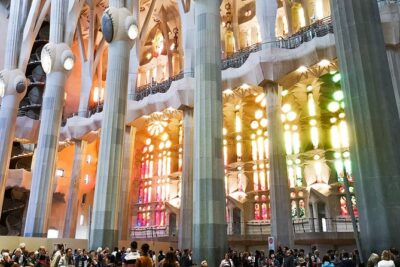
Sagrada Familia & Gaudi Tour Private or Small Group with Tickets
Read our review →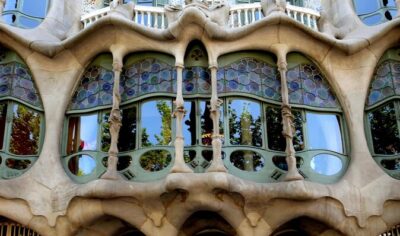
Complete Gaudi Tour: Casa Batllo, Park Guell & Sagrada Familia
Read our review →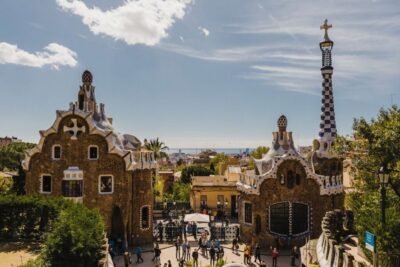
Discover Gaudí, Sagrada Familia, and Park Güell
Read our review →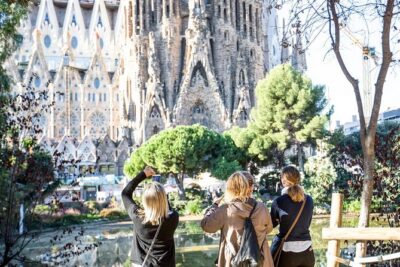
Fast Track Sagrada Familia & Park Guell the best of Gaudí
Read our review →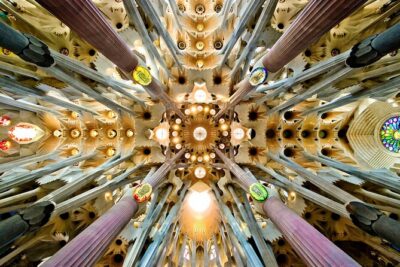
Sagrada Familia & Park Güell Optional: Small Group Tour
Read our review →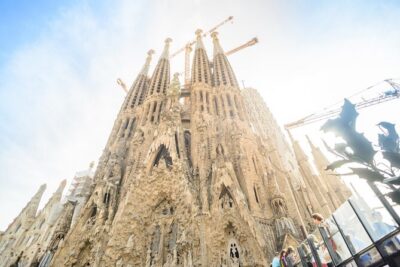
Sagrada Familia: Small Group Tour, hotel pick-up with Fast-Track
Read our review →Browse the lists this tour appears in