
REVIEW · WALKING TOURS
Private Walking Tour of Old Gdańsk with an architect-guide
Gdańsk rewards curious eyes. This private walk pairs major sights with an architect’s view of the city, so you get more than names and dates. I like the use of old photographs to show how places looked before World War II, and I like the small-group format, which lets you ask questions and adjust the pace. The main drawback is that several museums and towers are only suggested stops, not included admissions.
The route moves from the Old Town toward Main Town, passing the Great Mill, Great Armoury, St. Mary’s Church, Mariacka Street, the Green Gate, Uphagen’s House, and the old Prison Tower. Agnieszka, the guide, is praised for her energy, humor, architectural insight, and excellent French, while the advertised tour language is English. Plan for at least 90 minutes, though the walk can run as long as four hours if you linger.
Key Points at a Glance
- An architect’s eye: Buildings are explained through design, purpose, wealth, damage, and rebuilding.
- Old photos add power: Images help you picture areas before the destruction of World War II.
- Private for up to seven: Your group gets the guide’s attention instead of following a large crowd.
- A route with range: Canals, medieval defenses, churches, merchant halls, museums, and maritime trade all appear.
- Admissions are selective: The walking commentary is included, but the Amber Museum, Uphagen’s House, and Prison Tower cost extra.
- A flexible length: The core walk takes about 90 minutes, while a fuller version can last three to four hours.
Starting Beside the Radunia Canal
The meeting point is the Old Town City Hall, at Korzenna 33/35. This puts you beside the Radunia Canal, a useful place to begin because water, trade, defense, and urban power all meet here.
The first stop lasts about 12 minutes. You will hear about the city hall and the Teutonic Order, an important starting point for understanding why Gdańsk developed such a strong medieval identity. I like beginning here rather than jumping straight onto the postcard streets. You get a little context before the decorative facades take over.
The tour is private, with only your group participating, and the price is $264.35 for up to seven people. That works out to roughly $38 per person for seven, or about $66 each for four. For a couple, it is a more serious purchase, but you are paying for a private architect-guide rather than a standard group walk.
A pickup option is offered, and the meeting area is near public transportation. The exact pickup arrangement should be confirmed when you book, since the stated meeting point remains the Old Town City Hall.
More walking tours in the world:
- Lecce: Baroque Architecture and Underground Walking Tour
★ 4.6 · 1,248 reviews - Chicago in a Day: Food, History & Architecture Walking Tour
★ 5.0 · 1,153 reviews - Ramblas, Old Town, Gothic and Gaudi Architecture Walking Tour
★ 5.0 · 723 reviews
The Great Mill and Gdańsk’s Working Past
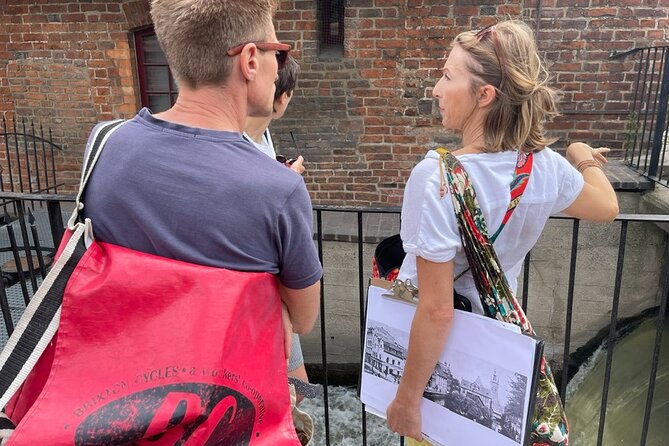
The Great Mill is a short stop, listed at around 10 minutes, but it gives the walk a useful change of mood. This is not just a pretty building to photograph. The guide explains its purpose and importance, then uses old images to show how the area looked before World War II.
That visual comparison is one of the strongest parts of the experience. Gdańsk can look polished and complete today, and it is easy to forget how much of the city was damaged and later rebuilt. Seeing earlier photographs helps you read the present-day buildings with more care.
The Amber Museum is housed in the Great Mill. It is not part of the tour price, but I would consider adding it before the walk if your schedule allows. The tour provider specifically encourages this option, and it makes practical sense: you are already in the building, and amber is closely tied to the culture and trade of the Baltic region.
The limitation is time. Ten minutes is enough for an introduction, not a museum visit. If you want to see the exhibits properly, allow separate time and pay the admission fee.
Optional Towers for Strong Legs
Two possible additions are discussed rather than automatically included. One is a church that remains active and also houses a Museum of Turrets Clocks. The museum is in the tower, so reaching it calls for strong legs.
Inside are centuries-old timekeeping devices, Poland’s biggest concert carillon, and the world’s first pulsar clock. Those details make this a tempting extra for anyone interested in engineering, clocks, or unusual museum collections. The practical point is simple: ask about it before the walk begins, since it is not part of the standard route.
Another tower marks the highest point of the medieval fortifications of Main Town. From there, the route shifts in character. You leave the Old Town area and begin exploring Main Town, the larger and more impressive urban center associated with Gdańsk’s commercial power.
The supplied details do not name either of these optional stops. Ask Agnieszka or the booking contact to clarify exactly which church and tower are available on your chosen day.
Great Armoury, a Renaissance Statement
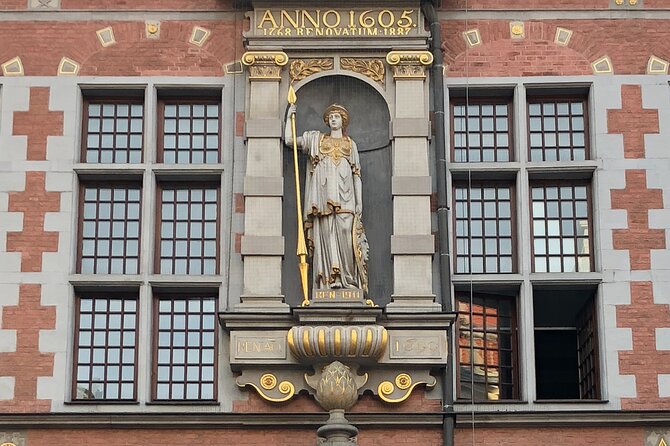
The Great Armoury is a brief five-minute stop, but it gives the architect-guide plenty to discuss. Its design is unusual for a military building, and that contrast is the point. The structure shows how Gdańsk’s wealth could turn a practical function into an elaborate public statement.
Today it houses the Academy of Fine Art. The building is sometimes open during student exhibitions, though entry is not guaranteed. I would treat the exterior explanation as the main event and consider an interior visit a bonus.
This is where an architect-guide can add real value. You are not simply told that the building is attractive. You get a chance to think about how appearance, purpose, and civic pride were combined. The short stop works well in the middle of the walk because it keeps the route moving while adding a different architectural style.
More private tours in the world:
- Best of Chicago: Architecture & Highlights City Private Tour
★ 5.0 · 94 reviews - Private Harajuku Omotesando Architecture Walking Tour
★ 5.0 · 67 reviews - Private Santa Barbara History and Architecture Walking Tour
★ 5.0 · 56 reviews - Private Barcelona Modernism and Gaudí Walking Tour
★ 4.7 · 54 reviews
St. Mary’s Church and the Astronomical Clock
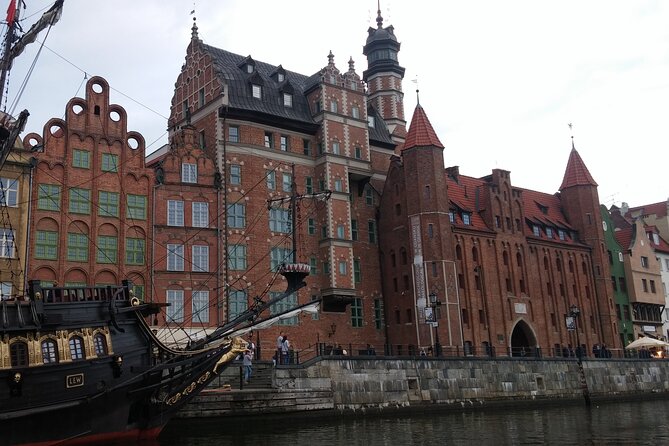
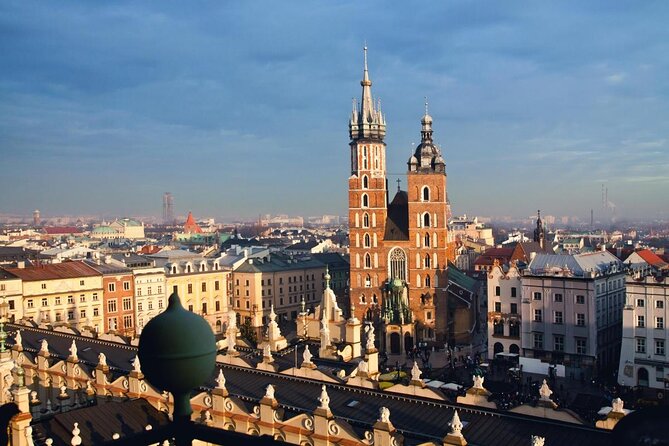
St. Mary’s Church receives about 15 minutes. It is identified as the biggest brick church in the world, and its scale is difficult to grasp from a photograph alone.
The major feature highlighted here is the huge astronomical clock from the 15th century. It chimes every day at noon, so timing matters if hearing it is important to you. Ask for the exact schedule when you book or meet the guide, since the tour’s starting time is not specified.
The church is still active, as are almost all the churches along the route. That matters because you are entering a living place of worship, not simply a historic shell. Keep the visit respectful, and be prepared for access or timing to depend on church activity.
Fifteen minutes gives you an introduction, not a full examination of the building. If you want to study the clock or sit quietly inside, you may need to extend the tour or return later.
Mariacka Street and the Amber Trade
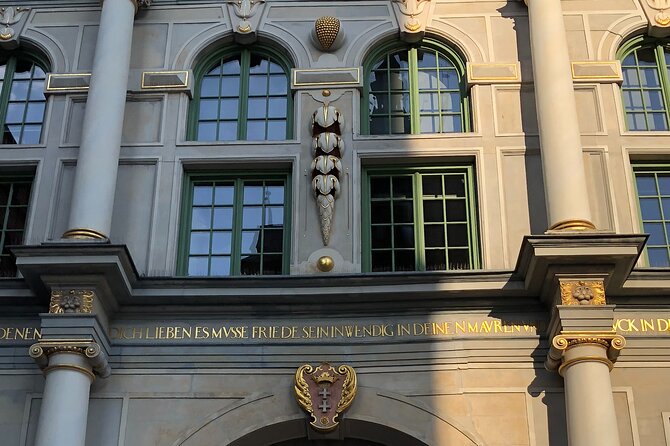
Mariacka Street gets about 20 minutes, making it one of the longer stops. This is the place to slow down and notice the atmosphere. The street preserves a strong sense of the old city, with details that reward a careful look rather than a rushed photograph.
From here, the walk continues through Brama Mariacka, or St. Mary’s Gate. The passage leads toward the Long Seashore, where the guide talks about maritime trade.
This transition is one of the best ideas in the route. Mariacka Street gives you the intimate, close-up side of Gdańsk. The gate then opens the story toward water, shipping, commerce, and the city’s place on the Baltic coast. You move from a street with a local feel to the wider forces that made Gdańsk wealthy.
The route does not promise a dedicated amber shopping session, and that is a plus for me. The emphasis stays on place and history rather than sales. If amber interests you, the Great Mill’s museum is a better planned stop than relying on a quick walk through shops.
Green Gate and the Great Market
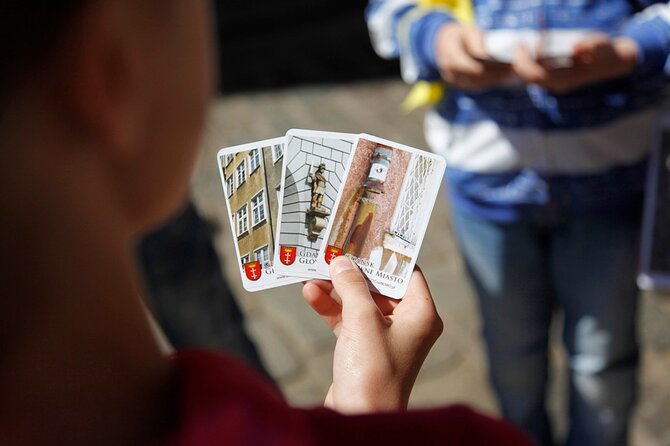
The Green Gate takes about 10 minutes. Passing through it brings you to the Great Market, described as the place to be in the city’s grand commercial age.
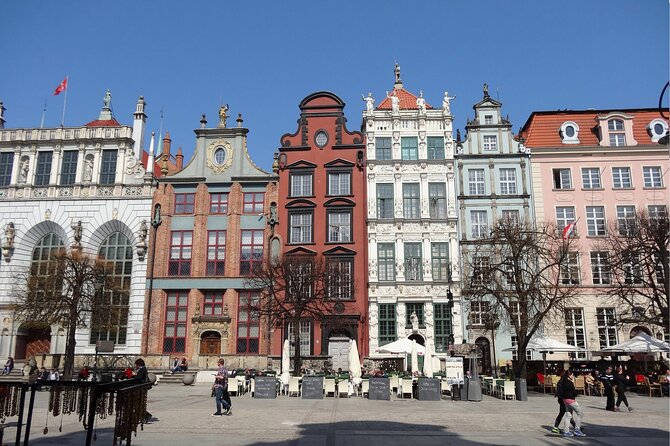
This stop helps connect architecture to social life. Public spaces were not only routes from one building to another. They were where merchants met, status was displayed, and civic life played out. An architect-guide can help you read the buildings around the square as a group rather than as isolated facades.
The route then reaches the Artus Court and the Main Town Hall. Artus Court was a meeting place for merchants and is now a museum of history and art. The Main Town Hall also has interesting interiors.
Neither interior visit is clearly included as a standard admission in the supplied details. Think of this part as an orientation. You will understand what deserves a later visit, but you may not have time to see every room during the walking tour.
That is a recurring strength of the experience: it helps you choose what to return to. Gdańsk has enough museums and church interiors to fill several days, so a good first walk should help you sort priorities.
Uphagen’s House, a Glimpse Indoors
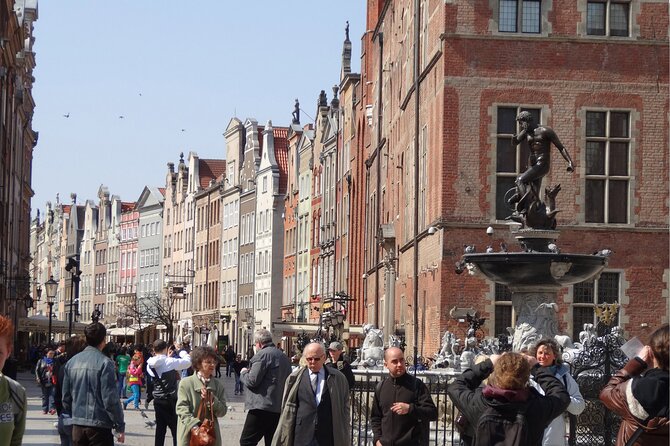
Uphagen’s House is described as a quick look inside, lasting around five minutes. The house is now part of the Museum of Gdańsk, and even a brief visit can show you how an earlier home was arranged and decorated.
Admission is not included, and the wording makes clear that you decide if you want to visit. That flexibility is useful. You can keep the walk focused on streets and exteriors, or add an interior if domestic history interests you.
I would not expect five minutes to cover the museum in detail. Treat it as a preview. If you like the rooms, return later with a proper admission ticket and enough time to look around without watching the clock.
Ending at the Prison Tower
The final stop is the Prison Tower, listed at about 10 minutes. The tone changes here. The route ends where some lives ended, giving the walk a darker closing note after the churches, merchant buildings, and grand gates.
The tour finishes at Katownia, Targ Węglowy 26, near the series of gates that once led into one of the wealthiest cities on the Baltic coast. This is a logical endpoint because it brings the story back to fortifications, law, punishment, and the controlled entrances to Main Town.
Admission to the Prison Tower is not included. Like Uphagen’s House, it is best viewed as an optional extension rather than a guaranteed interior tour.
The ending also makes the route convenient for continuing on your own. You finish near the defenses and gates, not back at the starting point, so plan your onward route before setting out.
What the Architect-Guide Adds
The guide is the heart of this experience. Agnieszka is described as bringing energy, humor, passion, and architectural insight to the walk. Her French is said to be excellent, and the advertised language for this booking is English.
That language detail matters. If you need French, confirm availability before booking, since several strong comments about Agnieszka specifically involve French-language guiding. If you book in English, you can expect the tour to be offered in English, but it is still wise to confirm the language and guide in advance.
The use of photographs is especially valuable. Old images can explain wartime destruction and rebuilding far better than a short speech. They also help you see why a building’s shape, gap, or street alignment may look the way it does today.
A private guide can adjust emphasis, too. You might spend longer on architecture, city planning, churches, wartime changes, or maritime trade. The route has a fixed outline, but its length ranges from 90 minutes to four hours, which suggests room for a more relaxed version.
How Much Time Should You Allow?
The official duration is approximately 1.5 to 4 hours. That is a broad range, but the itinerary explains it.
A quick version covers the main exterior stops and essential commentary. A longer version may include more questions, optional tower discussions, museum interiors, church timing, or a slower look at photographs and architectural details.
I would allow two to three hours if you want to enjoy the walk rather than race between points. Add separate time for the Amber Museum, Uphagen’s House, Artus Court, the Main Town Hall, or the Prison Tower. The stated stop times add up to roughly 87 minutes before optional visits, transitions, and questions, so the 90-minute minimum is realistic.
Because the tour includes active churches and optional museums, timing can affect what you see. If St. Mary’s astronomical clock at noon is a priority, choose your start time with care.
Who Gets the Best Value?
This tour suits you if you want a private introduction to Gdańsk and care about why buildings look the way they do. It is particularly useful for first-time visitors who want a clear route through Old Town and Main Town without spending the whole day inside museums.
It also suits families or small groups. Up to seven people can share the $264.35 price, making the cost more sensible as the group grows. A couple pays more per person, but gains privacy and the ability to ask questions without competing with a large group.
You should think twice if you want a fully inclusive museum package. Several of the most interesting interiors cost extra, and some are only briefly visited or discussed. This is primarily a guided city walk with optional add-ons, not an all-admissions sightseeing pass.
Most people can participate, and service animals are allowed. The route is near public transportation, and pickup is offered. The information does not specify full step-free access, tower conditions, or exact walking distances, so ask before booking if mobility is a concern.
Free cancellation is available if you cancel at least 24 hours before the start time. Changes or cancellations inside that window are not accepted for a refund.
Should You Book the Gdańsk Architect Walk?
I would book it if you want Gdańsk explained rather than simply photographed. The best reasons are the private format, the architect’s perspective, the old photographs, and the route’s range from canals and mills to churches, gates, merchant halls, and fortifications.
Book with a plan. Ask about the optional clock tower, confirm the language, and decide in advance which museums you want to add. If you are a group of four to seven, the price becomes easier to justify. If you are traveling as a couple and prefer independent museum visits, a shorter private walk followed by self-guided exploring may offer better value.
For a first look at Gdańsk, especially one that connects design with war, trade, religion, and civic life, this is a strong choice.
FAQ
How long does the private Gdańsk walking tour last?
The tour lasts approximately 1 hour 30 minutes to 4 hours. The shorter version focuses on the main route, while a longer visit allows more time for questions and optional stops.
Where does the tour start?
The meeting point is Ratusz Staromiejski, Korzenna 33/35, 80-001 Gdańsk, Poland.
Where does the tour end?
The tour ends at Katownia, Targ Węglowy 26, 80-836 Gdańsk, near the historic series of gates leading into Main Town.
Is the tour offered in English?
Yes. English is one of the stated tour languages. Agnieszka is also praised for speaking French well, but you should confirm French availability before booking.
Are museum admissions included?
No. Admission to the Amber Museum, Uphagen’s House, and the Prison Tower is not included. Some other interiors, including Artus Court and the Main Town Hall, may be discussed as places to visit.
Can I cancel for a full refund?
Yes, if you cancel at least 24 hours before the experience starts. Cancellations or changes made less than 24 hours before the start time are not eligible for a refund.
Just added in the world
- Wilmington History and Architecture Tour★ 4.8 · 18 reviews
- Washington, DC: Georgetown Architecture Walking Tour★ 5.0 · 8 reviews
- New Orleans : Garden District Architecture Walking tour★ 4.8 · 5 reviews
- Washington DC: Dupont Circle & Embassy Row Architecture Tour★ 5.0 · 6 reviews
- Vicenza: Palladian Architecture Private Walking Tour★ 3.3 · 3 reviews
- Walk & Discover KL’s Architectural and Heritage Gems★ 5.0 · 7 reviews
- Private Colonial Williamsburg Architectural Tour★ 5.0 · 5 reviews
- Unveiling Brno: History, Culture & Architectural Delights★ 5.0 · 2 reviews
Walking Tours, compared.

The Official Art Deco Walking Tour by The Miami Design Preservation League
Read our review →
Baroque Architecture and Underground Walking Tour
Read our review →
Chicago in a Day: Food, History & Architecture Walking Tour
Read our review →

Ramblas, Old Town, Gothic and Gaudi Architecture Walking Tour
Read our review →
Chicago’s Secret Interiors Architectural Walking Tour
Read our review →

Browse the lists this tour appears in