
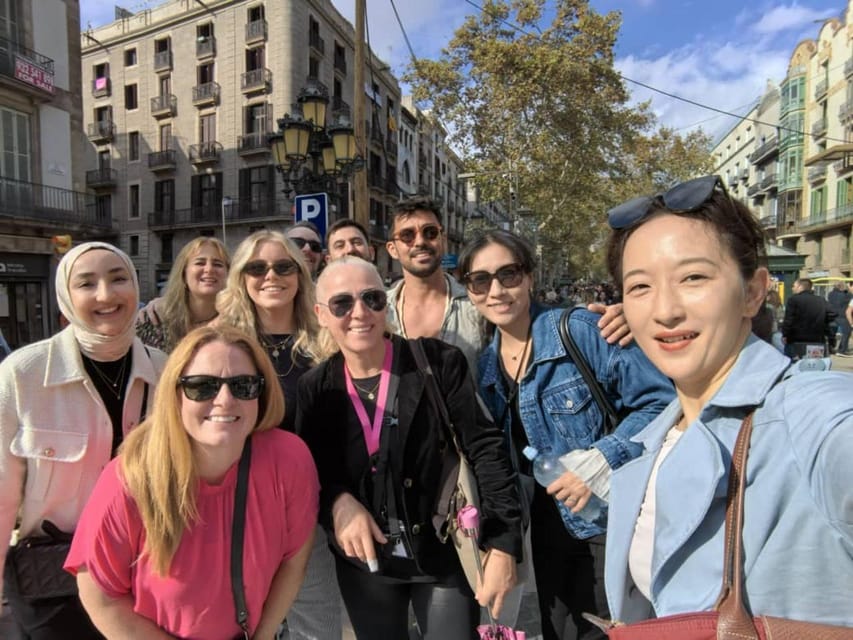
REVIEW · GAUDí TOURS
Private Barcelona Modernism and Gaudí Walking Tour
Barcelona’s buildings tell wild stories. This three-hour Modernism walk connects Gaudí’s famous works with less familiar designs by Domènech i Montaner and Puig i Cadafalch, so you see more than a parade of postcard façades. I especially like the expert-led explanations and the chance to compare several architects along Passeig de Gràcia. The main consideration is simple: you walk a lot, and the tour appears to focus on exterior architecture rather than included entry to the buildings.
At $21 per person, the price is strong for a private or small-group experience, especially if your guide is as engaging as Stephanie, Isabel, Antonio, André, or the other guides praised for their warmth and clear explanations. Check the meeting point carefully, wear comfortable shoes, and do not bring a large bag.
Key points to know before booking
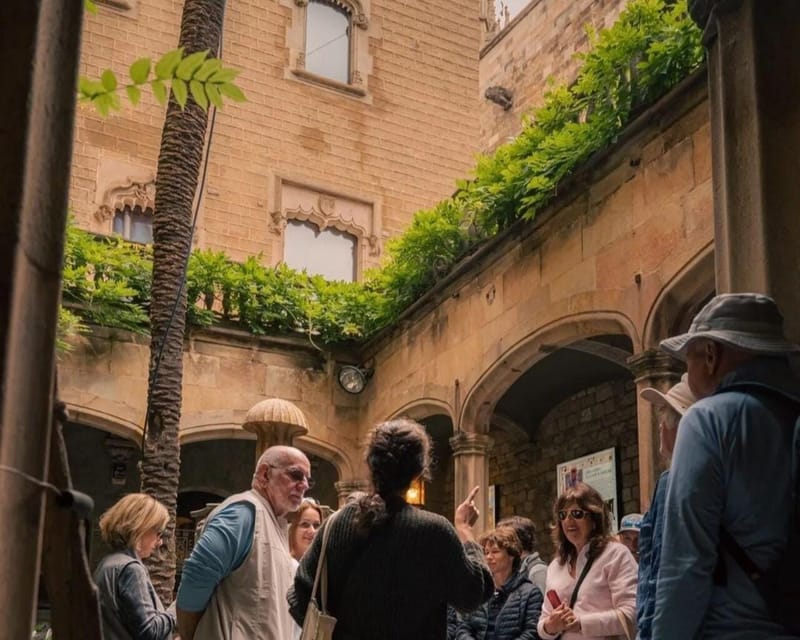
- Sagrada Familia anchors the route, but interior admission is not listed as included.
- Passeig de Gràcia supplies the architectural feast, with Casa Batlló, La Pedrera, Casa Amatller, and Casa Lleó Morera.
- The tour compares several architects, not just Antoni Gaudí.
- A three-hour walk covers a lot of ground, and one review described it as closer to two hours, so timing may vary.
- Small groups make questions easier, with a maximum of 12 participants and private-group options.
- The guide can shape the experience, with strong praise for friendly, art-focused guides who offered extra city tips.
Why this Barcelona walking tour is worth considering
Barcelona’s Modernist architecture can look like a collection of strange, colorful houses if you simply stroll past it. A good guide gives those buildings a voice. You learn why Gaudí used curved forms, how the Eixample was planned, and why Barcelona became such an important center for Catalan Modernisme.
That context is the real value here. You are not only checking off Sagrada Familia and Casa Batlló. You are also seeing how Gaudí worked beside, and sometimes competed with, architects such as Lluís Domènech i Montaner and Josep Puig i Cadafalch.
The tour lasts about three to three and a half hours. It is offered in English or Spanish, with a professional local guide. The group size is capped at 12, and private options are available. At $21 per person, that is a reasonable price for a guided introduction to one of Barcelona’s most important artistic movements.
I would view this as an orientation walk, not a complete Gaudí visit. It helps you understand what you see from the street and decide which interiors deserve a separate booking.
More Gaudi tours in Barcelona:
- Barcelona: Park Güell and Gaudí House Museum Entry Ticket
★ 4.5 · 6,326 reviews - Barcelona: Gaudí’s Park Güell Tour with Fast-Track Ticket
★ 4.8 · 4,512 reviews - Sagrada Familia & Gaudi Tour Private or Small Group with Tickets
★ 4.5 · 1,188 reviews
Starting with Sagrada Familia
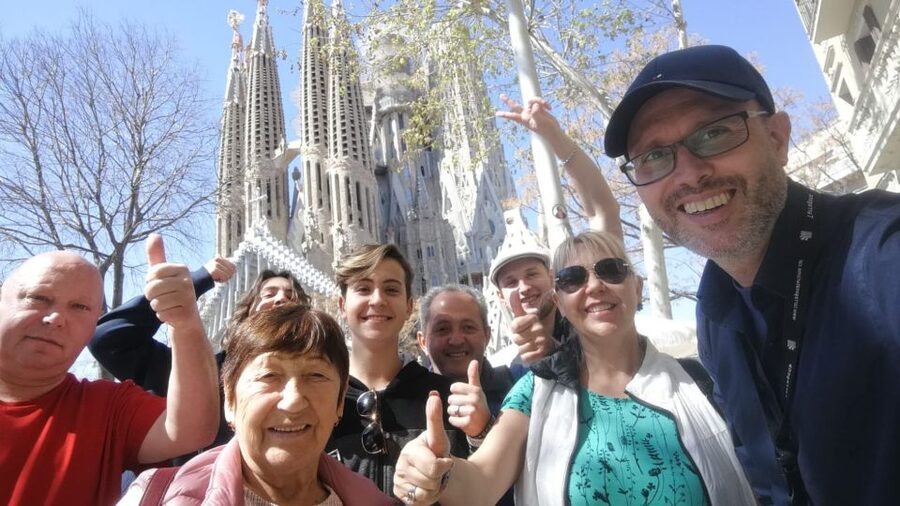
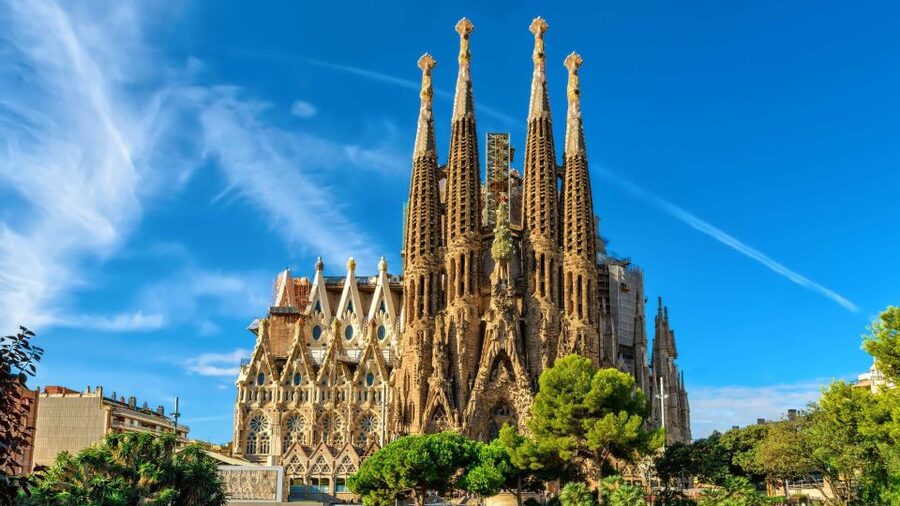
La Sagrada Familia is the obvious attention-getter. Even before you hear the details, the basilica’s towers and sculpted façades make it clear that Gaudí was working on a scale far beyond an ordinary church project.
Your guide explains Gaudí’s role in the basilica and the long construction process, which has continued for more than a century. You also hear about the Passion façade, designed by Josep Subirachs after Gaudí’s death. That gives the stop a useful layer of debate: the basilica is not a frozen monument, but an evolving work shaped by more than one generation.
The tour description emphasizes admiring the basilica and discussing its design. It does not list an interior ticket, so you should not assume that the walking tour includes entry. One useful tip comes from the route itself: the tour may finish near Sagrada Familia. If you want to go inside, ask about timing and arrange a separate admission for the end of the walk.
This is also a good reason to avoid scheduling something immediately afterward. The meeting point can vary by booking option, and the final location may not be where you started.
The Eixample grid and Cerdà’s city plan
The walk then puts the buildings into their urban setting. Eixample was developed in the mid-19th century as Barcelona expanded beyond its medieval walls. Its broad streets and orderly grid were part of Ildefons Cerdà’s plan for a healthier, more open city.
That planning story matters because Modernist architecture is not scattered randomly. The buildings work within a district designed for movement, light, greenery, and growing urban life. You can better understand why so many grand façades appear along the same avenues.
I like this part of the experience because it prevents the tour from becoming a simple architect-spotting exercise. You learn how the city itself changed, then see how wealthy families and businesses used architecture to announce their status.
The guide also connects art and daily life. Modernist details were not limited to a few famous landmarks. They appeared in homes, apartment blocks, entrances, balconies, tiles, ironwork, and decorative stone. Keep your eyes above street level. Barcelona rewards anyone willing to look up.
Passeig de Gràcia’s famous architectural trio
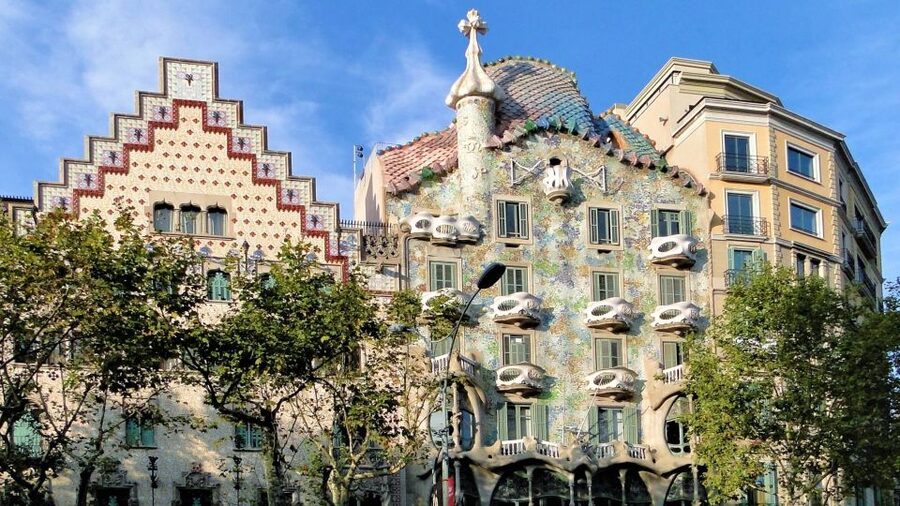
Passeig de Gràcia is the main course of the route. This elegant avenue contains several of Barcelona’s best-known Modernist buildings, including the trio formed by Casa Batlló, Casa Amatller, and Casa Lleó Morera.
More walking tours in Barcelona:
- Ramblas, Old Town, Gothic and Gaudi Architecture Walking Tour
★ 5.0 · 723 reviews - Barcelona 1.5h Private Old Town, Gothic & Ramblas Walking Tour
★ 5.0 · 318 reviews - Barcelona: Ramblas, Old Town & Gaudí Houses Walking Tour
★ 4.9 · 239 reviews - Barcelona Architecture Walking Tour With Casa Batlló Upgrade
★ 5.0 · 137 reviews
Casa Batlló
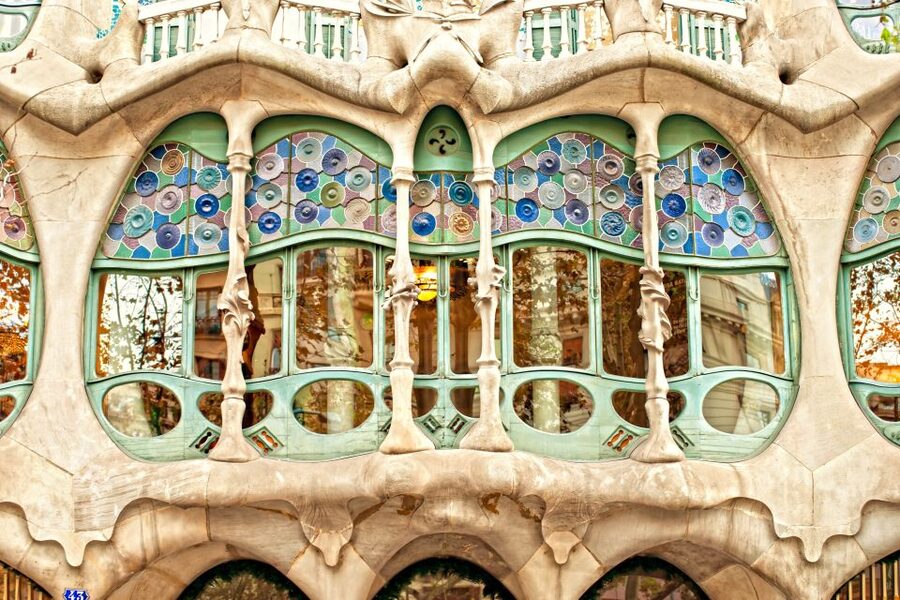
Casa Batlló is one of Gaudí’s most imaginative residential designs. Its façade uses flowing shapes, changing colors, and unusual details that encourage comparisons with the sea. You can discuss the building from the outside while your guide explains how Gaudí treated a private home almost like a piece of sculpture.
The exterior is the big draw on this walk. If you want to explore the rooms and roof terrace, you will need to arrange a separate visit, since admission is not included in the tour details.
Casa Amatller
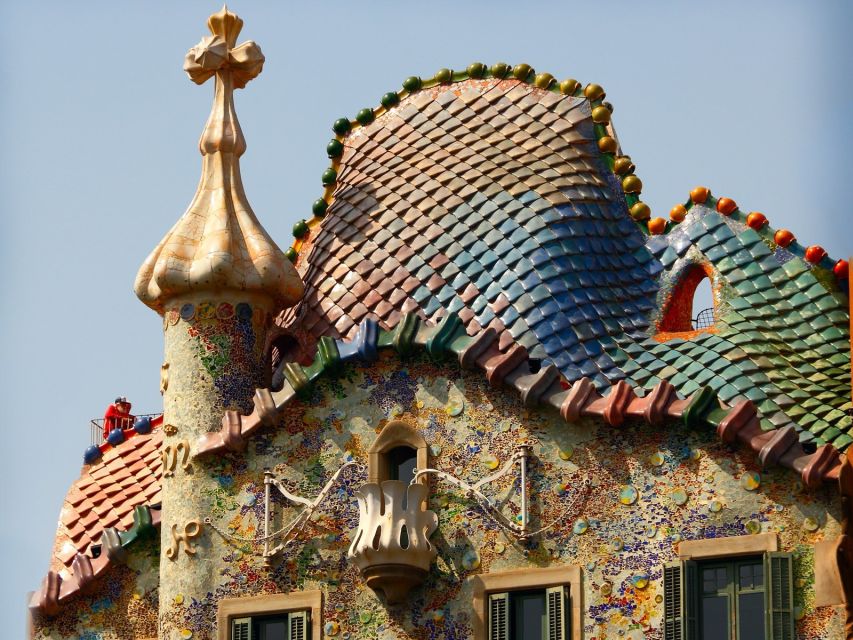
Next door, Casa Amatller gives you a useful contrast. Josep Puig i Cadafalch designed it with a more structured, historic style, including a distinctive stepped roofline. Seeing it beside Casa Batlló makes the differences between architects much easier to grasp.
This is where a guide adds real value. Alone, you might group both façades under the broad label of Gaudí style. With an explanation, you begin to recognize separate ideas, references, and design choices.
Casa Lleó Morera
Lluís Domènech i Montaner’s Casa Lleó Morera completes the trio. Its decoration is highly detailed, and it shows how Modernisme extended beyond Gaudí’s organic curves.
The three buildings are close enough to compare without needing a bus or taxi. That makes Passeig de Gràcia especially efficient for a short city stay. You get several major examples in one concentrated stretch.
La Pedrera, Gaudí’s last civil project
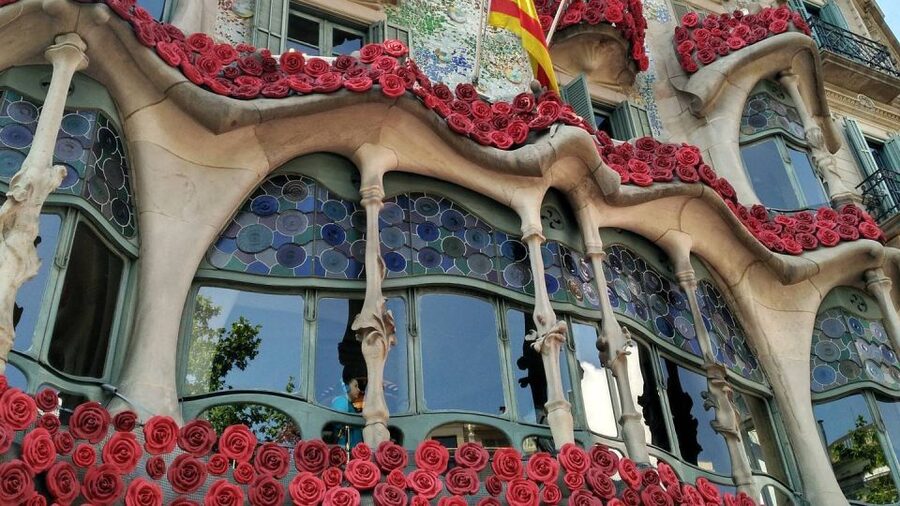
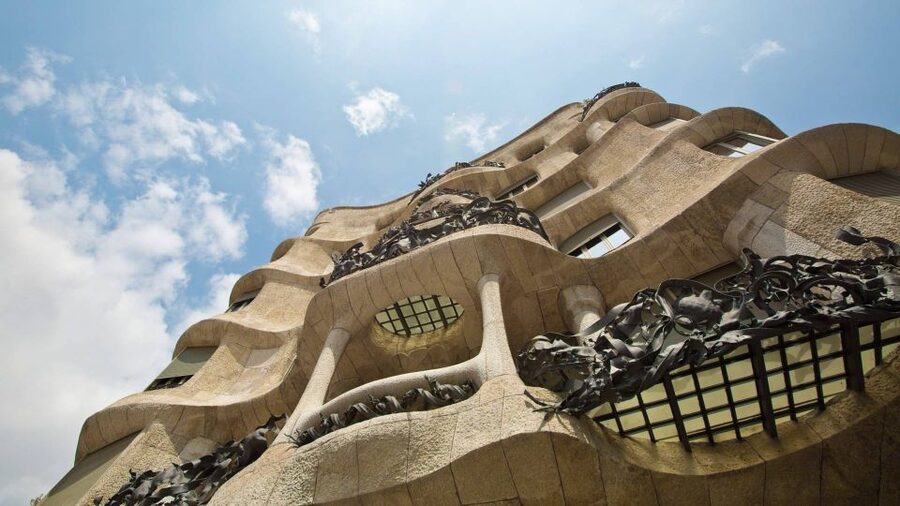
La Pedrera, also called Casa Milà, is another major Gaudí stop. The undulating stone façade is less like a conventional apartment building than a moving line of rock. The iron balconies add another layer of irregular, hand-worked decoration.
The tour presents La Pedrera as Gaudí’s last civil project. That makes it an important point in understanding how his work developed. You can compare its broad, wave-like exterior with the more colorful Casa Batlló and see how Gaudí kept pushing away from straight lines and standard ornament.
Again, this is an exterior-focused stop unless you make separate arrangements. The building’s interior courtyards and roof are major attractions, but they are not part of the stated guided walk. I would treat the tour as a helpful preview and book a separate visit only if those spaces are high on your list.
One advantage of seeing La Pedrera with a guide is that the building can otherwise feel visually overwhelming. A good explanation gives you a few clear things to notice instead of leaving you to decode every balcony and window on your own.
Casa Calvet and Gaudí’s less familiar work
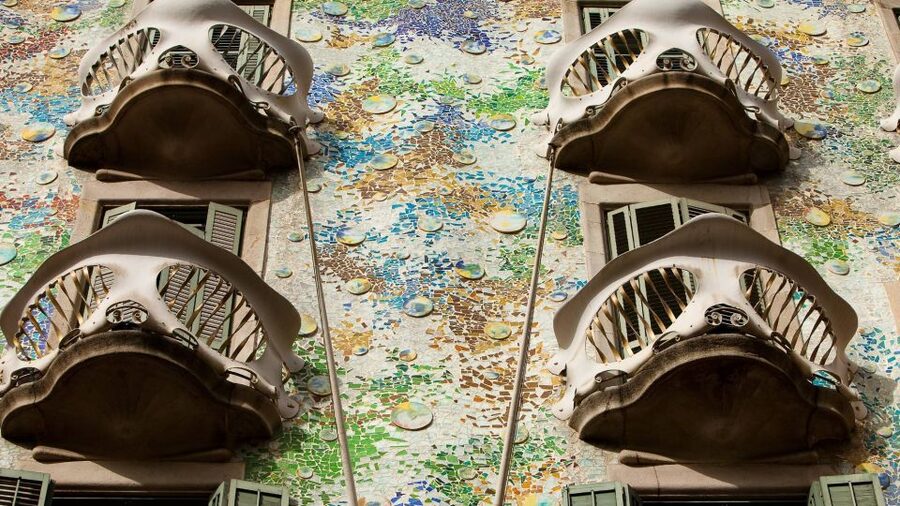
Casa Calvet presents a more restrained side of Gaudí. It is an early work, and its design is more formal than the wilder shapes associated with Sagrada Familia, Casa Batlló, or La Pedrera.
This stop helps you avoid the common mistake of treating Gaudí as if he had only one style. His work changed over time, and Casa Calvet shows how he could adapt his ideas to a more conventional urban building.
I would pay attention here to the contrast. The point is not that one building is more exciting than another. It is that you get a clearer sense of Gaudí’s range when the tour includes both his famous and quieter projects.
Casa Comalat and the wider Modernist circle
Casa Comalat is clearly influenced by Gaudí’s organic approach. Its forms and decoration add another example of how his ideas spread through Barcelona, even when he was not the architect responsible for the entire building.
That distinction is important. Catalan Modernisme was not a one-man show. Gaudí is the biggest name, but the city’s character comes from many designers working in related artistic circles.
The route also includes Palau del Baró de Quadres, designed by Josep Puig i Cadafalch. This building shows the decorative ambition of Modernisme in a more formal setting. It is a useful reminder that the movement could look elegant, historic, theatrical, or highly organic depending on the architect and commission.
Casa de les Punxes and Palau Montaner
Casa Terradas, widely known as Casa de les Punxes, adds one of the most distinctive silhouettes on the walk. Its pointed towers give it a storybook appearance, while its design reflects the period’s interest in medieval forms and elaborate decoration.
Palau Montaner provides another example of the city’s Modernist heritage. Together, these later stops broaden the experience beyond the better-known avenue landmarks.
I appreciate this wider route because it gives you more to notice during the rest of your stay. After the tour, you may begin spotting decorative entrances and unusual upper floors that you would otherwise pass without a second look.
The tradeoff is time and energy. The buildings are spread across the Eixample, so this is not a short loop around one plaza. One review specifically warned that there is a lot of walking, while another described the outing as about two hours. The advertised duration is three to three and a half hours, but actual timing may depend on the guide, questions, group size, and route.
The guide makes or breaks the experience
The strongest part of this tour is the guide. The published feedback repeatedly praises guides who combine facts with an easy conversational manner.
Stephanie was praised for expertise in art and architecture while also showing both major landmarks and lesser-known buildings. Isabel was described as making the walk feel like time with a friend. Antonio was noted for his clear account of Barcelona’s monuments and history.
André received especially warm praise after a tour became effectively private, with detailed explanations about the artists, the city, and the ideas behind the architecture. Olga was credited with answering questions, pointing out extra sights, and offering practical Barcelona tips. Jordi, Miguel, Flora, Roberto, and Daniel were also singled out for friendly, informative guiding.
That pattern tells me what you should expect from the best version of the tour: not a memorized list of dates, but a conversation that responds to your interests. If you care about architecture, ask about materials, symbols, and competing styles. If you are new to Barcelona, ask how the Eixample fits into the city’s growth.
Because guide quality matters so much, a private option may be worth considering for families or small groups who want to set the pace. The standard format can include up to 12 participants, which is still manageable, but a private group offers more room for questions and personal interests.
Is $21 a good price?
Yes, I think the price is attractive. For $21 per person, you receive a three-hour guided walk through a concentrated part of Barcelona, led in English or Spanish by a local professional.
The price is especially good if you use the tour as a first-day introduction. You can learn the basic story of Gaudí and Modernisme, identify the buildings you want to revisit, and pick up suggestions for the rest of your time in the city.
The price does not cover personal expenses, and there is no stated admission to the interiors. That is not a flaw, but you should budget separately if you want to enter Sagrada Familia, Casa Batlló, or La Pedrera.
Free cancellation up to 24 hours before the start and the option to reserve now and pay later also make the booking less risky. Still, confirm the meeting point for your selected option, since it may vary.
Who should book this walk?
I would recommend it to first-time visitors, architecture fans, couples, families with older children, and anyone who wants a clearer framework for Barcelona’s Modernist buildings.
It is also useful if you have only a few days in the city. Instead of spending hours researching which façades matter, you get a guided route through many of the key examples.
You may want something else if you dislike long walks, prefer museum interiors, or want an intensely focused visit to Sagrada Familia alone. This tour gives you breadth and context. It does not replace a dedicated interior visit.
Children up to age two can join free. Everyone else should bring comfortable shoes. Large bags and luggage are not allowed, so plan accordingly.
Final verdict: book it for context, not entry tickets
I would book this tour if you want Barcelona’s architecture to make more sense. The route covers the famous names, but its real strength is the comparison between Gaudí, Domènech i Montaner, Puig i Cadafalch, and the wider Modernist circle.
The friendly guides are the biggest reason to choose it. At $21, the walk offers solid value, particularly for a first morning or afternoon in the city. Just remember that the experience is primarily an architectural walk, not an interior admission package.
Book it when you want a lively introduction, wear good shoes, and leave time afterward for any buildings you decide to enter.
FAQ
How long does the tour last?
The stated duration is three to three and a half hours. One available account describes a shorter outing of about two hours, so the actual length may vary.
What languages are available?
The tour is available in English and Spanish, with a live local guide.
Is the tour private?
A private group option is available. The general tour is described as a small-group experience with a maximum of 12 participants.
Does the tour enter Sagrada Familia?
The tour includes admiring Sagrada Familia and discussing its architecture and construction. Interior admission is not listed as included.
Does the tour enter Casa Batlló or La Pedrera?
The tour visits these buildings as part of the architectural walk, but interior admission is not listed as included.
Where does the tour meet?
The meeting point may vary depending on the option you book. Check the details for your selected option before setting out.
What should I bring?
Bring comfortable shoes. The route involves substantial walking.
Can I bring luggage or a large bag?
No. Luggage and large bags are not allowed.
Can young children join the tour?
Children up to two years old can join free of charge.
Just added in Barcelona
- Self-Guided Audio Tour-The Surrealist Barcelona of Dalí and Gaudí★ 3.5 · 8 reviews
- Visit to the Modernist houses of the Americans★ 5.0 · 2 reviews
- Roman & Gotic & Gaudi in Barcelona: private walking tour★ 4.5 · 2 reviews
- Barcelona Gaudi Tour: Sagrada Familia, Casa Batllo & Casa Mila★ 5.0 · 4 reviews
- Barcelona Street Escape: Gaudi and the Hidden Treasure★ 5.0 · 17 reviews
- Sagrada Familia Private Tour – Unlock the mysteries of Gaudi★ 5.0 · 10 reviews
- Gaudi’s Casa Batlló and La Pedrera with Chocolate Tasting★ 5.0 · 5 reviews
- Gaudí & Catalan Modernism Private Walking Tour★ 5.0 · 11 reviews
Gaudí Tours, compared.
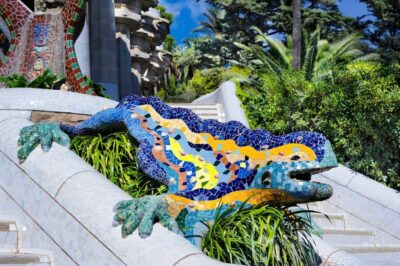
Park Güell and Gaudí House Museum Entry Ticket
Read our review →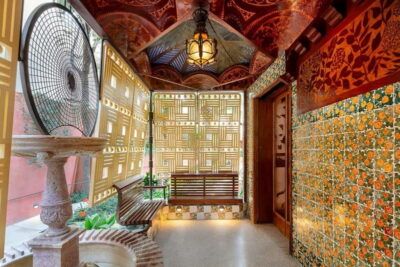
Gaudi’s Casa Vicens Skip-the-Line Entrance Ticket
Read our review →
Gaudí’s Park Güell Tour with Fast-Track Ticket
Read our review →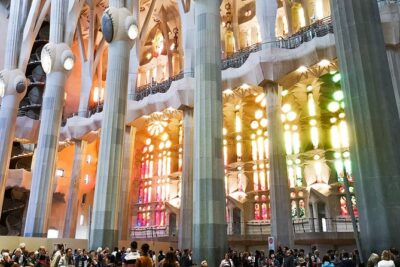
Sagrada Familia & Gaudi Tour Private or Small Group with Tickets
Read our review →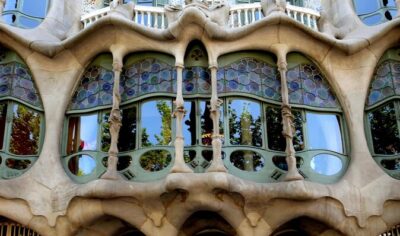
Complete Gaudi Tour: Casa Batllo, Park Guell & Sagrada Familia
Read our review →
Park Güell: Guided Tour with Optional Gaudí Experience Entry
Read our review →
Barcelona e-Bike Tour: Gaudí & Old Town Small Group
Read our review →
Ramblas, Old Town, Gothic and Gaudi Architecture Walking Tour
Read our review →Browse the lists this tour appears in