
REVIEW · NEW YORK CITY ARCHITECTURE TOURS
Financial District NYC Architecture Walking Tour
Lower Manhattan tells the city’s story in stone. This two-hour walk links Battery Park, Wall Street, Ground Zero, and the World Trade Center through buildings by Cass Gilbert, Gordon Bunshaft, Frank Gehry, and Santiago Calatrava. I like the small maximum of 15 people and the use of individual headsets, which should make it easier to hear without crowding around a guide. I also like that the route includes both famous landmarks and less obvious architectural details, including public art at One Chase Manhattan Plaza.
The main drawback is the amount of walking. The tour is not recommended for people with walking problems, and ten-minute stops can feel brief if you want to study each site. At $59, the value depends on how much you want guided context rather than simply seeing the buildings on your own.
Key points at a glance
- A two-hour route through Lower Manhattan: Start at the Glass Carousel near Castle Clinton in Battery Park and finish inside the Oculus at the World Trade Center.
- Architecture from 1842 to 2023: See Federal Hall, Trinity Church, the Woolworth Building, One Chase Manhattan Plaza, and newer World Trade Center structures.
- Ground Zero is central to the walk: The route includes the 9/11 Memorial and Museum area, St. Nicholas Greek Orthodox Church, Liberty Park, and the surrounding towers.
- Small-group format: The tour accepts no more than 15 people, with a professional guide and an individual headset for each person.
- A useful mix of old and new: The walk moves from historic churches and civic buildings to Frank Gehry’s 8 Spruce Street and Calatrava’s Oculus.
- A practical finish: The tour ends at a major transportation hub, close to the World Trade Center complex and PATH station.
Why this downtown walk is worth considering
I like this tour because it gives Lower Manhattan a clear shape. You are not simply ticking off Wall Street, the 9/11 Memorial, and the Oculus as separate sights. The guide connects them through changes in American finance, civic life, memorial design, and modern architecture.
That matters here. Downtown Manhattan can feel like a wall of tall buildings when you first arrive. A guide can help you notice why one building feels heavy and classical, another seems to float, and another uses light as its main material.
The tour is led by a licensed guide. The meeting information names Dr. Ivan Shumkov, while a published experience note praises a guide named William for keeping a family engaged and helping them reach a lunch reservation afterward. Guide assignments can vary, but the useful point is that the service goes beyond pointing at buildings. If you have questions about architecture or need help orienting yourself after the walk, ask.
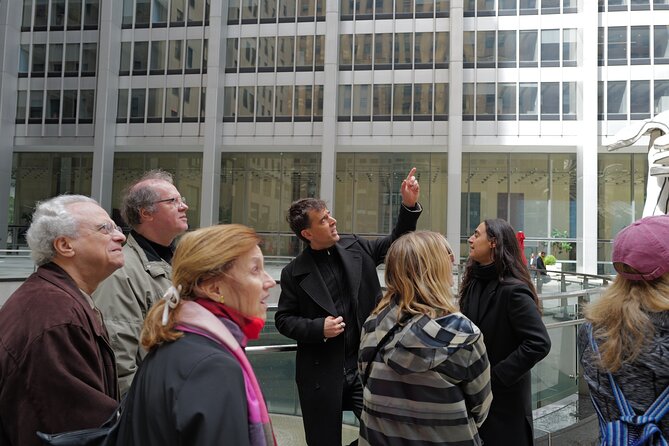
The headsets are another practical touch. With up to 15 people, you may not always be standing beside the guide. An individual headset helps you hear explanations while looking up at a façade instead of staring at the back of someone’s head.
More walking tours in New York City:
- Tribeca Architecture And History Walking Tour
★ 5.0 · 141 reviews - TriBeCa Architecture & History Walking Tour
★ 5.0 · 37 reviews - Midtown Manhattan Art and Architecture Walking Tour
★ 5.0 · 32 reviews
Battery Park and Trinity Church: a strong opening
The walk begins at Castle Clinton National Monument, near the Glass Carousel in Battery Park. This is a sensible starting point because you are at the southern edge of Manhattan, where the harbor, public space, and financial district meet.
You should arrive ready to walk rather than expecting a long visit inside Battery Park. The scheduled stop is about ten minutes, and admission is free. The guide uses this opening to get the group together and set the scene before moving north.
Trinity Church follows, with about five minutes at the historic church dating from 1846. Five minutes is enough for a quick exterior look and a short explanation, but not enough for a slow architectural study. If Trinity interests you, consider returning independently after the tour.
This early section helps you see an important contrast. Battery Park is open and low, while the streets ahead become much more enclosed by office towers. That change happens quickly in Lower Manhattan, and the guide can help you read it as part of the city’s growth.
Federal Reserve, Federal Hall, and the Woolworth Building
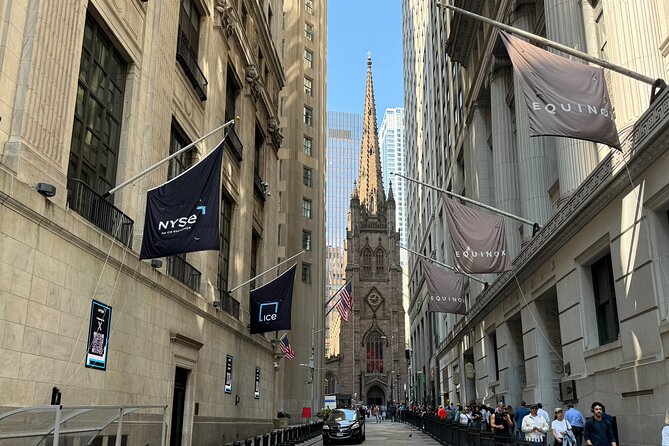
The route then turns toward some of the district’s most important civic and financial buildings. The Federal Reserve building by York and Sawyer dates from 1924 and is presented as a major gold-storage site. That detail gives the stop a direct link to the financial power concentrated in this part of New York.
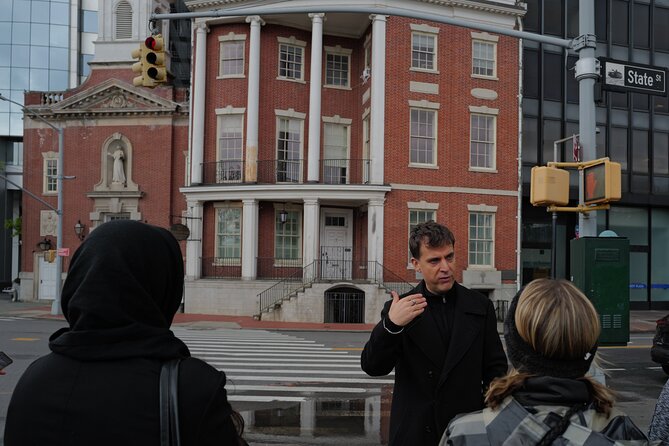
Federal Hall, designed by Town and Davis in 1842, brings a different tone. Its importance is civic rather than commercial. The stop is listed at about five minutes, so expect a concise explanation and an exterior view rather than an extended visit.
The Woolworth Building, designed by Cass Gilbert and completed in 1912, is one of the visual rewards of the walk. Even if you know the name, seeing it among newer towers gives you a better sense of its scale and ambition. The tour identifies it as an architectural highlight, but the timing suggests you will view it from outside.
This is one place where the guide’s role matters. On your own, you might photograph the façade and keep moving. With a guide, you can ask why these buildings look so different and how their designs reflect their original purposes.
One Chase Manhattan Plaza and Fulton Center
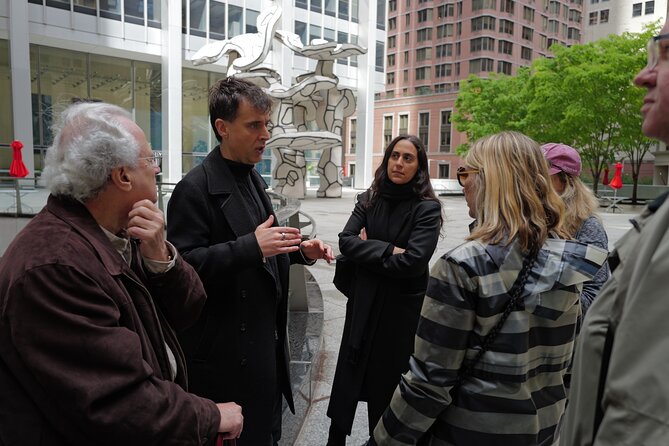
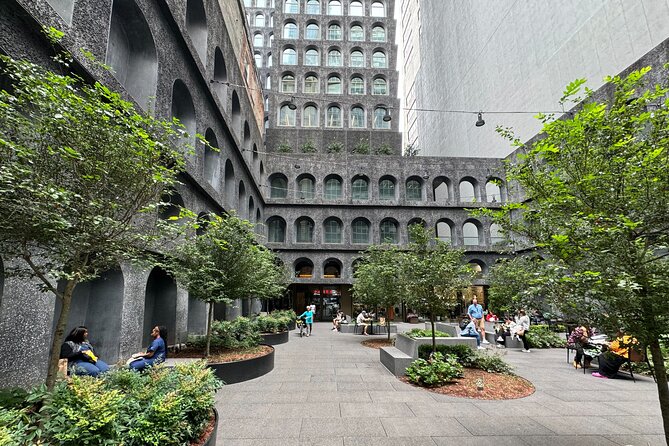
One Chase Manhattan Plaza, designed by Gordon Bunshaft of SOM and completed in 1960, shows a cleaner, more modern style. The stop lasts about ten minutes and includes the building’s public art and architecture.
I especially like this part of the itinerary because it broadens the idea of what counts as a downtown landmark. Many people focus only on older masonry buildings or the tallest towers. One Chase Manhattan Plaza reminds you that modern office architecture and public art also shape the district.
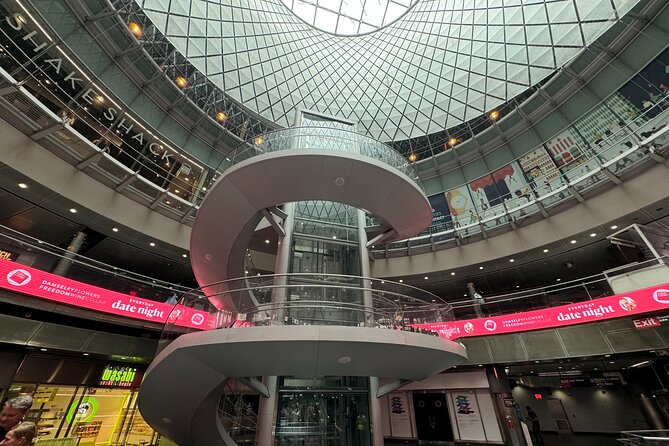
Fulton Center, designed by Grimshaw and completed in 2015, shifts the focus to transportation. The stop lasts about five minutes. You will see the station as a piece of modern design rather than merely a place to catch a train.
The short timing keeps the walk moving, but it also means you should manage expectations. This is an overview tour, not a detailed architectural seminar at every stop. The benefit is range: in two hours, you cover several centuries of design.
A few more architecture tours in New York City worth a look
- Manhattan Architecture Yacht Cruise
★ 5.0 · 1,395 reviews - NYC: Around Manhattan Official NYC Architecture Cruise
★ 4.8 · 402 reviews - Art Deco and Architecture Midtown Landmarks Tour
★ 5.0 · 142 reviews - 3 Hour Midtown Manhattan Architectural Tour
★ 5.0 · 81 reviews
Frank Gehry’s 8 Spruce Street
The route includes 8 Spruce Street, the New York building designed by Frank Gehry and completed in 2010. Its unusual exterior gives the tour a welcome change of pace after the formal lines of Federal Hall and the financial district.
This is a good example of why a guide can add value. Gehry’s building is easy to spot, but a quick look does not explain how it fits into the changing downtown skyline. The tour places it alongside older landmarks and the newer World Trade Center, allowing you to compare different ideas about height, surface, and movement.
The itinerary does not specify a long stop here. You may see it while moving between major sites, so keep your eyes open and listen for the explanation through your headset.
Ground Zero and the 9/11 Memorial area
The 9/11 Memorial and Museum is one of the most serious portions of the walk. The memorial and museum design is credited to Snohetta, Michael Arad, and Peter Walker, with the project dated to 2011. The scheduled visit is about ten minutes.
That time allows for orientation and a guided look, but it is not enough to visit the museum properly. The tour does not include a museum admission ticket, and you should not treat this stop as a substitute for a separate museum visit.
The value here is the setting. A guide can help you understand how the memorial fits within the larger World Trade Center plan and how the surrounding architecture responds to the site. You will have an organized introduction rather than arriving with no sense of where to look.
Expect this part of the walk to feel more reflective than the earlier stops. The route is still an architecture tour, but the buildings are tied to memory as well as design. Give yourself room to be quiet.
St. Nicholas, the Perelman Center, and Liberty Park
St. Nicholas Greek Orthodox Church and National Shrine, designed by Santiago Calatrava and completed in 2020, is another important stop in the World Trade Center area. The church is scheduled for about five minutes.
Its presence adds a human and religious dimension to a district often described through offices and finance. Calatrava also designed the Oculus, so seeing St. Nicholas before reaching the final station gives you a chance to compare two projects by the same architect.
The Perelman Performing Arts Center, designed by REX and completed in 2023, extends the tour into very recent architecture. The stop is not listed with a separate duration, so expect to see it as part of the walking route rather than spending a long time inside.
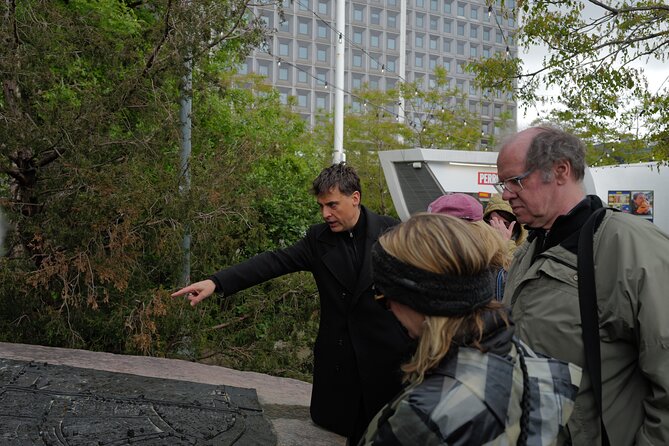
From there, the group visits Liberty Park and views the World Trade Center buildings. The route identifies One World Trade Center by David Childs of SOM, completed in 2015; 3 World Trade Center by Richard Rogers, completed in 2018; and 4 World Trade Center by Fumihiko Maki, completed in 2015. It also points out 2 World Trade Center and 5 World Trade Center, both described as in process, along with 7 World Trade Center by David Childs of SOM, completed in 2015.
This portion gives you the clearest look at the district as an ongoing project. You are not seeing a finished historic quarter preserved behind glass. You are seeing a place still being shaped by new towers, memorial spaces, transportation, and public buildings.
Ending inside the Oculus
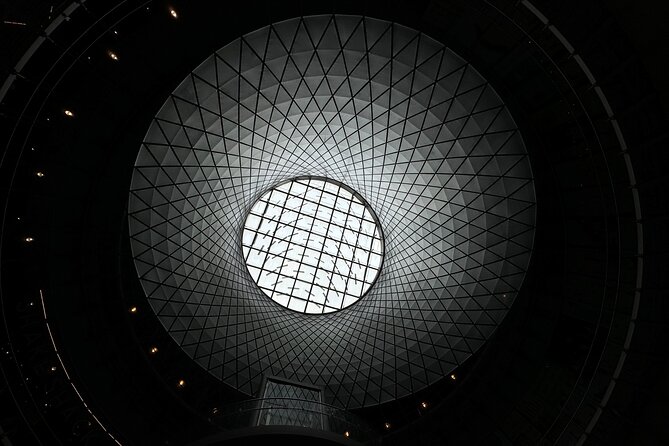
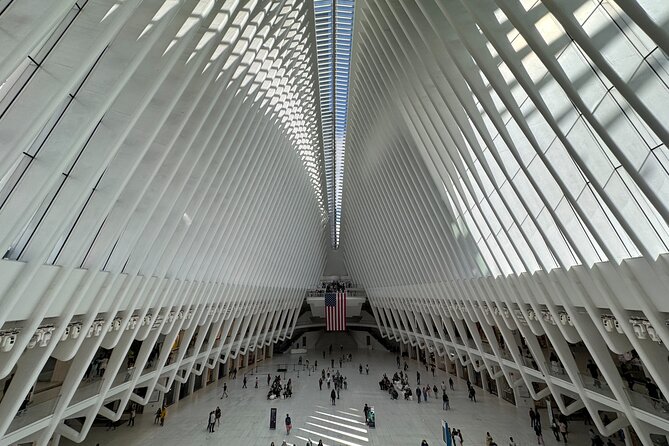
The tour finishes at the Oculus World Trade Center PATH station, at 185 Greenwich Street. Santiago Calatrava designed the station, completed in 2015, and the stop lasts about ten minutes.
The Oculus is a fitting end because it brings several themes together: transportation, public space, bold modern design, and the rebuilding of Lower Manhattan. Its bright interior and rib-like structure provide a strong final view after the darker, weightier forms of the financial district.
Ending here is also practical. You are not left on an anonymous street corner. You finish inside a major transit complex, with the World Trade Center area around you. If you have lunch plans or another downtown activity, the location is useful. One published note specifically describes a guide helping a family get to a lunch reservation after the tour.
What $59 buys you
The price is $59 per person. All fees and taxes are included, as are the individual headsets. Tips are not included.
I would judge the price by the quality of the guided experience, not by the number of buildings alone. Most of the stops are free to view, and you could walk between many of them without paying. The fee makes sense if you want a licensed guide to organize the route, explain the architecture, answer questions, and keep the walk easy to follow.
The small group improves the value. A maximum of 15 people is modest for New York, and it gives you a better chance to ask a question than you would on a large city tour. The headset also helps protect the experience from street noise.
The price is less attractive if you prefer moving at your own pace or spending 30 minutes at each major building. Several stops last only five or ten minutes. You are paying for a broad, guided introduction rather than deep study of one site.
Who should book this walk?
I would recommend it to first-time New York visitors who want a focused introduction to Lower Manhattan. It also suits families, especially because one published experience note says teenagers enjoyed the tour. The mix of old buildings, modern towers, memorial spaces, and transportation design gives younger visitors plenty of visual variety.
Architecture fans will appreciate the range of designers, including Cass Gilbert, Gordon Bunshaft, Frank Gehry, Richard Rogers, Fumihiko Maki, and Santiago Calatrava. People interested in the rebuilding of the World Trade Center will also get useful orientation.
You should think twice if walking for two hours is difficult. The route includes many outdoor sections, and the tour is not recommended for people with walking problems. Service animals are allowed, and the meeting point is near public transportation.
The tour requires good weather and a minimum number of people. If poor weather or low enrollment cancels it, you are offered another date or a full refund. You can cancel for a full refund up to 24 hours before the start time. Cancellations or changes within 24 hours are not refunded or accepted.
Should you book the Financial District walking tour?
Book it if you want a compact, guided look at how New York’s oldest business district meets its newest architecture. The route is well chosen, the group size is controlled, and the final stop at the Oculus gives the walk a clear finish.
Skip it if you want museum time, indoor access at every landmark, or a slow photographic tour. For most people who want context, orientation, and a manageable introduction to Lower Manhattan, $59 is a fair price, especially with a good guide such as William or Dr. Ivan Shumkov leading the discussion.
FAQ
Where does the tour begin?
It begins at Castle Clinton National Monument in Battery Park, near the Glass Carousel, New York, NY 10004.
Where does the tour end?
The tour ends inside the Oculus PATH station at the World Trade Center, at 185 Greenwich Street, New York, NY 10006.
How long does the tour last?
The walking tour lasts approximately two hours.
How many people can join the tour?
The tour has a maximum of 15 people.
Are headsets included?
Yes. Each person receives a professional individual headset, and all fees and taxes are included. Tips are not included.
Can I cancel for a refund?
Yes. You can cancel at least 24 hours before the start time for a full refund. Cancellations or changes made less than 24 hours before the start time are not refunded or accepted.
Just added in New York City
- Race to the Sky: NYC Architecture Tour With SUMMIT One Ticket★ 5.0 · 3 reviews
- New York Soho and the Village Art and Architecture Tour★ 5.0 · 4 reviews
- Chelsea and the High Line NYC Architecture Walking Tour★ 5.0 · 6 reviews
- Private Flatiron Food, History and Architecture Tour★ 5.0 · 8 reviews
- New York Upper West Side Art and Architecture Tour★ 5.0 · 4 reviews
- New York Upper East Side Art and Architecture Tour★ 5.0 · 3 reviews
- New York Midtown South Art and Architecture Tour★ 5.0 · 2 reviews
- Custom Private New York Architecture, Art and City Tour★ 5.0 · 3 reviews
New York City Architecture Tours, compared.


Around Manhattan Official NYC Architecture Cruise
Read our review →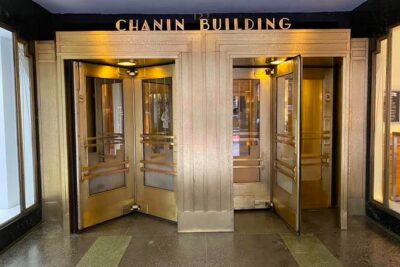
Art Deco and Architecture Midtown Landmarks Tour
Read our review →
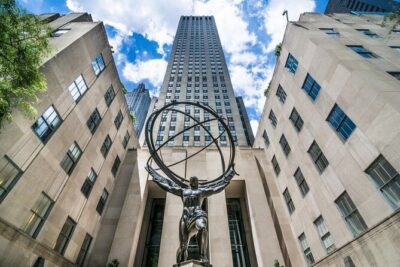
New York City The Official Rockefeller Center Tour
Read our review →
Browse the lists this tour appears in