
REVIEW · WALKING TOURS
Faro Private Walking Tour: Uncovering its Architectural Legacy
Faro rewards slow walking. This private tour brings you through the Old Town with a licensed guide, linking Roman, Arab, royal, religious, and local stories in about two hours. I like the one-to-one focus of a private tour and the chance to ask questions as you go. I also like that the guide may connect Faro’s architecture with surprising stories, including a king who confined his mother and fishermen who rescued American soldiers.
The main consideration is the price: $222.29 per person is a serious cost for a two-hour walk. The tour also lists outside visits to the main sights, so you should not expect a full interior tour of every building. Entrance to the Faro Municipal Museum is included, but the museum is not named as a regular stop, so confirm how that admission fits your planned visit.
Key points at a glance
- The Chapel of Bones is the tour’s most unusual sight, found at the Igreja da Ordem Terceira de Nossa Senhora do Monte do Carmo.
- A private licensed guide keeps the walk flexible, allowing your questions and interests to shape the conversation.
- Faro’s Old Town unfolds through four compact stops, from the Carmo church to Arco da Vila, Cidade Velha, and Faro Cathedral.
- The storytelling reaches beyond architecture, with accounts tied to royalty, fishermen, American soldiers, Romans, and Arabs.
- The two-hour length works well for a first look, though the pace may feel brisk if you want long interior visits or lots of photographs.
- Free cancellation is available until 24 hours before the start time, which gives you useful flexibility when planning your day.
A private introduction to Faro’s Old Town

Faro is easy to underestimate if you only see it as the airport city or a jumping-off point for the Algarve. Its old center has a very different mood, with stone streets, old religious buildings, city gates, and layers of Portuguese history packed into a walkable area.
This tour is designed to give you that first orientation without the strain of planning every turn yourself. You meet at Igreja da Ordem Terceira de Nossa Senhora do Monte do Carmo, at Largo do Carmo 21, and walk toward Faro Cathedral in the old city.
I like the format because the guide is not simply delivering a fixed speech to a large crowd. This is a private activity, so only your group participates. If you want more detail about religious art, local legends, medieval rulers, or the city’s older Roman and Arab connections, you can ask as you go.
The supplied information gives the tour a rating of 4.9 from eight reviews, a small sample but a strong result. The most praised feature is the storytelling. One particularly memorable set of subjects includes a king locking his mother away and fishermen helping save American soldiers. Those details suggest a tour that aims to connect grand events with human stories, rather than simply naming buildings and dates.
More walking tours in the world:
- Lecce: Baroque Architecture and Underground Walking Tour
★ 4.6 · 1,248 reviews - Chicago in a Day: Food, History & Architecture Walking Tour
★ 5.0 · 1,153 reviews - Ramblas, Old Town, Gothic and Gaudi Architecture Walking Tour
★ 5.0 · 723 reviews
Igreja do Carmo and the Chapel of Bones
The first stop is the Igreja da Ordem Terceira de Nossa Senhora do Monte do Carmo, an 18th-century Baroque church. Its most striking feature is the Capela dos Ossos, or Chapel of Bones, made from the remains of monks.
The church is listed as an outside visit, and no admission fee is charged for this stop. That distinction matters. You can expect the guide to explain the church, its setting, and the Chapel of Bones, but the supplied tour details do not promise a full interior visit here.
The Chapel of Bones gives this stop an unusual edge. Many European churches use grand paintings, carved wood, or gilded decoration to express religious ideas. Here, the physical remains of monks form part of the chapel itself. It is a serious sight, not a novelty, and your guide can help place it in the religious customs of its time.
I would give this stop your full attention, even though it comes early in the walk. The name alone may draw you in, but the value comes from understanding why such a chapel was created and how it fits the church’s Baroque setting.
The main limitation is clear: if you want to spend time examining the interior details or photographing every feature, two hours may not leave much room. Ask your guide at the beginning how much time is planned here and whether an interior visit is included on your date.
Arco da Vila, Faro’s old city gateway
From the Carmo church, the walk continues to Arco da Vila. This attractive arch marks the entrance to Faro’s historic Old Town and acts as a natural bridge between the modern city and the older streets behind it.
The arch is listed as an outside visit, with no admission fee. Its importance is not only visual. Gateways tell you how a city once controlled movement, welcomed visitors, and separated one part of town from another. At Arco da Vila, the guide can help you read the building as part of Faro’s wider urban story.
This is also a useful moment to listen for the mix of Roman, Arab, and Portuguese influences highlighted in the tour’s storytelling. The supplied review specifically praised stories about these earlier periods. That makes the arch more than a quick photo stop. It becomes a place to ask how Faro changed hands, changed faiths, and changed its streets over time.
You should expect the stop to be fairly compact. The planned timing gives each listed location about 30 minutes, but the total tour is approximately two hours. Since the four stops add up to the full walking time, the schedule appears focused on explanation and orientation rather than long, unhurried visits inside each site.
Cidade Velha and Faro’s everyday character
Cidade Velha, or Old City, is described as a charming historic square in the center of Faro’s old town. Cobblestone streets, older buildings, and local life give this part of the walk a more open and atmospheric feel than the church visit.
This is where I would encourage you to ask practical questions. Ask how the square relates to the surrounding streets, what kinds of buildings you are seeing, and which parts of Faro’s past still shape the city today. A private guide can adjust the conversation in a way a large group tour usually cannot.
The tour’s strongest theme appears to be the meeting of different eras. Faro is not presented as a single-period museum piece. Roman and Arab connections sit alongside Portuguese religious architecture, royal stories, and accounts of more recent local events. At Cidade Velha, that broad time frame can help the earlier stops make better sense.
There is also value in simply slowing down. A square and its surrounding lanes show you how Faro feels between major monuments. You may notice details that do not fit neatly into a formal sightseeing list, such as building fronts, street patterns, or the way the old center connects with the rest of the city.
Keep your expectations realistic. The description does not promise food tastings, shopping time, or a stop inside a café. This is an architectural and historical walking tour. If you want a more relaxed break, ask whether the guide can suggest a place to return to after the walk.
More private tours in the world:
- Best of Chicago: Architecture & Highlights City Private Tour
★ 5.0 · 94 reviews - Private Harajuku Omotesando Architecture Walking Tour
★ 5.0 · 67 reviews - Private Santa Barbara History and Architecture Walking Tour
★ 5.0 · 56 reviews - Private Barcelona Modernism and Gaudí Walking Tour
★ 4.7 · 54 reviews
Faro Cathedral and the final stretch
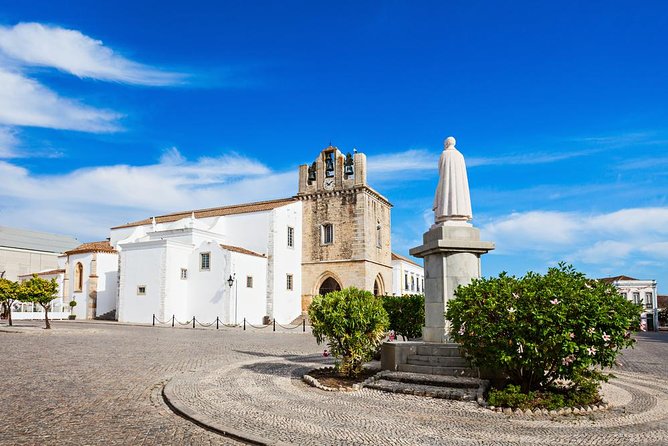
The final major stop is Faro Cathedral, at Largo da Sé 11. It is the city’s principal cathedral and brings together several architectural styles, offering a look at Faro’s religious past.
The cathedral is listed as an outside visit, and no admission fee is charged for the stop. That means the guide’s explanation of the building and its exterior setting is central to the experience. If you want to go inside, confirm whether that is possible and whether any separate admission applies.
Largo da Sé gives the tour a strong ending. After the church at Largo do Carmo, the city gate, and Cidade Velha, the cathedral helps complete the architectural sequence. You see how religious power, civic life, and the shape of the old city meet in one area.
The meeting information needs a little care here. It says the end point is Faro Cathedral, while another line says the tour ends at Igreja de Santa Maria. Those locations may be close within the Old Town, but the details are not identical. I would confirm the exact ending point before booking if you have a timed train, transfer, or another reservation afterward.
What the private format adds
A private tour costs $222.29 per person, so value depends heavily on group size and your interest in guided history. For one person, or a very small group, that is expensive for two hours. For a larger private party, group discounts may make the cost more reasonable, and the ability to divide the price among several people changes the calculation.
The benefit is not just privacy. Your guide can spend more time on the subjects you care about. You might focus on architecture, ask about the Chapel of Bones, follow the stories of Faro’s royal past, or shift toward local accounts such as the fishermen who rescued American soldiers.
That flexibility is especially useful if members of your group have different interests. One person may want dates and architectural terms. Another may want legends and local characters. A private guide can usually balance those requests more easily than a standard group walk.
The tradeoff is that a two-hour tour cannot cover every layer of Faro. You are buying a guided introduction, not a complete study of the city. The outside visits also suggest that the emphasis is on explanation, context, and street-level discovery rather than paid entry to several monuments.
The included entrance fees for the Faro Municipal Museum add some potential value, but the museum is not included among the four named stops. Ask when that entrance is used. It may be a useful addition before or after the walk, but the available details do not explain the arrangement.
Timing, meeting point, and practical planning
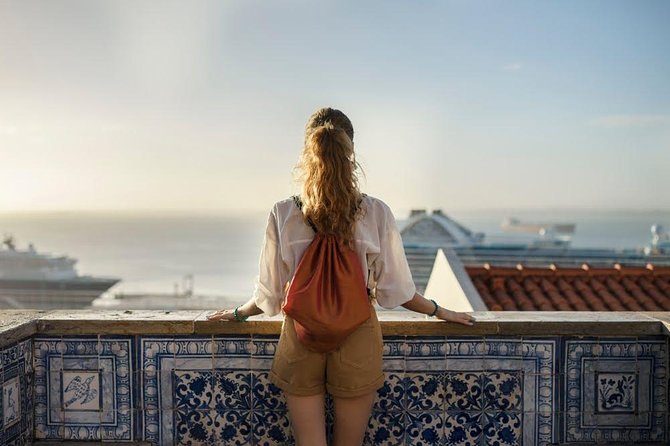
The tour lasts approximately two hours and is offered in English. You receive confirmation at booking, and a mobile ticket is available, which is useful if you prefer not to carry printed documents.
The starting point is Igreja da Ordem Terceira de Nossa Senhora do Monte do Carmo, Largo do Carmo 21, 8000-148 Faro, Portugal. The listed ending point is Faro Cathedral, Largo da Sé 11, 8000-138 Faro, Portugal, with the separate note about Igreja de Santa Maria. Confirm this small but important detail before the day of the tour.
The route is near public transportation, and most people can participate. No special physical restrictions are stated, but this is still a walking activity through an old city area. Cobblestones and historic streets can make walking slower than it looks on a map. Wear shoes you trust and allow a little extra time at the meeting point.
Because the tour is in English, it suits you best if you want explanations and conversation in that language. The private setup also means you do not need to adapt your questions to a large mixed group.
The cancellation terms are practical. You can cancel for a full refund up to 24 hours before the local start time. Cancellations or changes made less than 24 hours before the start are not refunded or accepted.
How this tour fits into a Faro visit

I see this walk working best near the beginning of your stay. It can give you a clear map of the Old Town and help you decide which buildings or streets deserve a second look later.
It also suits you if you value stories over a checklist. The most distinctive material is not simply the names of the church, arch, square, and cathedral. It is the way the guide connects Faro’s architecture with royal conflict, Roman and Arab periods, local fishermen, and American soldiers.
You may want a different plan if your priority is extensive interior access. Three of the four named stops are explicitly outside visits, and the church and cathedral are not presented as full admission visits. The tour also does not mention food, shopping, boat trips, or the surrounding Algarve.
The strongest fit is a couple, family, or small group that wants a flexible introduction and is willing to pay for personal attention. Group discounts could make the price easier to justify. If you are traveling alone and watching every euro, a public walking tour or self-guided route may offer better value, though it will not give you the same private question-and-answer time.
Should you book the Faro private walk?
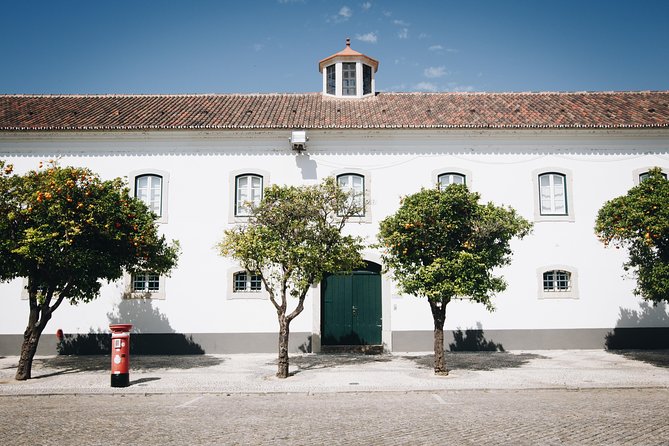
Book it if you want a short, personal introduction to Faro led by a licensed guide, especially if unusual stories matter as much to you as architectural facts. The Chapel of Bones, Arco da Vila, Cidade Velha, and Faro Cathedral create a sensible route through the Old Town, and the private format lets you shape the conversation.
Think twice if $222.29 per person feels high for a two-hour experience or if you expect full interior access at every major building. Confirm the museum admission and final meeting location before paying.
For a group that can use the discount, this looks like a focused way to get oriented. For a solo visitor on a tight budget, it is harder to recommend. The decision comes down to one question: do you want a guide tailored to your interests, or do you mainly need a map of Faro and a few facts? If it is the first, this tour has a strong case.
FAQ
Where does the tour begin?
It begins at Igreja da Ordem Terceira de Nossa Senhora do Monte do Carmo, Largo do Carmo 21, 8000-148 Faro, Portugal.
Where does the tour end?
The listed end point is Faro Cathedral, Largo da Sé 11, 8000-138 Faro, Portugal. The details also say the tour ends at Igreja de Santa Maria, so confirm the exact final point before the tour.
How long does the tour last?
The tour lasts approximately two hours.
Is the tour private?
Yes. Only your group participates in the activity.
Is the tour offered in English?
Yes. English is the listed language.
Is a guide included?
Yes. The tour includes your own licensed tour guide.
Which places are visited?
The route includes Igreja da Ordem Terceira de Nossa Senhora do Monte do Carmo, Arco da Vila, Cidade Velha, and Faro Cathedral.
Are entrance fees included?
Entrance fees for the Faro Municipal Museum are included. The four listed sightseeing stops are described as outside visits with no admission ticket charged.
Is public transportation nearby?
Yes. The tour is listed as being near public transportation.
Can I cancel for a full refund?
Yes, if you cancel at least 24 hours before the experience start time. Cancellations or changes made less than 24 hours before the start are not refunded or accepted.
Just added in the world
- Wilmington History and Architecture Tour★ 4.8 · 18 reviews
- New Orleans : Garden District Architecture Walking tour★ 4.8 · 5 reviews
- Washington DC: Dupont Circle & Embassy Row Architecture Tour★ 5.0 · 6 reviews
- Washington, DC: Georgetown Architecture Walking Tour★ 5.0 · 8 reviews
- Vicenza: Palladian Architecture Private Walking Tour★ 3.3 · 3 reviews
- Walk & Discover KL’s Architectural and Heritage Gems★ 5.0 · 7 reviews
- Private Colonial Williamsburg Architectural Tour★ 5.0 · 5 reviews
- Unveiling Brno: History, Culture & Architectural Delights★ 5.0 · 2 reviews
Walking Tours, compared.

The Official Art Deco Walking Tour by The Miami Design Preservation League
Read our review →
Baroque Architecture and Underground Walking Tour
Read our review →
Chicago in a Day: Food, History & Architecture Walking Tour
Read our review →

Ramblas, Old Town, Gothic and Gaudi Architecture Walking Tour
Read our review →
Chicago’s Secret Interiors Architectural Walking Tour
Read our review →
Browse the lists this tour appears in