
REVIEW · LOS ANGELES ARCHITECTURE TOURS
Downtown Los Angeles History and Architecture Walking Tour
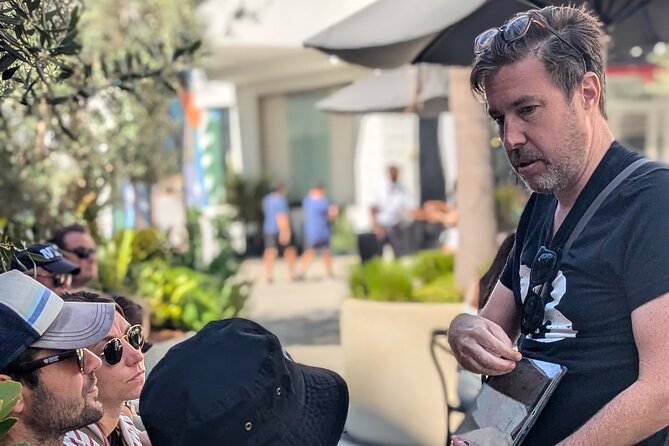
Downtown Los Angeles has more stories than palm trees. This small-group walking tour links movie palaces, old banks, food halls, theaters, and changing public spaces into one clear story about how Los Angeles grew. I like the guide’s personal angle: he is Belgian, lived in China for a decade, and has called DTLA home for four years. His outside perspective helps you notice things locals often pass without a second look.
I also like the use of old photographs and maps on an iPad. They help you compare today’s streets with the city that came before. The tour’s film connections are another strong point, especially at the Bradbury Building, Broadway’s theaters, and the Tower Theatre. The main consideration is simple: this is not a technical architecture lecture, and the walk can feel long without regular sitting or bathroom stops. If you want detailed discussion of styles and urban change, it fits well. If you want only building dates and design terms, it may feel broader than the title suggests.
Key things to know before you book
- Two and a half hours on foot: The route covers a large part of central DTLA, so bring comfortable shoes and expect steady walking.
- A maximum of 15 people: The small group leaves room for questions and conversation instead of a one-way speech.
- Architecture with film and social history: Movie palaces, repurposed buildings, public squares, and old financial blocks all get attention.
- Start at Grand Central Market: The tour begins near the market’s parking garage and finishes at Hotel Per La, close to 7th Street / Metro Center.
- Useful for locals as well as first-time visitors: Historical photos and maps can make familiar streets look entirely different.
- $35 offers solid value for the right audience: You are paying for interpretation and access to overlooked places, not admission to a paid attraction.
Why this DTLA walk feels different
Downtown Los Angeles can be hard to read. A grand theater may sit beside a shopfront. A former bank may now be a hotel. A public square can feel both important and unsettled. Without context, these details look disconnected.
The guide’s approach is to connect them. He talks about architecture, urban planning, cinema, immigration, business, and the city’s changing fortunes. The result is less a list of buildings and more a conversation about what Los Angeles has tried to become.
The tone also matters. The guide brings an international outlook without pretending to have grown up with every local story. His years in Europe and China give him useful comparisons, from Lisbon funiculars to Hong Kong’s Peak Tram and Antwerp’s jewelry trade. Those comparisons help you place DTLA in a wider urban story.
The walk is capped at 15 people. That matters here because the best parts often come from questions. Several comments praise the guide for answering questions fully and allowing the group to follow interesting subjects. Locals can add their own memories, and the guide uses those exchanges to build the discussion.
One caution: downtown streets can be noisy. Some people have found it difficult to hear the guide at times, and he does not use a microphone because it would add more street noise. Stay close, listen carefully, and ask him to repeat a point if needed.
More walking tours in the USA:
- The Official Art Deco Walking Tour by The Miami Design Preservation League
★ 5.0 · 1,580 reviews - Chicago in a Day: Food, History & Architecture Walking Tour
★ 5.0 · 1,153 reviews - Miami South Beach Art Deco Walking Tour
★ 5.0 · 1,039 reviews
Grand Central Market and the city’s mixed beginnings
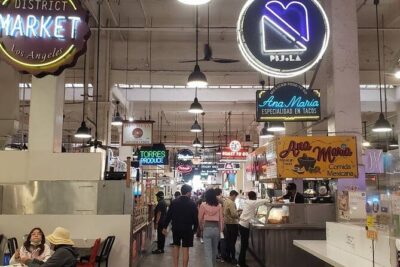
The meeting point is at the Grand Central Market parking garage on South Hill Street. The market itself is the first major stop, with about 10 minutes to look around.
Founded in 1917, Grand Central Market brings together Mexican tacos, Japanese ramen, Salvadoran pupusas, Jewish pastrami, and other foods under one roof. It is a quick, edible introduction to Los Angeles as a meeting place for different cultures and businesses.
Do not expect a long food tasting or a meal included in the tour. The market is used as a way to explain the city’s character, so you may want to return later for lunch. Starting here also makes practical sense: the location is central, easy to reach, and close to Angels Flight and Bunker Hill.
Angels Flight and the climb to Bunker Hill
Angels Flight is one of the most charming stops. Built in 1901, this compact railway once helped people move between the lower part of downtown and Bunker Hill. The guide compares it with the funiculars of Lisbon and the Peak Tram in Hong Kong, which is a useful way to understand its purpose and nostalgic appeal.
The railway is a reminder that hills have always shaped Los Angeles. Bunker Hill was once a residential area for wealthy Angelenos, then changed into a cultural and financial center. The walk uses the area to show how the city repeatedly removes, rebuilds, and reimagines itself.
The nearby Bunker Hill steps add another piece to that story. They are not simply a place to take a picture. They represent the upward movement of a district and, in a broader sense, the city’s effort to become a major international center.
Pershing Square and the problems of public space
Pershing Square provides a change of mood. Once a center of civic activity, it now raises questions about how public space works in a modern city.
The guide compares it with Madrid’s Puerta del Sol and Beijing’s Tiananmen Square, not because the spaces are identical, but because each shows how a central plaza can carry civic, political, and social meaning. The discussion turns toward public access, privatization, and the challenge of creating places where people actually want to gather.
This is one reason the tour may suit people interested in urban design and planning. You are not only told when a building was built. You are asked to think about who uses a space, who controls it, and how its purpose changes over time.
More history tours in the USA:
- Charleston’s Best Highlights: History, Culture & Architecture
★ 5.0 · 422 reviews - Palm Springs Modernism Architecture & History Bike Tour
★ 5.0 · 359 reviews - Charleston: History and Architecture Guided Walking Tour
★ 4.8 · 349 reviews - Historic Georgetown: History, Gossip, & Architecture Walking Tour
★ 5.0 · 321 reviews
Broadway’s movie palaces and the Million Dollar Theater
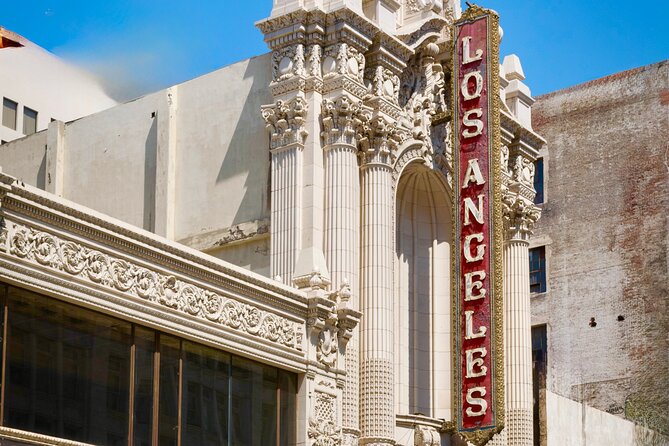
Broadway’s Historic Theater District is one of the strongest parts of the route. In a short stretch, you encounter a remarkable group of old movie palaces. The guide explains how these theaters helped turn moviegoing into a major public event.
The district recalls London’s West End or New York’s Broadway, but its story is distinctly Los Angeles. These buildings were designed to attract crowds with grand entrances, ornate interiors, and a sense of occasion. Their importance reaches beyond decoration. They show how cinema shaped downtown business and culture.
The Million Dollar Theater was Sid Grauman’s first movie palace. Its lavish design helped set a pattern later used by theaters across the country. The stop works best if you care about the relationship between architecture and entertainment. The guide treats the theater as part of the rise of Hollywood, not as an isolated old building.
The Bradbury Building and movie-world Los Angeles
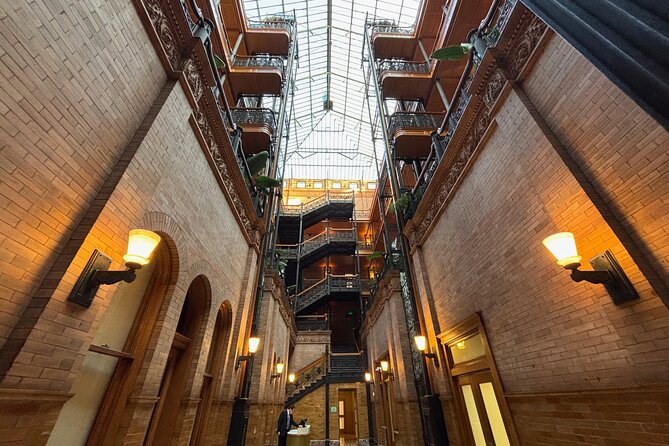
The Bradbury Building receives about 10 minutes and is one of the tour’s most memorable visual stops. Its open atrium, iron staircases, woodwork, and changing light create a setting that feels unlike the streets outside.
It is also famous from film, especially Blade Runner. That connection gives the building a second identity. You see both a real nineteenth-century interior and a place transformed by cinema into an imagined future.
The guide uses the Bradbury to discuss the line between architecture and fantasy. This is a good example of the tour’s method: the building matters for its design, but also for the way film has changed how people see it.
Spring Street’s banks and early skyscrapers
The Old Bank District offers a look at the financial ambitions of early Los Angeles. Spring Street was once known as the Wall Street of the West, and its Beaux-Arts buildings were designed to project confidence and wealth.
The Continental Building, completed in 1904, was among the city’s first high-rises. Its facade gives you a chance to consider how Los Angeles adapted tall-building ideas to its own growing business center.
The El Dorado Lofts adds another layer. Built in 1913 as a luxury hotel, it has an ornate terra cotta exterior with floral and geometric details. Today it serves as residential lofts, showing how older buildings can find new uses when their original purpose fades.
This section is especially valuable if you want to understand adaptive reuse. The tour repeatedly shows buildings that have survived not by remaining frozen in time, but by changing function.
The Last Bookstore, the Arcade Building, and Clifton’s
The Last Bookstore is a lighter stop, but it fits the theme of reuse and creativity. Opened in 2005, it occupies a former bank space and is known for its book tunnel, tall shelves, rare books, vinyl records, and local art.
You receive about 10 minutes here. That is enough to see the unusual interior, but not enough for a serious browsing session. If you love books, return after the tour with more time.
The Arcade Building, completed in 1924, once held studios and offices connected with Los Angeles radio. Today, it contains eateries and boutiques. It offers another example of an older commercial building adapting to new uses.
Clifton’s began in 1931 as a cafeteria known for giving free meals to people in need during the Great Depression. Its current design includes a large tree, forest-themed rooms, and hidden tiki bars. The guide uses it to discuss generosity, theatrical design, and the city’s ability to mix serious history with playful spectacle.
The Los Angeles Theatre and Tower Theatre
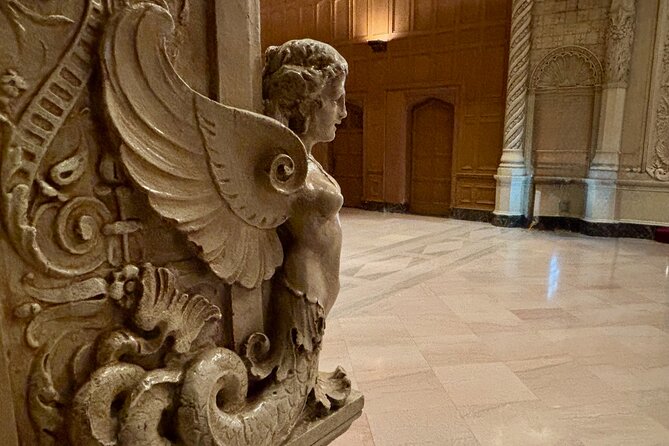
The Los Angeles Theatre is a highlight for cinema fans. Built in 1931 for the premiere of Charlie Chaplin’s City Lights, it was designed to make an ordinary film feel like a grand event.
Crystal chandeliers, gold details, marble stairs, and an opera-house mood show what movie palaces once offered. You can think of it as a time when going to the cinema meant dressing up, entering a fantasy world, and spending an evening inside a carefully designed setting.
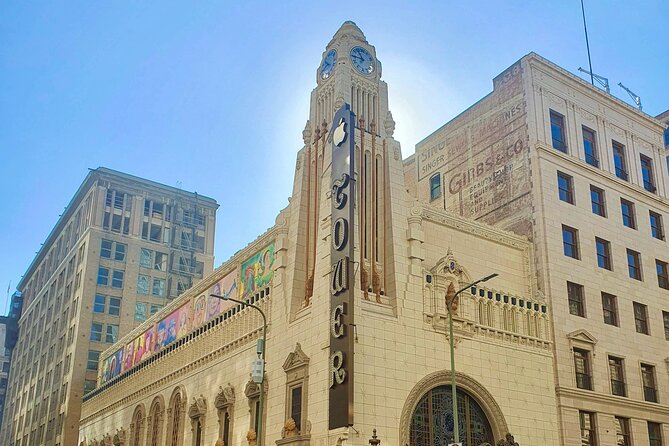
The Tower Theatre, built in 1927, marks another major moment. It was the first Los Angeles theater designed for films with synchronized sound, and its opening with The Jazz Singer reflected the arrival of talkies.
Today, the Tower Theatre has been adapted into an Apple flagship store. The modern use gives the building a practical future while keeping its historic identity visible. The guide also points to its appearance in the Mulholland Drive scene at Silencio, linking the theater’s real past with its dreamlike movie image.
These theater stops are where the tour’s architecture and film themes come together most clearly.
Jewelry, fashion, and the route toward Hotel Per La
The Jewelry District covers 12 blocks and is described as the largest jewelry district in the United States. Its roots reach back to the 1920s. The guide connects it to Antwerp, his Belgian home, and uses the area to discuss craftsmanship, business, migration, and international trade.
The nearby Fashion District shows another side of downtown commerce. It is less about polished storefronts and more about textiles, streetwear, design, and entrepreneurship. Together, these districts remind you that DTLA is not only a collection of old landmarks. It is also a working center for industries that shape what people buy and wear.
The Eastern Columbia Lofts provides one final architectural flourish. Its turquoise terra cotta tiles and clock tower make it one of the most recognizable Art Deco buildings in the area. Built in 1930, it captures the confidence and decorative style of that period.
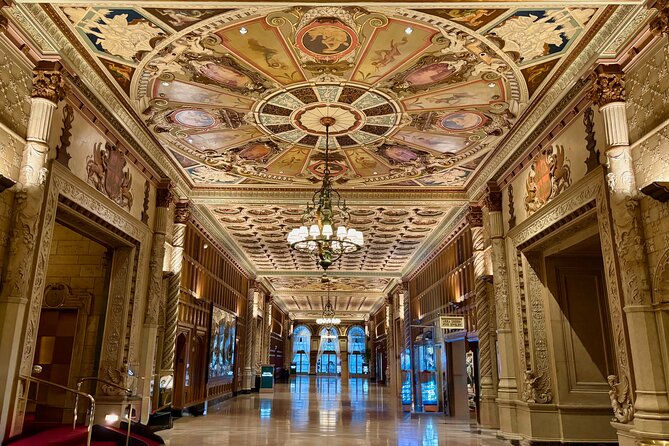
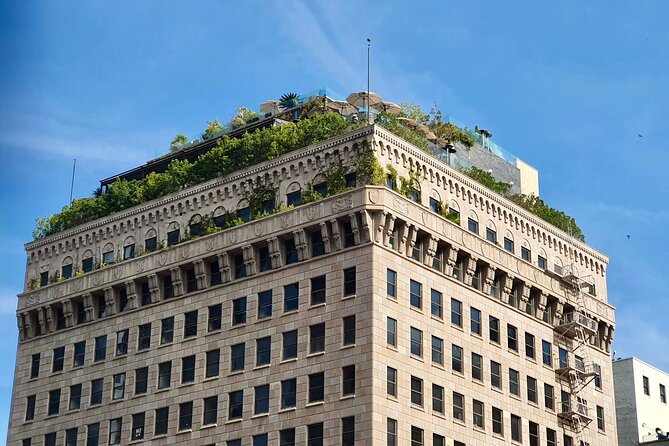
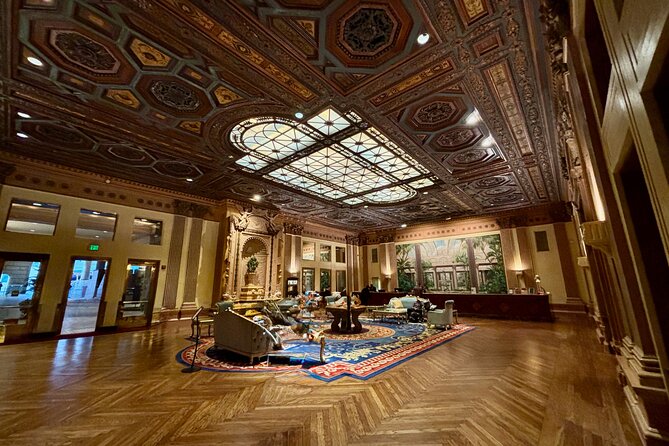
The tour finishes at Hotel Per La on South Olive Street. The building began as the Bank of Italy’s West Coast headquarters in the 1920s. Its restored gold ceiling, marble columns, rooftop pool, and art-filled interiors now belong to a boutique hotel.
This ending neatly brings together money, immigration, design, and reuse. The route begins with a food market and ends in a former bank turned hotel, with theaters, shops, financial buildings, and creative spaces in between.
Price, pace, and practical value
At $35 per person, the tour is reasonably priced for a two-and-a-half-hour guided walk, especially because the group is limited to 15 people and includes a local guide. You are not paying for a series of admission tickets. Most stops are viewed from public areas, and the value comes from explanation, historical images, connections, and access to interiors or arcades you might otherwise miss.
The price makes less sense if you want a relaxed stroll with many breaks. The route covers a lot of ground, and one family described it as a lot of walking. Another person found there were not enough chances to sit, use a bathroom, or stop for photographs.
Wear supportive shoes. A moderate level of fitness is recommended, and you should be prepared to stay on your feet for most of the 2.5 hours. The tour is offered in English, and mobile tickets are accepted. Group discounts are available.
The start is near public transportation, and the finish is one block from the 7th Street / Metro Center station, served by Metro lines A, B, D, and E. Parking is not included, so public transportation is the easier choice if it suits your plans.
Who should book this walk?
I would choose this tour if you like film history, old commercial buildings, urban planning, and stories about how cities change. It is also a smart choice for locals who think they already know downtown. Historical photographs and maps can make familiar corners suddenly legible.
It suits adults best, though the guide has made an effort to include children. Teenagers interested in movies, design, or unusual city spaces may enjoy it, but younger children could find the long walking time and discussion-heavy format tiring.
If your main goal is technical architecture, ask yourself what you want from the word architecture. This tour discusses style, space, use, design, and social meaning. It does not read like a formal architecture class packed with dates, architects, and construction terms.
Free cancellation is available up to 24 hours before the start time. The tour requires good weather and a minimum number of participants. If weather or low enrollment cancels it, you are offered another date or a full refund.
Should you book the Downtown Los Angeles History and Architecture Walking Tour?
Book it if you want DTLA to make more sense. The best parts are the film connections, the reused theaters and banks, the old photographs, and the chance to ask questions in a small group.
Skip it if you want frequent rest stops, a short route, or a strictly technical study of architecture. For most curious visitors and locals, $35 buys a useful way to see downtown as a changing city rather than a string of unrelated buildings.
FAQ
How long does the Downtown Los Angeles walking tour last?
The tour lasts approximately 2 hours and 30 minutes.
How much does the tour cost?
The listed price is $35 per person. Group discounts are available.
Where does the tour begin?
It begins at the Grand Central Market Parking Garage, 308 S Hill St, Los Angeles, California 90013.
Where does the tour finish?
It finishes at Hotel Per La, Autograph Collection, 649 S Olive St, Los Angeles, California 90014.
Is the tour close to public transportation?
Yes. The ending is one block from the 7th Street / Metro Center station, which serves Metro lines A, B, D, and E.
How many people can join the tour?
The maximum group size is 15 travelers.
Is the tour offered in English?
Yes. The tour is offered in English, and mobile tickets are accepted.
Is parking included?
No. Parking fees are not included in the tour price.
What happens if I need to cancel?
You can receive a full refund if you cancel at least 24 hours before the experience start time. Cancellations or changes made within 24 hours are not refunded or accepted. If bad weather or insufficient enrollment cancels the tour, you are offered another date or a full refund.
Just added in the USA
- Wilmington History and Architecture Tour★ 4.8 · 18 reviews
- New Orleans : Garden District Architecture Walking tour★ 4.8 · 5 reviews
- Washington DC: Dupont Circle & Embassy Row Architecture Tour★ 5.0 · 6 reviews
- Washington, DC: Georgetown Architecture Walking Tour★ 5.0 · 8 reviews
- Private Colonial Williamsburg Architectural Tour★ 5.0 · 5 reviews
- Tulsa: Art Deco Walking Tour of Tulsa★ 5.0 · 8 reviews
- Monuments and Memorials Architectural Walking Tour★ 5.0 · 17 reviews
- Castle to Capitol: Museums of the National Mall Architecture Tour★ 4.5 · 9 reviews
Los Angeles Architecture Tours, compared.
The History and Architecture of Downtown Los Angeles
Read our review →
The History and Architecture of Downtown Los Angeles
Read our review →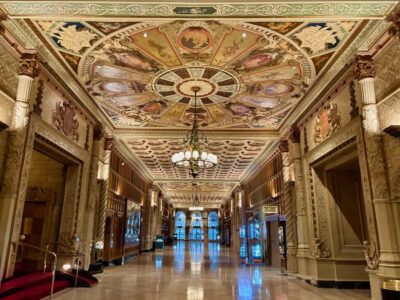
LA’s Art Deco & Beaux Art Architecture: Private Walking Tour
Read our review →
Downtown LA’s History & Architecture: Private Walking Tour
Read our review →Browse the lists this tour appears in