
REVIEW · ART DECO TOURS
LA’s Art Deco & Beaux Art Architecture: Private Walking Tour
Downtown Los Angeles wears its history in stone. This private three-hour walk links City Hall, the Bradbury Building, Pershing Square, the Central Library, and the striking Eastern Columbia Building in one well-planned route. I like the focus on architecture you can see up close, and I like having a private guide who can adjust the pace for your group. A rooftop viewing may also be possible, depending on the guide and the day.
The tour costs $175 per person, so the value depends heavily on group size and your interest in buildings. It is a good fit for architecture fans, film buffs, and curious first-time visitors, but less appealing if you want a broad tour of all Los Angeles or prefer to spend time inside museums. The walk also requires a moderate fitness level, and weather can affect the schedule.
Key things to know before you book
- Eight downtown stops in about three hours: The route covers major buildings without asking you to spend a full day on foot.
- Private guiding makes the difference: Only your group participates, so you can ask questions and take your time with photos.
- The Bradbury Building and Eastern Columbia Building are visual highlights: One is famous for its interior and age, while the other finishes the walk with a green terra-cotta facade and clock tower.
- Architecture changes as you walk south: You see Beaux-Arts ideas, early Art Deco, Art Moderne details, and later decorative changes in one compact area.
- The route starts at City Hall and ends near transit: You will not need a return transfer arranged by the tour.
- Plan for outdoor walking and flexible access: Some interiors may be available, but entry is not promised at every stop.
Why this downtown route works
Los Angeles can feel spread out and difficult to read on foot. This tour solves that problem by giving you a clear path from 200 North Spring Street to 849 South Broadway, with a guide handling the navigation. You can concentrate on cornices, columns, terra cotta, marble, towers, and odd little changes that are easy to miss when you are walking alone.
The route also gives you a useful architectural timeline. Beaux-Arts design came first, with its formal planning, classical references, and grand public presence. Art Deco later brought sharper lines, strong vertical shapes, geometric ornament, and a more modern mood. Several buildings on this walk changed over time, so you see that history in the architecture rather than only hearing about it.
I especially like the private format for this subject. A large group can make it hard to stop in front of a facade or hear an explanation beside a busy street. With your own guide, you have room to ask why one building looks classical while another reaches upward with Deco confidence.
The main limitation is pace. Eight stops in roughly three hours gives you about 20 minutes at each location on average, although the schedule varies. You will see a lot, but this is not an architectural survey where you study every ornament or enter every building.
More Art Deco tours in the USA:
- The Official Art Deco Walking Tour by The Miami Design Preservation League
★ 5.0 · 1,580 reviews - Miami South Beach Art Deco Walking Tour
★ 5.0 · 1,039 reviews - Miami Beach Food and Art Deco Walking Tour
★ 4.5 · 245 reviews
City Hall and the Los Angeles Courthouse
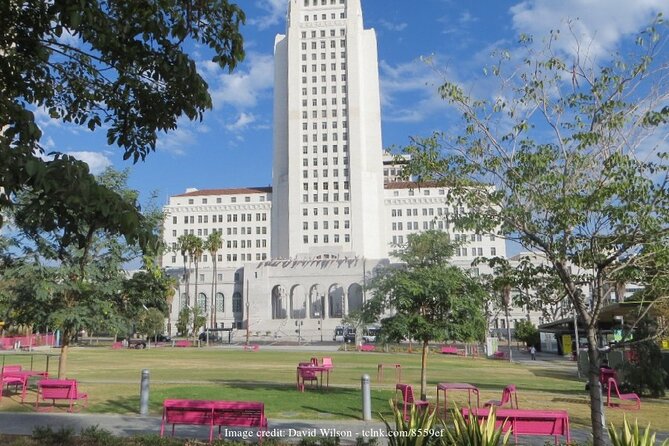
Your walk begins at Los Angeles City Hall, one of the city’s most recognizable public buildings. Its eclectic style has made it useful to the film industry, so you may recognize the building even if you have never visited Los Angeles before.
This is a smart starting point because City Hall gives the tour a strong civic opening. You are not beginning with a minor storefront or an isolated facade. Instead, you start with a building tied to the identity of the city and its public life.
From there, your guide takes you toward the Los Angeles Courthouse, an example of Art Moderne architecture. The courthouse helps show how architectural taste shifted away from some of the heavier classical traditions of earlier buildings. You should listen for the details that separate Art Moderne from the more decorative Art Deco buildings later in the walk.
You are allotted about 30 minutes for this first section, including the move between the buildings. Admission is free, and the time gives you a chance to get oriented without rushing straight into the busiest part of downtown.
The Bradbury Building and its famous interior
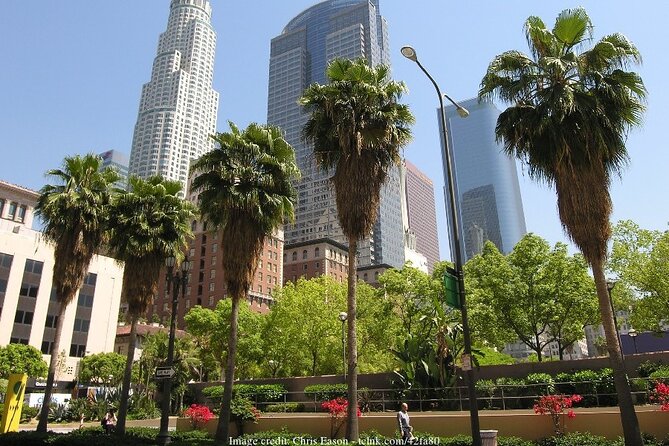
The Bradbury Building is one of the essential stops. It is a recognized Los Angeles landmark and one of downtown’s oldest surviving examples of Beaux-Arts architecture.
Its appeal is not limited to the outside. The building is known for its interior light, ironwork, stairs, and open central space. Access inside can depend on current conditions, so you should treat the interior as a possible highlight rather than a guaranteed private visit. Even from outside, your guide can help explain why this building feels different from the more polished Deco structures later in the route.
The tour allows about 30 minutes here. That is useful because the Bradbury rewards a slower look. Bring a phone or camera, and do not spend all your time taking a single wide shot. Details such as railings, upper levels, and patterns are the point.
This stop also gives the walk a needed change of mood. City Hall and the courthouse introduce public architecture. The Bradbury feels more intimate and theatrical. I like that contrast because it keeps the tour from becoming a parade of similar office buildings.
Title Guarantee Building and the vertical Art Deco look
The 1930 Title Guarantee Building began as an office building and now contains loft-style apartments. Its importance on this tour comes from its vertical Art Deco character.
Art Deco often encourages you to look upward. Buildings use narrow lines, stepped forms, repeated decoration, and a strong sense of height. The Title Guarantee Building gives your guide a clear example of how that style made a commercial building look modern and ambitious.
The stop lasts about 15 minutes, which should be enough for an explanation and some photographs. You will not spend a long time here, and that is reasonable. The building works best as part of the broader sequence, showing how the city moved from older Beaux-Arts ideas toward the streamlined confidence of the 1930s.
More walking tours in the USA:
- Chicago in a Day: Food, History & Architecture Walking Tour
★ 5.0 · 1,153 reviews - Chicago’s Secret Interiors Architectural Walking Tour
★ 5.0 · 635 reviews - Chicago: Secret Interiors Architecture Walking Tour
★ 4.9 · 498 reviews - Charleston: History and Architecture Guided Walking Tour
★ 4.8 · 349 reviews
Pershing Square and the Biltmore connection
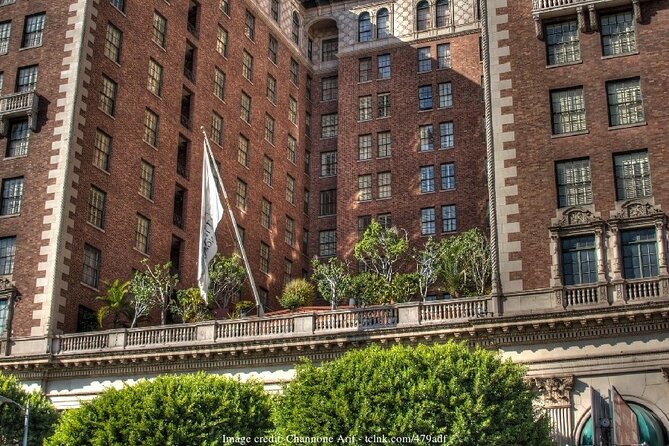
At Pershing Square, the focus shifts from one building to the larger story of architectural change. Your guide explains Art Deco and the Beaux-Arts style that came before it, using the 1925 Biltmore hotel as an example.
This is one of the more valuable teaching points on the route. You are not simply collecting pretty facades. You are learning to compare styles: the formal, classical language of Beaux-Arts design against the sharper, more geometric language of Art Deco.
The planned time is about 15 minutes. Pershing Square also gives you a break from standing directly in front of a building. You can use the space to look back at the surrounding downtown streets and understand how these different styles share the same district.
Keep your expectations practical. The tour is about viewing and interpreting the buildings, not a hotel tour or a long interior visit at the Biltmore. The hotel is used as a visible example in the architectural discussion.
The CalEdison and its marble details
The CalEdison building dates from 1931 and occupies a prominent corner. This is another strong Art Deco stop, especially if you enjoy materials as much as shapes.
You might be able to enter and see the marble floors and columns. That possibility matters because photographs of a facade cannot tell you how a building feels inside. Marble gives the lobby a different kind of drama from terra cotta or painted ornament, and the columns let you see how Art Deco could still use traditional materials in a newer style.
About 30 minutes are set aside here. That is generous enough for the guide to explain the building and for your group to wait briefly if interior access is possible. Still, do not assume you will enter. Access can change, and the tour information presents it as something that may happen.
For me, this is the kind of stop that justifies using a guide. A casual walk might take you past the CalEdison without noticing its date, materials, or role in the Art Deco story. A guide can point out what to look for before you move on.
Los Angeles Central Library and a preservation fight
The Los Angeles Central Library dates from 1926 and represents an early form of Art Deco. Its survival is part of the story: the building was saved from demolition in 1978 by the Los Angeles Conservancy.
That detail gives the tour more weight. Architecture is not only about design. It is also about what a city chooses to keep, replace, or protect. The library lets you connect decorative style with preservation and civic memory.
You have about 30 minutes here. That should give you time to study the exterior and hear how its design fits into the development of early Art Deco. The stop is also a good chance to take photographs from different angles, especially if your guide points out the features that are easy to overlook from the sidewalk.
The library is an important stop for anyone who likes urban preservation. It shows that a building’s value can include both its appearance and the public effort needed to save it.
The Oviatt Building and PacMutual
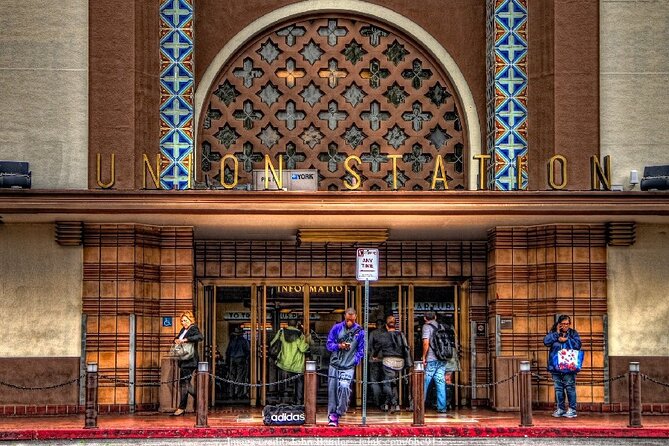
The Oviatt Building brings a more complicated story. Parts of it were built in the Romanesque Revival style, while other parts were changed to resemble Art Deco after the owner visited the 1925 Paris exposition.
That mixture makes the building especially useful for understanding style as a process. Buildings do not always belong to one neat category. Owners remodel them, fashions shift, and older structures receive new decorative treatments. The Oviatt Building lets you see those layers rather than a single frozen design period.
The stop takes about 15 minutes. During this portion, you also pass PacMutual, an original 1908 building that resembles a Greek temple and was remodeled in the 1930s to give it an Art Deco appearance.
These two examples help explain why downtown Los Angeles can feel architecturally dense. A single block may include classical references, Romanesque forms, and Deco updates. I would pay close attention here if you enjoy spotting what is original and what was added later.
Eastern Columbia Building and the green clock tower
The tour ends at the Eastern Columbia Building at 849 South Broadway. This is the grand finale for good reason. Its greenish terra cotta exterior and prominent clock tower make it one of the most eye-catching buildings on the route.
The building began as a department store and is now made up of luxury condominiums. The change from retail space to residences reflects the shifting use of downtown buildings, while the exterior keeps the visual power that made the structure memorable in the first place.
You have about 15 minutes here. That may feel short at the final stop, especially if you enjoy photography, so have your camera ready before you arrive. The building is a natural place to pause for facade shots, clock details, and a final comparison with the earlier buildings.
The property is associated with celebrity ownership, including a condominium once owned by Johnny Depp. That is a fun footnote, but the building’s main appeal is architectural. I would not book the tour for the celebrity connection. Book it for the terra cotta, the tower, and the way the route builds toward this final view.
Price, private-group value, and what you get
At $175 per person, this is not a bargain walk for a solo visitor. It becomes easier to justify when shared by a small private group, particularly if several people in your party care about design and want the freedom to ask questions.
The price includes a friendly professional guide and time for photographs. There are no admission tickets required, so you are paying mainly for the route, interpretation, navigation, and private attention. Food, drinks, hotel pickup, drop-off, and transportation during the day are not included.
The private format is the key value. You can move at your own pace within the three-hour framework, ask about a particular building, and pause for photographs without negotiating with a large group. Feedback about guides named Sam and Mary also points to the personal side of the experience. Sam was praised for explaining both the city and its buildings, while Mary’s outing included extra downtown sights such as the Disney Theatre, an old church, the market, and Angels Flight. Those additions are not promised parts of this architecture route, but they show how a guide may help connect the walk to the wider district.
One especially appealing extra was a rooftop viewing during one outing. Treat that as a possible bonus, not part of the fixed program. The scheduled route itself is the reason to book.
Practical planning for your three hours
Meet at Los Angeles City Hall, 200 North Spring Street. The walk finishes at the Eastern Columbia Building, 849 South Broadway, close to public transportation and taxi links. Your guide can help you work out the next part of your day.
Wear shoes suitable for a moderate amount of city walking. The tour is wheelchair accessible and near public transportation, but you should still allow time for outdoor surfaces, street crossings, and the fact that interior access may vary.
The experience is offered in English and uses mobile tickets. Confirmation arrives when you book. It is best suited to someone who likes to stop, listen, and look carefully rather than race through a checklist of attractions.
The tour requires good weather. You can cancel for a full refund up to 24 hours before the start time. If poor weather cancels the experience, you will be offered another date or a full refund. Changes or cancellations made less than 24 hours before the start time are not refunded.
Who should book this architecture walk?
I would recommend it to you if you enjoy historic buildings, urban design, film locations, preservation, or photography. It also suits families or friends with different levels of architecture knowledge because the guide can explain the basics while answering more detailed questions.
The walk may be a good match for a young architecture fan, too. One outing was especially successful for a son interested in architecture, with the guide’s explanations and a rooftop view adding extra appeal.
You should think twice if your priority is shopping, food, museums, or a broad overview of Los Angeles. This is a focused downtown walk. You will hear a lot about buildings, styles, dates, materials, and changes in use. That focus is the point, but it will not suit everyone.
Should you book LA’s Art Deco and Beaux-Arts walking tour?
Book it if you want a clear, personal introduction to downtown Los Angeles architecture and prefer a private guide over a large group. The route has a strong beginning at City Hall, useful comparisons at Pershing Square and PacMutual, excellent photo opportunities at the Bradbury and Eastern Columbia buildings, and enough variety to keep the three hours moving.
The price makes the most sense for a private group that will use the guide’s time well. Ask questions, take photos, and treat possible interior or rooftop access as a bonus. If you do that, this is a thoughtful way to see downtown through its buildings rather than simply passing through it.
FAQ
How long does the private walking tour last?
The tour lasts approximately three hours.
Where does the tour begin?
It begins at Los Angeles City Hall, 200 N Spring St, Los Angeles, California 90012.
Where does the tour end?
It ends at the Eastern Columbia Building, 849 S Broadway, Los Angeles, California 90014.
Is the tour private?
Yes. Only your own group participates in the activity.
What language is the tour offered in?
The tour is offered in English.
Is the tour wheelchair accessible?
Yes, the experience is wheelchair accessible.
Are admission tickets required?
No tickets are required for the listed stops.
Is food or drink included?
No. Food and drink are not included.
Can I cancel for a refund?
You can cancel at least 24 hours before the start time for a full refund. If poor weather causes the tour to be canceled, you will be offered another date or a full refund.
Just added in the USA
- Wilmington History and Architecture Tour★ 4.8 · 18 reviews
- New Orleans : Garden District Architecture Walking tour★ 4.8 · 5 reviews
- Washington DC: Dupont Circle & Embassy Row Architecture Tour★ 5.0 · 6 reviews
- Washington, DC: Georgetown Architecture Walking Tour★ 5.0 · 8 reviews
- Private Colonial Williamsburg Architectural Tour★ 5.0 · 5 reviews
- Tulsa: Art Deco Walking Tour of Tulsa★ 5.0 · 8 reviews
- Monuments and Memorials Architectural Walking Tour★ 5.0 · 17 reviews
- Castle to Capitol: Museums of the National Mall Architecture Tour★ 4.5 · 9 reviews
Art Deco Tours, compared.
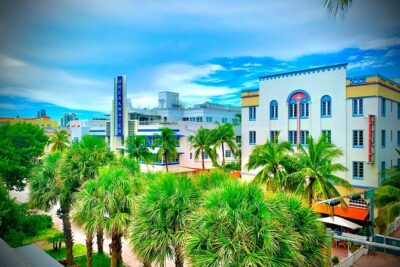
The Official Art Deco Walking Tour by The Miami Design Preservation League
Read our review →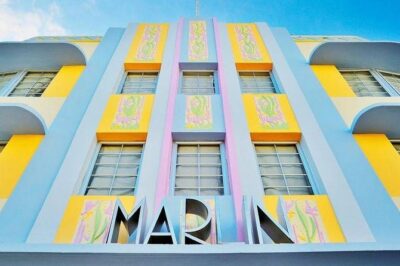
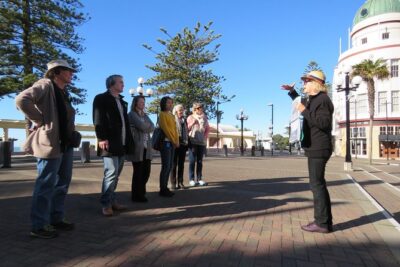
Guided 10am Morning Art Deco Walk From Napier Art Deco Trust
Read our review →
Award-winning Art Deco & Neon Lights Walking Tour in Miami Beach
Read our review →
Browse the lists this tour appears in