
REVIEW · WALKING TOURS
Bologna: Guided Architecture Walking Tour
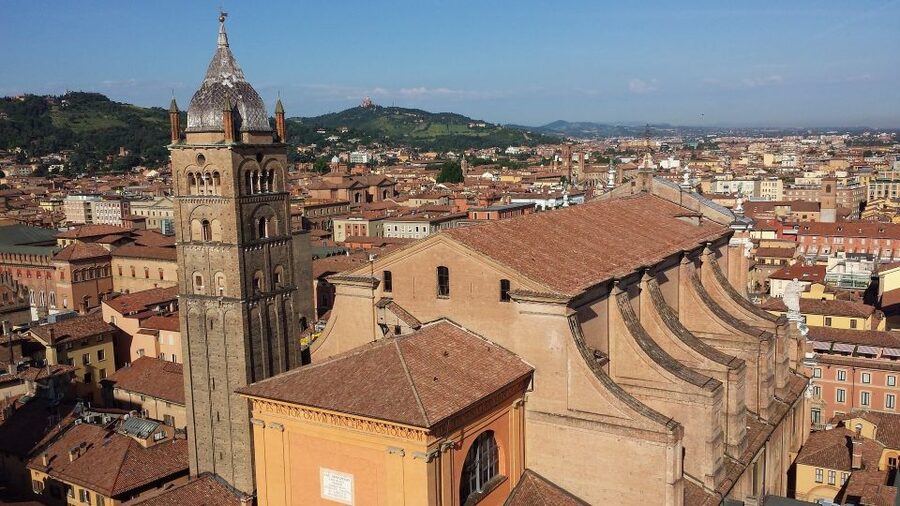
Bologna’s center is an open-air lesson in design. This private two-hour walk links the Archiginnasio, Piazza Maggiore, San Petronio, the Two Towers, and the Quadrilatero, giving you a clear look at Gothic, Baroque, Renaissance, and Classical architecture without sending you across the city. I like the compact route and the focus on major buildings rather than a rushed checklist of minor sights. I also like that you can ask for the kind of explanation you want, a point Roberta handled especially well according to the available feedback.
The main consideration is price. At $186.92 per person, this is a costly two-hour walk, especially since building entrances are not included. It makes the most sense for a private group that values a dedicated guide, flexible questions, and an organized introduction to Bologna’s center.
Key points to know before you book
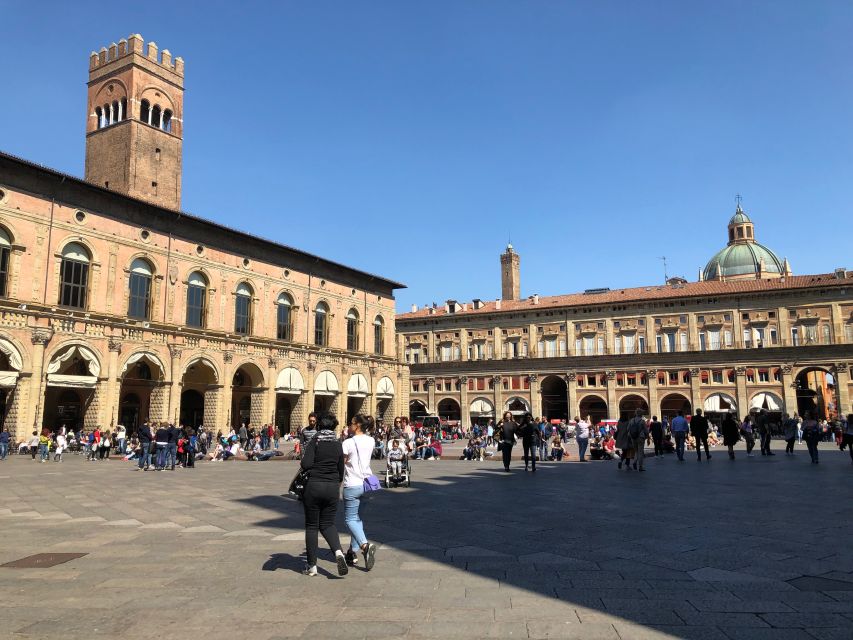
- The route begins at the Archiginnasio, the former university palace and main office building of the University of Bologna.
- Piazza Maggiore and San Petronio provide the tour’s strongest architectural stop, with the basilica’s imposing and unusual facade.
- Piazza del Nettuno brings together three important civic buildings: Palazzo d’Accursio, Palazzo del Podestà, and Palazzo del Capitano del Popolo.
- The Two Towers are viewed from their base, so this is a close look at their history and structure, not a tower climb.
- The walk continues through Corte Isolani, Santa Cecilia, San Giacomo Maggiore, and the Quadrilatero, adding smaller architectural details and a market district.
- Roberta received praise for an informative, engaging tour and for responding well to individual questions and requests.
Starting at the Archiginnasio and Piazza Galvani
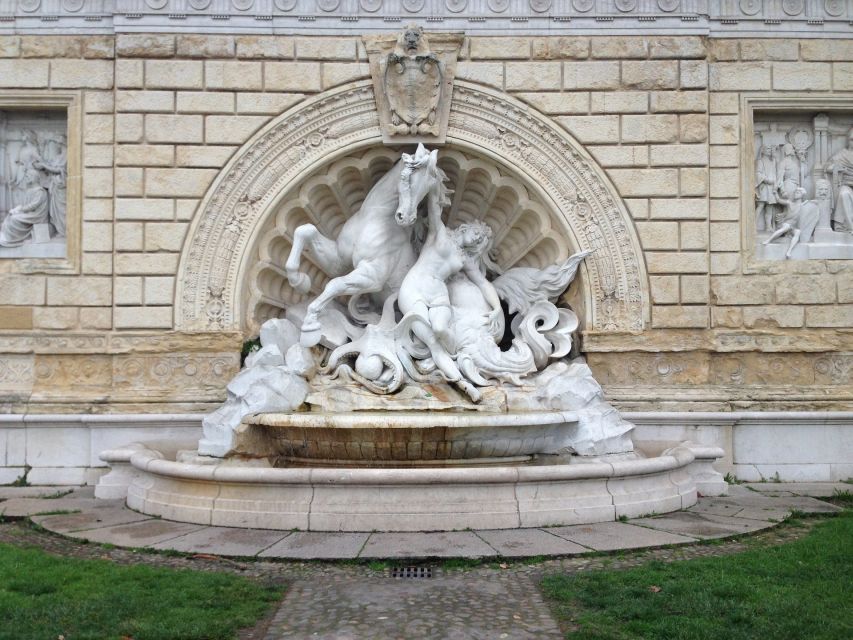
Meet your guide in front of the entrance to the Palace Archiginnasio at Piazza Galvani 1. The nearby Biblioteca Comunale dell’Archiginnasio is listed as the starting point, so I would arrive a few minutes early and look for the entrance rather than waiting in the middle of the square.
This is a strong place to begin. The Archiginnasio served as the main office building of the University of Bologna, described here as the oldest university in the world. That fact gives the opening stop real weight: you are not simply looking at an attractive old palace. You are beginning with a building tied to Bologna’s long academic role.
The first portion includes Piazza Galvani and a guided walk of about 15 minutes. That short opening stretch helps you get oriented before the tour reaches the larger public squares. You will want comfortable shoes, though the stated route is a city walk rather than a strenuous outing.
Because the tour is private, you can ask your guide to spend more time on the architectural points that interest you most. Roberta was praised for handling personal questions and requests well, which is useful here. A private format matters more on an architecture walk than it might on a simple transfer because the quality of the explanation shapes the whole experience.
More walking tours in Italy:
- Lecce: Baroque Architecture and Underground Walking Tour
★ 4.6 · 1,248 reviews - Experience Florence’s Art and Architecture on a Walking Tour
★ 5.0 · 318 reviews - Palermo: Art and Architecture Walking Tour
★ 4.7 · 136 reviews
The Archiginnasio: Bologna’s academic face
The Archiginnasio is both a sightseeing stop and a reminder of how closely education and city life were linked in Bologna. The tour includes guided sightseeing here, but admission to buildings mentioned along the way is not included.
That distinction is important. You should expect exterior viewing and discussion unless you arrange and pay for entry separately. The supplied details do not promise an interior visit, so plan this as a tour of the city’s architectural setting rather than a ticketed museum experience.
I like this opening because it gives the rest of the walk a useful frame. Bologna is not presented only as a collection of handsome squares. You begin with an institution, then move into the civic spaces where religious, academic, and administrative power meet.
If you already know Bologna, this section may feel familiar. Its value depends on the guide’s storytelling and your questions. That is where the private format can help. You can ask about the building’s role, its appearance, or how it connects to the nearby center instead of following a fixed group script.
Piazza Maggiore and San Petronio’s unfinished-looking facade
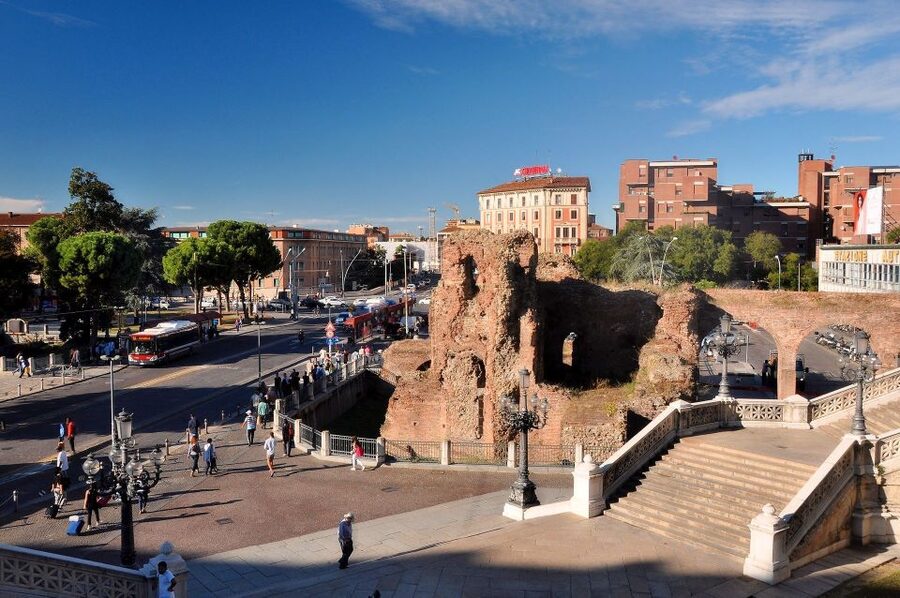
From the Archiginnasio, the tour continues to Piazza Maggiore, Bologna’s great central square. The Basilica of San Petronio is the star here, known for its imposing facade and distinctive appearance.
The architectural range becomes clearer at this point. The tour is designed to show Gothic, Baroque, Renaissance, and Classical examples, and San Petronio offers a major visual lesson in how a religious building can dominate a public square. Your guide can point out the features that make the facade different from the more uniform church fronts you may have seen elsewhere in Italy.
You should not expect entrance to the basilica to be included. The tour price covers an expert guide, but admission to buildings is listed separately. If you want to go inside, check the current opening and ticket arrangements on your own and allow extra time beyond the two-hour walk.
Piazza Maggiore is also one of the places where the tour’s short length becomes useful. You get a guided reading of the square without committing half a day to a single monument. On the other hand, two hours gives the guide limited time for every stop, so you may need to choose between asking detailed questions and covering the complete route.
Piazza del Nettuno and Bologna’s civic buildings
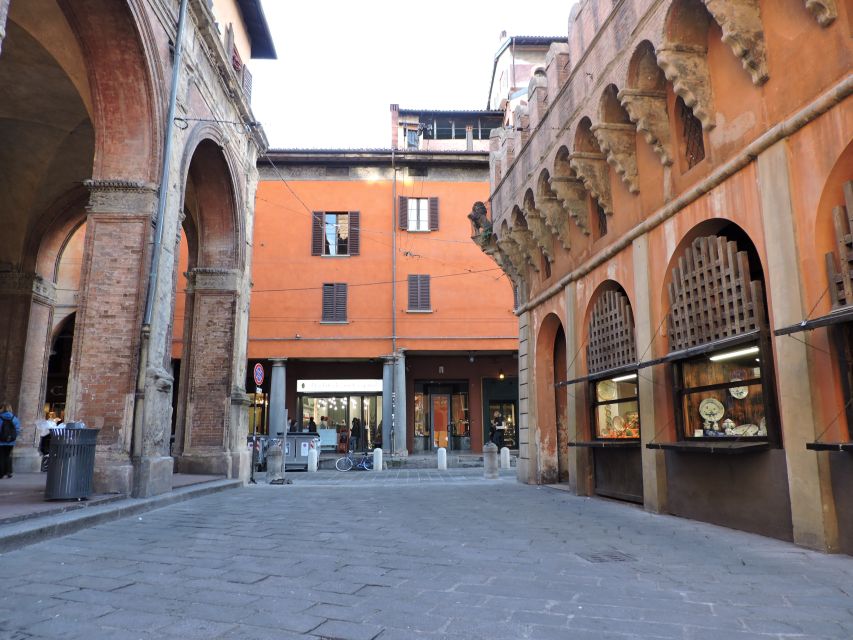
The walk then reaches Piazza del Nettuno, where three important administrative buildings surround the square: Palazzo d’Accursio, Palazzo del Podestà, and Palazzo del Capitano del Popolo.
This is one of the most useful parts of the route for understanding Bologna as a working city. San Petronio represents religious power, while these palaces show the civic and administrative side of the historic center. The tour lets you compare how different public buildings face one another and shape the space around them.
Palazzo d’Accursio receives its own guided sightseeing stop. The details provided do not promise entry, so you should plan to view the exterior and hear the guide’s explanation from the square. That can still be rewarding, especially if you enjoy looking at how public buildings announce authority through scale, placement, and design.
Piazza del Nettuno is also a practical point to pause and take stock. The route has moved from the university district into Bologna’s civic core, and the buildings are close enough together to make the change easy to follow. I would keep your camera ready here, but do not let photographs replace the explanation. The main benefit of a guided architecture walk is learning what to notice.
A few more architecture tours in Italy worth a look
- Basilica San Marco and the Pala d’Oro with Architect Guide
★ 4.5 · 19 reviews - Noto: Sicilian Baroque Architecture Guided Walking Tour
★ 4.3 · 6 reviews - Chicago River: 1.5-Hour Guided Architecture Cruise
★ 4.8 · 8,046 reviews - Park Güell: Guided Tour with Optional Gaudí Experience Entry
★ 4.1 · 832 reviews
The Two Towers at Piazza di Porta Ravegnana
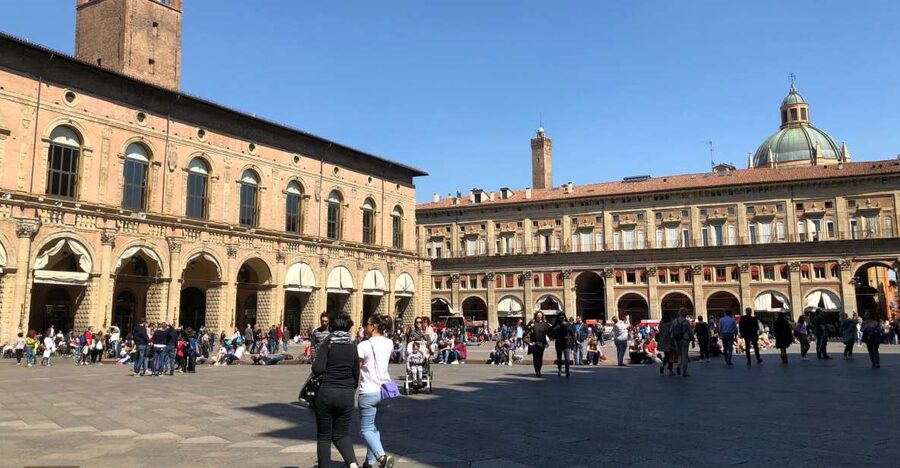
Next comes Piazza di Porta Ravegnana, the setting for Bologna’s iconic Two Towers: the Asinelli Tower and the Garisenda Tower. The tour stops at their base and explains their history and features.
The two towers are among Bologna’s most recognizable sights, but the experience offered here is not a climb. That matters if you are hoping for a high view over the city. This tour is about the structures themselves, their imposing presence, and the story attached to them.
Seeing the towers from below is also the sensible way to appreciate their scale. At street level, your guide can direct your attention upward and explain the differences between them. The route gives you time to examine the towers as part of the surrounding city rather than treating them as a quick photo stop.
There is a small tradeoff. If tower access is a top priority, you will need a separate plan because entry is not included. For someone more interested in Bologna’s urban form and architectural variety, the stop fits the tour well.
Corte Isolani, Santa Cecilia, and San Giacomo Maggiore
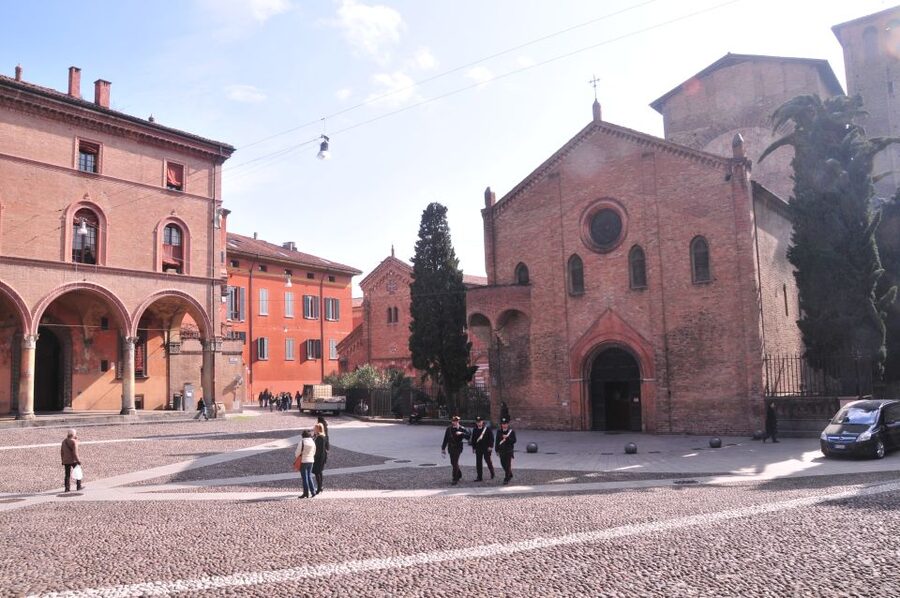
After the Two Towers, the walk takes a more detailed turn. You continue to the wooden arch of Corte Isolani, see the Oratory of Santa Cecilia, and admire the exterior of San Giacomo Maggiore.
These stops add variety after the major squares. The route is not limited to famous facades. A wooden arch gives you a smaller structural detail to study, while Santa Cecilia and San Giacomo Maggiore bring the focus back to religious architecture.
The tour specifically highlights the exterior of San Giacomo Maggiore. Again, you should not assume an interior visit. This is a useful reminder to keep your expectations clear: the experience is a guided walk through Bologna’s architectural setting, not a package of admissions.
I like this middle-to-late section because it breaks up the grand scale of Piazza Maggiore and the Two Towers. You get a sense of how architecture works at different levels, from an imposing basilica to a passageway and church facade. A guide can make those changes easier to notice, especially if you are not used to reading buildings.
Finishing around the Quadrilatero markets
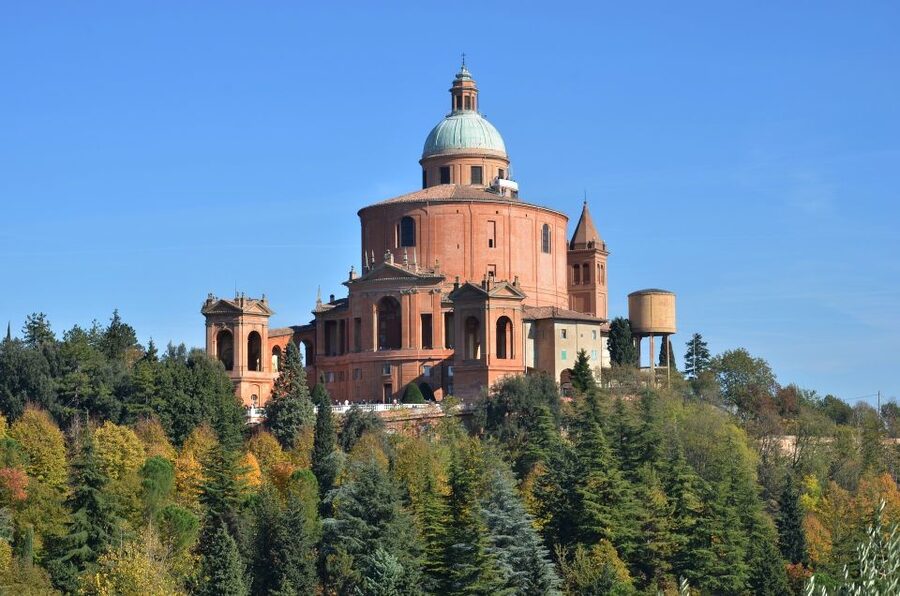
The route concludes in the area of the Quadrilatero, known for its markets and shops. This brings the tour back to ordinary city life after the formal squares, palaces, and churches.
The Quadrilatero is a fitting finish because it shows Bologna as more than a museum of architecture. Shops and markets occupy the same central fabric as the historic buildings, and you can continue exploring after the guided portion ends.
The stated end point is back at the meeting point near the Archiginnasio. The route description also places the final sightseeing around the Quadrilatero, so listen to your guide for the exact walking order and return arrangement on the day. Either way, you finish in a central area with plenty of options for continuing on foot.
If you want to eat or browse after the tour, this is a handy place to do it. The experience does not include food, shopping, or other activities, but the final district gives you an easy next step.
What the two-hour format really gives you
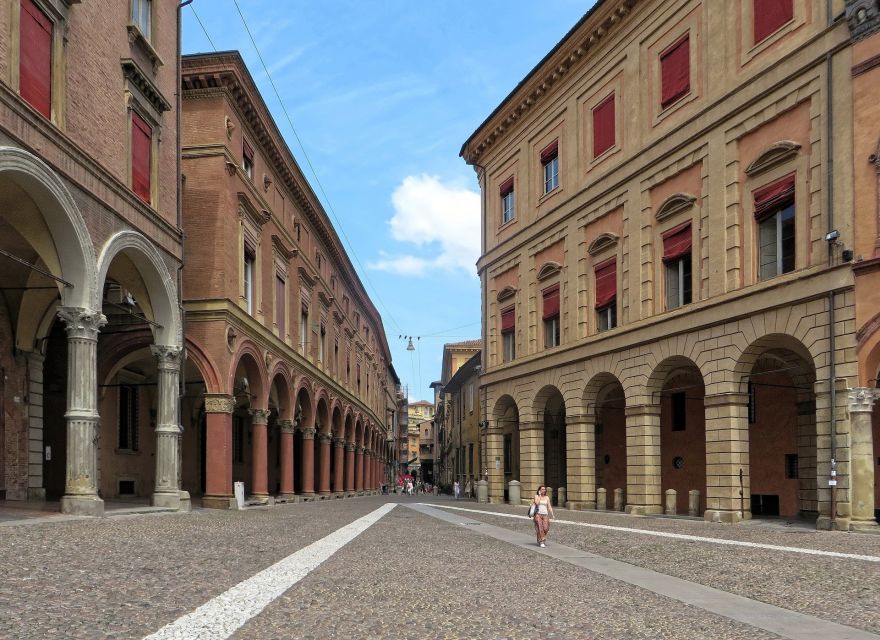
Two hours is enough for a well-organized introduction to Bologna’s central architecture. You cover the university palace, major square, basilica, civic buildings, towers, smaller religious sites, and market quarter without needing public transport.
The same time limit also calls for realistic expectations. You will not receive an exhaustive architectural study of every stop, and you will not have time to enter every building. I would think of this as a strong orientation walk. It helps you decide which places deserve a longer return visit.
The private group format is the biggest practical advantage. You can ask questions as you go, request more detail on a particular building, and keep the pace suited to your group. The feedback about Roberta is especially encouraging: she was described as informative and engaging, and as someone who responded well to individual interests.
Guiding is available in Italian, English, French, German, and Spanish. That range makes the tour accessible to many visitors, but be sure to select the language you need when checking availability.
The walk is also wheelchair accessible according to the supplied details. Since this is an urban route with several stops, you may still want to confirm the exact conditions of the day’s path if your group has specific mobility needs.
Is $186.92 per person good value?
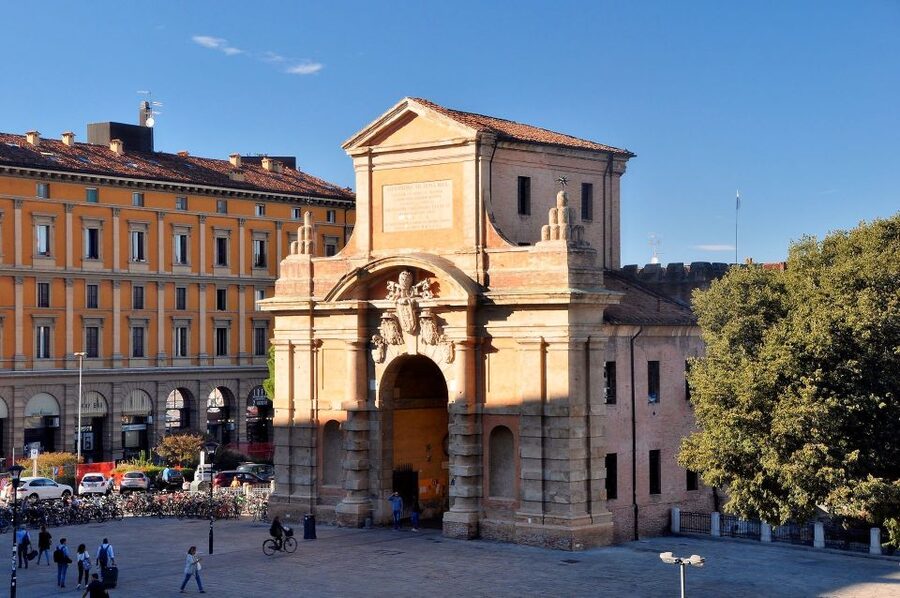
At $186.92 per person, this is not a budget sightseeing walk. The price is easier to justify if you are traveling as a private group and want a guide focused only on your party. It is harder to justify if you simply want to see the main sights from the outside and can read about them independently.
You are paying for organization, a live expert guide, language choice, and the ability to ask questions. You are not paying for monument admission, food, transportation, or a tower climb. Those exclusions should be part of your calculation.
I would compare the price with your priorities. If you want a quick overview before exploring Bologna on your own, the route is efficient and well chosen. If you want long interior visits or a low-cost group experience, this may not be the right fit.
The flexible booking terms add practical value. You can cancel up to 24 hours in advance for a full refund, and you can reserve now and pay later. Those policies do not change the tour’s cost, but they reduce the risk of locking in a plan too early.
Who should book this Bologna walk?
I would recommend it most strongly for:
- First-time visitors who want a clear introduction to central Bologna.
- Private groups who prefer a guide dedicated to their questions.
- Architecture fans who want to compare several styles in a short outing.
- Families or mixed-age groups that benefit from a manageable two-hour route.
- Visitors who want to understand the city before choosing which buildings to enter later.
I would be more cautious if your main goal is interior access. The tour does not include entrance fees, and several important stops are viewed from outside. I would also think twice if $186.92 per person feels high for a short walk without admissions.
Should you book the Bologna Guided Architecture Walking Tour?
Book it if you want a focused, private introduction to Bologna’s central buildings and value a guide who can adapt to your interests. The route covers a lot in two hours, from the University of Bologna’s Archiginnasio to San Petronio, the civic palaces, the Two Towers, and the Quadrilatero.
Skip it if you are looking for a cheap overview, a tower climb, or a tour built around interior visits. The price is substantial, but the private format and multilingual guide can make it worthwhile for the right group. Roberta’s praised ability to answer individual questions is exactly the quality I would want on an architecture walk, where a good explanation can turn a passing facade into a place you remember.
FAQ
Where does the Bologna architecture tour start?
The tour starts in front of the entrance of the Palace Archiginnasio at Piazza Galvani 1, Bologna BO. The listed starting location is the Biblioteca Comunale dell’Archiginnasio.
Where does the tour end?
The activity ends back at the meeting point near the Archiginnasio.
How long does the walking tour last?
The tour lasts two hours. Starting times vary, so you need to check availability when booking.
Which languages are available?
The live guide is available in Italian, English, French, German, and Spanish.
Are building entrance fees included?
No. Entrance to the buildings mentioned on the route is not included in the tour price.
Is the tour private and wheelchair accessible?
Yes. The activity is offered as a private group tour and is listed as wheelchair accessible.
Just added in Italy
- Vicenza: Palladian Architecture Private Walking Tour★ 3.3 · 3 reviews
- Private Personalized Architecture Tour of Rome with an Architect★ 5.0 · 5 reviews
- Architectural Milan: Private Tour with a Local Expert★ 4.5 · 2 reviews
- The Architect’s Water★ 4.5 · 11 reviews
- Architectural Florence: Private Tour with a Local Expert★ 5.0 · 3 reviews
- Rione Sanità: tour among street art, architecture, folklore★ 4.5 · 2 reviews
- Palermo Tour: Magnificent Mixture Of Architectural Styles★ 4.2 · 6 reviews
- Discover Coppedè in Rome: Liberty architecture, symbols, and jewels★ 5.0 · 2 reviews
Walking Tours, compared.
The Official Art Deco Walking Tour by The Miami Design Preservation League
Read our review →
Baroque Architecture and Underground Walking Tour
Read our review →
Chicago in a Day: Food, History & Architecture Walking Tour
Read our review →
Ramblas, Old Town, Gothic and Gaudi Architecture Walking Tour
Read our review →
Chicago’s Secret Interiors Architectural Walking Tour
Read our review →
Browse the lists this tour appears in