
REVIEW · PARIS ARCHITECTURE TOURS
Architectural Bourgeois Paris 19th Century
Paris has more than one beautiful face. This two-hour walk reveals the polished, ambitious Paris created for the 19th-century bourgeoisie, with stops at Parc Monceau, Haussmann’s broad avenues, Saint-Augustin Church, Gare Saint-Lazare, and Galerie Lafayette. I especially like the mix of open-air scenery and grand architecture, along with the chance to see how industry, rail travel, fashion, and private wealth reshaped the city.
I also like the small-group format, limited to 10 people, and the guide’s focus on 19th-century Paris rather than a quick list of famous sights. The main consideration is pace: you will walk for about two hours, and the tour is best for anyone with a moderate level of fitness. It also has a narrow focus, so it will not cover medieval Paris, the Eiffel Tower, or the Louvre.
Key points to know before booking
- Parc Monceau opens the tour with unusual garden features, including an ancient colonnade, a bridge, a pyramid, and several notable private residences.
- Baron Haussmann’s Paris is explained on foot, with wide boulevards and the familiar apartment blocks that define much of central Paris.
- Saint-Augustin Church connects architecture with the period, since it was built around 1860 during the transformation of the city.
- The train station stop explains the social cost and rewards of industrialization, including how railway growth helped make local entrepreneurs wealthy.
- Galerie Lafayette provides the grand finish, bringing the story of 19th-century department stores into a still-active shopping setting.
- Historian François received special praise for his clear, friendly guidance, including his ability to lead in both English and French.
Why this walk shows a different Paris
Many Paris walks follow a familiar route through medieval lanes, royal monuments, or the Left Bank. This one moves through the 8th and nearby 9th districts, where the city feels more formal and carefully planned. The subject is the Paris of the Belle Epoque, the period often translated as the Beautiful Era, when new wealth, new technology, and new styles changed daily life.
I like this focus because it gives you a useful way to read the city. The apartment facades, boulevards, parks, railway stations, churches, restaurants, and department stores are not random sights. Together, they show how 19th-century Paris became a modern capital.
The walk begins at Monceau, Paris 75017, at 10:30 in the morning. It ends at 40 Boulevard Haussmann, inside the Galerie Lafayette area. You move from a landscaped park to streets shaped by Baron Haussmann, then toward the commercial center of the grand department stores.
The tour is capped at 10 people. That matters here. A historian can point out architectural details and explain them without trying to project over a huge group. The experience is also offered with a mobile ticket, which keeps arrival simple.
A few more architecture tours in the world worth a look
- Chicago Architecture River Cruise
★ 5.0 · 15,756 reviews - Chicago River 90-Minute Architecture Tour
★ 4.5 · 9,629 reviews - Chicago River: 1.5-Hour Guided Architecture Cruise
★ 4.8 · 8,046 reviews
Parc Monceau: a park made for curious eyes
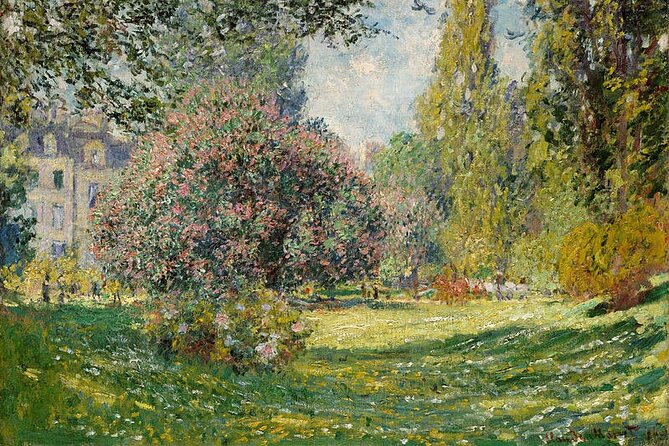
The first 30 minutes take place in Parc Monceau. This is not treated simply as a pleasant green space. The guide uses its unusual structures and nearby residences to introduce the taste and ambitions of wealthy 19th-century Paris.
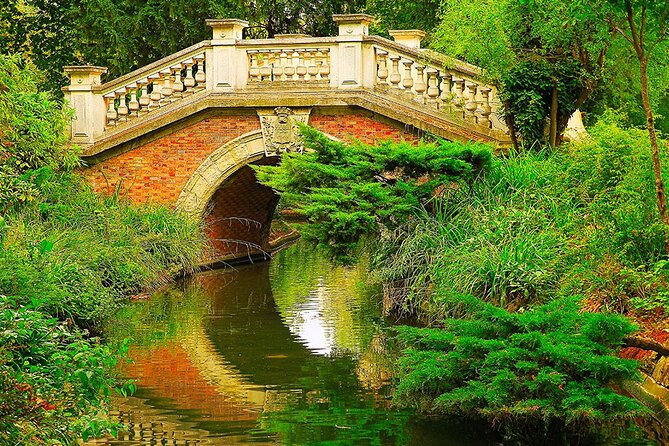
You will see an old colonnade, a bridge, a pyramid, and remarkable trees as you walk around the park. These features give the opening section a visual rhythm. You are not standing in one place listening to a long lecture. You are moving through a setting where every turn can prompt a story about design, money, or social fashion.
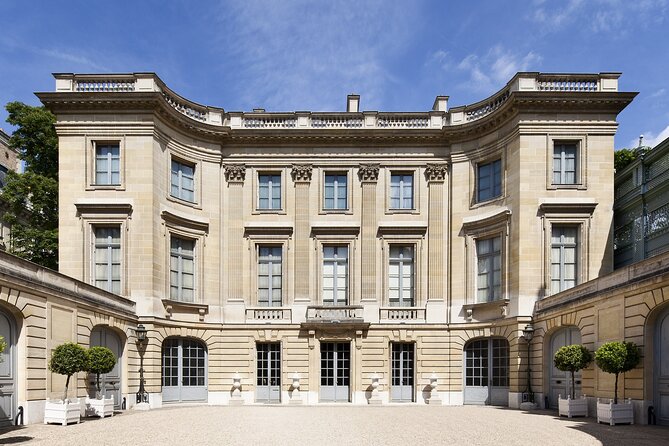
The route also passes Hotel Menier, the Pagoda of Mr. Loo, and the hôtel particulier associated with Camondo. These private houses help explain how the affluent classes lived and displayed their status. An hôtel particulier was a private urban mansion, often built around a courtyard or garden. Seeing these buildings near a public park helps you picture the neighborhood as a place of leisure and prestige.
This is likely the most relaxed section of the walk. It also offers the best early chance for photographs. If you enjoy gardens, decorative architecture, and the details of grand residences, arrive ready to look beyond the main path.
The limitation is that the value of this stop depends on the guide’s explanation. Without context, a colonnade or pyramid can seem like an attractive oddity. With a historian such as François, the park becomes an introduction to the social world that shaped the rest of the route.
Baron Haussmann and the new shape of Paris
The next 20 minutes focus on the statue of Baron Haussmann, the administrator whose rebuilding program changed the appearance of Paris. Here, the tour shifts from a park with scattered curiosities to the organized city around you.
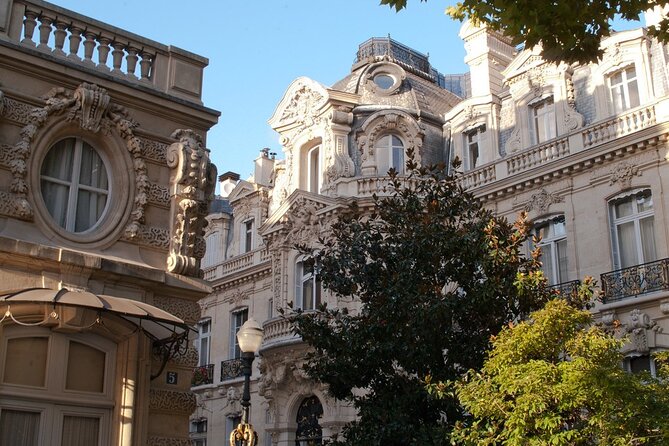
You will pause at the statue and then walk through Haussmannian Paris, with its broad boulevards and familiar apartment blocks. This is the point where the tour helps you connect individual buildings to a larger plan. Straight streets, generous avenues, and consistent facades are part of a deliberate transformation, not just a local architectural preference.
I find this kind of explanation useful because visitors often admire Haussmann-style Paris without knowing why it looks so unified. The guide’s job here is to show how urban planning, government power, and bourgeois taste worked together.
There is also a practical benefit. Once you understand the basic Haussmann pattern, you can recognize it elsewhere in Paris. The tour gives you a visual tool you can keep using after the walk ends.
This stop is more about observation than entry into a monument. If you prefer tours packed with interiors, it may feel less dramatic than the church or department store sections. If you want to understand why Paris has its famous wide streets and orderly apartment fronts, it is essential.
Saint-Augustin Church, built during the transformation
The walk continues to Saint-Augustin Church, with about 20 minutes inside. The church was built around 1860, placing it directly in the period under discussion. That makes it more than a religious stop. It is a building from the same era that produced the new boulevards, private mansions, and commercial institutions nearby.
Entering the church gives the tour a change of mood. After the park and busy streets, you get an interior setting where architecture can be studied at a slower pace. The church helps show that 19th-century Paris was not built only for commerce and private comfort. Religious buildings were also part of the city’s new public image.
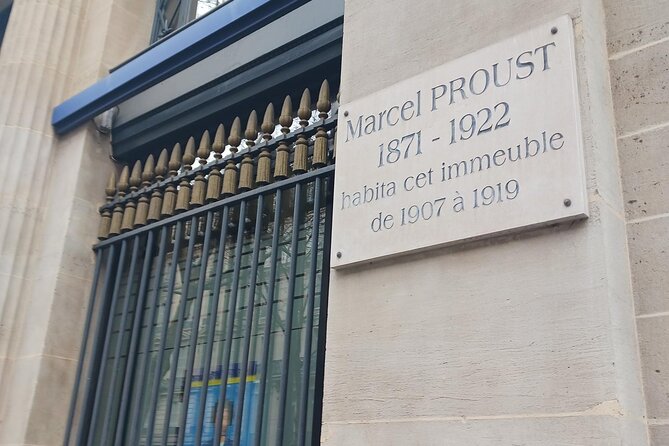
The guide can also make a detour, by request, to the place where writer Marcel Proust lived and wrote A la Recherche du Temps Perdu. This is a useful option if you care about literature and want to connect architecture with the writers who experienced this Paris from inside its apartments and social circles.
The Proust detour is not presented as a separate guaranteed stop, so ask about it before or at the start of the walk. The same goes for timing, since a detour may affect the flow of the two-hour route.
Same city, a different building to stand in front of:
- Chicago Architecture Center River Cruise aboard First Lady
★ 5.0 · 5,536 reviews - Chicago: Architecture River Cruise Skip-the-Ticket Line
★ 4.8 · 4,325 reviews - Chicago River 45-Minute Architecture Tour from Magnificent Mile
★ 4.5 · 2,924 reviews - Barcelona: Sant Pau Recinte Modernista Entry Ticket
★ 4.6 · 2,567 reviews
Gare Saint-Lazare and the money of the railway age
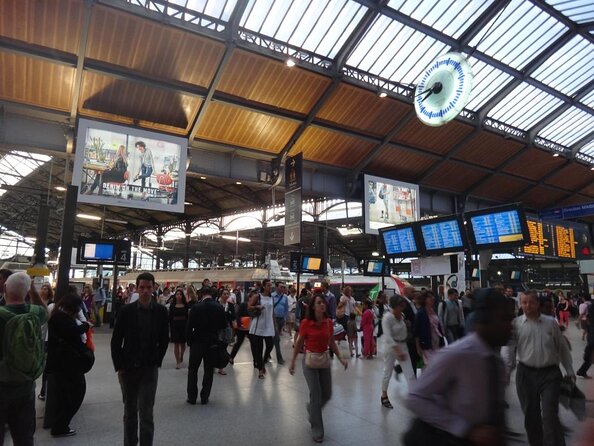
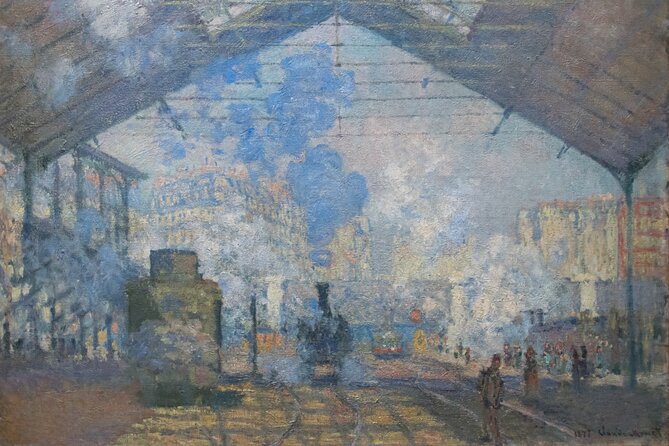
The next 20 minutes pass the back side of Gare Saint-Lazare. This railway station becomes a doorway into the economic story of the tour. Rail travel was a major force in 19th-century Paris, bringing people, goods, and new business connections into the city.
The guide explains how industrialization helped many entrepreneurs become wealthy. Many of them lived in the neighborhood covered by this walk. That point ties the station to the surrounding architecture. The grand homes and polished streets were not just the result of old aristocratic privilege. New fortunes also helped shape this part of Paris.
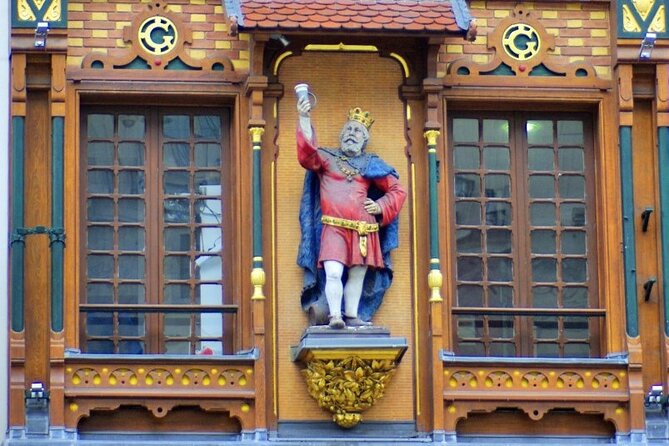
You will also see a remarkable building associated with Le Roi de la Bière. The description points out an amusing modern contrast: the building includes a McDonald’s restaurant. That detail gives the walk a little humor and reminds you that Parisian buildings often carry several layers of use over time.
This stop is primarily a street-level look at the station and its surroundings. You are not promised a full station tour or a railway museum visit. Still, it is a strong connection between infrastructure and urban life. You see how a train station can influence housing, business, restaurants, and the movement of people across the city.
Printemps and Galerie Lafayette: shopping becomes a spectacle
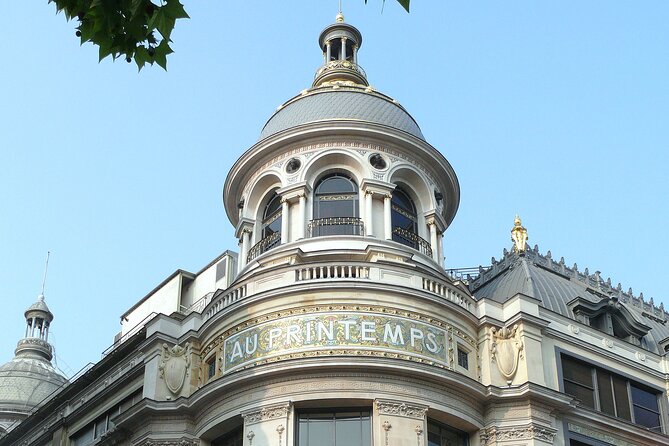
The final 30 minutes turn to the grand department stores, known in French as les grands magasins. The route passes Printemps and ends inside Galerie Lafayette during opening hours.
This is a fitting final stop. The tour begins with private wealth in a park and around grand residences, then finishes with a public form of luxury. Department stores made fashionable goods visible to a much larger audience. They also turned shopping into an architectural and social event.
Galerie Lafayette gives you the chance to see how that 19th-century idea still functions today. The building is not simply a place to buy something. It is the climax of a story about commerce, design, display, and urban pleasure.
The included Galerie Lafayette visit is one of the clearest value points in the tour. You do not finish on an anonymous street corner. Instead, the route ends in one of the city’s best-known department store settings, where the theme of bourgeois Paris reaches its natural conclusion.
The practical catch is that this portion depends on opening hours. The experience includes Galerie Lafayette during those hours, so confirm that your chosen date fits the stated 10:30 start and the store’s operation. Coffee and tea are not included, so plan your own refreshment before or after the walk.
The guide makes the difference
The guide is a historian specializing in 19th-century Paris. That background suits the subject well. This is not a route where you only need directions between famous buildings. The pleasure comes from understanding why these particular places belong together.
François received especially strong praise for being friendly, well informed, and comfortable speaking in both French and English. That bilingual ability can matter if your group includes people using both languages. It also suggests a flexible communication style, though the exact language arrangement for a particular departure should be confirmed when booking.
A good guide can turn the tour from an architecture walk into a story about people. At Parc Monceau, that means more than identifying a bridge or mansion. At Gare Saint-Lazare, it means connecting railway growth to new fortunes. At Galerie Lafayette, it means explaining why department stores mattered to 19th-century city life.
The group limit of 10 supports that kind of conversation. You have a better chance of hearing clearly and asking a question than you would in a large coach group. The tradeoff is that the experience remains a walking tour, not a private custom route.
Price, pace, and who gets good value
The price is $68.65 per person. For a two-hour walk, that is not the cheapest way to spend a morning in Paris. You are paying for a specialist guide, a small group, historical interpretation, and access to Galerie Lafayette rather than transportation or a meal.
I think the price makes the most sense for you if architecture and social history are central to your trip. The route covers five distinct settings and explains how they fit together. It is also useful if you have already seen the headline sights and want a more focused look at the city’s 19th-century identity.
The value is weaker if you only want casual sightseeing or a general introduction to Paris. You will not see the city’s biggest landmarks, and there is no private vehicle to save your legs. The experience is booked, on average, 32 days ahead, so advance planning is sensible.
You should expect regular walking for about two hours. A moderate fitness level is required. The route is near public transportation, and service animals are allowed, but the supplied information does not promise a fully step-free route or describe seating along the way. If mobility is a concern, ask the provider for current route details before booking.
My booking advice for this Paris walk
I would choose this experience if you want to understand how wealthy 19th-century Paris looked, worked, and entertained itself. The sequence is well judged: begin in a decorative park, move through Haussmann’s city, enter a period church, connect the streets to rail and industry, then finish with the grand department stores.
I would be less likely to choose it if this is your first and only Paris activity and you want the Eiffel Tower, the Louvre, Notre-Dame, or Montmartre. This is a specialist walk, and its appeal depends on your interest in architecture, urban planning, literature, commerce, and Belle Epoque society.
The strongest reason to book is the guide-led interpretation, especially with François’s reported ability in French and English. The second is the compact group size. The main caution is the price for two hours and the amount of walking, but the route gives you a clear subject rather than a scattered list of sights.
Free cancellation is available up to 24 hours before the 10:30 start time. That gives you some flexibility, though changes or cancellations made inside that window are not accepted for a refund.
FAQ
Where does the tour begin?
It begins at Monceau, 75017 Paris, France.
Where does the tour end?
It ends at 40 Boulevard Haussmann, 75009 Paris, at Galerie Lafayette.
What time does the experience start?
The tour starts at 10:30 am.
How long does the tour last?
The experience lasts approximately two hours.
What is the price?
The price is $68.65 per person.
How many people can join the tour?
The group has a maximum of 10 travelers.
Is Galerie Lafayette included?
Yes. Entry to Galerie Lafayette is included during opening hours.
Is food or drink included?
No. Coffee and tea are not included.
Is private transportation provided?
No. Private transportation is not included.
Is the tour suitable for people with limited mobility?
The stated requirement is a moderate level of physical fitness. The experience is near public transportation, and service animals are allowed. Details about step-free access are not provided, so contact Paris Promenade before booking if you need specific accessibility information.
Just added in the world
- Wilmington History and Architecture Tour★ 4.8 · 18 reviews
- New Orleans : Garden District Architecture Walking tour★ 4.8 · 5 reviews
- Washington DC: Dupont Circle & Embassy Row Architecture Tour★ 5.0 · 6 reviews
- Washington, DC: Georgetown Architecture Walking Tour★ 5.0 · 8 reviews
- Vicenza: Palladian Architecture Private Walking Tour★ 3.3 · 3 reviews
- Walk & Discover KL’s Architectural and Heritage Gems★ 5.0 · 7 reviews
- Private Colonial Williamsburg Architectural Tour★ 5.0 · 5 reviews
- Unveiling Brno: History, Culture & Architectural Delights★ 5.0 · 2 reviews
Paris Architecture Tours, compared.
Bastille’s Architecture & Artisans Self-Guided Walking Tour
Read our review →
Private Art Nouveau and Art Deco tour near Opera
Read our review →
Neoclassical Paris Architecture 2-Hour Private Walking Tour
Read our review →
Discover the hidden architecture gems of Le Marais
Read our review →
Browse the lists this tour appears in