
REVIEW · ART DECO TOURS
Private Art Nouveau and Art Deco tour near Opera
Paris hides its best details above eye level. This private two-hour walk links Gare Saint-Lazare, Boulevard Haussmann, Galeries Lafayette, Printemps, and Palais Garnier through the decorative world of Art Nouveau. I like the way the tour reveals grand interiors you could easily miss, and I like having a guide such as Solène explain how shops, stations, cafés, and banks shaped modern Paris. The main drawback is its short length: you get a lively introduction, not a full course in Art Nouveau or Art Deco.
The small private format makes this a pleasant choice for couples, families, or friends who want to ask questions and set the pace. I also like that one drink at the traditional Mollard brasserie is included. At $180.23 per person, it is not a cheap walk, but the price can make sense if you value personal attention and access to places you would probably pass without noticing.
Key points at a glance
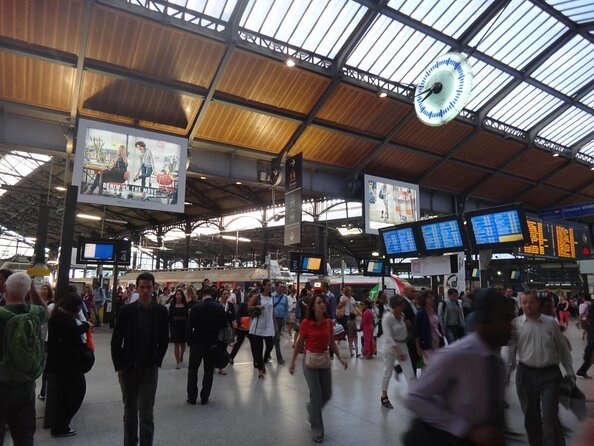
- Saint-Lazare begins the story: The station is not just a meeting point. Its growth helped shape the buildings and commercial life around it.
- Mollard adds a proper Paris pause: You stop at an old Art Nouveau brasserie for a drink, with its ornate interior as part of the experience.
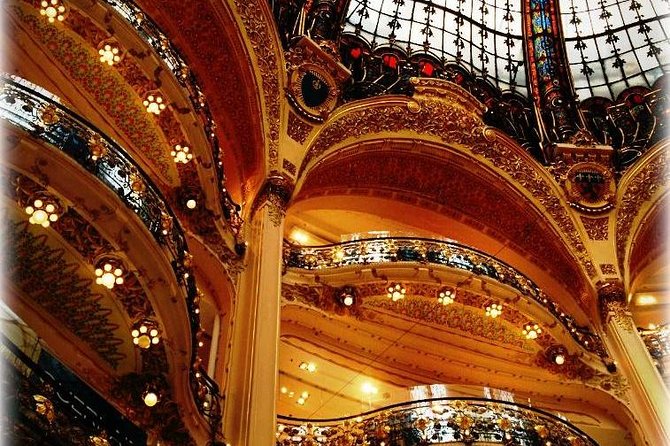
- Galeries Lafayette rewards looking up: Its glass dome, gilded balconies, upper levels, and viewing areas provide much more than a shopping stop.
- Printemps brings another grand department-store interior: The tour compares its architecture with Galeries Lafayette and points out details easy to overlook.
- The route ends at Palais Garnier: You admire the opera house from outside and finish near one of Paris’s most famous squares.
- Solène receives repeated praise: Her friendly, conversational approach and local knowledge are a major part of the tour’s appeal.
Why this short walk works in central Paris
This is a focused architecture tour, not a general introduction to Paris. The route stays in the 8th and 9th arrondissements, where transport, shopping, cafés, rail travel, and grand civic design meet. That concentration helps the two-hour schedule feel useful rather than rushed.
I like the route because it shows how Art Nouveau appears in ordinary city life. You are not only looking at a monument from a distance. You are entering a railway station, pausing in a brasserie, walking through department stores, and examining buildings that Parisians still use every day.
The private format matters here. Decorative details can be small, crowded by shoppers, or easy to miss from the pavement. With only your own group, you can ask why a particular curve, tile, balcony, dome, or ironwork detail matters. The guide can also adjust the conversation toward architecture, shopping, city views, or local places to eat.
The tour starts at 3 p.m. outside Saint-Lazare and lasts about two hours. That timing gives you an afternoon look at the area, followed by an easy finish near Opéra. You should be comfortable walking for the full outing and moving through large public buildings. The experience requires a moderate level of physical fitness.
More Art Deco tours in the world:
- Art Deco and Architecture Midtown Landmarks Tour
★ 5.0 · 142 reviews - Chicago Architecture Walking Tour: Incredible Art Deco Interiors
★ 5.0 · 85 reviews - Tulsa Art Deco and Architecture with Expert Guide Walking Tour
★ 5.0 · 77 reviews
Gare Saint-Lazare: where the architecture story starts
Meet your guide at 13 Rue d’Amsterdam, outside Gare Saint-Lazare. The station is one of Paris’s major railway buildings, but the point of this first stop is not simply to admire trains or take a quick photograph.
The guide explains how the station developed and how its growth influenced the surrounding architecture. That context gives the rest of the tour a useful foundation. You begin to see the district as a connected urban project rather than a collection of unrelated façades.
Inside, look upward and around the station rather than focusing only on signs and platforms. The tour draws attention to features that thousands of people pass each day without really seeing. This is one of the strongest parts of the experience for anyone who enjoys architecture hiding in plain sight.
You should expect about 30 minutes here. Since Gare Saint-Lazare is an active station, the setting can feel busy and distracting. That is part of its value, but it also means you will not get the quiet atmosphere of a museum. Stay close to your guide and keep your attention on the details being explained.
Mollard: an Art Nouveau brasserie pause
Near the station, the tour stops at Mollard, a traditional Parisian brasserie. One drink is included, and this is more than a break for coffee or hot chocolate. The interior itself is one of the main architectural sights.
The brasserie is known for its preserved Art Nouveau decoration, including mosaic work and ornate surfaces. Sitting down gives you time to study the room without walking past it. Solène has used this stop to point out how the design works around you, helping you connect the movement’s decorative ideas with a real Paris café.
This pause is especially useful if you are not already familiar with Art Nouveau. Instead of hearing a long lecture filled with dates and names, you can look at materials, shapes, patterns, and furnishings in front of you. The setting makes the style easier to understand.
The drink is included, but additional food and drinks are not. The stop is scheduled for about 30 minutes, so do not treat it as a full meal. If you want lunch or dinner, plan that separately.
Galeries Lafayette and the famous glass dome
From the station, the route follows Boulevard Haussmann to Galeries Lafayette Paris Haussmann. The store is a shopping institution, yet the architecture is the real reason you are here.
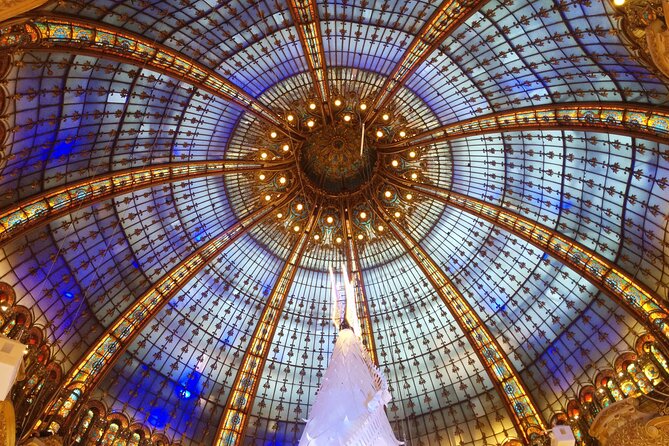
The main reward is the soaring stained-glass dome. Gilded balconies frame the interior, and the view changes as you move through the building. The guide points out details that are easy to miss if you enter only to shop or reach the upper floors.
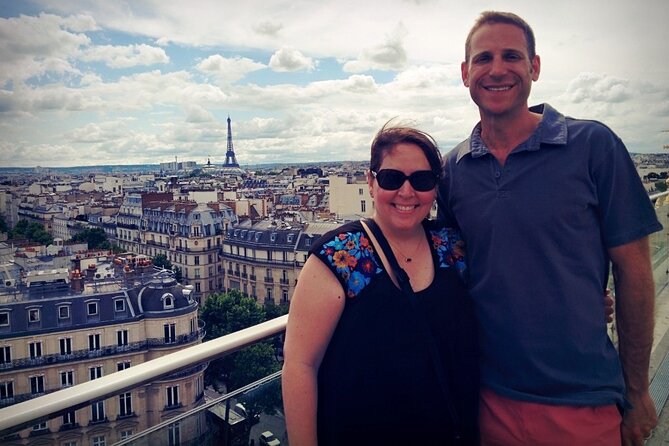
Some of the most praised parts of the tour involve seeing how the domes are built and finding upper-level viewpoints. You may also reach a rooftop viewing area, where the guide identifies architectural features around Paris. These views add a welcome change of scale after spending time examining close-up decoration.
The department store can be crowded, and commercial activity continues around you. That may reduce the sense of a quiet architectural visit, but it also shows how the building was designed for public life. Art Nouveau here is not locked behind glass. It is part of a working store.
Allow around 30 minutes for this stop. You should keep your phone or camera ready, but remember to look away from the screen. The best details may be above the displays, balconies, and circulation areas.
More Art Nouveau tours in the world:
- Walking Tour of Riga’s Beautiful Art Nouveau Architecture
★ 4.8 · 20 reviews - Riga’s Architecture: A self-guided audio tour of the city’s art nouveau history
★ 5.0 · 3 reviews - Mexico City origins and architecture: Art Nouveau, Deco,Eclectic
★ 3.0 · 2 reviews - Barcelona: Art Nouveau & Gaudí Tour
★ 5.0 · 39 reviews
Printemps and the art of department-store design
The next stop is Printemps, another major department store on Boulevard Haussmann. The tour uses it as a second example of how shopping and decorative architecture were brought together.
The value of seeing both Galeries Lafayette and Printemps is comparison. You can consider how each building uses glass, height, ornament, and public viewing areas to create a sense of occasion. The stores were not designed as plain retail boxes. Their interiors encourage you to look up, move around, and treat shopping as a form of entertainment.
The tour also includes access to rooftop viewing areas and upper architectural features according to the experience details. Those points can give you a broader view of Paris and help you understand the relationship between the grand boulevard and the buildings around it.
This is a good part of the walk for first-time visitors to the district. You may already have planned to visit one of the department stores, but the guide adds a reason to notice the structure rather than simply browse the brands.
A striking bank and other details beyond the main route
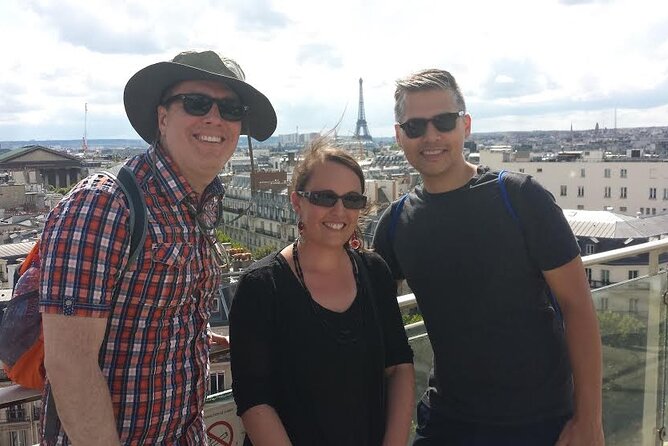
The route can include a traditional bank that remains in use. Its interior architecture has been described as one of the most memorable sights on the walk. This is exactly the kind of place that gives the tour its character: a functioning building that does not advertise itself as a tourist attraction.
The experience may also reveal tile work, decorative surfaces, glass structures, and other details around the district. These are not necessarily grand monuments. Their appeal comes from seeing how much visual design is built into everyday Paris.
Because this is a private tour, you can ask questions as these discoveries appear. Solène is described as multilingual, a Paris resident, and well traveled in France. Her advice can extend beyond architecture to places to eat and quieter parts of the city, although the tour itself remains centered on the 8th and 9th arrondissements.
One point to keep in mind is that the exact balance of stops may depend on access and conditions inside public buildings. The listed route includes Saint-Lazare, Mollard, Galeries Lafayette, and Printemps, with the tour ending near Palais Garnier. The bank and certain upper-level areas are part of the experience described by past participants, but you should not assume every interior space will be available at every moment.
Palais Garnier: a grand ending from the outside
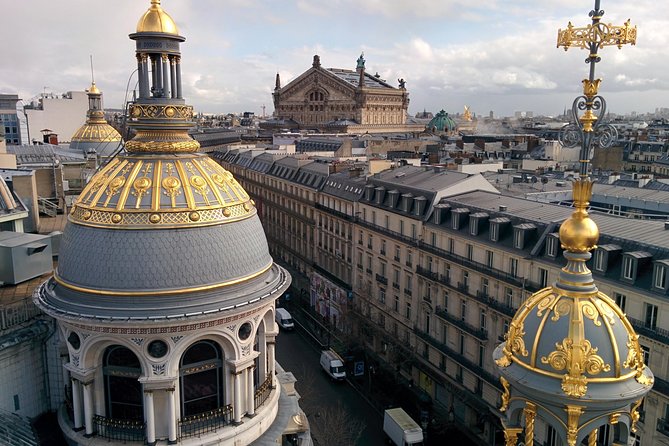
The walk concludes at Palais Garnier, the grand opera house on Place de l’Opéra. The building dates from the late 19th century and is one of Paris’s best-known architectural symbols.
The tour focuses on the exterior. Entry to the opera house is not included, so this experience does not replace a separate Palais Garnier visit. Still, ending here works well. After seeing the practical and commercial architecture of the station, brasserie, and department stores, you finish with a building designed to make a public statement.
Look at the stonework, monumental form, and ornate decoration. Your guide can connect the opera house with the wider architectural fashions of the period and explain how the district’s grand appearance developed.
The end point is Palais Garnier, Place de l’Opéra, near public transportation. That makes it easy to continue sightseeing, find a restaurant, or return to your hotel. Since there is no hotel pickup or drop-off, you should make your own way to Saint-Lazare at the beginning and arrange your onward route from Opéra.
What Solène adds to the experience
A private architecture walk depends heavily on the guide. Solène is repeatedly praised for being friendly, conversational, and well prepared. She is also described as the founder of A Journey in Paris, multilingual, and a Paris resident.
The strongest part of her approach appears to be her ability to make overlooked details feel worth your attention. She can point out architectural features in places you might otherwise treat as a station, store, café, or bank. That is more useful than a list of dates because it changes how you see the district after the tour ends.
You can also ask questions about food and less crowded places in Paris. That practical local guidance is a bonus, though you should book this tour primarily for the architecture. The walk is not designed as a broad food tour or a complete city orientation.
Is $180.23 per person fair?
At $180.23 per person, this is a premium two-hour experience. If you are comparing it with a large group walking tour, the price will look high. The value comes from the private guide, the small-group attention, the included brasserie drink, and the chance to see details and upper areas that you might not notice alone.
The price makes the most sense for a couple or small group splitting the cost of a private guide. It also suits people who care about architecture but do not want to spend half a day in a formal museum. You are paying for interpretation and access to a better way of looking, not for a long list of included admissions.
The short duration is both a strength and a limitation. Two hours fit neatly into an afternoon and leave room for other plans. But you should not expect a detailed survey of the Art Nouveau movement, a full Art Deco comparison, or entry to Palais Garnier. One participant wanted more general context about Art Nouveau, and that is a fair expectation to manage before booking.
Who should book this Paris architecture walk?
I would choose this tour if you enjoy buildings, interiors, urban design, or the small details that most people pass by. It is also a good first-day activity because it can help you get your bearings in the Opéra and Haussmann area.
Families and friends may appreciate the private setting, especially if one person is already interested in architecture and others need a more relaxed introduction. The brasserie stop and rooftop views give the walk enough variety to keep it from becoming a lecture.
You should think twice if you want extensive museum time, a long historical tour, or a guaranteed visit inside Palais Garnier. You should also allow for walking and standing in active public spaces. The tour is offered in English and uses a mobile ticket.
Free cancellation is available up to 24 hours before the 3 p.m. start time. Changes or cancellations made within 24 hours are not accepted for a refund, and the experience requires a minimum number of participants to operate.
Should you book it?
Book this tour if you want to see Paris through its working buildings rather than only its famous monuments. The combination of Saint-Lazare, Mollard, Galeries Lafayette, Printemps, rooftop views, and Palais Garnier gives you a lively two-hour route with plenty to look up at.
I would especially recommend it for a first visit, an architecture-minded couple, or anyone who likes personal guidance and lesser-noticed interiors. Just keep your expectations in line with the clock. This is a sharp, enjoyable introduction to Art Nouveau around Opéra, not an exhaustive study. If that sounds right, the private format and Solène’s local insight make the price easier to justify.
FAQ
Where does the tour begin?
It begins outside Gare Saint-Lazare at 13 Rue d’Amsterdam, 75008 Paris, France.
What time does the tour start?
The tour starts at 3 p.m.
Where does the tour end?
It ends at Palais Garnier, also called Opéra Garnier, at Place de l’Opéra in the 9th arrondissement.
How long does the tour last?
The experience lasts approximately two hours.
Is the tour private?
Yes. Only your group participates in the private tour.
Is the tour offered in English?
Yes. English is one of the offered languages.
Is a drink included?
Yes. One drink at a traditional brasserie is included.
Is entry to Palais Garnier included?
No. The tour views Palais Garnier from the exterior only, and admission inside is not included.
Is hotel pickup provided?
No. Hotel pickup and drop-off are not included.
What level of fitness is needed?
A moderate level of physical fitness is recommended.
Can the tour be canceled for a full refund?
Yes. You can cancel at least 24 hours before the start time for a full refund.
Just added in the world
- Wilmington History and Architecture Tour★ 4.8 · 18 reviews
- New Orleans : Garden District Architecture Walking tour★ 4.8 · 5 reviews
- Washington DC: Dupont Circle & Embassy Row Architecture Tour★ 5.0 · 6 reviews
- Washington, DC: Georgetown Architecture Walking Tour★ 5.0 · 8 reviews
- Vicenza: Palladian Architecture Private Walking Tour★ 3.3 · 3 reviews
- Walk & Discover KL’s Architectural and Heritage Gems★ 5.0 · 7 reviews
- Private Colonial Williamsburg Architectural Tour★ 5.0 · 5 reviews
- Unveiling Brno: History, Culture & Architectural Delights★ 5.0 · 2 reviews
Art Deco Tours, compared.

The Official Art Deco Walking Tour by The Miami Design Preservation League
Read our review →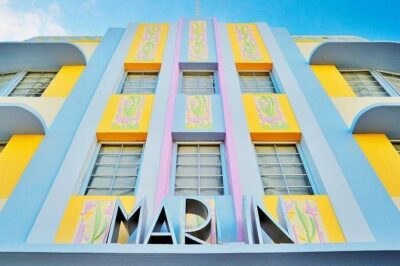
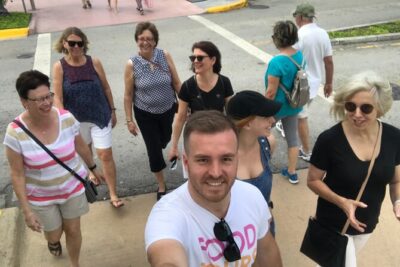
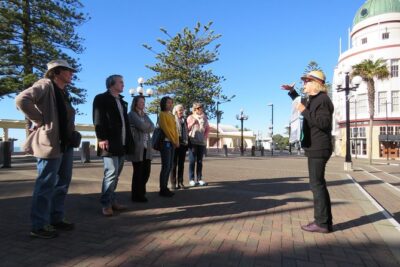
Guided 10am Morning Art Deco Walk From Napier Art Deco Trust
Read our review →
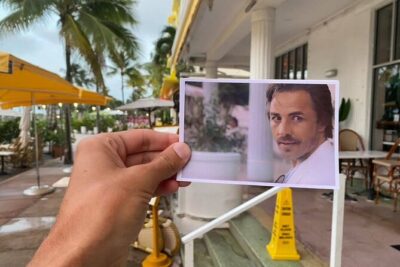
Award-winning Art Deco & Neon Lights Walking Tour in Miami Beach
Read our review →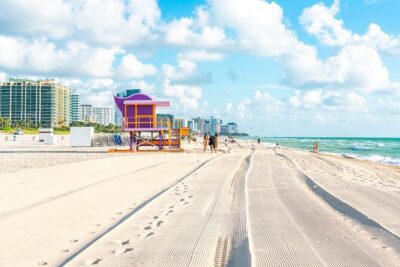
Browse the lists this tour appears in