
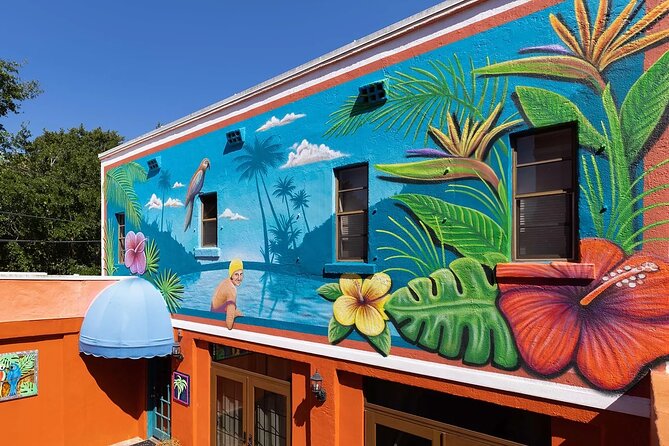
REVIEW · ARCHITECTURE TOURS
Sarasota Architecture Tour
Sarasota rewards anyone who looks up. This 90-minute architecture tour reveals a side of the city many beach-focused visitors miss, from the 1938 Municipal Auditorium to sleek Mid-Century Modern designs. I like the clear mix of architectural styles, and I like that the tour connects buildings to the people and civic ambitions behind them. At $80.12 per person, it is not a cheap sightseeing ride, so you should have a real interest in design, local history, or Sarasota beyond its waterfront.
The tour also earns praise for strong guiding. Ed is specifically singled out for bringing overlooked buildings to life and explaining Sarasota’s Mid-Century Modern movement in a way that fills in the gaps, even for people who already know the name Paul Rudolph. The main drawback is the short format: 90 minutes gives you a useful introduction, but not time for a slow architectural study or extended interior visits.
Key Points Before You Book
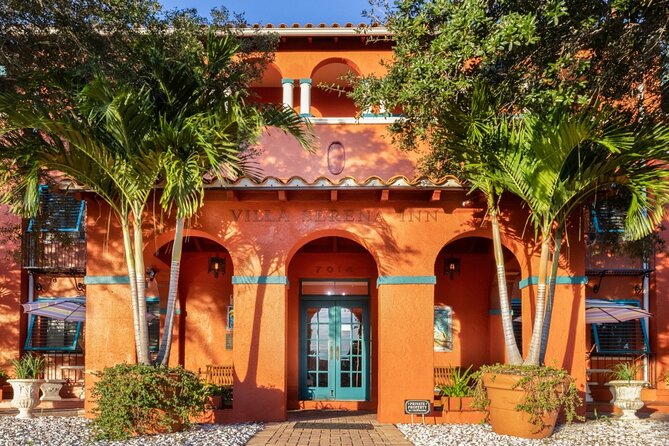
- Three major design traditions in 90 minutes: Art Deco, Mediterranean Revival, and Sarasota’s Mid-Century Modern school all appear on the route.
- The Blue Pagoda is a highlight: Victor Lundy designed the 1956 structure with a blue glazed tile roof inspired by the waters of Sarasota Bay.
- Ed receives special praise: His explanations connect buildings, architects, the Ringlings, and Sarasota’s growth into a major design center.
- The tour begins at 10:30 am: You meet at Discover Sarasota Tours, 1826 4th Street, and return there at the end.
- Small enough to stay manageable: The maximum group size is 30 people, and the tour is offered in English.
- Book ahead: It is often reserved about 38 days before departure and sells out weekly.
Why Sarasota Architecture Deserves Your Morning

Sarasota is easy to read as a resort town. Look closer, though, and the city becomes a compact lesson in changing American design.
The architecture here reflects several different eras and ideas. Art Deco brought streamlined decoration and modern confidence in the early 20th century. Mediterranean Revival looked toward Spanish and Italian forms during Sarasota’s development in the 1920s. Later, architects working in the Sarasota School of Architecture favored light, practical structures that fit Florida’s climate and open setting.
I like this sequence because it gives the tour a story rather than a loose parade of buildings. You are not simply asked to admire a facade. You learn how Sarasota changed, who helped shape it, and why local architecture became important far beyond Florida.
The experience lasts about an hour and a half, so you should expect an overview rather than a specialist seminar. That is a good fit if you want the city to make more sense during a short visit. If you are already an architecture expert, you may wish the schedule allowed more time at each building.
A few more architecture tours in the USA worth a look
- Chicago Architecture River Cruise
★ 5.0 · 15,756 reviews - Chicago River 90-Minute Architecture Tour
★ 4.5 · 9,629 reviews - Chicago River: 1.5-Hour Guided Architecture Cruise
★ 4.8 · 8,046 reviews
Starting at the Municipal Auditorium and Chidsey Library
The tour begins at Discover Sarasota Tours at 1826 4th Street. The start time is 10:30 am, a useful hour for fitting the experience into a morning without forcing an unusually early arrival.
One of the first major subjects is Art Deco. The style first appeared in France during the 1910s and became especially influential through the 1930s, shaping architecture, fashion, and decorative design. In Sarasota, the Sarasota Municipal Auditorium offers a strong example of that period.
The auditorium was built in 1938. That date matters because it places the building in the mature Art Deco era, when public architecture often aimed to look modern, efficient, and optimistic. You will learn about both its design and its civic role, which is more useful than treating the building as a pretty exterior with no context.
The Art Deco Chidsey Library adds another layer. It opened in May 1941 as Sarasota’s first public library building. That detail gives the stop a human scale. A library is not only a design object. It reflects what a city wanted to provide for its residents and how public institutions were becoming part of everyday life.
I especially like the pairing of the auditorium and library. One is a major civic gathering place, while the other served the quieter needs of reading and public access. Together, they show how Art Deco appeared in different types of buildings.
A possible limitation is that the tour information does not promise interior access. You should expect to learn about the buildings from the outside and through the guide’s explanation rather than assume you will walk through every space.
Burns Court and Sarasota’s Mediterranean Revival Style
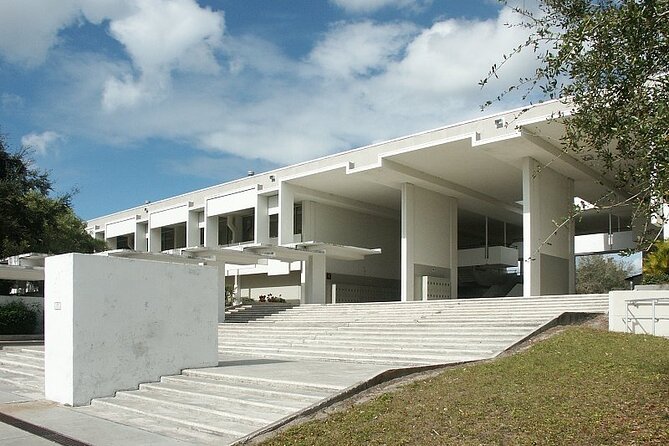
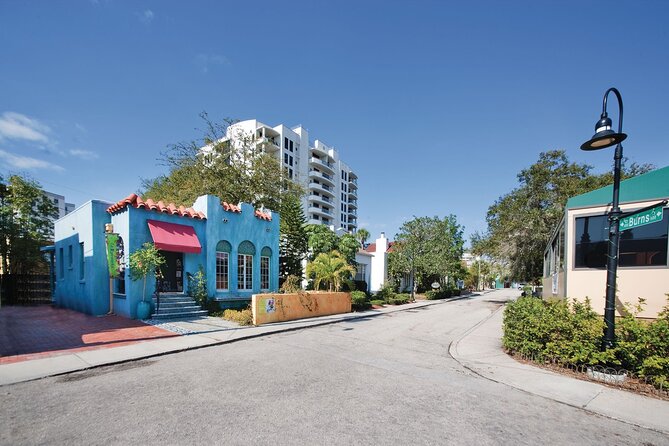
The Burns Court Historic District shifts the visual mood. Here, houses and some commercial buildings show the Mediterranean Revival style associated with Sarasota’s development in the mid-1920s.
This style drew on Spanish and Italian architectural ideas. In Sarasota, it helped create a resort image that felt tied to the Mediterranean world. The buildings are important not only because of their arches, stucco surfaces, and period details, but because they reveal how developers imagined the city in the 1920s.
You will hear about the history and design of the Burns Court development. That makes this part more than a quick pass through attractive homes. The point is to understand the neighborhood as a planned place with a particular identity.
The Burns Court stop also connects to the influence of the Ringlings. The family’s role in Sarasota helped shape the city’s cultural reputation and its taste for Mediterranean-inspired design. Ed is praised for explaining that connection, along with the transition from the 1920s and 1930s into later architectural movements.
For me, this is one of the tour’s most useful contrasts. Art Deco looks toward modernity and machine-age design, while Mediterranean Revival uses older European references to create a sense of place. Seeing both in one compact route helps you recognize the difference for the rest of your visit.
The practical caution is simple: this is a neighborhood stop, not a house museum visit. You will gain design and development context, but the experience does not indicate that private homes are open for inspection.
The Sarasota Art Center and the Mid-Century Modern Shift
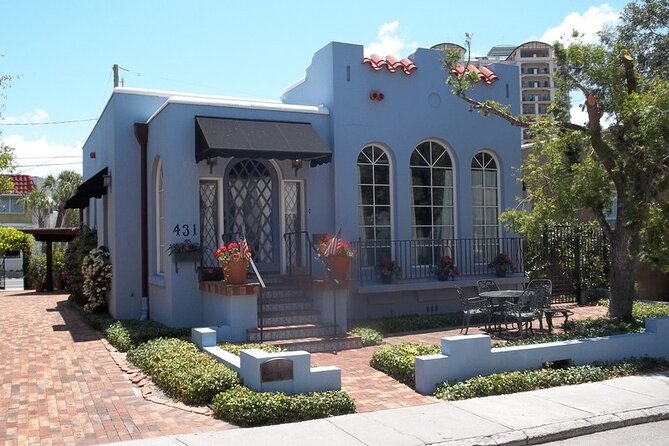
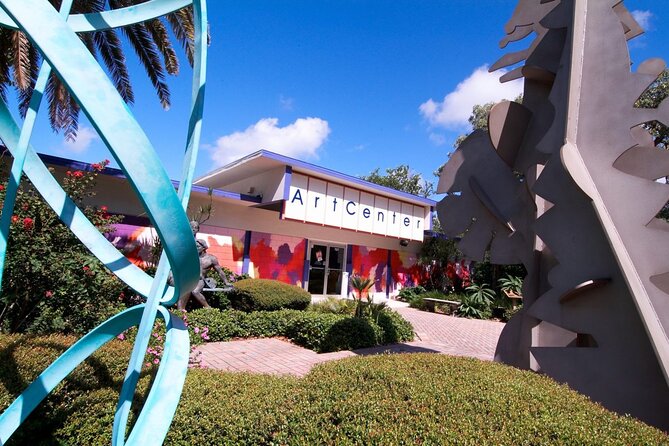
The Sarasota Art Center introduces the Sarasota School of Architecture, a local movement within Mid-Century Modern design. This is the part of the tour most likely to appeal to anyone who enjoys clean lines, structural clarity, and buildings that respond to their setting.
Sarasota became a hotbed of Mid-Century Modern design, and the tour explains how that happened. The story includes architects such as Paul Rudolph, whose name may already be familiar to architecture fans. Ed’s explanations are praised for filling in the missing pieces around Rudolph and the wider movement.
The value here is the connection between individual buildings and a broader design culture. You are not only looking at a particular roofline or arrangement of windows. You are learning why Sarasota attracted architects who wanted to rethink how buildings worked in Florida.
The Sarasota Art Center represents that movement. It is an important stop because it gives you a direct example of the local school rather than only a general lecture. The tour should help you notice the qualities that make Mid-Century Modern architecture different from the earlier Art Deco and Mediterranean Revival buildings.
I would pay close attention here if you are visiting Sarasota for its design reputation. The city’s architecture is not just a collection of isolated stylish buildings. The tour shows how several architects and local institutions helped create a recognizable regional approach.
Same city, a different building to stand in front of:
- Chicago Architecture Center River Cruise aboard First Lady
★ 5.0 · 5,536 reviews - Chicago: Architecture River Cruise Skip-the-Ticket Line
★ 4.8 · 4,325 reviews - Chicago River 45-Minute Architecture Tour from Magnificent Mile
★ 4.5 · 2,924 reviews - Chicago Lake and River Architecture Tour
★ 4.5 · 2,308 reviews
The Blue Pagoda and Victor Lundy’s Bayfront Idea
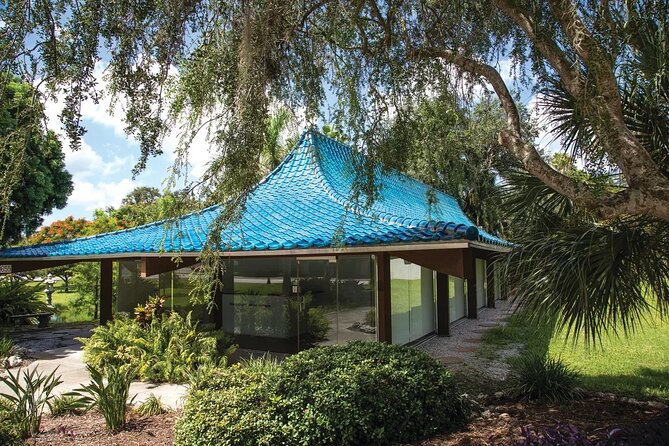
The Blue Pagoda is likely the most memorable stop for many people. Designed by Victor Lundy, a founding member of the Sarasota School of Architecture, it dates to 1956 and was built for the Greater Sarasota Chamber of Commerce.
The building takes inspiration from Japanese gardens. Its most distinctive feature is the blue glazed tile roof. Lundy wanted those tiles to reflect the nearby blue waters of Sarasota Bay, creating a direct visual link between the structure and its setting.
That idea gives the building more personality than a simple label such as Mid-Century Modern. The design is modern, but it also looks to Japanese garden traditions and responds to Sarasota’s waterfront character. You get a sense of an architect working with several influences at once.
The Blue Pagoda is also a good reminder that Mid-Century Modern architecture was not always plain or boxlike. The movement could include color, symbolism, cultural references, and carefully chosen materials. This structure sounds particularly rewarding to see in person because its roof is such a strong visual feature.
The tour description places it near the bayfront, but it does not promise a long stop or interior entry. You should think of it as a focused architectural viewing point, supported by the guide’s explanation of Lundy and the building’s purpose.
The 1959 Center for Architecture
The final major stop is the Center for Architecture in Sarasota. Commissioned in 1959, it provides another example of Mid-Century Modern design.
You will learn about the building’s construction and design. That makes it a fitting final stop because the tour can return to the questions raised at the Sarasota Art Center and Blue Pagoda: How did local architects use modern materials? How did they respond to Florida’s climate and surroundings? What made Sarasota different from other American cities adopting Mid-Century Modern ideas?
The Center for Architecture also gives the tour a clear endpoint. You have moved from the Art Deco public buildings of the 1930s and early 1940s, through Mediterranean Revival development, and into the modern architecture of the 1950s.
I appreciate that the route does not focus on only one famous architect. You get a broader picture of Sarasota’s design culture, with civic buildings, residential development, cultural centers, and commercial architecture all contributing to the story.
Again, the 90-minute limit matters. You will learn what to notice, but you may not have time to linger at every detail. If you enjoy photographing architecture, you may find yourself wishing for a longer version of the tour.
What the Guide Adds to the Buildings
A good architecture tour depends heavily on explanation. Buildings can be easy to overlook when you do not know their dates, designers, or original purpose.
The strongest praise for this experience focuses on the guide’s storytelling and command of local history. Ed is specifically noted for explaining buildings that people had passed for years without really seeing. That is a valuable skill. The point is not only to identify a style, but to train your eye.
Ed also connects Sarasota’s architecture to the Ringlings and to Paul Rudolph. Those links make the tour more useful than a series of disconnected facts. You get people, institutions, and design movements in the same story.
The staff is also described as friendly and engaging. That matters on a short tour, since a dry presentation can make even excellent architecture feel remote. The available feedback gives strong support to the quality of the guiding, with a 4.9 rating from 41 reviews and 100 percent recommending the experience.
Still, guide quality can vary by departure. Ed is praised by name, but you should not assume he will lead every scheduled tour. The provider is Discover Sarasota Tours, and the tour is offered in English.
Price, Timing, and Who Will Get the Most From It
At $80.12 per person, this is a premium short tour. You are paying for a focused route, an architectural subject that is easy to miss on your own, and interpretation that connects Sarasota’s buildings to larger design movements.
I think the price makes the most sense if you are genuinely interested in architecture or local history. It is also useful if you have limited time and want an efficient introduction before exploring Sarasota independently. The tour can help you identify buildings and styles that might otherwise pass unnoticed.
The value is weaker if you mainly want scenic sightseeing or a general city orientation. The route is specialized. You should not book it expecting a broad tour of every Sarasota attraction.
The group maximum is 30 people. That is not an intimate private outing, but it places a limit on the size and should keep the presentation more manageable than a large open-ended city tour. Most people age 10 and older can participate, while children under 10 are not allowed.
Service animals are welcome, and the meeting point is near public transportation. Confirmation arrives when you book. Free cancellation is available if you cancel at least 24 hours before the 10:30 am start time. Changes or cancellations inside that window are not refunded.
The tour is often booked 38 days ahead and sells out weekly. I would reserve early, especially if your Sarasota dates are fixed.
Should You Book the Sarasota Architecture Tour?
Book this tour if you want to understand why Sarasota looks the way it does. The strongest reasons are the range of styles, the Blue Pagoda, the Art Deco civic buildings, and the guide’s ability to make familiar streets feel newly visible.
I would recommend it especially to architecture fans, design students, curious first-time visitors, and anyone who has already seen Sarasota’s beaches and wants a more thoughtful view of the city. The 90-minute length also works well when you want a compact morning activity.
Skip it if you want a long walking tour, extensive interior access, or a general sightseeing route. At $80.12, the experience needs to match your interests. For the right person, though, it offers a sharp and memorable introduction to Sarasota’s built environment, with just enough history to make the buildings matter.
FAQ
Where does the Sarasota Architecture Tour begin?
The tour begins at Discover Sarasota Tours, 1826 4th Street, Sarasota, Florida 34236.
What time does the tour start?
The scheduled start time is 10:30 am.
How long does the tour last?
The experience lasts approximately 1 hour and 30 minutes.
Where does the tour end?
The activity ends back at the meeting point at Discover Sarasota Tours.
How much does the tour cost?
The listed price is $80.12 per person.
What architectural styles are covered?
The tour covers Art Deco, Mediterranean Revival, and Sarasota’s Mid-Century Modern architectural movement.
Is the tour offered in English?
Yes. The tour is offered in English.
Are children allowed to join?
Most people age 10 and older can participate. Children under 10 are not allowed.
What is the cancellation policy?
You can cancel for a full refund if you cancel at least 24 hours before the experience start time. Cancellations and changes made less than 24 hours before the start are not refunded.
Just added in the USA
- Wilmington History and Architecture Tour★ 4.8 · 18 reviews
- New Orleans : Garden District Architecture Walking tour★ 4.8 · 5 reviews
- Washington DC: Dupont Circle & Embassy Row Architecture Tour★ 5.0 · 6 reviews
- Washington, DC: Georgetown Architecture Walking Tour★ 5.0 · 8 reviews
- Private Colonial Williamsburg Architectural Tour★ 5.0 · 5 reviews
- Tulsa: Art Deco Walking Tour of Tulsa★ 5.0 · 8 reviews
- Monuments and Memorials Architectural Walking Tour★ 5.0 · 17 reviews
- Castle to Capitol: Museums of the National Mall Architecture Tour★ 4.5 · 9 reviews
Architecture Tours, compared.
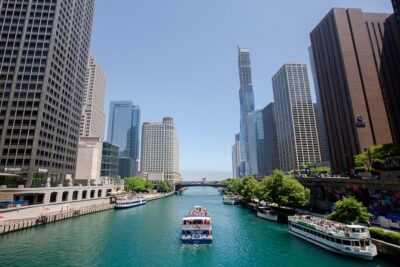
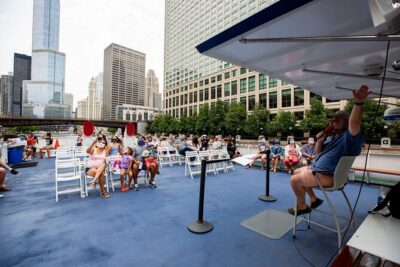

Chicago River: 1.5-Hour Guided Architecture Cruise
Read our review →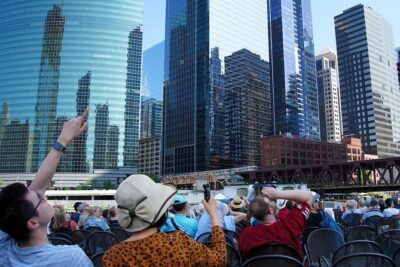
Chicago Architecture Center River Cruise aboard First Lady
Read our review →
Architecture River Cruise Skip-the-Ticket Line
Read our review →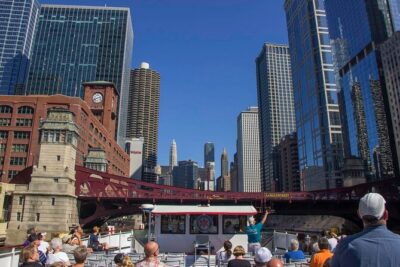
Chicago River 45-Minute Architecture Tour from Magnificent Mile
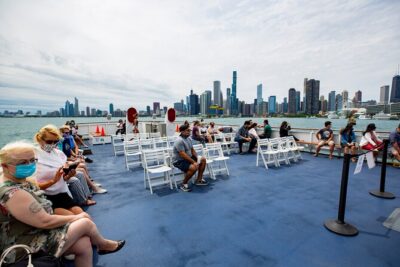
Read our review →
Browse the lists this tour appears in