
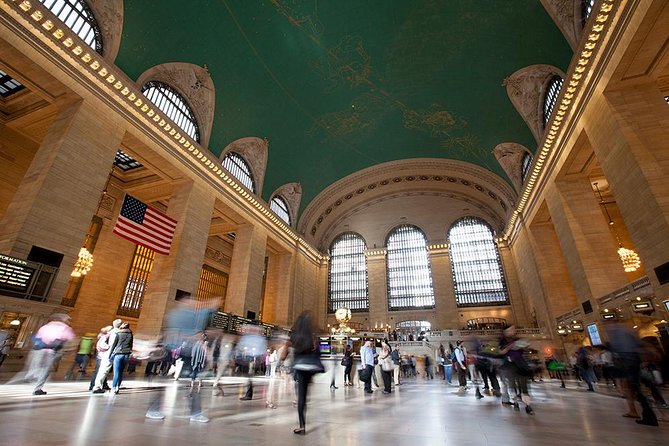
REVIEW · NEW YORK CITY ARCHITECTURE TOURS
Manhattan Architecture Photography Tour
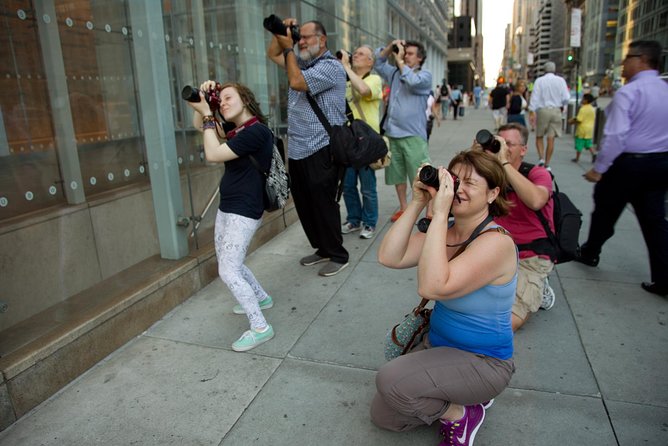
Great buildings reward a second look. This three-hour Manhattan photography tour pairs major New York sights with practical instruction from a professional photographer, helping you find stronger angles, manage difficult light, and make ordinary snapshots more deliberate. The small group is limited to eight people, so you should have room to ask questions.
I like the mix of hands-on camera tuition and classic Manhattan locations. I also like the route itself: Grand Central Terminal, the Chrysler Building, Times Square, the New York Public Library, and Bryant Park give you several very different subjects in a short time.
The main consideration is pace. Five stops in about three hours means you will walk, set up quickly, and move on before every possible composition has been explored. You need a moderate level of fitness, and a digital camera is not provided.
Key points before you book
- Grand Central opens the tour with dramatic interior space, a useful setting for learning composition, lines, and perspective.
- Zim is praised for patient, adaptable teaching, making the tour suitable for beginners as well as more experienced photographers.
- Times Square presents a real technical challenge, with bright signs, motion, crowds, and changing light competing for your attention.
- Bryant Park gives you a strong Empire State Building viewpoint, adding a classic skyline image to the architectural route.
- The group is capped at eight people, which should make personal feedback easier than on a large walking tour.
- The price is $125 per person, a fairer deal for anyone who values instruction, not just a guided stroll through familiar sights.
What the three-hour route is really designed to teach
This is not simply a tour of famous addresses. It is a short photo workshop built around New York’s visual problems: tall buildings that are hard to frame, interiors with tricky light, signs that can overwhelm a picture, and crowded streets where timing matters.
You will begin near Pershing Square at 90 East 42nd Street. The route then works through Midtown landmarks, ending away from the starting point. The exact finishing details are not specified, so plan your schedule with some flexibility after the tour.
The group size matters here. With no more than eight people, the guide can look at your camera settings, suggest a different viewpoint, and respond to your own interests. That is especially useful if you are unsure about your camera’s abilities. One participant learned how to use functions that had been sitting idle, along with ways to remove empty or unhelpful space from a frame.
You should expect walking between stops, rather than a series of long indoor lessons. The tour suits someone who wants to learn by making pictures on the spot. It is less suited to anyone seeking a slow architectural lecture or a private session at each building.
More photo walks in New York City:
- Saint Augustine Evening Architectural Photo Tour
★ 5.0 · 15 reviews - Photography Tour Singapore (Architecture, Street, Nightscape, Sunset, Sunrise)
★ 5.0 · 2 reviews - Berlin Architecture/River Spree Full Day Photography Tour
★ 5.0 · 2 reviews
Grand Central Terminal: start with New York’s grandest interior
Grand Central Terminal is the strongest opening stop because it gives you a large, controlled subject with plenty to study. The tour allows about 20 minutes here, and admission is included.
The main lesson is likely to be composition. The terminal’s scale encourages you to look beyond a quick shot of the central information booth. You can work with symmetry, repeating lines, open space, and the relationship between people and architecture. The wide interior also helps you see why a camera can record a scene differently from your eyes.
For a new photographer, this is a useful place to get comfortable asking questions. You can learn how to avoid a flat, empty composition and how to use the building’s structure to guide the eye. More experienced photographers may appreciate the chance to refine framing rather than simply collect a famous postcard image.
Twenty minutes is enough for a focused lesson, but not enough to cover every corner. You will need to listen, try a few compositions, and move on. That limitation is part of the format: the guide is helping you build repeatable habits, not promising a complete photographic study of Grand Central.
Chrysler Building: finding a fresh angle in ten minutes
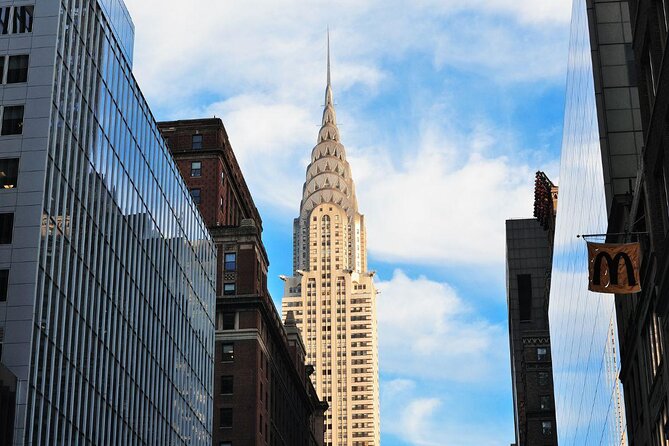
The Chrysler Building stop lasts about ten minutes and focuses on viewpoints. Admission is free, and the short visit reflects the purpose of this part of the route: learning how position changes a familiar subject.
The building is one of Manhattan’s most recognizable architectural forms, which creates a problem. A standard straight-up photograph may be attractive, but it can also look like every other quick tourist image. A professional guide can help you consider angle, distance, surrounding structures, and the amount of sky or street you leave in the frame.
Ten minutes is brief, so you should arrive ready to work. This is not the place for a long technical explanation. It is a chance to make a few deliberate choices, compare them, and see how a small change in position affects the result.
If you enjoy architectural photography, this may be one of the most useful stops because it deals directly with originality. You are not just recording the building. You are deciding how to present it.
Times Square: managing signs, movement, and hard light
Times Square receives about 15 minutes, with admission included in the tour. It is a compact lesson in handling visual overload.
The signs are bright, the streets are active, and the scene changes constantly. That makes Times Square harder to photograph well than it first appears. A phone snapshot can easily become a jumble of glowing screens, partial people, and dark corners. Your guide can help you decide what belongs in the frame and what should be left out.
This is where the advice about eliminating boring or unnecessary space becomes especially practical. The goal is not to include every sign. A stronger image may come from choosing one building, one angle, or one slice of movement and giving it room to work.
Fifteen minutes will not allow for many experiments, particularly if the area is crowded. Still, the stop gives you a clear exercise in timing and selection. You will need to react quickly, and that can improve your confidence in other busy city settings.
The tour also includes the area around Broadway and the Pershing Square Signature Center, a complex of three theaters just off Broadway. That adds another urban subject to the route and helps connect the major sights with the city’s theater district.
A few more architecture tours in New York City worth a look
- Manhattan Architecture Yacht Cruise
★ 5.0 · 1,395 reviews - NYC: Around Manhattan Official NYC Architecture Cruise
★ 4.8 · 402 reviews - Art Deco and Architecture Midtown Landmarks Tour
★ 5.0 · 142 reviews - Tribeca Architecture And History Walking Tour
★ 5.0 · 141 reviews
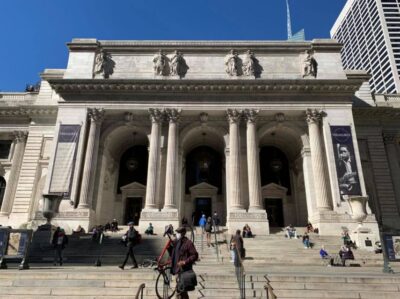
New York Public Library: exterior details and grand scale
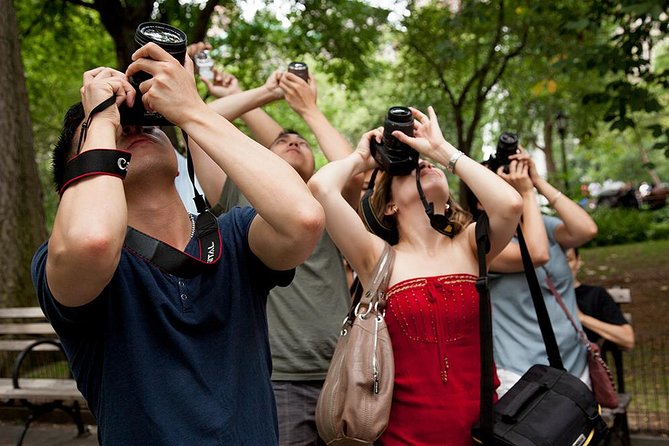
The New York Public Library gets about 15 minutes, with admission included. The focus is on photographing the exterior, not on an extended visit inside.
That distinction matters. You should think of this stop as an architectural study rather than a library tour. The exterior gives you formal lines, a powerful facade, and a setting where details can compete with the whole building. Your guide can help you decide when to step back for a broader composition and when to isolate a smaller feature.
The short timing again favors efficiency. You may have enough time to make several frames from different positions, but not to wait for every possible light condition. Since the tour requires good weather, conditions can affect how successful this stop feels. Overcast skies may soften harsh contrast, while brighter conditions can make the facade and surrounding street more demanding to expose correctly.
For you, the value is in learning to photograph a building with both scale and detail. That skill transfers well to other city landmarks.
Bryant Park: a classic view of the Empire State Building
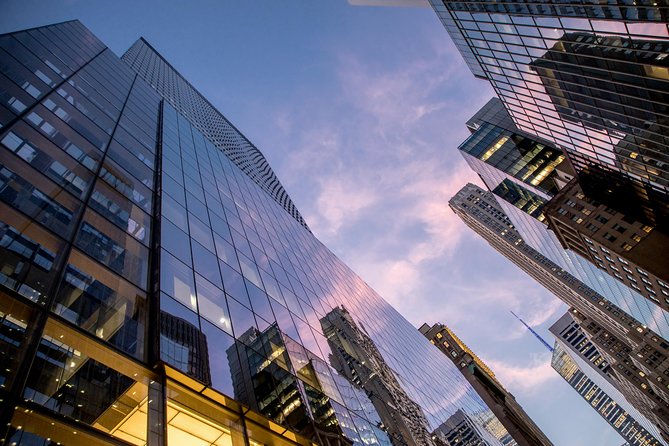
Bryant Park is scheduled for about 15 minutes, and entry is included. This is the route’s clearest opportunity to work on a classic New York skyline composition, with the Empire State Building as the main subject.
The park gives you a different setting from the enclosed terminal and dense streets of Times Square. You can compare the building against open space, greenery, paths, and the surrounding city blocks. That contrast helps you see how foreground and background affect a landmark image.
The guide can also help you avoid a picture where the Empire State Building simply sits in the center with no visual support. A good architectural photograph often depends on what you place around the main subject. Bryant Park gives you options, even during a short stop.
There is a practical benefit to ending around this part of Midtown. You finish with a recognizable image and a chance to review what you have learned about framing, angles, and space. The tour ends at a different location from the meeting point, though the supplied details do not specify the exact final address.
Why the guide matters more than the landmark list
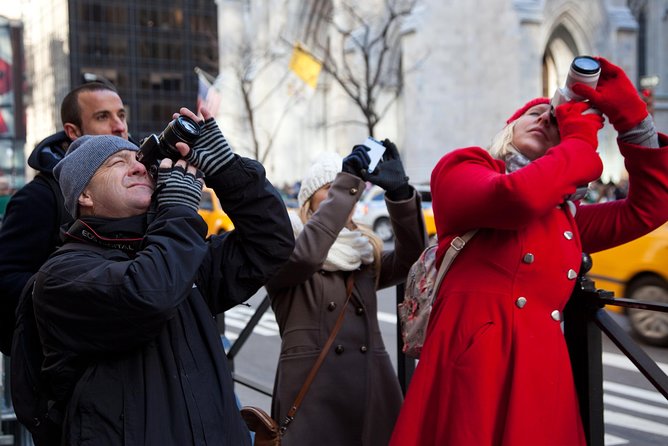
You can reach all these sights on your own. The reason to pay for this tour is the photographer guiding your decisions.
Zim receives especially warm praise for being patient, attentive, and able to adjust suggestions to your skill level and interests. That is important because a beginner may need help with basic camera controls, while a more experienced photographer may want advice on composition or stronger angles. The same guide can support both if the group remains small.
Another useful part of the experience is the local perspective. Zim has also been praised for sharing interesting New York facts along the way, adding context without turning the outing into a standard sightseeing lecture.
The teaching style sounds practical rather than formal. You should expect to learn by trying, correcting, and trying again. One participant described coming away with a better understanding of unused camera functions and ways to cut boring space from an image. Those are useful lessons because they continue helping you after the tour ends.
Is $125 good value for three hours?
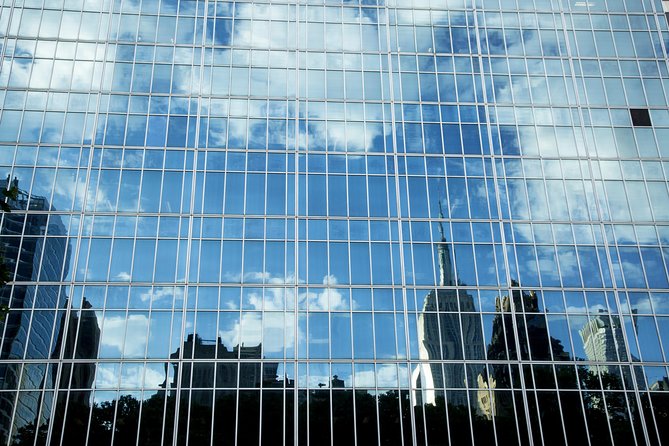
At $125 per person, this is not a cheap way to see Midtown. You are paying more than you would for an ordinary self-guided walk because the professional photographer is the central service.
The price makes better sense if you already own a camera and want to improve how you use it. You receive about three hours of instruction, a route through several major sites, and a small group capped at eight people. The value is strongest when you ask questions and actively apply the advice instead of simply following the guide.
It is less compelling if you only want sightseeing. You can visit Grand Central, Times Square, Bryant Park, and the library without booking a photography class. The tour earns its price through personal feedback, not exclusive access to the buildings.
Remember that the digital camera is not included. Bring your own equipment, and make sure you are comfortable carrying it while walking. The activity is offered in English.
Who should book this Manhattan photo tour?
This tour is a good fit for several types of people:
- Beginners who want patient help with camera functions and basic composition.
- Intermediate photographers looking for better angles and more disciplined framing.
- Visitors with limited time who want a focused Midtown route rather than a full-day workshop.
- Solo photographers who would benefit from direct feedback and a small group.
- Repeat New York visitors who want to see familiar buildings through a more deliberate photographic approach.
You should think twice if you dislike walking, need a slow pace, or want extensive time at each landmark. The route covers several stops in three hours, and one direct comment from a participant is worth taking seriously: be prepared for walking.
Children must be accompanied by an adult. Service animals are allowed, and the meeting point is near public transportation. Confirmation is provided when you book.
Weather, cancellations, and planning your day
The tour requires good weather. If poor conditions force cancellation, you can choose another date or receive a full refund.
You can cancel for a full refund up to 24 hours before the start time. Changes or cancellations made less than 24 hours ahead are not accepted for a refund, and the cut-off uses New York local time.
Because the route ends somewhere different from the Pershing Square meeting point, avoid scheduling a tight appointment immediately afterward. Allow extra time to orient yourself before your next plan.
Should you book the Manhattan Architecture Photography Tour?
Book it if you want more than a checklist of famous buildings. The best reason to choose this tour is the chance to learn how to make stronger images in real New York conditions, with a guide who can adjust advice to your ability.
I especially like the combination of Grand Central’s interior scale, Times Square’s difficult light, and Bryant Park’s Empire State Building view. Those stops give you different photographic problems in one compact outing. Zim’s patient, flexible teaching is another strong point.
Skip it if your main goal is a relaxed sightseeing walk or if $125 feels too high for three hours. You will need your own camera, a moderate level of fitness, and a willingness to keep moving. For photographers who want useful skills they can apply long after Midtown, though, this is a focused and well-priced lesson.
FAQ
How long does the Manhattan Architecture Photography Tour last?
The tour lasts approximately three hours.
How much does the tour cost?
The price is $125 per person.
How many people can join the tour?
The group has a maximum of eight participants.
Where does the tour begin?
It begins at Pershing Square, 90 East 42nd Street, New York, NY 10017.
Where does the tour end?
The activity ends at a different location from the meeting point. The specific final address is not provided.
Is a digital camera included?
No. A digital camera is not included, so you need to bring your own.
What happens if bad weather cancels the tour?
You can choose a different date or receive a full refund if poor weather causes the cancellation.
Just added in New York City
- Race to the Sky: NYC Architecture Tour With SUMMIT One Ticket★ 5.0 · 3 reviews
- New York Soho and the Village Art and Architecture Tour★ 5.0 · 4 reviews
- Chelsea and the High Line NYC Architecture Walking Tour★ 5.0 · 6 reviews
- Private Flatiron Food, History and Architecture Tour★ 5.0 · 8 reviews
- New York Upper West Side Art and Architecture Tour★ 5.0 · 4 reviews
- New York Upper East Side Art and Architecture Tour★ 5.0 · 3 reviews
- New York Midtown South Art and Architecture Tour★ 5.0 · 2 reviews
- Custom Private New York Architecture, Art and City Tour★ 5.0 · 3 reviews
New York City Architecture Tours, compared.


Around Manhattan Official NYC Architecture Cruise
Read our review →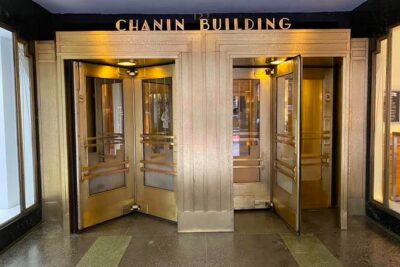
Art Deco and Architecture Midtown Landmarks Tour
Read our review →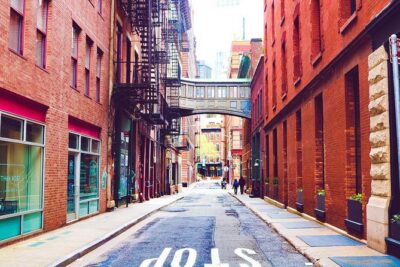
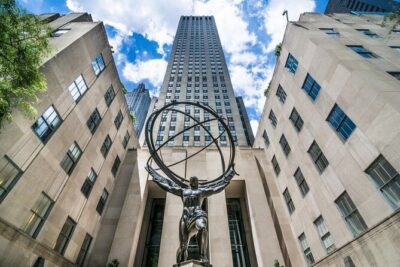
New York City The Official Rockefeller Center Tour
Read our review →
Browse the lists this tour appears in