
REVIEW · ARCHITECTURE TOURS
Explore the legacy of artist, ecologist, architect, visionary
Colour changes how you see Whangarei. The Hundertwasser Art Centre brings together the largest collection of Friedensreich Hundertwasser’s work outside Vienna and the world’s first dedicated Māori public art gallery. I like the building’s playful forms, bright tiles, and planted roof, and I like that the visit connects art with practical ideas about nature. The main drawback is simple: visitors expecting a large museum may find the indoor collection fairly limited for the admission price.
You can spend one to three hours here, or stay longer because your ticket allows all-day access. I also like the choice between exploring alone and paying extra for a one-hour interactive guided tour. The centre sits by Whangarei’s Town Basin, so it fits easily into a walk around the riverfront, though some people may find the short documentary and interior architecture less impressive than the building’s exterior.
Key points to know before you go
- Hundertwasser’s New Zealand connection: See works from his years in New Zealand, from 1973 to 2000, alongside examples of his ecological ideas.
- Two art experiences in one: The building houses Hundertwasser displays and the changing exhibitions of Wairau Māori Art Gallery.
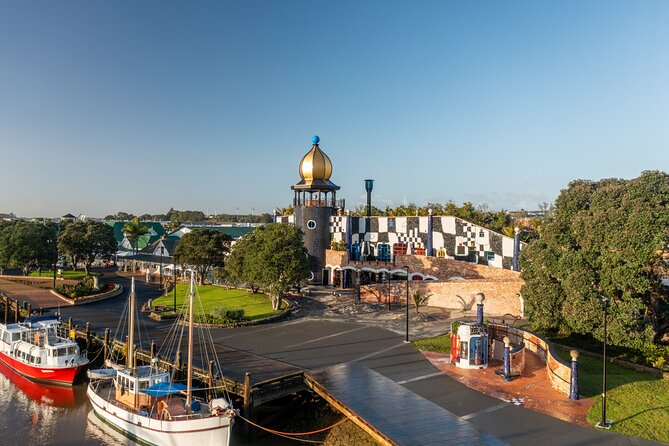
- The roof is part of the visit: Walk onto the Afforested Roof for 360-degree views, planted spaces, and the golden cupola.
- Self-guided or guided: Admission covers independent exploration, while the one-hour interactive tour costs extra.
- Good location for a half-day plan: The centre is beside the Town Basin, close to riverside walks, restaurants, and public transport.
- A compact visit with all-day access: You can see the main displays in about one to three hours, then return to favourite areas.
Why Hundertwasser belongs in Whangarei
Friedensreich Hundertwasser was more than a painter. He worked as an architect and ecologist, and his ideas centred on living with nature rather than forcing nature out of daily life. That makes this centre different from a standard art museum. You are not only looking at colourful pictures. You are also seeing how an artist imagined buildings, trees, roofs, windows, and people sharing space.
Hundertwasser spent part of his life in New Zealand, and the exhibition Hundertwasser in New Zealand 1973-2000 gives the visit a local focus. His work is often instantly recognisable: curved lines, uneven surfaces, strong colours, and a dislike of sterile straight edges. Some of the art feels playful and childlike. Other pieces carry a clear environmental warning.
I find that mix useful because you do not need a background in modern art to get something from the displays. You can respond to the colours and shapes first, then consider the bigger ideas behind them. His slogan, You are a guest of Nature, so behave, remains easy to understand and fits the centre’s design.
A few more architecture tours in the world worth a look
- Chicago Architecture River Cruise
★ 5.0 · 15,756 reviews - Chicago River 90-Minute Architecture Tour
★ 4.5 · 9,629 reviews - Chicago River: 1.5-Hour Guided Architecture Cruise
★ 4.8 · 8,046 reviews
The building is the first exhibit
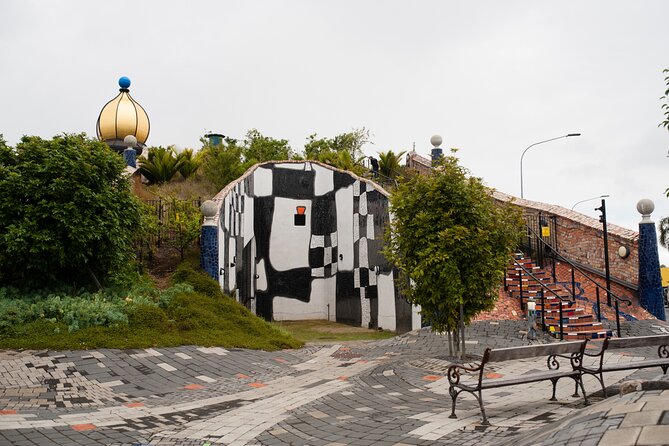
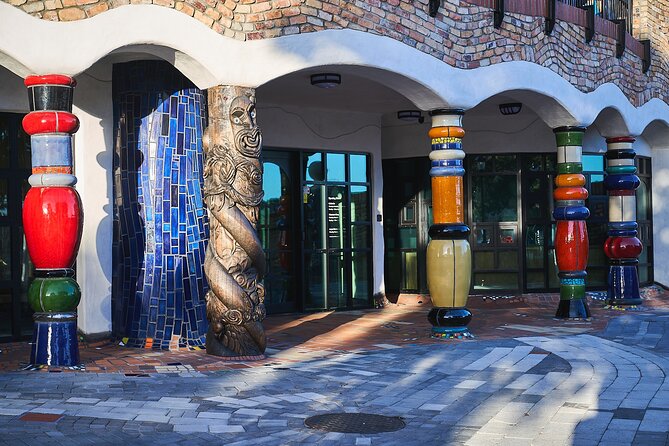
Before you enter, take time to look at the building from outside. Its quirky forms, bright tiles, curved brickwork, unusual railings, and planted roof announce the artist’s style before you see a single gallery display.
This is one of the centre’s strongest features. The exterior has the sort of visual detail that rewards a slow walk around the frontage. Look up, look along the walls, and notice how the building avoids the plain box shape used by so many modern museums. You may find yourself taking as many photographs of the architecture as of the art.
The outside also helps explain Hundertwasser’s dislike of rigid design. The building feels irregular and cheerful. It has a handmade quality, even though it serves a modern public purpose. For many visitors, this architectural experience is the highlight of the whole visit.
The interior is more restrained. It contains the exhibition rooms, models, film theatre, shop, and access to the roof. If your main reason for coming is architecture, set your expectations carefully. The building’s outside is more memorable than the indoor spaces, and the models do not replace the experience of seeing one of Hundertwasser’s large buildings in person.
Inside the Hundertwasser collection
The main exhibition gives you the chance to see a substantial group of Hundertwasser works connected with New Zealand. You can look at his art while also learning about his approach to materials, buildings, and environmental responsibility.
I would allow enough time to read the information panels rather than simply passing through. The centre works best when you connect the paintings and applied art with the building around you. A colourful image may seem like a simple celebration of shape, but the surrounding material explains how Hundertwasser linked beauty with ecological action.
A small film theatre shows documentaries on a loop. This can add useful background, especially if you know little about the artist. Still, the film may feel basic. The available material does not always provide a strong narrative, so I would not plan your visit around the cinema alone. Treat it as an optional pause between gallery rooms.
The collection is not enormous. That matters at the listed price of $18.62 per person. The ticket gives you all-day access and includes both art spaces, so the value improves if you take your time, visit the roof, watch part of the film, browse the shop, and combine the stop with the Town Basin. If you race through the interior in 30 minutes, the price may feel high.
Wairau Māori Art Gallery adds a needed second voice
The Wairau Māori Art Gallery is not simply an extra room attached to the Hundertwasser displays. It has its own purpose and presents changing exhibitions by contemporary Māori artists.
This gallery explores indigenous themes and the history of Aotearoa. That makes the visit broader than a single-artist museum. You move from Hundertwasser’s European-born ideas about nature and architecture to contemporary Māori perspectives shaped by this country’s people, places, and past.
Because the exhibitions change, the exact experience will depend on what is showing when you visit. That is a reason to return if you are spending several days in Whangarei. It also means you should give this gallery proper attention rather than treating it as a quick add-on after the Hundertwasser rooms.
For me, the two galleries work well together because they create a conversation about identity, place, and the relationship between people and the natural world. They are not presenting the same kind of art, and that difference keeps the visit from feeling repetitive.
Same city, a different building to stand in front of:
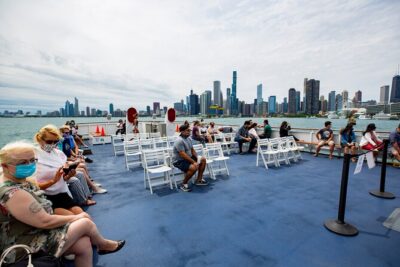
- Chicago Architecture Center River Cruise aboard First Lady
★ 5.0 · 5,536 reviews - Chicago: Architecture River Cruise Skip-the-Ticket Line
★ 4.8 · 4,325 reviews - Chicago River 45-Minute Architecture Tour from Magnificent Mile
★ 4.5 · 2,924 reviews - Barcelona: Sant Pau Recinte Modernista Entry Ticket
★ 4.6 · 2,567 reviews
Climb to the Afforested Roof
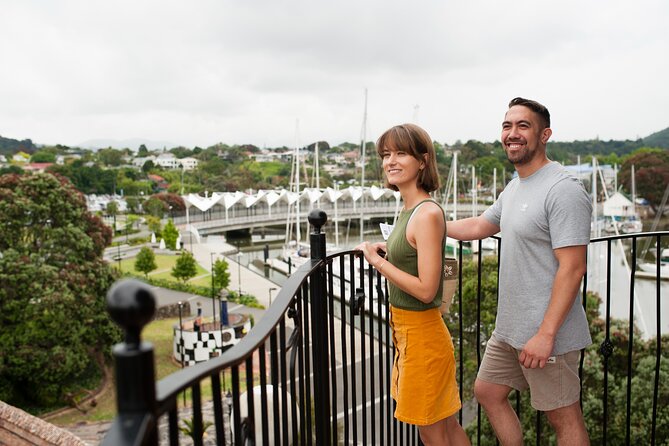
The award-winning Afforested Roof is the centre’s best practical feature. Trees and planting occupy the roof, showing Hundertwasser’s belief that architecture should return natural space rather than consume it all.
At the top, a golden cupola catches the eye and gives the roof a strong focal point. From here, you get sweeping views over the Hātea River and Whangarei. The 360-degree outlook helps you understand the centre’s place in the city. You are not looking at art in isolation. You are looking back over the river, streets, and surrounding town from an unusual urban garden.
Do not skip the roof if the weather is suitable. It is one of the main reasons the admission feels more worthwhile. The views also give children and teenagers something active to do after the gallery rooms, and the unusual design keeps the stop from feeling like a quiet museum visit only for art specialists.
The roof may not take long to explore, but it changes the rhythm of the visit. After the concentrated indoor displays, you get open air, height, and a chance to look at the building as a whole.
Should you take the guided tour?
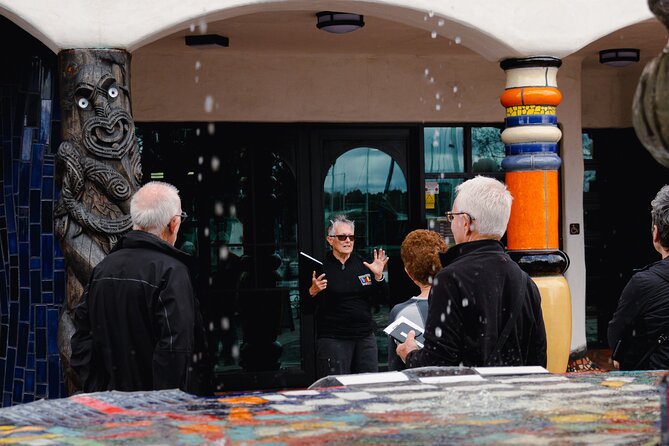
The standard admission is self-guided. This gives you control over the pace, which is useful if you want to focus on the paintings, spend time in the Māori gallery, or make a short visit around other Whangarei plans.
An optional one-hour interactive guided tour is available for an additional fee. The supplied details do not name individual guides, so you should not expect to book a particular person. The guided option makes sense if you want more explanation about Hundertwasser’s methods, his environmental beliefs, and the meaning behind the building.
I would choose the guided tour if you are new to Hundertwasser or if you enjoy asking questions. I would choose self-guided entry if you prefer moving quietly through galleries or have only a limited window. Since admission lasts all day, you could also explore independently and return to a favourite section later, though the guided tour remains a separate extra.
Allow time for the shop and food
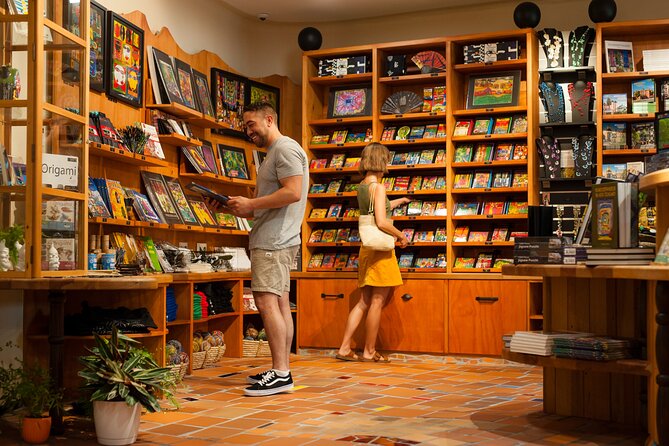
The MuseumShop has a broad selection of Hundertwasser applied art, unusual objects, and gifts. It is a useful stop if you want something more distinctive than a standard postcard. The range also reflects the artist’s interest in bringing art into everyday objects.
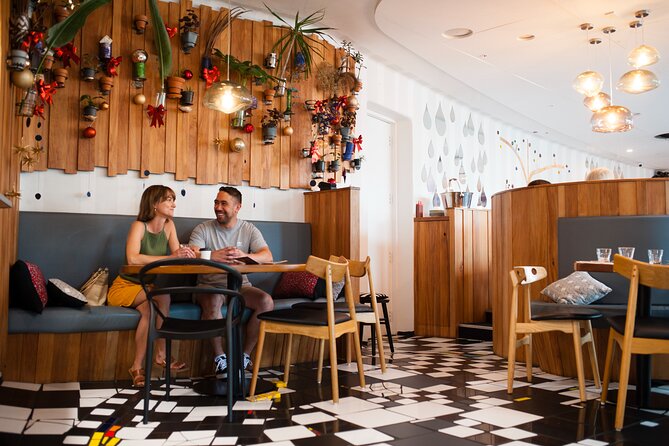
An on-site restaurant adds another reason to linger. The dining experience has received strong praise for its food, atmosphere, and river views, with sashimi and chowder singled out as especially good choices. Food service can change, so check what is available on the day, but the restaurant gives you a convenient way to turn the visit into a longer Town Basin outing.
The setting helps here. After the galleries, you can continue along the riverfront and find more places to eat nearby. The centre is in an active part of downtown Whangarei rather than in an isolated museum compound. That makes it easy to pair with a walk, lunch, or other town activities.
How much time should you plan?
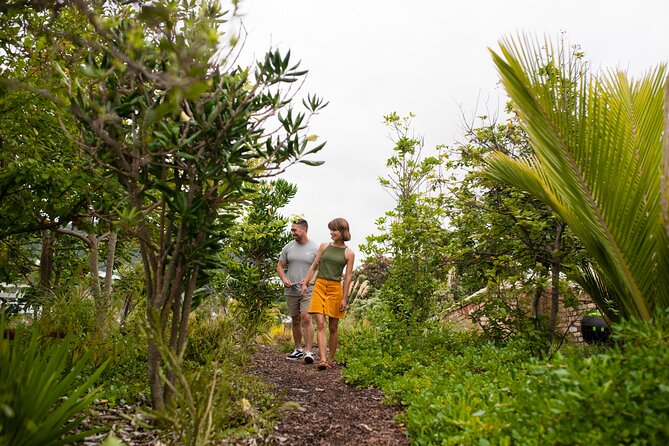
The advertised visit lasts about one to three hours, but your ideal timing depends on how you use the ticket.
For a quick but worthwhile visit, allow about an hour to see the main Hundertwasser exhibition, Māori gallery, and roof. This will give you the general idea, but not much time for the film, shop, or careful reading.
For a fuller visit, plan two to three hours. That gives you room to study the displays, watch some of the documentary, enjoy the roof views, browse the shop, and stop for food. Since the ticket provides all-day access, you do not need to force everything into one continuous visit.
The centre is also suitable for mixed-interest groups. Art fans can spend time in the galleries, while others may prefer the architecture, rooftop views, restaurant, or riverside setting. Teenagers may respond especially well to the colour, shapes, and unusual building rather than to long blocks of museum text.
Price, access, and practical planning
At $18.62 per person, the admission is reasonable if you use the full range of the visit. The strongest value comes from combining the two galleries, rooftop access, documentary screening, shop, and nearby Town Basin activities. The value is weaker if you only want to see the outside architecture or expect a very large collection.
The centre is near public transportation, and service animals are allowed. Most people can take part, so this is a fairly easy attraction to add to a day in Whangarei. Confirmation is provided when you book, and free cancellation is available until at least 24 hours before the experience begins. Changes or cancellations inside that 24-hour window are not accepted for a refund.
The mobile ticket is convenient for a flexible day. You do not need to commit to a long guided outing, and the all-day admission gives you some freedom around meals and other plans. The centre’s position by the Town Basin is the key practical advantage: you can fit it into a wider walk rather than making it the only reason to visit the area.
Who will enjoy this most?
I would recommend this experience to anyone interested in architecture, environmental ideas, modern art, or contemporary Māori art. It also suits families and mixed groups because the colourful design and rooftop are as important as the written displays.
You should come with realistic expectations. This is not a giant museum filled with hundreds of works, and the indoor architecture may seem plain compared with the exterior. The documentary is a supporting feature, not the main event.
If you appreciate buildings as much as paintings, take your time outside before entering. If you care most about art, give the Wairau Māori Art Gallery equal attention rather than treating it as a side room. If you have only a short stop in Whangarei, prioritise the roof, the main Hundertwasser exhibition, and the Māori gallery.
Should you book the Hundertwasser Art Centre?
Yes, if you want a distinctive Whangarei attraction that combines art, architecture, ecology, Māori perspectives, and city views in one stop. The Afforested Roof and unusual exterior are the strongest reasons to go, while the two galleries give the visit substance beyond the building’s bright appearance.
I would skip paid admission if you only want a quick photograph of Hundertwasser-style architecture. For everyone else, especially visitors who can stay two hours or combine the centre with lunch and a Town Basin walk, the ticket offers fair value. Choose the guided tour if you want context and conversation. Choose the self-guided option if you prefer freedom and a slower, more personal pace.
FAQ
Where is the Hundertwasser Art Centre?
It is in Whangarei on New Zealand’s North Island, beside the Town Basin and the Hātea River.
How much does admission cost?
The listed admission price is $18.62 per person.
How long does the experience take?
The suggested duration is approximately one to three hours, though admission provides all-day access to the centre’s spaces.
Is a guided tour included?
No. Admission is for self-guided access. An optional one-hour interactive guided tour is available for an additional charge.
What does the admission ticket include?
It includes full-day access to the Hundertwasser exhibition, Wairau Māori Art Gallery, Afforested Roof, and the centre’s other visitor spaces.
Can I cancel for a full refund?
Yes. You must cancel at least 24 hours before the experience start time for a full refund. Cancellations or changes made less than 24 hours before the start time are not accepted.
Just added in the world
- Wilmington History and Architecture Tour★ 4.8 · 18 reviews
- New Orleans : Garden District Architecture Walking tour★ 4.8 · 5 reviews
- Washington DC: Dupont Circle & Embassy Row Architecture Tour★ 5.0 · 6 reviews
- Washington, DC: Georgetown Architecture Walking Tour★ 5.0 · 8 reviews
- Vicenza: Palladian Architecture Private Walking Tour★ 3.3 · 3 reviews
- Walk & Discover KL’s Architectural and Heritage Gems★ 5.0 · 7 reviews
- Private Colonial Williamsburg Architectural Tour★ 5.0 · 5 reviews
- Unveiling Brno: History, Culture & Architectural Delights★ 5.0 · 2 reviews
Architecture Tours, compared.
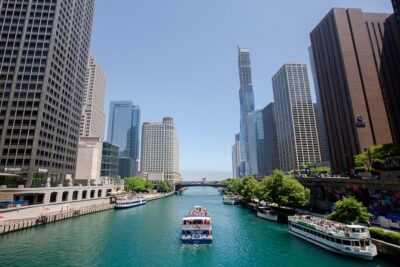
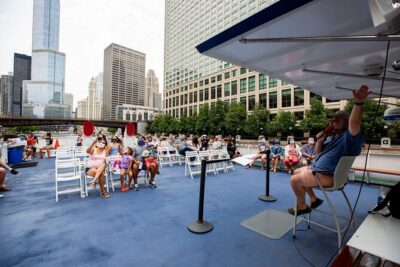

Chicago River: 1.5-Hour Guided Architecture Cruise
Read our review →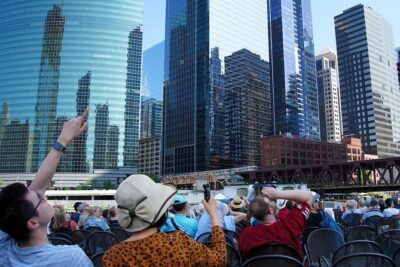
Chicago Architecture Center River Cruise aboard First Lady
Read our review →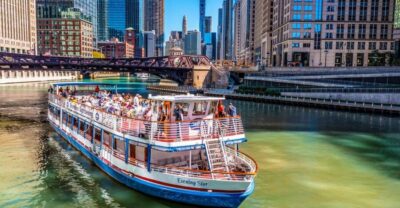
Architecture River Cruise Skip-the-Ticket Line
Read our review →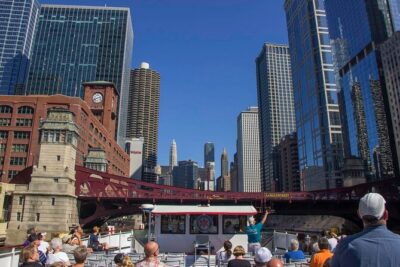
Chicago River 45-Minute Architecture Tour from Magnificent Mile
Read our review →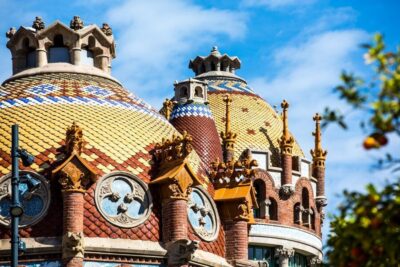
Browse the lists this tour appears in