
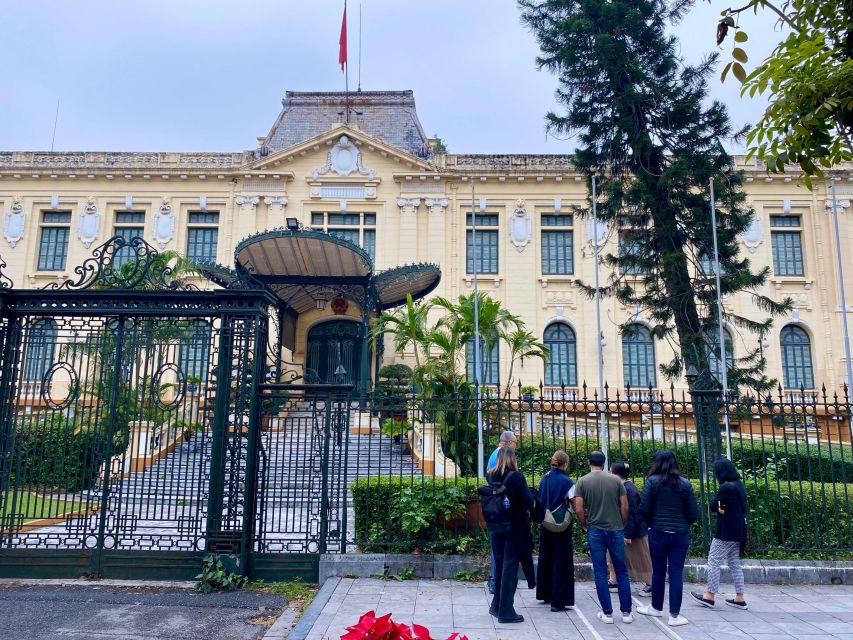
REVIEW · HISTORICAL TOURS
Coffee, History, and Architecture of the French Quarter
Hanoi tells its story in stone and coffee. This 2.5-hour walk brings the French Quarter to life through colonial buildings, Vietnamese history, and easy conversation rather than a stiff lecture. I especially like the opening coffee in an old French villa and the stop at Trang Tien Ice Cream, two simple treats that make the past feel close and local. The main consideration is that this is a walking tour in Hanoi’s heat and rain, so comfortable shoes, a hat, and weather protection matter.
Guides such as Mina and Dung receive especially warm praise for clear English, humor, patience, and their ability to answer questions. I also like that the tour does not paint French rule as either wholly good or wholly bad. It looks at social change, architecture, war, and Vietnamese resilience, though anyone wanting museum interiors or long visits at each landmark may find the outdoor stops brief.
Key points at a glance
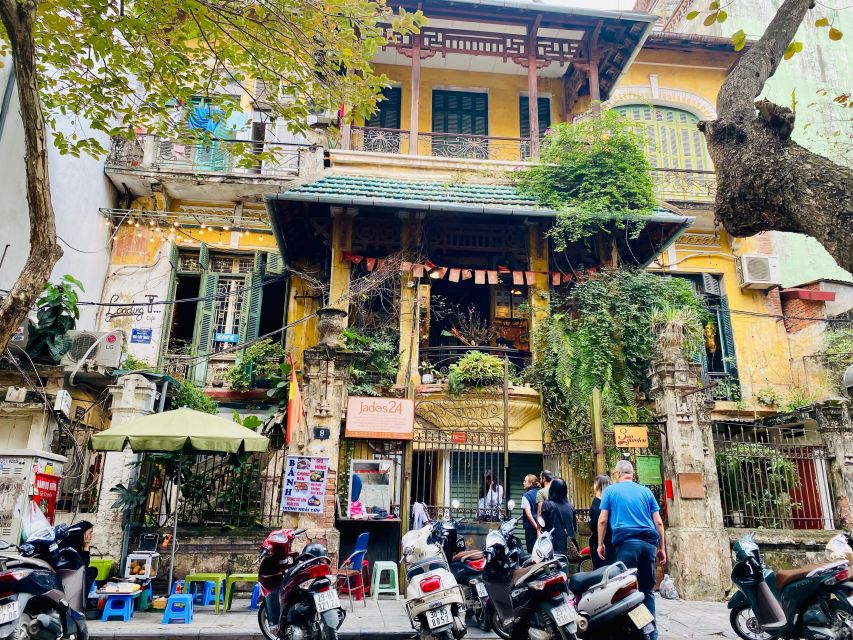
- Coffee in an old French villa: Begin with Vietnamese coffee or tea while your guide sets out the country’s general history.
- More than 15 sights: Connect St. Joseph’s Cathedral, the Opera House, Hoan Kiem Lake, Trang Tien Street, the Metropole, and other landmarks.
- History as conversation: Mina and other guides use questions, photos, humor, and plain English instead of delivering a memorized speech.
- A balanced look at French rule: Learn how colonial power changed Hanoi, including both its lasting architecture and its painful social effects.
- Two local food stops: Vietnamese coffee, including egg or coconut coffee when available, and the famous Trang Tien ice cream are included.
- Good first-day orientation: The route gives you useful context for exploring Hanoi on your own, including ideas for food and further historical sights.
Why this French Quarter walk works
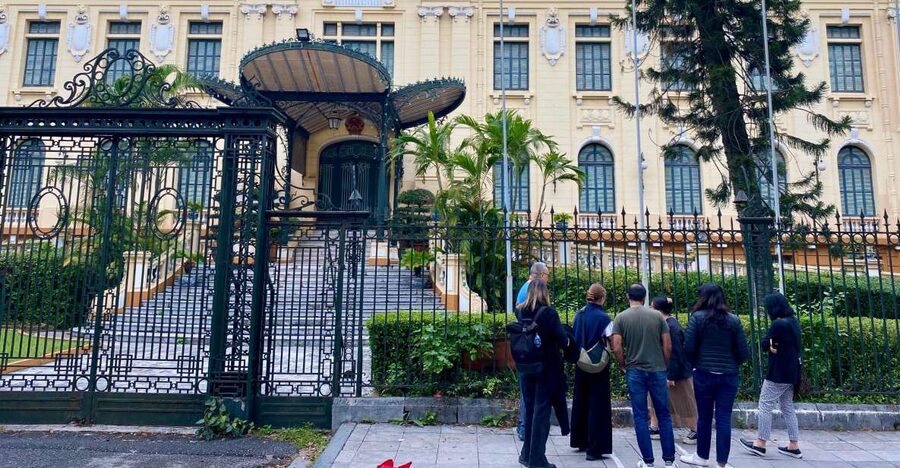
The French Quarter is a useful place to study Hanoi because several layers of the city sit close together. French colonial buildings, Vietnamese religious life, commercial streets, modern hotels, war-era memories, and daily street activity all appear within a compact walking route.
I like tours that explain what you are looking at instead of simply pointing at it. Here, a church is not just a church, a grand hotel is not just a grand hotel, and a broad boulevard is not just a pleasant place for a photograph. Your guide connects each place to changing power, culture, education, and city life.
The tour is also built around conversation. That matters in Hanoi, where a polished building can raise as many questions about Vietnamese society as it answers about French architecture. Mina is praised for using photos on her phone to explain major events, breaking complex subjects into clear points, and welcoming plenty of questions.
The mood is relaxed, but the subject matter is not shallow. You hear about French influence, the Vietnam War, Vietnamese coffee culture, and the effects of colonial rule. The guide’s local perspective gives the walk more character than a simple architectural circuit.
Other architecture tours people book in the world:
- Chicago Architecture River Cruise
★ 5.0 · 15,756 reviews - Chicago River 90-Minute Architecture Tour
★ 4.5 · 9,629 reviews - Chicago River: 1.5-Hour Guided Architecture Cruise
★ 4.8 · 8,046 reviews
Starting beside St. Joseph’s Cathedral
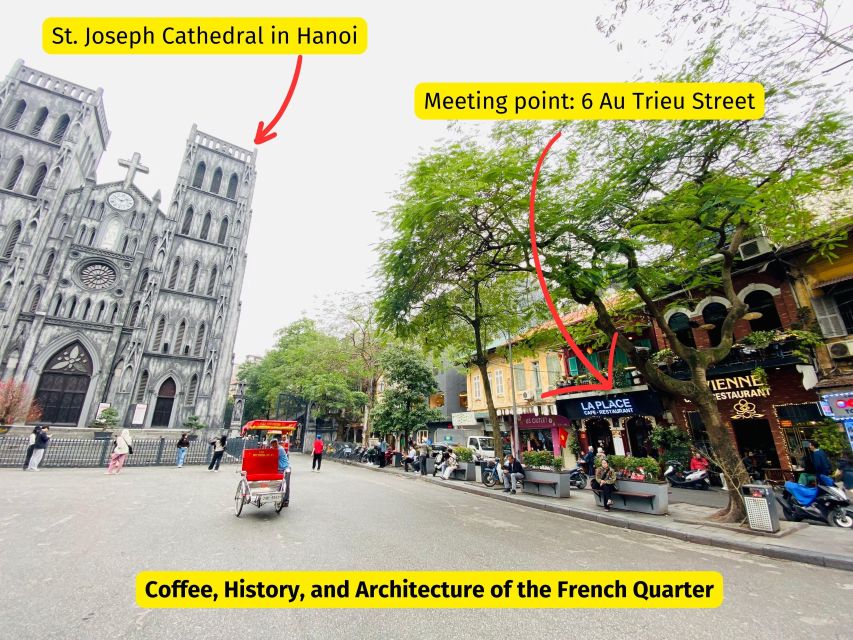
The meeting point is 6 Au Trieu Street, right beside St. Joseph’s Cathedral. This is a practical starting place because the cathedral gives you an immediate visual introduction to Hanoi’s French period, while the surrounding streets provide a distinctly Vietnamese setting.
The cathedral stop lasts about 15 minutes and combines a guided explanation with walking and a break. You should expect to hear about the building and its place in the city, but this is not an extended interior visit. The emphasis is on understanding the site as part of Hanoi’s changing urban and religious life.
This first stop also helps you get oriented. If you arrive early, check the address carefully and allow enough time to locate Au Trieu Street. The guide is expected to wait at the stated meeting point, next to the cathedral.
Vietnamese coffee in an old French villa
The coffee stop is one of the most appealing parts of the experience. You sit in a local cafe located in an old French villa, where the guide begins with a general explanation of Vietnamese history before moving into French influence.
A cup of Vietnamese coffee or tea is included. Several people have particularly enjoyed egg coffee and coconut coffee, so ask what is available when you sit down. These drinks are not just refreshments. They give you a small, tasty introduction to modern Vietnamese cafe culture and a chance to ask your first questions before the walking begins.
The cafe visit lasts about 30 minutes, making it the longest single stop. That is a good choice. History is easier to follow when you are seated, cool, and not trying to listen over traffic. The setting also helps show how old French buildings can be reused in present-day Hanoi rather than preserved as frozen museum pieces.
Your guide may discuss Vietnam’s general history before narrowing the focus to Hanoi. This broader context is useful because the French Quarter makes little sense without understanding the country’s earlier political and cultural development.
Walking through the French Quarter
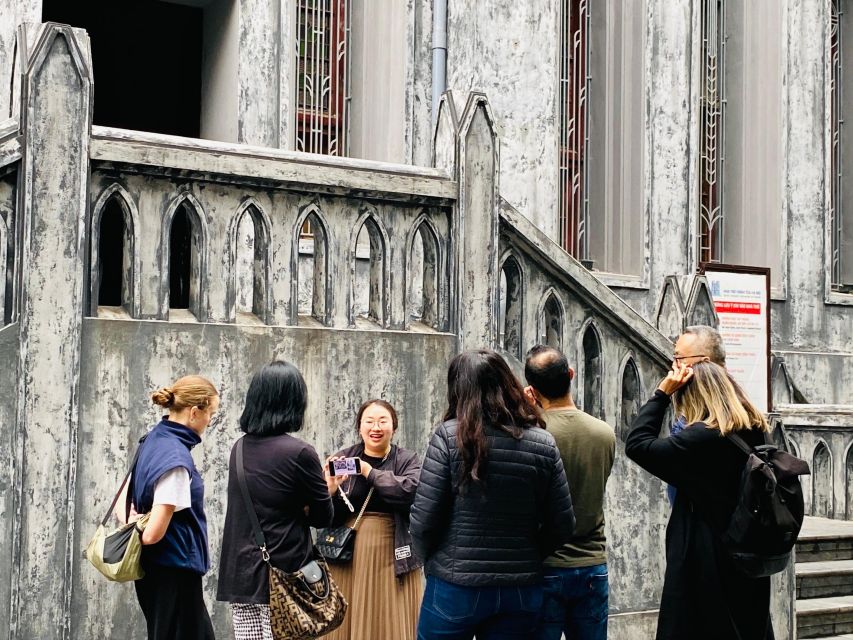
After coffee, the tour moves through the French Quarter for about 15 minutes of guided explanation before continuing to more landmarks. The pace is designed to be easy, with short stretches of walking and regular stops.
Do not expect a single uninterrupted block of colonial buildings. The interest comes from contrast. Grand facades appear alongside ordinary streets, shops, motorbikes, and the routines of modern Hanoi. Your guide helps you notice details you could easily miss if you walked the same route alone.
This is also where the tour’s balanced approach matters. French architecture can be attractive, but colonial history was not simply an architectural gift. The discussion looks at how French rule shaped Vietnamese society, and it acknowledges both the physical legacy and the unequal power behind it.
The walk is conducted in English. Mina is repeatedly praised for speaking clearly, explaining difficult subjects in simple terms, and adding humor without turning serious history into a joke. That combination should suit you if you want substance but do not enjoy academic lectures.
More history tours in the world:
- Chicago in a Day: Food, History & Architecture Walking Tour
★ 5.0 · 1,153 reviews - Charleston’s Best Highlights: History, Culture & Architecture
★ 5.0 · 422 reviews - Palm Springs Modernism Architecture & History Bike Tour
★ 5.0 · 359 reviews - Charleston: History and Architecture Guided Walking Tour
★ 4.8 · 349 reviews
Hanoi Opera House and the city’s grand public face
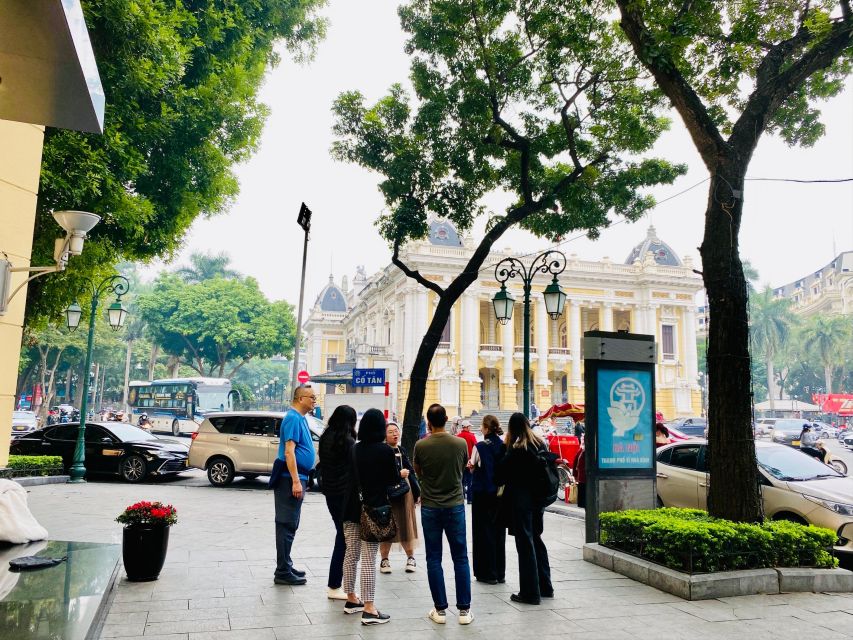
The Hanoi Opera House receives about 15 minutes of guided attention. Its scale and formal design show how French colonial authorities created public spaces that reflected European ideas of prestige and control.
Your guide can place the building in the wider story of Hanoi rather than treating it as an isolated photo stop. Look at its relationship with the surrounding streets and ask about who used such spaces, who had access to them, and how their meaning changed after colonial rule.
The stop is short, so you should not plan on a lengthy architectural inspection or a performance. The value comes from the explanation and from seeing the building as part of the city’s political and cultural story.
For photographers, this is one of the route’s strongest exterior stops. For history-minded visitors, it is a useful prompt to ask how Vietnamese people adapted, resisted, and reshaped institutions introduced under foreign rule.
Hoan Kiem Lake and the everyday city

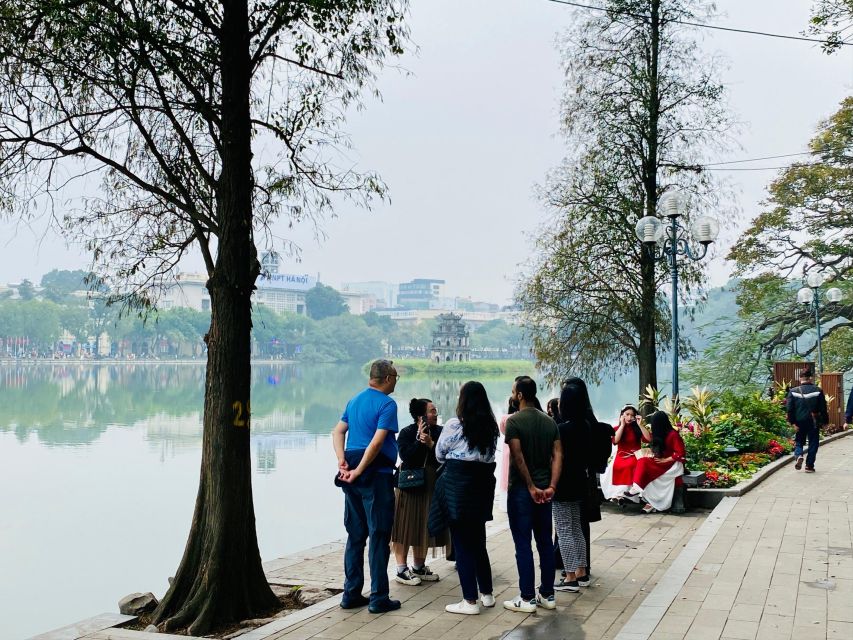
Hoan Kiem Lake is another 15-minute guided stop. The lake gives the tour a change of scale after the formal buildings and streets of the French Quarter.
Here, I like the chance to connect public space with daily Hanoi life. The lake is not only a scenic landmark. It is part of the city’s social rhythm, and the guide can help you understand how this central area fits into the wider city.
The stop also provides a natural pause during a warm walk. Bring water even though coffee and ice cream are included, since neither replaces regular hydration. Sunscreen, breathable clothing, a hat, and comfortable shoes are specifically recommended.
The lake is open and exposed, so weather matters. This tour runs rain or shine. Check the forecast the day before and bring an umbrella or raincoat if needed.
The Metropole and colonial privilege
The Sofitel Legend Metropole Hanoi receives about 15 minutes of guided discussion. The hotel offers another way to understand the French colonial period through luxury, status, and international connections.
A good guide will help you look past the polished exterior. The building represents a world of privilege that existed alongside a very different Vietnamese experience. That contrast is central to understanding colonial Hanoi.
The hotel also connects the past to the present. Unlike a ruined site, it remains part of active city life. You see how a colonial-era building can continue to carry historical associations while functioning as a modern hotel.
Do not expect to spend the tour inside the hotel or receive access to private areas. This is an exterior and historical stop, with the guide’s explanation doing most of the work.
Trang Tien Street and Hanoi’s sweetest finish
Trang Tien Street forms part of the route and leads to the famous Trang Tien Ice Cream parlor. Ice cream is included, and seating plus a restroom are available, giving you a useful break near the end of the walk.
This stop works because it is both a food experience and a piece of local life. Instead of ending with another grand facade, the tour gives you a familiar Hanoi treat. The ice cream also helps reset your energy after walking in warm weather.
The stop lasts about 15 minutes as part of the guided route. You should not expect a long tasting session, but it is enough time to try the ice cream, sit down briefly, and ask final questions.
The coffee and ice cream are not decorative extras. They make the tour feel connected to Hanoi today. You get architecture and political history, but also two everyday pleasures that help you remember the city through taste.
The first university in French Indochina and other sights
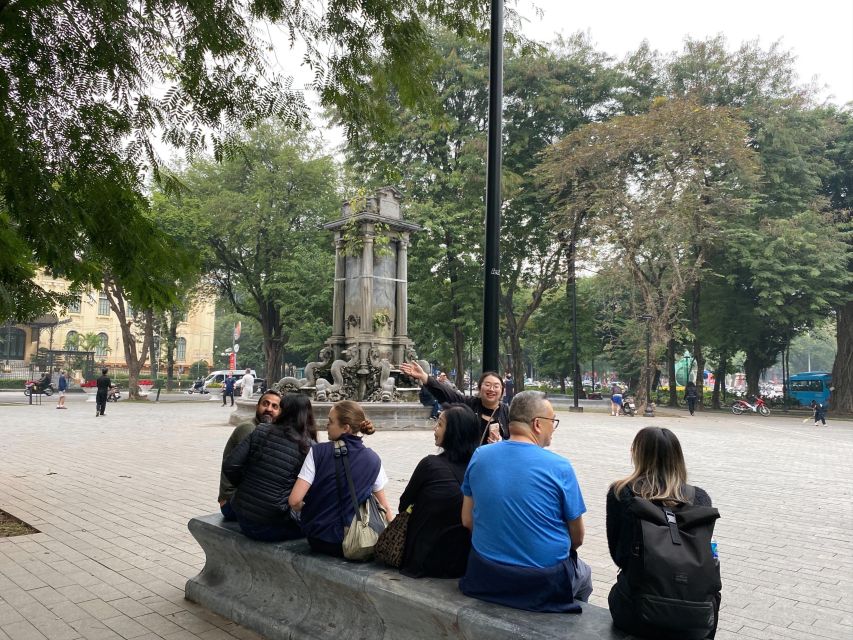
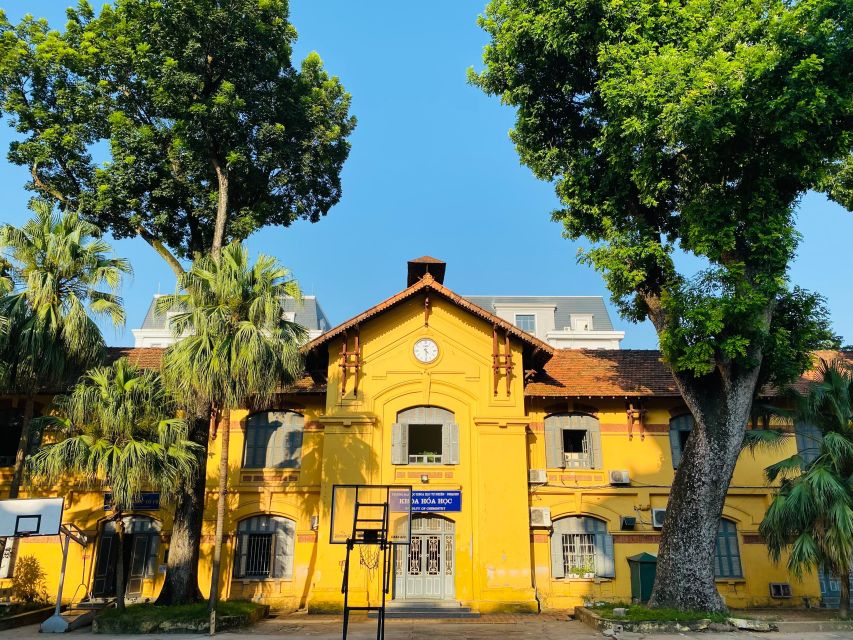
The experience includes more than 15 notable sights, including Hanoi Post Office, Trang Tien Street, the first university in French Indochina, and other points in the French Quarter. Not every place receives a long scheduled stop, so the guide’s narration is important.
This broad coverage suits a first visit. You get a map of the area and enough context to decide where you want to return. The walking route can also help you spot places you might otherwise pass without understanding.
The final location is listed as Hanoi University of Pharmacy. The meeting information also describes the activity as ending back at the meeting point, so confirm the exact end arrangement when booking. Either way, the route remains a compact walking experience rather than a transport-based tour.
What the price gives you for $31
At $31 per person, the value depends on what you want from a city tour. You are paying for a live English-speaking guide, roughly 2.5 hours of walking and explanation, a Vietnamese coffee or tea, and Trang Tien ice cream.
That is a fair price if you care about context. A self-guided walk can show you the same buildings, but it will not easily explain the links between French architecture, Vietnamese society, war history, and present-day city life. You also avoid spending time researching every stop before you arrive.
The tour is less useful if you want admission to major museums, long interior visits, or a private vehicle. It is an outdoor walking experience, and much of its value rests on the guide’s ability to explain and respond.
Free cancellation up to 24 hours before the start gives you some flexibility, and you can reserve now and pay later. These terms are useful in Hanoi, where weather can change your plans.
Who will enjoy this walk most
I would choose this tour for a first or second day in Hanoi, especially if you want a clear introduction to the city’s modern history. It suits couples, families with older children, and anyone curious about architecture, colonialism, coffee, and local life.
It is also a good fit if you like asking questions. Mina has been praised for personalizing parts of the walk around interests, dietary needs, and energy levels. Guides have also offered food suggestions, pronunciation tips, and ideas for places such as Hoa Lo Prison.
You may want something else if you dislike walking outdoors, need long indoor breaks, or prefer a tightly scripted lecture. The route can be hot, wet, and noisy, and the tour runs in all weather. Some stops are only 15 minutes, so the experience favors breadth and conversation over detailed inspection of one building.
Small groups appear to be part of the appeal, though the exact group size is not specified. A manageable group makes it easier to hear the guide, ask questions, and stay together on Hanoi’s active streets.
Practical advice before you go
Wear comfortable shoes with good grip. Choose light, breathable clothing, apply sunscreen, and bring a hat. An umbrella or raincoat is wise because the tour operates rain or shine.
Arrive at 6 Au Trieu Street beside St. Joseph’s Cathedral with enough time to find the meeting point. Keep some water with you, even with the included drinks and ice cream.
Bring curiosity rather than a long checklist. The best moments may come from asking why a building looks a certain way, how French rule affected ordinary people, or how Hanoi changed after war and independence.
The guides use historical photographs on their phones to make major events easier to understand. That is especially helpful when the subject becomes complicated. You get a visual reference without being asked to memorize dates and names.
Should you book Coffee, History, and Architecture of the French Quarter?
Book it if you want Hanoi explained through streets, buildings, coffee, and conversation. The strongest parts are the clear English, the guides’ humor and patience, the balanced treatment of French rule, and the small local touches at the villa cafe and Trang Tien Ice Cream.
I would be more cautious if you need air-conditioned sightseeing or extensive access inside landmarks. For most people, though, $31 buys a useful orientation, two included treats, and a better understanding of what you are seeing in central Hanoi. It is a particularly good choice early in your stay, when a little historical context can improve every walk that follows.
FAQ
How long does the French Quarter walking experience last?
The stated duration is 2.5 hours. Starting times vary, so check availability when choosing a date.
Where does the tour begin?
The guide meets you at 6 Au Trieu Street, right next to St. Joseph’s Cathedral of Hanoi.
What language is the tour conducted in?
The live tour guide speaks English.
Is coffee included?
Yes. You receive a cup of Vietnamese coffee or tea at a local cafe in an old French villa. Egg coffee and coconut coffee have been available on some tours.
Is Trang Tien ice cream included?
Yes. The experience includes ice cream at the famous Trang Tien ice cream parlor. Seating and a restroom are available there.
What sights are included?
The route covers St. Joseph’s Cathedral, the French Quarter, Hanoi Opera House, Hoan Kiem Lake, Sofitel Legend Metropole Hanoi, Trang Tien Street, Hanoi Post Office, the first university in French Indochina, and more than 15 notable sights overall.
What should I bring?
Bring sunscreen, breathable clothing, a hat, and comfortable shoes. Since the tour operates rain or shine, check the forecast the day before and bring an umbrella or raincoat if necessary.
Just added in the world
- Wilmington History and Architecture Tour★ 4.8 · 18 reviews
- New Orleans : Garden District Architecture Walking tour★ 4.8 · 5 reviews
- Washington DC: Dupont Circle & Embassy Row Architecture Tour★ 5.0 · 6 reviews
- Washington, DC: Georgetown Architecture Walking Tour★ 5.0 · 8 reviews
- Walk & Discover KL’s Architectural and Heritage Gems★ 5.0 · 7 reviews
- Vicenza: Palladian Architecture Private Walking Tour★ 3.3 · 3 reviews
- Private Colonial Williamsburg Architectural Tour★ 5.0 · 5 reviews
- Unveiling Brno: History, Culture & Architectural Delights★ 5.0 · 2 reviews
Historical Tours, compared.
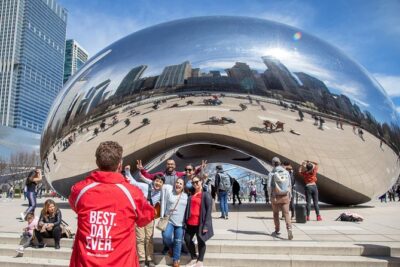
Chicago in a Day: Food, History & Architecture Walking Tour
Read our review →
Charleston’s Best Highlights: History, Culture & Architecture
Read our review →
Palm Springs Modernism Architecture & History Bike Tour
Read our review →
Historic Georgetown: History, Gossip, & Architecture Walking Tour
Read our review →
Charleston History, Homes, and Architecture Guided Walking Tour
Read our review →
Historical and Architectural Chicago Fireboat River & Lake Cruise
Read our review →Browse the lists this tour appears in