
REVIEW · CHARLESTON ARCHITECTURE TOURS
Charleston Architectural Walking Tour
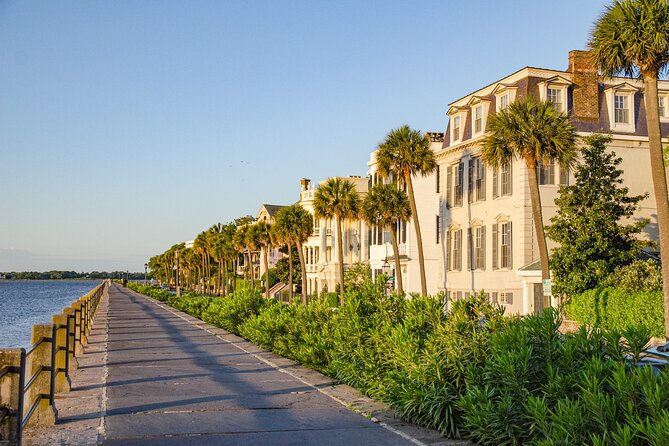
Charleston’s best details sit at street level. This two-hour walk links major architectural sights with the stories behind them, from St. Michael’s Church and its graveyard to the mansions lining the Battery. I like the small group of no more than 10 people, which should make it easier to hear the guide and ask questions. I also like the route’s clear sense of place, ending at the Four Corners of Law after moving through some of central Charleston’s most important streets.
The main consideration is the price: $50 per person for about two hours. That can be fair if you want a guide who explains design, preservation, and local history rather than simply pointing out buildings. It is less attractive if you prefer to walk Charleston at your own pace or only want exterior views. The tour also depends on good weather, and the route includes outdoor walking.
Key points to know before booking
- A compact group of up to 10 people keeps the walk more personal than a large city tour.
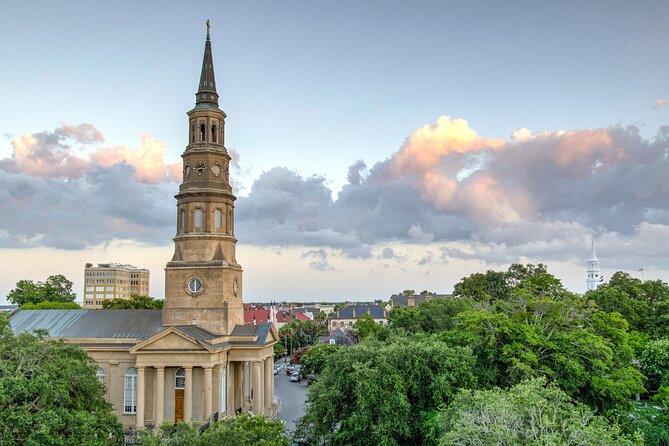
- St. Michael’s Church provides the opening look at Charleston design, local influence, unusual details, and a graveyard.
- The Battery and White Point Gardens appear twice, giving you both a garden walk and a closer look at the seawall and South Battery mansions.
- The Nathaniel Russell House is discussed for its preservation and distinctive architectural features.
- The French Huguenot Church dates to 1845 and is described as the last active French Huguenot Church in the United States.
- The guide’s strongest reported quality is flexibility, with a friendly, interesting style and the ability to answer questions before returning to the main subject.
Why this Charleston walk works
This is a focused architecture tour, not a general sightseeing loop. That distinction matters. You are not simply ticking off famous places. The guide is expected to explain how buildings look, why their design matters, and what makes certain structures different from the rest of the city.
The route lasts about two hours and begins at 9:30 am at 18 Vendue Range. That early start is useful in Charleston, where outdoor walking can become more tiring as the day progresses. You also begin near the historic center, so the meeting point is practical if you are already staying or sightseeing downtown.
The group size is capped at 10 people. I consider that one of the better features of the experience. A small group gives you a better chance to hear details, ask about a building, or pause briefly without holding up a large crowd. It also suits the guide’s conversational style. The available feedback describes the guide as very friendly and interesting, with enough patience to handle repeated questions and then return to the planned topic.
That last point is more important than it may sound. Architecture tours can become either stiff lectures or loose conversations that never reach the planned sights. Here, the guide appears to offer a useful middle ground: questions are welcome, but the tour still has a route and a finish.
More walking tours in the USA:
- The Official Art Deco Walking Tour by The Miami Design Preservation League
★ 5.0 · 1,580 reviews - Chicago in a Day: Food, History & Architecture Walking Tour
★ 5.0 · 1,153 reviews - Miami South Beach Art Deco Walking Tour
★ 5.0 · 1,039 reviews
Starting with St. Michael’s Church
The first stop is St. Michael’s Church, where you spend about 10 minutes discussing its design, influence, unusual features, and graveyard. The ticket information lists admission as free, so this portion is centered on the exterior setting and guided interpretation rather than a separate admission charge.
Ten minutes is a short stop, but that can work well at the beginning of a walking tour. It gives you an early look at how the guide handles architecture without using up too much of the morning. You will likely get a concise introduction to the church’s design and its place in Charleston, then move on before the opening explanation becomes too long.
The graveyard adds a useful layer. Architectural details can feel abstract when you look only at facades, but a churchyard connects the building to the people and religious life around it. You are not just looking at a structure. You are considering how the church functioned within the city.
Do not expect an extended church visit based on the scheduled timing. This is an interpretive stop, not a long interior tour. If you want to study every architectural detail, you may find the pace brisk. The benefit is that St. Michael’s serves as a starting point rather than taking over the entire walk.
White Point Gardens and South Battery
The walk continues to White Point Gardens, with about 15 minutes devoted to the gardens and the architecture of South Battery. This gives you a change of setting from the church and moves the focus toward Charleston’s waterfront-facing homes and public spaces.
The gardens are useful for understanding how architecture works in relation to open space. Instead of seeing a house in isolation, you can consider the wider streetscape, the gardens, and the Battery area together. The tour’s focus on South Battery architecture should help you notice the relationship between grand homes and their prominent location.
The information provided does not promise interior access to private residences, so plan on viewing the architecture from public areas. That is normal for a city walking tour, but it is worth knowing before you book. The value comes from the guide’s explanation of what you are seeing, not from entering each building.
A 15-minute stop is long enough for a focused discussion and short enough to keep the group moving. If you are interested in Charleston’s building styles, this is one of the places where a guide can add more than a map or self-guided stroll. You can look up South Battery afterward, but a live explanation gives you a chance to ask why a feature matters as you stand nearby.
The Nathaniel Russell House in five minutes
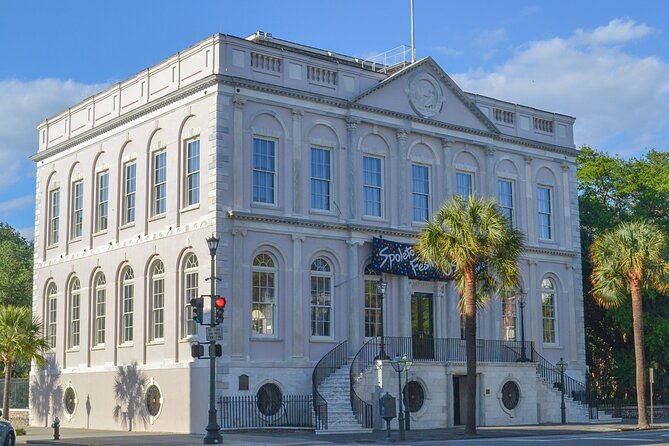
The Nathaniel Russell House receives about five minutes of discussion. That is the shortest stop on the route, so it is best understood as a quick architectural reading of the house rather than a full visit.
The focus is on its architecture, preservation, and distinct features. Those three subjects make the stop especially useful for anyone interested in how historic buildings survive. Preservation is not just about keeping an old facade in place. It also involves deciding which features deserve protection and how a building’s character can be understood today.
Still, five minutes is not much time. If you hoped to tour the house inside, this walk may not meet that expectation. The schedule lists no admission ticket, and the short timing suggests that the group discusses the property from the route rather than conducting a full house visit.
I would treat this as a sharp, specific stop in the middle of a broader walk. It breaks up the outdoor route with a building known for its unusual design and preservation story. You get a useful introduction, then continue before the tour loses momentum.
A few more architecture tours in the USA worth a look
- Chicago Architecture River Cruise
★ 5.0 · 15,756 reviews - Chicago River 90-Minute Architecture Tour
★ 4.5 · 9,629 reviews - Chicago River: 1.5-Hour Guided Architecture Cruise
★ 4.8 · 8,046 reviews - Chicago Architecture Center River Cruise aboard First Lady
★ 5.0 · 5,536 reviews
The French Huguenot Church and its 1845 design
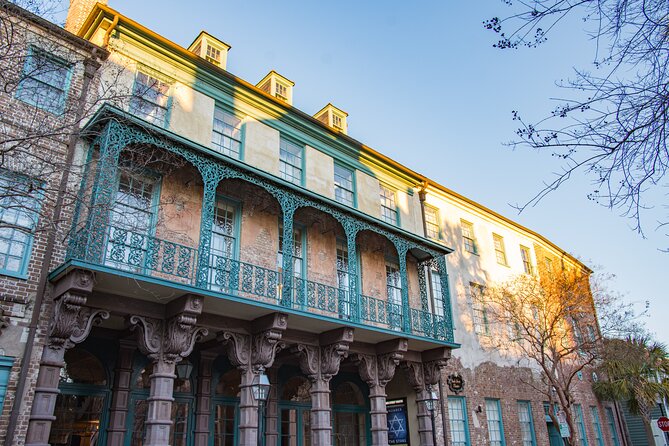
The French Huguenot Church is scheduled for about eight minutes. It is described as the last active French Huguenot Church in the United States and was built in 1845. That gives this stop a clear identity within the tour.
The church adds religious and cultural context to the route. St. Michael’s begins the discussion, but the French Huguenot Church broadens it by showing another tradition and another period of construction. You are not looking at several similar buildings. Each church contributes a different point of comparison.
Eight minutes is enough for a compact explanation of the church’s design and role, though again, this is not advertised as an extended interior visit. Admission is listed as free. If your main goal is to enter and inspect church interiors, check your expectations carefully. If you want to understand how the building fits into Charleston’s architectural story, the stop should be more satisfying.
This is also a good place for questions. The available feedback praises a guide who can follow a question, give an interesting answer, and then return to the planned subject. That makes a difference at a stop like this, where you may want clarification about the church’s identity or age.
A longer look at the Battery seawall
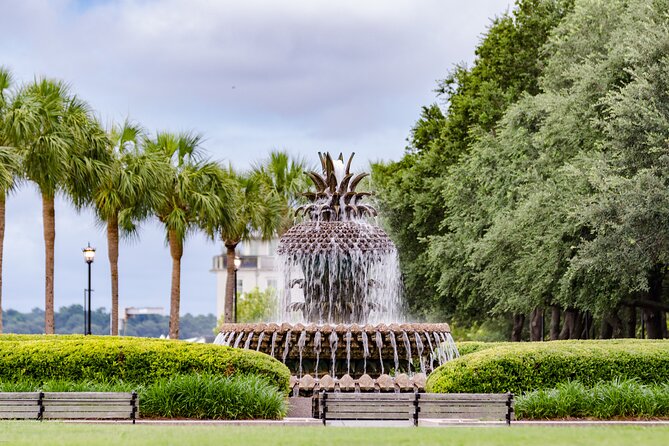
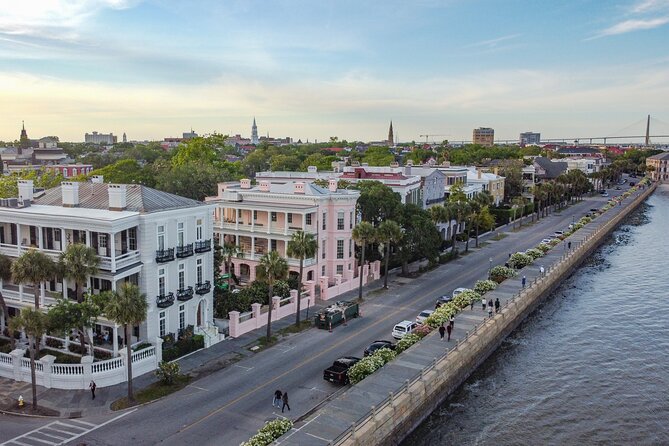
The tour returns to the Battery and White Point Gardens for about 20 minutes. This is the longest scheduled stop, and it makes sense. The seawall and mansions along it form one of the most scenic parts of the route.
Here, the experience shifts from individual buildings to a broader architectural view. You can look at the seawall, the waterfront setting, and the homes together. The longer timing gives the guide room to discuss several buildings and explain how the South Battery streetscape works as a whole.
This is likely the most visually rewarding section of the walk. The setting provides open views, while the mansions supply the architectural detail. You should have time to appreciate the scene instead of stopping for only a quick explanation and immediately moving on.
The Battery is also where the tour’s outdoor nature matters most. The scenery is a major part of the appeal, but weather can affect your enjoyment. The experience requires good weather, and the operator may offer another date or a full refund if poor conditions force a cancellation. Wear comfortable shoes and be ready for a full period on foot, though the provided details do not state the walking distance or number of stairs.
Finishing at the Four Corners of Law
The tour ends at Broad Street and Meeting Street, at the Four Corners of Law. This is a sensible endpoint because it leaves you in a central part of Charleston rather than returning you to the starting point at Vendue Range.
The ending also gives the tour a clear shape. You begin near 18 Vendue Range, move through churches, gardens, houses, and the Battery, then finish at a major downtown intersection. You can continue exploring on foot afterward, though no onward route is included with the experience.
Because the walk ends at a different location, you should plan your day around that fact. If you need to return to a hotel, vehicle, or another meeting point, allow time after 11:30 am or so. The listed duration is approximately two hours, so the finish should be around late morning, but walking tours can run slightly longer when questions are active.
Is $50 a fair price?
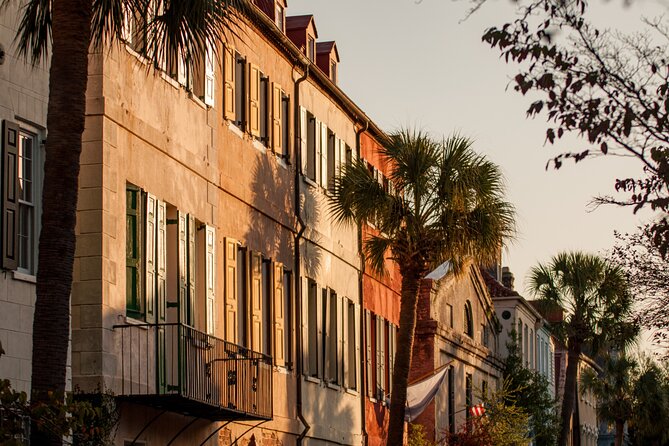
At $50 per person, this is not the cheapest way to see Charleston’s historic center. Several stops list free admission, so you are paying mainly for the guide’s time, interpretation, route planning, and small-group format.
I think the price is reasonable for the right kind of visitor. You get about two hours, a maximum group of 10, and a route that brings together several important architectural settings. The guide’s ability to answer questions is especially valuable if you want more than memorized facts.
The value is weaker if you only want to photograph the Battery or walk past the churches. You can see the outside of these places without booking a tour. The fee makes more sense if you want help noticing design features, understanding preservation, and connecting separate sights into one story.
There is also no added admission cost listed for the stops. That keeps the price straightforward. You do not appear to be paying $50 and then facing several required entrance fees along the way, based on the supplied details.
Who should book this tour?
I would recommend it most strongly to first-time visitors who want an organized introduction to Charleston architecture. It also suits people who enjoy asking questions, since the guide’s reported strength is an open, friendly conversation that still stays on track.
The tour should work well for adults, couples, solo visitors, and small groups who prefer a quieter experience. The maximum of 10 people is a good fit if large bus tours leave you cold.
It may also suit architecture and preservation enthusiasts, but with one qualification. The stops are short, especially at the Nathaniel Russell House, and the experience does not promise interior access. If you want detailed building studies or long visits inside historic homes, look for a more specialized tour.
Most people can participate, and service animals are allowed. The tour is near public transportation, which makes reaching the starting point easier. You should still prepare for outdoor walking and changing weather, since the experience depends on good conditions.
Booking, cancellation, and timing
You receive confirmation when booking, and the tour is offered in English with a mobile ticket. It is usually booked about 18 days ahead, so reserving early is sensible if your Charleston dates are fixed.
Free cancellation is available up to 24 hours before the 9:30 am start time for a full refund. Inside that 24-hour window, refunds are not available and changes are not accepted. The cut-off follows local Charleston time.
The operator may cancel if the weather is poor or if the minimum number of participants is not reached. In either case, you are offered a different date or experience, or a full refund.
My final recommendation
Book this Charleston architectural walk if you want a small group, a clear two-hour route, and a guide who can explain what makes the city’s buildings worth noticing. The Battery, White Point Gardens, St. Michael’s Church, the French Huguenot Church, and the Nathaniel Russell House give you a strong overview without turning the morning into an all-day march.
Skip it if you want extensive interior visits, a completely private experience, or a self-guided stroll at no cost. For most first-time visitors interested in design and local context, the $50 fee is justified by the group size and the guide’s friendly, question-friendly approach.
FAQ
How long is the Charleston Architectural Walking Tour?
The tour lasts approximately two hours.
What time does the tour start?
It starts at 9:30 am.
Where does the tour begin?
The meeting point is 18 Vendue Range, Charleston, South Carolina 29401.
Where does the tour end?
The tour ends at Broad Street and Meeting Street, at the Four Corners of Law.
What language is the tour offered in?
The tour is offered in English.
How many people can join the tour?
The tour has a maximum of 10 participants.
Is admission to the stops included?
The listed stops show free admission. The experience focuses on guided discussion of the architecture and sites.
Are service animals allowed?
Yes, service animals are allowed.
What happens if the tour is canceled because of weather?
You will be offered a different date or a full refund if poor weather causes the cancellation.
Just added in the USA
- Wilmington History and Architecture Tour★ 4.8 · 18 reviews
- New Orleans : Garden District Architecture Walking tour★ 4.8 · 5 reviews
- Washington DC: Dupont Circle & Embassy Row Architecture Tour★ 5.0 · 6 reviews
- Washington, DC: Georgetown Architecture Walking Tour★ 5.0 · 8 reviews
- Private Colonial Williamsburg Architectural Tour★ 5.0 · 5 reviews
- Tulsa: Art Deco Walking Tour of Tulsa★ 5.0 · 8 reviews
- Monuments and Memorials Architectural Walking Tour★ 5.0 · 17 reviews
- Castle to Capitol: Museums of the National Mall Architecture Tour★ 4.5 · 9 reviews
Charleston Architecture Tours, compared.
Charleston’s Best Highlights: History, Culture & Architecture
Read our review →
Charleston History, Homes, and Architecture Guided Walking Tour
Read our review →
Charleston History and Architecture Walking Tour
Read our review →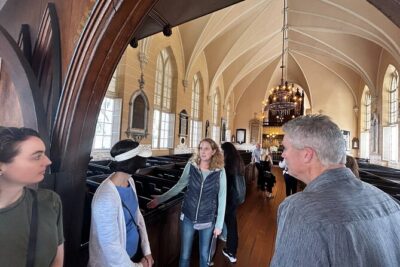
Historic Charleston: The Battery, Rainbow Row, St. Michael Church
Read our review →Browse the lists this tour appears in