REVIEW · ARCHITECTURE TOURS
Architecture Tour of Brussels
Brussels reveals its character in stone. This two-hour architecture walk links grand squares, theaters, churches, shopping arcades, and city views while an architect guide explains how each place fits the city’s story. I like the focus on buildings rather than a quick checklist of sights, and I like the small maximum of 18 people. The main drawback is the brisk pace, since ten stops leave limited time at several locations.
The 8 pm start gives the route a pleasant evening mood, especially around the old center. Guides Gamaal and Jimmy have received praise for clear explanations, humor, flexibility, and useful suggestions. Just note that the tour is on foot, transport is not included, and the published price is $30.10 per person.
Key points to know before you go
- An architect leads the walk: You get more than dates and names, with attention to facades, styles, city planning, and how buildings changed over time.
- Grand Place sets the stage: The route begins at Brussels’ UNESCO-listed centerpiece, once a market surrounded by wooden houses.
- Ten central stops fit into about two hours: Some places receive 20 minutes, while others get only five or ten.
- Mont des Arts supplies the best photo stop: You look across the old city toward the town hall tower and the Royal Palace.
- The group is capped at 18 people: That should make it easier to hear the guide and ask questions.
- The evening timing matters: The walk begins at 8 pm, so you should plan your dinner and transport around a nighttime departure.
Why an architect-led walk works well in Brussels
Brussels can feel visually scattered at first. A medieval square, a grand nineteenth-century arcade, a theater, a small statue, and a modern arts center may seem like unrelated sights. An architect guide gives you a way to connect them.
The emphasis here is on how the city was built and rebuilt. At Grand Place, you look at Gothic and Baroque fronts rather than simply taking a picture. At the Galeries Royales Saint-Hubert, you hear how one architect pursued a difficult idea and used professional contacts to bring it into being. At De Brouckere, the guide links the present-day square to the old river route and the defensive role of water.
That approach suits me because it gives you something to notice after the walk ends. You may start spotting changes in scale, ornament, and building purpose as you continue around Brussels on your own.
The route also mixes famous sights with small pieces of local culture. Literary cafes near the galleries, Jacques Brel’s statue, chocolate around the Sablon, and the wardrobe of Manneken Pis keep the experience from becoming a dry architecture lecture.
A few more architecture tours in the world worth a look
- Chicago Architecture River Cruise
★ 5.0 · 15,756 reviews - Chicago River 90-Minute Architecture Tour
★ 4.5 · 9,629 reviews - Chicago River: 1.5-Hour Guided Architecture Cruise
★ 4.8 · 8,046 reviews
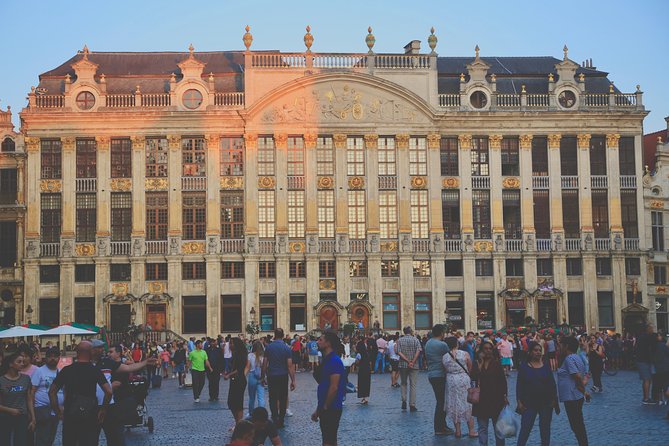
Starting at Grand Place, Brussels’ great outdoor room
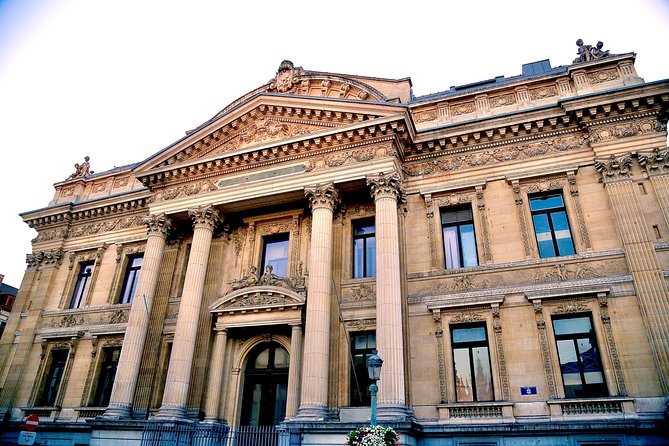
Meet at the Godiva shop at Grand Place 21/22. This is an easy landmark in the city center, but give yourself enough time to find the exact meeting point because the square can be crowded and visually overwhelming.
The tour begins with the place that most people associate with Brussels. Grand Place was once a market edged by wooden houses. Over time, those early structures gave way to the Gothic and Baroque architecture you see today.
The useful part is the close look at the facades. You are not only told that the square is beautiful. You examine how the fronts differ, how the square changed, and how famous people connected to these buildings. The guide’s architectural training should help you read the square as a collection of individual structures rather than one giant postcard.
This first stop lasts about 20 minutes. That is enough for an introduction and some photographs, though you will not study every facade in detail. If Grand Place is high on your list, return later when you can look at it without keeping pace with the group.
Galeries Royales Saint-Hubert and the ambition of nineteenth-century Brussels
The next 20-minute stop takes you to the Galeries Royales Saint-Hubert, described here as the first shopping mall in the world. The arcade dates from the same period as the Belgian state, giving the building a useful link to the country’s early national identity.
The story centers on the architect who imagined the project and worked through a network of contacts to make it real. That human side is valuable. Large public buildings rarely appear by magic, and you get a sense of the effort, planning, and persistence behind this elegant covered passage.
The galleries also connect architecture with literary life. Cafes along the route were places where famous authors drank coffee and worked on writing that later became part of world literature. You should pay attention to the relationship between the bright passage, the shops, and the cafes. This was not only a practical commercial project. It was also a social setting.
Again, the stop lasts about 20 minutes. You get time to appreciate the space, but the shops and cafes may tempt you to linger. Save a return visit for shopping or coffee.
La Monnaie and Place De Brouckere
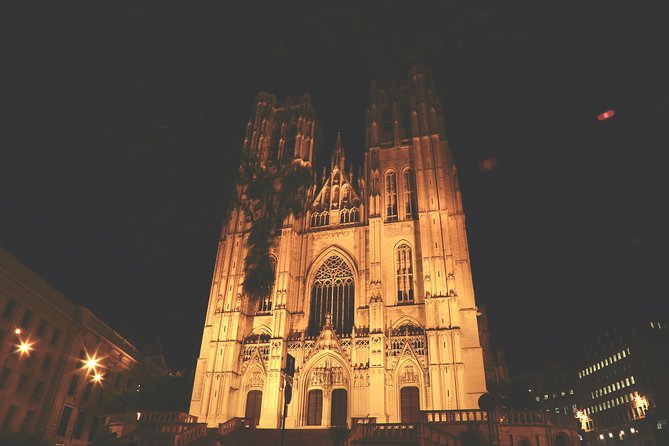
La Monnaie receives about ten minutes. This royal theater has a long history, and the guide also points out the nearby shopping street and the role of the area in the revolution.
That makes this a compact but useful stop. A theater is never only a performance hall. It can reflect royal power, public taste, urban growth, and political change. You should expect an overview rather than an interior visit, since admission to buildings is not included and the tour is conducted along the route.
At Place De Brouckere, another ten-minute stop, the focus shifts to the former De Brouckere palace and the old river route through the city. The discussion of water as part of Brussels’ defense adds a practical layer to the city’s story. Streets and squares are easier to understand when you know what ran through them before later construction covered or redirected it.
These two stops are short, so listen closely. If you want long explanations at every site, the schedule may feel tight. If you prefer a moving walk with several themes, the pace keeps the route lively.
Same city, a different building to stand in front of:
- Chicago Architecture Center River Cruise aboard First Lady
★ 5.0 · 5,536 reviews - Chicago: Architecture River Cruise Skip-the-Ticket Line
★ 4.8 · 4,325 reviews - Chicago River 45-Minute Architecture Tour from Magnificent Mile
★ 4.5 · 2,924 reviews - Barcelona: Sant Pau Recinte Modernista Entry Ticket
★ 4.6 · 2,567 reviews
La Bourse and the many lives of a civic building
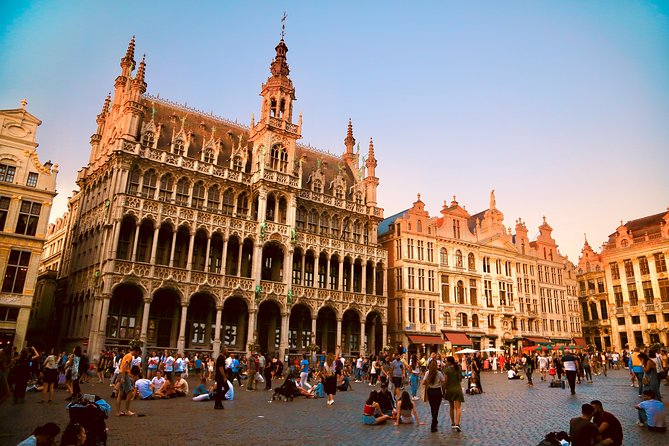
La Bourse de Bruxelles gets ten minutes. The guide traces the development of the stock exchange from Bruges to Grand Place and finally to its present square in Brussels.
That sequence shows how a financial institution can change location as a city’s commercial importance grows. The building itself now forms part of Brussels’ art scene, which gives the stop a present-day angle instead of treating the structure as a finished chapter.
I like this kind of context because it explains why a building occupies its particular place. You are not just told what La Bourse is. You hear how its role and setting developed over time.
Ten minutes is enough to understand the main idea, but not enough to inspect every architectural detail. Use the guide’s overview to decide if you want to return independently.
Manneken Pis, a small statue with a huge wardrobe
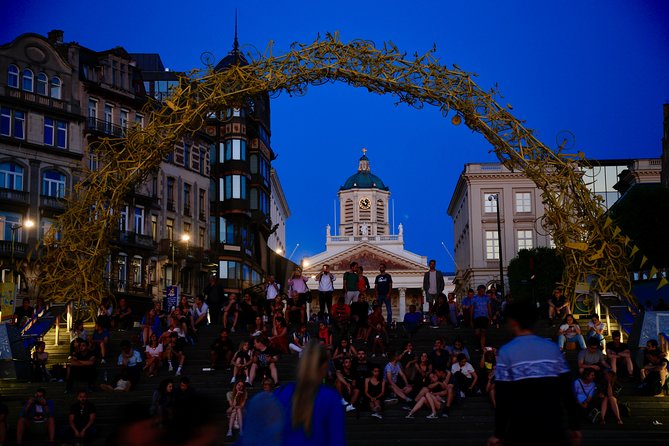
The stop at Manneken Pis lasts about 15 minutes. The guide calls it Brussels’ greatest disappointment, and that joke is fair. The statue is famous, but it is much smaller than many people expect.
The real subject is the collection of more than 1,200 uniforms and the several stories connected with the boy. You then climb the hill to the wardrobe museum. Four well-known explanations are covered, giving you a better sense of why such a small figure became a major symbol of Brussels.
This stop works because it resets your expectations. Brussels is not only about impressive facades and official buildings. It also enjoys absurdity, local legends, and a bit of civic mischief.
The hill matters. You should be ready for a short uphill walk, especially after several hours of sightseeing. The provided details do not describe the museum’s interior or any separate admission, so treat this part as a guided visit toward the wardrobe museum rather than a promise of a full museum tour.
Jacques Brel, Sablon chocolate, and Notre Dame
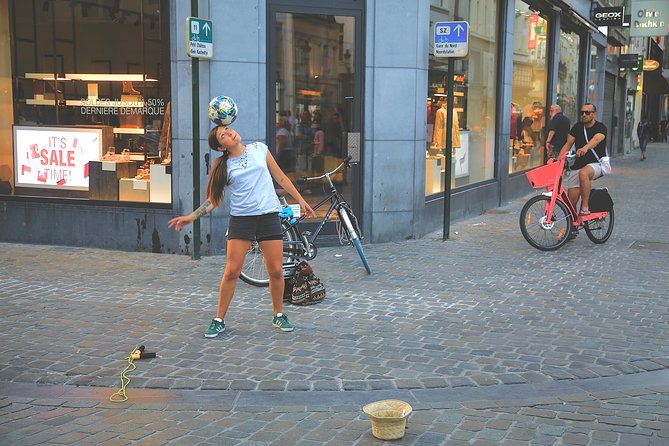
The Jacques Brel statue gets only five minutes, with the central question being why a sculpture of the famous Belgian singer belongs here. That short pause adds a human voice to a route otherwise filled with stone, commerce, and civic buildings.
You may find this stop more rewarding if you already know Brel’s name or music, but the guide’s explanation gives the statue a clear place in Brussels culture. It is a quick cultural marker, not a full biography.
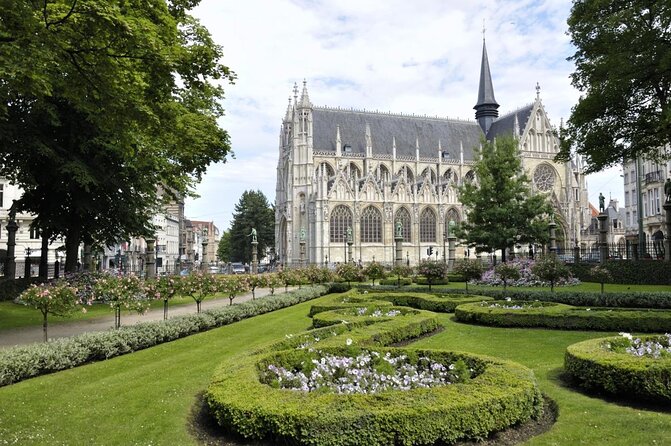
At Notre Dame des Victoires au Sablon, the tour spends about 15 minutes on two subjects: chocolate and the church. The pairing feels very Brussels. You get a look at an important religious building while also hearing about one of the city’s best-known foods.
The church provides another change in architectural mood after the commercial arcades and civic buildings. Churches can be especially useful on an architecture tour because their scale, decoration, and design often differ sharply from nearby streets. Since the schedule is short, you should expect key points and exterior appreciation rather than a lengthy religious history.
BOZAR and the final view from Mont des Arts
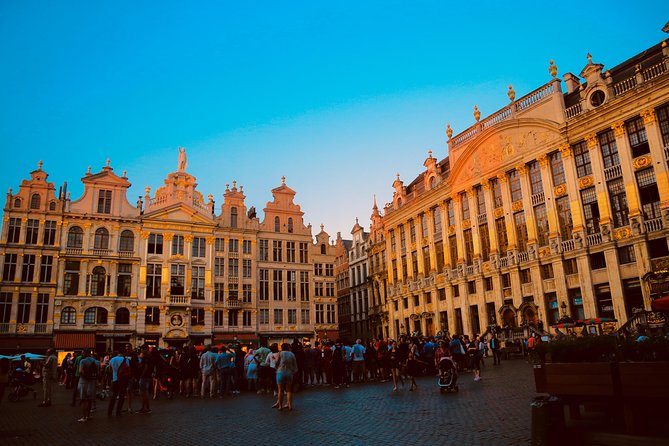
BOZAR Centre for Fine Arts receives five minutes. The invitation to discover what lies behind its large walls suggests a quick introduction to the building and its cultural purpose.
Five minutes is not enough for a full visit, and no admission is included. Think of BOZAR as a marker of Brussels’ arts life and a chance to hear what makes the building important before you continue.
The final stop is Mont des Arts, where the walk spends about 20 minutes. This is the payoff for anyone who enjoys city views and photographs. You look across the old city and its former walls, with the town hall tower as the main focus and the Royal Palace visible at the other end.
The viewpoint gives the route a clear finish. After hearing how Brussels changed through markets, rivers, theaters, commerce, and public buildings, you can see the old center from above. Bring a phone or camera with enough battery. The tour includes a mobile ticket, but that does not replace the need for your own device if you want pictures.
What the guides add to the experience
The most praised part of this walk is the guiding. Gamaal is described as engaging, funny, and able to explain architecture and history in depth. One account says he asked what the group wanted to learn and adjusted the experience around those interests.
That matters because a fixed route can still feel personal when the guide listens. If you care more about churches than shopping arcades, or more about city planning than legends, say so early.
Jimmy also receives strong praise for site selection, funny stories, recommendations, and adapting the walk during extreme wind. A German-language note praises an evening atmosphere, attention to personal wishes, and restaurant tips. The published tour is offered in English, so you should not book it expecting the German option described in that separate comment.
The guide quality is not fully predictable, of course. But the repeated strengths are clear: strong command of the subject, humor, flexibility, and practical local advice. Those qualities can turn a standard city walk into a much better introduction.
Price, pace, group size, and practical value
At $30.10 per person, the tour is priced as an affordable introduction rather than an all-day specialist course. You get about two hours, a professional local guide, ten central stops, and a viewpoint finish. Since no attraction admission or transport is included, the value rests mainly on the guide’s explanations and the efficient route.
For a first evening in Brussels, I think that is a fair use of money. You see major landmarks without arranging your own route, and you get context that is hard to gather from plaques alone. The price is less attractive if you want extended time inside museums or buildings, since the schedule focuses on outdoor stops.
The maximum group size is 18. That is small enough to hear a guide more easily than in a large city walk, though it is not a private tour by default. Some departures may feel nearly private if few people book, as happened for one party, but you should not count on that.
The tour starts at 8 pm and ends back at the meeting point. Transport is not included, so plan how you will reach and leave Grand Place. The route is near public transportation, and most people can take part. Wear comfortable shoes and be prepared to walk, pause, and climb the hill toward the Manneken Pis wardrobe museum.
Confirmation arrives within 48 hours, subject to availability. The activity normally needs a minimum number of people, and if that number is not reached, you are offered another date or experience, or a full refund. You can cancel for a full refund up to 24 hours before the start time. Changes or cancellations inside that window are not accepted.
Who should book this Brussels walk?
I would choose this tour if you want a compact introduction to Brussels architecture with stories attached. It fits a first visit, an arrival evening, or a short stay when you need a clear route through the historic center.
It is especially suitable for you if:
- You like buildings, city planning, and urban history.
- You prefer a guide who can answer questions and adjust the discussion.
- You want major sights without paying for several separate admissions.
- You enjoy a mix of architecture, music, chocolate, legends, and city views.
- You are comfortable walking at a steady pace for two hours.
I would hesitate if your main goal is to enter several buildings, spend long periods taking photographs, or explore Brussels at a slow pace. Five- and ten-minute stops are useful for orientation, but they cannot provide a full visit.
Should you book this tour?
Yes, if you want a lively first look at Brussels and value explanation over simple sightseeing. The combination of Grand Place, the royal galleries, La Monnaie, La Bourse, Sablon, BOZAR, and Mont des Arts gives you a strong sweep of the center for $30.10.
Book it early if your dates are fixed, since the experience is often reserved well in advance and confirmation depends on availability. Try to arrive ready with one or two interests to share with the guide. That is where the walk seems to gain its greatest value: not from racing between ten names, but from having someone help you see why these places belong together.
FAQ
Where does the Architecture Tour of Brussels begin?
It begins at the Godiva shop at Grand Place 21/22, 1000 Bruxelles, Belgium.
What time does the tour start?
The tour starts at 8:00 pm.
How long does the experience last?
It lasts approximately two hours.
What language is the tour offered in?
The tour is offered in English.
What is included in the price?
A professional local guide is included.
Is transportation included?
No. Transport is not included in the experience.
How many people can join the tour?
The maximum group size is 18 people.
Can I cancel for a full refund?
Yes. You can cancel at least 24 hours before the start time for a full refund. Cancellations or changes made less than 24 hours before the start are not accepted.
Just added in the world
- Wilmington History and Architecture Tour★ 4.8 · 18 reviews
- New Orleans : Garden District Architecture Walking tour★ 4.8 · 5 reviews
- Washington DC: Dupont Circle & Embassy Row Architecture Tour★ 5.0 · 6 reviews
- Washington, DC: Georgetown Architecture Walking Tour★ 5.0 · 8 reviews
- Vicenza: Palladian Architecture Private Walking Tour★ 3.3 · 3 reviews
- Walk & Discover KL’s Architectural and Heritage Gems★ 5.0 · 7 reviews
- Private Colonial Williamsburg Architectural Tour★ 5.0 · 5 reviews
- Unveiling Brno: History, Culture & Architectural Delights★ 5.0 · 2 reviews
Architecture Tours, compared.
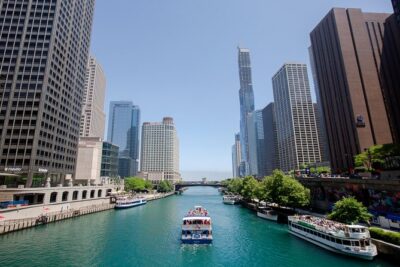
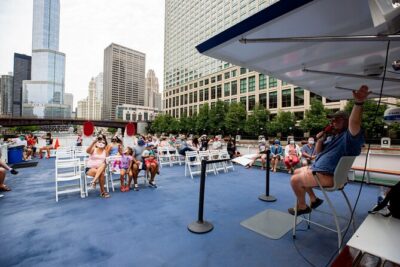

Chicago River: 1.5-Hour Guided Architecture Cruise
Read our review →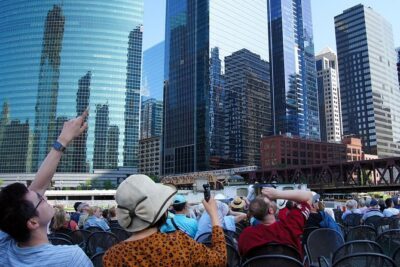
Chicago Architecture Center River Cruise aboard First Lady
Read our review →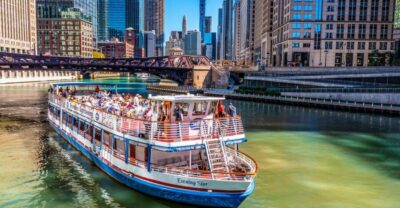
Architecture River Cruise Skip-the-Ticket Line
Read our review →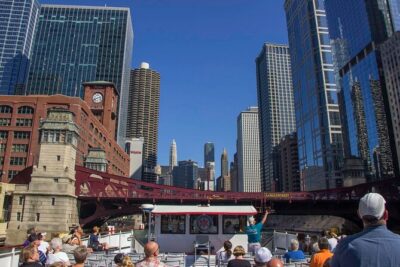
Chicago River 45-Minute Architecture Tour from Magnificent Mile
Read our review →