
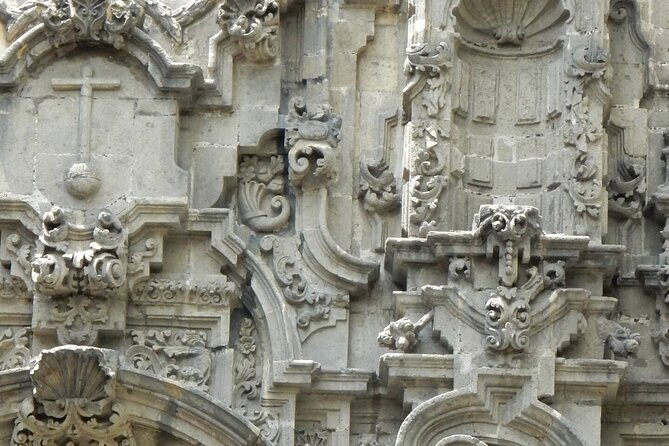
REVIEW · HISTORICAL TOURS
Architecture and History of Mexico City – Small Groups
Mexico City reveals itself one layer at a time. This three to three-and-a-half-hour walk links major buildings, archaeological remains, colonial courtyards, and grand civic spaces while showing how the city changed from Mexica foundations to modern Mexico. I especially like the maximum group size of six, which should make it easier to ask questions, and the way the route uses balconies, atriums, and public squares rather than simply pointing at façades from the sidewalk. The one drawback is that this is a walking-heavy experience with only moderate physical fitness recommended, and admission to Palacio de Bellas Artes is not included.
Guide Raul is the main reason this tour has earned such strong praise. His approach combines architecture, art, sociology, and political history, so you get more than dates and building names. I would book it early in your Mexico City stay, since the tour gives you useful bearings for later visits to the Historic Center and the National Museum of Anthropology.
Key points to know before you go
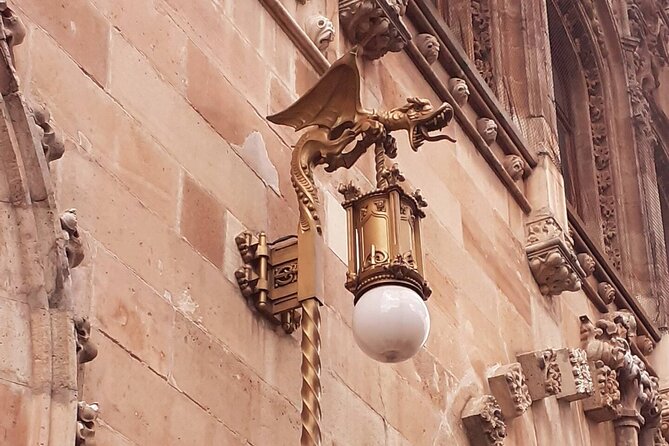
- A six-person limit keeps the walk personal: You can ask questions without trying to compete with a large crowd.
- The route covers nearly 300 years at the House of Tiles: Its balconies also provide useful views toward nearby buildings.
- Raul’s storytelling is the heart of the experience: He connects architecture with Mexica, Spanish, political, and artistic history.
- The walk begins at Torre Latinoamericana and ends at the Zócalo: You cross much of the central district on foot.
- Palacio de Bellas Artes requires separate admission: The discussion outside is included, but entry is not.
- The tour costs $83.59 per person: That is a serious price for a three-hour walk, but the small group and guide-led interpretation add real value.
Why this walk works as a first day in Mexico City
The Historic Center can feel like several cities placed on top of one another. You have pre-Hispanic remains, Spanish colonial buildings, nineteenth-century civic projects, twentieth-century artistic movements, and modern towers all within a fairly compact area. Without context, it is easy to see impressive buildings without understanding how they fit together.
This walk gives you that framework. Raul has been praised for explaining both pre-Spanish Mexico and the centuries that followed, which is especially useful if you plan to visit the Anthropology Museum later. You will already have a basic sense of the city’s major historical shifts, making the museum’s collections easier to place.
I also like that the tour treats architecture as evidence. Materials, building styles, decoration, and street layouts all become clues. The conversation is not limited to famous monuments. You also look at the relationship between neighboring buildings, which helps explain why Mexico City feels visually layered.
The small group matters here. With no more than six people, the guide can respond to specific questions and adjust the pace within reason. You are not just listening to a fixed speech from the back of a crowd. That personal format is one reason the price can make sense for visitors who want a serious introduction rather than a quick photo walk.
More history tours in the world:
- Chicago in a Day: Food, History & Architecture Walking Tour
★ 5.0 · 1,153 reviews - Charleston’s Best Highlights: History, Culture & Architecture
★ 5.0 · 422 reviews - Palm Springs Modernism Architecture & History Bike Tour
★ 5.0 · 359 reviews
Torre Latinoamericana: start with the city’s changing skyline
The meeting point is Torre Latinoamericana, at Eje Central Lázaro Cárdenas 2. The first stop lasts about 30 minutes and is designed to orient you to the city’s development.
From this corner, you begin reading Mexico City as a record of different eras. The point is not simply to admire one tower. It is to see how older buildings, later civic projects, and modern construction coexist around the Historic Center.
This is a smart opening because it gives the rest of the walk a theme. You are encouraged to notice layers rather than treat each building as an isolated object. The tour uses this starting point to introduce the stories and architectural changes that appear at later stops.
No admission ticket is included or needed for this stop. The meeting point is near public transportation, but private transportation is not provided. Plan your route to Torre Latinoamericana before the start time, since arriving at the wrong location can cost you part of the opening discussion. Raul has been praised for communicating before the tour and for being patient when a group arrived at the wrong meeting point, but you should still leave extra time.
The Temple of San Francisco and the materials of Mexico City
The second stop is the Atrium of the Temple of San Francisco, with about 25 minutes devoted to the site. This building helps explain the materials used in Mexico City and the historical processes that shaped the country.
That focus is useful because architecture can otherwise become a parade of styles. Here, you look at what buildings are made from and why construction choices matter. The atrium also brings you closer to the physical setting of the Historic Center, rather than keeping the discussion at the level of grand monuments.
The stop has no admission cost listed. Since the tour moves through public and historic spaces, you should expect the guide to explain what you are seeing from accessible areas rather than lead a long interior visit at every location.
For me, this is where the tour’s method becomes clear. A material is not just a material. It can point to available resources, building traditions, colonial change, and the practical demands of a large city. Raul’s strength, according to the praise directed toward him, is making those links understandable without losing the human story.
The House of Tiles and a useful balcony view
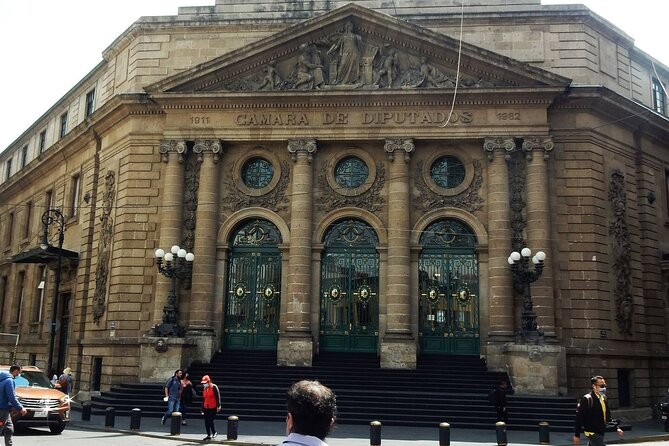
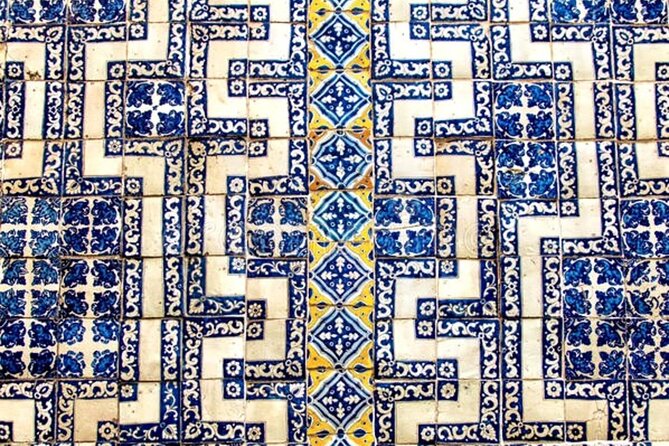
The House of Tiles receives about 25 minutes and offers one of the tour’s more distinctive stops. You will examine an artwork inside the building, then use its balconies to look toward other structures nearby.
The balcony matters because it changes your point of view. At street level, buildings can seem unrelated. From above, you can compare façades, rooflines, and the way public spaces connect. The tour also follows the building’s development across almost 300 years, giving you a compact example of how Mexico City’s architecture changes over time.
The House of Tiles is not treated as a quick exterior photo stop. You get a closer look at its artwork and its changing role in the city. That combination of art, architecture, and urban views is one of the most memorable parts of the route.
Keep your expectations practical. The allotted time is about 25 minutes, so this is an interpreted visit, not a full museum-style examination of every room. Still, the balcony perspective gives the stop a quality that many ordinary walking tours miss.
A few more architecture tours in the world worth a look
- Chicago Architecture River Cruise
★ 5.0 · 15,756 reviews - Chicago River 90-Minute Architecture Tour
★ 4.5 · 9,629 reviews - Chicago River: 1.5-Hour Guided Architecture Cruise
★ 4.8 · 8,046 reviews - Chicago Architecture Center River Cruise aboard First Lady
★ 5.0 · 5,536 reviews
Palacio de Bellas Artes and the politics of grand design
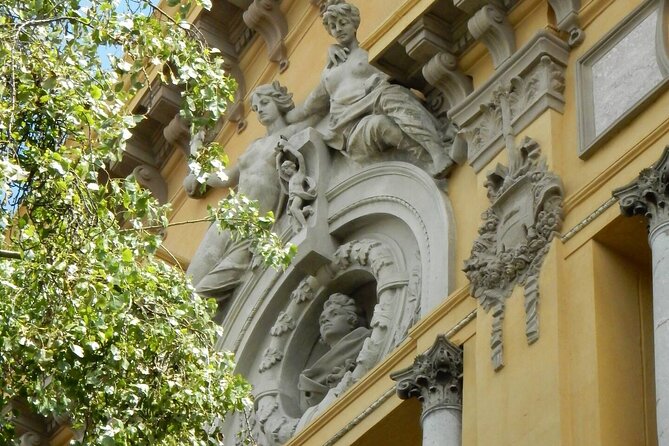
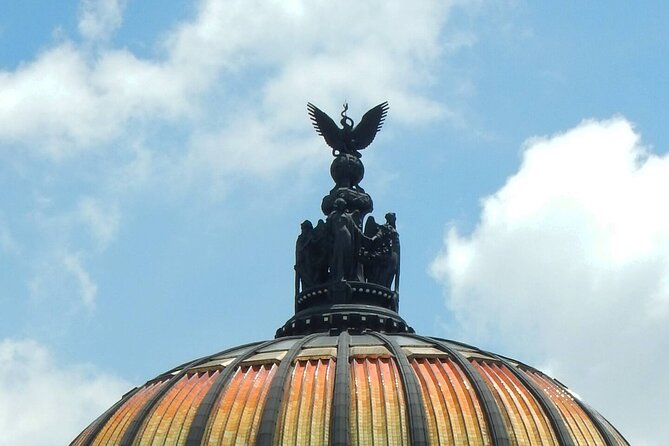
The route then reaches Palacio de Bellas Artes for about 20 minutes. The focus is on the political, artistic, and historical settings in which this building and its neighbors were created.
This is a strong place to discuss how public architecture carries ideas about national identity. Grand cultural buildings are rarely just decorative. Their design and position can reflect political goals, artistic movements, and changing views of Mexico’s place in the world.
The important practical point is that admission is not included. The tour provides the outside discussion, but you should budget separately if you want to enter Palacio de Bellas Artes. The available details do not specify an added visit inside, so treat this stop as an architectural and historical explanation rather than a guaranteed museum tour.
Raul’s background in art and architecture seems particularly useful here. Several strong comments about his guiding describe his ability to connect buildings with the muralist movement and with political and social history. That makes the stop more meaningful than a simple explanation of construction dates.
Palacio Postal: a short look at early twentieth-century design
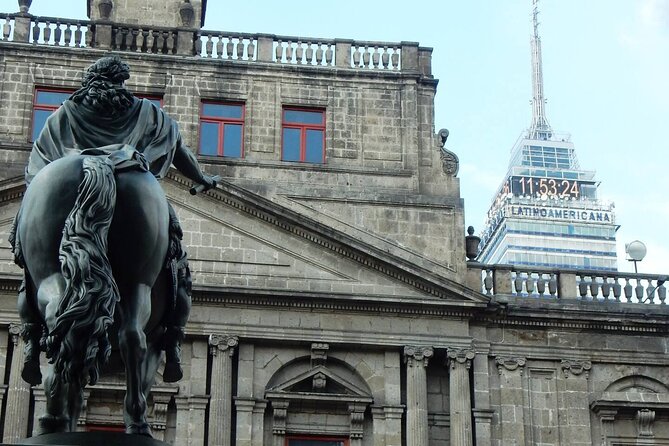
Palacio Postal is another 20-minute stop. This early twentieth-century post office is one of the route’s clearest examples of grand public design from that period.
The group may visit the inside depending on the time of day. That qualification matters. You should enjoy the exterior and the guide’s explanation without assuming that an interior visit is guaranteed.
The stop adds a different period and purpose to the walk. Unlike a church or archaeological site, a post office shows how a modern civic service could be given an elaborate architectural setting. It also helps you compare the building with nearby structures from other eras.
The listed admission is free. Even so, the timing of the interior access is outside your control, so keep your schedule flexible if you hope to see the inside.
Plaza Tolsá and the city’s eclectic mix
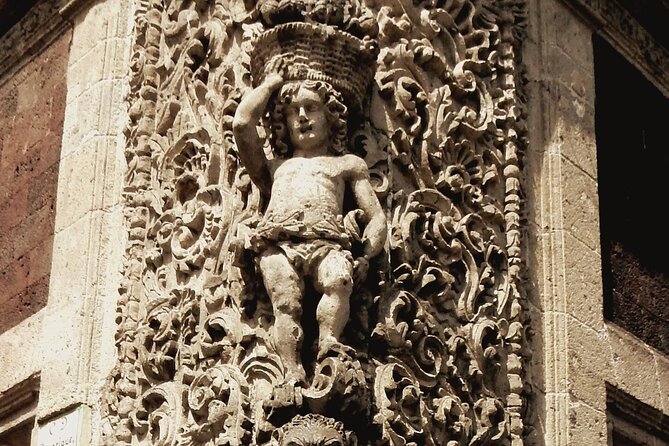
At Plaza Tolsá, the group spends about 20 minutes examining the different buildings around the statue of Charles IV of Spain.
This is a good stop for understanding eclectic architecture. The buildings around one square do not all belong to a single period or style, and the guide uses that mix to explain how Mexico City developed through several phases. The statue provides a central reference point while you look outward at the surrounding architecture.
I appreciate this kind of stop because it asks you to compare rather than memorize. You may notice how design, decoration, and scale change from one building to the next. Raul has been praised for pointing out details such as griffins and mermaids, which can make decorative features feel less like random ornament and more like clues to a building’s ideas and influences.
The visit is free and relatively short. It works best as part of the larger argument of the walk, not as a standalone attraction.
Templo Mayor: bringing pre-Hispanic Mexico into the route
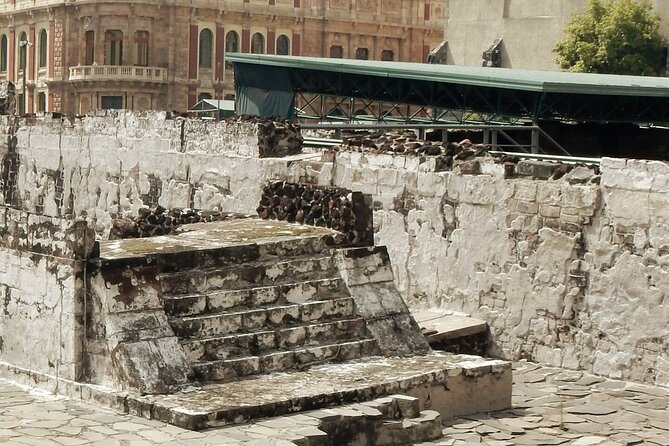
Before the finish, you visit the archaeological site at Museo del Templo Mayor for about 20 minutes. This stop is essential because it brings the Mexica foundations of central Mexico into direct conversation with the colonial and modern buildings seen earlier.
The physical remains help explain why the Historic Center cannot be understood through Spanish architecture alone. The city’s story begins earlier, and the archaeological site gives that earlier chapter a place in the route.
The listed stop has no admission charge. The allotted time is brief, so you should not expect a full museum visit or a detailed examination of every part of the archaeological area. Instead, the purpose is to connect the site to the larger story of Mexico City.
This is also where the tour can help prepare you for a later museum visit. The guide’s explanations about pre-Spanish Mexico, colonial change, art, and politics give you a set of questions to carry forward.
The Zócalo ties the story together
The tour ends at Constitution Plaza, better known as the Zócalo, after about 20 minutes. This is a fitting finish because the square gathers many of the themes introduced earlier: power, religion, urban planning, public ceremony, and the long relationship between older foundations and later buildings.
Raul uses the final section to answer questions and offer suggestions for the rest of your time in Mexico City or for a future visit. That makes the ending useful rather than abrupt. You can ask about places connected to the subjects discussed during the walk.
The finish also gives you a central location for continuing on your own. Since the tour ends in the main square, you are well placed to plan the next part of your day, though no private transport is supplied.
Is $83.59 a fair price?
At $83.59 per person, this is not a budget stroll. The walk lasts about three to three-and-a-half hours, includes bottled water, and limits the group to six people. That makes the price easier to justify for you if a small, discussion-based format matters.
You are paying mainly for Raul’s interpretation, not for a long list of included admissions. Most stops are listed as free, while Palacio de Bellas Artes costs extra if you enter. Private transportation is also not included.
The value comes from the connections between sites. A cheaper walk may show you the same streets, but this experience is designed to explain how architecture, politics, art, construction materials, and social change relate to one another. If you prefer a fast overview with many photo stops, the price may feel high. If you want a serious orientation from a guide who welcomes questions, it is more defensible.
The strong praise for Raul is consistent on several points: he is warm, thorough, engaging, and passionate about Mexico City. He has also been credited with giving people a better foundation for later visits to the Anthropology Museum. Those qualities matter more than a simple checklist of monuments.
Timing, walking, and practical planning
The total duration includes travel time between stops, but you should still expect a substantial amount of walking in central Mexico City. A moderate physical fitness level is recommended.
Wear comfortable shoes and bring protection from changing weather. The experience requires good weather, and if poor weather forces a cancellation, you are offered another date or a full refund. The standard cancellation terms are strict: the booking is non-refundable and cannot be changed for personal reasons.
The tour is offered in English and includes a mobile ticket. Bottled water is supplied, but you should handle your own transportation to Torre Latinoamericana and from the Zócalo after the walk.
Since the tour is often booked about 25 days ahead, planning early is sensible if your dates are fixed. The small group can fill more quickly than a large city walk.
Who should book this experience?
I would recommend it to first-time visitors who want a strong foundation in Mexico City’s central district. It also suits anyone who cares about architecture but wants the buildings explained through politics, art, history, and daily civic life.
You will get the most from it if you enjoy asking questions and comparing different periods. The tour is less suitable if you want extended interior visits, private transportation, or a relaxed ride between attractions.
It is also a good choice for people who usually feel lost in historic centers. The route gives you a clear progression from Torre Latinoamericana to the Zócalo, while Raul’s explanations help turn a complicated city into a story you can follow.
Should you book the Mexico City architecture walk?
Book it if you want an in-depth introduction to the Historic Center, prefer a group of six or fewer, and value a guide who can move between architecture, art, politics, and pre-Hispanic history. Raul’s warm and detailed style is the strongest reason to choose it.
Skip it if your priority is entering every major building, avoiding several hours on foot, or keeping the cost as low as possible. For the right reader, though, this is a useful first-day experience that gives you better eyes for the rest of Mexico City.
FAQ
How long does the tour last?
The experience lasts approximately three to three-and-a-half hours, including travel time between stops.
Where does the tour begin?
It begins at Torre Latinoamericana, at Eje Central Lázaro Cárdenas 2 in Mexico City’s Centro Histórico.
Where does the tour end?
It ends at Constitution Plaza, also called the Zócalo, in the Centro Histórico.
Is transportation included?
Private transportation is not included. Travel time between stops is included in the total tour duration.
Is admission to Palacio de Bellas Artes included?
No. Admission to Palacio de Bellas Artes is not included. The other listed stops are shown as free or included, with the Palacio Postal interior visit depending on the time of day.
How large is the group?
The group has a maximum of six travelers.
Just added in the world
- Wilmington History and Architecture Tour★ 4.8 · 18 reviews
- New Orleans : Garden District Architecture Walking tour★ 4.8 · 5 reviews
- Washington DC: Dupont Circle & Embassy Row Architecture Tour★ 5.0 · 6 reviews
- Washington, DC: Georgetown Architecture Walking Tour★ 5.0 · 8 reviews
- Vicenza: Palladian Architecture Private Walking Tour★ 3.3 · 3 reviews
- Walk & Discover KL’s Architectural and Heritage Gems★ 5.0 · 7 reviews
- Unveiling Brno: History, Culture & Architectural Delights★ 5.0 · 2 reviews
- Private Colonial Williamsburg Architectural Tour★ 5.0 · 5 reviews
Historical Tours, compared.
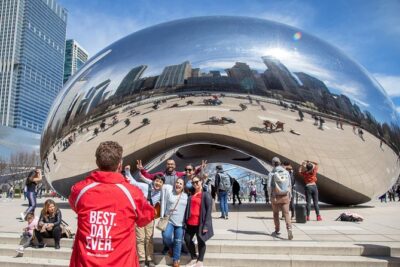
Chicago in a Day: Food, History & Architecture Walking Tour
Read our review →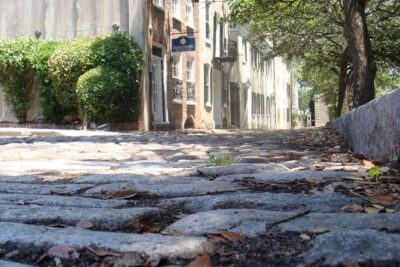
Charleston’s Best Highlights: History, Culture & Architecture
Read our review →
Palm Springs Modernism Architecture & History Bike Tour
Read our review →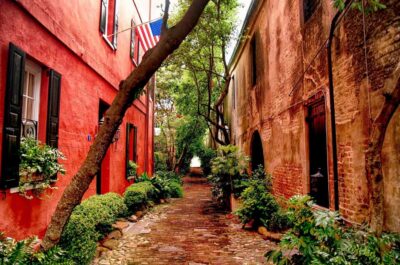

Historic Georgetown: History, Gossip, & Architecture Walking Tour
Read our review →
Charleston History, Homes, and Architecture Guided Walking Tour
Read our review →

Historical and Architectural Chicago Fireboat River & Lake Cruise
Read our review →Browse the lists this tour appears in