
REVIEW · WALKING TOURS
Walking Tour about Golden Age Architecture, private local guide
Amsterdam’s old buildings tell excellent stories. I like the private format, which lets you ask questions and pause for photos, and I like the focus on engineering, trade, and everyday life rather than façades alone. The route links Dam Square, the canal belt, Jordaan, and Westerkerk in about 90 minutes, giving you a useful first look at central Amsterdam.
The main consideration is the pace. You will walk and stand for roughly an hour and a half, and the tour is not recommended for people who use a walker or have trouble walking. At $73.59 per person, it offers good value for a small group that wants personal attention, but it is less attractive if you only want a quick stroll or a broad city overview.
Key points to know before booking
- A private walk with Anna: The guide’s friendly, patient style is a major part of the experience, with plenty of room for questions and photographs.
- Nine central stops in 90 minutes: The route runs from the Royal Palace and Dam Square toward the canal belt, Jordaan, and Westerkerk.
- Architecture with practical explanations: You learn about soft ground, building materials, hoisting beams, façade styles, and the way homes served merchants and workers.
- A useful focus on details: Look for crooked houses, carved façade stones, ornate gables, and the dolphin symbol on De Dolphijn.
- An efficient end point: The walk finishes at Westerkerk, near the Anne Frank House, making it easy to continue sightseeing.
- A walking tour, not an interior tour: Admission is free at each stop, but the experience centers on exterior architecture and spoken explanation.
Why Amsterdam’s Golden Age buildings deserve a closer look
Amsterdam can feel like a city designed for quick photographs. You see narrow canal houses, stepped gables, leaning walls, and handsome bridges at every turn. It is easy to admire the view without asking why the buildings look this way.
This tour gives you the missing layer. You learn how Amsterdam grew during the 17th century, when trade made the city a major force in Europe. That prosperity affected everything from grand public buildings to merchant homes, warehouses, churches, and modest workshop houses.
I like this approach because it treats architecture as a record of daily life. A large window may hint at status and light. A roof beam may reveal how goods entered a warehouse. A carved stone may identify a trade or explain the original purpose of a house.
You also hear about construction on Amsterdam’s soft, marshy ground. That detail changes how you see the city. The leaning façades are not just charming oddities. They also reflect the technical problems faced by builders working on difficult soil.
More walking tours in Netherlands:
- Rotterdam: Architectural Highlights Guided Walking Tour
★ 4.8 · 215 reviews - Rotterdam: Highlights, Gems, Architecture & History Walk
★ 5.0 · 191 reviews - Rotterdam Walk: Hilights, Gems, Architecture & WWII | 2 or 3hrs
★ 5.0 · 149 reviews
Starting near Dam Square and the Royal Palace
The meeting point is the Royal Palace Amsterdam at Nieuwezijds Voorburgwal 147. The first part of the walk centers on Dam Square, where you get a short introduction to Amsterdam’s rise during the Golden Age.
Dam Square gives the tour a strong starting point because it connects political power, commerce, and public life. You hear how Amsterdam developed into a global trading center during the 17th century and how that success shaped the city around you.
The Royal Palace receives about ten minutes of attention. It was originally built as Amsterdam’s town hall, not as a royal residence. That distinction matters. The building first represented the power of the city and its merchants, and only later became a royal palace.
You hear about its Dutch Neoclassical design, its building materials, and the engineering needed to support such a massive structure on clay and marshland. That is one of the tour’s best subjects because it moves beyond the usual list of dates and names.
You should not expect a full interior visit here. The stop is an outdoor explanation, and the admission listing is free. If you want to see the palace inside, you will need to arrange that separately.
Huis Bartolotti and the language of wealth
From the palace area, the walk heads toward the canals and Huis Bartolotti. This red-brick house is a fine example of 17th-century Dutch Baroque architecture.
The façade uses large windows and carved sandstone details to signal wealth. You learn that the original owner had strong trading connections with Italy, which helps explain the decorative influence and the house’s showy appearance.
This is where a guide adds real value. Without help, you might simply see a handsome canal house. With the building’s social context, you can read the façade as a public statement about money, taste, and international business.
The stop lasts about five minutes, so expect a focused explanation rather than an extended visit. Keep your camera ready, but listen for the details that connect the design to the owner’s commercial life.
Torensluis, crooked houses, and four façade styles
Torensluis is one of the more useful places to stop and compare buildings. From this broad bridge, you get a view of four façade designs associated with Amsterdam’s mercantile class during the Golden Age.
The guide explains how Dutch builders adapted Baroque ideas to local tastes. You can compare decorative details, roof shapes, and the overall balance of the façades instead of treating every canal house as identical.
This bridge also offers a good setting for understanding crooked houses. Amsterdam’s buildings can lean in different directions, sometimes because of settling ground and sometimes because of changes over time. Their odd angles are part of the city’s character, but the tour adds the practical reason behind the appearance.
You spend about ten minutes here. That gives you enough time to look, listen, and take photographs, though you may wish you had longer if architecture is your main interest.
More private tours in Netherlands:
- Gouda Private Walking Tour: History, Architecture & Cheese
★ 4.5 · 8 reviews - Private Rotterdam Walking Tour – guided by Architects
★ 5.0 · 2 reviews - Amsterdam, Eastern Docklands Architecture: Private Tour
★ 5.0 · 2 reviews - Sagrada Familia & Gaudi Tour Private or Small Group with Tickets
★ 4.5 · 1,188 reviews
De Dolphijn and a link to Rembrandt
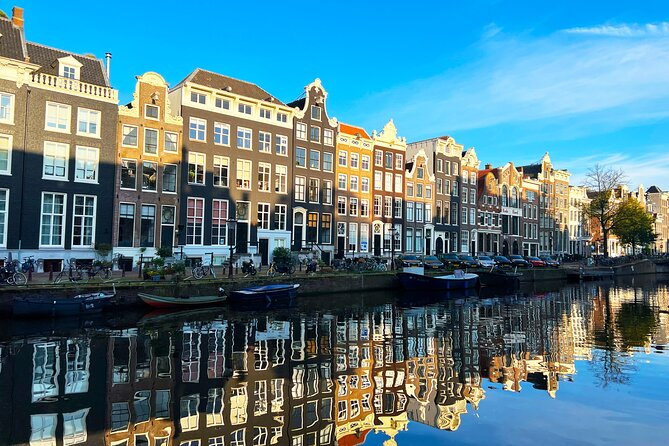
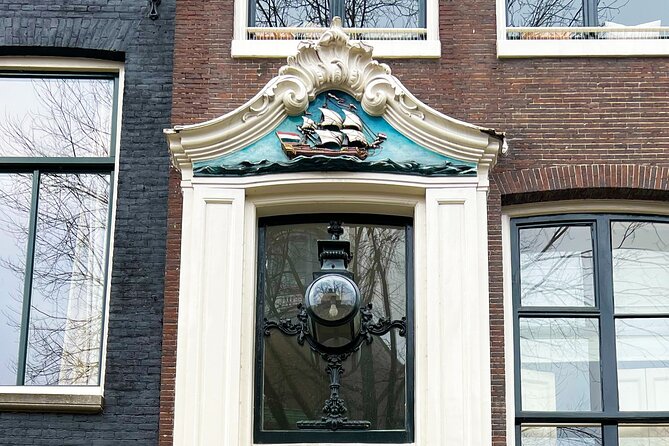
De Dolphijn brings together architecture, maritime trade, and one of Amsterdam’s best-known paintings. The name refers to the dolphin symbol, associated with wealth and the city’s prosperous seafaring economy.
The house was originally owned by Frans Banning Cocq, the captain shown in Rembrandt’s The Night Watch. That connection gives the building extra historical weight without turning the tour into a museum lecture.
I find stops like this especially useful because they connect a place you can see from the street with a person and a work of art you may already know. The house becomes more than a decorative canal façade. It becomes part of the social world that produced Amsterdam’s wealth and culture.
The stop is brief, about five minutes. You get the essential story, but you will not spend time inside the house.
The Ronde Lutherse Kerk and the power of a dome
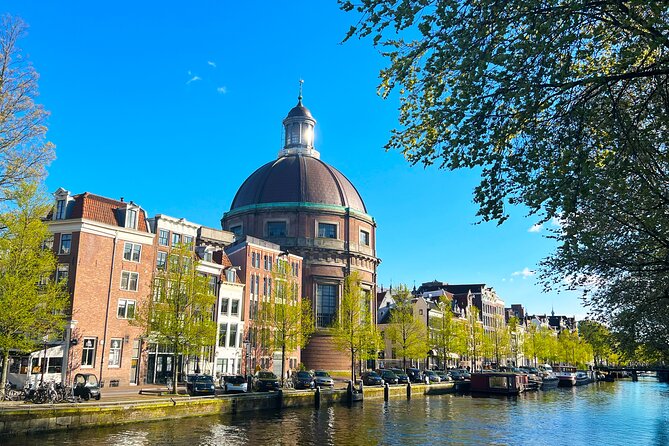
The Ronde Lutherse Kerk provides a short look at the importance of domes during the Renaissance period. Domes were difficult and impressive structures, and their use could signal technical skill, ambition, and religious importance.
This is one of the fastest stops, listed at about five minutes. You should treat it as a visual pause and a chance to hear how architectural achievement was understood in its period.
The tour’s strength here is comparison. After seeing merchant houses and commercial buildings, you get a different expression of wealth and design in a religious setting. The experience does not try to cover every detail, but it keeps the route moving.
Prinsengracht warehouses and the business of the canal
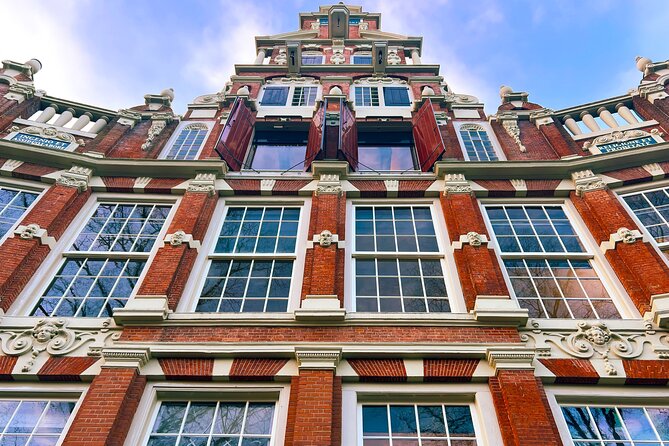
Along Prinsengracht, the subject shifts from grand houses to warehouses. These buildings show how closely Amsterdam’s architecture was tied to trade.
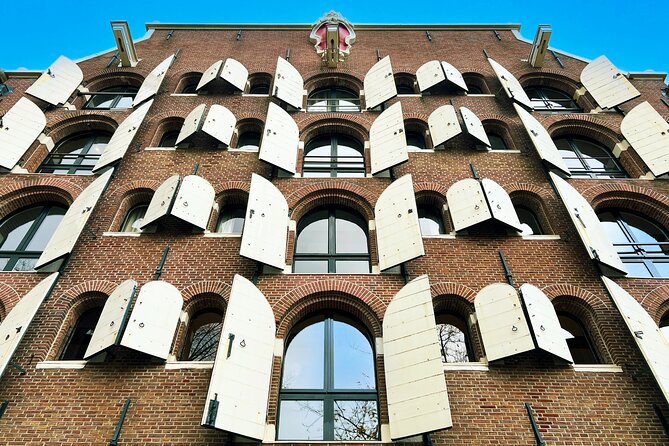
The warehouses use tall façades, steep gables, large windows, and wooden hoisting beams near the roofs. Those beams were practical tools. Merchants used them to lift heavy goods from boats and move cargo into storage areas above street level.
This is the kind of explanation that can change how you look at the canal belt after the tour. The upper floors were not simply decorative. The windows, beams, and roof forms helped a working business operate in a narrow urban setting.
The exterior design is often restrained, with clean lines and limited ornament. That simplicity makes sense when you consider the buildings’ purpose. Their scale, however, reflects the money and reach of the merchants who used them.
The stop lasts around five minutes. If you want a fuller lesson about Amsterdam’s trading system, you may need a longer history tour. For a 90-minute architectural walk, this is a practical and memorable introduction.
Jordaan and the stories hidden in façade stones
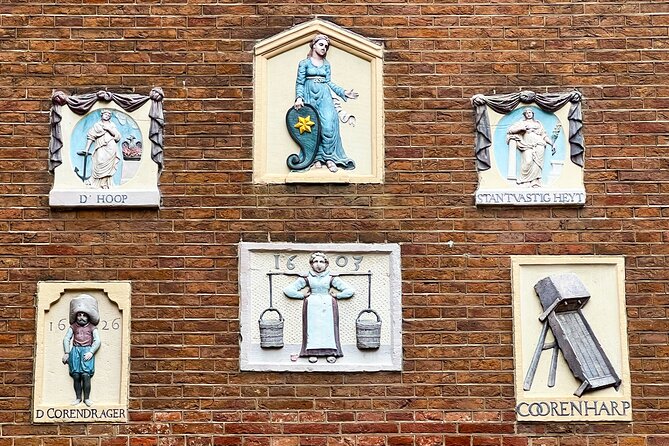
Jordaan receives the longest stop, about 20 minutes, and it is likely the most rewarding section for people who enjoy small details.
In the 17th century, Jordaan served as a lower and middle-class area for craftspeople, laborers, shopkeepers, and families. Its narrow canals and compact houses created a very different feel from the grander merchant residences elsewhere along the route.
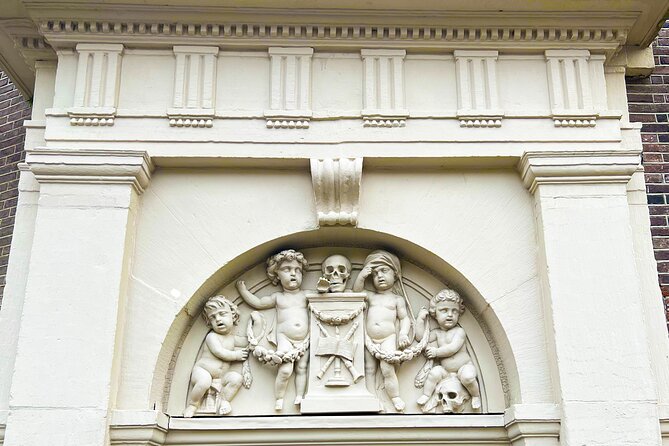
The main focus here is the gevelsteen, or façade stone. These small carved plaques were set into building fronts and often explained what happened inside. A stone might point to a profession, a shop, an owner’s trade, or another fact about the people who lived and worked there.
I like façade stones because they make the street feel personal. You are not only looking at a row of historic houses. You are looking for clues left by ordinary residents and working businesses.
Anna is especially well suited to this kind of walk. Her local connection to Amsterdam and her ability to explain social policy, architecture, and neighborhood life give the façades more meaning. She has also been praised for answering many questions patiently and allowing time for photographs.
Jordaan is a good place to slow down, but the walk remains short. You may want to return later if you enjoy photographing the stones or comparing the houses at your own pace.
Westerkerk and the walk’s final view
The tour ends at Westerkerk on Prinsengracht, near the Anne Frank House. This is a practical finish because you can continue to one of Amsterdam’s best-known sights or explore more of the Jordaan afterward.
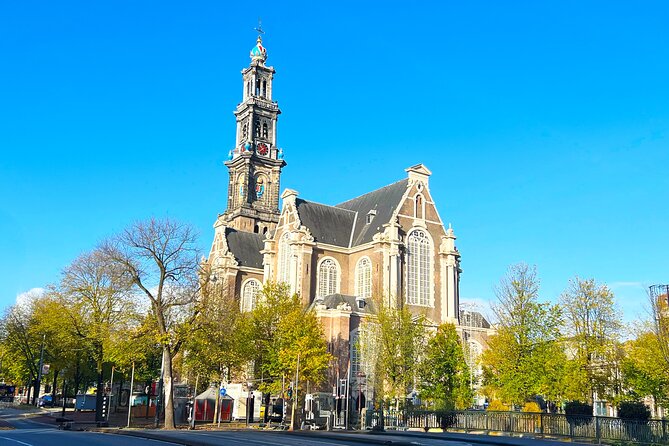
Westerkerk was built as a Calvinist church for Amsterdam’s growing population. Its design is large and airy, with a restrained style suited to Calvinist worship. The church is also linked to Rembrandt, who was buried there.
The tower rises 85 meters above the Jordaan and is topped by the imperial crown, a symbol connected with Amsterdam’s status. Its clock and chimes are also tied to the city’s daily life. Anne Frank wrote about those sounds in her diary, giving the tower an especially strong place in Amsterdam’s memory.
The tour gives you about five minutes here. Again, this is mainly an exterior stop. If you want to visit the church or climb its tower, you should check separately for opening details and admission.
What the private format adds
The private setup is the clearest reason to choose this tour over a larger group walk. Your group is the only group participating, so you can ask about a façade, pause for a photograph, or request extra explanation without worrying about holding up a crowd.
That flexibility matters on a route built around small details. A guide can point out something easy to miss, then adjust the explanation to your interests. If you care about building methods, you can focus on engineering. If you like social history, you can ask more about merchants, workers, and household life.
Anna’s style appears warm and personal. She is described as friendly, patient, and easy to understand, with excellent English. The strongest praise centers on her ability to make the subject accessible without losing detail.
The private format also makes the price easier to assess. At $73.59 per person, it is not a budget walk. For one person or a couple, the cost is fairly high for 90 minutes. For a small group, though, the chance to share a private guide can make the price reasonable, especially if you value questions and personal recommendations.
Group discounts are available, so check the final price for your party before deciding.
Timing, walking comfort, and practical details
The tour lasts about one hour and 30 minutes. It covers a lot of ground, but the route is broken into short stops, with the longest explanation in Jordaan.
You should wear comfortable shoes and expect to walk and stand throughout. The tour is not recommended for people who use a walker or have difficulty walking and standing for 1.5 hours. Mobility aids are not available.
The experience is offered in English and includes a mobile ticket. Bottled water is not included, so carry your own if you need it.
Confirmation arrives at booking. Service animals are allowed, and the meeting point is near public transportation. Free cancellation is available up to 24 hours before the start time. Changes or cancellations inside that window are not accepted for a refund.
The walk ends at Westerkerk, Prinsengracht 279, near the Anne Frank House. That makes it easy to plan a second activity afterward, though you should allow extra time if you have a timed entry elsewhere.
Who should book this architecture walk?
I would choose this tour if you want to understand why Amsterdam looks the way it does. It suits first-time visitors who want an introduction to the canal belt, as well as returning visitors who have already seen the major sights and now want to notice the smaller clues.
It is particularly good for people who enjoy architecture, urban history, trade, engineering, and local stories. The focus on façade stones and building details makes it more specific than a standard city orientation walk.
I would be less likely to recommend it if you want museum admissions, long interior visits, or a relaxed stroll with lots of sitting. The tour is short, focused, and made for people who are comfortable walking and standing.
Should you book the Golden Age Architecture walk?
Book it if you want a personal guide to the buildings you might otherwise pass without understanding. The strongest features are the private setting, Anna’s clear and friendly approach, and the attention to construction, trade, and small architectural clues.
Think twice if $73.59 feels steep for a 90-minute outdoor walk, or if mobility is a concern. For a small group that likes asking questions, the price can be justified. For a solo visitor on a tight budget, a public walk or self-guided route may offer better value.
For the right audience, this is a smart way to get your bearings in central Amsterdam. You finish near Westerkerk and the Anne Frank House, but more importantly, you leave knowing what to look for: hoisting beams, façade stones, crooked walls, domes, gables, and the marks of a city built by trade.
FAQ
How long is the Golden Age architecture tour?
The tour lasts approximately 1 hour and 30 minutes.
Where does the tour start?
It starts at the Royal Palace Amsterdam, Nieuwezijds Voorburgwal 147, 1012 RJ Amsterdam.
Where does the tour end?
The walk ends at Westerkerk, Prinsengracht 279, near the Anne Frank House.
Is this a private tour?
Yes. Only your group participates in the activity.
What language is the tour offered in?
The tour is offered in English.
Is the tour suitable for people with walking difficulties?
The tour is not recommended for people who use a walker or have trouble walking and standing for 1.5 hours. Mobility aids are not available.
Just added in Netherlands
- Rotterdam Must Do Tour: Highlights, History, WW2 and Architecture★ 5.0 · 20 reviews
- Escape Room – l’Architecte★ 4.5 · 13 reviews
- Private Rotterdam Walking Tour – guided by Architects★ 5.0 · 2 reviews
- Rotterdam Architecture and Highlights Walking Tour (TOP RATED)★ 4.5 · 14 reviews
- Maastricht Highlights, Architecture & Heritage Tour★ 5.0 · 7 reviews
- Gouda Private Walking Tour: History, Architecture & Cheese★ 4.5 · 8 reviews
- Amsterdam Architecture Tour★ 5.0 · 4 reviews
- Amsterdam Walking Tour. All about History, Architecture, Traditions & Anecdotes.★ 5.0 · 2 reviews
Walking Tours, compared.

The Official Art Deco Walking Tour by The Miami Design Preservation League
Read our review →
Baroque Architecture and Underground Walking Tour
Read our review →
Chicago in a Day: Food, History & Architecture Walking Tour
Read our review →

Ramblas, Old Town, Gothic and Gaudi Architecture Walking Tour
Read our review →
Chicago’s Secret Interiors Architectural Walking Tour
Read our review →
Browse the lists this tour appears in