
REVIEW · ROTTERDAM ARCHITECTURE TOURS
Rotterdam: Architectural Highlights Guided Walking Tour
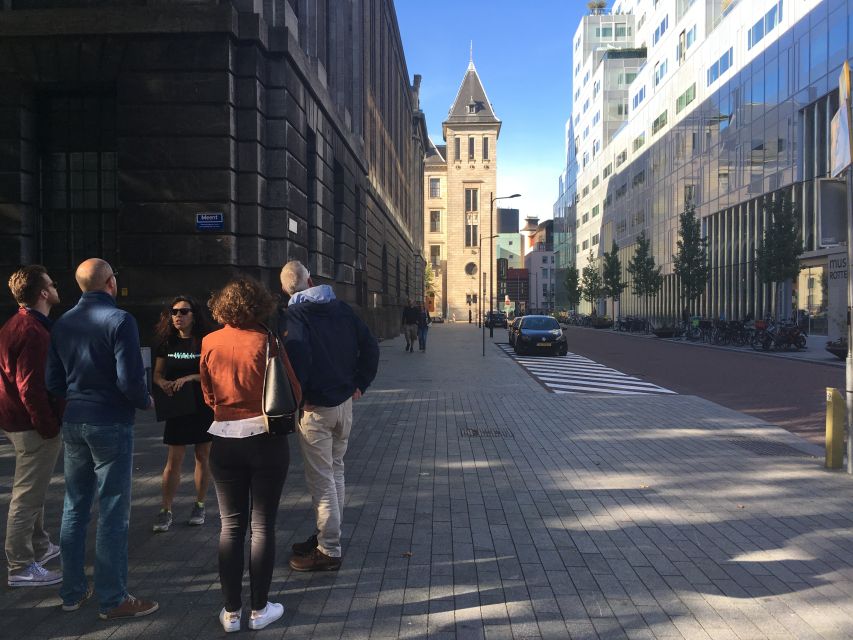
Rotterdam rewards curious walkers. This two-hour tour links the city’s major architectural sights with its wartime destruction, rebuilding, and ambitious future. I like the route from Rotterdam Centraal to the Maas waterfront, and I like having an architect explain why the buildings look so different instead of simply pointing them out. The main consideration is pace: you cover 3 to 4 kilometers in two hours, and there is a lot to take in.
The tour is especially useful at the start of a Rotterdam visit. Guides such as Tania, Tanya, Silvia, and Sylvie have been praised for explaining buildings in their historical and social setting, not just listing names and dates. You should expect an urban walk rather than an architecture lecture, but the content is serious enough for design fans.
Key points at a glance
- A city-size introduction: Walk from Rotterdam Centraal to the riverside while seeing many of the central landmarks in one continuous route.
- Architecture with reasons behind it: Learn how the 1940 bombing, postwar planning, and later development shaped the city.
- Major sights included: The route features Lijnbaan, City Hall, Timmerhuis, Sint Laurens church, Markthal, the Cube Houses, and Erasmus Bridge views.
- A practical two-hour length: Long enough to get your bearings, short enough to fit around trains, museums, or a day trip.
- Strong guide element: The architect guide is the real value, with past participants praising Tania, Tanya, Silvia, and Sylvie for clear explanations and friendly pacing.
- Bring walking shoes: The tour operates in all weather and includes several kilometers on foot, with no food, drinks, or transport included.
Why an architect changes the way Rotterdam looks
Rotterdam can confuse you at first. Its center mixes historic fragments, postwar rebuilding, modern towers, experimental housing, broad streets, and new waterfront projects. Without context, you may simply see a collection of unusual buildings.
A local architect gives those buildings a storyline. You learn about daily life in the city, its industrial past, the destruction caused by the 1940 bombardment, and the choices made during reconstruction. That context matters because Rotterdam did not merely replace what was lost. It used the rebuilding period to rethink how a city center should work.
I particularly like that the tour treats architecture as part of ordinary life. Lijnbaan is not just a shopping street. City Hall is not just a grand civic building. The Markthal and Cube Houses are not just photo stops. Each site helps explain how Rotterdam tested new ideas about streets, housing, commerce, public space, and the relationship between old and new.
The guides also appear to adjust their explanations to the group. People with little architectural background can follow the walk, while those who already like design have room to ask more detailed questions. Some guides have used historical photographs to show how areas changed, which can make the rebuilding story much easier to grasp.
More walking tours in Netherlands:
- Rotterdam: Highlights, Gems, Architecture & History Walk
★ 5.0 · 191 reviews - Rotterdam Walk: Hilights, Gems, Architecture & WWII | 2 or 3hrs
★ 5.0 · 149 reviews - Rotterdam Architecture Highlights Walking Tour
★ 5.0 · 66 reviews
Meeting under the clock at Rotterdam Centraal
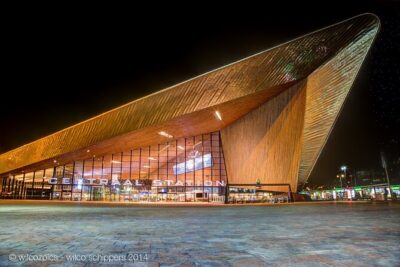
The meeting point is underneath the clock at Rotterdam Centraal Station. That is a sensible place to begin because the station itself introduces the city’s modern character before the walking route even starts.
You should arrive ready to walk, rather than treating this as a stop-and-start sightseeing tour. The route generally moves from the station through central Rotterdam and onward to the riverside. You will have chances to pause for explanations, but the group needs to keep moving to cover the distance.
The station is also useful for anyone arriving by train or using Rotterdam as a base for a day visit. Since the tour begins at a major transport hub and finishes near the waterfront, it can fit neatly into a wider day in the city. Transportation costs are not included, so you handle your own journey to and from the meeting point.
From Central Station to Lijnbaan and City Hall
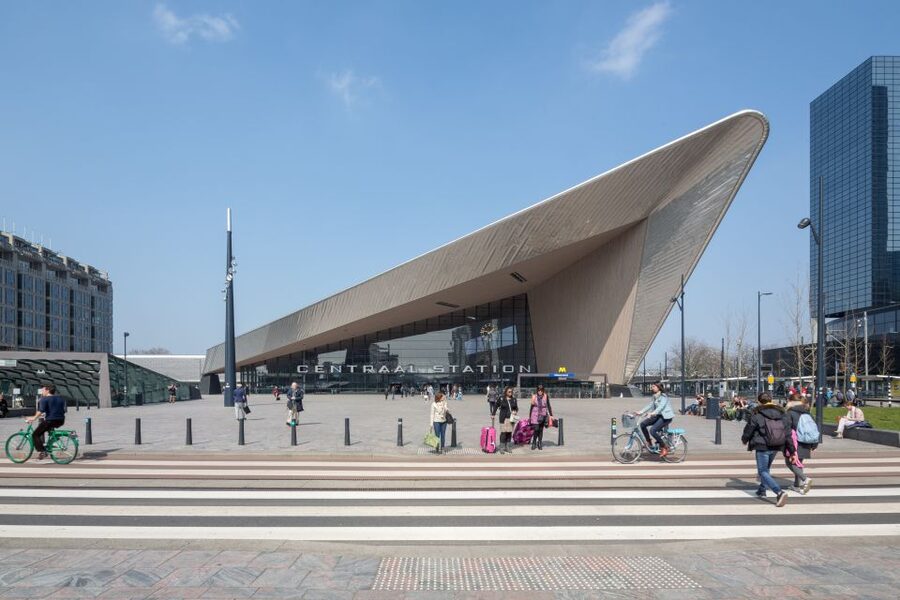
Rotterdam Centraal provides an immediate lesson in the city’s preference for bold, practical design. The tour uses the station as a starting point before moving into the central streets and the Lijnbaan area.
Lijnbaan is important because it reflects Rotterdam’s postwar approach to city planning. Rather than presenting the city as a preserved old center, the route shows how commercial streets and public spaces were redesigned for modern urban life. Your guide can explain the thinking behind the layout and how it fits into Rotterdam’s rebuilding story.
City Hall adds another layer. Here, the focus shifts from shopping and public movement to civic architecture and the way a city expresses authority and identity through its public buildings. The value of this part of the walk is not only the building itself. It is the comparison between different periods and purposes, which helps you read the city as you go.
This section can feel information-heavy if you are mainly looking for photographs. I would pay attention to the guide’s explanation of why particular design decisions were made. That is where the tour earns its price.
Timmerhuis and Rotterdam’s mix of old and new
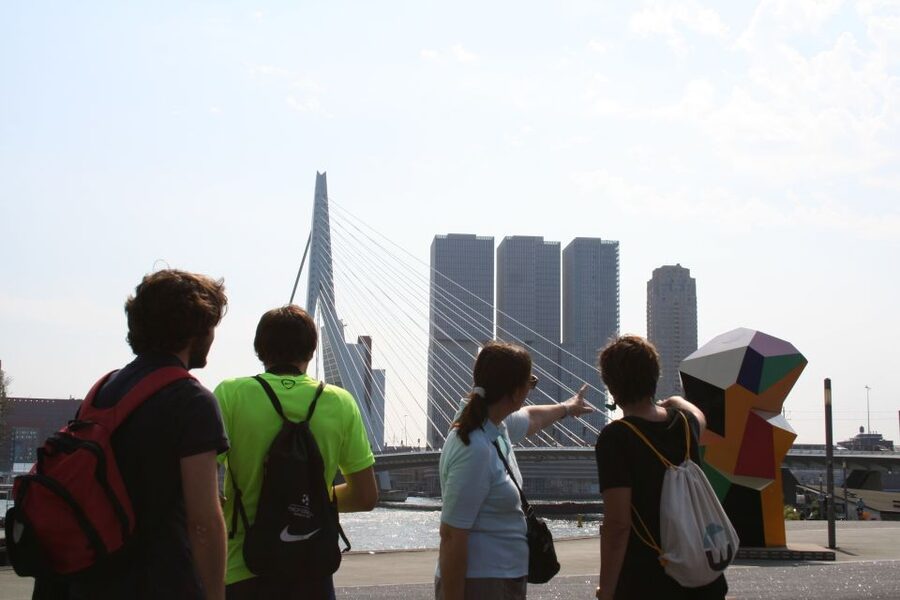
The Timmerhuis gives the tour a chance to discuss newer architecture and changing ideas about how city buildings should function. It is part of the central route, so you can compare its form and scale with nearby buildings rather than viewing it in isolation.
That comparison is one of the strongest features of the experience. Rotterdam’s architecture does not follow one neat style. You encounter different answers to different problems: rebuilding after wartime destruction, providing housing, creating commercial space, supporting city administration, and making room for new development.
A guide who works as an architect can explain those differences in plain language. Past participants have singled out the explanations of urbanization, architecture, and city planning as especially useful. You do not need technical training to benefit. The best moments are likely to be the small details that make you notice a building’s purpose, structure, or relationship to the street.
A few more architecture tours in Netherlands worth a look
- Walking Tour about Golden Age Architecture, private local guide
★ 5.0 · 15 reviews - Private Rotterdam Walking Tour – guided by Architects
★ 5.0 · 2 reviews - Chicago River: 1.5-Hour Guided Architecture Cruise
★ 4.8 · 8,046 reviews - Park Güell: Guided Tour with Optional Gaudí Experience Entry
★ 4.1 · 832 reviews
Sint Laurens church and the memory of 1940
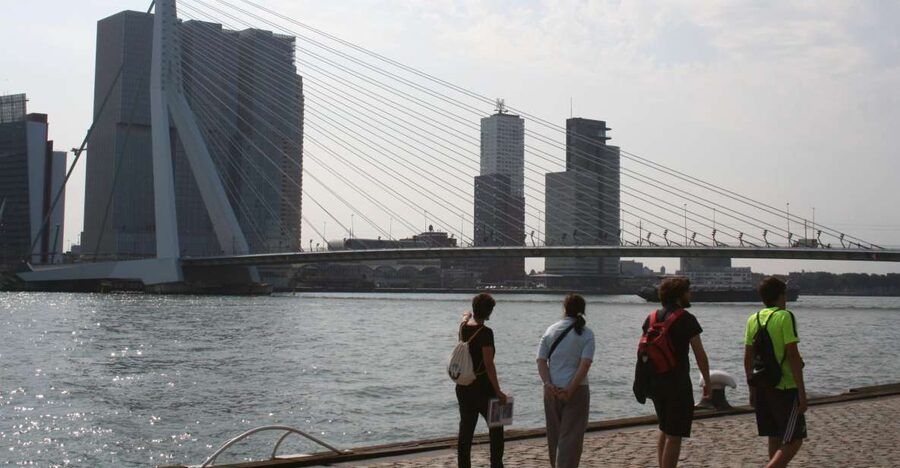
Sint Laurens church brings a historical counterpoint to Rotterdam’s modern center. It helps show what survived, what was damaged, and how the city’s older identity fits into a center better known for new construction.
The 1940 bombing is central to understanding Rotterdam. Several past participants found that the tour’s treatment of destruction and rebirth gave them a better sense of why the city looks so unlike many other Dutch cities. This is not a side note added for atmosphere. It explains the gaps, the planning choices, and the confidence behind much of Rotterdam’s postwar architecture.
You may also hear about subtle ways the city remembers the destroyed area. One past guide used historical photographs and pointed out lights embedded in sidewalks that mark the section affected by the bombing at night. That detail shows the kind of information you would likely miss while walking alone.
The subject can be sobering, but the tour does not stop at tragedy. It connects the past to later decisions and to the city’s continuing effort to rebuild and reshape itself.
Inside the Markthal and past the Cube Houses
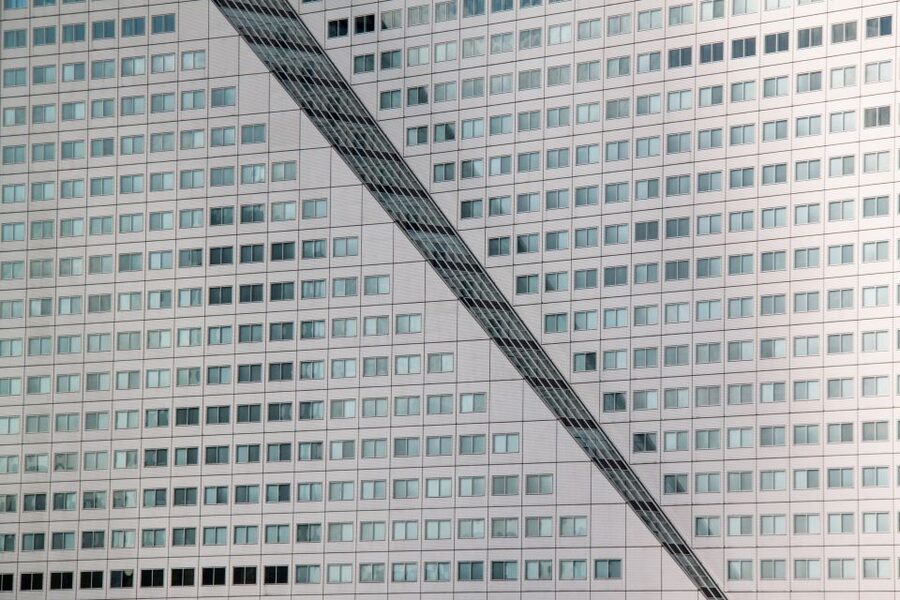
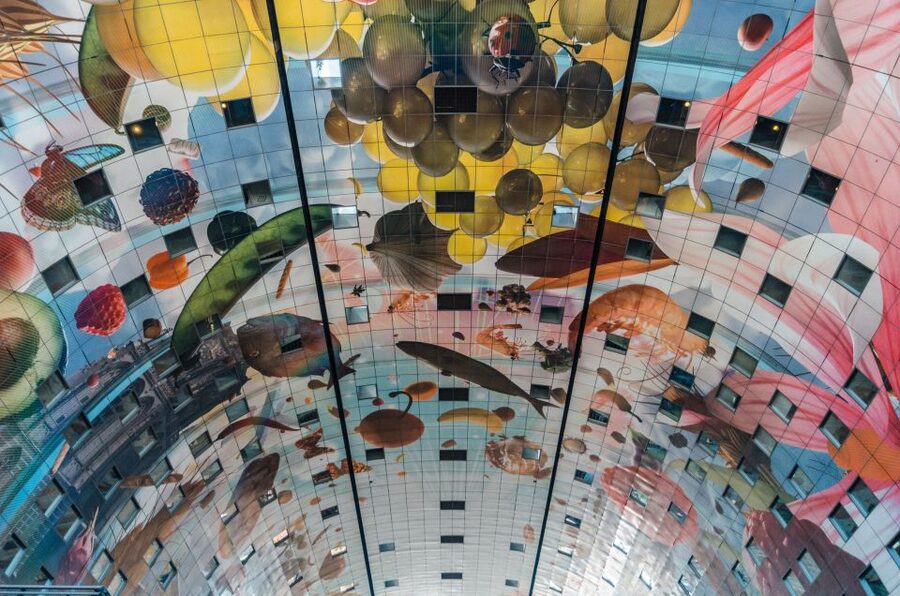
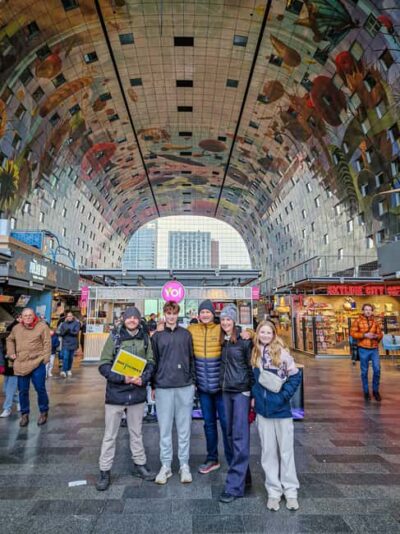
The Markthal is one of the tour’s most recognizable stops. You walk inside rather than viewing it only from the street, which gives you a better sense of its scale and public purpose.
The guide can place the building within Rotterdam’s wider push to create new central spaces. You should have a chance to look around as you move through, but remember that this remains a guided walking tour, not a dedicated food visit. Food and drinks are not included, so plan to make your own purchases if you want to eat there.
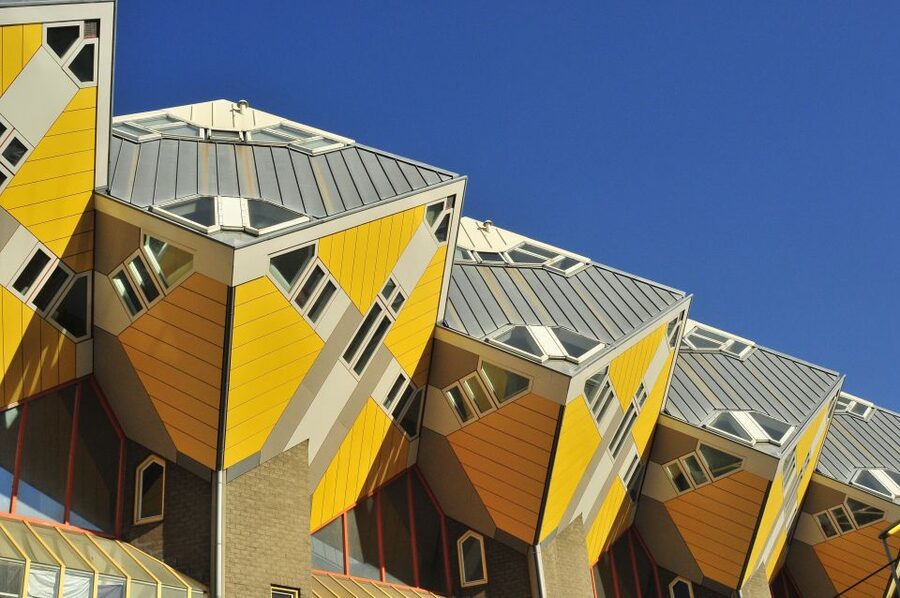
The Cube Houses come next, or near this part of the route, and provide another clear example of Rotterdam’s willingness to try unusual forms. Their angled structures are visually memorable, but the tour’s value is in explaining the idea behind them and how they fit into the surrounding area.
Not everyone will love the Cube Houses as design. One past participant felt the route gave them more attention than the buildings deserved, while another appreciated seeing the area as part of the city’s architectural story. That is a fair warning: you will see the Cube Houses, but you do not have to agree that every famous building is successful.
If you want a tour centered on less familiar housing or social architecture, this route may leave you wanting more. The set itinerary focuses on central landmarks, and one participant specifically wished for more social housing projects. Still, the Cube Houses make a useful discussion point because they show how fame and function do not always line up.
Toward the Maas and Erasmus Bridge
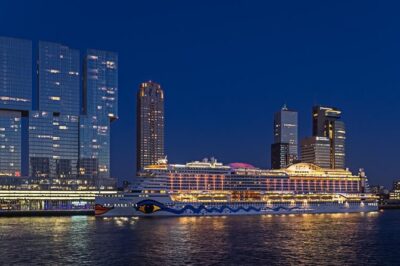
The walk finishes by moving toward the riverside, where the city’s newer development and skyline come into view. This change in setting is welcome after the tighter central streets. You get a broader sense of Rotterdam as a port city and see how the center relates to the water.
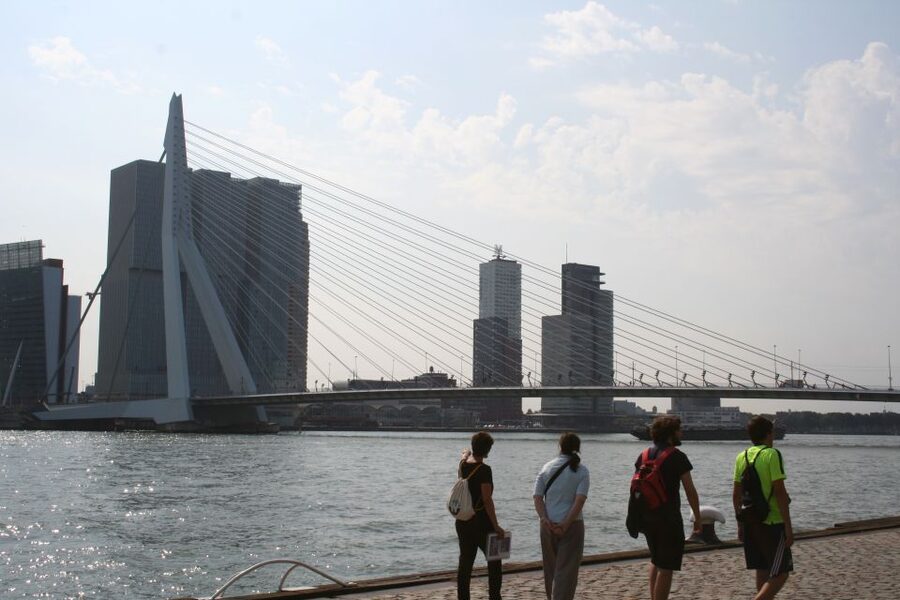
The Erasmus Bridge is the visual payoff. Its sweeping form has become one of Rotterdam’s best-known symbols, and the riverside setting lets you consider it as part of a larger development rather than as an isolated landmark.
The guide also discusses the South Bank and the city’s newer high-rise growth. This is where Rotterdam’s future plans enter the conversation. You can connect the older industrial city, the rebuilt center, and the newer waterfront projects in one walk.
The route is not a full harbor tour, and two hours cannot cover every interesting building near the river. One past participant suggested that a bicycle version could make sense for exploring more of the harbor area. That is useful advice if you are strongly focused on port architecture or want a wider survey of Rotterdam.
How much architecture fits into two hours
Two hours is a good length for an introduction, but it requires a steady pace. You cover about 3 to 4 kilometers and stop repeatedly for explanations, so comfortable shoes matter.
Several past participants felt the tour covered a great deal in the time available. Others wished it lasted four hours or included more pauses. I would expect a brisk but manageable walk, especially if you want to ask questions at each stop.
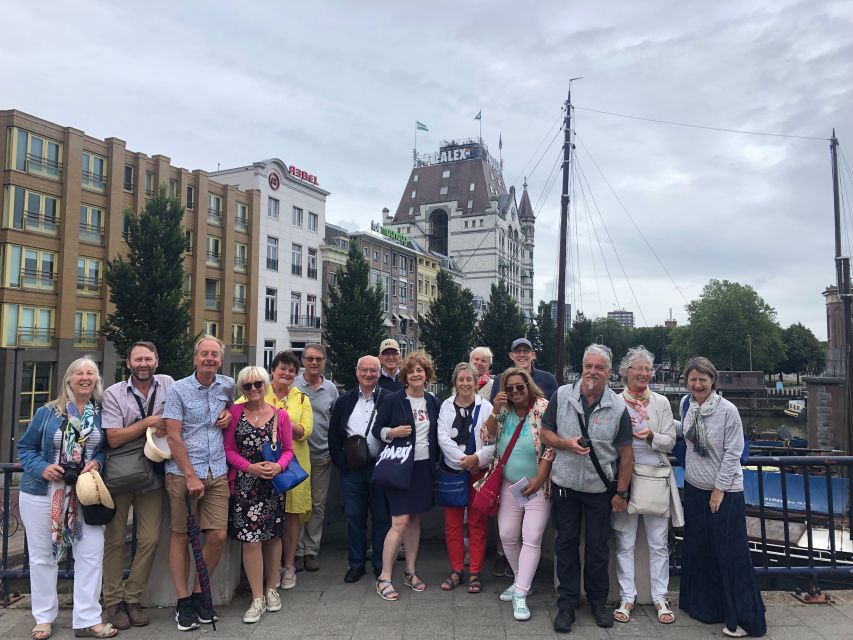
The group format can affect the feel. Smaller groups allow more conversation and make it easier to ask about a particular building. A private group is available, which may suit families, friends, or architecture students who want a more tailored discussion. The tour is wheelchair accessible, though you should still consider the length and the number of outdoor walking sections when deciding if it suits your group.
Children aged 0 to 12 can join free. The important question is not the price, but attention span and stamina. The subject matter is aimed at adults, and the route lasts two hours, so younger children may need patience from the adults accompanying them.
Guide quality and listening comfort
The architect guide is the reason to book this walk instead of simply following a map. Tania and Tanya receive repeated praise for friendly, engaging explanations, while Silvia and Sylvie are described as especially strong at connecting architectural development with the city’s past.
A few practical points are worth noting. English is the tour language, and one participant found a guide’s Spanish accent occasionally difficult to understand. That does not make the tour unsuitable, but if you have trouble with accents, stay close to the guide and ask for repetition when needed.
The strongest guides appear to balance facts with conversation. They answer questions, slow down for people who need to catch up, and offer suggestions for other sights, restaurants, and things to do. The tour should not feel like a memorized speech, though the route itself is set.
That fixed route is both a strength and a limit. It keeps the two-hour walk focused and ensures you see the major central sights. It also means the guide may not be able to follow every personal interest, such as social housing, industrial buildings, or a particular architectural era.
Is $53 a fair price?
At $53 per person, this is not the cheapest way to walk around Rotterdam. You can see the buildings from the outside for free, and the route itself does not include food, drinks, or transportation.
The value comes from interpretation. You are paying for a local architect, a planned sequence of major sights, historical context, and the ability to ask questions. Past participants have repeatedly described the experience as good value, with one calling the quality a bargain and another saying it provided an excellent introduction for the price.
I think the price makes the most sense if Rotterdam is new to you and you want to understand the city quickly. It is also worthwhile if you enjoy design but do not have the background to interpret buildings on your own. If you already know Rotterdam’s central architecture well, the set route may feel less useful unless you book a private group and shape the discussion around your interests.
Free cancellation up to 24 hours before the start and the option to reserve now and pay later make the booking less risky. The tour runs rain or shine, so check the forecast and dress for the conditions. Comfortable shoes and a weatherproof layer are more important than dressing up.
Who should book this Rotterdam walk?
I would recommend it most strongly to first-time visitors, architecture fans, urban-planning enthusiasts, and anyone arriving by train with a few hours to spare. It also suits people who prefer understanding a place through its buildings rather than spending the whole day inside museums.
You should book it if you want to connect the 1940 bombing with the modern city, compare several architectural periods, and finish with the Markthal, Cube Houses, and Erasmus Bridge in one route.
You may want a different experience if you dislike brisk walking, want a relaxed café-based tour, or hope to focus mainly on the harbor and South Bank. The two-hour format gives you a strong central overview, but it cannot explore every corner of Rotterdam.
Final verdict: a smart first look at Rotterdam
This is a focused, useful introduction to a city that can be hard to read on your own. I like the combination of Central Station, Lijnbaan, City Hall, Timmerhuis, Sint Laurens church, Markthal, Cube Houses, and the riverside because it gives you both famous sights and the story connecting them.
The main tradeoff is speed. You cover a lot of ground, and some people will want longer pauses or a second tour focused on housing or the harbor. Still, if you arrive with comfortable shoes and an interest in how cities change, I think the $53 price is fair. Book it early in your Rotterdam stay, then use what you learn to make sense of the rest of the city.
FAQ
How long is the Rotterdam architecture walking tour?
The tour lasts two hours.
Where does the tour meet?
Meet the guide at Rotterdam Centraal Station underneath the clock.
Where does the walking tour go?
The route runs from Rotterdam Centraal Station through central Rotterdam toward the riverside.
Which landmarks are included?
The tour includes Rotterdam Centraal, the Lijnbaan area, City Hall, Timmerhuis, Sint Laurens church, Markthal, the Cube Houses, and views of the Erasmus Bridge and riverside development.
How far do you walk?
The route covers approximately 3 to 4 kilometers.
What language is the tour offered in?
The live tour guide speaks English.
Is the tour wheelchair accessible?
Yes, the activity is listed as wheelchair accessible.
Can children join the tour?
Yes. Children aged 0 to 12 can join for free, though parents should consider the distance, subject matter, and two-hour duration.
Does the price include food, drinks, or transportation?
No. Food, drinks, and transportation costs are not included.
What should you bring?
Bring comfortable shoes and clothing suitable for the weather. The tour operates rain or shine.
Can you cancel the booking?
Yes. You can cancel up to 24 hours in advance for a full refund.
Is a private group available?
Yes. A private group option is available.
Just added in Netherlands
- Rotterdam Must Do Tour: Highlights, History, WW2 and Architecture★ 5.0 · 20 reviews
- Private Rotterdam Walking Tour – guided by Architects★ 5.0 · 2 reviews
- Escape Room – l’Architecte★ 4.5 · 13 reviews
- Rotterdam Architecture and Highlights Walking Tour (TOP RATED)★ 4.5 · 14 reviews
- Maastricht Highlights, Architecture & Heritage Tour★ 5.0 · 7 reviews
- Gouda Private Walking Tour: History, Architecture & Cheese★ 4.5 · 8 reviews
- Amsterdam Architecture Tour★ 5.0 · 4 reviews
- Walking Tour about Golden Age Architecture, private local guide★ 5.0 · 15 reviews
Rotterdam Architecture Tours, compared.
Rotterdam Walk: Hilights, Gems, Architecture & WWII | 2 or 3hrs
Read our review →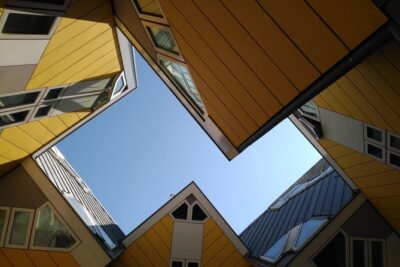
Rotterdam Must Do Tour: Highlights, History, WW2 and Architecture
Read our review →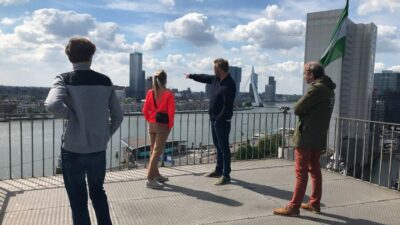
Rotterdam Architecture and Highlights Walking Tour (TOP RATED)
Read our review →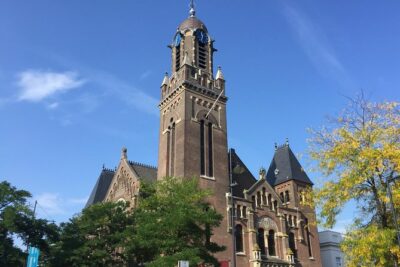
Browse the lists this tour appears in