
REVIEW · ROTTERDAM ARCHITECTURE TOURS
Rotterdam: Highlights, Gems, Architecture & History Walk
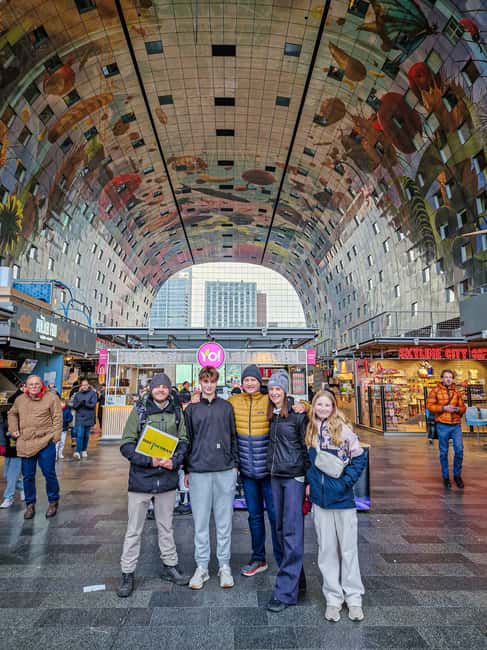
Rotterdam tells its story in steel and stone. This 2 to 3-hour walk makes the city easier to understand, linking its medieval harbor roots with wartime destruction and bold rebuilding. I especially like the local perspective from guides such as Yoreh and Elmer, plus the use of large photo sheets showing Rotterdam’s past, present, and planned future. I also like that the route finishes inside the Markthal, where you can turn a sightseeing walk into lunch.
The main consideration is the pace. You cover about 5 kilometers and roughly 11,000 steps, with periods of standing and some stairs. I would choose the two-hour version if you want a useful first look, but the three-hour option gives you more time for stories, architecture, and questions. Good shoes are not optional here.
Key Points at a Glance
- A local Rotterdam guide: Yoreh and Elmer bring personal stories, strong historical context, and practical advice about food, museums, shopping, and photo spots.
- Old, current, and future Rotterdam: The walk connects the medieval city, the port, WWII destruction, modern buildings, and new development plans.
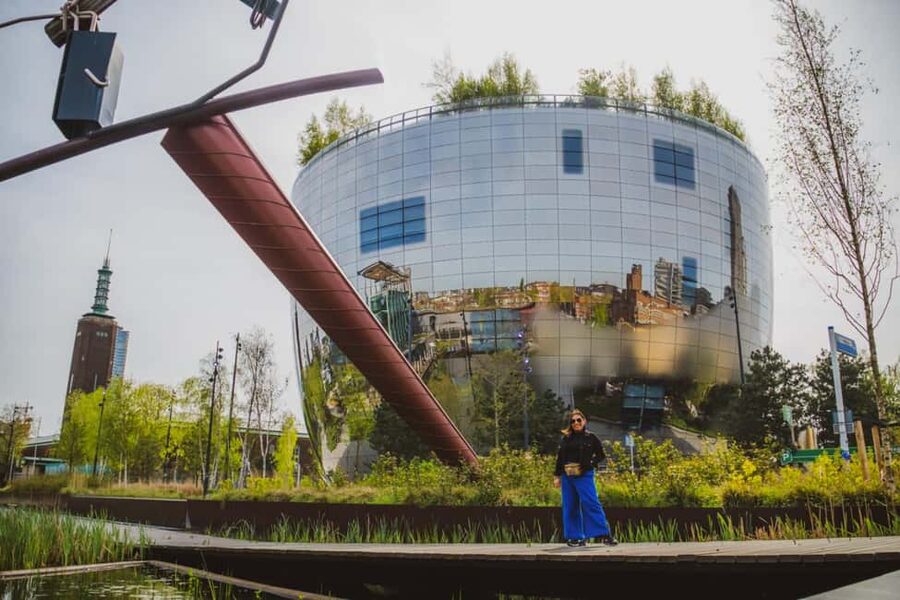
- Major sights in one route: You pass the Depot Boijmans Van Beuningen, Erasmus Bridge, Maritime District, Old Harbor, Cube Houses, and Markthal.
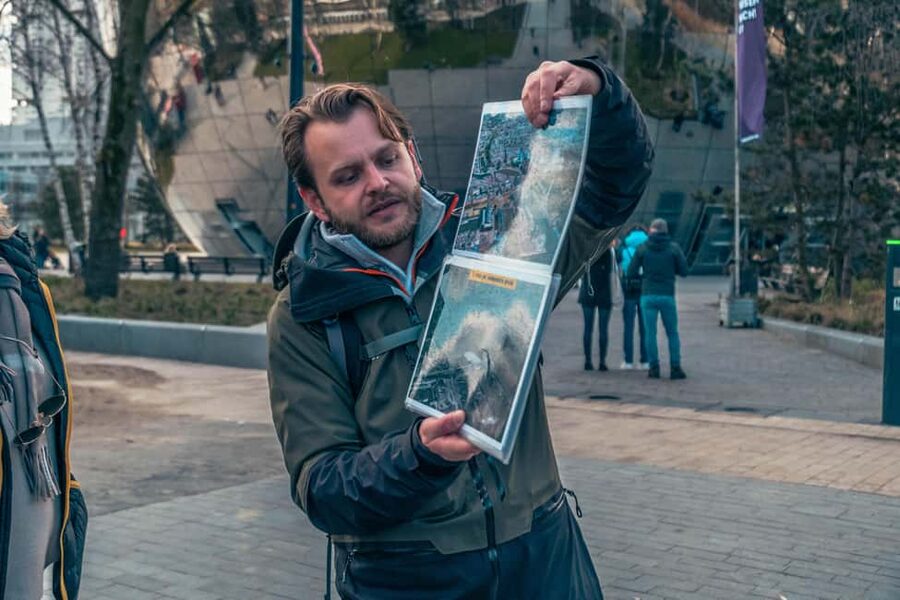
- Visual storytelling: A3 photo sheets help you see what Rotterdam looked like before the bombing and how the city changed afterward.
- A small-group feel: The guide can answer questions and adjust the conversation to the people in the group.
- A practical finish: The tour ends at the Markthal, with food suggestions and time to continue exploring on your own.
Why This Walk Helps You Understand Rotterdam
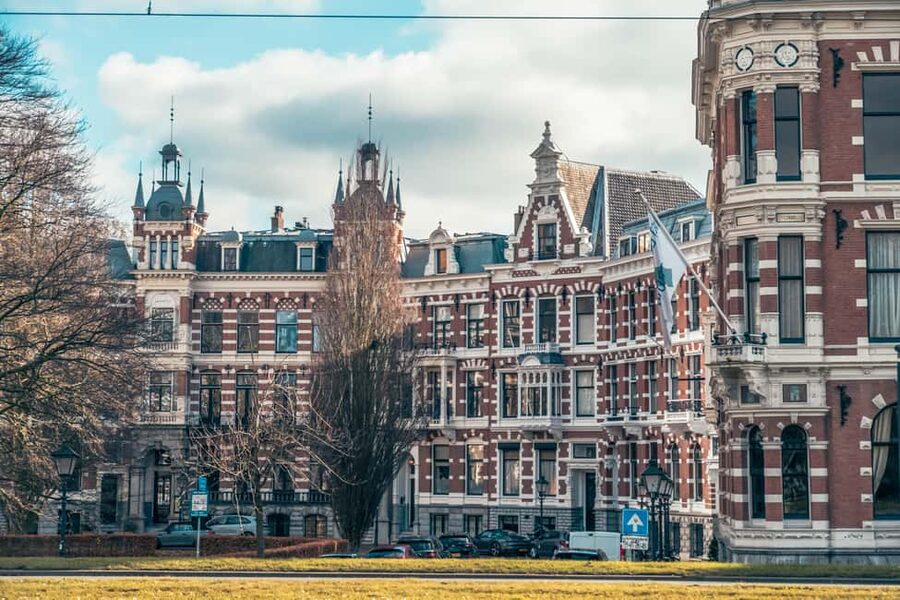
Rotterdam can be a puzzling first stop. Much of the center looks new, angular, and purpose-built, with relatively little of the old Dutch cityscape that you may expect from Amsterdam, Delft, or Utrecht. This walk explains why.
The story begins in the 13th century, when Rotterdam grew beside the Rotte River. From there, the city developed into a major trading center and eventually one of Europe’s most important ports. That port remains central to Rotterdam’s identity, but the tour does not treat shipping as a dry economic subject. It connects the harbor to neighborhoods, bridges, public spaces, and the city’s changing ambitions.
The most important turning point is WWII. The bombing and invasion caused enormous damage, and Rotterdam had to rebuild rather than simply restore its old center. The result is a city that became a testing ground for modern architecture and urban planning.
That context makes the buildings easier to read. The Cube Houses are not just unusual yellow structures for a quick photo. The Markthal is not merely a food court with a colorful ceiling. The route helps you see how Rotterdam repeatedly asks a practical question: what should a modern port city look like now, and what should it become next?
More walking tours in Netherlands:
- Rotterdam: Architectural Highlights Guided Walking Tour
★ 4.8 · 215 reviews - Rotterdam Walk: Hilights, Gems, Architecture & WWII | 2 or 3hrs
★ 5.0 · 149 reviews - Rotterdam Architecture Highlights Walking Tour
★ 5.0 · 66 reviews
Starting Near the Depot Boijmans Van Beuningen
Meeting points can vary according to the option booked, so check your confirmation carefully. One listed starting point is near the Vaimoo shared-bike station at Melkkoppad.
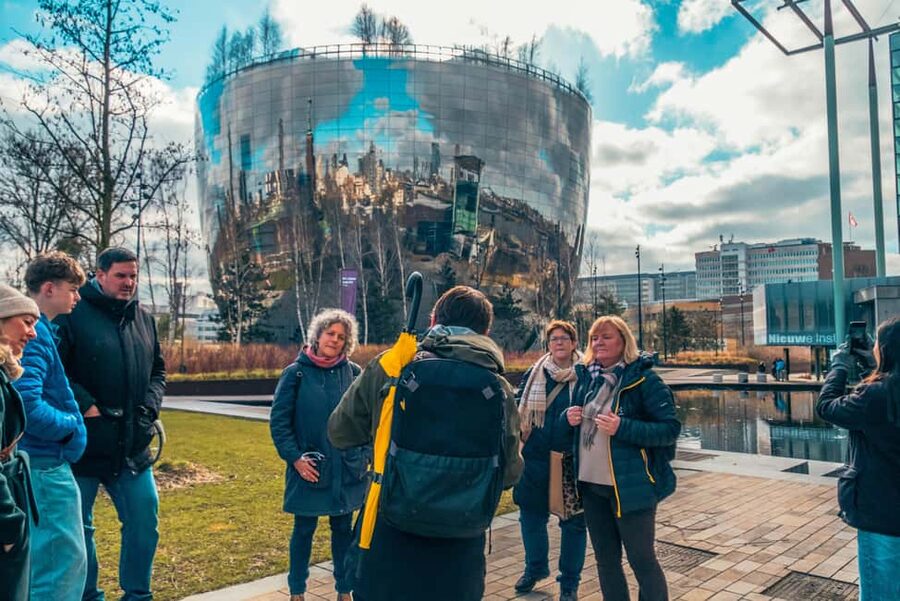
The walk passes the Depot Boijmans Van Beuningen, the striking public art storage building beside Museumpark. It is a useful early introduction to Rotterdam’s taste for unusual forms. The depot’s mirrored exterior reflects the surrounding city, while the building’s purpose is tied to the nearby museum collection.
You do not enter the depot as part of this walk, so consider it an orientation stop rather than a museum visit. The guide helps place it within the Museum Quarter and points out nearby sights for later. If you have more time in Rotterdam, this area deserves a separate visit.
The guide’s photo material is especially useful here and at later stops. Instead of hearing a date and moving on, you get a visual comparison between earlier Rotterdam and the city you are seeing.
Veerhaven and the Maritime Side of the City
The route continues through Veerhaven, a more refined part of Rotterdam with a different feel from the city’s large commercial zones. This change matters because it prevents the tour from presenting Rotterdam as nothing but glass towers and concrete.
From here, the city’s maritime character comes into focus. Rotterdam’s relationship with water is not decorative. The port shaped its work, wealth, neighborhoods, and sense of purpose. Your guide also connects the older harbor areas with the city’s present-day development.
This is one of the places where a local guide adds real value. A map can show you the waterfront, but it cannot easily explain how the harbor influenced the city’s growth or why certain parts feel older, more formal, or more industrial.
Erasmus Bridge and the Modern Skyline
The walk passes the Erasmus Bridge, one of Rotterdam’s best-known structures. Its sweeping white support has earned it a nickname connected with a swan, but the more useful point is what the bridge represents: Rotterdam’s link between older central districts and newer development across the river.
The bridge offers strong views for photographs, especially when the skyline, water, and cable structure line up. Your guide also suggests good picture locations, and several people have appreciated the help with taking photos. That is a small service, but it can make a difference when you are traveling alone or with a group.
Do not expect a long stop dedicated only to photography. The walk keeps moving, and the route may change slightly during city events or severe weather. You can take pictures, but you need to keep a steady pace to complete the tour on time.
More history tours in Netherlands:
- The rise of Haarlem: Culture, History, Art and Architecture Walking Tour
★ 5.0 · 59 reviews - Rotterdam Must Do Tour: Highlights, History, WW2 and Architecture
★ 5.0 · 20 reviews - Gouda Private Walking Tour: History, Architecture & Cheese
★ 4.5 · 8 reviews - Maastricht Highlights, Architecture & Heritage Tour
★ 5.0 · 7 reviews
Leuvehaven and the Maritime District
At Leuvehaven, the route pauses for about ten minutes. This gives you a chance to absorb Rotterdam’s connection to ships, trade, and water before moving farther into the center.
The Maritime District adds another layer to the city story. Here, older harbor traces sit beside newer buildings, showing how Rotterdam keeps reusing central land. The guide explains the history, current character, and future plans for this part of town.
This mix is one of the strongest parts of the walk. You are not simply ticking off sights. You are seeing how a city changes when its economy, transport needs, and population change.
The guide may also provide useful suggestions for what to visit later. Past participants have received advice about museums, restaurants, shopping, and places to return for better photographs. If you have only one day in Rotterdam, keep your phone ready to note these recommendations.
Old Harbor and the City’s Earlier Layers
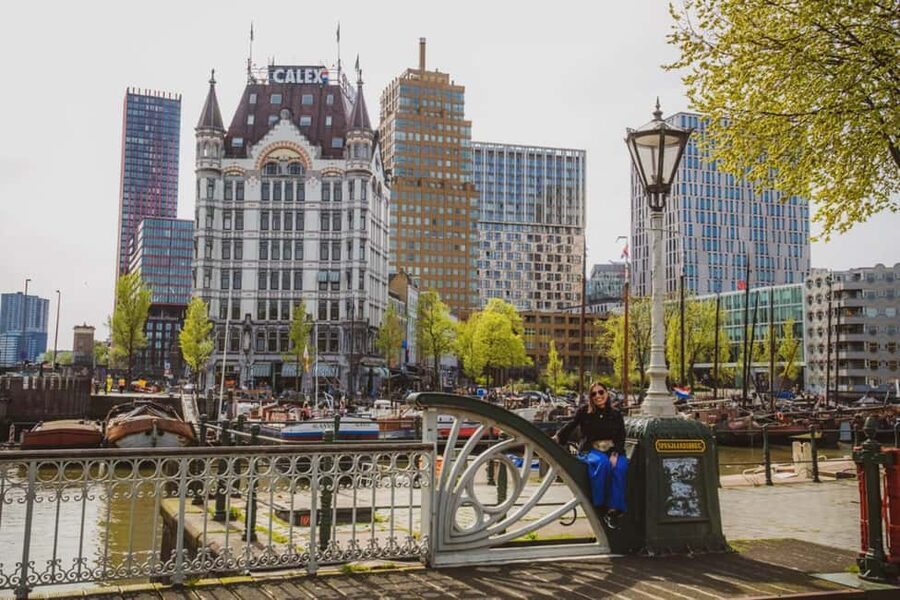
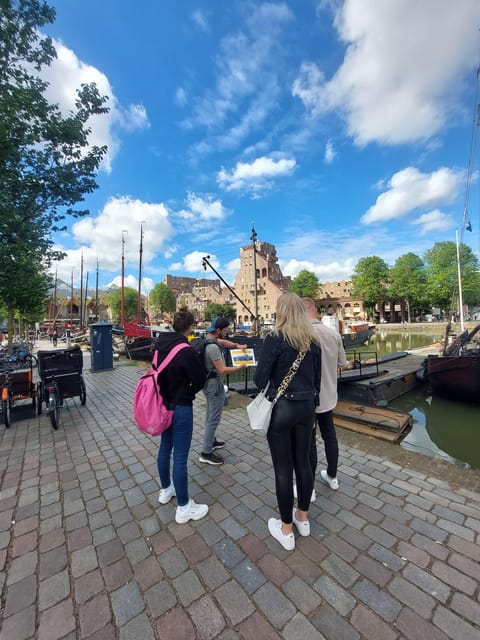
Oude Haven, or Old Harbor, brings you closer to Rotterdam’s earlier identity. It offers a helpful contrast with the large modern structures seen elsewhere on the route.
The guide uses the harbor to explain how Rotterdam grew from a smaller riverside settlement into a major port. This is also a good place to ask questions about the city’s changing waterfront. The tour is designed for conversation, not just a speech delivered while everyone walks in silence.
Some stops include an opportunity to sit while the guide explains a point. There is also a restroom break around the middle of the walk. Still, you should expect to stand for longer stretches, and seating is not available at every stop.
The Cube Houses and Overblaak

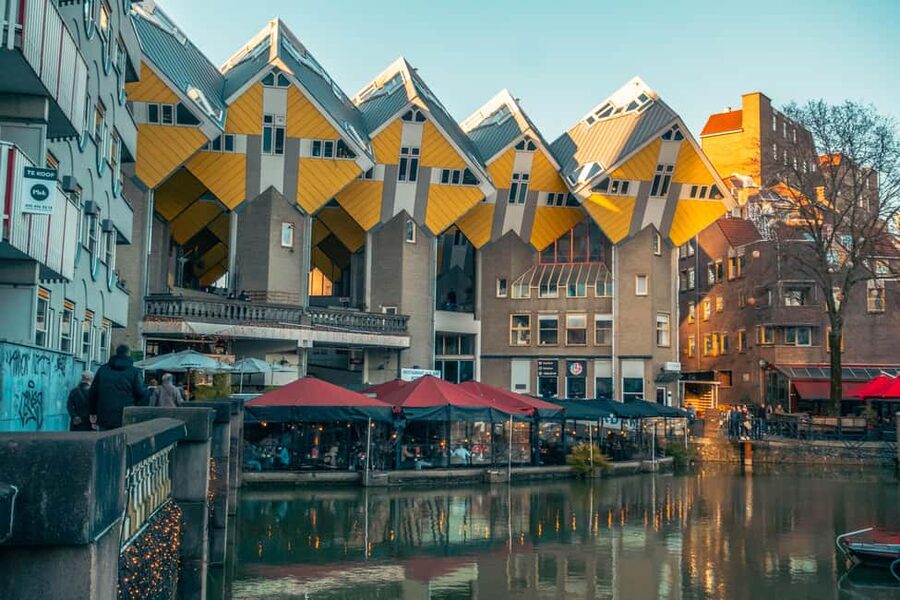
The Cube Houses are among Rotterdam’s most recognizable buildings. Their tilted forms make ordinary ideas about streets, windows, and living space look surprisingly flexible.
The route walks through the Cube Houses and Overblaak area, but it does not include entry inside a cube house. You can visit one afterward, with the access point only about a minute from the tour’s route. That separation is useful because the walk keeps its focus on the city as a whole, while you can decide later if you want a closer look at the interior.
This is a good stop for families and anyone interested in design. The unusual shapes give younger visitors something concrete to examine, while the guide can explain why Rotterdam became open to experimental architecture.
The Cube Houses also show one of the tour’s central themes: Rotterdam rebuilt with confidence after WWII. The city did not simply replace damaged buildings with copies of what had been there. It tried new forms, new streets, and new ways to use limited urban space.
Markthal, the Tour’s Tasty Finish
The final major stop is the Markthal. Its large arched form and colorful interior make it one of the easiest places in Rotterdam to remember.
The guide explains why the building matters as architecture and then gives practical suggestions about where to eat. Finishing here is smart. After several hours on foot, you may be more interested in lunch than in another abstract discussion about urban planning.
The Markthal also gives the tour a satisfying connection between daily life and design. Rotterdam’s architecture is not confined to museums. It appears in places where people shop, eat, meet, and pass through the city.
A stroopwafel is provided about halfway through the walk, adding a simple Dutch snack and a useful energy boost. Depending on the season and occasion, the guide may also introduce you to another local treat, such as an oliebol. These small food moments help keep the walk human rather than purely academic.
Two Hours or Three?
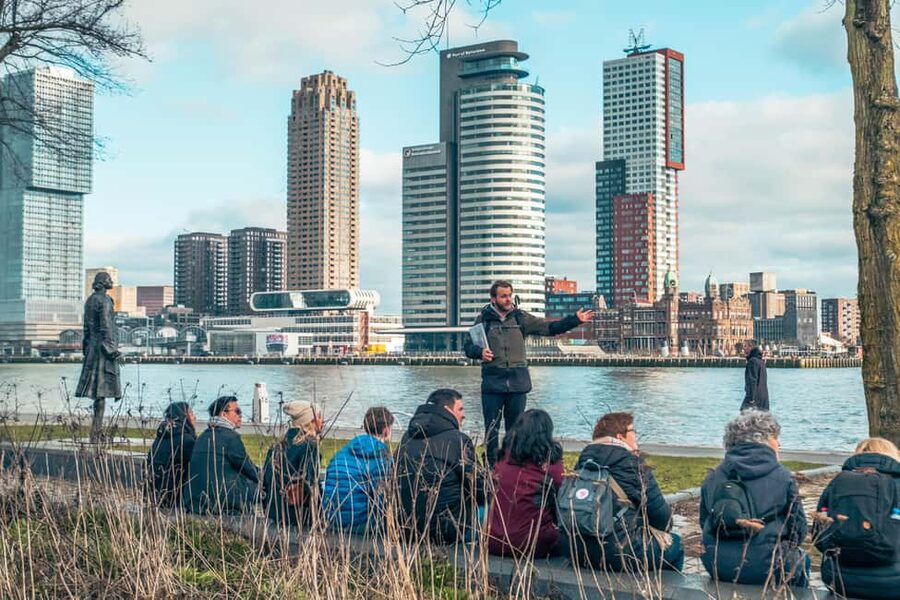
The two-hour tour gives you a solid orientation. It is a good choice if you are visiting Rotterdam briefly, have limited stamina, or want to leave time for a museum or a separate harbor visit.
The three-hour version is better if you want the city’s story to connect. You get more time for the route’s core districts, more detailed explanations, and more room for questions. The longer option also helps you understand why Rotterdam looks the way it does instead of simply collecting a list of famous buildings.
At roughly 5 kilometers and 11,000 steps, the longer walk is active. You will stand, walk steadily, and encounter stairs, although steps can be avoided on the route for wheelchair users. A wheelchair-accessible restroom is available, and the route can be adjusted to avoid stairs. Even so, the tour is not recommended for people with back, hip, or foot problems, or for highly pregnant participants.
The pace can be adjusted somewhat, but this is not a slow café-to-café stroll. Wear comfortable shoes and dress for changing weather. City events or extreme weather can alter the route and timing.
The Guide Makes the Difference
The strongest feature is the guide’s presentation. Yoreh is a native Rotterdam guide who uses personal memories, humor, photographs, maps, and charts to make the city’s changes clear. Elmer has also led the walk and is praised for answering questions and making the three hours pass quickly.
The photo sheets are more useful than a standard folder of facts. They show older streets, WWII damage, present-day buildings, and planned developments. That lets you compare what you see with what once stood there, and what may appear in the future.
The English is described as fluent and easy to follow. The guide arrives early, offers to take photographs, and keeps the atmosphere friendly. Families have found that children can stay interested for the full three hours, while solo visitors may receive a more personal experience when the group is small.
You should still ask questions. The tour has enough flexibility for personal interests, and the guide can spend more time on architecture, history, culture, or practical city tips depending on the group.
Is $48 a Fair Price?
At $48 per person, this is not the cheapest way to see Rotterdam. You are paying more than you would for a large, basic orientation walk.
The value comes from the combination of coverage and interpretation. In one outing, you see major architecture, harbor districts, WWII history, skyline views, the Museum Quarter, the Cube Houses, and the Markthal. You also receive restaurant suggestions, photo advice, a stroopwafel, restroom access, and visual material that helps explain the city.
For a first visit, that can save you time. You finish at the Markthal with a useful list of places to revisit, rather than spending your whole day trying to work out which districts deserve your attention.
The price makes the most sense for people who enjoy guided storytelling and want a small-group experience. If you prefer wandering alone, stopping every few minutes, or spending a long time inside each attraction, you may find a self-guided day more suitable.
Who Should Book This Walk?
I would recommend it to first-time visitors, architecture fans, history lovers, families with older children, solo visitors, and anyone who wants practical suggestions for the rest of a Rotterdam stay.
It is also a good choice if Rotterdam initially seems too modern to have much character. The guide explains the city’s difficult past while showing how its unusual present grew from that past.
I would be more cautious if you have limited mobility, foot or hip pain, or dislike walking at a steady pace. The route is wheelchair accessible with adjustments, but the tour still involves standing and several hours outside.
Book the three-hour version if you want the fullest explanation and have the energy for it. Choose two hours if you need a brisk introduction. Either way, schedule it near the beginning of your stay so you can use the guide’s suggestions afterward.
FAQ
How long does the Rotterdam walking tour last?
The tour lasts two to three hours. The two-hour option gives you a broad introduction, while the three-hour option includes more detailed stories and a fuller route.
How much walking is involved?
You can expect about 5 kilometers of walking and roughly 11,000 steps. The route includes periods of standing and some stairs.
What places does the tour visit?
The route passes the Depot Boijmans Van Beuningen, Veerhaven, Erasmus Bridge, Leuvehaven, Maritime District, Oude Haven, and Cube Houses. It visits the Markthal and finishes there.
Does the tour go inside a Cube House?
The tour walks through the Cube Houses and Overblaak area, but entering a Cube House is not included. You can visit inside afterward, about a minute from the route.
Is the tour wheelchair accessible?
Yes. Stairs and steps can be avoided on the route, and a wheelchair-accessible restroom is available. The tour still includes walking and standing, so check whether the pace suits you.
What languages are available?
The tour is available in Dutch and English.
Is food included?
A stroopwafel is provided halfway through the walk. The guide also suggests places to eat inside the Markthal at the end. Other meals are not included.
Where does the tour finish?
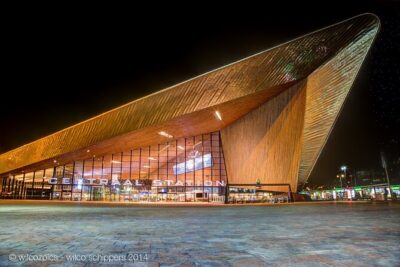
The tour finishes inside the Markthal, also called the Market Hall.
Can the route change?
Yes. City events or extreme weather may cause a slight route change, and the tour may finish a little earlier or later than planned.
Should You Book It?
Book this walk if you want Rotterdam explained rather than simply photographed. The mix of port history, WWII, architecture, future planning, personal stories, and practical food advice gives you a strong first reading of the city.
The three-hour option offers the best value for most visitors who are comfortable walking. If you need a shorter introduction, the two-hour version still covers the main idea. Bring good shoes, keep your camera ready, and leave room for lunch at the Markthal.
Just added in Netherlands
- Rotterdam Must Do Tour: Highlights, History, WW2 and Architecture★ 5.0 · 20 reviews
- Private Rotterdam Walking Tour – guided by Architects★ 5.0 · 2 reviews
- Escape Room – l’Architecte★ 4.5 · 13 reviews
- Rotterdam Architecture and Highlights Walking Tour (TOP RATED)★ 4.5 · 14 reviews
- Maastricht Highlights, Architecture & Heritage Tour★ 5.0 · 7 reviews
- Gouda Private Walking Tour: History, Architecture & Cheese★ 4.5 · 8 reviews
- Amsterdam Architecture Tour★ 5.0 · 4 reviews
- Walking Tour about Golden Age Architecture, private local guide★ 5.0 · 15 reviews
Rotterdam Architecture Tours, compared.
Rotterdam Walk: Hilights, Gems, Architecture & WWII | 2 or 3hrs
Read our review →
Rotterdam Must Do Tour: Highlights, History, WW2 and Architecture
Read our review →

Rotterdam Architecture and Highlights Walking Tour (TOP RATED)
Read our review →
Browse the lists this tour appears in