
REVIEW · ARCHITECTURE TOURS
San Francisco: Downtown Architecture & Public Art Tour
Downtown San Francisco rewards a closer look. This $44 walking tour links earthquake-era banks, art deco towers, modern glass offices, and public art that most visitors would miss. I especially like the clear story of the city’s growth and the stop at Salesforce Transit Center, where a bus terminal supports a remarkable rooftop park. The main drawback is simple: three hours on city streets requires comfortable shoes and some stamina.
The tour begins at Mechanics Monument Plaza on Market Street and ends at the San Francisco Museum of Modern Art. Jamie is the guide most often named in the feedback, praised for his relaxed, conversational style and his ability to connect local buildings with architects and ideas from around the world. The pace is a walk rather than a hike, but you should still check the weather and dress for San Francisco’s changeable conditions.
Key points to know before you book
- A timeline of downtown architecture: See how San Francisco rebuilt after 1906, then moved through art deco, mid-century modernism, and the technology-era skyline.
- Public art in ordinary city spaces: George Rickey, Jenny Holzer, Frank Stella, Jonathan Borofsky, and Ugo Rondinone all appear along the route.
- A major stop at Salesforce Transit Center: Walk through a 5.5-acre rooftop park built above an intermodal transport terminal.
- A guide-led conversation: Jamie’s approach is relaxed and open to questions, which suits curious visitors who want more than dates and architect names.
- A useful central finish: The tour ends at SFMOMA, making it easy to continue with modern art after the walk.
- Good practical value: For $44, you get three hours of expert-led sightseeing, with no parking costs included and no need to plan your own route.
Why this downtown walk is different
San Francisco is often sold through its hills, cable cars, painted houses, and bay views. Those are worthwhile, but this tour puts the Central Business District at center stage. That means office blocks, plazas, arcades, towers, and transit spaces become the subject rather than scenery you hurry past.
I like this approach because downtown architecture can seem like a wall of glass and stone when you walk through it alone. A guide gives you the clues. You learn why a building looks the way it does, what period it belongs to, and how each phase of construction changed the city’s direction.
The route also treats public art as part of daily life. For about 40 years, new downtown office buildings have devoted 1 percent of construction budgets to public art. That policy helps explain why sculptures, paintings, digital works, and playful installations appear in plazas and passages that can feel like outdoor museum rooms.
This is not a tour built around a single famous monument. It is about seeing connections. A bank built after the 1906 earthquake helps explain recovery. An art deco telephone building reflects the confidence of the 1920s. A sleek postwar tower shows the influence of the International Style. Newer projects reveal how finance, technology, transit, and public space now work together.
A few more architecture tours in the USA worth a look
- Chicago Architecture River Cruise
★ 5.0 · 15,756 reviews - Chicago River 90-Minute Architecture Tour
★ 4.5 · 9,629 reviews - Chicago River: 1.5-Hour Guided Architecture Cruise
★ 4.8 · 8,046 reviews
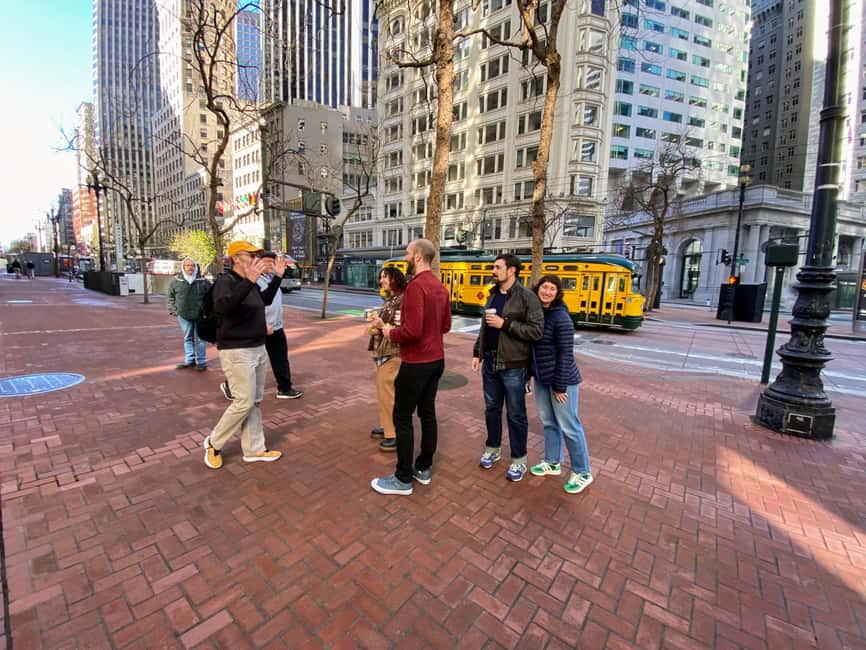
Starting at 488 Market Street and the Mechanics Monument
Meet in front of the Mechanics Monument Plaza at 488 Market Street. This is a practical starting point because you are already in the middle of the downtown story, surrounded by buildings from different periods.
The first 2.5 hours focus on the Financial District and nearby parts of the CBD. You can expect frequent stops rather than a constant march. That matters because the best details are often above eye level: a facade pattern, a change in materials, a sculptural element, or the way a tower meets its plaza.
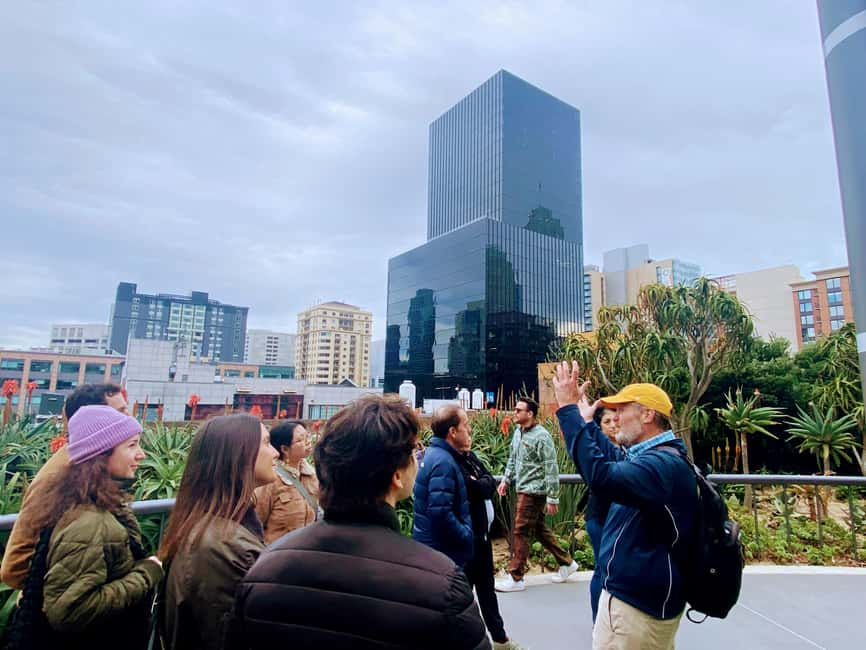
The guide’s role is especially important here. Jamie is praised for making the tour feel like a conversation instead of a lecture. That is a real advantage on an architecture walk. You can ask why a building was designed in a particular way, how an architect’s work compares with another tower, or what a public space was intended to do.
The route is wheelchair accessible, but the practical note about moderate walking still matters. Downtown pavement, crossings, and the three-hour duration can be tiring. Wear shoes you trust, and bring a layer even on a bright day.
From earthquake recovery to art deco confidence
One of the early architectural periods is represented by the London Paris National Bank, built after the destruction of 1906’s earthquake and fire. Its importance is not just visual. It gives the tour a way to explain how San Francisco rebuilt itself and how commercial buildings helped restore confidence in the city.
This kind of context is where a guided walk earns its fee. On your own, you might photograph a handsome historic facade and keep going. With an informed guide, the building becomes evidence of a city recovering, adapting, and making room for new business.
The route then moves into the exuberant art deco period, including the Pacific Telephone Building. The building reflects the spirit of the 1920s, when new technology and corporate power were reshaping the skyline. Art deco is easy to recognize once someone points out its strong geometry, decorative details, and sense of upward motion.
You will want to look at these older buildings slowly. They have more visual information than many modern office towers, and a guide can help you see how decoration, structure, and corporate identity were combined. The tour is not only about famous architects. It is also about how buildings communicated ambition.
The Crown Zellerbach Building and the age of glass
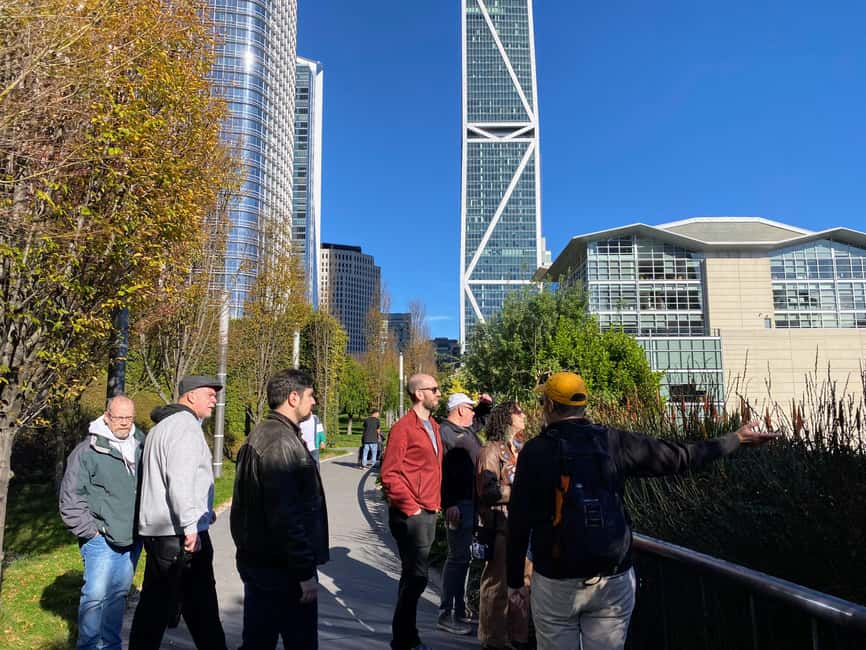
The mid-century section turns to the International Style, with the Crown Zellerbach Building as a key example. Here the mood changes. Instead of heavy ornament, you get clean lines, glass, steel, and a more restrained visual language.
This is a useful contrast with the earlier stops. The tour shows that architecture changes when technology, business needs, and design values change. The shift from decorative commercial buildings to sleek modern towers was not random. It reflected a new idea of what a serious office building should look like.
For you, this part of the walk can make the modern skyline easier to read. A glass tower is not simply a glass tower. Its proportions, facade, setting, and relation to the street can place it in a particular era. Jamie’s strength, based on the feedback about his tours, is explaining those distinctions without turning the walk into a classroom.
The route also covers later buildings associated with downtown’s southward growth. The JP Morgan Chase Building represents the change that took place around the turn of the millennium, when the business core pushed farther south and new projects began to alter the balance of the district.
Same city, a different building to stand in front of:
- Chicago Architecture Center River Cruise aboard First Lady
★ 5.0 · 5,536 reviews - Chicago: Architecture River Cruise Skip-the-Ticket Line
★ 4.8 · 4,325 reviews - Chicago River 45-Minute Architecture Tour from Magnificent Mile
★ 4.5 · 2,924 reviews - Chicago Lake and River Architecture Tour
★ 4.5 · 2,308 reviews
Star architects and the current skyline
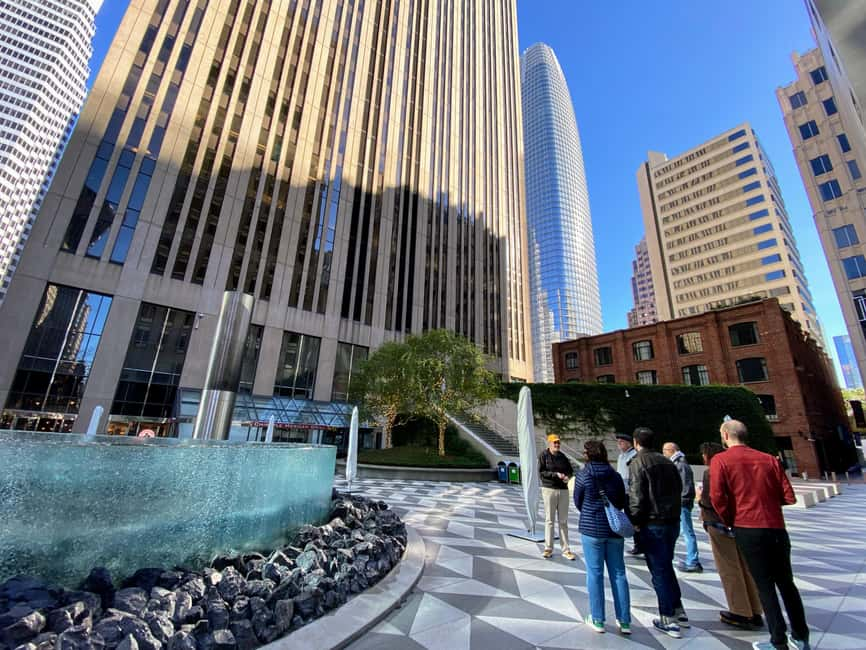
The tour includes work by architects such as Cesar Pelli and Rem Koolhaas, along with other high-profile designers connected with San Francisco’s current technology era. This is one of the better reasons to choose a guided experience instead of a self-guided photo walk.
You do not need to know architectural theory before joining. The value comes from learning what to notice. A guide can point out the scale of a tower, the shape of its base, the way it handles light, or the public space it gives back to the city.
The buildings also show that modern downtown development is not only about height. Large office projects affect sidewalks, plazas, transit, retail areas, and the daily experience of people who may never work inside them. That connection between private construction and public life gives the tour more substance than a simple list of architects.
The main limitation is that architecture is subjective. If you prefer historic neighborhoods, painted Victorian homes, or scenic viewpoints, a downtown design walk may feel less instantly charming. You are choosing urban form and public art over postcard views.
Public art by George Rickey, Jenny Holzer, and more
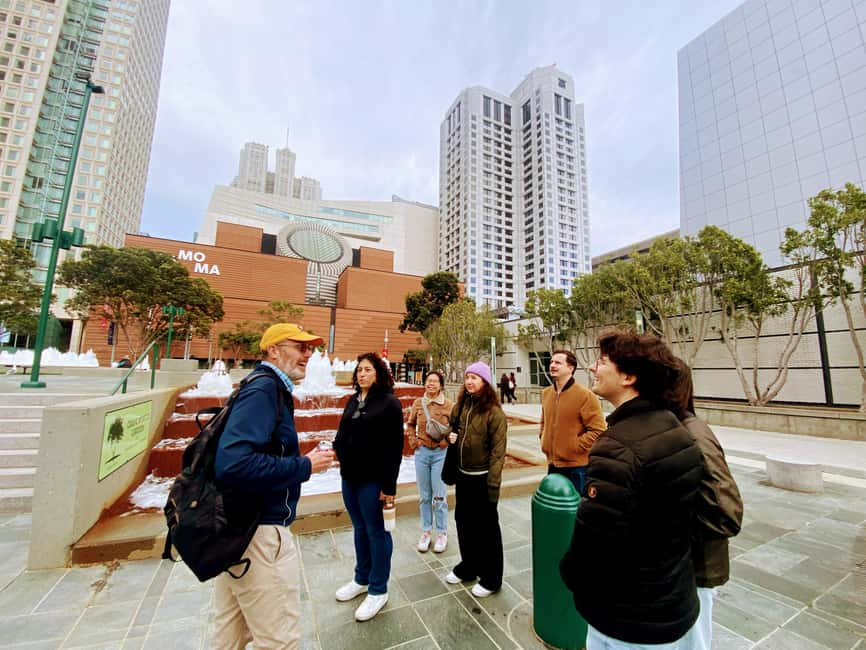
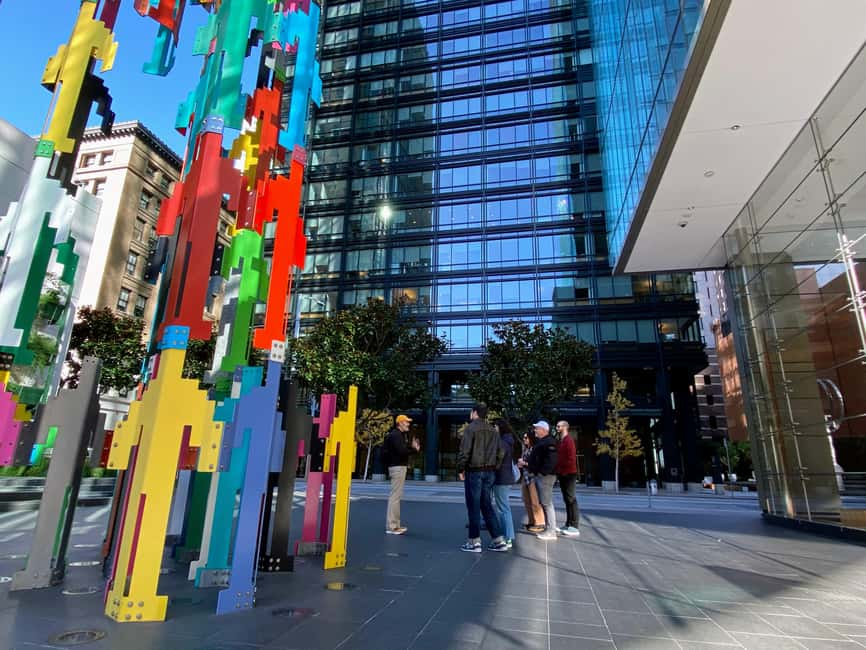
The public art portion is a major strength. You may see kinetic sculpture by George Rickey, digital art by Jenny Holzer, paintings by Frank Stella, and unusual installations by Jonathan Borofsky and Ugo Rondinone.
These works are placed in the flow of the city, not behind museum walls. That changes how you experience them. Office workers pass by, buses move through nearby streets, and the art shares space with ordinary city routines. A guide helps you understand why a work is there and how it relates to the building or plaza around it.
I particularly like the range of work included. Kinetic sculpture gives you movement. Digital art brings text and technology into the city. Large paintings add color and structure. Quirky installations keep the route from becoming too serious.
The art stops also provide natural breaks in the walking. You are not expected to stare at buildings for three hours without pause. The route shifts between facades, plazas, sculptures, and open spaces, which keeps the experience varied.
Still, conditions can affect what you see. Outdoor art is experienced in public space, so nearby activity, weather, and the pace of the group are part of the experience. If one work catches your attention, you may need to make a note and return later on your own.
Salesforce Tower and the rooftop park
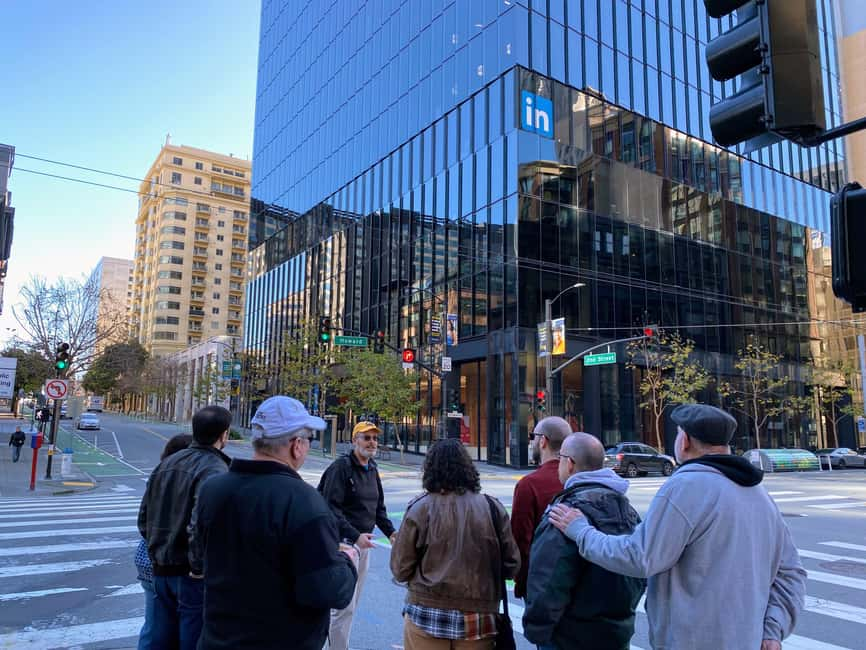
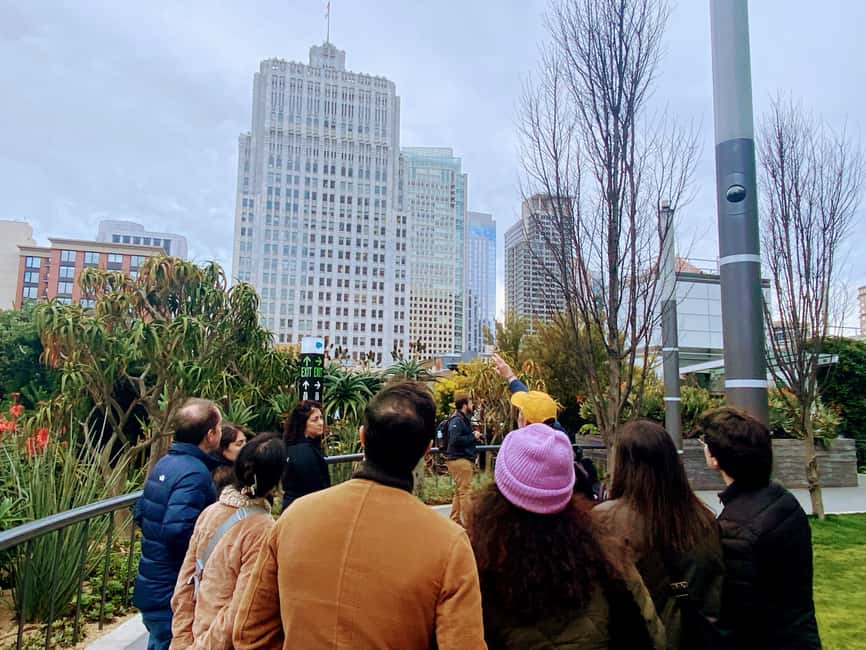
The Salesforce area provides the tour’s biggest modern set piece. You will see the towering Salesforce building and visit the park built above the Salesforce Transit Center.
The park covers 4.5 city blocks and about 5.5 acres, a striking amount of greenery in a part of the city where open ground is scarce. It sits about 70 feet above street level, on top of an intermodal transit terminal. In other words, buses run below while gardens and public space occupy the roof.
That arrangement is more than a construction trick. It shows how a dense city can add public space without finding a large empty parcel of land. The park includes about 600 trees and 16,000 plants arranged in zones modeled on 13 ecosystems around the world.
You can expect quiet areas for reading, space used for yoga, movie nights, concerts, and a beer garden. There is also a fountain whose water jets respond as buses move through the terminal below. That small detail connects the transport system to the park above and gives the place a sense of motion.
The views of nearby office and residential buildings are another reason to pay attention. From the roof, you can study the surrounding skyline from a different height and see buildings that may have seemed flat from street level.
The park is likely the most memorable stop for many people, but it is also where the tour’s timing may feel tight. There is plenty to see, and you may want more time than a walking itinerary allows. If the rooftop park interests you, plan to return after the tour for a slower visit.
Ending at SFMOMA
The walk finishes at the entrance to the San Francisco Museum of Modern Art. SFMOMA is one of the world’s largest museums devoted to modern and contemporary art, and its exterior gives the tour a fitting final stop.
The ending works well because the route has already introduced you to art outside a museum. You finish at a place where you can continue thinking about design, materials, public space, and the relationship between art and the city.
The tour does not present the museum as a full gallery visit. It ends at the entrance, so you should treat SFMOMA admission as a separate plan rather than assuming the walking tour includes museum time. If you want to go inside, check the museum’s hours and ticket details separately.
You also finish in a useful part of downtown. Afterward, you can continue with the museum, stop for food, or make your own way elsewhere. The central ending is convenient, especially if you are using the tour as part of a full day in San Francisco.
What $44 gets you
At $44 per person, this is fairly priced for a three-hour guided city walk. You are paying for route planning, interpretation, access to a carefully connected set of buildings and artworks, and a guide who can answer questions in real time.
The value is strongest if you are curious about design, cities, public art, or San Francisco’s business core. You could walk these streets for free, but you would need to research the buildings, identify the art, and work out the route yourself. The tour saves that effort and adds context.
The value is less certain if you want a broad introduction to all of San Francisco. This is not a cable car tour, a neighborhood food walk, or a visit to the city’s famous hills. It concentrates on downtown architecture and public spaces.
Parking is not included, and driving into the CBD is not the easiest way to approach the tour. Since the meeting point is at 488 Market Street, consider your transport plan before booking. The exact start time varies, so check availability when choosing a date.
The booking terms are flexible: you can reserve now and pay later, and cancellation is free up to 24 hours in advance. That is useful if your San Francisco plans depend on weather or changing schedules.
Who will enjoy this tour most
I would recommend it to:
- People who like architecture but want plain explanations rather than technical lectures
- Museum lovers who want to see art in public spaces before visiting SFMOMA
- Repeat visitors who have already covered the cable cars and major viewpoints
- Locals who want a fresh look at buildings they normally pass without noticing
- Visitors interested in how transit, office development, and public space fit together
- Anyone who enjoys asking questions and having a real conversation with a guide
It may not suit you if you dislike city walking, need frequent long breaks, or want a scenic route focused on the bay and hills. The tour is accessible, but it still covers a moderate distance over three hours.
The strongest praise for Jamie centers on his calm, personable manner and his ability to explain both buildings and the stories behind them. He also gets credit for admitting when he does not know a small detail, then keeping the conversation moving. That makes the tour feel natural rather than over-rehearsed.
Should you book the Downtown Architecture and Public Art Tour?
Book it if you want to understand San Francisco through its buildings, public art, and open spaces rather than only through its famous views. The combination of post-earthquake architecture, art deco, mid-century glass, modern towers, and Salesforce Transit Center gives you a clear story in three hours.
Skip it if your priority is a relaxed sightseeing ride or a classic first look at the city’s hills and waterfront. For curious walkers, though, $44 is a sensible price, especially if you value a guide who welcomes questions. Wear good shoes, bring a weather layer, and save extra time for the Salesforce rooftop park or SFMOMA after the walk.
FAQ
How long does the tour last?
The experience lasts three hours. About 2.5 hours are spent on the guided downtown walking tour, followed by the finish at the San Francisco Museum of Modern Art.
Where does the tour begin?
Meet the guide in front of Mechanics Monument Plaza at 488 Market Street in San Francisco.
Where does the tour finish?
The tour finishes at the entrance of the San Francisco Museum of Modern Art.
What language is the tour offered in?
The tour is conducted in English with a live English-speaking guide.
Is the tour wheelchair accessible?
Yes, the activity is listed as wheelchair accessible. You should still be prepared for a moderate amount of walking.
How much does the tour cost?
The listed price is $44 per person. Parking is not included.
Just added in the USA
- Wilmington History and Architecture Tour★ 4.8 · 18 reviews
- New Orleans : Garden District Architecture Walking tour★ 4.8 · 5 reviews
- Washington DC: Dupont Circle & Embassy Row Architecture Tour★ 5.0 · 6 reviews
- Washington, DC: Georgetown Architecture Walking Tour★ 5.0 · 8 reviews
- Private Colonial Williamsburg Architectural Tour★ 5.0 · 5 reviews
- Tulsa: Art Deco Walking Tour of Tulsa★ 5.0 · 8 reviews
- Monuments and Memorials Architectural Walking Tour★ 5.0 · 17 reviews
- Castle to Capitol: Museums of the National Mall Architecture Tour★ 4.5 · 9 reviews
Architecture Tours, compared.
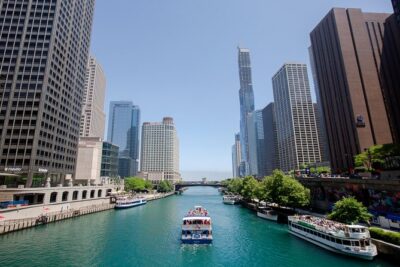
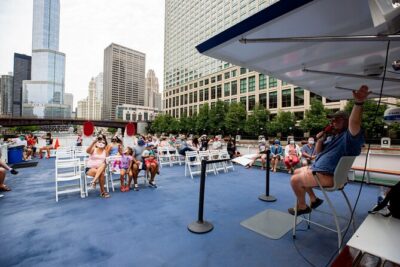

Chicago River: 1.5-Hour Guided Architecture Cruise
Read our review →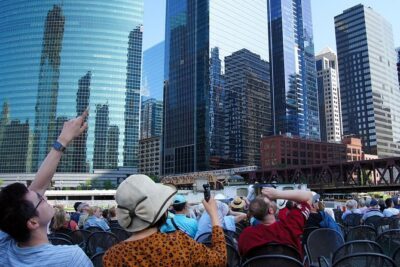
Chicago Architecture Center River Cruise aboard First Lady
Read our review →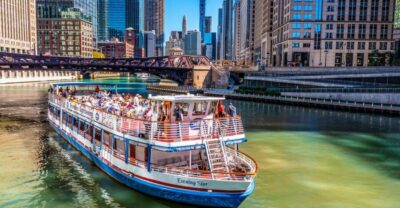
Architecture River Cruise Skip-the-Ticket Line
Read our review →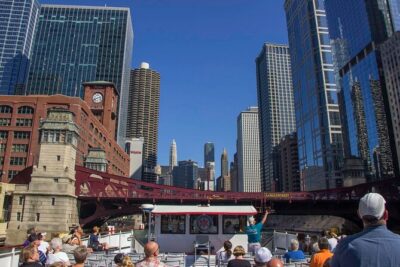
Chicago River 45-Minute Architecture Tour from Magnificent Mile
Read our review →
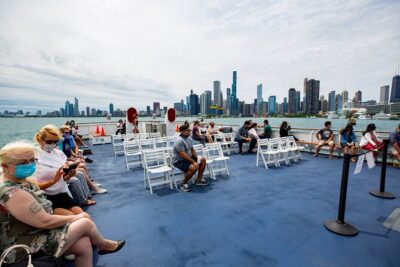
Browse the lists this tour appears in