
REVIEW · ART DECO TOURS
New York City: Art Deco and Architecture Landmarks Tour
Look up, Midtown has secrets.
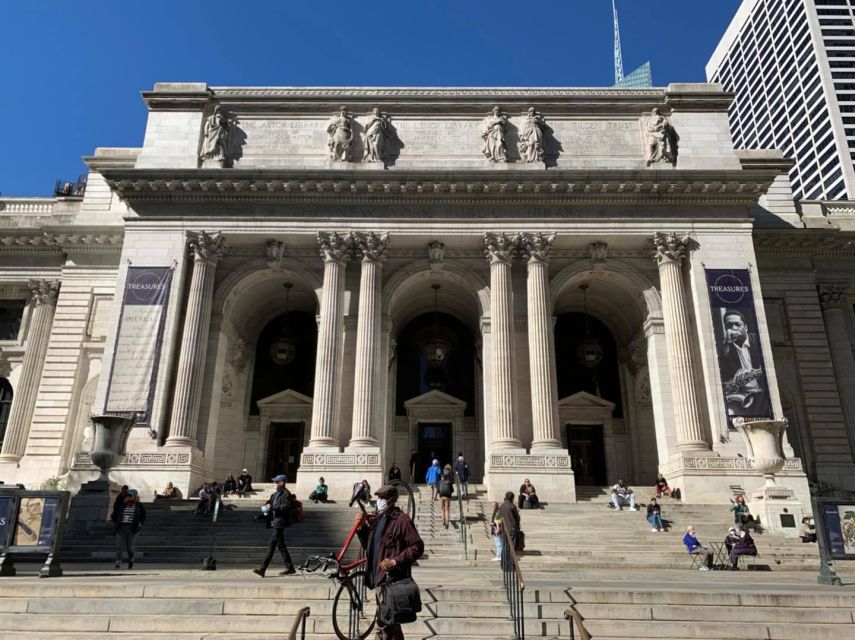
This 150-minute walking tour turns a familiar stretch of Manhattan into a lesson in design, ambition, and preservation. I like the way it covers famous buildings such as the Empire State Building, Chrysler Building, Grand Central Terminal, and Rockefeller Center while also pointing out smaller architectural details you could easily miss. I also like the historic photographs, which help you see how Midtown changed over time.
The main consideration is pace. One earlier guest felt the guide walked too quickly even after asking him to slow down. You will be on your feet for most of the tour, so comfortable shoes matter. At $40, the price is fair for a small-group walk with interior visits, but this is best for people who enjoy architecture more than casual sightseeing.
Key details before you book
- Look up often: The guide highlights decorative details high above street level, where much of Midtown’s best design is easy to miss.
- See more than the usual icons: The route includes the Empire State Building, Chrysler Building, Grand Central Terminal, and Rockefeller Center, plus lesser-known buildings.
- Step inside preserved spaces: Several historic lobbies and the interior of Grand Central Terminal add depth to the outdoor walk.
- Learn how landmarks were saved: The guide explains the origins of New York City’s landmarking laws and the preservation movement.
- Plan for a long walk: The tour lasts 150 minutes, with sightseeing along Bryant Park, 42nd Street, Fifth Avenue, and Midtown.
- Expect English commentary: The tour is led in English, with a live guide and a small group.
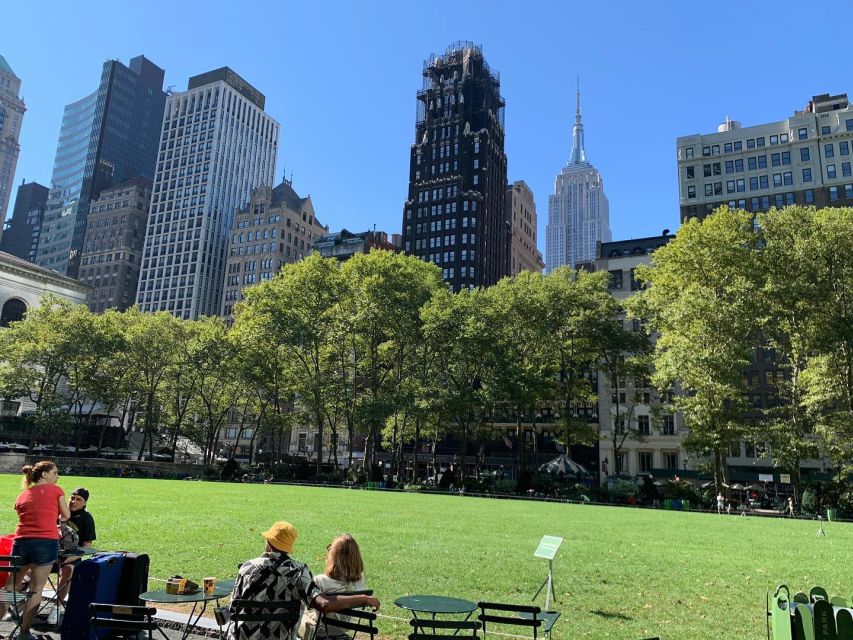
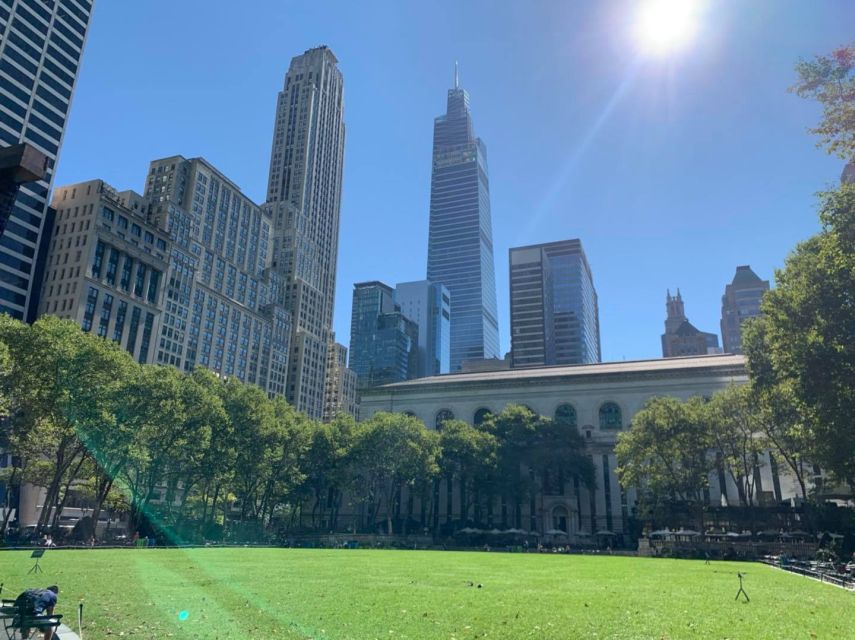
Starting near Bryant Park and the Midtown skyline
You meet the guide in front of the Whole Foods store on Sixth Avenue, near the Renaissance Reinsurance building. This is a practical starting point in central Midtown, though you should allow a few minutes to find the exact meeting spot in the rush of office workers and pedestrians.
The tour begins with an introduction to Midtown’s architectural story. You are not simply shown a building and handed its name. The guide explains how different design styles arrived in New York, how Art Deco took hold, and why certain buildings survived while others disappeared.
That context matters. Midtown can feel like a wall of glass, stone, and traffic when you first walk through it. A good guide gives you a way to sort it all out. Here, you learn to spot the vertical lines, geometric shapes, metal ornament, setbacks, and carefully chosen materials that give Art Deco its distinctive look.
Bryant Park provides a pleasant opening point. It is calmer than many nearby streets and gives you a chance to get your bearings before the route becomes more urban and crowded. The park itself is not the main subject, but it helps frame the contrast between open public space and the tall buildings around it.
The first Midtown segment lasts about 30 minutes. Expect frequent stops for photographs, explanations, and views along the way. The guide also uses historic images, giving you a useful before-and-after comparison rather than relying only on verbal descriptions.
More Art Deco tours in New York City:
- Art Deco and Architecture Midtown Landmarks Tour
★ 5.0 · 142 reviews - The Official Art Deco Walking Tour by The Miami Design Preservation League
★ 5.0 · 1,580 reviews - Miami South Beach Art Deco Walking Tour
★ 5.0 · 1,039 reviews
Bryant Park: a quiet start to a very vertical story
The Bryant Park stop is short, around 15 minutes, but it sets up one of the tour’s central ideas: New York architecture changes when you look at it from different angles.
From street level, many Midtown buildings can seem plain or repetitive. The guide encourages you to look above shop signs and traffic lights. Decorative panels, carved figures, metal details, and patterned stonework often appear several floors above your head.
That habit may become the most useful thing you take away from the tour. One guest described learning to look way up, because so much detail is invisible at normal eye level. It is practical advice for the rest of your New York visit. After the tour, you may find yourself examining upper stories instead of only photographing the main entrance.
The guide also discusses the roots of New York’s landmarking laws. This is an important part of the experience because architectural preservation did not happen automatically. The story includes successful efforts to protect buildings and interiors that might otherwise have been altered or lost.
Forty-Second Street and Midtown’s changing face
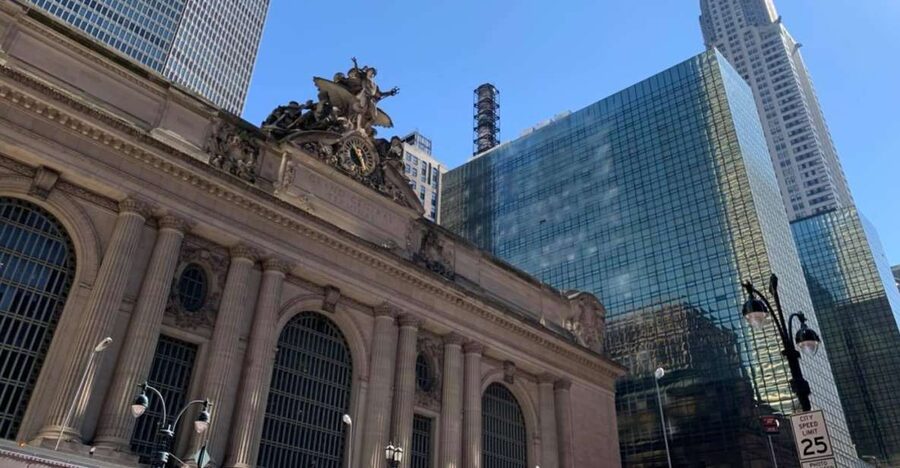
The route then moves along historic 42nd Street, one of Midtown’s most useful corridors for seeing several periods of New York architecture close together.
The 42nd Street section takes about 30 minutes. It is a good place to understand how commercial ambition shaped the city. Buildings here were designed to attract attention, signal success, and make an impression on people arriving by train, subway, or streetcar.
Your guide points out major structures as well as less famous examples. This balance is one of the strongest parts of the tour. If you already know the Empire State Building and Chrysler Building, you still get something new from the smaller buildings and decorative features that do not usually appear in a standard sightseeing walk.
The Empire State Building receives special attention, including a distinct perspective on the famous skyscraper. The tour does not take you up to an observation deck, so you should not book it as a replacement for the Empire State Building’s paid viewing experience. Its value is different. You learn how to read the building’s form, design, and place in Midtown rather than simply look out from the top.
Historic photographs make this section more vivid. Seeing earlier views of the street and buildings helps explain the scale of change in Midtown. It also gives you a stronger sense of the city as an evolving place, not a finished stage set.
The Chrysler Building and Art Deco at full volume
The Chrysler Building is the tour’s major architectural highlight, and the stop lasts about 15 minutes. Even from the street, its crown is hard to ignore. The guide draws attention to its design details and explains the thinking behind the ornament.
One especially fun detail concerns the automobile-inspired features, including the Chrysler building’s famous car design references and the Chrysler Bulldog. This is the kind of detail that changes the way you see the building. Instead of treating the crown as a distant decoration, you begin to notice the machine-age ideas behind it.
The Art Deco style works especially well here because it combines clean geometry with theatrical decoration. The building feels precise and glamorous at the same time. The guide’s job is to connect those visual elements to the period in which the skyscraper was built.
You will have time for photographs and questions, but do not expect a private, empty view. Midtown is a working part of the city, and the street can be busy. That is part of the experience, though it means you may need patience when taking pictures or listening near traffic.
The tour also includes several other Art Deco buildings with decorated facades and preserved lobbies. These interiors are a real strength. Many walking tours stay outside, but entering a lobby lets you see materials, lighting, floors, ceilings, and wall decoration at close range.
Access to specific interiors can depend on building conditions and permission, so the exact sequence may vary. Still, the tour is designed to include both exterior and interior architecture, not just a sidewalk view.
A few more architecture tours in New York City worth a look
- Manhattan Architecture Yacht Cruise
★ 5.0 · 1,395 reviews - NYC: Around Manhattan Official NYC Architecture Cruise
★ 4.8 · 402 reviews - Tribeca Architecture And History Walking Tour
★ 5.0 · 141 reviews - 3 Hour Midtown Manhattan Architectural Tour
★ 5.0 · 81 reviews
Grand Central Terminal, more than a train stop
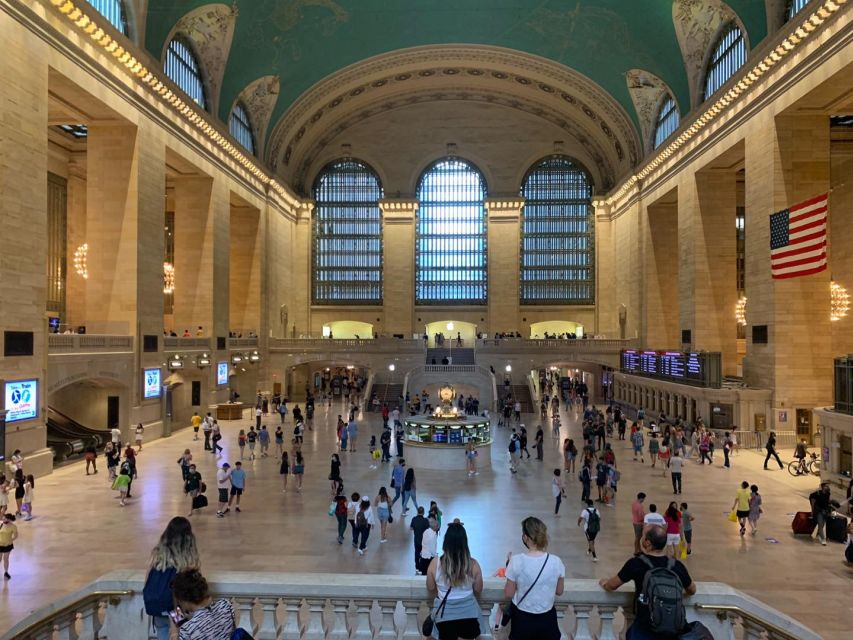
Grand Central Terminal is one of the most rewarding stops because the building works as both a transport hub and a grand civic interior. The visit lasts about 15 minutes, though the guide discusses it as part of the wider architectural story.
The scale can be overwhelming when you first enter. Your guide helps direct your attention to the design instead of letting the crowds become the whole experience. Look up, look across the main room, and notice how the building turns a practical railway function into a ceremonial public space.
This stop also gives the tour a useful change of rhythm. Much of the route takes place on sidewalks, with buildings rising overhead. Grand Central lets you step into a preserved interior and see how architectural design controls movement, light, and mood.
The guide’s historic photographs add value here too. They provide context for how the terminal looked in earlier periods and help you understand its importance in the city’s development. The visit is short, so you will not receive an exhaustive tour of every room or platform area. Think of it as a focused architectural stop within a larger Midtown walk.
Fifth Avenue and a lesser-known Art Deco favorite
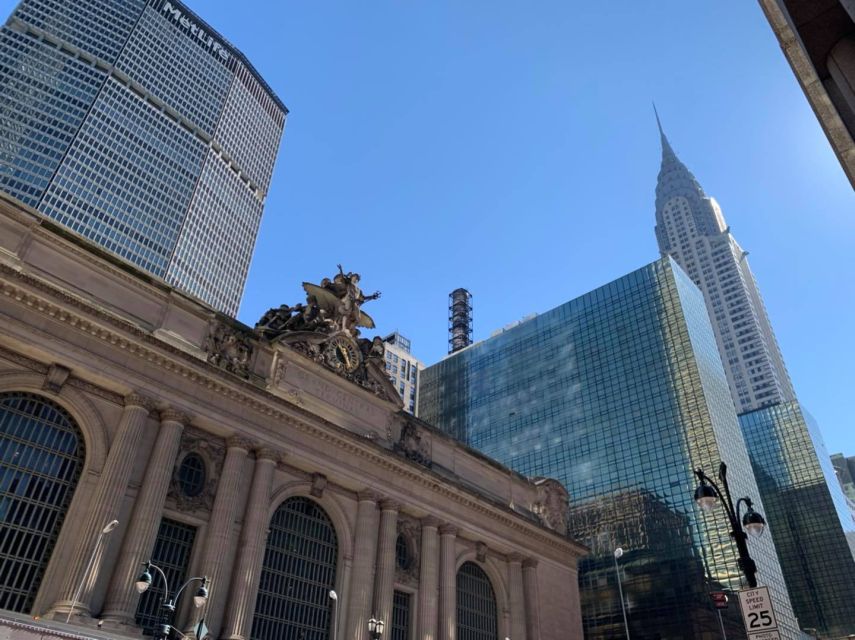
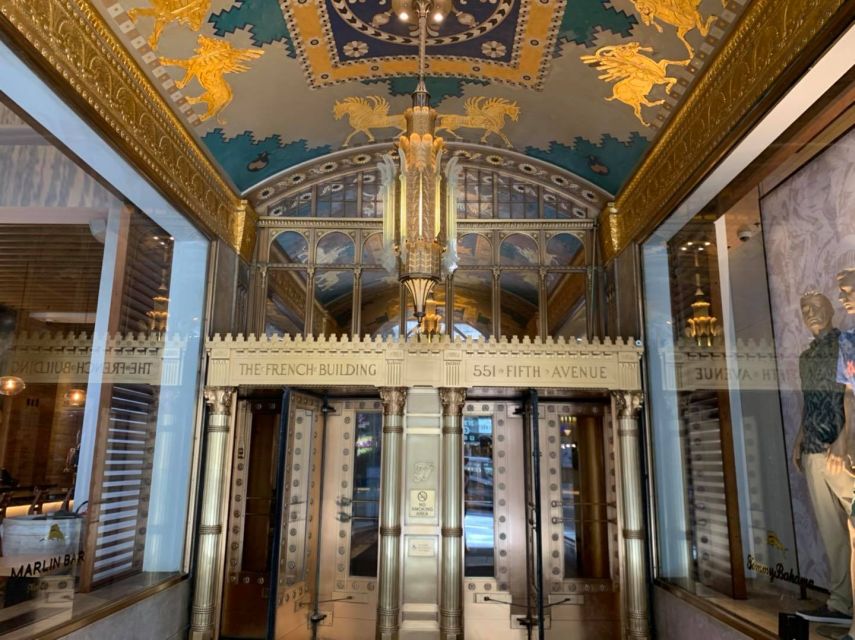
After Grand Central, the route heads toward Fifth Avenue and eventually finishes at Rockefeller Plaza. Along the way, the guide introduces a favorite Art Deco treasure in Midtown that is less likely to appear in a basic New York guidebook.
The exact appeal of this part is discovery. You are not only checking off famous addresses. You are learning how to identify good architecture in buildings that may not have the same fame as the Chrysler Building or Empire State Building.
This is where the guide’s personal enthusiasm matters. Jeremy is frequently praised for his strong command of Midtown’s buildings, his use of visuals, and his willingness to answer questions. Robin has also led the tour, and one small group of three received the same thoughtful attention and energy.
The small-group format helps here. You can ask why a certain ornament was used, how a building survived, or what separates Art Deco from Beaux-Arts design. The tour is not presented as a rigid speech from start to finish. The guide can respond to the interests of the group, though the pace still needs to work for everyone.
Rockefeller Center as the final architectural lesson
The tour ends at Rockefeller Plaza, a sensible finish for a walk through Midtown design. Rockefeller Center brings together architecture, public art, decoration, and urban planning in one place.
It also gives you a chance to connect several themes from the tour. You have seen how skyscrapers compete for attention, how interiors can be as important as facades, and how preservation can protect more than a single building. Rockefeller Center shows how an entire complex can shape the character of a neighborhood.
If you plan to visit Top of the Rock, this tour pairs especially well with it. One guest used the view from above after the walk to locate and compare the buildings discussed during the tour. That is a smart combination. From street level, you study the details. From above, you understand the arrangement of Midtown’s towers.
Top of the Rock admission is not included, so treat it as a separate plan and expense. The walking tour ends at Rockefeller Plaza, making the location convenient if you already want to visit the observation deck.
What the $40 price gets you
At $40 per person, this is good value if you care about architecture and want more than a list of famous buildings.
You receive a 150-minute guided walk, a live English-speaking guide, a small group, historic visual material, and access to several notable interior spaces. You also cover a lot of central Midtown in one outing, including Bryant Park, 42nd Street, the Chrysler Building area, Grand Central Terminal, Fifth Avenue, and Rockefeller Center.
The price is less compelling if you only want quick photo stops. You could walk past many of these buildings on your own. The fee pays for interpretation, historical context, route planning, and the details you are unlikely to notice without guidance.
It is also worth remembering what is not included. There is no hotel pickup, food, drink, or observation-deck admission. You meet the guide in Midtown and make your own way to the starting point.
Free cancellation is available up to 24 hours before the tour, and you can reserve now while paying later. The walk operates in rain and is canceled only for severe weather. Bring comfortable shoes and check the forecast, because 150 minutes on city pavement is not the time for footwear that looks better than it feels.
The tour is wheelchair accessible, though the route takes place across active Midtown streets and public spaces. If you have specific mobility concerns, confirm the current route details when booking.
Who will enjoy this tour most?
I would choose this tour for you if you have any of these interests:
- Art Deco, Beaux-Arts, or early skyscraper design
- New York history and preservation
- Photography, especially architectural photography
- Historic interiors and lobbies
- A more focused alternative to a general Midtown sightseeing walk
It also suits repeat visitors who have already seen the main attractions but want to understand them better. The guide adds enough background to make familiar buildings feel less familiar.
Families with older children may enjoy it if the children can manage a 150-minute walking tour and appreciate visual details. Younger children may find the steady architectural commentary slow, especially during longer explanations.
You should think twice if you dislike walking, want lots of free time for shopping, or prefer a relaxed route with few stops. The tour covers substantial ground, and the guide may move quickly to keep the schedule.
How to get the most from the experience
Wear supportive shoes. That is basic advice, but it matters here.
Bring a phone or camera, though listen before photographing. The best details may be above you, and the guide’s explanation can help you frame better pictures. Historic photos are also useful for seeing how a building has changed, so pay attention to those comparisons instead of treating them as decoration.
Ask questions. Jeremy is praised for giving clear answers and adapting to the group’s interests. If you want to know about materials, preservation, design influences, or a building you pass outside the planned focus, speak up when there is a safe pause.
Allow extra time afterward at Rockefeller Plaza. The tour itself ends there, but the surrounding area rewards a slower look. If you have booked Top of the Rock separately, the tour can give you a better visual checklist for the view from above.
Finally, keep an eye on the sky. The tour runs in rain, so a light rain layer can make the experience more comfortable. Severe weather may lead to cancellation, but ordinary wet conditions are part of the plan.
Should you book it?
Book this tour if you want to understand why Midtown’s buildings look the way they do, not merely photograph them. The strongest features are the expert guides, the historic images, the preserved lobbies, and the mix of famous towers with less obvious buildings.
I would especially recommend it to architecture fans, first-time visitors who want a focused introduction to Midtown, and repeat visitors who feel they have already seen the standard sights. At $40, the combination of time, coverage, and interpretation is solid.
Skip it if you want a short, easy stroll or an observation-deck ticket. This is an educational walking tour with a real amount of pavement, but for the right audience, it can change the way you see New York’s streets.
FAQ
How long does the Art Deco and Architecture Landmarks Tour last?
The tour lasts 150 minutes, or two and a half hours.
What is the price of the tour?
The price is $40 per person.
Where does the tour meet?
You meet the guide in front of the Whole Foods store on Sixth Avenue.
Where does the tour finish?
The tour finishes at Rockefeller Plaza in New York.
Which major buildings are included?
The route includes views and discussion of the Empire State Building, Chrysler Building, Grand Central Terminal, and Rockefeller Center, along with other Midtown buildings.
Does the tour visit interiors?
Yes. The experience includes several preserved lobbies and a visit inside Grand Central Terminal.
Is the tour offered in English?
Yes. The live tour guide provides commentary in English.
Is the tour wheelchair accessible?
Yes, the activity is listed as wheelchair accessible.
What should I bring?
Bring comfortable shoes. The tour runs in rain but can be canceled in severe weather.
Just added in New York City
- Race to the Sky: NYC Architecture Tour With SUMMIT One Ticket★ 5.0 · 3 reviews
- New York Soho and the Village Art and Architecture Tour★ 5.0 · 4 reviews
- Chelsea and the High Line NYC Architecture Walking Tour★ 5.0 · 6 reviews
- Private Flatiron Food, History and Architecture Tour★ 5.0 · 8 reviews
- New York Upper East Side Art and Architecture Tour★ 5.0 · 3 reviews
- New York Midtown South Art and Architecture Tour★ 5.0 · 2 reviews
- New York Upper West Side Art and Architecture Tour★ 5.0 · 4 reviews
- The Story Behind NY’s Evolving Skyline An Architectural Journey Through History★ 5.0 · 18 reviews
Art Deco Tours, compared.

The Official Art Deco Walking Tour by The Miami Design Preservation League
Read our review →

Guided 10am Morning Art Deco Walk From Napier Art Deco Trust
Read our review →


Award-winning Art Deco & Neon Lights Walking Tour in Miami Beach
Read our review →
Browse the lists this tour appears in