
REVIEW · LONDON ARCHITECTURE TOURS
London: Architecture Tour of Benjamin Franklin House
Franklin’s London life began behind one narrow door. At 36 Craven Street, you can explore the only remaining home of Benjamin Franklin, the rooms where he lived for 16 years, and the building’s unusual links to Georgian medicine. I especially like the tour’s mix of personal stories and architecture, plus the chance to play Franklin’s glass armonica. The main drawback is the steep, uneven staircase through this five-storey townhouse, which makes the visit unsuitable for wheelchair users.
The tour costs $16 per person and lasts about an hour. That is a fair price for entry to a Grade I listed house with a live English-speaking guide. Children under 12 enter free, and the visit works well as a compact stop between nearby London sights.
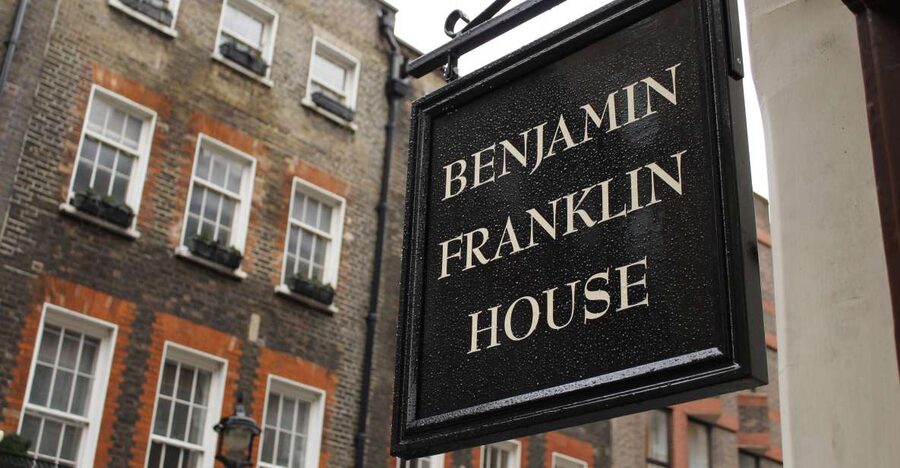
Guide quality matters here. Ron has been praised for his enthusiasm and detailed explanations, while Brian was noted for adding extra information about Franklin. One practical warning: entering through the front door can interrupt the opening part of the tour, so arrive ready to knock at 36 Craven Street, below the Benjamin Franklin House sign.
Key points to know before visiting
- This is Franklin’s only surviving home: He rented part of the Craven Street townhouse for 16 years, from 1757 until 1776.
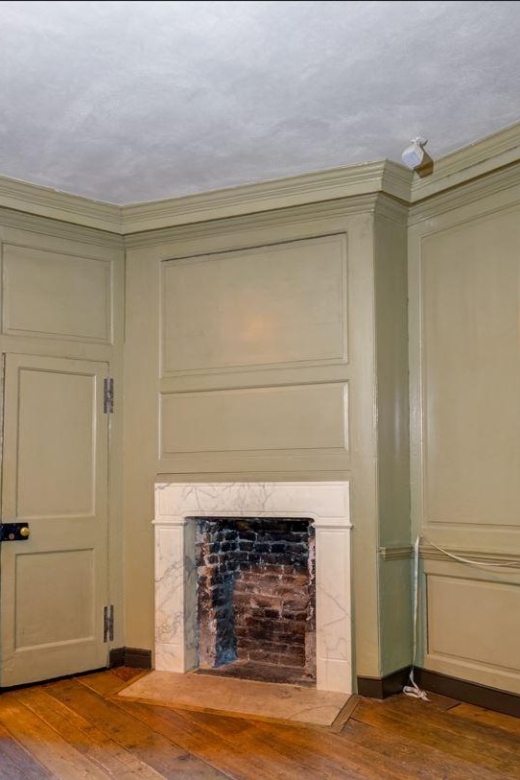
- The house is the main attraction: Original Georgian and Victorian features help you picture daily life in an eighteenth-century London townhouse.
- The tour connects science, politics, and domestic life: You move from the kitchen to Margaret Stevenson’s parlour, Franklin’s own rooms, and the Glass Armonica Room.
- The Craven Street Bones add a darker twist: The house was later linked to surgeon Hewson’s anatomy school and the discovery of human bones.
- You can try Franklin’s glass armonica: The final room offers a rare hands-on moment tied directly to Franklin’s inventions.
- Expect stairs and uneven floors: The five-storey building has handrails and seats, but no wheelchair access and no accessible restroom.
Why Benjamin Franklin’s London home matters
Benjamin Franklin is often presented in London as an American statesman, inventor, and Founding Father. This house shows a less polished version of him: a long-term renter, political thinker, scientist, social observer, and family friend living abroad while America’s future was taking shape.
Franklin stayed at 36 Craven Street for 16 years. That is long enough to make the building more than a temporary address. It was his London base during an important part of his life, when he worked on political matters, pursued experiments, and met people who shaped his understanding of Britain and its colonies.
Franklin left London in 1776 to return to America and sign the Declaration of Independence. He never returned to the house. That departure gives the final part of the tour extra weight, even though the visit focuses as much on the building as on famous political events.
I like that the tour does not treat Franklin as a distant marble figure. You hear about his diet, his habits, his political beliefs, and his relationship with the Stevenson family. The result is more domestic than ceremonial. You are looking at the rooms where he lived, not simply reading a list of accomplishments.
A few more architecture tours in the world worth a look
- Chicago Architecture River Cruise
★ 5.0 · 15,756 reviews - Chicago River 90-Minute Architecture Tour
★ 4.5 · 9,629 reviews - Chicago River: 1.5-Hour Guided Architecture Cruise
★ 4.8 · 8,046 reviews
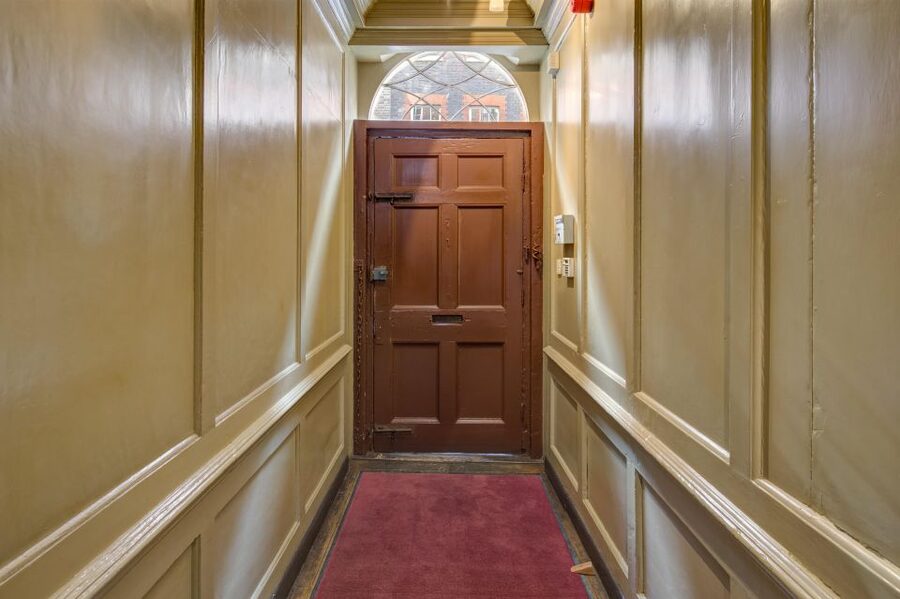
Entering at 36 Craven Street
The meeting point is simple: knock on the door at 36 Craven Street, directly below the Benjamin Franklin House sign. This is not a large museum entrance, so pay attention to the address and allow a little time to find the door.
The building’s location makes sense for a London walking day. It is in South East England, in the central London area, and the experience is short enough to fit around other plans. At about one hour, it will not take over your day. You can treat it as a focused historical visit rather than a full-day outing, even though the booking information lists the activity as valid for one day.
The opening moments may be slightly awkward. One visitor noted that the way people enter can interrupt the guide. That is worth knowing in advance. If several people arrive together or the door needs repeated attention, the introduction may pause. It is a small practical flaw, not a reason to skip the house, but arriving on time helps.
The building itself sets the tone. This is a five-storey townhouse, not a modern museum with broad galleries and level floors. Its Grade I listed status means the uneven and sloping floors are part of an old structure that has been conserved rather than rebuilt for modern convenience.
Georgian food in the original kitchen
The tour begins to connect the house and Franklin’s life through the kitchen. Here, the guide explains Georgian food and Franklin’s thoughts about the London diet.
That detail is useful because it turns architecture into daily life. A kitchen is not just a room with old features. It helps you think about what people ate, how a rented townhouse functioned, and how Franklin reacted to the food around him. His observations about the London diet offer a more personal entry into his time in Britain.
I appreciate this part of the tour because it avoids making every stop about grand political events. Franklin spent plenty of time dealing with ordinary matters. Food, rooms, household routines, and relationships are the details that help you picture him as a real person.
The house includes original Georgian and Victorian features. You should expect the charm of an old building, along with its limits. Floors and stairs are uneven and sloping, and you move between rooms by staircase. Handrails are available on all staircases, and seating is provided in the historic rooms, so you do not need to remain standing throughout the hour.
Margaret Stevenson’s parlour and Franklin’s social world
As you go upstairs, the guide introduces Margaret Stevenson, the wealthy widow from whom Franklin rented. Her parlour is one of the most useful stops because it places Franklin within a household and a social circle.
Franklin did not live in isolation. In the parlour, you hear about influential people he met and the current affairs they discussed. You also learn about his connection with the Stevenson family and his own family. That family link makes the tour more personal than a simple account of Franklin’s public career.
This room also helps explain why the address mattered. Franklin’s London life was shaped by the people around him, not only by his work. The house was a place for conversation and debate, as well as a place to sleep and conduct experiments.
The guide’s role is especially important here. Ron has been praised for bringing enthusiasm and detail to the visit. Brian was also singled out for giving an informative tour with extra information about Franklin. If you enjoy asking questions, this is the point where the live format has an advantage over a self-guided display.
The tour is in English, and the guides use the house to build a story as you move through it. The visit should suit you best if you enjoy listening closely and asking questions rather than rushing from room to room.
Same city, a different building to stand in front of:
- Chicago Architecture Center River Cruise aboard First Lady
★ 5.0 · 5,536 reviews - Chicago: Architecture River Cruise Skip-the-Ticket Line
★ 4.8 · 4,325 reviews - Chicago River 45-Minute Architecture Tour from Magnificent Mile
★ 4.5 · 2,924 reviews - Barcelona: Sant Pau Recinte Modernista Entry Ticket
★ 4.6 · 2,567 reviews
Franklin’s parlour after 16 years at Craven Street
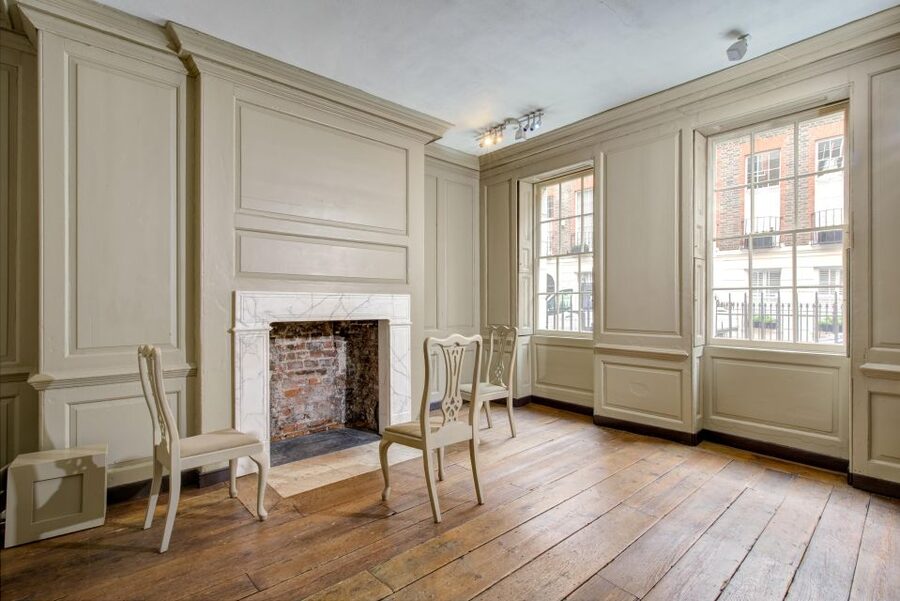
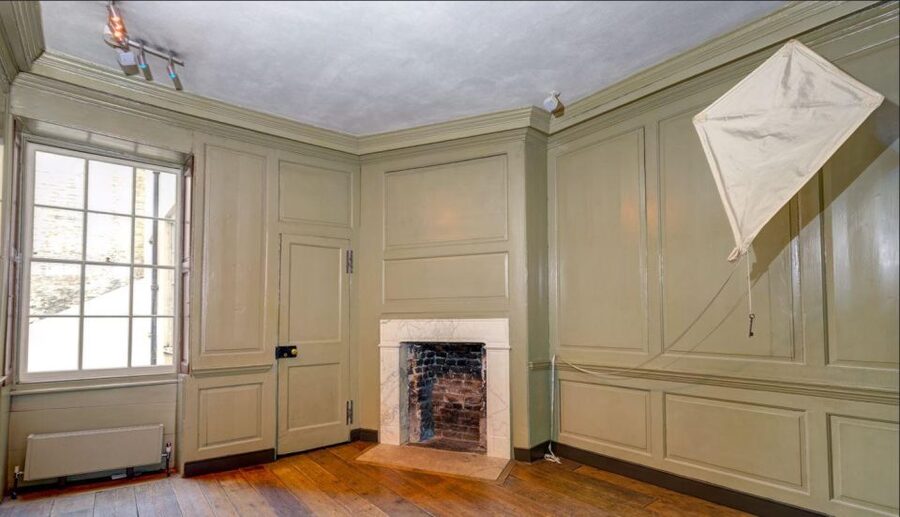
Franklin’s parlour is the heart of the visit. This is the floor he rented for 16 years, and it gives the tour its strongest sense of place.
Here, the guide covers Franklin’s experiments, political beliefs, and actions. You also hear about his eccentric personality. Those subjects work well together because Franklin’s scientific interests and political life were not separate parts of his character. The room gives you a setting for both.
The main value is the connection between a famous name and an actual interior. Franklin’s public achievements can feel abstract when encountered in a textbook or grand monument. In this parlour, you are reminded that he spent years working, thinking, and meeting people in a rented London home.
Do not expect a large collection of objects or an expansive museum display from the information provided. The appeal is the building itself, the guided explanation, and the connection to Franklin’s life. If you need a major exhibition with many galleries, this will feel modest. If you prefer a small historic house where the room carries the story, the format is a good match.
The tour also makes clear that Franklin’s London years ended at a turning point. In 1776, he returned to America to sign the Declaration of Independence. He left the Stevenson family and this house behind, and he never came back to London.
The Craven Street Bones and Hewson’s anatomy school
The Craven Street Bones add a surprising and unsettling chapter. The house is connected with surgeon Hewson’s anatomy school, and the tour explains the discovery of human bones associated with that work.
This part broadens the visit beyond Franklin. The house was not frozen in one moment, and its later story has its own importance. The anatomy-school connection shows how the building changed use and how the history of medicine could unfold in an ordinary London townhouse.
You should expect this subject to be handled as historical context rather than as a theatrical horror display. The information supplied does not suggest a frightening presentation, but the topic may not suit very young children or anyone uncomfortable with anatomy. Parents should use their judgment.
For me, the Craven Street Bones are one of the most memorable reasons to choose this tour over a basic Franklin biography. They give the building a second story, one that is less familiar and more closely tied to the physical structure of the house.
Trying Franklin’s glass armonica
The final stop is the Glass Armonica Room. Franklin invented the instrument, and you are invited to try playing a tune.
This is a smart ending because it changes the pace. Much of the tour involves listening, looking, and climbing stairs. Here, you get a direct connection to Franklin’s inventive side. You do not just hear that he experimented with sound. You have the chance to make a sound yourself.
The opportunity is brief, but it gives the visit a clear final moment. It also helps explain why Franklin remains interesting beyond politics. His curiosity crossed science, music, practical invention, and public life.
Photography is allowed, but flash photography is not. You can take pictures during the visit, as long as you follow the house rules. Audio recording is not permitted, so plan to listen and make notes afterward rather than record the guide.
Is $16 good value for one hour?
At $16 per person, the price is reasonable for London if you value a small historic interior and a guided visit. The admission includes entry to the house and an hour-long tour, with time for questions at the end.
The value comes from three things:
- You enter a Grade I listed townhouse with original features.
- You see the rooms tied to Franklin’s 16 years in London.
- You receive a live explanation that links architecture, family life, politics, science, food, and medicine.
The visit is less suitable if you measure value by the number of rooms, displays, or hours spent inside. This is a compact experience. You are paying for access to a rare address and a focused guide, not an all-day museum.
Children under 12 enter free, which makes it easier to add the house to a family itinerary. The subject matter includes anatomy, politics, and eighteenth-century domestic life, so older children may get more from the visit than very young ones.
The booking terms also offer some useful flexibility. You can cancel up to 24 hours in advance for a full refund, and you can reserve now and pay later. Starting times depend on availability, so check the schedule before planning the rest of your day.
Stairs, seating, and practical limits
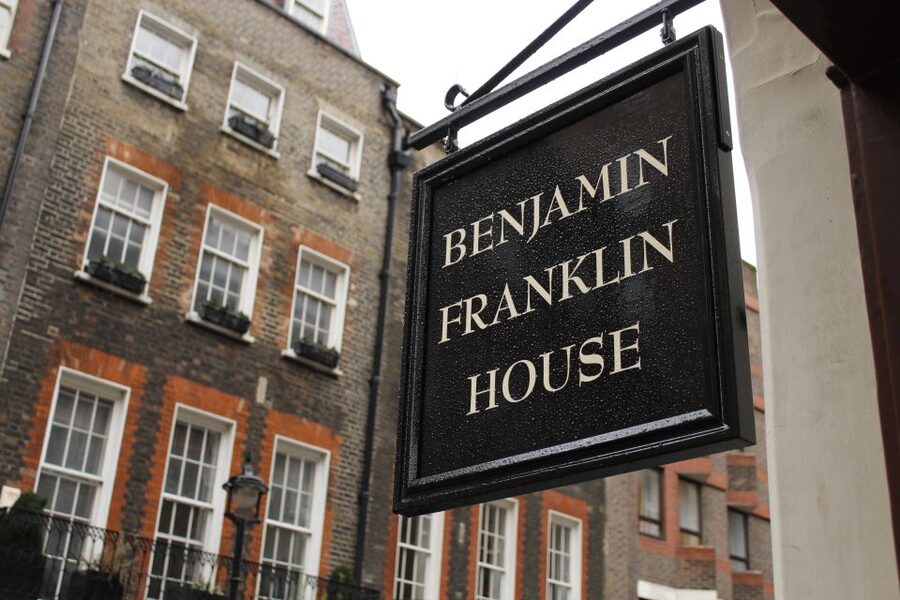
The physical setup deserves clear attention. Benjamin Franklin House is a five-storey townhouse with a staircase between each floor. The floors and stairs are uneven and sloping, though handrails are fitted on all staircases.
There is visitor seating in each historic room. That is helpful if you need a rest during the tour or prefer not to stand for the full explanation. Still, the building has no wheelchair access because of its Grade I historic structure and different levels.
The restroom is downstairs in the basement, and there is no accessible restroom. Carers enter free of charge, and visitors with disabilities qualify for concessionary tickets. Guide dogs and hearing dogs are allowed in all areas, while other pets are not permitted.
Smoking and vaping are forbidden indoors. Drinks, alcohol, drugs, and bare feet are also not allowed. These rules are straightforward, but the no-drinks policy is worth remembering if you are fitting the visit into a longer walking route.
Who will enjoy this house most?
I would recommend the tour to anyone interested in Franklin beyond the standard portrait of him as a statesman. You get a closer look at his London years, his working room, his friendships, his political thinking, and his inventive habits.
It also suits architecture fans who enjoy old buildings with visible layers of use. The Georgian and Victorian features, sloping floors, and compact rooms give you a sense of a real historic townhouse rather than a purpose-built museum.
Families can consider it too, especially because under-12s enter free and the glass armonica offers a hands-on finish. The anatomy-school story may require a little explanation for children.
You might skip it if you need step-free access, dislike stairs, or prefer a large museum with extensive displays. The visit is short and building-focused. Its strength is intimacy, not scale.
My verdict on the Benjamin Franklin House tour
Book this tour if you want a focused, affordable look at Franklin’s long London connection. I especially value the combination of his parlour, Margaret Stevenson’s household, the Craven Street Bones, and the glass armonica. Those details make the hour feel broader than a standard famous-person house visit.
The guides are a major part of the experience. Ron and Brian have both been praised for clear, enthusiastic explanations, and the format leaves room for questions. Just arrive at the correct door, expect some interruptions at entry, and prepare for five storeys of uneven stairs.
For $16, this is a good choice for history fans, architecture lovers, families with older children, and anyone curious about the lesser-known part of Franklin’s life. It is not the right pick for visitors needing step-free access or a long museum visit, but for a compact London stop with genuine character, it earns a place on your plan.
FAQ
Where does the Benjamin Franklin House tour begin?
Meet at the door of 36 Craven Street, below the Benjamin Franklin House sign.
How long does the tour last?
The guided tour lasts about one hour.
What language is the tour in?
The live tour guide speaks English.
What does the price include?
The price includes entry to Benjamin Franklin House and the one-hour guided tour, with an opportunity to ask questions at the end.
Are children allowed to visit for free?
Children under the age of 12 enter free of charge.
Can I take photographs inside?
Yes, photography is allowed, but flash photography is not permitted.
Can I play the glass armonica?
Yes. In the Glass Armonica Room, you are invited to try playing a tune on Franklin’s instrument.
Is the house wheelchair accessible?
No. The five-storey townhouse has stairs between floors, uneven and sloping surfaces, and no wheelchair access.
Are service dogs allowed?
Guide dogs and hearing dogs are permitted throughout the house. Other pets are not allowed, while assistance dogs are permitted.
Just added in the world
- Wilmington History and Architecture Tour★ 4.8 · 18 reviews
- New Orleans : Garden District Architecture Walking tour★ 4.8 · 5 reviews
- Washington DC: Dupont Circle & Embassy Row Architecture Tour★ 5.0 · 6 reviews
- Washington, DC: Georgetown Architecture Walking Tour★ 5.0 · 8 reviews
- Vicenza: Palladian Architecture Private Walking Tour★ 3.3 · 3 reviews
- Walk & Discover KL’s Architectural and Heritage Gems★ 5.0 · 7 reviews
- Private Colonial Williamsburg Architectural Tour★ 5.0 · 5 reviews
- Unveiling Brno: History, Culture & Architectural Delights★ 5.0 · 2 reviews
London Architecture Tours, compared.
Private Tour of Hampton Court Palace with Award-Winning Architectural Historian
Read our review →
Modern Architecture & Building Guided Walking Tour
Read our review →
Official Natural History Museum Tour – Architecture
Read our review →Browse the lists this tour appears in