
REVIEW · HIDDEN GEMS ARCHITECTURE TOURS
Chicago: Secret Interiors Architecture Walking Tour
Look up, then step inside. This two-hour walk through Chicago’s Loop pairs famous exteriors with ornate interiors that are easy to miss, even when you are standing right outside them. I like the focus on domes, mosaics, and fine craftsmanship, and I like how the guide connects design choices to real problems involving light, structure, business, and city growth. The main catch is simple: much of the tour takes place outdoors, so winter visitors need warm clothing.
The route covers several major buildings for $35, a fair price if you want context rather than a quick photo stop. Guides such as Grant, Talia, Annie, Angel, and Matthew have been praised for clear storytelling, humor, and personal enthusiasm. Still, the pace can feel brisk for some people, and there may be stairs inside certain buildings.
Key points before you book
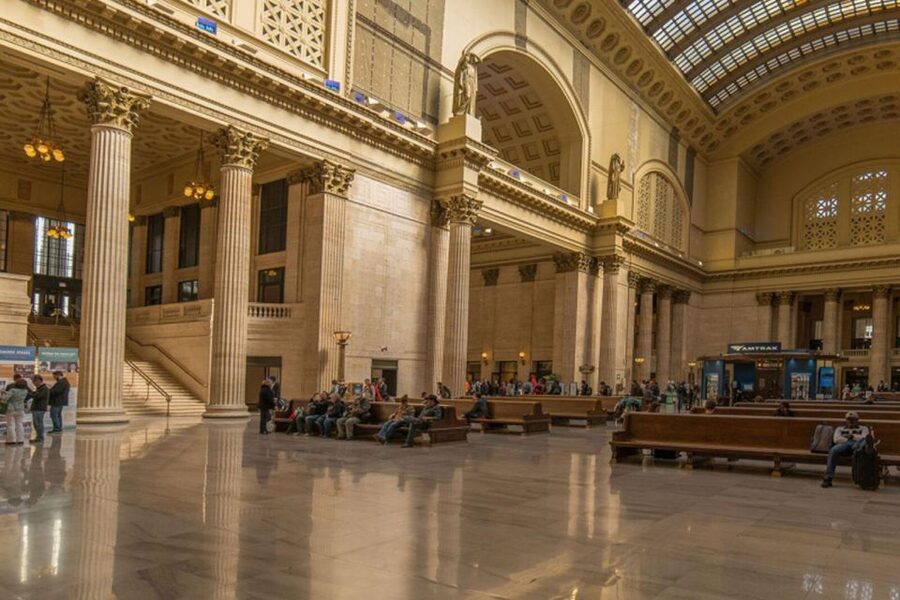
- You begin at Union Station: Meet inside the Great Hall under the Clinton Street sign.
- You see both exteriors and interiors: The route includes grand public spaces, street views, and details you could easily pass without noticing.
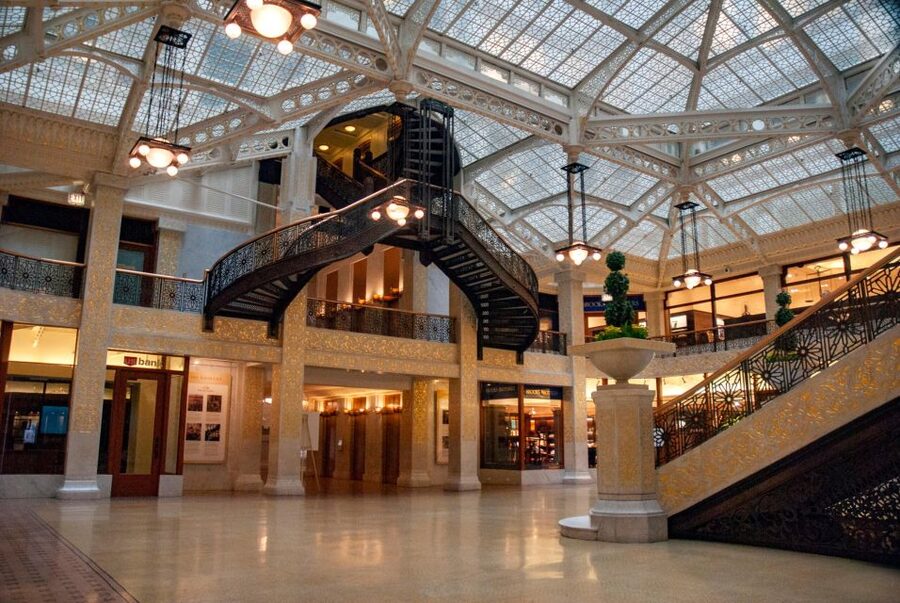
- The Rookery is a highlight: It is closed on Sundays, when an alternative stop is used.
- Most of the tour is outside: One participant estimated that about 90 percent of the time was outdoors, making weather a real factor.
- The route ends at Marshall Field and Company: This puts you near several other central Chicago sights after the walk.
- It suits curious first-time visitors and locals: Even people who have lived near Chicago for years may find buildings they have never entered.
Why Chicago’s interiors are worth your time
Chicago is often sold through its skyline. That is only half the story. The Loop’s street walls, towers, arcades, lobbies, halls, and decorative details show how the city’s ambitions took physical form.
This tour is built around that contrast. You begin at a major transportation hub, then move through a district shaped by industrial wealth, commercial competition, engineering challenges, and changing architectural taste. The buildings are not treated as isolated monuments. Their details help explain the people and pressures behind Chicago’s rise as an architectural center.
I especially like the attention to practical design. You learn how architects and engineers dealt with illumination and structural strength while trying to create buildings that looked impressive. That gives the decoration a purpose. A mosaic or dome is not just something to photograph. It becomes part of a larger story about technology, money, status, and public life.
The tour also reaches from early skyscraper-era work to modernist design. You are not simply shown old buildings. You are given a basic outline of how Chicago’s architecture changed and how its ideas influenced buildings far beyond the city.
More hidden-gem architecture tours in Chicago:
- Chicago’s Secret Interiors Architectural Walking Tour
★ 5.0 · 635 reviews - Tokyo: Shibuya Highlights Walking Tour & Secret View Spot
★ 5.0 · 287 reviews - Delhi Hidden Gems: Mehrauli, Lodhi Art & Sunder Nursery
★ 5.0 · 108 reviews
Starting at Union Station’s Great Hall
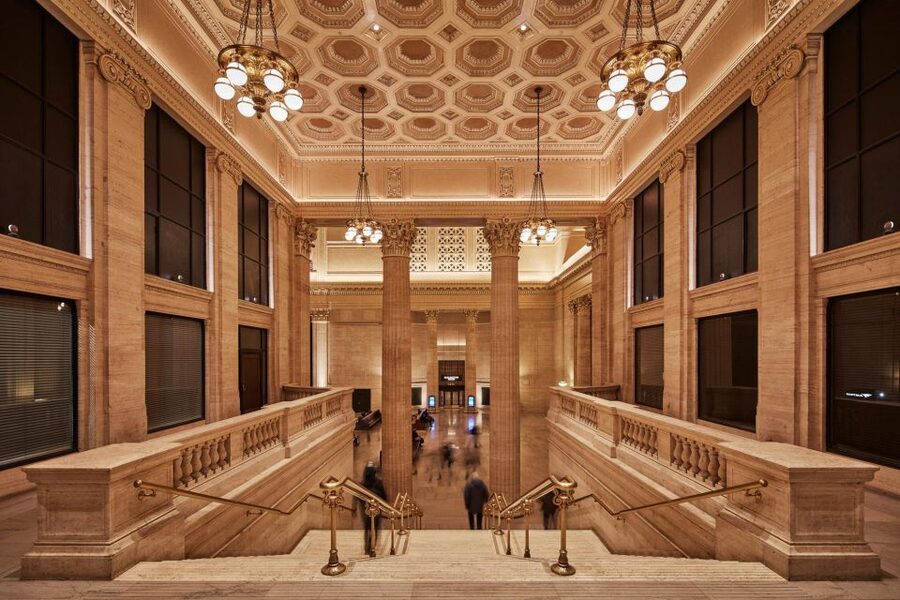
The meeting point is inside Union Station, in the Great Hall, under the Clinton Street sign. This is a sensible place to begin because it is easy to identify, visually dramatic, and connected to Chicago’s long story as a major rail city.
Arrive with comfortable shoes. The tour lasts about two hours and covers a large part of the Loop at a brisk but generally manageable pace. The route is not described as a strenuous hike, and several people found the pace comfortable, but one person with leg concerns found it fast.
From Union Station, your guide sets the tone by placing the Loop in context. The emphasis is on what you are about to notice: the difference between a building’s public face and the details inside, the way design reflects changing eras, and the people who moved through these spaces during Chicago’s Gilded Age and Roaring Twenties.
Chicago Loop: a walking lesson in changing styles
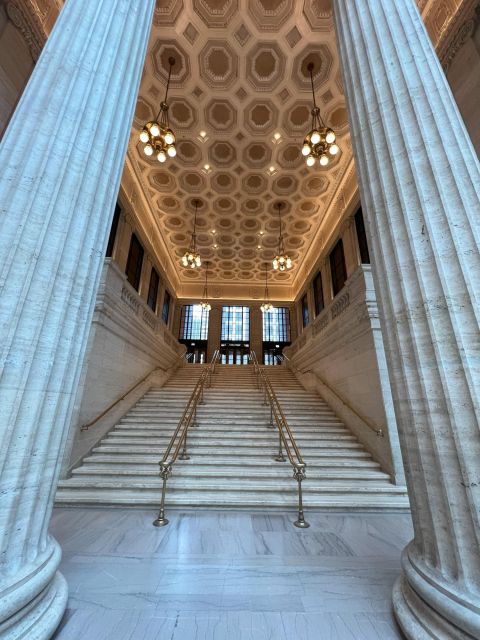
The Loop portion gives the tour its broad framework. You walk rather than sit in a vehicle, so the city itself becomes part of the lesson. Streets, building fronts, entrances, and busy downtown movement help you understand how these structures relate to one another.
This is also where a good guide matters most. The most praised guides have included Grant, Talia, Annie, Angel, Matthew, and Avery. Their strengths are described in similar terms: clear explanations, a friendly manner, a good sense of humor, and a willingness to answer questions.
Grant has been especially praised for turning historical facts into stories and for offering useful suggestions after the tour. Talia has been singled out for her enthusiasm, patience, and care with group comfort. Annie has been praised for her warm style and local food and drink suggestions. The exact guide depends on the date, but the experience appears to rely heavily on the person leading it.
The walk works best when you pay attention between the official stops. Look at entrances, doorways, upper stories, and decorative elements as you move. One participant wished for more explanation of some details passed along the way, though the guide was happy to answer questions when prompted. That is useful advice: ask when something catches your eye.
South LaSalle Street and Chicago’s grand civic image
South LaSalle Street provides one of the strongest outdoor portions of the route. Here, the tour focuses on Chicago’s formal downtown character and the way major buildings create a powerful sense of place from the street.
This stop helps you read the Loop as a group of connected statements. A building can project authority through its scale, decoration, and entrance, while the street around it shows how commercial and civic life shared the same space.
The photo stop is useful, but do not treat it as only a picture break. Listen for the explanation of styles and engineering choices. The tour is at its best when you understand why a building looks the way it does, not just which building you are facing.
More walking tours in Chicago:
- Chicago in a Day: Food, History & Architecture Walking Tour
★ 5.0 · 1,153 reviews - Chicago Walking Tour: Art Deco Skyscrapers Loop
★ 5.0 · 138 reviews - Chicago Architecture Walking Tour: Incredible Art Deco Interiors
★ 5.0 · 85 reviews - Chicago Architecture Walking Tour: What’s New
★ 5.0 · 64 reviews
The Rookery Building and its celebrated interior
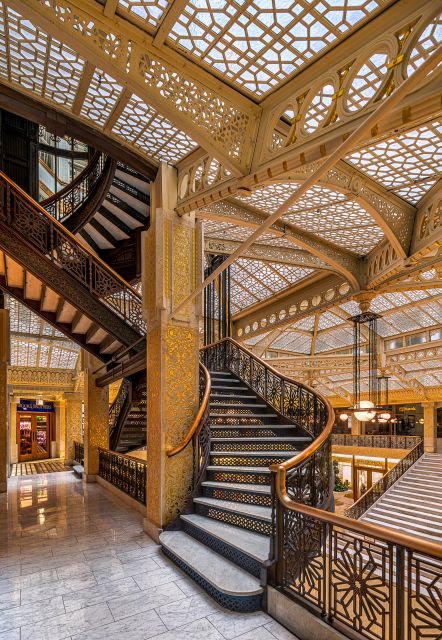
The Rookery is one of the main reasons to choose this tour. Its interior offers the kind of decorative detail that can be easy to miss if you only walk past the exterior. The tour highlights elaborate craftsmanship, light, structure, and the ambition behind Chicago’s early commercial buildings.
The building is closed on Sundays, so an alternative stop is included on that day. If the Rookery is high on your list, book another day when possible. If Sunday is your only option, the tour still includes several other significant interiors, but the route will not be identical.
This stop rewards slow looking. Pay attention to how open areas, decorative surfaces, and light work together. The point is not just that the building is beautiful. It is that the design had to solve practical problems while also making a strong public impression.
The Field Building and the scale of downtown ambition
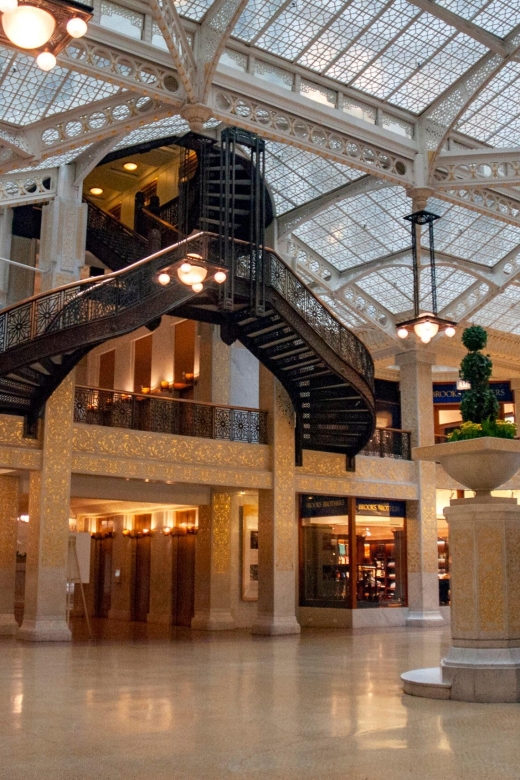
The Field Building continues the discussion of Chicago’s commercial growth. Its presence on the route gives you another chance to compare architectural choices across different periods and buildings.
The tour does not reduce the Loop to a single style. Instead, it shows how architects used different materials, forms, decorative programs, and planning ideas to create individual identities. That makes this stop useful for anyone who likes comparison. You can ask why one structure feels formal, another feels ornate, and another seems more restrained.
This is also a good place to consider the people who occupied these buildings. The tour brings in industrial magnates, famous figures, and less admirable characters connected to Chicago’s past. Architecture becomes a record of social power, not just a collection of attractive surfaces.
The Marquette Building and details at eye level
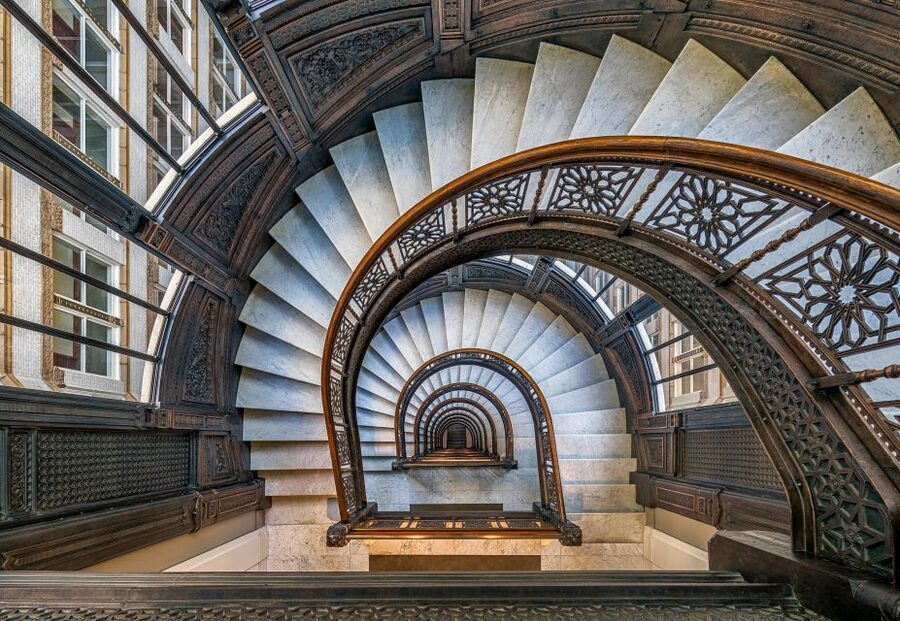
The Marquette Building adds another interior viewpoint to the route. The value here is the chance to see details that are not obvious from the sidewalk, including decorative work and design elements that reward a closer look.
This is where you should resist the urge to keep up with the group while staring only at the largest feature. Small areas can carry much of the story. Notice entrances, doorways, decorative borders, mosaics, and transitions between public areas.
The tour’s format is helpful because your guide can point out what deserves attention. Without that direction, you might enter a building, admire the general effect, and leave without understanding why it matters.
Palmer House Hilton and a living piece of Chicago
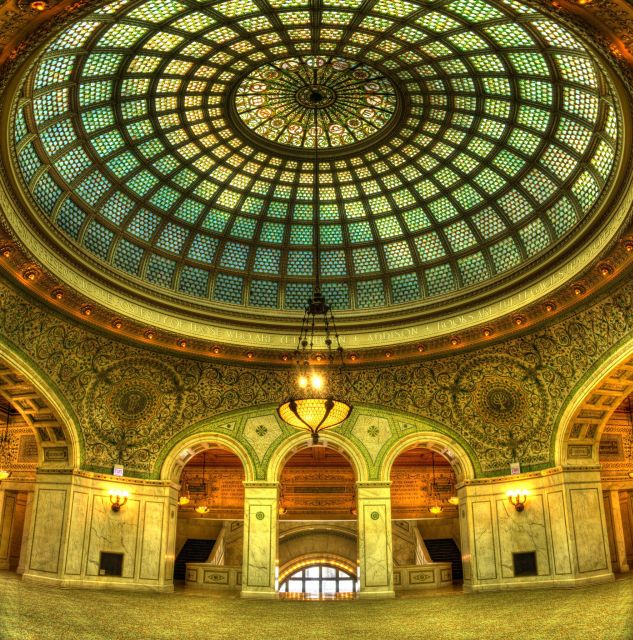
The Palmer House adds a hotel setting to the itinerary. Hotels offer a different architectural experience from office and commercial buildings because they were designed for movement, hospitality, display, and public arrival.
The tour uses the building to widen the story of Chicago’s development. You are not only looking at engineering or office architecture. You are also considering how famous people and everyday visitors moved through grand public interiors during the city’s most theatrical decades.
This stop can be especially appealing if you enjoy historic hotels, decorative interiors, or stories of social life. It also breaks up the route with a different kind of building experience before the tour moves to the Chicago Cultural Center.
Chicago Cultural Center and the most decorative pause
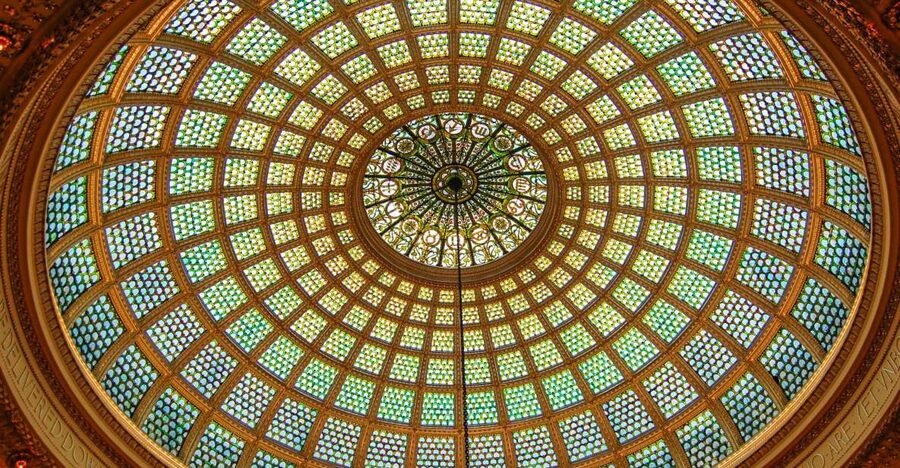
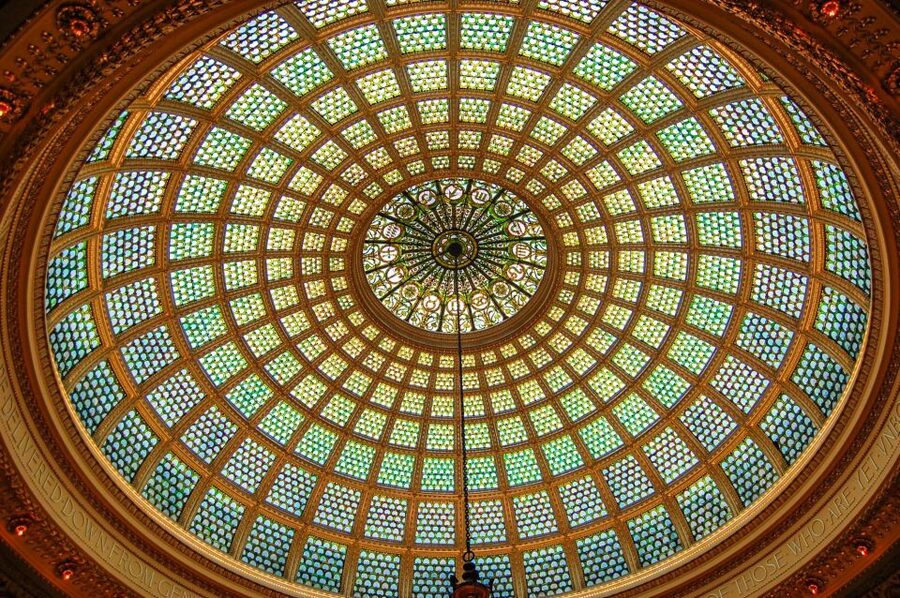
The Chicago Cultural Center is one of the tour’s strongest stops for visual detail. The experience highlights domes, shimmering mosaics, and elaborate craftsmanship, and this is the sort of setting where those features can be appreciated at close range.
The building shows how a public interior can use decoration to create ceremony. Look upward, then look across the walls and surfaces around you. The guide explains the significance of design elements rather than leaving you with a list of dates and names.
This stop should appeal to art and architecture fans, including people drawn to Art Deco and related decorative styles. One participant specifically described the tour as a must-do for Art Deco fans, although the tour covers more than one period and style.
Because the tour keeps moving, take your own photos efficiently. You may not have unlimited time in each interior, and the guide’s explanation is more valuable than trying to photograph every square foot.
Marshall Field and Company Building: a fitting finish
The tour ends at the Marshall Field and Company Building. That makes sense thematically because department stores were designed as public experiences, not merely places to buy things. Their architecture had to attract attention, guide movement, and create a sense of occasion.
The final stop gives you one more chance to compare commercial design with the offices, hotels, and civic interiors seen earlier. By this point, the route has shown how different buildings used scale, decoration, light, and structure to shape public life.
Ending here also gives you a practical advantage. You are still in the central Loop, with the chance to continue exploring nearby on your own. The tour does not return you to Union Station, so plan your next stop from the finish rather than assuming you will end where you began.
How much walking, time, and weather to expect
The advertised duration is two hours. The walk covers a sizeable area, but the route is not described as an endurance event. Several people found it comfortable, while one person felt the pace was quick and noted that some buildings involved many stairs.
Plan for about 90 percent of the experience to be outdoors. Chicago weather can change the feel of this tour completely. In winter, wear a warm coat, gloves, and shoes with good traction. Even if the interiors are warm, you will spend substantial time moving between them.
Comfortable shoes are essential. The tour is listed as wheelchair accessible, but because one participant encountered stairs in and out of buildings, you should confirm the current route if you need step-free access for every stop.
Small groups appear possible, and that can improve the experience. Some departures have had only two to four people, giving the guide plenty of time for questions. A larger group may feel less personal, but the route still depends more on clear guiding than on group size.
Is $35 a fair price?
At $35 per person, this tour offers good value if you want access, context, and a planned route through several buildings. You could walk past many of these places for free, but you would miss the connections between their design choices, historical uses, and hidden interior details.
The price is less attractive if you only want exterior photographs or prefer to explore at your own pace. An architecture boat tour may be a better first choice for a broad view of Chicago’s skyline and riverfront buildings. This walking tour works well as a companion because it takes you inside and gives attention to details that a boat cannot show.
The booking terms also reduce risk. You can cancel up to 24 hours ahead for a full refund, and you can reserve without paying immediately. Starting times vary, so check availability when choosing your date.
Who should book this Loop architecture tour?
I would recommend it to first-time Chicago visitors who want more than the standard skyline view. It is also a strong choice for locals, history teachers, architecture students, art fans, and anyone who enjoys stories tied to physical places.
Families can enjoy it if children are comfortable walking and listening for two hours. The tour has enough visual material to keep curious young people interested, but it is not built as a children’s program.
You should think twice if you dislike outdoor walking, cold weather, brisk pacing, or frequent stops. Sunday visitors also need to accept that the Rookery will be replaced with another location.
Should you book it?
Book this tour if the words why does this building look this way interest you. For $35, you get a focused walk through major Loop buildings, access to striking interiors, and a guide who can turn doors, domes, mosaics, and structural choices into a connected story.
I would choose it after, or alongside, a river architecture tour. The boat gives you the big picture. This walk gives you the details at street level and inside the buildings. Dress for the weather, wear comfortable shoes, ask questions, and try to book a day when the Rookery is open if it is a priority.
FAQ
Where does the Chicago Secret Interiors Architecture Walking Tour start?
It starts inside Union Station in the Great Hall, under the Clinton Street sign.
Where does the tour finish?
The tour finishes at the Marshall Field and Company Building.
How long does the tour last?
The tour lasts two hours.
What is included in the price?
The price includes a guide, the walking tour, and commentary about architectural styles and innovations.
What language is the tour conducted in?
The live tour guide leads the experience in English.
Is the tour wheelchair accessible?
The activity is listed as wheelchair accessible. Because some buildings may include stairs, confirm the current route if you require step-free access at every stop.
Is the Rookery Building included every day?
The Rookery is closed on Sundays. An alternative stop is used on that day.
What should you bring?
Bring comfortable shoes. Dress warmly in winter because most of the tour takes place outdoors.
Just added in Chicago
- Private Frank Lloyd Wright Architectural Tour by Luxury Vehicle★ 3.5 · 7 reviews
- Private Chicago Architecture Tour★ 5.0 · 5 reviews
- Chicago Luxury Minibus City Tour and Architecture River Cruise★ 4.5 · 8 reviews
- Chicago History and Architecture Walking Tour with Boat Cruise★ 4.5 · 10 reviews
- Private Chicago Architecture Walking Tour★ 5.0 · 6 reviews
- Small Group History And Architecture Walking Tour of Chicago★ 4.5 · 8 reviews
- Chicago Walking Tour: See Inside Art Deco Masterpieces★ 4.9 · 8 reviews
- Chicago: Icons Guided Architecture Walking Tour★ 4.4 · 4 reviews
Hidden Gems Architecture Tours, compared.
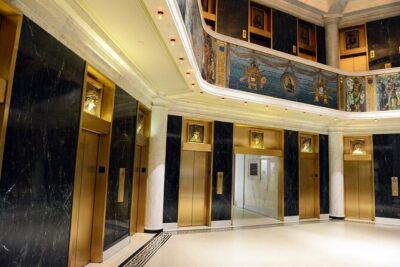
Chicago’s Secret Interiors Architectural Walking Tour
Read our review →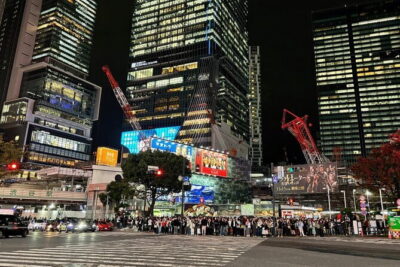
Shibuya Highlights Walking Tour & Secret View Spot
Read our review →
Delhi Hidden Gems: Mehrauli, Lodhi Art & Sunder Nursery
Read our review →
Miami Beach Art Deco & Hidden Gems Bike Tour with Local Historian
Read our review →
Detroit: Architectural Beauty and Hidden Gems Walking Tour
Read our review →
Secret Split: Socialist Architecture & brutalism – Urban Utopia
Read our review →
Barcelona Beyond Gaudí: Modernism, Rooftops, and Hidden Gems
Read our review →Browse the lists this tour appears in