
REVIEW · CHICAGO ARCHITECTURE TOURS
Private Chicago Architecture Walking Tour
Chicago tells its story in stone. This three-hour private walk links the Loop’s great buildings, from the Marquette Building to the Wrigley Building, with an English-speaking guide to explain why each one matters. I especially like the small private format and the carefully chosen route, which brings together office towers, grand hotels, a department store, and public cultural spaces. The guide also provides bottled water, and lunch is listed as included.
I also like the way the tour mixes famous sights with interiors that can be easy to miss on your own, including the Rookery, Sullivan Center, and Chicago Cultural Center. The main caution is access: you may not enter every building, particularly on weekends, and one review reported that lunch was not actually provided despite being advertised and separately confirmed. Verify both points before you go.
Key points to know before you book
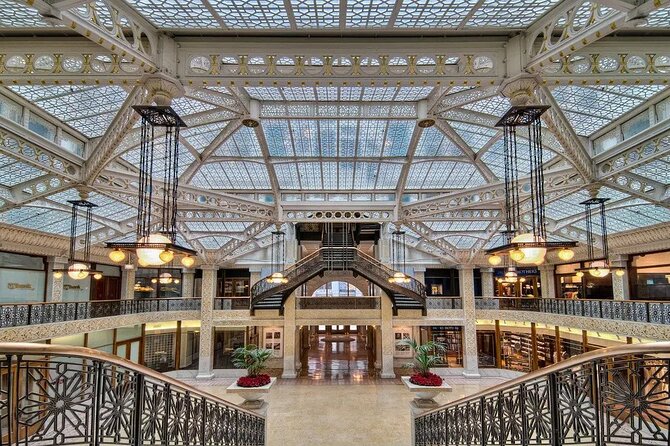
- Eight major buildings in three hours: The route covers the Marquette Building, Rookery, Palmer House, Sullivan Center, Chicago Athletic Association, Chicago Cultural Center, Tribune Tower, and Wrigley Building.
- A private guide keeps the pace flexible: Only your group participates, so you can ask questions and spend more time on details that catch your eye.
- The tour begins near the Fine Arts Building: You meet at 410 South Michigan Avenue and finish at the Wrigley Building on North Michigan Avenue.
- Interior access can vary: Several admissions are listed as included, but access may be limited by opening hours or weekend conditions.
- Lunch needs confirmation: It is listed among the inclusions, but a past booking did not receive it.
- The price reflects personal attention: At $211 per person, this is aimed at visitors who want a guided architectural lesson rather than a low-cost stroll.
Why this private Chicago walk is worth considering
Chicago is easy to admire from the sidewalk. It is harder to understand without some help. A private walk gives you the missing links: why the Loop became a testing ground for tall buildings, how office space became an investment product, and why decoration mattered as much as structure in the city’s early skyscrapers.
The route is also well shaped. You begin near the southern end of the downtown core and finish by the Chicago River at the Wrigley Building. That gives the outing a clear sense of movement rather than sending you back and forth across the same blocks.
I like the private setup here. You are not trying to hear a guide over a large crowd, and your questions can shape the discussion. If you care about design, city planning, or Chicago’s commercial past, that personal attention adds real value.
Still, $211 per person is a serious price for a three-hour walk. The cost makes more sense for a couple, family, or small group that wants a dedicated guide. If you mainly want exterior photographs, you can see many of these buildings for free on your own. The price earns its keep through interpretation and access, not through the number of sights alone.
More walking tours in Chicago:
- Chicago in a Day: Food, History & Architecture Walking Tour
★ 5.0 · 1,153 reviews - Chicago’s Secret Interiors Architectural Walking Tour
★ 5.0 · 635 reviews - Chicago: Secret Interiors Architecture Walking Tour
★ 4.9 · 498 reviews
Starting at the Fine Arts Building
The meeting point is the Fine Arts Building at 410 South Michigan Avenue. This puts you on an important stretch of Chicago’s cultural corridor, close to the Loop and within reach of major public transportation.
The route then moves through buildings that show different phases of the city’s growth. That variety is one of the tour’s best features. You are not looking at eight versions of the same office tower. Instead, you see speculative commercial buildings, financial district landmarks, hotels, department-store architecture, a private club, a public cultural center, and two famous North Michigan Avenue icons.
The tour lasts about three hours. That sounds generous, but eight stops require steady movement. Several visits are planned for 15 to 30 minutes, so you should expect a brisk overview rather than an unhurried study of every room and facade.
Marquette Building: Chicago’s office boom in miniature
The first stop is the Marquette Building, with about 20 minutes of included admission. Its importance is economic as much as architectural.
The building was created as a speculative commercial office project during Chicago’s 19th-century construction boom. Investors were betting on the future of a growing urban center, and the goal was to fill the building with high-grade offices that would produce steady income.
That idea helps you see early skyscrapers in practical terms. These were not built only as civic monuments. They were business machines, designed to attract companies, tenants, and investment. A guide can turn the Marquette from an attractive old building into a lesson about how modern downtowns began to function.
Twenty minutes is enough for a focused explanation and a look at the building’s key spaces, but not for a long architectural study. If the interior is open during your visit, pay attention to how the design balances commercial purpose with civic decoration.
The Rookery: early skyscraper ambition on LaSalle Street
The Rookery receives another 20-minute visit, with admission included. Located at LaSalle and Adams, it occupies a prime place in Chicago’s financial district and was considered the largest and finest office building in the United States when completed.
That claim tells you how quickly Chicago was changing. The city was not content to copy older building traditions. It was competing with itself, producing taller, more elaborate, and more efficient commercial structures.
The Rookery is one of the tour’s strongest stops because it connects engineering, business, and public image. A building of this size needed to work as an office center, but it also needed to impress people arriving in the financial corridor. The guide’s explanations are especially useful here, since the building’s importance is not always obvious from a quick look at the exterior.
Access is worth watching closely. The itinerary includes admission, but the tour cannot guarantee that every space will be available at every hour. Weekend visits may offer less interior access.
More private tours in Chicago:
- Best of Chicago: Architecture & Highlights City Private Tour
★ 5.0 · 94 reviews - Chicago in a Day: Food and Architecture Private Walking Tour
★ 5.0 · 53 reviews - Private Frank Lloyd Wright Architectural Tour by Luxury Vehicle
★ 3.5 · 7 reviews - Chicago: Private Architecture Tour – 3 or 6 Hours
★ 4.0 · 6 reviews
Palmer House: ten minutes inside a hotel pioneer
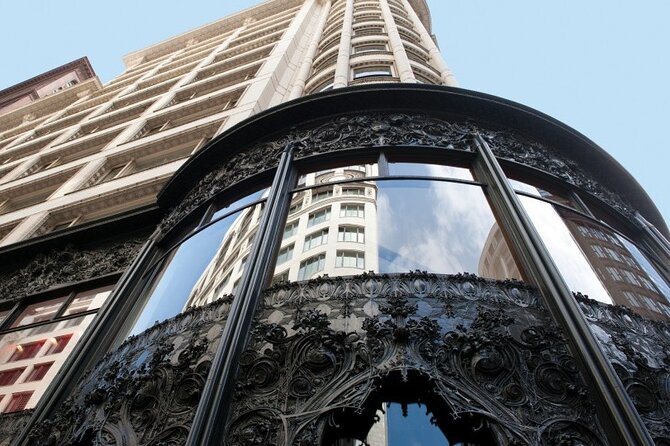
The Palmer House Hilton gets about ten minutes, with no separate admission charge. This is a short stop, but the building gives the tour a welcome change of subject.
The hotel is in Chicago’s Loop and is described as the longest continuously operating hotel in North America. It was also the city’s first hotel with elevators, and the first to offer electric light bulbs and telephones in guest rooms.
Those details show how hotels served as early testing grounds for new technology. A stay at a grand hotel was not only about a bed and a meal. It could also offer access to inventions that were not yet common in ordinary homes.
Ten minutes is enough to take in the historic lobby and hear the main points. Do not expect a full hotel tour. The stop works best as a compact look at how luxury, technology, and urban life came together in the Loop.
Sullivan Center: where retail met the Chicago School
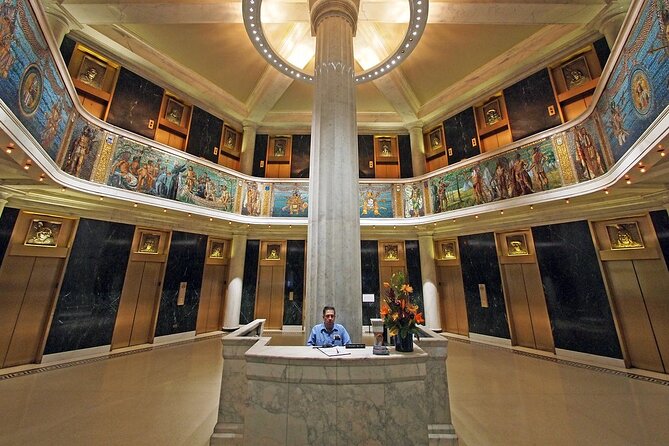
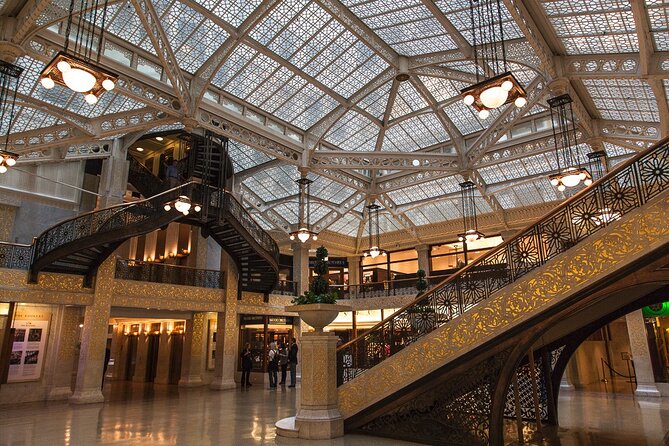
The Sullivan Center, formerly the Carson Pirie Scott department store, receives about 20 minutes and included admission. Built from 1899 to 1903, it is one of the clearest examples of the Chicago School and an important work in the development of tall buildings.
Its original retail purpose matters. The building was designed not just to house merchandise, but to draw shoppers inside and make a strong impression from the street. That makes it different from the office buildings earlier in the route.
The Sullivan Center was declared a Chicago landmark in 1975. Its place on the tour helps you see how architectural ideas moved beyond office towers and into everyday commercial life. The department store was a public stage, and its exterior had to work at street level.
I would pay close attention to the lower portions of the building. The tour’s earlier stops may have you looking upward at height and structure. Here, the street-facing details and retail function deserve equal attention.
Chicago Athletic Association: a private club turned public hotel
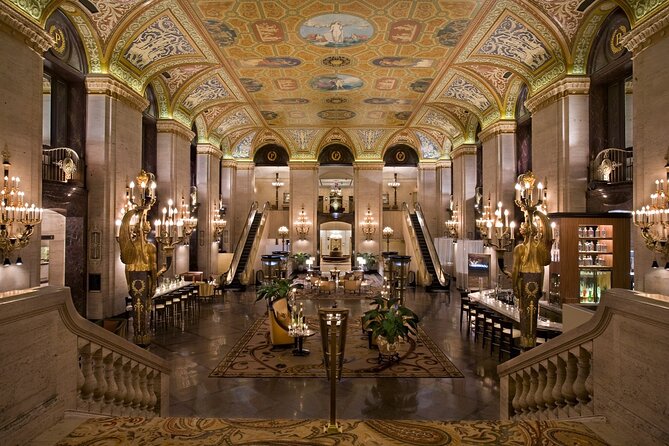
The Chicago Athletic Association receives the longest scheduled stop, about 30 minutes. Admission is free, and the building sits across from Millennium Park.
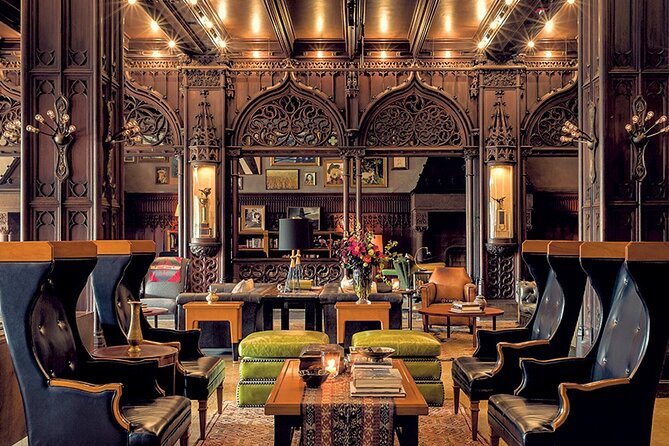
The 11-story Venetian Gothic structure was designed by Henry Ives Cobb and completed in 1893. It operated as a private club for wealthy Chicagoans until 2007, then became a hotel while keeping much of its ornate interior character.
This is one of the most enjoyable contrasts on the route. You get a sense of exclusivity without needing to enter a private club. The building contains elaborate molding, decorative paneling, detailed trim, restaurants, ballrooms with views toward Lake Michigan, and pubs designed for relaxed conversation.
The stop also shows how older buildings can receive a new use without losing their personality. Its modern hotel function sits inside a structure shaped by another era. That makes it especially useful for anyone interested in preservation and adaptive reuse.
Because the building is now a hotel, the atmosphere may feel more open than at some office landmarks. Still, the tour is not promising a full inspection of every room. You should expect to see selected public areas and hear how the building changed over time.
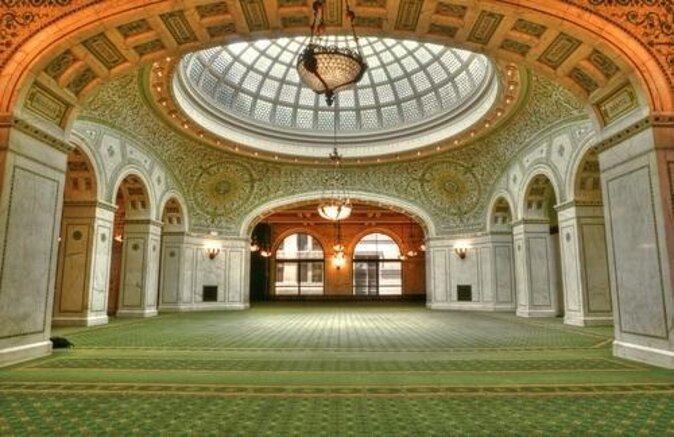
Chicago Cultural Center: a free public room with a remarkable dome
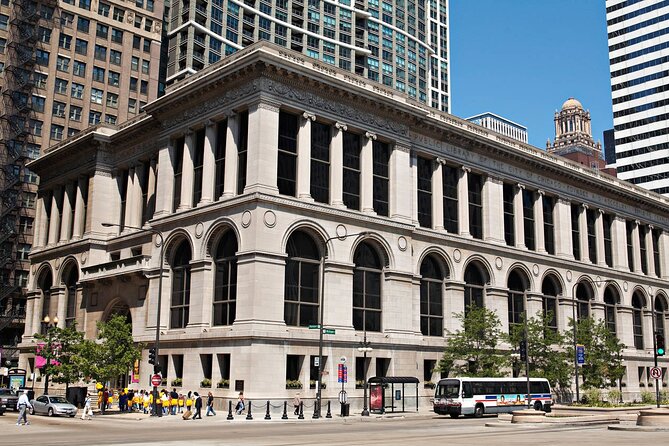
The Chicago Cultural Center gets about 30 minutes and includes admission. It occupies a full city block and serves as a major cultural center in the Loop.
Its most famous feature is the world’s largest Tiffany stained glass dome. That alone makes the stop worthwhile, but the building also matters because it offers more than architecture. It presents more than 700 humanities programs each year, many of them free and open to the public.
I like this stop because it brings the tour back to public life. The Marquette Building and Rookery were shaped by private business. The Chicago Athletic Association began as an exclusive club. The Cultural Center shows how an important historic building can serve the wider community.
Thirty minutes gives you time to look up, take in the decorative work, and listen to the guide’s explanation without rushing too hard. If you like grand interiors but do not want to pay another admission fee, this is a particularly good part of the route.
Tribune Tower: Chicago’s Gothic calling card
The Tribune Tower receives about 15 minutes and includes admission. At 36 stories, it is not the tallest building downtown, but its Gothic spires give it a strong visual identity.
The lobby is described as shrine-like, with inspirational quotations and a ceremonial feel. That tone is part of the building’s appeal. The Tribune Tower was designed to look important, not merely efficient. Its architecture tells you that newspaper power and civic influence were being expressed through stone and height.
Fifteen minutes is a short visit, so you will need to make the most of the lobby and exterior views. The stop works as a sharp lesson in image-making. A building can be famous not because it is the biggest, but because its form becomes linked with the identity of a city.
Wrigley Building: finishing by the Chicago River
The final stop is the Wrigley Building, at 400 to 410 North Michigan Avenue. The tour ends here after about 15 minutes, with admission included.
The building dates from the 1920s and uses French Renaissance decoration. Its clock tower reaches about 425 feet, making it a major skyscraper in its own right as well as one of downtown Chicago’s most recognized buildings.
Ending here is practical. North Michigan Avenue is a major downtown destination, and you can continue exploring after the tour rather than needing to return to the starting point. The Wrigley Building also gives the route a strong final image: ornate decoration, commercial ambition, and a highly visible position near the river.
The closing stop is brief, so I would use it to ask the guide how the building fits into the larger story of Chicago architecture. By this point, you have seen 19th-century office buildings, early technology, department-store design, public culture, Gothic revival, and 1920s commercial architecture.
What the $211 price really buys you
At $211 per person, the tour is not a bargain walk. Its value depends on how much you want from the guide.
You are paying for a private experience, an English-speaking guide, bottled water, listed admissions and fees, and a route through eight notable buildings. Lunch is also listed as included, but I would confirm this directly before booking because one past participant reported that lunch was not provided despite prior confirmation.
The private format matters most if you have a particular interest. You can ask why one building uses Venetian Gothic details, how speculative office development worked, or why a department store required a different design approach. On a standard group walk, those questions may be harder to fit in.
The price is harder to justify if you want only a photo walk. Many exteriors are visible without a ticket, and the schedule allows limited time at each building. You are buying context and convenience more than exclusive access.
Timing, access, and who will enjoy it most
The walk is offered in English and is private, with only your group participating. It is near public transportation, service animals are allowed, and most people can take part.
The route involves walking between eight downtown stops over roughly three hours. Comfortable shoes and a bottle of water are sensible, even though bottled water is listed as provided. Chicago weather can also change the feel of the outing, since some movement takes place between buildings.
Access is the key practical issue. The route includes several admissions, but you will not necessarily enter every building. Weekend tours may have even less interior access, and closures can occur beyond the operator’s control. If seeing specific interiors is your main reason for booking, ask what is expected to be open on your date.
The tour suits:
- First-time Chicago visitors who want an organized introduction to the Loop.
- Architecture fans who want a guide to explain why the buildings matter.
- Small groups who prefer private questions and a flexible conversation.
- Families with older children or adults interested in design and city history.
- Repeat visitors who have seen the skyline but want to understand its buildings.
It may not suit you if you want a slow photography session, a full interior tour of every stop, or a low-cost introduction to downtown.
Booking advice and cancellation terms
Confirmation is provided when you book, and the experience can be canceled for a full refund up to 24 hours before the start time. Cancellations made within 24 hours are not refunded, and changes during that period are not accepted.
Before paying, I would ask two direct questions: Is lunch being provided on your date, and which interiors are expected to be open? Those answers matter more than the small details of the schedule.
Should you book the private Chicago architecture walk?
Book it if you want Chicago’s buildings explained rather than simply photographed. The route is smart, the private format is appealing, and the guide can connect commercial ambition, technology, decoration, and preservation in one morning or afternoon.
I would be more cautious if you are booking mainly for interior access. That part can change, especially on weekends, and the lunch information needs confirmation. At $211 per person, the tour works best for people who value a personal guide and a well-planned architectural introduction.
For a first look at Chicago’s Loop and North Michigan Avenue, it offers a useful structure and plenty of visual rewards. Just confirm the details before you commit, then keep your eyes up. Chicago built much of its identity above street level.
FAQ
How long is the private Chicago architecture walking tour?
The tour lasts approximately three hours.
Where does the tour begin?
It begins at the Fine Arts Building, 410 South Michigan Avenue, Chicago, Illinois 60605.
Where does the tour end?
The tour ends at the Wrigley Building, 400 to 410 North Michigan Avenue, Chicago, Illinois 60611.
Is the tour private?
Yes. Only your group participates in the activity.
What language is the tour offered in?
The tour is offered in English with an English-speaking guide.
Is lunch included?
Lunch is listed as included, but one past booking reported that lunch was not provided. Confirm this detail before your tour date.
Are building admissions included?
Admission is listed as included for the Marquette Building, Rookery Building, Sullivan Center, Chicago Cultural Center, Tribune Tower, and Wrigley Building. The Palmer House and Chicago Athletic Association stops list no separate admission charge.
Will you enter every building?
No guarantee is provided that you will enter every building. Interior access can be limited, and weekend tours may have fewer opportunities to go inside.
Is the tour suitable for most people?
Most people can participate. The experience is near public transportation, and service animals are allowed.
Can you cancel for a full refund?
Yes. You must cancel at least 24 hours before the experience start time for a full refund. Cancellations within 24 hours are not refunded.
Just added in Chicago
- Private Chicago Architecture Tour★ 5.0 · 5 reviews
- Private Frank Lloyd Wright Architectural Tour by Luxury Vehicle★ 3.5 · 7 reviews
- Chicago History and Architecture Walking Tour with Boat Cruise★ 4.5 · 10 reviews
- Chicago Luxury Minibus City Tour and Architecture River Cruise★ 4.5 · 8 reviews
- Small Group History And Architecture Walking Tour of Chicago★ 4.5 · 8 reviews
- Chicago: Icons Guided Architecture Walking Tour★ 4.4 · 4 reviews
- Chicago: Private Architecture Tour – 3 or 6 Hours★ 4.0 · 6 reviews
- Chicago Walking Tour: See Inside Art Deco Masterpieces★ 4.9 · 8 reviews
Chicago Architecture Tours, compared.
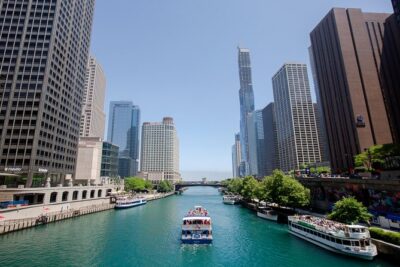
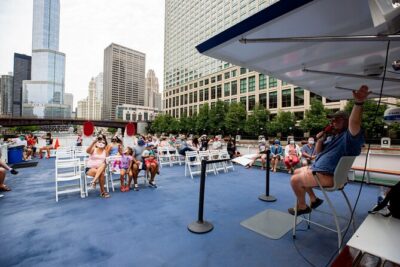

Chicago River: 1.5-Hour Guided Architecture Cruise
Read our review →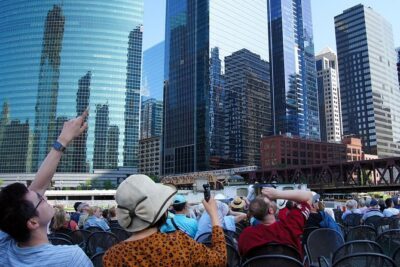
Chicago Architecture Center River Cruise aboard First Lady
Read our review →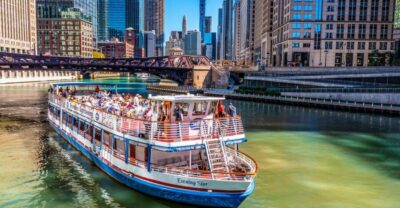
Architecture River Cruise Skip-the-Ticket Line
Read our review →
Chicago River 45-Minute Architecture Tour from Magnificent Mile
Read our review →
45-Minute Family-Friendly Architecture River Cruise
Read our review →Browse the lists this tour appears in