
REVIEW · ARCHITECTURE TOURS
Contemporary Architecture in Bordeaux city center!
Bordeaux is no longer sleeping. This two-hour walk shows you how the city moved from faded port town to modern regional capital, pairing the Water Mirror and river quays with Richard Rogers’ glass Law Courts, Philippe Starck’s Mama Shelter, and the small but clever Square Vinet. I like the mix of famous sights and less obvious corners. I also like that an architect leads the walk, so you get more than dates and façades.
The route makes history useful rather than dusty. You see how 18th-century Bordeaux, Haussmann’s city, and new construction now share the same center. The main consideration is pace: two hours is enough for a sharp introduction, not enough for a full architectural survey. Some of the Euratlantique material, including the Méca, may be discussed as a possible extension rather than a guaranteed stop.
Key points at a glance
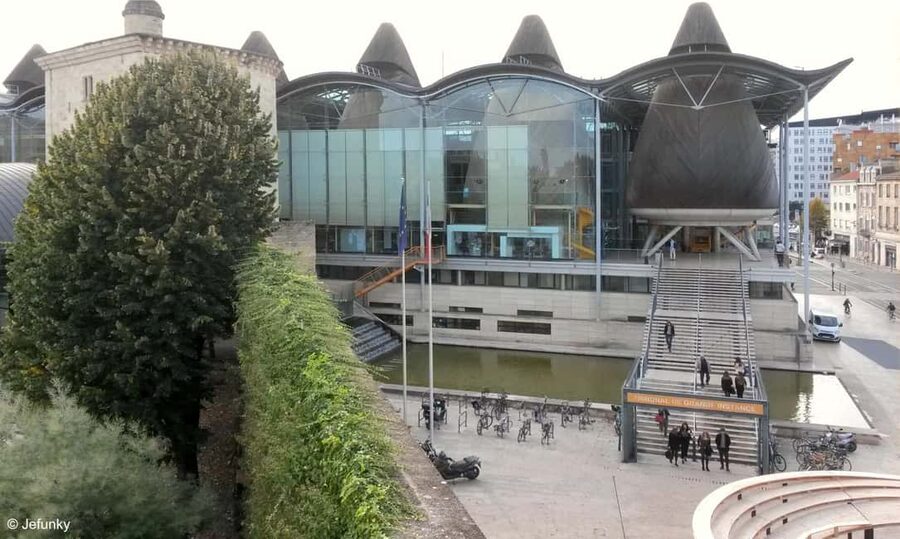
- Enter Richard Rogers’ glass Law Courts: Begin beside one of Bordeaux’s boldest modern buildings and see how it challenges the city’s classical image.
- Read the Water Mirror as city planning: The reflecting pool is not just a photo stop. It helps explain Bordeaux’s riverfront renewal.
- Compare old and new at Place Pey-Berland: Historic monuments sit beside a carefully planned contemporary setting.
- Find Square Vinet: This tiny public space uses vertical planting and a playful design in a very compact footprint.
- See Mama Shelter’s unusual reuse: A 1934 office building became a colorful hotel associated with Philippe Starck.
- Hear about Euratlantique and Méca: The tour connects central Bordeaux with its larger current building program.
Why modern Bordeaux is worth a closer look
Bordeaux can fool you at first. The pale stone façades, formal squares, and broad riverfront suggest a city built once and left alone. That impression misses the major changes of the last twenty-five years.
The city was long called the Sleeping Beauty, a nickname tied to its fading reputation. Over time, Bordeaux was seen as dark, neglected, and short on energy. Its renewal changed that picture. The city regained its role as the capital of Nouvelle-Aquitaine, became a UNESCO World Heritage Site in 2007, and began drawing new residents and investment. Its population is expected to reach one million by 2030.
That growth creates a useful tension. Bordeaux still protects the formal character of its historic center, but it also needs new offices, public spaces, hotels, courts, cultural buildings, and housing. This walk puts that tension in front of you instead of treating architecture as a row of isolated objects.
I like this approach because it gives you a way to read the city after the tour ends. A classical façade is not simply old. A new building is not automatically good. Each belongs to a larger decision about movement, public space, tourism, and the river.
A few more architecture tours in the world worth a look
- Chicago Architecture River Cruise
★ 5.0 · 15,756 reviews - Chicago River 90-Minute Architecture Tour
★ 4.5 · 9,629 reviews - Chicago River: 1.5-Hour Guided Architecture Cruise
★ 4.8 · 8,046 reviews
Start at the Bordeaux Law Courts
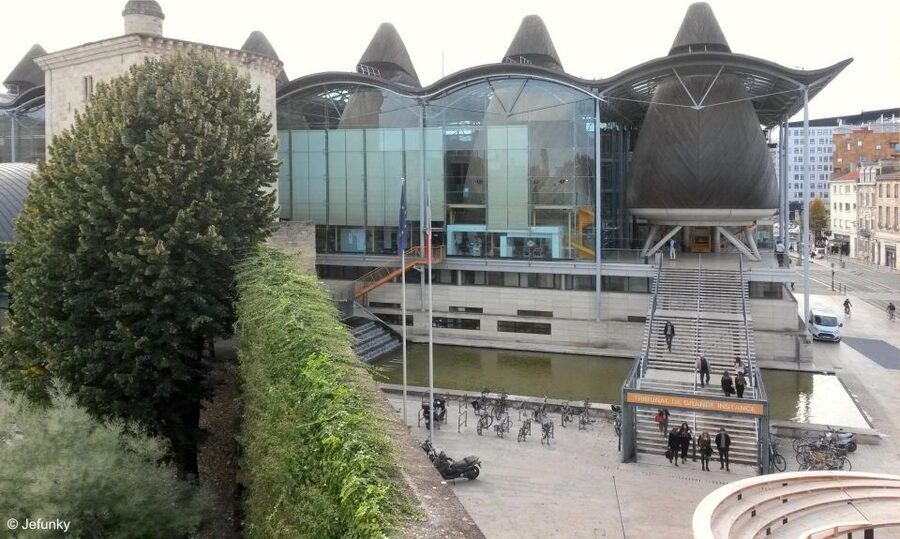
The meeting point is at the foot of the entrance stairs to the Bordeaux Law Courts. That detail matters. You do not begin with a long orientation in a café or beside a standard monument. You meet directly at one of the city’s most distinctive contemporary buildings.
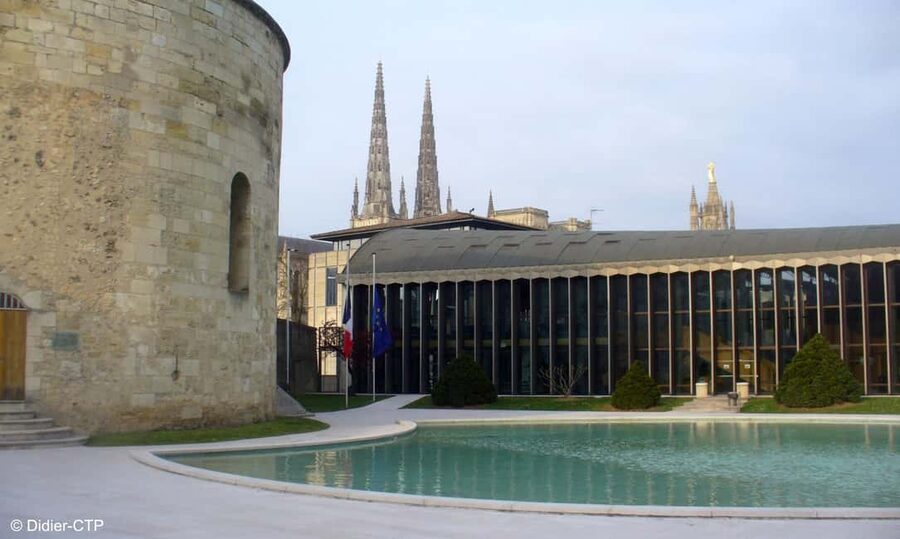
Richard Rogers designed the Law Courts as an all-glass complex, a striking answer to Bordeaux’s stone-heavy center. The building is presented as a major work by the British architect, and the tour includes entry inside. That interior access is one of the strongest reasons to book this walk. From outside, you can admire the unusual form. Inside, your guide can explain how the building works as a court rather than leaving you to guess.
The Law Courts also set up the central question of the tour: how can modern architecture belong in a historic city? Bordeaux could have treated its old center like a museum. Instead, it placed new civic architecture among important older buildings. The result is not designed to please everyone, and that is part of its value. You get to examine the decision at close range.
Expect architectural explanation here, not a guided legal visit. The focus is the building, its form, and its place in Bordeaux’s redevelopment.
Place Pey-Berland puts old and new side by side
From the Law Courts, the walk moves through the city center and reaches Place Pey-Berland. This historic square is one of the places where Bordeaux’s grand older architecture meets newer urban planning.
The square is important because the tour does not treat contemporary work as something found only in a new district. Here, a high-end contemporary masterplan operates beside established monuments. You can consider the paving, open space, sight lines, and relationship between buildings, rather than looking only upward at façades.
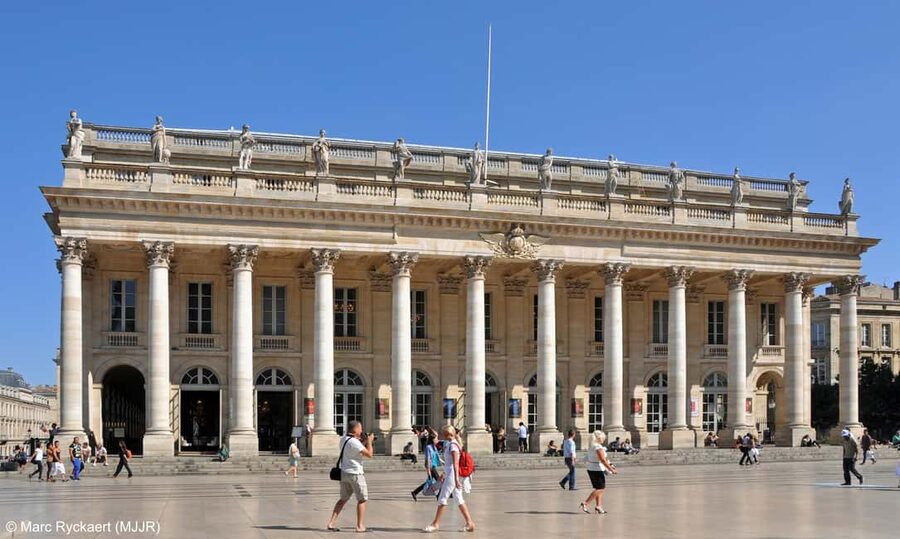
The surrounding historic setting includes the Rohan Palace and the Grand Théâtre. Rohan Palace represents Bordeaux’s formal civic tradition. The Grand Théâtre helped inspire some of the great operas of the 19th century, making it more than a handsome performance hall. Its design helped define the city’s public image.
The comparison is especially useful for visitors who think modern architecture means leaving the old center. In Bordeaux, modern work often has to negotiate with neoclassical streets and protected views. Your guide can help you notice where the new plan respects the old structure and where it deliberately introduces a fresh note.
Mama Shelter shows how reuse can change a building
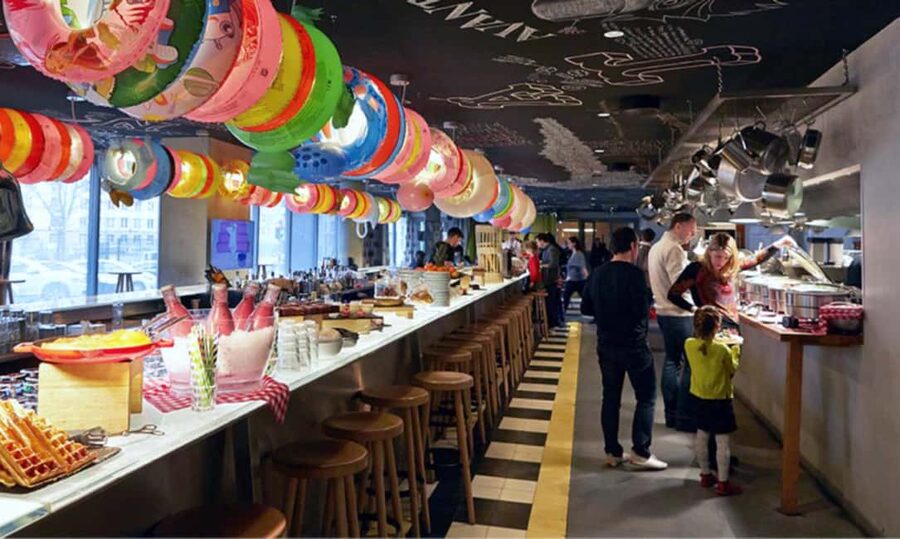
A short look at Mama Shelter adds a different kind of modern architecture to the route. This is not a new glass landmark built from an empty site. It is a 1934 office building turned into a funky hotel, with Philippe Starck connected to its design.
That change of use raises practical questions. What happens when an office building no longer serves its original purpose? Can a hotel bring new activity without erasing the older structure? Mama Shelter gives you a compact example of adaptation in the city center.
The stop is described as a peek, so you should not expect a full hotel tour or access to every interior space. Still, the building adds variety to the walk. The Law Courts are a purpose-built public institution. Mama Shelter shows how a previous building can gain a new role through design and hospitality.
I find this contrast valuable because it keeps the tour from becoming a parade of famous architects. You see one dramatic civic project, then a more commercial form of reuse. Both affect how people experience the city, but they do so in different ways.
Same city, a different building to stand in front of:
- Chicago Architecture Center River Cruise aboard First Lady
★ 5.0 · 5,536 reviews - Chicago: Architecture River Cruise Skip-the-Ticket Line
★ 4.8 · 4,325 reviews - Chicago River 45-Minute Architecture Tour from Magnificent Mile
★ 4.5 · 2,924 reviews - Barcelona: Sant Pau Recinte Modernista Entry Ticket
★ 4.6 · 2,567 reviews
Square Vinet proves that small spaces matter
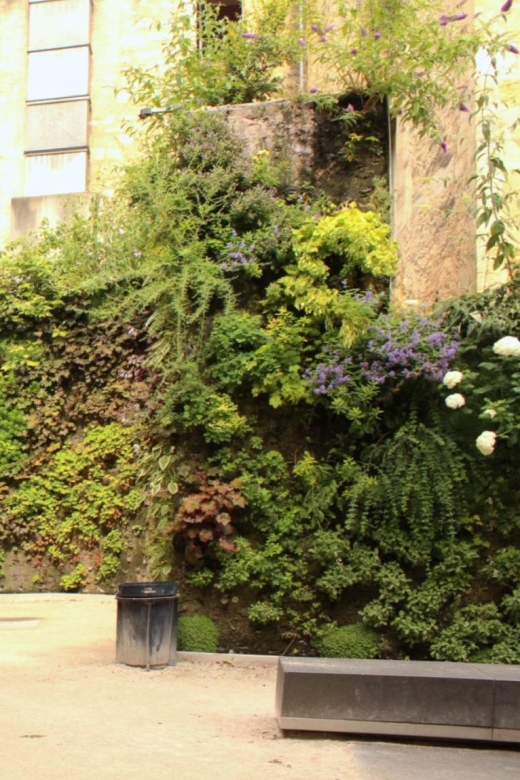
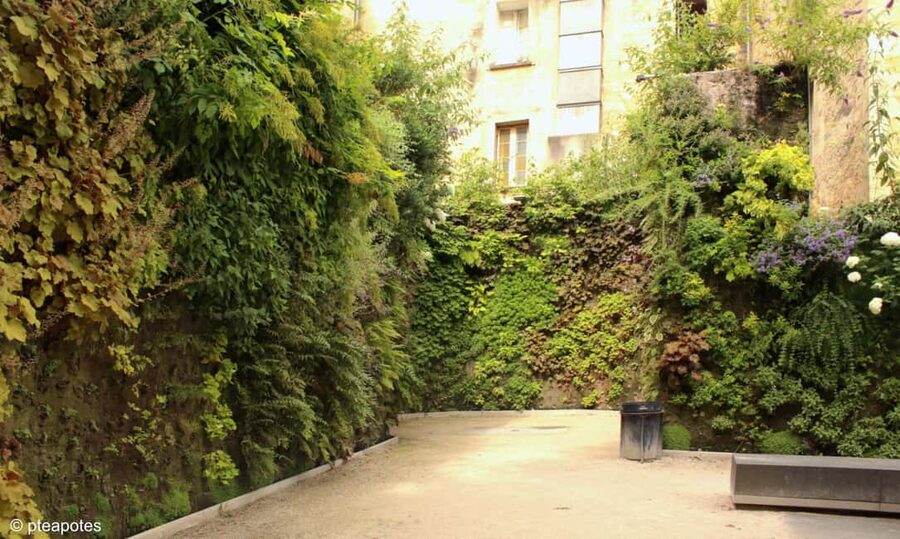
Square Vinet is easy to miss if you are moving quickly through Bordeaux. The tour calls attention to it as a tiny, secret-feeling playground with vertical green walls.
The designers are Michel Desvigne and Patrick Blanc. Their work here demonstrates how a very small urban space can serve more than one purpose. The playground gives children a place to use, while the vertical planting changes the feel of the surrounding walls.
You should not expect a large park. The charm is the tight scale. Square Vinet asks you to look at what can happen in leftover or restricted city space. A wall does not have to remain blank. A narrow site can still offer play, planting, and visual relief.
This is also where the tour becomes particularly practical. Grand projects get attention because they are easy to photograph. Small public spaces often shape daily life more directly. A pocket square may not appear on a postcard, yet it can make a dense center more comfortable.
The tour is not suitable for children under 10, so the playground is an architectural example rather than a feature for your own young children to use during the walk.
The Water Mirror explains Bordeaux’s riverfront reset
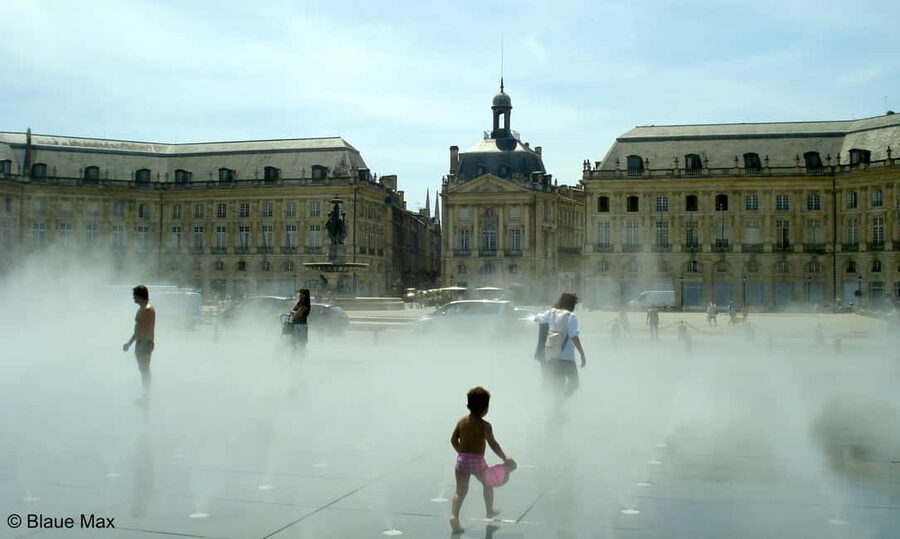
The Water Mirror, designed by Michel Corajoud, is one of the key stops. It sits along the Garonne quays, described as the backbone of Bordeaux’s redevelopment.
It is easy to treat the Water Mirror as a simple picture stop. You see the shallow reflective surface, the historic façades, and the changing relationship between stone, sky, and water. The better use of your time is to ask what the space did for the riverfront.
The tour uses this point to discuss the major strategies introduced since 1995. Bordeaux’s river edge became a central part of the city’s renewed public life, rather than a neglected boundary. The Water Mirror helps make that change visible because it turns a broad open area into a place for stopping, looking, and talking.
You also get time to discuss current development here. That matters because Bordeaux’s renewal is not finished. Growth brings pressure, and new buildings must fit into a city already carrying a powerful historic identity.
I would pay close attention to the conversation at this stop. The Water Mirror is visually memorable, but its greater value is as a planning lesson. It shows how a public project can influence the way people see an entire district.
The Euratlantique discussion broadens the picture
The final part of the experience focuses on major current development operations, especially Euratlantique. This shifts the walk from individual buildings to a larger development area tied to Bordeaux’s growth.
The information provided for the tour says you may discover some of the project’s emblematic buildings, including the Méca, designed by the Danish firm BIG. The wording matters: the Méca is a possible part of the wider focus, not a promise that you will spend a long time inside it during the two-hour route.
That uncertainty is not necessarily a flaw. A short city-center tour cannot cover every project in detail. The Euratlantique material gives you context for what comes next and helps connect the older center with the city’s expanding future.
If you care about urban planning, this part may be the most useful. You can ask how Bordeaux handles new cultural and commercial buildings, how development changes movement through the city, and how modern projects relate to the historic center. If you mainly want old monuments, this section may feel less immediately rewarding.
The tour’s listed route also passes essential older sights such as the Grand Théâtre and Rohan Palace. That balance keeps the development story tied to real streets and buildings rather than turning it into a technical lecture.
What the two-hour format really gives you
Two hours is a good length for this subject. It keeps the walk focused and allows several stops without turning each building into a long seminar. You get a clear sequence: riverfront renewal, civic architecture, historic squares, adaptive reuse, a compact planted space, and wider development plans.
The tradeoff is depth. You will not receive a complete history of Bordeaux architecture or a full inspection of every building named. You will get a guided framework for understanding the city’s change.
The walk includes a guide who is also an architect. English and French are available. A recent booking with David was praised for a relaxed, kind, and friendly manner, along with a good balance between detailed explanation and unusual sites. That description fits the kind of guide you want here: someone able to explain construction and planning without making every stop feel like a university lecture.
Several possible drink stops are included in the experience. They are a pleasant option if the group wants to pause and continue the discussion, but the details of those stops are not fixed. Think of them as flexible chances to talk, not a formal tasting program.
The meeting point is convenient to identify because it is the entrance stairs of the Law Courts. You should plan to arrive ready to walk and listen from the first minute.
Is the $40 price fair?
At $40 per person, the experience costs more than a casual self-guided stroll, but the price can make sense if you want interpretation rather than a checklist of buildings.
You are paying for access inside the Law Courts, an architect-led explanation, and a route that links sites many visitors would otherwise see separately. The real value is the connection between them. A guide can explain why the Water Mirror matters, why Square Vinet deserves attention, and how Mama Shelter differs from a new civic building.
The price is harder to justify if you prefer to walk at your own pace, take long photo breaks, or spend most of your time inside historic monuments. It is also less suitable if your main interest is only the Méca, since that project is part of the broader development focus and may not receive extensive treatment within two hours.
For someone interested in architecture, planning, and Bordeaux’s recent change, I consider $40 reasonable. You are buying a sharper way to see the city, not simply transportation between sights.
Who should book this walk?
I would recommend it to adults and older children who enjoy asking why a city looks the way it does. It suits visitors who have already seen the main historic center and now want to understand what changed behind the familiar façades.
It is also a good first-day activity if you want a clear map of Bordeaux’s old and new districts. The river quays, Water Mirror, central squares, and Law Courts give you useful reference points for the rest of your stay.
You may want to skip it if you dislike architectural discussion or need a slow route with frequent sitting. The experience is not suitable for people with mobility impairments, and it is not designed for children under 10.
The best match is a curious, reasonably mobile visitor who wants the city explained through buildings and public spaces. You do not need specialist training. A willingness to look closely is enough.
Should you book Contemporary Architecture in Bordeaux?
Book this tour if you want to understand why Bordeaux feels different from its old Sleeping Beauty image. The strongest parts are the Law Courts, the Water Mirror, the contrast with Place Pey-Berland, and the small-scale surprise of Square Vinet.
I would choose it over a standard sightseeing walk if you value context, adaptive reuse, and urban planning. Keep your expectations realistic: it is a focused two-hour introduction, not a full tour of every contemporary project in Bordeaux. If that sounds right, the $40 fee buys a thoughtful route and a useful way to see both the city Bordeaux inherited and the city it is still building.
FAQ
Where does the tour meet?
The meeting point is at the foot of the entrance stairs of the Bordeaux Law Courts.
How long does the experience last?
The tour lasts two hours.
How much does the tour cost?
The price is $40 per person.
Which languages are available?
The live tour guide is available in English and French.
Is the Bordeaux Law Courts included?
Yes. The tour enters Richard Rogers’ all-glass Bordeaux Law Courts.
Does the tour visit the Water Mirror?
Yes. The Water Mirror is included as a stop and is used to explain Bordeaux’s recent development.
Will I see Mama Shelter?
The route includes a look at Mama Shelter, a 1934 office building converted into a hotel with Philippe Starck associated with the design.
Is the Méca included?
The Euratlantique section may include some emblematic buildings, such as the Méca by BIG. The available details describe this as a possibility rather than a guaranteed full visit.
Who cannot take this activity?
The experience is not suitable for children under 10 or for people with mobility impairments.
Just added in the world
- Wilmington History and Architecture Tour★ 4.8 · 18 reviews
- New Orleans : Garden District Architecture Walking tour★ 4.8 · 5 reviews
- Washington DC: Dupont Circle & Embassy Row Architecture Tour★ 5.0 · 6 reviews
- Washington, DC: Georgetown Architecture Walking Tour★ 5.0 · 8 reviews
- Vicenza: Palladian Architecture Private Walking Tour★ 3.3 · 3 reviews
- Walk & Discover KL’s Architectural and Heritage Gems★ 5.0 · 7 reviews
- Private Colonial Williamsburg Architectural Tour★ 5.0 · 5 reviews
- Unveiling Brno: History, Culture & Architectural Delights★ 5.0 · 2 reviews
Architecture Tours, compared.
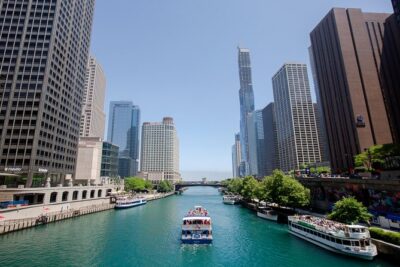
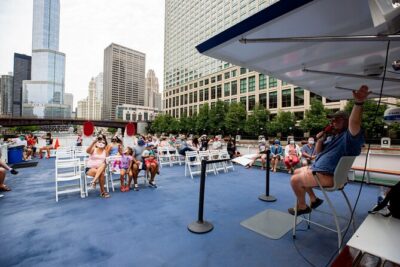

Chicago River: 1.5-Hour Guided Architecture Cruise
Read our review →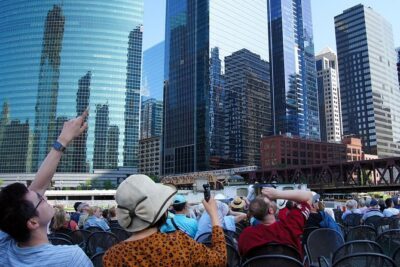
Chicago Architecture Center River Cruise aboard First Lady
Read our review →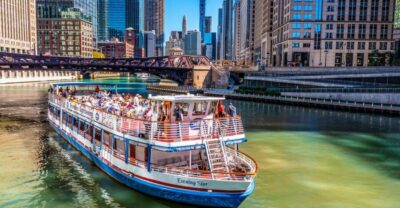
Architecture River Cruise Skip-the-Ticket Line
Read our review →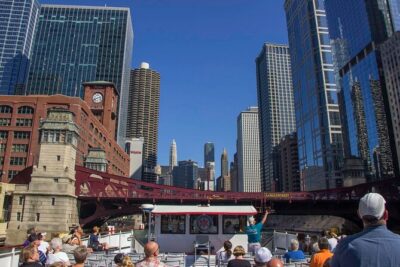
Chicago River 45-Minute Architecture Tour from Magnificent Mile
Read our review →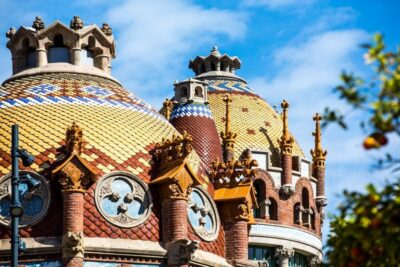
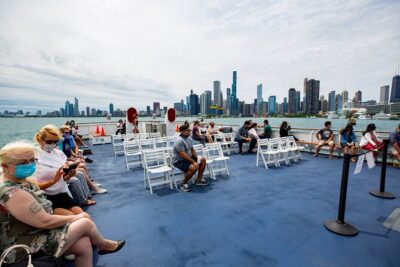
Browse the lists this tour appears in