

REVIEW · ARCHITECTURE TOURS
2 Hours Savannah Architectural Tour
Historic Savannah rewards a slower look. This two-hour walk focuses on the architects behind the city’s famous buildings, not just the façades, and it reaches several places that broad city tours often pass by. I like the small maximum of 10 people and the listening device that lets you hear the guide from up to 150 feet away. The main consideration is simple: this is an outdoor tour, and admission to the house museums is not included.
I also like the take-home map, which helps you keep exploring after the tour ends. Guides such as Kelse, Kelsey, Mike, and Savanna have been praised for answering questions, adapting the pace, and adding practical suggestions for further sightseeing. At $50 per person, the tour makes the most sense if you care about architecture, preservation, and the stories behind Savannah’s squares.
Key points to know before you book

- Nine stops in two hours: The route connects landmark houses, public squares, museums, and religious buildings in Savannah’s historic district.
- Architects take center stage: You’ll hear about William Jay, John Norris, Hyman Witcover, William Gibbons Preston, Charles Klusky, and others.
- A quieter view of downtown: Parts of the walk move away from the busiest visitor paths and into calmer residential streets.
- Small groups matter: The tour is capped at 10 people, which makes questions and conversation much easier.
- Outdoor access only: You see the buildings from the street. Museum entry is not part of the $50 price.
- Useful follow-up map: You receive a map to help you return to buildings and squares on your own.
Why this Savannah architecture walk is different
Savannah has plenty of tours about founders, ghosts, food, and general city history. This one takes a narrower path. It asks you to look at the people who designed, commissioned, changed, and preserved the city’s buildings.
That focus gives the walk a clear purpose. Instead of simply hearing that a house is old or beautiful, you learn who shaped its proportions, style, materials, and setting. You also hear how later owners and preservationists kept these places alive.
The tour covers nine stops, but the buildings are not treated as isolated sights. The guide connects them to Savannah’s square system, its social history, changing building styles, and the practical limits of older construction. That makes the walk useful even if you are not an architecture specialist.
I would especially recommend it after you have spent a little time in Savannah. A general orientation tour can show you where the squares are. This walk helps you understand what you are seeing when you return to them.
A few more architecture tours in the USA worth a look
- Miami: 2-Hour Art Deco Bike Tour
★ 4.6 · 155 reviews - Guided Gaudí Trencadís Mosaic Workshop in Barcelona 2 Hours
★ 5.0 · 176 reviews - Gaudi’s Barcelona 2-Hour Segway Tour with a Live Guide
★ 4.9 · 67 reviews
Starting at the Juliette Gordon Low Birthplace
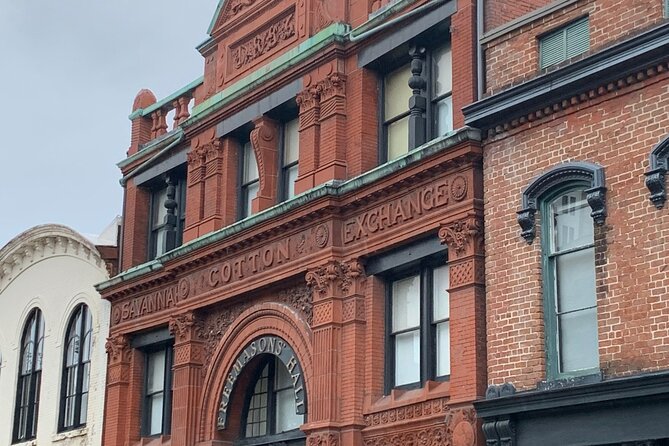
The tour begins at 124 Abercorn Street, near the Juliette Gordon Low Birthplace Museum. The museum itself is not entered, but the building provides an immediate lesson in Savannah’s architectural story.
Here the discussion turns to William Jay, often described as Savannah’s father of architecture. That gives the tour an early anchor: you begin with one of the city’s major designers, then follow architectural ideas through later buildings and neighborhoods.
The stop is scheduled for about 10 minutes. That is enough time for a focused explanation, though not enough for a full museum visit. If you want to tour the Juliette Gordon Low Birthplace separately, plan that as another activity.
The Harper Fowlkes House and Charles Klusky
The next stop is Harper Fowlkes House, another place where the guide shifts your attention from the building’s name to its design and history. The talk includes Charles Klusky and helps show how individual architects and builders contributed to Savannah’s appearance.
This is one of the tour’s useful habits: you are encouraged to compare buildings instead of viewing each one as a separate postcard. Details that seem small at first, such as decorative choices or the way a façade meets the street, become part of a broader story.
You spend about 10 minutes here. Since the tour remains outside, you will not receive an interior tour of the house.
Orleans Square and the lost Bulloch house
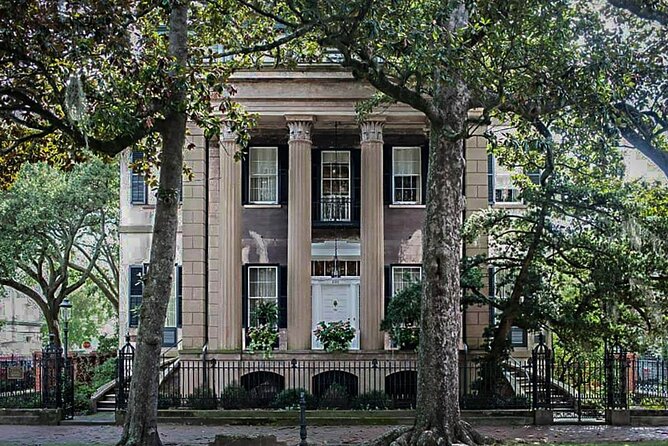
At Orleans Square, the guide discusses Harper Fowlkes House and the site of what was once the Bullochs House. This stop is important because Savannah’s architecture is not only about what survives. It is also about what has disappeared, changed ownership, or been replaced.
The square setting gives you a chance to connect architecture with Savannah’s planned layout. The city’s squares are more than pleasant patches of green. They frame streets, organize neighborhoods, and create changing views of houses and public buildings.
This is a quick 10-minute stop, so listen for the larger point rather than expecting a long lecture on every building nearby.
Same city, a different building to stand in front of:
- Chicago Architecture River Cruise
★ 5.0 · 15,756 reviews - Chicago River 90-Minute Architecture Tour
★ 4.5 · 9,629 reviews - Chicago River: 1.5-Hour Guided Architecture Cruise
★ 4.8 · 8,046 reviews - Chicago Architecture Center River Cruise aboard First Lady
★ 5.0 · 5,536 reviews
SCADstory and the former armory
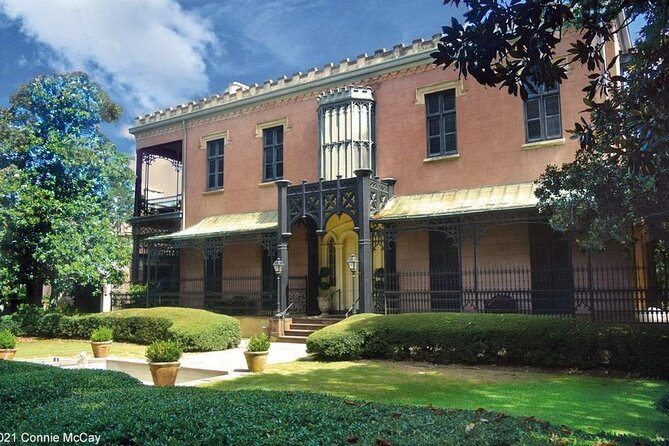
The route continues to SCADstory, where the guide discusses Savannah’s original armory and architect William Gibbons Preston. The contrast here is useful. A building connected with civic or military purposes tells a different story from a private townhouse.
This stop also broadens the tour beyond the best-known residences. You begin to see how Savannah’s architectural character includes institutional buildings, public spaces, and adaptive uses, not just grand homes.
The scheduled time is about 15 minutes. That extra time allows the guide to explain the building’s earlier purpose and its place in the city’s development.
Gryphon Tea Room and Hyman Witcover
At the Gryphon Tea Room, the subject is the Scottish Rights Temple, its connection with the Freemasons, and architect Hyman Witcover. This is one of the more unusual stops because the building’s history is tied to an organization and a specific architectural commission rather than a famous private family.
You’ll also see how one building can pass through different uses while retaining clues to its earlier identity. The tour’s value here lies in learning to read those clues from the outside.
About 15 minutes is allotted. If the tea room interests you, remember that the walking tour does not include a meal or entry. The stop is for architectural and historical discussion.
Mercer Williams House and the preservation story
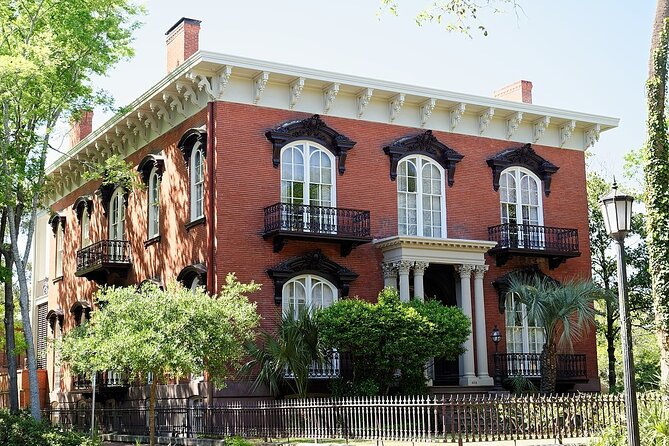
The Mercer Williams House Museum brings together architect John Norris and preservationist Jim Williams. This gives the tour a second major theme: saving old buildings can be as important as designing them.
Savannah’s historic structures did not simply remain untouched for centuries. Owners, preservationists, and local efforts helped keep them standing, and choices about repair, restoration, and use shaped what you see today.
The house is discussed from outside. Admission is not included, so you would need to return separately if you want to visit the interior. The stop lasts about 15 minutes, giving the guide room to connect the house’s architecture with its later preservation story.
Green-Meldrim House and John Norris
The Green-Meldrim House is another 15-minute stop centered on John Norris. Seeing more than one Norris building helps you compare his work and understand how an architect’s methods may appear across different projects.
This is where the architecture-first format pays off. You are not merely collecting names. You are building a visual reference point for the city, noticing patterns across façades and settings as the walk continues.
The house is another exterior stop, not a museum visit. If you prefer tours with frequent indoor breaks, keep that in mind, especially in hot or rainy weather.
Girl Scout First Headquarters and Andrew Low
The Girl Scout First Headquarters adds a different layer to the route. The discussion includes Andrew Low and John Norris, linking the building to Savannah’s civic and social history as well as its design.
This stop shows why architecture tours can reveal more than style. Buildings become records of the organizations, families, and public movements connected with them. The short 10-minute visit keeps the pace moving while giving you another point of comparison.
The route also makes clear that Savannah’s architectural story includes women’s history and community institutions, not only wealthy homeowners and prominent architects.
Lafayette Square and the final architectural contrast
The tour ends at Lafayette Square, in front of the fountain at the center of the square. The final discussion includes St. John the Baptist Cathedral and J.D. Hall’s Hamilton-Turner House.
This is a strong ending because the square offers several major visual landmarks close together. You can compare religious architecture with residential design, then look back at how the square organizes the surrounding buildings.
The endpoint is 330 Abercorn Street, and the tour finishes in the square rather than returning to the starting point. That matters when planning your day. Lafayette Square is a convenient place to continue walking, take photographs, or visit nearby sights after the guide departs.
What the guides do well
The most consistent strength is the quality of the guiding. Kelse, Kelsey, Mike, and Savanna are named in the feedback, and the comments repeatedly praise clear explanations, humor, patience, and an ability to answer questions.
That matters on an architecture tour. A dry list of dates and names would make two hours feel long. The strongest guides on this walk connect buildings to people, decisions, materials, politics, preservation, and everyday life.
The guides also appear willing to adjust the pace. Some tours ran longer because the guide slowed down for questions or made it easier to walk in hot weather. One guide supplied water and tried to keep the group in the shade when possible. That is helpful, but you should still prepare for a real outdoor walk.
The optional listening technology is another practical advantage. Noble Jones Tours says the system lets you hear the guide from up to 150 feet away. You do not need to crowd around a single speaking point, and you can keep a little distance while still following the explanation.
Group size, walking pace, and comfort
The maximum group size is 10 people. That is small enough for a more personal experience and makes it easier to ask about a particular building or architectural detail.
The route is described as easygoing, but it still covers nine stops across the historic district in about two hours. You should expect steady walking with repeated pauses rather than a relaxed sit-down presentation.
Weather matters. The experience requires good weather and may be rescheduled or refunded if conditions are poor. On a hot day, bring water, wear comfortable shoes, and make use of shade when available. The tour does not include indoor museum visits, so the weather can affect your comfort more than it would on a house tour.
Service animals are allowed, the route is near public transportation, and most people can participate. Confirmation is provided when you book.
Is $50 a fair price?
At $50 per person, this is not the cheapest way to see Savannah. You are paying for a focused two-hour walking experience led by a guide who can explain the city’s architecture and answer questions, not for admission to the houses.
The value is strongest for three kinds of visitors:
- You care about architecture or historic preservation.
- You have already seen Savannah’s main sights and want more detail.
- You prefer a small group and an interactive guide.
The price is harder to justify if you mainly want to enter historic homes. No museum admission is included, so you may spend more later if you add interior visits.
The map improves the value. You can use it to return to places that caught your attention, plan a second walk through the squares, or seek out buildings the guide recommends. That turns a two-hour tour into a useful starting point for the rest of your stay.
Who should book this walk?
I would choose this tour for history fans, architecture students, preservation supporters, and repeat visitors to Savannah. One person who had lived in the area for about 10 years still learned new information, which suggests the tour goes beyond the standard city introduction.
It also works for curious first-time visitors who do not know much about architecture. The guide explains the history through buildings, so you do not need technical training to follow along.
Families can enjoy it if children are comfortable walking and listening for two hours. Couples and friends who prefer quiet streets and detailed conversation may find it more rewarding than a large group tour.
I would skip it if your priority is food, interiors, shopping, or ghost stories. I would also think twice if you dislike walking outdoors or want a tour with plenty of seated breaks.
Booking, cancellation, and timing advice
The tour is often booked about 27 days ahead, so reserve early if your Savannah dates are fixed. You receive a mobile ticket, and the tour is offered in English.
Free cancellation is available up to 24 hours before the start time for a full refund. Cancellations or changes made within 24 hours are not refunded. If poor weather or an insufficient number of bookings causes the tour to be canceled, you can receive a different date or a full refund.
Since the walk ends at Lafayette Square, plan your next activity from there rather than from the original meeting point. The route begins at 124 Abercorn Street and finishes at the fountain in Lafayette Square, in front of 330 Abercorn Street.
Should you book the 2 Hours Savannah Architectural Tour?
Book it if you want Savannah to make more sense, not simply look pretty. The strongest part of this experience is the connection between buildings and the people who designed, used, changed, and preserved them.
At $50, it is a fair choice for a small-group tour with strong guiding, listening equipment, a useful map, and a route that includes less familiar architectural stops. Just remember that the entire experience is outdoors and that house museum admission costs extra.
If you have already taken a general Savannah tour, this is an especially good follow-up. If you are visiting for the first time, it can give you a sharper way to read the squares and buildings for the rest of your trip.
FAQ
How long is the Savannah architecture tour?
The tour lasts approximately two hours and includes nine stops in Savannah’s historic district.
Where does the tour begin?
It begins at 124 Abercorn Street, Savannah, Georgia 31401.
Where does the tour end?
The tour ends at Lafayette Square, in front of the fountain at the center of the square. The listed endpoint is 330 Abercorn Street.
Are house museum admissions included?
No. This is an outdoor walking tour, and admission to house museums is not included in the $50 price.
How many people can join the tour?
The experience has a maximum of 10 travelers.
Is the tour offered in English?
Yes. The tour is offered in English and includes a mobile ticket.
What happens if the weather is poor?
The experience requires good weather. If it is canceled because of poor weather, you will be offered a different date or a full refund.
Just added in the USA
- Wilmington History and Architecture Tour★ 4.8 · 18 reviews
- New Orleans : Garden District Architecture Walking tour★ 4.8 · 5 reviews
- Washington DC: Dupont Circle & Embassy Row Architecture Tour★ 5.0 · 6 reviews
- Washington, DC: Georgetown Architecture Walking Tour★ 5.0 · 8 reviews
- Private Colonial Williamsburg Architectural Tour★ 5.0 · 5 reviews
- Tulsa: Art Deco Walking Tour of Tulsa★ 5.0 · 8 reviews
- Monuments and Memorials Architectural Walking Tour★ 5.0 · 17 reviews
- Castle to Capitol: Museums of the National Mall Architecture Tour★ 4.5 · 9 reviews
Architecture Tours, compared.

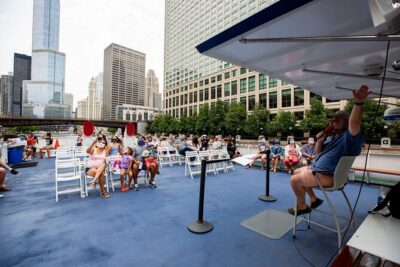

Chicago River: 1.5-Hour Guided Architecture Cruise
Read our review →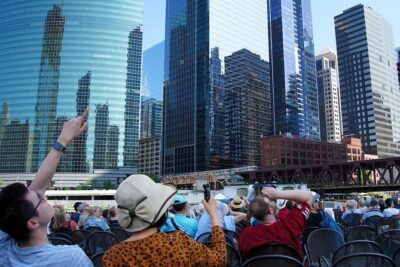
Chicago Architecture Center River Cruise aboard First Lady
Read our review →
Architecture River Cruise Skip-the-Ticket Line
Read our review →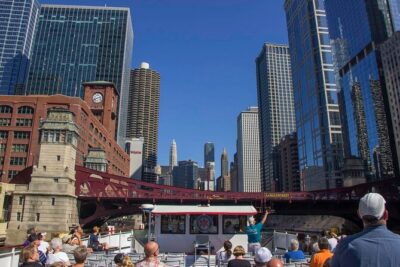
Chicago River 45-Minute Architecture Tour from Magnificent Mile
Read our review →
Browse the lists this tour appears in