
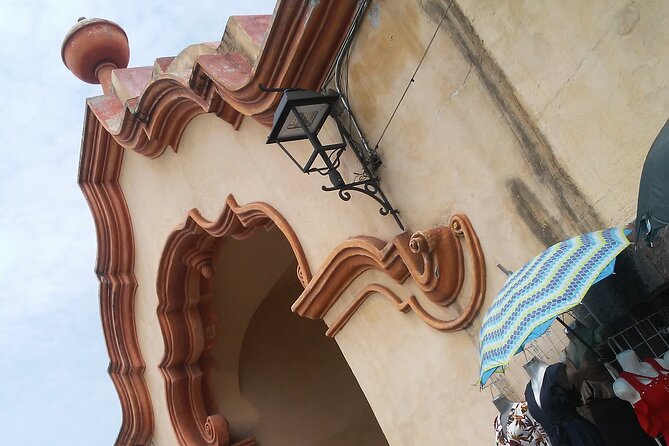
REVIEW · HISTORICAL TOURS
Queretaro: colonial architecture and history
Querétaro tells Mexico’s story in stone. This small-group walking tour links the city’s aqueduct, churches, convents, plazas, and important historical figures into one clear morning, led in English by Armando Magaña, a guide praised for his storytelling and command of Mexican history. I especially like the maximum group size of six, which should make questions and conversation easy. I also like the way the tour connects local events to larger Mexican, Spanish, and world history.
The main caution is focus. Although the experience includes handsome colonial and Neo-Classical buildings, it leans more toward history, religion, and national events than toward close architectural analysis. If you want a building-by-building architecture lesson, say so at the start.
Key points to know before booking
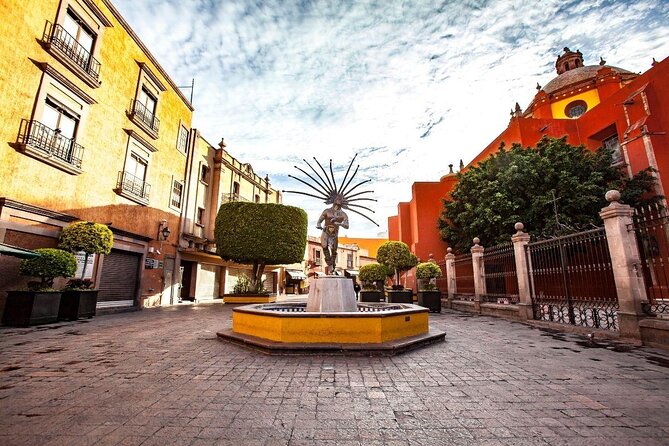
- Seven central sights in one morning: The route covers the aqueduct, a historic cemetery, churches, convents, Plaza de Armas, and the city museum area.
- Armando Magaña is the main attraction: His style centers on stories, context, and links between Querétaro and major events in Mexican history.
- Small groups matter: With no more than six people, you can ask questions and request more history or architecture.
- The route begins above the old town: Meet at the Mirador de los Arcos near the aqueduct, then finish at Museo de la Ciudad.
- Plan for a real walk: The scheduled time is three to four hours, but detailed conversations can make it last longer.
- Best for history-minded adults: Children who are not used to walking and listening for several hours may find the pace demanding.
Why this Querétaro tour works so well
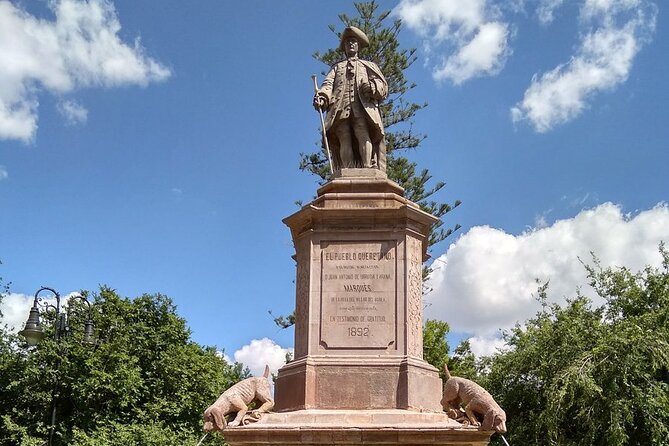
Querétaro can be difficult to read on your own. A church may look like a pretty colonial façade, while the square beside it may mark a political turning point. A convent may seem quiet today, yet once played a role in education, medicine, religion, or national conflict.
This tour gives those places a connecting thread. Armando’s strongest quality is his ability to place local events inside a much larger story. You may begin with the city’s founding and the aqueduct, then move into Spanish expansion, silver, religious orders, independence, the French intervention, and the changing role of the city over time.
That approach gives you more than a collection of monuments. You get a sense of why Querétaro mattered and how it helped shape Mexico.
I would book this early in your stay if possible. One person who took the tour late in a visit wished it had been the first activity because it made the old town easier to understand. That is sound advice. Once you know the stories behind the churches and plazas, later walks through the center have more meaning.
The experience costs $50 per person. That is not the cheapest way to walk around Querétaro, but the group limit makes the price easier to justify. You are paying for a guide, interpretation in English, and a structured route through several important sites, not simply for entrance tickets. Admission is listed as free at each stop.
More history tours in the world:
- Chicago in a Day: Food, History & Architecture Walking Tour
★ 5.0 · 1,153 reviews - Charleston’s Best Highlights: History, Culture & Architecture
★ 5.0 · 422 reviews - Palm Springs Modernism Architecture & History Bike Tour
★ 5.0 · 359 reviews
Starting at the aqueduct and the city’s beginnings
The meeting point is the Mirador de los Arcos, at Ejército Republicano 47 in the La Santa Cruz and La Pastora area. The start time is 9:00 a.m., and beginning near the aqueduct gives the morning a strong visual opening.
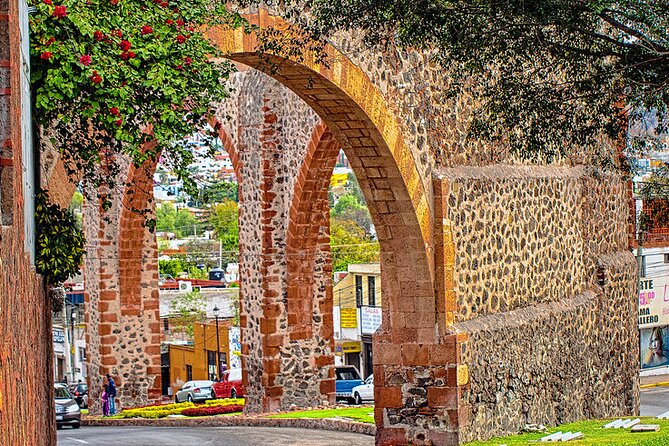
At El Acueducto de Querétaro, you hear about the city’s foundation and the love story tied to the aqueduct’s construction. The stop itself is scheduled for about 15 minutes, so do not expect a long engineering lecture or a formal visit inside a building. Its value is as an introduction to the city’s origins and to the personal story behind a major public work.
I like this kind of beginning because it puts a face on history. Aqueducts can become background scenery very quickly. A story about why this one was built makes it easier to remember and gives the first stop an emotional hook.
The aqueduct also helps you understand Querétaro as a city shaped by infrastructure, religion, trade, and colonial expansion. Armando uses the site to establish the larger setting before leading you into the older center.
Panteón de los Queretanos Ilustres and the people behind the city
The next stop is the Panteón de los Queretanos Ilustres, where the focus shifts from architecture to people. The visit lasts about 15 minutes and introduces some of the important figures buried there, along with actions that influenced the history of Querétaro and Mexico.
This is a useful stop for anyone who finds dates and political events hard to remember. Names can feel remote when they appear in a textbook. Standing in a place connected with those people gives the story a physical anchor.
The cemetery is also part of the larger historical method used throughout the morning. Querétaro is not presented only as a collection of old buildings. You learn about the people who made decisions, led movements, shaped institutions, and affected the country’s direction.
The short time here means the stop is an overview rather than a detailed study of every grave. If a particular figure interests you, ask about that person. The small group makes it practical to steer part of the conversation toward your interests.
Santa Cruz and the legends on the founding hill
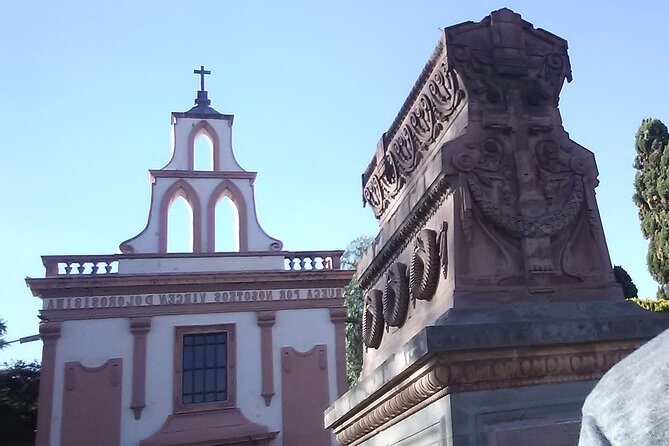
At the Templo y ex-convento de la Santa Cruz de los Milagros, the tour reaches the hill where Querétaro was founded for the second time. The visit lasts about 40 minutes, making it one of the more substantial stops.
Here, expect a mixture of legend, religious history, and national events. The Franciscan convent has been connected with several chapters of Mexico’s past, and Armando explains how the site fits into the city’s development.
This is also one of the places where the walking element matters. The tour does not simply point at a church and move on. You spend enough time to hear why the convent mattered and how its setting relates to the city below.
The religious emphasis may not suit everyone. Several stops on the route are churches or convents, and the tour treats religion as a major force in Mexican history. That is historically useful, but it means the morning is not a neutral survey of secular architecture.
For me, that religious focus is a strength when it is tied to social and political change. It helps explain how Franciscan institutions shaped education, settlement, belief, and public life. If you prefer art history alone, you may find the discussion less tailored to your interests.
A few more architecture tours in the world worth a look
- Chicago Architecture River Cruise
★ 5.0 · 15,756 reviews - Chicago River 90-Minute Architecture Tour
★ 4.5 · 9,629 reviews - Chicago River: 1.5-Hour Guided Architecture Cruise
★ 4.8 · 8,046 reviews - Chicago Architecture Center River Cruise aboard First Lady
★ 5.0 · 5,536 reviews
Plaza de Armas and the colonial center
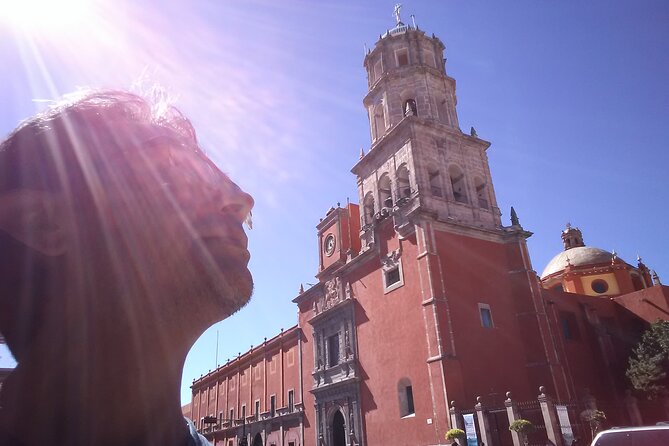
The tour then moves into Plaza de Armas, the picturesque main square. This is a 35-minute stop and one of the best places to see how Querétaro’s central spaces work as a group.
Before reaching the square, you see a couple of Neo-Classical examples. That gives you a useful contrast with the older Baroque and colonial forms encountered elsewhere. The experience does not treat architecture as a technical subject, but you receive enough context to notice differences in style and period.
At Plaza de Armas, the emphasis returns to stories. The square becomes a stage for historical events, local personalities, and the changing role of the city. Armando’s style is especially effective here because he links what you can see around you with events that reached far beyond the plaza.
The square is also a good place to pause and absorb the morning. You are no longer looking at one isolated church or convent. You can begin to see the old city as a connected center shaped by civic life, religion, wealth, and political power.
If architecture is your top priority, use this stop to ask specific questions. The guide has experience discussing architecture, but the tour naturally gives more attention to history and historical connections.
La Congregación and the importance of Guadalupe
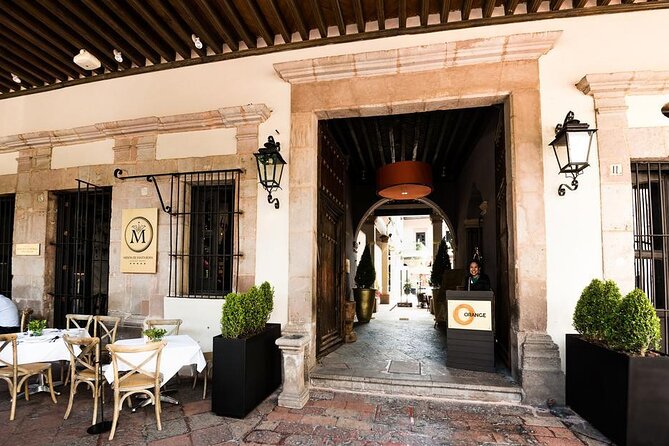
The Santuario de La Congregación de Nuestra Señora de Guadalupe receives about 15 minutes. Inside or around the temple, you learn about the importance of the Virgin of Guadalupe in Mexico and about the person who built the temple.
This stop adds a national religious symbol to the local story. The Virgin of Guadalupe is not treated as a decorative detail. You hear why this figure carries such weight in Mexican culture and history.
The visit is fairly brief, so expect a focused explanation rather than a long examination of every feature. Still, it helps broaden the tour beyond Querétaro’s local development. The morning keeps returning to the question of how local places connect with national identity.
I would pay attention to the way Armando explains the builder and the building together. That approach helps you see architecture as the result of choices made by particular people, within a specific religious and political setting.
San Francisco and the old inner-land road
The Templo y Exconvento de San Francisco de Asís de Querétaro is another 15-minute stop. From within the former convent premises, you hear about the building’s many changes as Mexico passed through different historical periods.
That is a practical way to look at an old structure. Instead of treating the convent as frozen in one colonial moment, the tour shows how buildings change when the country changes. Uses, ownership, and public meaning can shift over time.
You also learn about the point where the old inner-land road began. This detail gives the site a geographic role as well as a religious one. Querétaro was not simply a destination. It was connected to movement, routes, commerce, and the wider development of central Mexico.
The stop is short, but its subject is large. If you want more detail about the building’s transformations, ask follow-up questions. Armando is known for allowing time for questions and for explaining events in a wider setting.
Santa Clara and one remarkable city corner
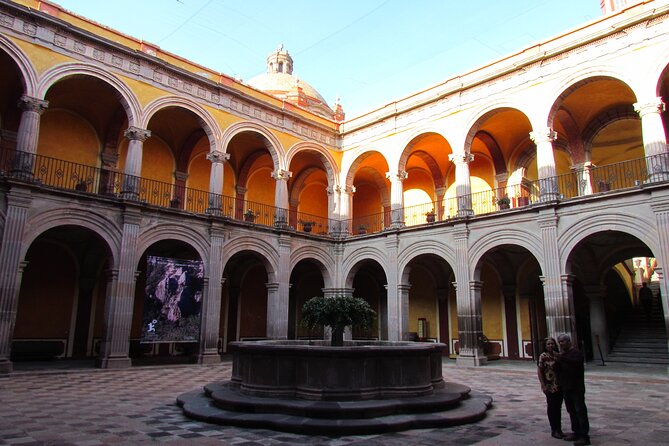
The Convento de Santa Clara brings several kinds of history together in one place. It was the city’s first and largest female convent, and the area also includes the old city hospital, a notable Neo-Classical fountain, and what is described as the finest example of Baroque private-house architecture in the city.
That concentration makes this one of the most rewarding stops for architecture lovers, even though architecture is not the tour’s only concern. In a single corner, you can compare religious, medical, civic, and domestic buildings.
The 20-minute visit gives you enough time to understand why the area matters. You are not just looking at a convent façade. You are seeing how institutions and private wealth occupied the same urban space.
This is also where the tour’s balance becomes clear. It moves between religious life, public services, private homes, and national history. The city’s old center feels less like a museum and more like a place where different parts of society once met.
How Armando Magaña guides the morning
Armando Magaña receives the strongest praise for his storytelling, passion, English, patience, and ability to connect different periods. His method is not a rapid list of dates. He uses each stop to open a larger subject, then places Querétaro within Mexican and world events.
You may hear about the Spanish search for silver, the effects of European events, the Mexican independence movement, the Revolution, the expulsion of the French in the 1860s, and the people who influenced the country’s development. The exact balance depends partly on your questions and interests.
He also uses teasers about what is coming next. That helps maintain interest during a long morning of churches, plazas, names, and dates. His English is described as excellent, which matters when historical explanations depend on fine distinctions.
The tour can sometimes run beyond the advertised three to four hours. That is a benefit if you want detail and do not have a tight schedule. It can be a problem if you have a fixed lunch reservation, transportation connection, or afternoon plan.
Walking conditions, group size, and practical planning
You should arrive ready for a moderate physical effort. The experience is a walking tour through historic Querétaro, and one particularly useful warning is that children who are not used to walking and listening for three to four hours may struggle.
Wear comfortable shoes and bring water. Those are simple choices, but they matter more when the guide is giving enough information to keep you on foot for half a day. The tour is offered in English and is limited to six people, so it should feel much more personal than a large city group.
The route begins at the Mirador de los Arcos and ends at Museo de la Ciudad, the former Capuchin convent, on Calle Vicente Guerrero Norte 27 in the historic center. Ending there is convenient. You can continue walking through the old town, take a taxi back to your hotel, or find a place to rest and have dinner.
The experience allows service animals, and a moderate fitness level is recommended. Confirmation is provided at booking. You can cancel for a full refund up to 24 hours before the start time, but cancellations or changes inside that window are not accepted.
Is $50 a fair price?
At $50 per person, this is a good value if you want interpretation rather than a self-guided walk. The admission cost at the stops is free, so the price is not paying for tickets. It pays for Armando’s preparation, English-language guiding, a route through seven significant locations, and the ability to ask questions in a tiny group.
The value rises if history is your main interest. The tour can help you understand events that would otherwise seem disconnected, especially independence, religious influence, foreign intervention, and the development of Querétaro.
The value is less clear if you only want architectural detail or a quick photo walk. In that case, you may spend more time hearing political and religious context than examining façades, floor plans, or decorative details.
Should you book this Querétaro experience?
I would book it if you want Querétaro to make sense, not just look attractive. It is especially well suited to solo visitors, couples, and small groups who enjoy history, ask questions, and can walk for several hours.
Book early in your visit if you can. The route gives you useful bearings for later exploration, and Armando’s explanations can turn the city’s churches and plazas into readable historical places.
Skip it if you want a short tour, a children-focused activity, or a strict architecture survey. Otherwise, the combination of a six-person limit, English guiding, strong storytelling, and a route through major historical sites makes this a worthwhile morning for history-minded people.
FAQ
How much does the tour cost?
The price is $50 per person.
How long does the experience last?
The scheduled duration is approximately three to four hours. It may run longer if the group spends extra time on questions and discussion.
Is the tour offered in English?
Yes. The experience is offered in English.
Where does the tour start?
It starts at 9:00 a.m. at Mirador de los Arcos, Ejército Republicano 47, La Santa Cruz, La Pastora, 76025 Santiago de Querétaro, Querétaro, Mexico.
Where does the tour end?
It ends at Museo de la Ciudad, Calle Vicente Guerrero Norte 27, Centro, 76000 Santiago de Querétaro, Querétaro, Mexico.
How many people can join the tour?
The tour has a maximum of six participants.
What places are included?
The route includes El Acueducto de Querétaro, Panteón de los Queretanos Ilustres, Templo y ex-convento de la Santa Cruz de los Milagros, Plaza de Armas, Santuario de La Congregación de Nuestra Señora de Guadalupe, Templo y Exconvento de San Francisco de Asís de Querétaro, and Convento de Santa Clara.
Is the tour physically demanding?
A moderate level of physical fitness is recommended. You should be prepared to walk and listen for three to four hours.
Can I cancel for a full refund?
Yes. You must cancel at least 24 hours before the local start time for a full refund. Cancellations or changes made less than 24 hours before the start are not accepted.
Just added in the world
- Wilmington History and Architecture Tour★ 4.8 · 18 reviews
- New Orleans : Garden District Architecture Walking tour★ 4.8 · 5 reviews
- Washington DC: Dupont Circle & Embassy Row Architecture Tour★ 5.0 · 6 reviews
- Washington, DC: Georgetown Architecture Walking Tour★ 5.0 · 8 reviews
- Vicenza: Palladian Architecture Private Walking Tour★ 3.3 · 3 reviews
- Walk & Discover KL’s Architectural and Heritage Gems★ 5.0 · 7 reviews
- Private Colonial Williamsburg Architectural Tour★ 5.0 · 5 reviews
- Unveiling Brno: History, Culture & Architectural Delights★ 5.0 · 2 reviews
Historical Tours, compared.
Chicago in a Day: Food, History & Architecture Walking Tour
Read our review →
Charleston’s Best Highlights: History, Culture & Architecture
Read our review →
Palm Springs Modernism Architecture & History Bike Tour
Read our review →
Historic Georgetown: History, Gossip, & Architecture Walking Tour
Read our review →
Charleston History, Homes, and Architecture Guided Walking Tour
Read our review →

Historical and Architectural Chicago Fireboat River & Lake Cruise
Read our review →Browse the lists this tour appears in