
REVIEW · ART NOUVEAU TOURS
Riga’s Architecture: A self-guided audio tour of the city’s art nouveau history
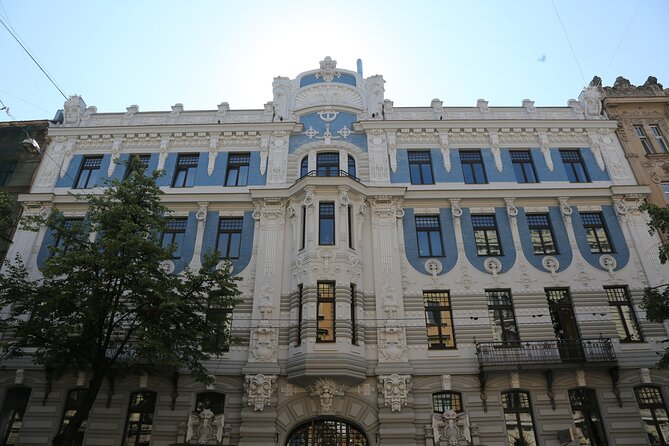
Riga rewards people who look up. This self-guided audio tour turns a short walk from the Latvian National Museum of Art to Alberta Street into a lively lesson in Europe’s most concentrated Art Nouveau district. I like the clear, manageable storytelling, and I like that offline maps and audio let you walk without chasing a guide or mobile signal. The main drawback is simple: you need your own smartphone and headphones, and the non-refundable booking leaves little room for a change of plans.
At about 30 to 45 minutes, the route suits a tight sightseeing schedule. It also gives you enough background to recognize Art Nouveau after the tour, rather than merely photographing pretty façades and moving on.
Key points to know before you go
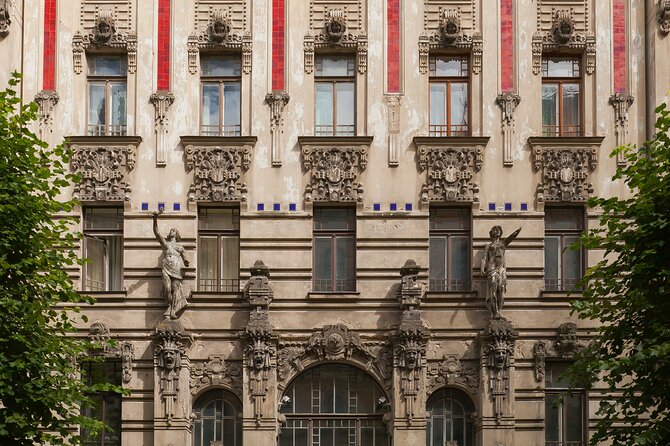
- Riga has more than 800 Art Nouveau buildings: This is not a single famous street with a few decorative façades. The style shapes a large part of central Riga.
- The walk links the Latvian National Museum of Art with Alberta Street: You begin at Jaņa Rozentāla laukums and finish at Alberta iela 12.
- Michael Eisenstein gets special attention: His highly decorative buildings are among the visual highlights, with a useful family connection to filmmaker Sergei Eisenstein.
- You visit a residential courtyard: The route includes a brief look at one of Riga’s most impressive apartment-building courtyards.
- National Romanticism adds a Latvian angle: You learn how local architects adapted Art Nouveau into a style tied more closely to Latvian identity.
- The app works offline: Download the VoiceMap app, audio, maps, and geodata before walking, then leave your data connection alone.
Why Riga is such a good city for Art Nouveau
Riga is one of the best places in Europe to see Art Nouveau in quantity and variety. The city has more than 800 buildings in the style, giving you far more than a single landmark to admire. Here, elaborate architecture is part of the ordinary city fabric. Apartment buildings, corner blocks, and residential façades all carry the marks of the period.
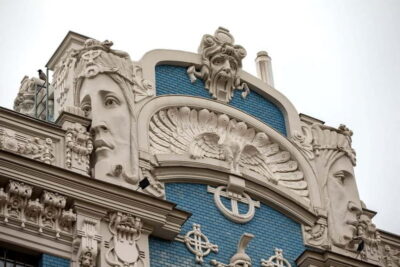
The tour helps you identify those marks. You learn how to look for curved lines, floral decoration, sculpted faces, unusual window shapes, and carefully arranged symbols. That matters because Art Nouveau can seem like a blur of ornaments at first. Once you know what to watch for, each façade begins to tell you something about taste, technology, status, and local design.
I especially like the historical frame. This is not only a walk past handsome buildings. You hear how architects in Riga developed their own approach, including National Romanticism. That gives the route a Latvian character instead of treating the city as a copy of Paris, Brussels, or Vienna.
The compact route also works well as an introduction. You do not need to commit half a day to architecture. In less than an hour, you get a focused sample of the district, then you can decide if you want to keep looking on your own.
More Art Nouveau tours in the world:
- Walking Tour of Riga’s Beautiful Art Nouveau Architecture
★ 4.8 · 20 reviews - Mexico City origins and architecture: Art Nouveau, Deco,Eclectic
★ 3.0 · 2 reviews - Barcelona: Art Nouveau & Gaudí Tour
★ 5.0 · 39 reviews
Starting at the Latvian National Museum of Art
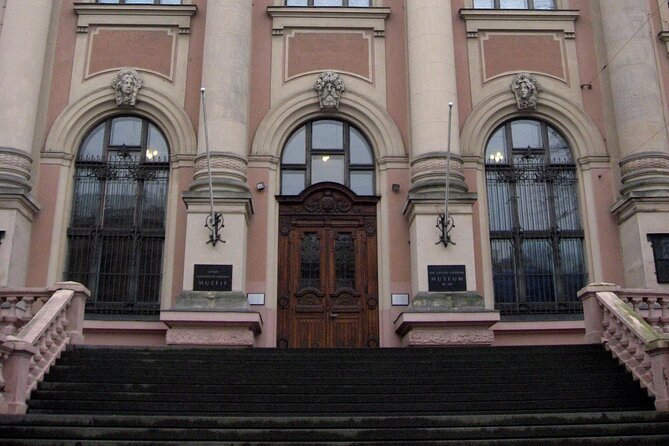
The walk begins at the Latvian National Museum of Art, at Jaņa Rozentāla laukums 1. This is a sensible meeting point because you start near one of central Riga’s major cultural landmarks and move toward the famous Alberta Street buildings.
You do not need to enter the museum for this experience. No museum admission is included, and the route is built around outdoor viewing. If you want to visit the museum as well, plan that separately and allow extra time.
At the start, the audio sets up the basic question: how do you recognize an Art Nouveau building? This opening lesson is useful because the buildings ahead are heavily decorated. Without some guidance, it is easy to focus only on the most obvious faces, masks, and floral shapes.
The tour’s tone is one of its strengths. The information is designed to keep moving, with enough context to explain why the buildings matter without burying you under dates and architectural terminology. That balance is important on a short walk. You are still looking at the city, not attending a lecture with your eyes closed.
Elizabetes 10b and the drama of Michael Eisenstein
The first brief stop is at Elizabetes 10b. This is where the decorative side of Riga’s Art Nouveau becomes especially clear. The route points you toward the work of Michael Eisenstein, one of the architects most closely linked with Riga’s theatrical façades.
Eisenstein’s designs are known for making a strong first impression. Expect the audio to direct your attention to the details that turn a residential building into something much more expressive: sculpted ornament, carefully planned symmetry, and an almost stage-like façade.
The family connection adds a memorable human detail. Michael Eisenstein was the father of Sergei Eisenstein, who later became a legendary Soviet filmmaker. That fact gives you a useful way to remember the architect. One Eisenstein shaped streets through decoration and structure; the other shaped films through editing and visual drama.
This stop is also a good reminder that these buildings were not built as isolated monuments. They were residential architecture. People lived behind those elaborate façades, which makes the contrast between everyday use and grand decoration part of the appeal.
Alberta 2a and the move from decoration to design
The route then reaches Alberta 2a. Here, the audio continues to build your visual vocabulary rather than simply naming another building and moving on.
That approach improves the walk. You are encouraged to compare façades, not treat each one as a separate postcard. Some buildings make their mark through heavy ornament. Others rely more on shape, structure, materials, or a calmer arrangement of details.
At 2a, listen for how the design fits into the wider group on Alberta Street. The value is in seeing the buildings together. A single façade can look extravagant, but a whole street of Art Nouveau architecture shows how widespread the style became in Riga during its building boom.
Because the stop is brief, you should keep your expectations realistic. This is not a long architectural lecture at every address. It is a paced walk that gives you a useful point or two, then sends you onward. If you like stopping for close-up photographs, you can pause the audio and take your time.
More self-guided audio tours in the world:
- Self-Guided Tour of Ísafjörður: Art, History, and Architecture
★ 5.0 · 23 reviews - Bastille’s Architecture & Artisans Self-Guided Walking Tour
★ 4.5 · 18 reviews - Philadelphia Architecture: Discover Every American Style on a GPS Audio Tour
★ 5.0 · 2 reviews - Woodlawn Cemetery: A Self-Guided Audio Tour of Gilded Age Art and Architecture
★ 5.0 · 2 reviews
Alberta 4 and the reward of looking upward
At Alberta 4, you continue along one of Riga’s most celebrated architectural stretches. The audio encourages the habit that makes this kind of walk work: look up, then look again.
The most interesting details may sit above eye level. Doorways, lower floors, and street signs naturally draw attention, but the upper stories often carry the boldest decoration. You might find faces, geometric shapes, floral forms, and unusual framing around windows and rooflines.
This is where a self-guided format can be more useful than a rigid group walk. You can stop when a detail catches your eye, replay a section, or take a photograph without holding up anyone else. The activity is private to your group, and there is no shared walking party to keep pace with.
The trade-off is that you must manage the walk yourself. There is no live guide beside you to answer a question or point out something you missed. The audio provides structure, but your attention still does the work.
Alberta 11 and the courtyard detour
Alberta 11 brings one of the route’s more unusual features: a courtyard connected with one of Riga’s impressive residential buildings. Street façades get most of the attention in Riga, so this inward view adds welcome variety.
A courtyard helps you understand how these buildings functioned as homes rather than just public decoration. The street side might be designed to impress, while the courtyard reveals another side of urban residential life. You get a better sense of the building as a complete place, not just a front wall.
This stop is valuable for another reason. Art Nouveau is often associated with surface decoration, but the movement also concerned the shape and experience of modern urban living. A courtyard gives the audio a chance to connect architecture with daily life.
Access details are not specified, so you should follow the app’s instructions and respect any building rules. The route says the courtyard is visited briefly, not that you receive a long interior tour. Keep that distinction in mind when planning your expectations.
Alberta 13 and Riga’s National Romantic style
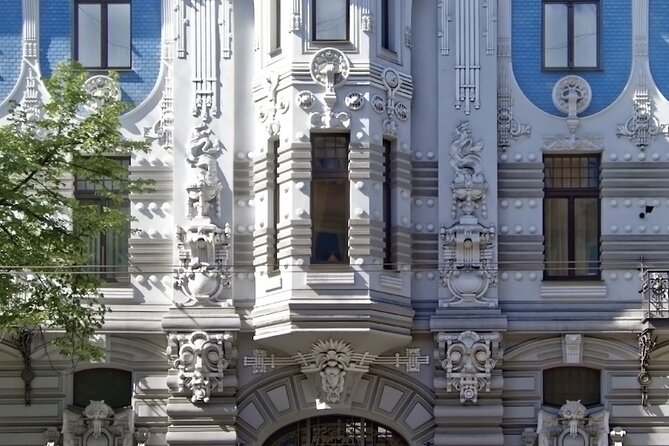
At Alberta 13, the focus shifts toward the local style known as National Romanticism. This is one of the most important parts of the experience because it explains how Riga’s architects made Art Nouveau their own.
National Romanticism drew on ideas of local identity and regional character. In Riga, architects developed designs that felt more connected to Latvia instead of simply repeating international Art Nouveau formulas. The audio explains that development in a short, approachable way.
I like this part because it gives the walk a clear purpose. You are not only hunting for the most elaborate façade. You are learning to notice differences in mood, materials, form, and cultural meaning.
The stop also gives you a chance to compare. By this point, you have already seen the theatrical side of Michael Eisenstein and several major apartment buildings. National Romanticism helps you see that Riga’s architectural story includes more than one visual language.
Ending at Alberta 12
The tour ends at Alberta iela 12, close to the buildings that make this district famous. Ending here works well because you finish with a stronger understanding of what you have been seeing rather than simply reaching an arbitrary corner.
Alberta Street is a natural place to continue exploring. The tour itself lasts only around 30 to 45 minutes, so you may want to stay in the area afterward and revisit the façades at your own pace. The audio gives you a foundation; your own slow look adds the rest.
The end point is also practical for a day of sightseeing in central Riga. The route begins and ends in the same general city-center area, and the starting point is near public transportation. No transportation is provided, but you do not need a vehicle for the walking route itself.
How the VoiceMap format works
You receive lifetime access in English through the VoiceMap app for Android and iOS. The package includes offline audio, maps, and geodata, which is a real advantage. Download everything before you start, then you can concentrate on the buildings instead of checking your connection.
You need to bring your own smartphone and headphones. Food, drinks, transportation, museum tickets, and other entrance fees are not included. The experience is private in the sense that only your group participates, but it is not a live private guide service.
The narration seems carefully paced for independent use. One especially appealing feature is the clear voice and enthusiastic presentation of history and politics. The information is substantial enough to make the architecture meaningful, yet short enough to avoid boredom. You also gain access to other self-guided walks in the app after downloading it, which may improve the value if you plan to use VoiceMap more than once.
Is $5.20 good value?
At $5.20 per person, this is an inexpensive way to add structure to a Riga visit. The price is low enough that you are mainly paying for interpretation, route planning, and convenience rather than a major organized event.
The value is strongest if you want a quick introduction. You get a focused route, historical context, architect information, a courtyard stop, and an explanation of National Romanticism. A live walking tour would normally cost more, take longer, and operate at a fixed time.
The low price does not remove the practical limits. You must supply the phone and headphones, and you do not have a guide to answer questions. You also cannot receive a refund or make changes after booking, so check your schedule before paying.
The tour is booked, on average, five days ahead. That does not mean you must book exactly five days in advance, but it suggests that planning a few days ahead is sensible if the walk is important to your schedule.
Who should choose this audio walk?
I would recommend it to you if you enjoy architecture but do not need a live guide. It is especially useful if you have only a short window in Riga, prefer to set your own pace, or want to avoid joining a larger walking group.
It also suits independent visitors who appreciate a little structure. You can follow the route in order, pause when needed, and continue exploring after Alberta 12.
You may want something else if you prefer long conversations, detailed question-and-answer time, or access to interiors beyond the brief courtyard visit. The tour is concise by design. It gives you the tools to look at Riga more intelligently, but it does not attempt to cover every Art Nouveau building in the city.
Should you book it?
Book this tour if you want an affordable, flexible introduction to Riga’s Art Nouveau quarter. The short route, offline access, and clear storytelling make it easy to fit around a larger day in the city.
I would make it an early stop in your Riga visit if possible. After learning how to spot the style, you will notice far more in the surrounding streets. Skip it only if you already have a detailed architecture plan or strongly prefer a live guide. For most independent visitors, $5.20 is a modest price for a useful pair of eyes.
FAQ
Where does the audio tour start?
It starts at the Latvian National Museum of Art, Jaņa Rozentāla laukums 1, in central Riga.
Where does the tour finish?
The tour ends at Alberta iela 12, in central Riga.
How long does the tour take?
The estimated duration is approximately 30 to 45 minutes.
What language is the tour in?
The tour is available in English.
Does the tour work without mobile data?
Yes. Offline access includes the audio, maps, and geodata through the VoiceMap app. You should download the material before starting.
Are museum tickets or transportation included?
No. Museum and attraction admission, transportation, food, drinks, a smartphone, and headphones are not included.
More Self-Guided Tours in the world
- Gaudi and La Sagrada Familia Exterior Self-Guided Audio Tour
★ 3.5 · 25 reviews - Palau Guell by Gaudi with Audio Guide in Barcelona
★ 4.5 · 13 reviews - Self-Guided Audio Tour-The Surrealist Barcelona of Dalí and Gaudí
★ 3.5 · 8 reviews - Self-Guided Audio Tour – Miami Art Deco
★ 3.0 · 7 reviews
More history tours in the world
- Chicago in a Day: Food, History & Architecture Walking Tour
★ 5.0 · 1,153 reviews - Charleston’s Best Highlights: History, Culture & Architecture
★ 5.0 · 422 reviews - Palm Springs Modernism Architecture & History Bike Tour
★ 5.0 · 359 reviews - Charleston: History and Architecture Guided Walking Tour
★ 4.8 · 349 reviews
Just added in the world
- Wilmington History and Architecture Tour★ 4.8 · 18 reviews
- New Orleans : Garden District Architecture Walking tour★ 4.8 · 5 reviews
- Washington DC: Dupont Circle & Embassy Row Architecture Tour★ 5.0 · 6 reviews
- Washington, DC: Georgetown Architecture Walking Tour★ 5.0 · 8 reviews
- Vicenza: Palladian Architecture Private Walking Tour★ 3.3 · 3 reviews
- Walk & Discover KL’s Architectural and Heritage Gems★ 5.0 · 7 reviews
- Private Colonial Williamsburg Architectural Tour★ 5.0 · 5 reviews
- Unveiling Brno: History, Culture & Architectural Delights★ 5.0 · 2 reviews
Art Nouveau Tours, compared.
Walking Tour of Riga’s Beautiful Art Nouveau Architecture
Read our review →
Private Art Nouveau and Art Deco tour near Opera
Read our review →
Mexico City origins and architecture: Art Nouveau, Deco,Eclectic
Read our review →Browse the lists this tour appears in