
REVIEW · ART DECO TOURS
Mexico City origins and architecture: Art Nouveau, Deco,Eclectic
Mexico City reveals its past in layers. This private tour links Aztec ruins, Diego Rivera murals, major museums, and Roma architecture in one long day, giving you both the city’s grand public story and its more intimate street-level details. I like the mix of archaeology and architecture, and I like that private transportation keeps the group together between far-flung stops. The main drawback is pace: with up to eight hours of sightseeing, this is a full day, and museum admission, lunch, and parking cost extra.
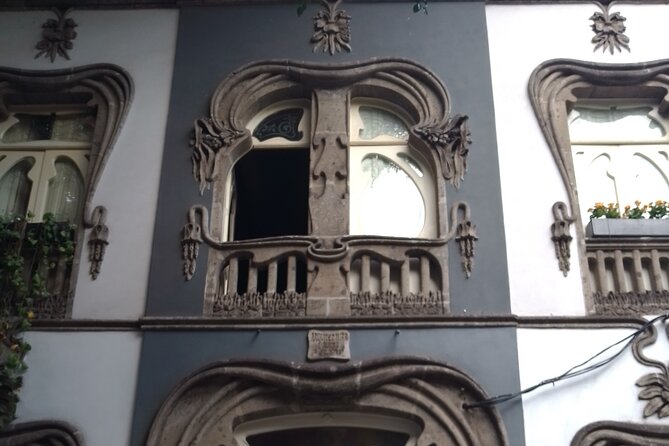
The three-hour walk through Roma gives the experience its own flavor. You examine Art Nouveau, Art Deco, and Eclectic buildings rather than simply photographing them, then connect the neighborhood to figures such as Clement Jacques, Aldon Conti, Antonio Caso, Leonora Carrington, and Alfaro Siqueiros. Communication deserves care, though. One booking ended after a last-minute change in plans and a missed WhatsApp reply, so confirm the pickup time clearly and keep an eye on messages before the tour.
Key points at a glance
- One private day, five very different stops: You move from Templo Mayor and the National Museum of Anthropology to Reforma and Roma’s residential streets.
- Roma receives the most detailed attention: The architectural walk lasts three hours and compares Art Nouveau, Eclectic, and Art Deco features.
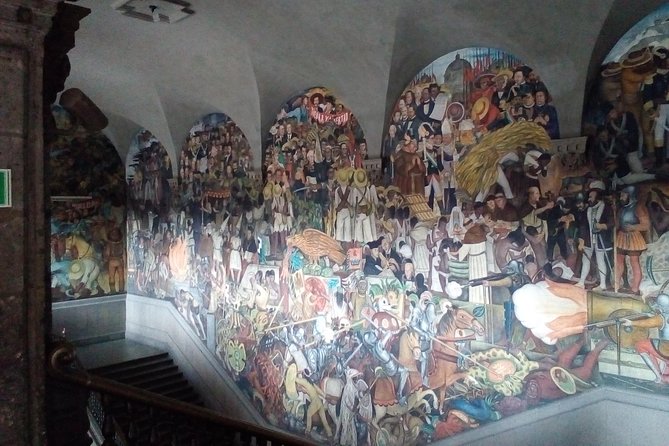
- Diego Rivera’s murals are a major highlight: Palacio Nacional’s second floor is lined with his large historical paintings.
- Transportation is included, admissions are not: The $98.33 price applies to the whole group, up to 10 people, which can make it good value for a small party.
- The tour is available in English: Pickup can be arranged, including from Mexico City International Airport.
- Expect an active, tightly packed day: The listed stops add up to about seven hours, before traffic, meals, and museum entry arrangements.
Five stops that explain Mexico City
This experience works because it presents Mexico City through several time periods and visual styles. You begin with the remains of Mexico Tenochtitlan, move into colonial and national history, then visit one of the world’s major anthropology museums before turning to the monuments of Reforma and the architecture of Roma.
You are not just looking at old buildings. You are watching the city change its ambitions. The day moves from an Aztec capital to a colonial seat of power, then to a modern nation eager to present itself as cultured, international, and forward-looking.
The schedule is long, but each stop has a different purpose. That variety helps prevent the day from becoming one long museum visit.
More Art Deco tours in the world:
- Art Deco and Architecture Midtown Landmarks Tour
★ 5.0 · 142 reviews - Chicago Architecture Walking Tour: Incredible Art Deco Interiors
★ 5.0 · 85 reviews - Tulsa Art Deco and Architecture with Expert Guide Walking Tour
★ 5.0 · 77 reviews
Templo Mayor: Mexico Tenochtitlan beneath modern Mexico City
Your first stop is Museo del Templo Mayor, built around the ruins of the main ceremonial center of Mexico Tenochtitlan. The site gives you a direct look at the Aztec city that once occupied this part of the capital.
I like beginning here because it gives the rest of the day a firm point of reference. Later buildings and monuments make more sense when you remember that Mexico City was not created from an empty site. Its modern streets occupy ground shaped by an earlier capital.
You have about one hour here. That is enough for an introduction and a focused look, but it is not a leisurely museum visit. Admission is not included, so you will need to budget separately for entry. Since the tour moves through several paid sites, ask about the day’s admission plan before setting out.
This stop is especially useful for anyone interested in archaeology, Indigenous civilizations, or the origins of the capital. If you prefer to spend several hours with one collection, the schedule may feel short.
Palacio Nacional and Diego Rivera’s sweeping murals
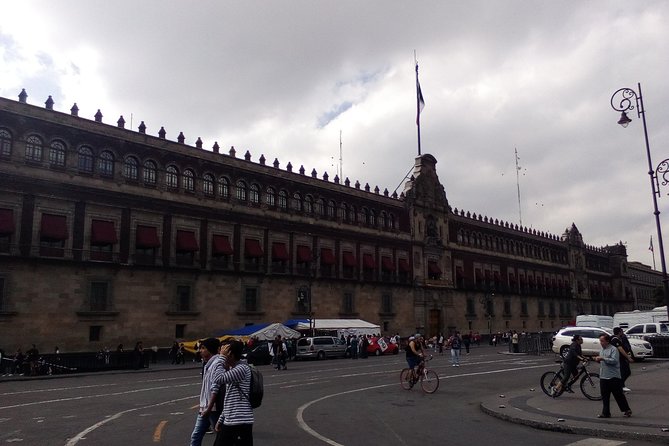
Next comes Palacio Nacional de Mexico, where Diego Rivera’s murals cover practically all the walls on the building’s second story. You have about 45 minutes here.
That is a compact visit, but the mural focus gives it a clear purpose. Rather than wandering through the entire building without direction, you can concentrate on Rivera’s presentation of Mexican history and the way art turns a government building into a public lesson.
I would treat this stop as a visual and political counterpart to Templo Mayor. The first stop shows the foundations of the earlier city. Rivera’s work then interprets Mexico’s past for the modern nation, placing Indigenous history, conquest, struggle, and national identity into a monumental public setting.
Admission is not included. The short time here also means you should be ready to keep moving. If you want a detailed study of every panel, you may wish for more time, but the stop fits well into a day designed to cover several parts of the city.
Two hours at the National Museum of Anthropology
Museo Nacional de Antropologia receives the longest museum visit, with about two hours. Its archaeological pieces include objects found during years of excavation in Mexico City’s center.
This is an important part of the day because it broadens the story beyond the ruins you saw earlier. Templo Mayor gives you a physical site. The anthropology museum adds archaeological material and a wider setting for understanding the cultures connected to Mexico City and the surrounding region.
Two hours allows a useful introduction, although the museum is large enough that you will need to make choices. I would not try to see everything. Follow the sections that connect most closely with your interests, and ask the guide to help you focus if time is tight.
Admission is extra. That matters when you calculate the real cost of the day. The advertised group price covers private transportation, but entry tickets to the museums and sites are separate.
For you, this stop is likely to be the most demanding in terms of concentration. It comes before the architectural walk, so the day shifts from indoor collections to outdoor streets later on. That change helps, but comfortable shoes and sensible pacing still matter.
More Art Nouveau tours in the world:
- Walking Tour of Riga’s Beautiful Art Nouveau Architecture
★ 4.8 · 20 reviews - Riga’s Architecture: A self-guided audio tour of the city’s art nouveau history
★ 5.0 · 3 reviews - Barcelona: Art Nouveau & Gaudí Tour
★ 5.0 · 39 reviews - Private Art Nouveau and Art Deco tour near Opera
★ 5.0 · 15 reviews
Paseo de la Reforma: monuments and national ambition
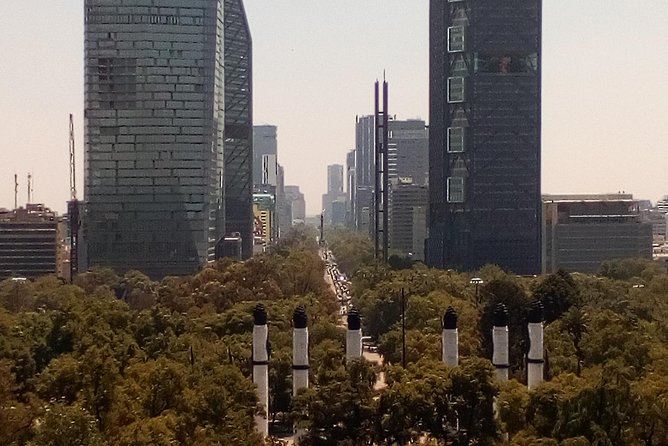
The 30-minute stop at Paseo de la Reforma is shorter and more panoramic. You see the Independence Column, government buildings, Chapultepec Park, and other monuments.
This is not presented as a long walking tour. Think of it as a chance to understand one of Mexico City’s major ceremonial avenues and to connect its monuments with the city’s public image.
I like this pause because it breaks up the museum-heavy middle of the day. You get outside, see the scale of the capital, and consider how the city uses grand avenues, monuments, and government architecture to tell its national story.
There is no admission charge for this stop. Time may be affected by traffic or by how the day has gone so far, so it is best viewed as a focused overview rather than an extended exploration of every monument.
Roma on foot: three architectural styles in one neighborhood
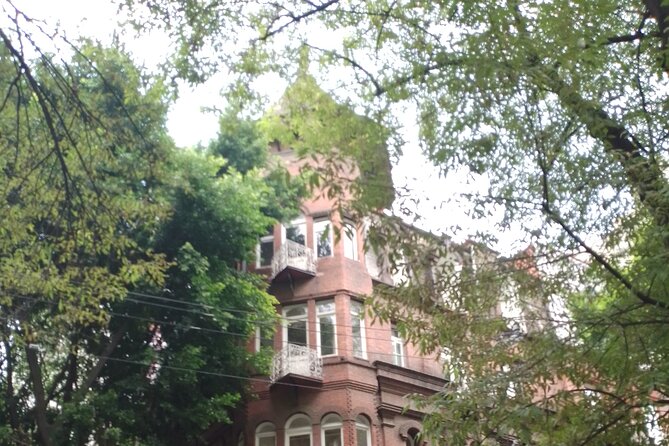
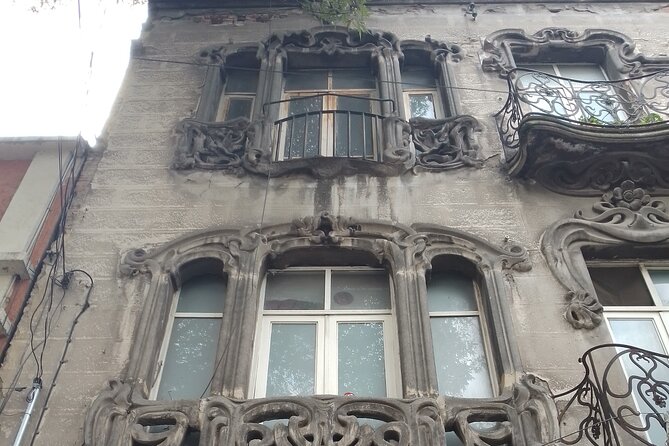
The final portion is the most distinctive part of the experience. A three-hour walk begins at Casa Lamm Centro de Cultura and explores the Roma neighborhood through Art Nouveau, Eclectic, and Art Deco design.
The walk starts at the church in Romita Town, then circles through the neighborhood and its older and newer buildings. You compare architectural and ornamental features instead of simply being told that a building is beautiful. That approach can sharpen your eye: you begin looking for the specific shapes, decoration, materials, and proportions that separate one style from another.
The route includes Ajusco, Roma, and Cibeles squares. These public spaces give the walk a natural rhythm, with time to move from one cluster of buildings to another. You also learn about people connected with the neighborhood, including Clement Jacques, Aldon Conti, Antonio Caso, high-ranking politicians, Leonora Carrington, and Alfaro Siqueiros.
The historical theme is not only architectural. The walk also addresses the conflict between the state and the church at the Sagrada Familia Neo-Romanesque Cathedral. That adds a political and religious layer to the buildings. You are looking at design, but you are also considering the tensions that shaped Mexico City’s public life.
I particularly like the idea of contrasting original buildings with modern design. Roma is not treated as a frozen period piece. Instead, you look at how newer work sits beside older architecture and how the neighborhood’s appearance has changed.
Because this section lasts three hours, it is the part where the tour becomes more than a quick city orientation. You have time to notice details and ask questions. A friendly guide who explains clearly can make a large difference here. The available feedback describes the guide as helpful, willing to answer questions, and good at keeping the discussion entertaining.
What the $98.33 group price really offers
The price is $98.33 per group of up to 10 people, not per person. That distinction matters.
For one or two people, the cost is less of a bargain than it is for a family or small group. With six to ten people sharing the fee, the private transportation and dedicated guide can represent solid value, especially since you are covering several parts of a large city in one day.
The price includes private transportation. It does not include lunch, museum or site admission, or parking. Since there are three paid cultural stops, you should treat the listed rate as the base cost rather than the final total.
I would compare this with the cost and effort of arranging separate taxis or rides between central Mexico City, the anthropology museum, Reforma, and Roma. The value is not only the vehicle. It is the organized connection between places that are often experienced separately.
The trade-off is that you are paying for breadth. If your priority is a slow museum visit or a single neighborhood, this will feel rushed. If you want a broad introduction and prefer not to manage transportation yourself, the structure is more useful.
Timing, pickup, and communication
The experience lasts approximately six to eight hours. The listed stop times add up to about seven hours and 15 minutes, so the full duration makes sense once you allow for driving and transitions.
Pickup is offered, and Mexico City International Airport pickup is available. That can be useful if you are arranging a first-day introduction to the city or have a long layover, but the schedule is too substantial to treat as a casual airport transfer. Confirm the exact pickup details before booking.
The tour is offered in English. It is private, so only your group participates. That gives you more room to ask questions than you would have in a large group, and it lets the guide adjust the emphasis between archaeology, art, or architecture.
Communication is the one practical point I would not ignore. One person arranged a time change by phone, then the guide cancelled the night before because a WhatsApp message had not received a reply. You should respond promptly to confirmation messages, repeat the agreed time in writing, and avoid assuming that a phone conversation alone has settled the plan.
The cancellation policy allows a full refund when you cancel at least 24 hours in advance. Keep that deadline in mind if your schedule changes.
Who will get the most from this experience?
I would recommend this tour to you if you want a broad first look at Mexico City and enjoy connecting art, politics, archaeology, and urban design. It suits a private group that values convenience and wants an English-speaking guide rather than a self-guided day.
It is also a good match for people who like architecture but do not want a walk limited to façades. The Roma portion connects styles with residents, artists, religious conflict, and the city’s unrealized hopes for progress.
Families and small groups may find the per-group price appealing, especially when shared among several people. The private format can also make questions easier and reduce the uncertainty of moving around a large capital.
I would be more cautious if you dislike long days, walking, or switching subjects. The schedule moves from ruins to murals to archaeology, then from a monumental avenue to a three-hour neighborhood walk. You will need energy and curiosity.
Museum specialists should also set expectations. The visits are introductions, not full-day studies. The National Museum of Anthropology gets two hours, while Templo Mayor and Palacio Nacional receive one hour and 45 minutes respectively.
My verdict: a useful city overview with a strong Roma finale
I like this experience most for its range and for the three-hour Roma walk. The museums and monuments explain Mexico City’s large public story, while the neighborhood portion brings you into architectural details and local personalities.
The value is strongest when several people share the $98.33 group fee and want private transportation. The price is less attractive once you add museum admissions, lunch, and parking, particularly for only one or two people.
Book it if you want a structured day that combines Mexico’s Indigenous past, national art, archaeology, monuments, and early twentieth-century architecture. Skip it if you want slow museum time or a relaxed neighborhood stroll. Before booking, confirm the pickup time carefully and keep WhatsApp communication clear. That small bit of preparation can prevent the main practical problem associated with this otherwise wide-ranging introduction to Mexico City.
FAQ
How long does the Mexico City tour last?
The experience lasts approximately six to eight hours. The planned visits total about seven hours and 15 minutes, before allowing for transportation and transitions.
Is private transportation included?
Yes. Private transportation is included in the tour price.
Does the tour pick up at Mexico City International Airport?
Yes. Pickup from Mexico City International Airport is available.
Are museum and site admission tickets included?
No. Admission to Museo del Templo Mayor, Palacio Nacional, and Museo Nacional de Antropologia is not included. Parking is also excluded.
Is lunch included?
No. Lunch is not included, so you should plan for that separately during the long day.
How many people can join the private tour?
The price covers one private group of up to 10 people. Only your group participates.
Just added in the world
- Wilmington History and Architecture Tour★ 4.8 · 18 reviews
- New Orleans : Garden District Architecture Walking tour★ 4.8 · 5 reviews
- Washington DC: Dupont Circle & Embassy Row Architecture Tour★ 5.0 · 6 reviews
- Washington, DC: Georgetown Architecture Walking Tour★ 5.0 · 8 reviews
- Vicenza: Palladian Architecture Private Walking Tour★ 3.3 · 3 reviews
- Walk & Discover KL’s Architectural and Heritage Gems★ 5.0 · 7 reviews
- Private Colonial Williamsburg Architectural Tour★ 5.0 · 5 reviews
- Unveiling Brno: History, Culture & Architectural Delights★ 5.0 · 2 reviews
Art Deco Tours, compared.

The Official Art Deco Walking Tour by The Miami Design Preservation League
Read our review →

Guided 10am Morning Art Deco Walk From Napier Art Deco Trust
Read our review →


Award-winning Art Deco & Neon Lights Walking Tour in Miami Beach
Read our review →
Browse the lists this tour appears in