
REVIEW · NEW YORK CITY ARCHITECTURE TOURS
New York Soho and the Village Art and Architecture Tour
Old buildings tell New York’s best stories. This two-hour walk connects SoHo, the East and West Villages, the Lower East Side, and Washington Square through architecture and city planning rather than celebrity trivia. I like the small group of no more than 15 people, and I like the personal headsets, which make it easier to hear the guide on busy streets. The main drawback is its narrow focus: if you want major museum interiors or a broad sightseeing tour, this walk may feel too specialized.
At $49, I see good value for anyone who enjoys buildings, public spaces, and the way old neighborhoods change. Guide Ivan receives especially strong praise for clear explanations, thoughtful answers, and adjusting the walk to match the group’s interests. The 5:30 pm start also makes this easy to fit after other plans, though the route depends on good weather and includes a fair amount of standing and walking.
Key points to know before you book
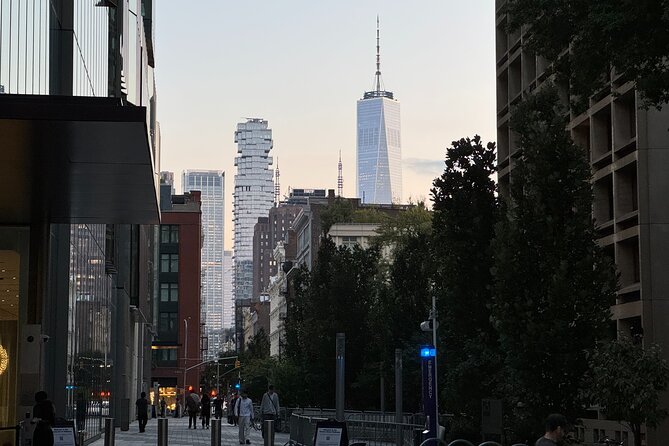
- Architecture across several New York eras: See 19th-century banks and religious buildings beside recent apartments, hotels, libraries, and art institutions.
- A compact, personal format: The maximum group size is 15, giving you a real chance to ask questions.
- Headsets improve the experience: Each person receives a professional individual headset, a useful feature on noisy city streets.
- A strong guide matters here: Ivan is praised for making architecture and urban planning understandable, not dry or academic.
- A practical evening route: The walk begins at Cooper Square at 5:30 pm and ends under the Washington Square Arch.
- Good value for curious New York visitors: The tour costs $49 and includes guide service, headsets, fees, and taxes.
Why this route makes New York look different
Many people walk through SoHo and the Village while watching traffic, checking directions, or hunting for a restaurant. This tour asks you to look up. It gives you a way to read facades, public spaces, building materials, and changes in city life.
The route is especially useful because it places old and new buildings close together. A former bank, a contemporary art museum, a modern hotel, student residences, a university library, and a public park all appear within two hours. You do not simply see attractive buildings. You get a framework for understanding why they look different and how the city keeps reusing its streets.
I also like the focus on urban design. The walk is not limited to architectural style. It considers how buildings meet sidewalks, how public spaces work, and how major projects affect surrounding neighborhoods. That wider view gives the tour more value than a simple list of famous facades.
The route covers a lot in a short time, so each stop is brief. That is helpful if your schedule is tight, but it also means you should not expect long interior visits or a slow photographic study of each building.
A few more architecture tours in New York City worth a look
- Manhattan Architecture Yacht Cruise
★ 5.0 · 1,395 reviews - NYC: Around Manhattan Official NYC Architecture Cruise
★ 4.8 · 402 reviews - Art Deco and Architecture Midtown Landmarks Tour
★ 5.0 · 142 reviews
Cooper Union starts the story at Cooper Square
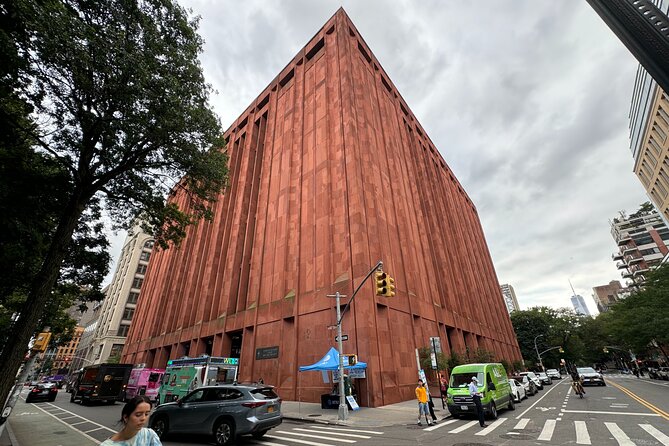
The meeting point is Cooper Square, near the Cooper Union Foundation Building. The tour begins here at 5:30 pm, with about 10 minutes devoted to the building and institution.
Cooper Union is a fitting starting point because it introduces the connection between education, architecture, and civic life. You receive context before moving into the surrounding streets, rather than beginning with an isolated building and a pile of dates.
The admission is free, but the important value is the guide’s explanation of what you are seeing. If you arrive a few minutes early, you can get oriented around Cooper Square before the group sets off. The area is near public transportation, which makes the start practical after a day elsewhere in Manhattan.
New York’s sharp contrast at 40 Bond Street and the New Museum
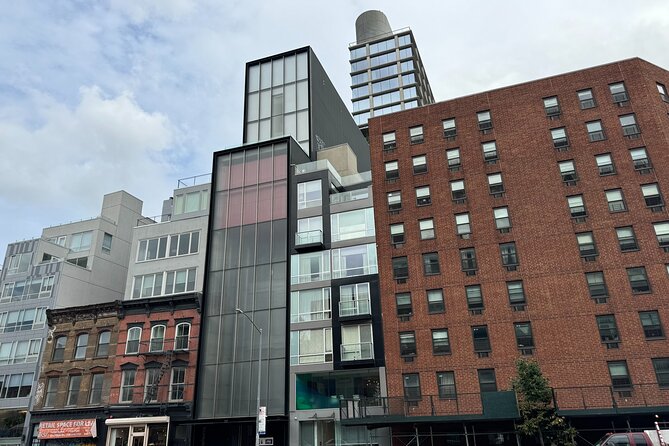
The stop at 40 Bond Street lasts about five minutes. This residential building by Herzog and de Meuron brings a very modern note to the route. Its presence helps you consider how a new apartment building can respond to a historic neighborhood without simply copying older styles.
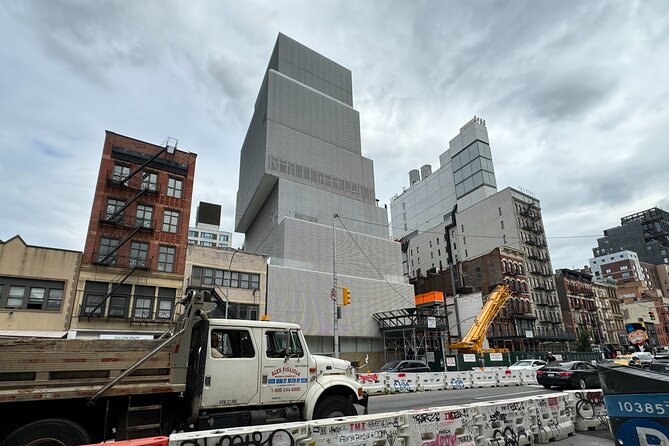
The New Museum of Contemporary Art follows, also with about five minutes. Designed by SANAA, it gives the walk a clear link between contemporary art and contemporary architecture. You see how an art institution can become part of the street experience, not just a container for exhibitions.
These quick stops are best for people who enjoy comparison. You can place 40 Bond Street and the New Museum beside the older structures later on the route. If your main goal is to enter the museum or study either building in detail, the short timing will feel limited. The tour is about seeing the wider pattern.
The Public Hotel and the former Bowery Savings Bank
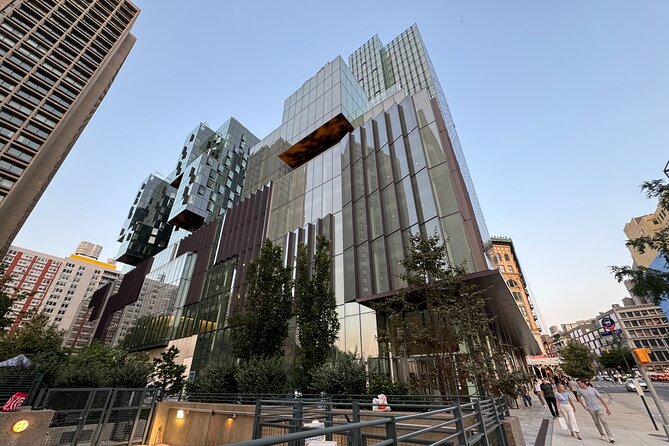
The Public Hotel provides another modern building to examine. The stop lasts around five minutes, so expect an exterior look and an explanation rather than a hotel tour.
The contrast becomes sharper at Capitale, the former Bowery Savings Bank. The building dates to 1895 and was designed by McKim, Mead & White. You receive about five minutes here, enough to place the building within New York’s grand bank-building tradition and to understand how a former financial institution now serves a new purpose.
This is one of the route’s most useful pairings. The hotel and former bank show two very different ideas of urban prestige. One is a modern hospitality project, while the other reflects the weight and confidence once associated with a major savings bank.
The short stop may leave you wanting more. That is not a flaw if you treat the tour as an introduction. You can note the buildings that interest you most and return later with more time.
Same city, a different building to stand in front of:
- Tribeca Architecture And History Walking Tour
★ 5.0 · 141 reviews - New York City The Official Rockefeller Center Tour
★ 4.5 · 119 reviews - 3 Hour Midtown Manhattan Architectural Tour
★ 5.0 · 81 reviews - New York City: Art Deco and Architecture Landmarks Tour
★ 5.0 · 76 reviews
Smaller architectural surprises along the way
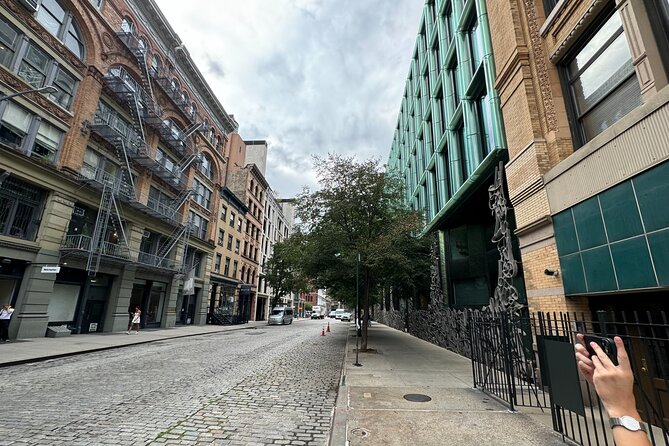
The route also includes the Little Singer Building, the Scholastic Building by Aldo Rossi, and New York’s old cathedral. These are easy to miss when you are walking independently, especially if your attention is fixed on shops, restaurants, or traffic.
The Little Singer Building adds another layer to the city’s architectural story. The Scholastic Building introduces Aldo Rossi and a more recent architectural approach. The old cathedral brings religious architecture into the mix, reminding you that these neighborhoods are not defined by apartments and boutiques alone.
Because some of these locations are passed rather than assigned a full timed stop, the guide’s narration is important. Ivan’s ability to explain design and history in plain terms is a major part of the experience. He is praised for answering questions fully and for making the material feel connected to everyday New York.
I would pay attention to the transitions between buildings. The route’s strength is not just the individual stops. It is the changing conversation between old and new, commercial and residential, private buildings and public institutions.
NYU and the changing streets around Houston
The walk then reaches New York University’s main campus and the additions around Houston Street and Washington Square. This section looks at newer campus buildings and residences, showing how a large university has added to an already established part of Manhattan.
You can expect another short stop of about five minutes. That may sound brief, but the subject is broad. Campus expansion affects sidewalks, housing, open space, and the character of nearby streets. A guide can help you notice these connections instead of seeing each new building as a separate project.
This is also where the tour’s urban-planning focus becomes especially useful. The route is not only asking if a building is beautiful. It asks how the building fits into the neighborhood and what kind of city life it supports.
If you have spent years passing through this part of New York, the tour may change your attention. One published comment describes gaining a new respect for buildings that had previously been easy to overlook. That is exactly the practical benefit here: you leave with a better set of questions for the rest of your time in the city.
Silver Towers and public art in a modern setting
Silver Towers receives about 10 minutes, making it one of the longer stops. The guide discusses the buildings, the public spaces around them, and the art connected with the complex.
This section gives you a chance to think beyond street facades. The relationship between towers, open areas, and public art shows how large residential projects can shape daily life at ground level. The buildings are not treated as isolated objects. Their spaces between them matter too.
I appreciate this part because it broadens the definition of architecture. You are considering movement, gathering areas, sightlines, and art, not just windows and entrances. For anyone interested in city planning, this may be one of the strongest sections of the walk.
The tradeoff is that a 10-minute stop cannot cover every debate or detail connected with a large residential complex. Still, it gives you enough background to understand why the site belongs on an art and architecture route.
Inside Bobst Library, then across Washington Square
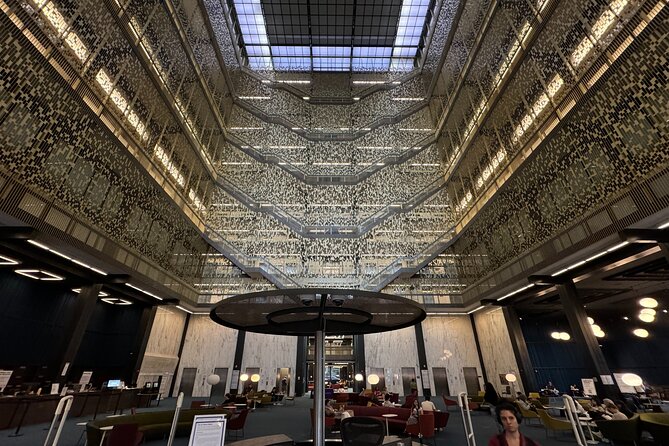
At Bobst Library, the tour enters the building for about five minutes. This is a welcome change from an entirely exterior walking tour. You get to experience one of the university’s major interior spaces, even though the visit is short.
The library stop is especially useful after the earlier discussion of NYU additions and residences. It connects the institution’s buildings with the people and activities they serve. You are not just looking at a facade from the sidewalk.
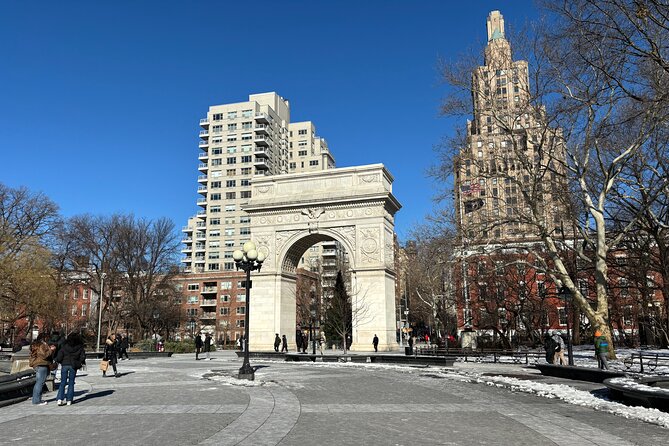
The final stop is Washington Square Park, with about 10 minutes around the park and the Washington Square Arch. The tour ends under the Arch, at Washington Square North.
This is a satisfying finish because the park gathers many of the route’s themes in one place. Architecture, public space, campus life, neighborhood movement, and city history meet here. It is also a handy ending point. You can continue exploring the Village, find a meal, or use nearby public transportation without retracing the route.
What $49 gets you
The $49 price is fair if you want interpretation rather than a self-guided walk. You are paying for a two-hour route, an in-person guide, individual headsets, all fees, and taxes. You are not paying admission to a series of museums or for an extended interior tour.
The small maximum group of 15 matters. Architecture tours work best when you can ask why a building looks the way it does, or pause over a detail that catches your eye. A large group would make that harder. The intimate format also lets the guide adjust the emphasis, something Ivan is specifically praised for doing.
The headsets are another practical advantage. SoHo, the Village, and the Lower East Side can be noisy. Clear audio means you spend less time trying to catch every sentence and more time looking at the buildings.
Tips are not included, so plan for that extra cost if you feel the guide provided strong service. Free cancellation is available up to 24 hours before the 5:30 pm start. Cancellations or changes within 24 hours are not refunded or accepted. Since the walk requires good weather and a minimum number of participants, a cancellation by the operator can result in another date, another experience, or a full refund.
Who will get the most from this walk
I would choose this tour if you enjoy architecture, city planning, contemporary art, or the small details that make neighborhoods distinctive. It also suits a New York resident who wants to see familiar streets with a fresh set of eyes.
The route works well for a short visit because it lasts about two hours and ends in a useful location. The 5:30 pm start leaves most of the day open, though you should allow time for walking and standing.
It is less suitable if you want a relaxed sightseeing ride, long museum visits, or a tour centered on food and entertainment. The stops are brief, and the subject requires attention. You will get more from it if you are willing to listen, look upward, and ask questions.
Most people can participate, and service animals are allowed. The tour is near public transportation, but the information provided does not specify exact accessibility arrangements for every building or stretch of pavement. If that matters for you, ask the operator before booking.
Should you book the SoHo and Village architecture walk?
Book it if you want to understand New York through buildings and public spaces rather than simply ticking off famous sights. The strongest reasons are the small group, the personal headsets, the range of architectural periods, and Ivan’s praised ability to explain complex ideas in a clear, friendly way.
Skip it if you prefer extensive interior access or a tour with more time at each attraction. At $49, this is best viewed as a focused introduction to SoHo, the Villages, and nearby areas. It gives you the tools to keep exploring on your own after the walk ends, which is where much of its value lies.
FAQ
How long is the SoHo and Village Art and Architecture Tour?
The tour lasts approximately two hours, including travel time between the stops.
What time does the tour begin?
The tour begins at 5:30 pm.
Where does the tour start?
It starts at Cooper Square in New York, near the Cooper Union Foundation Building.
Where does the tour end?
The tour ends under the Washington Square Arch at Washington Square Park.
What is the maximum group size?
The tour has a maximum of 15 participants.
Are headsets provided?
Yes. Each participant receives a professional individual headset so the guide can be heard more clearly.
Does the price include entrance fees and taxes?
Yes. The $49 price includes all fees and taxes, the in-person guide, and the individual headset. Tips are not included.
Is the tour suitable in poor weather?
No. The experience requires good weather. If the operator cancels because of poor weather, you can receive a different date or a full refund.
What is the cancellation policy?
You can cancel at least 24 hours before the start time for a full refund. Cancellations or changes made less than 24 hours before the start time are not refunded or accepted.
Just added in New York City
- Race to the Sky: NYC Architecture Tour With SUMMIT One Ticket★ 5.0 · 3 reviews
- Chelsea and the High Line NYC Architecture Walking Tour★ 5.0 · 6 reviews
- Private Flatiron Food, History and Architecture Tour★ 5.0 · 8 reviews
- New York Upper West Side Art and Architecture Tour★ 5.0 · 4 reviews
- New York Upper East Side Art and Architecture Tour★ 5.0 · 3 reviews
- New York Midtown South Art and Architecture Tour★ 5.0 · 2 reviews
- The Story Behind NY’s Evolving Skyline An Architectural Journey Through History★ 5.0 · 18 reviews
- Chelsea Architecture and Art Tour with Award Winning NYC Guide★ 5.0 · 9 reviews
New York City Architecture Tours, compared.


Around Manhattan Official NYC Architecture Cruise
Read our review →
Art Deco and Architecture Midtown Landmarks Tour
Read our review →

New York City The Official Rockefeller Center Tour
Read our review →

Browse the lists this tour appears in