
REVIEW · NEW YORK CITY ARCHITECTURE TOURS
Chelsea Architecture and Art Tour with Award Winning NYC Guide
Chelsea makes art feel like part of the street. This two-hour walk links the Meatpacking District, the High Line, the Whitney Museum, major galleries, and bold new buildings by Frank Gehry, Jean Nouvel, and Zaha Hadid. I like the small group size, capped at 10, and the chance to hear how Chelsea changed from an industrial district into one of Manhattan’s leading art areas.
I also like the guide’s professional background: the guide is licensed by New York City and belongs to AICA USA, the International Association of Art Critics. The main drawback is simple: the tour takes place rain or shine and is almost entirely outdoors, so weather can shape the day more than the art does.
Key points at a glance
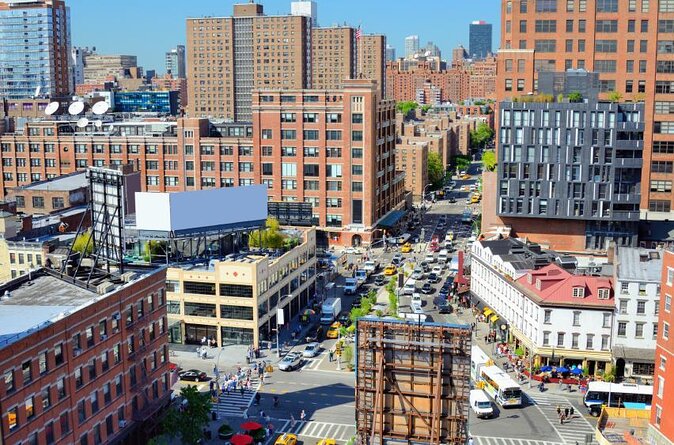
- A compact two-hour route: The walk connects Lower Manhattan with Chelsea’s galleries, the High Line, and the Whitney area without taking up a full day.
- Small groups capped at 10: This keeps the tour more personal and gives you a better chance to ask questions.
- Architecture by major designers: Look for work associated with Frank Gehry, Jean Nouvel, Zaha Hadid, and other international architects.
- The High Line is part of the lesson: You’ll discuss its past, public sculpture, and changing role in the neighborhood.
- Gallery visits may vary by season: From September through June, the route may include one or two major exhibitions.
- A strong guide credential: Your guide is licensed by New York City and is a member of AICA USA.
Why this short Chelsea walk works
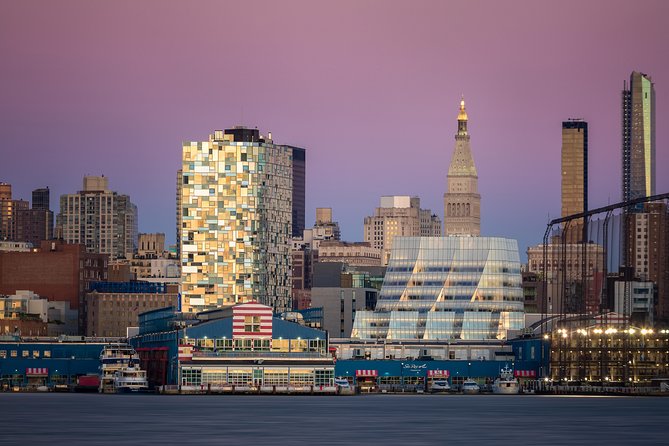
Chelsea is one of the best parts of New York for seeing several kinds of city life in a small area. In a single walk, you can move from old residential buildings to the Meatpacking District, from a former rail line to new museum architecture, and from public sculpture to serious gallery spaces.
That variety gives this tour its value. You are not only looking at buildings. You are also considering how the neighborhood changed, why galleries moved here, and how public art became part of the daily walk through the city.
At $49 per person, this is reasonably priced for a small-group guided walk in Manhattan. The fee includes the local guide, taxes, and fees. It does not promise a full museum admission or a private gallery appointment, so the value rests mainly in the guide’s interpretation and route planning.
I would see this as a focused introduction rather than a complete art course. Two hours is enough to give you a clear sense of the district, but not enough to study every gallery, building, and public artwork in detail.
A few more architecture tours in New York City worth a look
- Chicago River: 1.5-Hour Guided Architecture Cruise
★ 4.8 · 8,046 reviews - Park Güell: Guided Tour with Optional Gaudí Experience Entry
★ 4.1 · 832 reviews - Barcelona: Gaudi’s Casa Vicens Guided Tour
★ 4.8 · 401 reviews
Meeting near Lower Manhattan at 11 a.m.
The tour begins in Lower Manhattan, in the 10014 ZIP code area. The exact starting point is confirmed by email one week before the tour, so you should check your message rather than assume that the general location is the precise corner.
The start time is 11 a.m. That is useful if you want a relaxed morning, but you should leave enough time to reach the meeting point. The walk finishes near 10th Avenue in the mid-20s, placing you in a useful part of Chelsea for lunch, more gallery browsing, or further exploration along the High Line.
The tour lasts about two hours. Since the route is on foot and almost entirely outside, wear comfortable shoes and dress for the forecast. The High Line has plenty to look at, but it is still a walking route, not a seated museum program.
A mobile ticket makes the booking simple. Confirmation arrives at the time of booking, and free cancellation is available if you cancel at least 24 hours before the start. Changes or cancellations made later are not accepted for a refund.
The Whitney Museum and the Meatpacking District
The walk includes the Whitney Museum of American Art and the Meatpacking District. These two places make a good opening because they show how Chelsea’s art scene sits beside older commercial and residential parts of Manhattan.
The Whitney is one of the district’s most recognizable cultural landmarks. On this tour, you should expect the guide to place the museum within the surrounding streets and explain how its architecture fits into the area. The listed stop has no separate admission charge, but the tour price does not state that a full museum entry is included, so think of this portion as an architectural and neighborhood visit unless your guide confirms otherwise.
The Meatpacking District adds a different layer. Its name points to an older working identity, while the current streets are closely linked with design, fashion, food, and art. The tour uses that contrast to explain Chelsea’s changing character rather than presenting the neighborhood as a frozen museum piece.
I like this approach because it gives the buildings a reason to matter. You are not simply told that a structure is attractive. You can consider what the area needed in the past, what it became later, and why new cultural institutions found a home here.
The itinerary includes contemporary buildings connected with Frank Gehry, Jean Nouvel, Zaha Hadid, and other major architects. If you enjoy modern design, this is likely the strongest part of the walk. You get to compare different architectural ideas within a relatively compact area.
The High Line as a public artwork
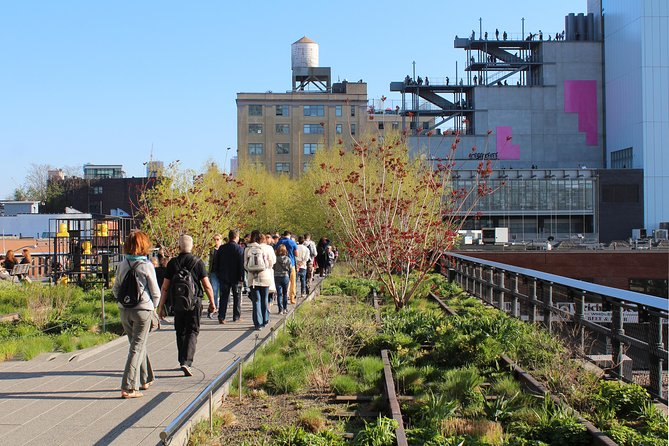
The route then heads north on or near the High Line. The guide discusses the raised park’s past, its public sculpture program, and its role in Chelsea today.
The High Line works well on a walking tour because it is both a place and a subject. You can observe how the path changes your view of the streets while also learning why this route became such an important public space. The sculpture program adds another layer, since the art is encountered outdoors rather than behind a museum entrance.
I would pay close attention to how your guide connects the park with nearby buildings. From the High Line, architecture is not presented as an isolated object. You see it alongside older homes, commercial buildings, sidewalks, and changing views of the neighborhood.
The walk also includes handsome 19th-century residences and buildings. That detail matters. Without it, a tour focused on starchitects could make Chelsea seem like a display case for new construction. The older structures provide a useful counterpoint and show that the area’s appeal does not come only from recent design.
The High Line can be crowded at times, and the tour is not designed as a quiet private stroll. Still, the group limit of 10 should make it easier to stay close to the guide and hear the commentary than it would be on a large coach-style outing.
Same city, a different building to stand in front of:
- Manhattan Architecture Yacht Cruise
★ 5.0 · 1,395 reviews - NYC: Around Manhattan Official NYC Architecture Cruise
★ 4.8 · 402 reviews - Art Deco and Architecture Midtown Landmarks Tour
★ 5.0 · 142 reviews - Tribeca Architecture And History Walking Tour
★ 5.0 · 141 reviews
Chelsea’s galleries from September through June
Chelsea is New York’s largest gallery district, and the tour may include one or two important exhibitions during the main art season from September through June.
The word may matters here. Gallery visits are not presented as a fixed promise for every departure. The choice can depend on current exhibitions, access, and what is worth seeing at the time. That flexibility can be a strength, since contemporary art changes quickly, but you should not book expecting a specific gallery or show unless the provider confirms it.
The gallery portion also helps explain why Chelsea became such a major art center. You are able to see how art functions in repurposed buildings and newer spaces, rather than only in a traditional museum setting. The spaces themselves can be part of the discussion.
If you visit from September through June, the odds of seeing active exhibitions are better because that is the stated art season. A summer departure may still cover the district and its architecture, but the gallery portion may be different or absent.
For someone who already knows New York’s museum scene, this section could be especially useful. It shifts attention away from famous institutions and toward the galleries that shape current art conversations. For a first-time visitor, it offers a manageable introduction without asking you to spend a full day moving between galleries on your own.
What the guide brings to the walk
The guide is licensed by New York City’s Department of Consumer Affairs and belongs to AICA USA. Those credentials do not guarantee that every topic will suit every person, but they are reassuring for a tour centered on art, criticism, architecture, and urban change.
The guide named in the feedback is Merrily. One detailed comment praised her professional answers and her clear coverage of the buildings, parks, Meatpacking District, High Line, and Lower Manhattan. That is useful information because this walk depends heavily on explanation. You are paying for the connections between places, not merely for a route you could follow on a map.
A good guide can also adjust the emphasis. You might care most about architecture, while someone else wants the neighborhood story or the gallery scene. With no more than 10 people, it should be easier to ask a question without interrupting a large crowd.
The rating is 5 from nine reviews, a very small sample. I would treat that as an encouraging sign, not proof that every departure will be perfect. The strongest praise focuses on the guide’s information, professional manner, and ability to explain the buildings and public spaces along the route.
Weather, walking, and group size
This is an outdoor activity in a city where the weather can change your mood quickly. Tours run rain or shine, and the route is almost entirely outside. Bring clothing that suits the forecast, since there is no indication that the walk can be moved indoors when conditions turn poor.
You should also expect regular walking rather than a stop-and-start bus tour. Comfortable footwear matters, especially if you plan to continue exploring Chelsea after the official end near 10th Avenue.
The maximum group size is 10. That is one of the tour’s better features. A small group can gather around a sculpture or building without blocking the entire sidewalk, and the guide can respond to individual questions more easily.
Most people can participate, and service animals are allowed. The route is near public transportation, which helps both before the tour and after it. Since the precise meeting point arrives by email one week ahead, plan your connection once that message comes through.
Who will get the most from this tour
I would recommend this walk to anyone who wants a guided introduction to Chelsea without spending a whole day in museums. It suits visitors who like architecture, public art, city planning, neighborhood change, and current gallery shows.
It is also a good choice if you prefer context to a long list of facts. The route gives you several subjects to compare: old residences, new buildings, a former rail line, outdoor sculpture, the Whitney, and commercial gallery spaces.
You may want a different outing if your main goal is to spend hours inside the Whitney Museum. This tour is built around the surrounding district, and the listed stops do not promise a long indoor museum visit.
It may also be less suitable if rain would ruin your day. Since the walk continues in wet weather, check the forecast before the cancellation deadline. You can receive a full refund if you cancel at least 24 hours before the start time, but not after that point.
Is $49 a fair price?
For $49, you receive about two hours with a licensed local guide, a small group, and a route through some of Manhattan’s most art-focused streets. Taxes and fees are included, so the advertised price is straightforward.
The value depends on how much you want interpretation. If you are happy to walk the High Line and look at buildings by yourself, you can visit much of the area without paying for a tour. If you want help understanding the neighborhood’s changes, the architects, the sculpture program, and the gallery district, the fee is easier to justify.
The small group improves the value. You are not paying for a generic commentary delivered to dozens of people. You are paying for access to a guided reading of the area, with room for questions and discussion.
I would call it good value for an art-minded visitor, especially during the September to June gallery season. It is a less obvious choice in poor weather or for someone seeking substantial indoor museum time.
My booking advice
I would book this Chelsea walk if you want a concise, informed look at Manhattan’s art and architecture, especially if you enjoy seeing old and new buildings side by side. The combination of the High Line, Whitney area, major architects, and possible gallery visits gives the two hours a clear purpose.
Book it with realistic expectations. You are getting a guided neighborhood walk, not a private museum tour or guaranteed access to a particular exhibition. Check the meeting email, prepare for outdoor conditions, and leave room in your schedule after the finish near 10th Avenue.
For architecture fans and first-time Chelsea explorers, this is a strong pick. For a full day devoted to paintings and indoor collections, choose a museum visit instead.
FAQ
How long does the Chelsea Architecture and Art Tour last?
The tour lasts approximately two hours.
What time does the tour begin?
The tour begins at 11 a.m.
Where does the tour start?
It starts in Lower Manhattan, New York, in the 10014 ZIP code area. The exact meeting location is confirmed by email one week before the tour.
Where does the tour finish?
The tour ends near 10th Avenue in the mid-20s in Chelsea.
Is the tour held indoors or outdoors?
It is almost entirely outdoors and operates rain or shine.
Does the tour include a visit to the Whitney Museum?
The Whitney Museum is included as a stop on the route. The listed stop has no admission charge, but the tour information does not state that full museum entry is included.
Can I visit a gallery during the tour?
During the art season from September through June, the tour may include one or two important exhibitions. A specific gallery visit is not guaranteed.
What is the maximum group size?
The tour has a maximum of 10 people.
Just added in New York City
- Race to the Sky: NYC Architecture Tour With SUMMIT One Ticket★ 5.0 · 3 reviews
- New York Soho and the Village Art and Architecture Tour★ 5.0 · 4 reviews
- Chelsea and the High Line NYC Architecture Walking Tour★ 5.0 · 6 reviews
- Private Flatiron Food, History and Architecture Tour★ 5.0 · 8 reviews
- New York Upper West Side Art and Architecture Tour★ 5.0 · 4 reviews
- New York Upper East Side Art and Architecture Tour★ 5.0 · 3 reviews
- New York Midtown South Art and Architecture Tour★ 5.0 · 2 reviews
- Custom Private New York Architecture, Art and City Tour★ 5.0 · 3 reviews
New York City Architecture Tours, compared.


Around Manhattan Official NYC Architecture Cruise
Read our review →
Art Deco and Architecture Midtown Landmarks Tour
Read our review →
New York City The Official Rockefeller Center Tour
Read our review →
Browse the lists this tour appears in