
REVIEW · ROTTERDAM ARCHITECTURE TOURS
Rotterdam Architecture: Centre and South Bank with watertaxi
Rotterdam makes a museum of its streets. This three-hour walking tour offers a smart way to read the city through its buildings, from the rebuilt Central Station to the old harbor district across the river. I like the architect guide, who can explain why Rotterdam looks so different from other Dutch cities, and I like the mix of walking and a fast water taxi ride under the Erasmus Bridge.
The route covers about four kilometers and packs in major sights without turning into a simple photo stop parade. The main consideration is the pace: this is a walking tour with a speedboat transfer, so it may not suit anyone who finds long walks or boat boarding difficult.
Key points to know before booking
- The route begins at Rotterdam Central Station, under the station clock outside the main entrance, making it easy to reach by public transport.
- An architect leads the tour, with attention to both Rotterdam’s postwar rebuilding and its future projects.
- The four-kilometer walk includes the Lijnbaan, Timmerhuis, St. Laurens Church, Markthal, and Cube Houses.
- The watertaxi is part of the experience, carrying you across the river at speed and beneath the Erasmus Bridge.
- The South Bank adds a different side of Rotterdam, with the former harbor area, Hotel New York, Fenixloods, Fenix Food Factory, cafes, and restaurants.
- Children under 12 join the tour free, although the listed price covers their speedboat fee.
Why this tour fits Rotterdam so well
Rotterdam is not a city you understand by checking off a medieval square and a palace. Much of the centre was rebuilt after wartime destruction, and the city chose bold modern design rather than a careful imitation of what came before.
That makes an architect-led walk especially useful. You see the buildings first, of course, but the guide helps connect them. A shopping street, a market hall, a church, a group of tilted houses, and a former harbor district begin to make sense as parts of one changing city.
I particularly like the balance between famous sights and city planning. You are not only shown the Cube Houses because they photograph well. You also hear about the design choices, the changing use of the waterfront, and future plans for Rotterdam.
The tour is conducted in English. The provider is Walk Rotterdam, and the guide named in the strongest written feedback is Tania. Her explanations of the architecture and future developments were praised, along with her suggestions for other sights during the rest of a Rotterdam visit. That last point matters: a good city guide should help you use the rest of your day, not simply finish at the final stop.
A few more architecture tours in Netherlands worth a look
- Rotterdam: Architectural Highlights Guided Walking Tour
★ 4.8 · 215 reviews - Rotterdam: Highlights, Gems, Architecture & History Walk
★ 5.0 · 191 reviews - Rotterdam Walk: Hilights, Gems, Architecture & WWII | 2 or 3hrs
★ 5.0 · 149 reviews
Meeting under the station clock
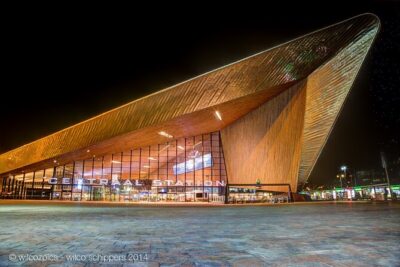
Your starting point is practical and memorable: meet under the station clock, next to the main entrance on the outside of Rotterdam Central Station.
Central Station itself is a fitting opening scene. It is one of the city’s major modern landmarks, and the tour begins with Rotterdam’s newer face before moving into the centre. If you arrive by train, the meeting point saves you the trouble of crossing town first.
Give yourself enough time to find the correct side of the station. The instructions specify the clock outside the main entrance, not a meeting point inside the concourse. Comfortable shoes are essential. Four kilometers is manageable for most people, but the route includes enough walking that thin-soled city shoes may become tiresome.
Large bags and luggage are not allowed. That is important if you are arriving with suitcases or planning to leave directly for another destination. You will want to travel light, with only what you need for three hours.
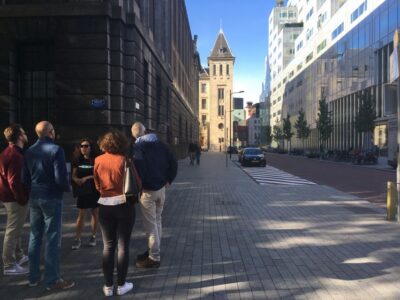
Lijnbaan and the postwar city centre

The early part of the walk introduces the Lijnbaan, a postwar modernist shopping area. This is one of the places where an architect guide earns the ticket price.
At first glance, a shopping street may seem less exciting than a church or a famous market hall. Yet the Lijnbaan helps explain how Rotterdam rebuilt its centre and thought about modern urban life. The focus is not only on individual facades. It is on how people move, shop, and use public space.
I like this stop because it gives you a better reading of the city before the more dramatic buildings appear. Rotterdam’s architecture can look like a collection of unrelated experiments if you walk around without context. The Lijnbaan provides an early lesson in the city’s postwar design choices.
The practical drawback is that this is an urban walking route, not a quiet architectural stroll. You are seeing active parts of central Rotterdam, with city traffic and shopping activity around you. The reward is that you experience the buildings in their everyday setting rather than behind a museum rope.
Timmerhuis and the city’s modern working heart
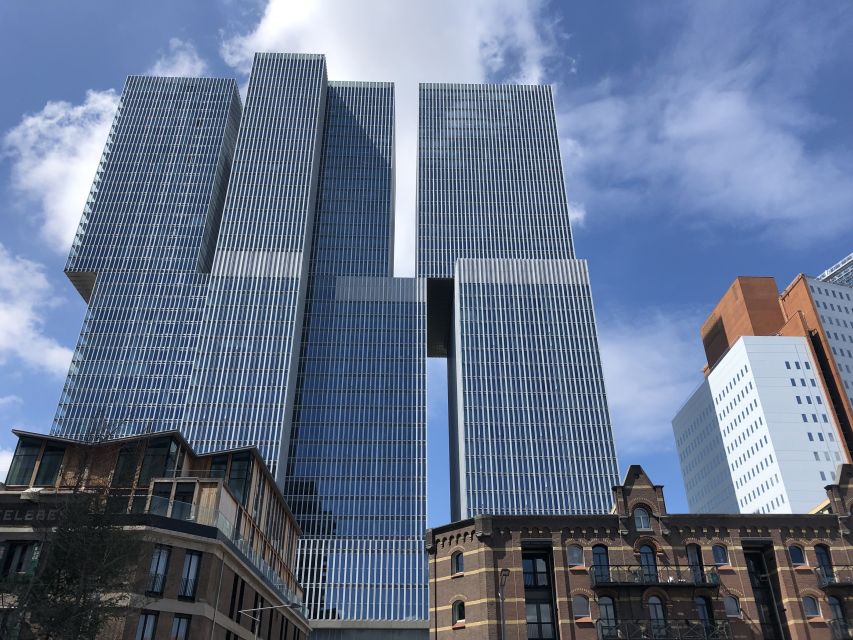
The route continues to Timmerhuis, designed by the internationally known architecture firm OMA. The building is one of the tour’s clearest examples of Rotterdam’s willingness to try unusual forms in the middle of the city.
This stop should appeal to anyone interested in how new construction fits into an older urban centre. The guide can explain the building’s design and its place in Rotterdam’s continuing development. Rather than treating architecture as decoration, the tour looks at how a building changes the way a district works.
Timmerhuis also adds a useful contrast to the Lijnbaan. Both belong to Rotterdam’s modern identity, but they come from different moments in the city’s development. The route lets you see that Rotterdam’s architectural story did not stop with postwar rebuilding. New projects continue to reshape the centre.
The supplied information does not promise interior access, so expect to study the building from the public route rather than tour private working areas. That is typical of a city architecture walk, and the outside view is still enough to appreciate the form and setting.
Same city, a different building to stand in front of:
- Rotterdam Architecture Highlights Walking Tour
★ 5.0 · 66 reviews - The rise of Haarlem: Culture, History, Art and Architecture Walking Tour
★ 5.0 · 59 reviews - Rotterdam Must Do Tour: Highlights, History, WW2 and Architecture
★ 5.0 · 20 reviews - Rotterdam: Architecture Highlights Tour including the Depot
★ 4.6 · 17 reviews
St. Laurens Church and the old city beneath the new
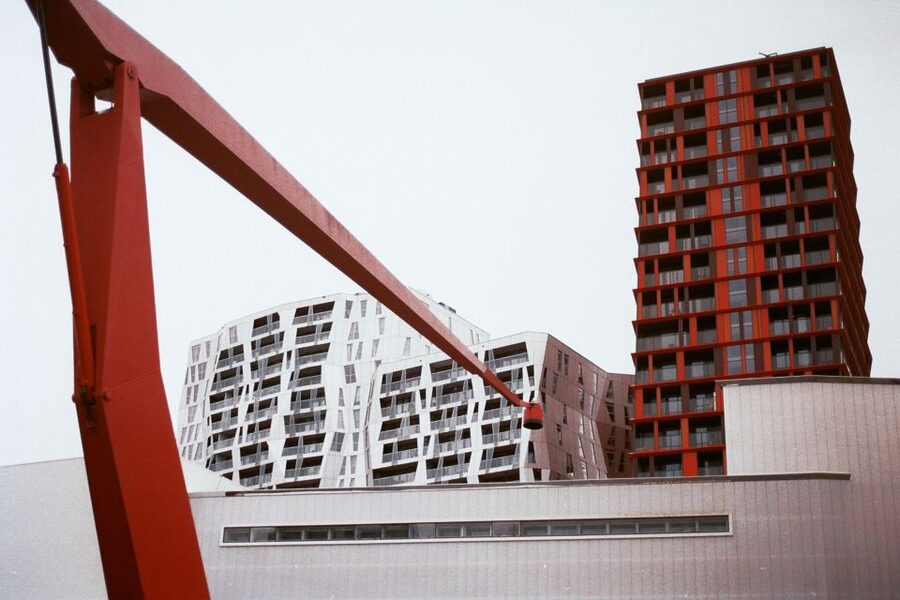
St. Laurens Church gives the walk a needed change of rhythm. After modern shopping streets and striking new construction, the church reminds you that Rotterdam had a much older centre before the wartime destruction and rebuilding that define its current appearance.
This is one of the most valuable contrasts on the route. You can better appreciate Rotterdam’s modern architecture when you see what survived, what was restored, and what was built afterward. The church is not simply an old stop inserted into a modern itinerary. It helps frame the city’s break with its past.
The tour information does not include a guaranteed interior visit, so you should not book this expecting a full church tour. The value here is the architectural and historical context provided along the route.
Markthal, where food and architecture share one roof
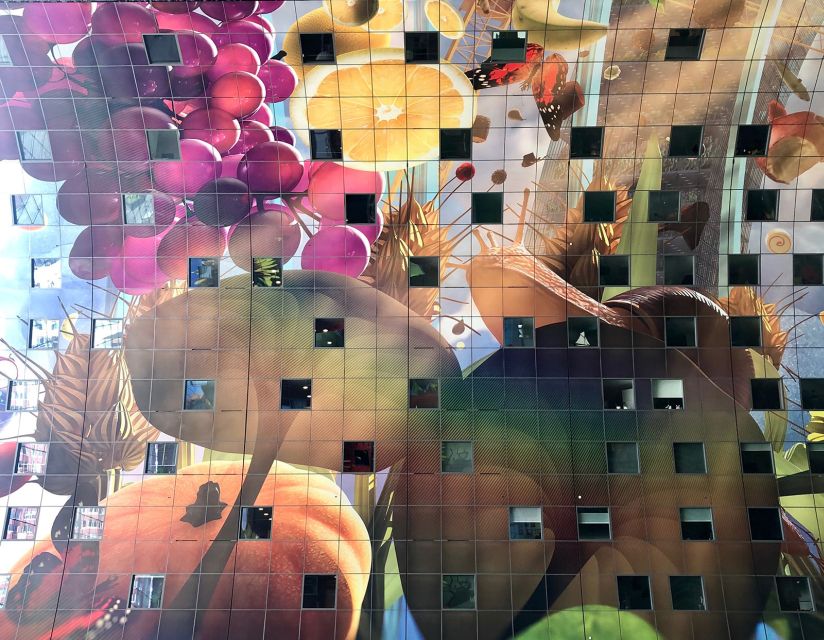
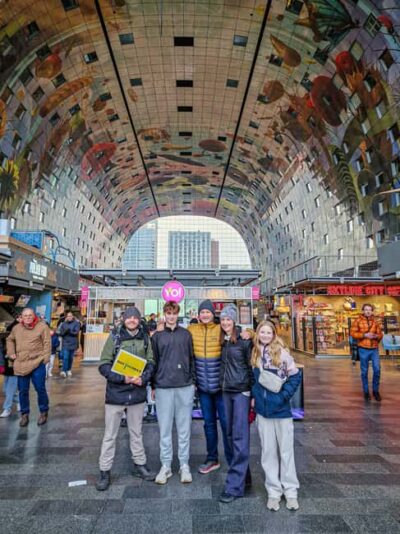
The Markthal is one of Rotterdam’s most visually dramatic public buildings and one of the easiest places to remember after the tour. It is presented as one of Europe’s most distinctive indoor markets, and its scale makes an immediate impression.
I like that the Markthal appears after the church and other central buildings. By this point, you have seen several stages of Rotterdam’s development. The market hall then shows how the city combines housing, food, public activity, and bold design in one major project.
You will have a better experience here if you take time to look upward and outward instead of treating it as a quick food stop. The building works both as a market and as a piece of urban design. Your guide can help point out details that are easy to miss when you are focused on finding something to eat.
Food and drinks are not included in the tour price. That is not a serious problem, since the Markthal and the South Bank offer opportunities to eat later, but budget for your own purchases if you want a snack or drink during the day.
Cube Houses and Rotterdam’s playful side
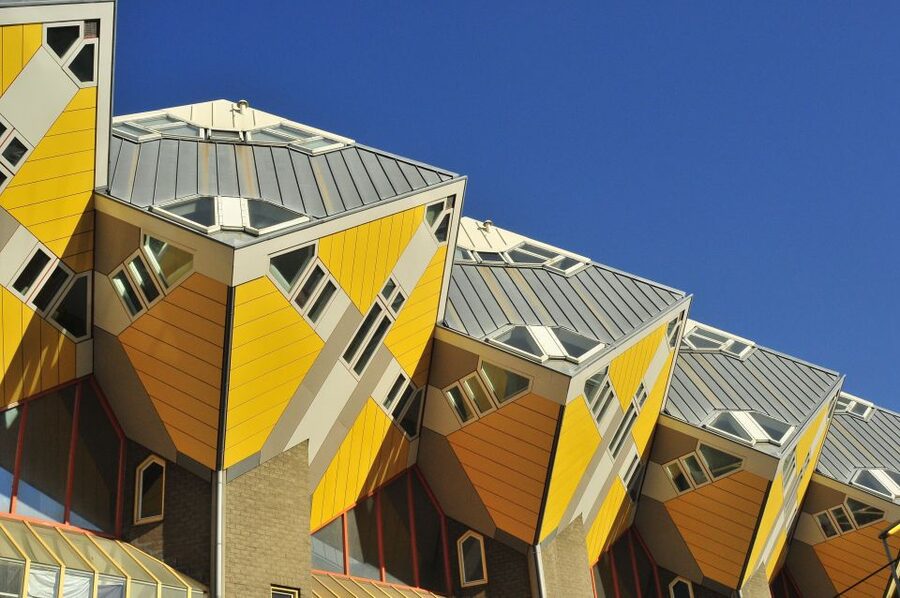
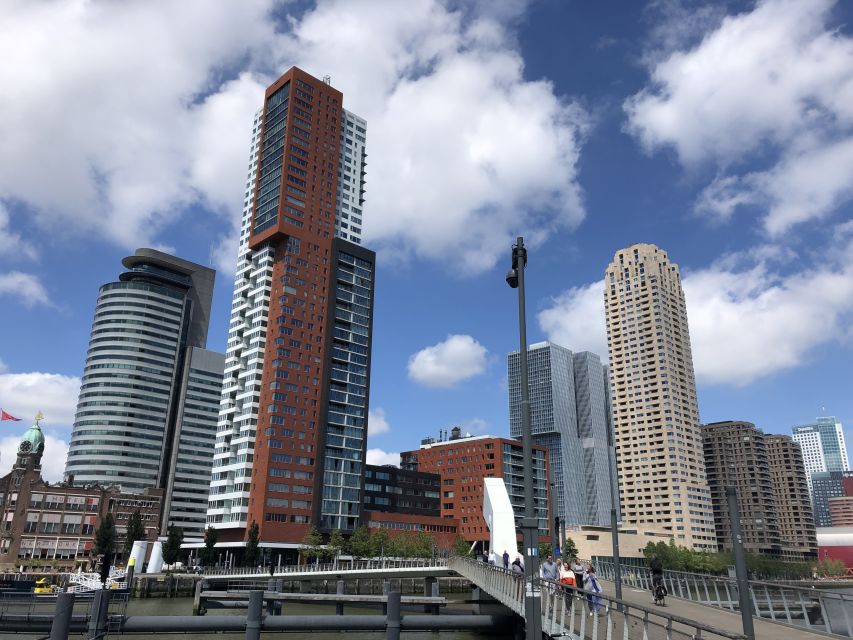
The Cube Houses bring a strong dose of visual surprise. Their tilted forms are among Rotterdam’s best-known architectural sights, and they show how far the city is willing to push the idea of what a home can look like.
A short stop here works well because the route has already given you context. Without explanation, the Cube Houses can seem like a clever photo background. With an architect guiding you, the focus shifts to how the unusual angles affect living space, streets, and the relationship between private homes and public areas.
This is also a good point to ask questions. An architect guide can discuss the building as a design experiment rather than simply pointing out its most famous feature. The tour is not described as including entry into a Cube House, so plan on seeing the complex from the route unless your guide says otherwise.
The area can be visually busy, and the distinctive design naturally attracts attention. Keep your belongings close and listen for the guide’s meeting instructions. No special equipment is needed, but comfortable shoes remain important.
The watertaxi under the Erasmus Bridge
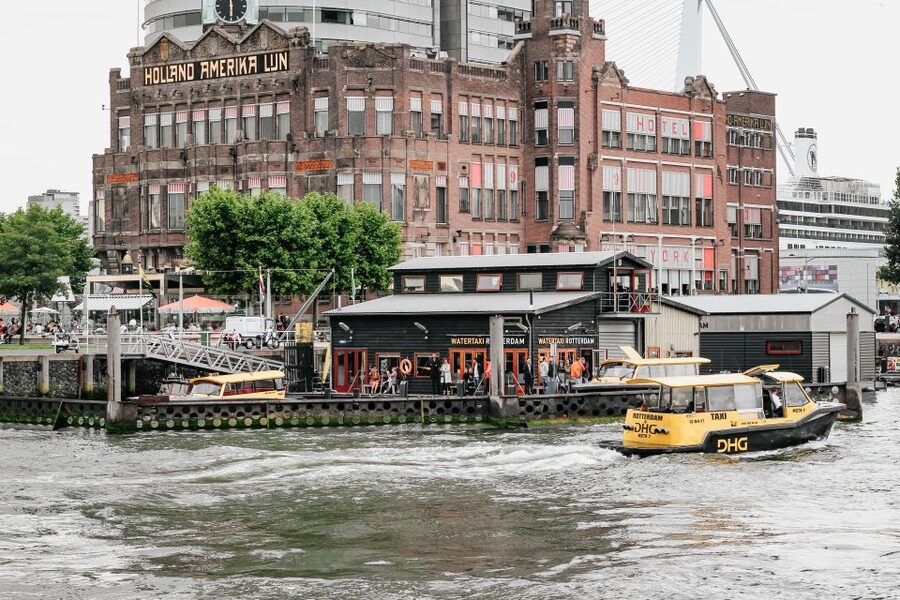
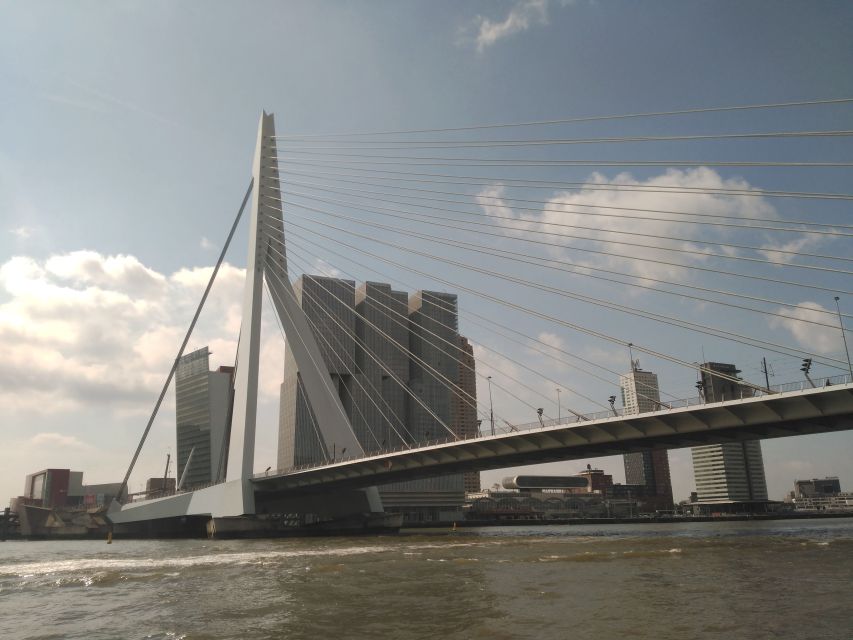
At the riverside, the walking tour changes character. You board a watertaxi for a fast ride across the river to the South Bank, with the Erasmus Bridge as the key landmark along the way.
This is more than a convenient transfer. The boat gives you a new view of Rotterdam’s skyline and waterfront, allowing you to see how the city sits around the river. The speed adds a little fun, too. After several urban stops on foot, the short ride feels like a proper change of scene.
The water taxi fee is included in the $82 price. That helps the tour’s value, since you are not paying separately for the crossing. The exact length of the ride is not provided, so think of it as one part of a three-hour experience rather than a standalone river cruise.
Boat boarding is the main practical point to consider. The activity is described as wheelchair accessible, yet it is also marked as unsuitable for people with mobility impairments, and the four-kilometer route may be demanding. If you use a wheelchair or have difficulty stepping onto a boat, confirm the current boarding arrangements with Walk Rotterdam before booking.
South Bank, Hotel New York, and the former harbor
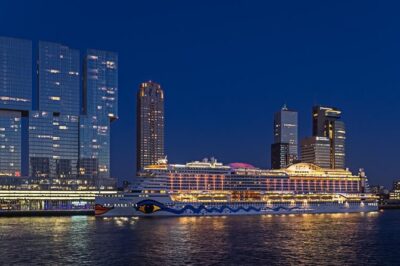
The South Bank shows a different Rotterdam from the central shopping streets. This former harbor area has developed into a popular district with high-end architecture, cafes, and restaurants.
The guide explains both the area’s past and its future plans. That forward-looking angle is useful because the South Bank is not presented as a finished historic quarter. It is a place where old harbor buildings and new projects share the same setting.
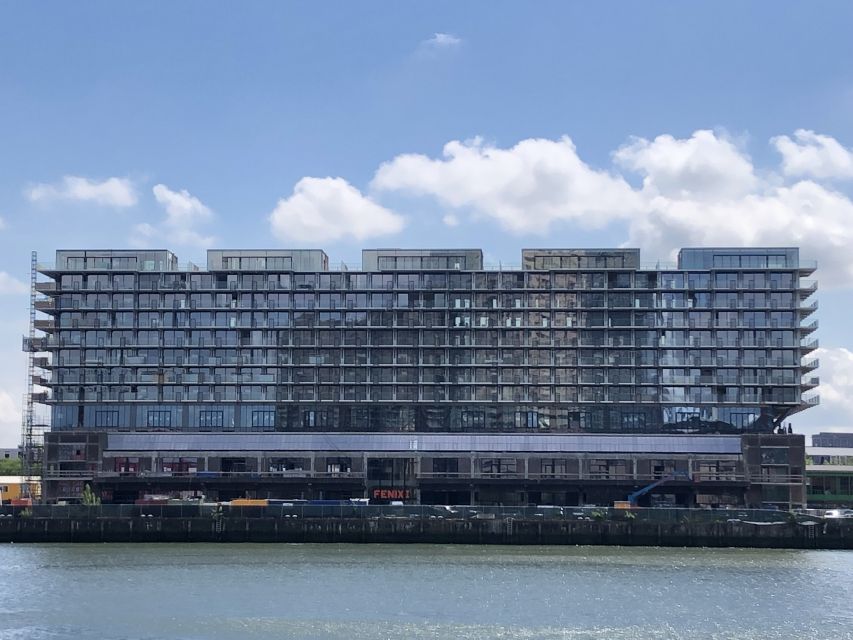
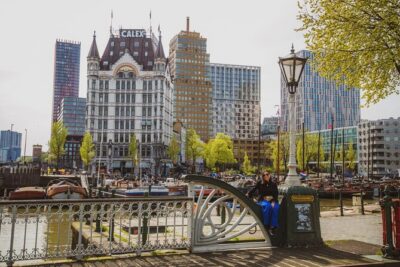
You will see the Rotterdam OMA building, historic Hotel New York, Fenixloods, and Fenix Food Factory. Each adds a different note to the walk. Hotel New York and the former harbor buildings connect you with the area’s earlier role, while the newer architecture and food venues show how the waterfront is being reused.
Fenix Food Factory is especially helpful as a practical reference point. It gives you an idea of where to return for food after the tour, though food and drinks are not part of the booking. The nearby cafes and restaurants also make the South Bank a sensible place to continue your afternoon.
The South Bank portion is a strong reason to choose this tour over a standard centre-only walk. You get a fuller picture of Rotterdam, including the river crossing that has shaped the city’s identity.
What $82 buys you
At $82 per person, this is not the cheapest way to see Rotterdam’s centre. The price makes more sense if you value interpretation, a planned route, and the included watertaxi ride.
You are paying for three hours with an architect guide, not just transportation between landmarks. The guide connects the Lijnbaan, Timmerhuis, St. Laurens Church, Markthal, Cube Houses, and South Bank into one story. Without that explanation, you could visit many of these places independently, but you would need to plan the route and research the architectural background yourself.
The water taxi adds real value because it is both useful and memorable. You do not have to arrange a separate crossing, and the river view gives the tour a change of pace that a standard walking route would lack.
The price is less attractive if you already know Rotterdam’s architecture well or prefer to explore at your own speed. It also does not include drinks, food, hotel pickup, or drop-off. Families should note the useful exception: children under 12 can participate in the tour free of charge, with the listed child price covering only the speedboat fee.
Free cancellation up to 24 hours before the start and the option to reserve now and pay later make the booking less rigid. Still, the main value comes from the guide and the route, not from added extras.
Who should book this architecture walk
I would recommend this experience to you if you:
- Want a focused introduction to Rotterdam in three hours
- Enjoy modern architecture and urban planning
- Prefer learning from a local architect rather than reading signs
- Want to combine walking with a river crossing
- Are staying near Rotterdam Central Station
- Need ideas for the rest of your visit
- Can comfortably walk four kilometers and manage a speedboat transfer
I would be cautious about booking if you dislike set routes, want extended time inside each attraction, or have mobility limitations. The tour does not offer hotel pickup, and the no-large-bags rule makes it a poor choice immediately after arriving with luggage.
The experience is also aimed at architecture lovers more than people seeking a traditional sightseeing tour. You will see major landmarks, but the focus is on how Rotterdam was rebuilt, how it functions now, and what may come next.
Should you book Rotterdam Architecture: Centre and South Bank?
Book it if you want the city’s main architectural sights explained in a clear three-hour route, with the added pleasure of a watertaxi ride beneath the Erasmus Bridge. The architect-led approach is the strongest feature, and Tania’s clear explanations and useful suggestions for the rest of a Rotterdam visit make the guiding feel especially valuable when she is assigned to your group.
Skip it if you want a slow, unstructured day, need luggage storage, or cannot comfortably manage the four-kilometer walk and boat transfer. For everyone else, the combination of Central Station, postwar modernism, Markthal, Cube Houses, and the South Bank offers a strong first look at Rotterdam’s unusual character.
FAQ
Where does the Rotterdam architecture tour meet?
Meet your guide under the station clock next to the main entrance of Rotterdam Central Station, on the outside.
How long is the tour?
The tour lasts three hours.
How far do you walk?
The route covers about four kilometers.
Is the watertaxi included in the price?
Yes. The water taxi fee and tour guide are included.
Is the tour offered in English?
Yes. The live tour guide conducts the experience in English.
Can children under 12 join the tour?
Yes. Children under 12 can participate for free, but the listed price covers the speedboat fee.
Just added in Netherlands
- Rotterdam Must Do Tour: Highlights, History, WW2 and Architecture★ 5.0 · 20 reviews
- Private Rotterdam Walking Tour – guided by Architects★ 5.0 · 2 reviews
- Escape Room – l’Architecte★ 4.5 · 13 reviews
- Rotterdam Architecture and Highlights Walking Tour (TOP RATED)★ 4.5 · 14 reviews
- Maastricht Highlights, Architecture & Heritage Tour★ 5.0 · 7 reviews
- Gouda Private Walking Tour: History, Architecture & Cheese★ 4.5 · 8 reviews
- Amsterdam Architecture Tour★ 5.0 · 4 reviews
- Walking Tour about Golden Age Architecture, private local guide★ 5.0 · 15 reviews
Rotterdam Architecture Tours, compared.
Rotterdam Walk: Hilights, Gems, Architecture & WWII | 2 or 3hrs
Read our review →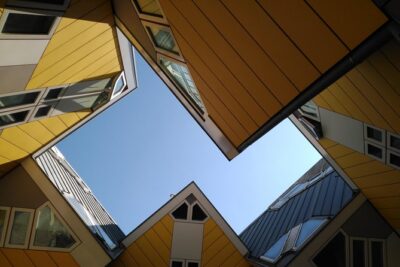
Rotterdam Must Do Tour: Highlights, History, WW2 and Architecture
Read our review →
Rotterdam Architecture and Highlights Walking Tour (TOP RATED)
Read our review →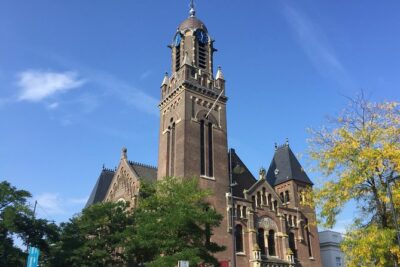
Browse the lists this tour appears in