
REVIEW · WALKING TOURS
Puebla Architecture Walking Tour
Puebla rewards anyone who looks up. This three-hour private walk brings together grand churches, colorful streets, artisan shops, and more than 5,000 catalogued historic buildings, giving you a clear sense of why UNESCO named Puebla a Human Heritage City. I especially like the visit to the cathedral and the playful crossword, which keeps your attention on details you might otherwise miss.
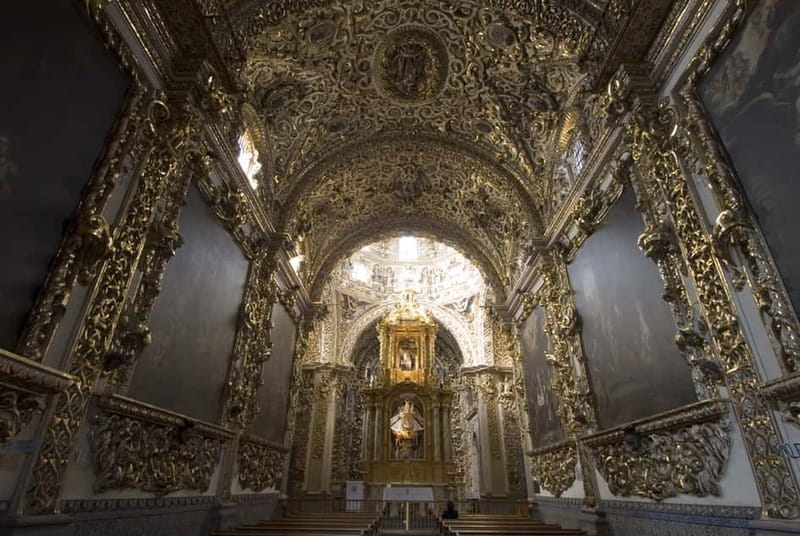
The Rosario Chapel is another strong point. Its gilded Mexican Baroque interior is the kind of place that makes a walking tour worthwhile, since a guide can explain what you are seeing instead of leaving you to admire the gold in silence. The main consideration is practical: hotel transportation is not included, and three hours on foot may feel full for anyone who needs frequent breaks.
Key points at a glance
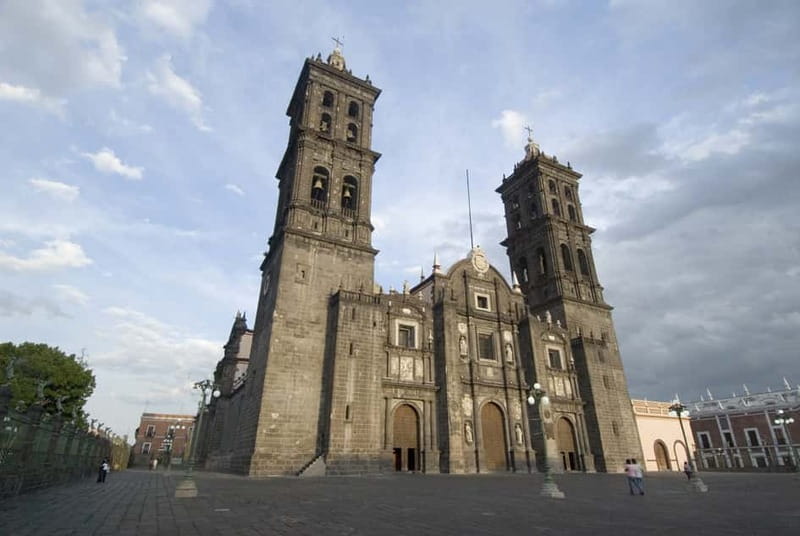
- Cathedral with towering ambition: Visit Puebla’s gilded cathedral, completed over more than 300 years and known for having the highest towers on the continent.
- Mexican Baroque at Rosario Chapel: See ornate gilded stucco in a chapel once regarded as the eighth wonder of the world.
- A citywide architecture lesson: The route introduces more than 5,000 buildings and several architectural styles and techniques.
- A crossword with the sightseeing: Use facts from the guide to complete a Puebla city crossword as you walk.
- Private and bilingual: The tour is available in English or Spanish for a private group.
- Good practical value: The $59 price includes a guide and entrance fees for visited sites.
Why Puebla works so well on foot
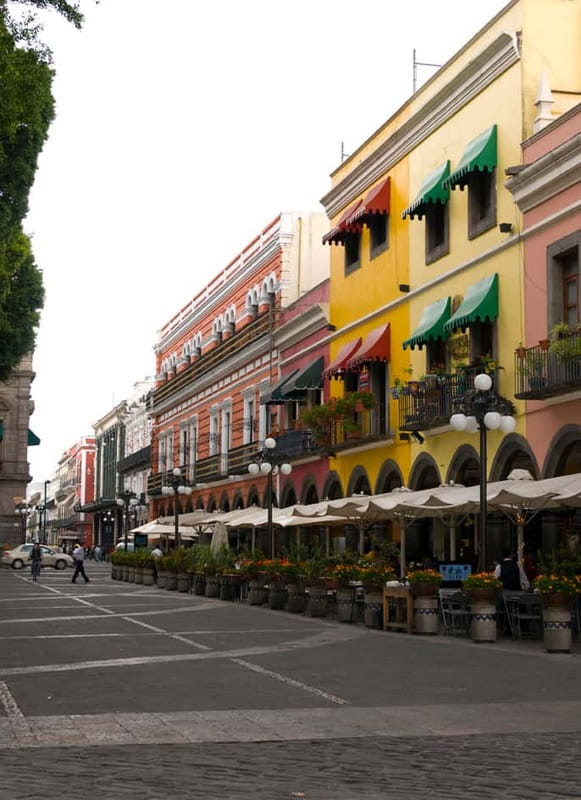
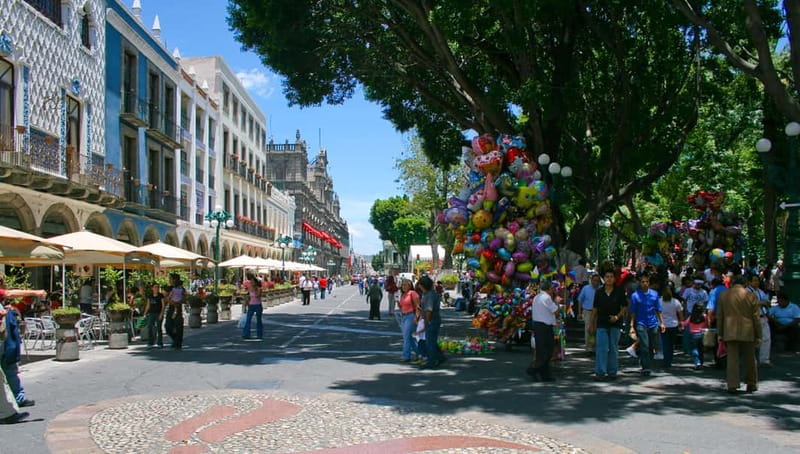
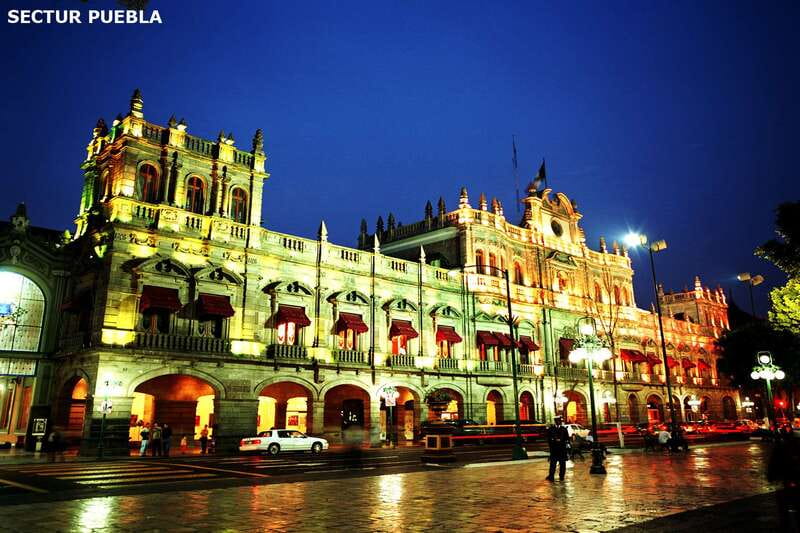
Puebla’s historic center packs a great deal into a walkable area. Instead of spending the tour moving between distant attractions, you go from the main square to major religious buildings, narrow lanes, craft stalls, and older neighborhoods on foot.
That matters because architecture is easier to understand at street level. You can compare facades, notice decorative details, and see how the city changes from formal civic spaces to small lanes lined with shops. A car would get you there faster, but it would also remove much of the point.
The tour uses the city itself as a classroom. You are not only looking at one famous church. You are learning how different styles and building techniques appear across the historic downtown. The reference to more than 5,000 buildings gives you a sense of Puebla’s scale as an architectural collection, not just a place with two or three headline sights.
I also like the crossword idea. It adds a small task to the walk without turning the experience into a lecture. If you hear a useful date, architectural term, or local detail, you have a reason to remember it. It should work especially well for families and curious adults who enjoy a little structure during sightseeing.
More walking tours in the world:
- Lecce: Baroque Architecture and Underground Walking Tour
★ 4.6 · 1,248 reviews - Chicago in a Day: Food, History & Architecture Walking Tour
★ 5.0 · 1,153 reviews - Ramblas, Old Town, Gothic and Gaudi Architecture Walking Tour
★ 5.0 · 723 reviews
Starting at Puebla’s main square
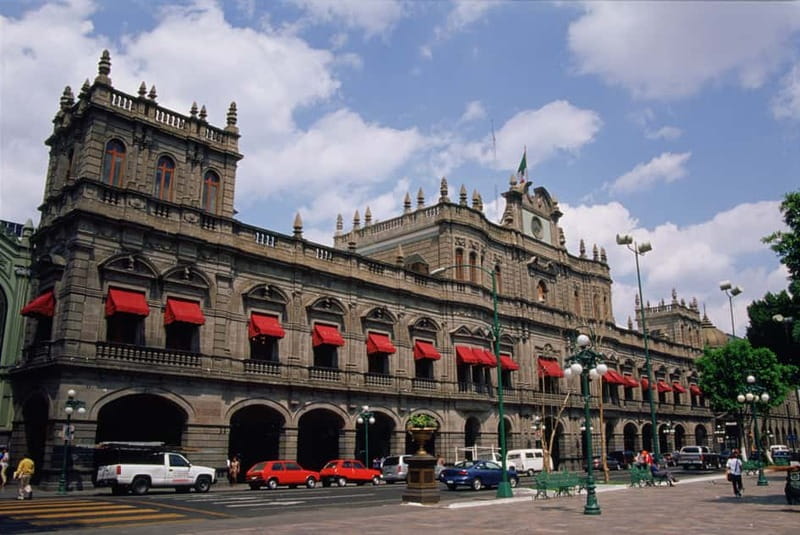
The walk begins at the main square, where the city’s most important buildings and public spaces come together. The meeting point is Av. Juan de Palafox y Mendoza 14, Portal Hidalgo, at the Tip Tours & DMC booth inside the visitor center.
Give yourself time to find this exact spot. The operator does not include transportation from your hotel, so you need to reach the starting point independently. Since the tour begins in the center, it is worth treating the meeting location as part of your planning rather than assuming a hotel pickup.
The opening section should help you get your bearings. Puebla can feel like a collection of impressive facades at first, but a guide gives the streets a pattern. You begin to see which buildings belong to religious, civic, commercial, or neighborhood traditions. Ask questions early, especially if you want more attention on architecture rather than general city history.
Because this is a private group, the pace can be more personal than on a large shared walk. The available information does not specify the exact group size, so you should not assume it is limited to only two or three people. Still, private format means your group is the only party booking that experience, which can make it easier to ask for clarification or spend an extra moment on a detail.
Puebla Cathedral and its long construction story
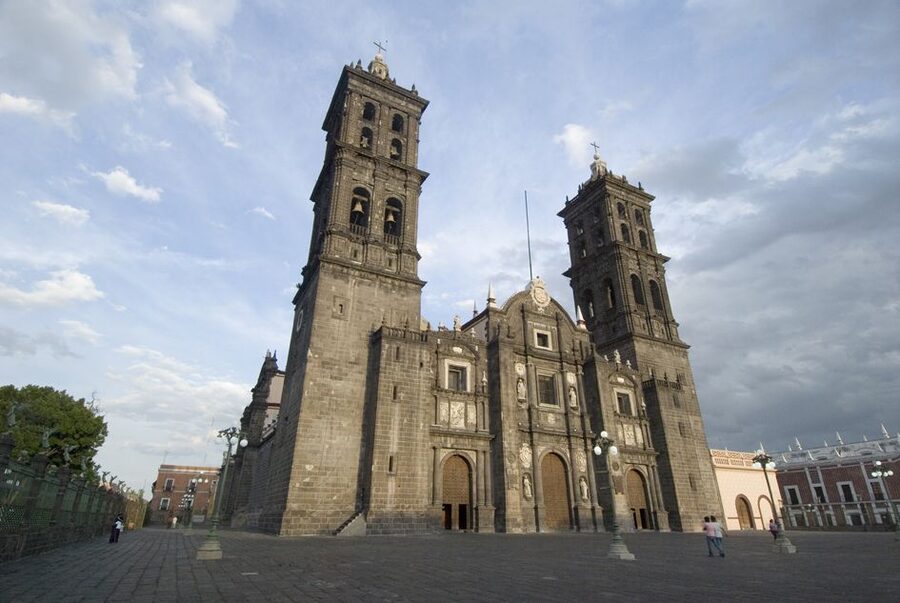
The cathedral is the tour’s grandest stop. Construction took more than 300 years, and that long building period gives the structure a sense of accumulated ambition. You are not simply seeing a finished church. You are seeing the result of a project that continued across generations.
The cathedral is described as gilded and is known for its highest towers on the continent. Those towers provide a useful first impression from outside, but the interior is just as important. The temple contains major cultural, sculptural, and pictorial works, so this is a place where the guide’s explanation adds real value.
I would pay attention to how the cathedral feels as a whole before trying to identify every individual feature. Look at the relationship between the towers, facade, interior decoration, and scale of the building. Then use the guide to connect those pieces. Without context, a grand church can blur into the next grand church. With context, the long construction story gives it a stronger identity.
The cathedral may also be the point where the walking format feels most rewarding. You can approach the building through the surrounding streets, see it rise above the square, and then examine its interior details at close range. The tradeoff is that the cathedral is a major attraction, so the amount of time spent there may depend on access and the day’s conditions. The tour promises entrance fees to visited sites, but it does not provide a minute-by-minute schedule.
Rosario Chapel and Puebla’s Mexican Baroque

The Rosario Chapel is likely the visual high point. It is covered in gilded stucco and is presented as a major example of Mexican Baroque architecture. At one time, it was regarded as the eighth wonder of the world, a claim that tells you how strongly its decoration impressed earlier generations.
This is the kind of interior where you should slow down. The gold is not a small accent. It shapes the entire experience, catching your eye across the walls and ornament. A guide can help you distinguish between the decorative effect and the architectural technique, which is useful when the sheer amount of detail becomes overwhelming.
I like that the chapel is included alongside the cathedral rather than treated as a replacement for it. The two stops offer different lessons. The cathedral gives you monumental scale and a long construction story. Rosario Chapel gives you concentrated ornament and the theatrical side of Mexican Baroque.
Do not expect the chapel to be a quiet, empty space reserved for your group. The information provided does not promise exclusive access or special viewing conditions. The benefit of the private tour is your guide’s attention, not a guarantee that the site itself will be free of other activity.
A few more architecture tours in the world worth a look
- Chicago Architecture River Cruise
★ 5.0 · 15,756 reviews - Chicago River 90-Minute Architecture Tour
★ 4.5 · 9,629 reviews - Chicago River: 1.5-Hour Guided Architecture Cruise
★ 4.8 · 8,046 reviews - Chicago Architecture Center River Cruise aboard First Lady
★ 5.0 · 5,536 reviews
Candy street, artist neighborhoods, and Sapos alley
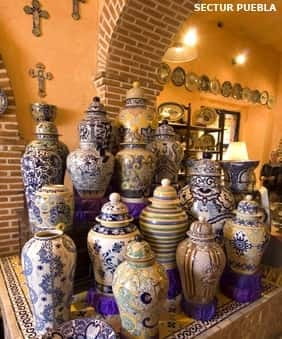
After the major churches, the route turns toward the smaller-scale character of Puebla. You visit the famous candy street, artist neighborhoods, Sapos alley, and the Parian handcraft market.
Candy street brings a lighter note to the walk. It shows how local food traditions and commercial streets become part of a city’s identity. The details of the shops and products are not specified, so I would approach this stop as a chance to see Puebla’s everyday character rather than expect a formal tasting session. If buying sweets interests you, bring room in your bag, but the tour information does not state that purchases or tastings are included.
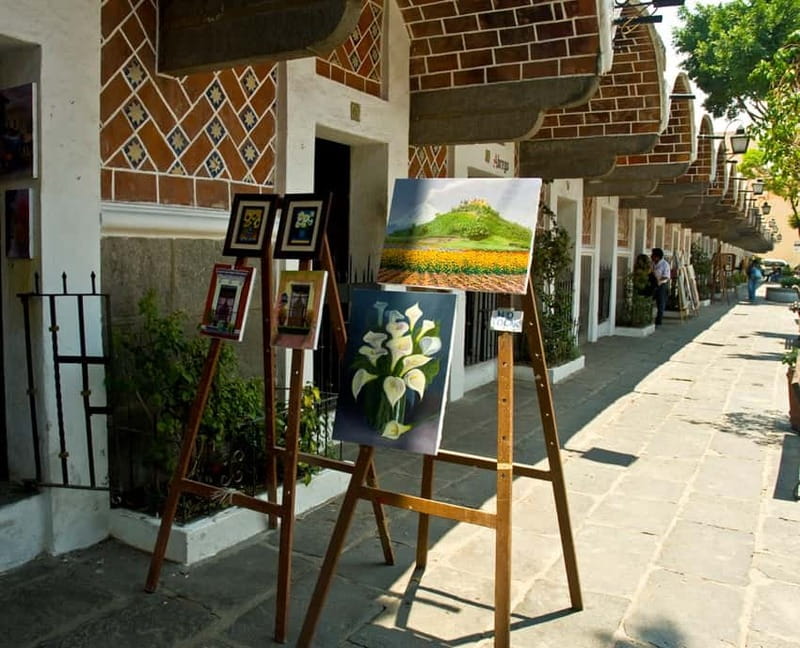
The artist neighborhoods provide another change of pace. Here, the focus shifts from major monuments to the atmosphere of local streets and creative activity. That contrast is useful. Puebla’s architecture is not limited to churches and government buildings. Smaller neighborhoods show how historic spaces continue to support shops, makers, and daily life.
Sapos alley adds a more intimate setting. The narrow passage is known for its intricate character, and walking through it lets you experience the city at a slower scale. This is where the tour’s focus on architectural variety becomes easier to understand. You move from large institutional buildings to details that are more easily missed, such as street width, facade decoration, and the way buildings meet the lane.
The Parian handcraft market rounds out the route with a strong shopping and craft element. You can browse local handicrafts and see how Puebla’s design traditions are presented for daily use and souvenirs. The market may appeal most to anyone who wants to take home something more connected to the city than a standard souvenir.
How the crossword changes the walk
The crossword is not just an extra amusement. It gives the tour a clear thread. As the guide explains Puebla’s buildings and neighborhoods, you collect answers from what you are hearing.
I find this useful because architecture walks can become dense with names, dates, and style terms. The puzzle gives you a reason to listen for specific information. It also gives children and teenagers a role beyond following adults from one building to another.
The activity will suit you if you enjoy learning by doing. If you prefer an unhurried walk with no task at all, it may feel slightly forced. The good news is that the crossword does not appear to replace the sightseeing. It runs alongside the tour, so you can focus on the buildings and return to a clue when you are ready.
A private group should make it easier to ask the guide to repeat a clue or explain a term. English and Spanish are available, which is important for anyone who wants architectural information in a language they can follow comfortably.
What $59 includes and what it does not
The price is $59 per person. For a three-hour private walking tour, that is a fair price if you want a guide focused on your group rather than a general route you follow on your own. Entrance fees to the visited sites are included, which makes the cost easier to assess.
You are paying for interpretation as much as access. Puebla’s churches and historic streets are attractive without help, but the guide supplies the connections between styles, construction periods, decoration, and local places. The strongest value comes if you ask questions and use the crossword to stay engaged.
The price does not include transportation from your hotel or insurance. That means you should add the cost and time of reaching Portal Hidalgo, then decide if the total still fits your plan. If you are already staying near central Puebla, the arrangement is more convenient. If you are based farther away, the meeting point requires more planning.
Current feedback gives the experience a 4.9 out of 5 rating from six ratings. Specific praise centers on the guides’ communication, welcoming manner, and ability to explain the stops. Ronnie is singled out as a strong communicator and a pleasant guide, while Guadalupe is praised for creating an enjoyable tour and explaining Puebla clearly. Those comments suggest that guide quality is one of the main reasons to choose this experience.
Timing, comfort, and who should book
The tour lasts three hours, a useful length for seeing several major places without giving up an entire day. You should still plan for a fair amount of walking and standing. Wheelchair access is listed, but the information does not describe the exact surfaces, steps, restroom arrangements, or route adjustments, so anyone with specific mobility needs should confirm those details before booking.
This tour fits first-time visitors who want a strong introduction to central Puebla. It also suits repeat visitors who have seen the main square but want more context for the buildings around it. Architecture fans will get the most from the combination of cathedral, chapel, neighborhood streets, and the wider catalogue of historic buildings.
Families may appreciate the crossword, especially if children enjoy puzzles. Shoppers will find the candy street and Parian market useful, though the core of the experience remains architecture and guided sightseeing rather than shopping.
You may want a different activity if you dislike guided walks, prefer to explore at your own pace, or need extensive time at each individual site. Three hours creates a broad introduction, not an exhaustive study of every building in the downtown area. The tour covers many themes, so it is better for range and context than for a single specialist subject.
Reservations must be made at least 24 hours before the tour date. You can cancel up to 24 hours in advance for a full refund, and the reserve-now, pay-later option helps if your schedule is still changing. These policies are useful, but they do not remove the need to plan your route to the meeting point.
Should you book the Puebla Architecture Walking Tour?
Book it if you want Puebla explained through its buildings, not just photographed from the outside. The cathedral and Rosario Chapel provide the big visual moments, while candy street, Sapos alley, the artist neighborhoods, and the Parian market give the walk a more local scale.
The $59 price makes the most sense for a private group that values a bilingual guide, included entrance fees, and a focused three-hour route. Ronnie and Guadalupe receive especially warm praise for clear explanations and friendly service, so guide quality appears to be a real strength.
Skip it if you want hotel pickup, a short ride between sights, or a loose schedule with no planned route. For everyone else, this is a well-shaped introduction to Puebla, with enough architecture for serious interest and enough variety to keep the walk from feeling like a church-by-church march.
FAQ
How long is the Puebla Architecture Walking Tour?
The tour lasts three hours.
How much does the tour cost?
The price is $59 per person.
Where does the tour meet?
The meeting point is Av. Juan de Palafox y Mendoza 14, Portal Hidalgo, at the Tip Tours & DMC booth inside the visitor center.
What languages are available?
The tour is available with a live guide in English or Spanish.
Is the tour private?
Yes. It is offered for a private group.
Are entrance fees included?
Yes. Entrance fees to the sites visited during the tour are included.
Is the tour wheelchair accessible?
Yes. The activity is listed as wheelchair accessible. The available information does not provide detailed route or surface information, so confirm any specific access requirements before booking.
Just added in the world
- Wilmington History and Architecture Tour★ 4.8 · 18 reviews
- New Orleans : Garden District Architecture Walking tour★ 4.8 · 5 reviews
- Washington DC: Dupont Circle & Embassy Row Architecture Tour★ 5.0 · 6 reviews
- Washington, DC: Georgetown Architecture Walking Tour★ 5.0 · 8 reviews
- Vicenza: Palladian Architecture Private Walking Tour★ 3.3 · 3 reviews
- Walk & Discover KL’s Architectural and Heritage Gems★ 5.0 · 7 reviews
- Unveiling Brno: History, Culture & Architectural Delights★ 5.0 · 2 reviews
- Private Colonial Williamsburg Architectural Tour★ 5.0 · 5 reviews
Walking Tours, compared.

The Official Art Deco Walking Tour by The Miami Design Preservation League
Read our review →
Baroque Architecture and Underground Walking Tour
Read our review →
Chicago in a Day: Food, History & Architecture Walking Tour
Read our review →

Ramblas, Old Town, Gothic and Gaudi Architecture Walking Tour
Read our review →
Chicago’s Secret Interiors Architectural Walking Tour
Read our review →
Browse the lists this tour appears in