
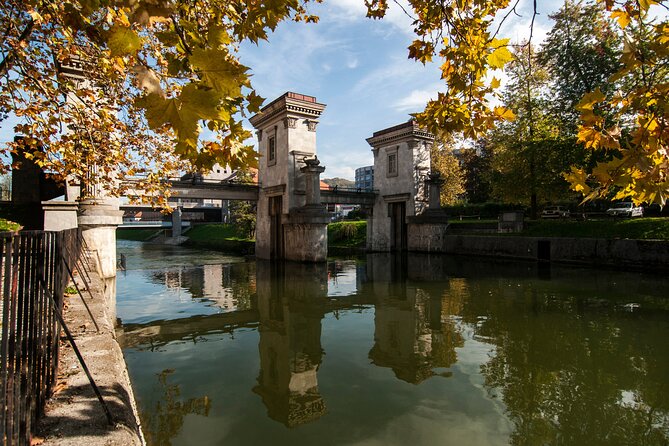
REVIEW · WALKING TOURS
Plečnik’s Ljubljana -UNESCO heritage- A walk among architect Plecnik’s creations
Ljubljana reveals its character through architecture. This private walk follows Jože Plečnik’s most important city works, from the Triple Bridge to the National and University Library, with a local guide explaining how one architect reshaped the capital. I like the small private format and the way the route links major sights on foot. The included snacks also add a pleasant local touch.
The tour is especially good for anyone curious about design, city planning, or the human stories behind grand buildings. Guide Tjasa has earned warm praise for making Plečnik engaging even for people who did not begin the tour as architecture fans. My main caution is the short two-hour schedule: you will see many places, but most stops are brief and focused on explanation rather than long visits.
Key points to know before booking
- Plečnik’s Ljubljana in two hours: Follow a compact route through bridges, market structures, a square, a theater, and a library.
- A private tour for up to six people: Your group receives the guide’s full attention instead of joining a large walking crowd.
- Tjasa is praised for bringing architecture to life: Her warm, energetic approach helped one family member rethink an architecture major.
- Snacks are part of the walk: Small tastings connect the city’s food and residents with the places you see.
- The route ends at Križanke: You finish at Plečnik’s former monastery theater, not back at the starting point.
- Good value for a small group: At $220.41 per group, the price makes the most sense when shared by several people.
Why Plečnik gives Ljubljana its own look
Ljubljana is an easy city to explore on foot, but this tour gives you a way to read what you are seeing. Jože Plečnik’s work is not limited to one grand building. It appears in bridges, columns, lighting, riverfront spaces, market structures, public squares, and details that can be easy to pass without noticing.
That is the central value of this experience. Instead of looking at the city as a collection of pretty places, you follow one architect’s ideas across several parts of central Ljubljana. Your guide connects the stops and explains Plečnik’s work and life in a way that gives the walk a clear theme.
I would choose this tour early in a Ljubljana stay. It can help you understand the city before you return on your own. The route also offers advice on what else to do in Ljubljana or elsewhere in Slovenia, which is useful if you are still shaping your plans.
This is a private activity for your group only, with a maximum of six people. That matters. You can ask questions, pause for clarification, or steer the discussion toward architecture, local life, or practical sightseeing without trying to catch a guide’s words at the back of a crowd.
More walking tours in the world:
- Lecce: Baroque Architecture and Underground Walking Tour
★ 4.6 · 1,248 reviews - Chicago in a Day: Food, History & Architecture Walking Tour
★ 5.0 · 1,153 reviews - Ramblas, Old Town, Gothic and Gaudi Architecture Walking Tour
★ 5.0 · 723 reviews
Starting at Krekov trg and the Triple Bridge
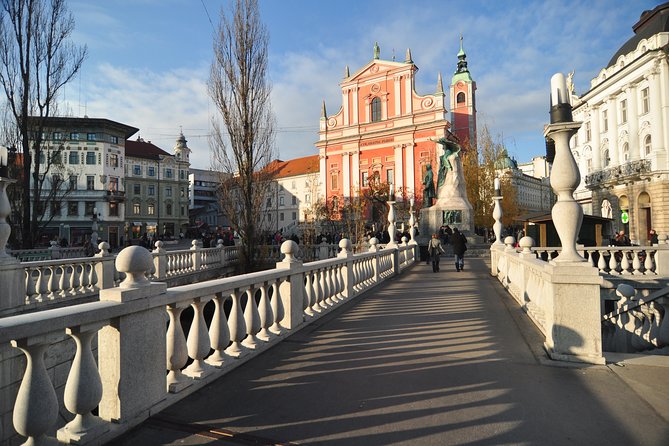
The walk begins at Krekov trg, a central meeting point in Ljubljana. From there, you reach the Triple Bridge, or Tromostovje, one of the city’s best-known public spaces.
The name can cause a small bit of confusion. Plečnik created two of the three bridges, so your guide can point out exactly which parts belong to his intervention. That small detail captures the broader spirit of the tour: familiar city sights become more interesting once you know what to look for.
You can expect about five minutes here. That is enough for an introduction and a focused explanation, but not a long pause. If you like taking photographs, you may want to arrive a few minutes early so you can look around before the walking commentary begins.
The Triple Bridge is a strong opening because it shows how Plečnik worked with an existing urban setting rather than treating each project as an isolated object. You begin with a public crossing, then continue toward the market and riverfront.
Central Market, where design meets daily life
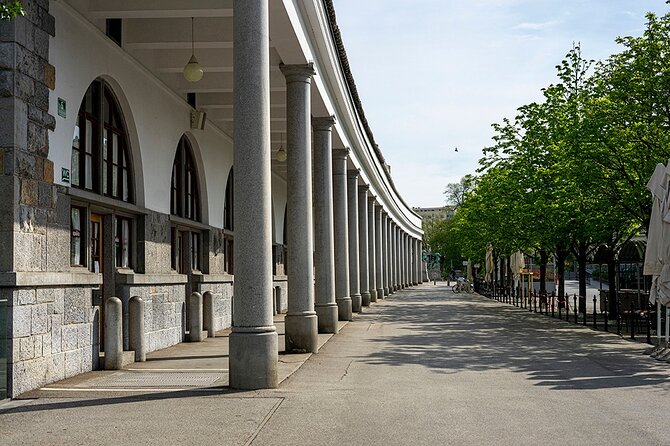
The next stop is Ljubljana’s Central Market, reached along the route toward Dragon Bridge. The walk from the Triple Bridge to the market includes Plečnik’s work on two levels, giving you more than a quick look at a single building.
This section is valuable because markets show how a city functions in ordinary life. Here, architecture is tied to shopping, food, movement, and meeting people. The included tastings fit naturally into this part of the tour. They are small rather than a full meal, but they help connect the city’s design with its residents and local habits.
Plan on about ten minutes at the Central Market. The timing keeps the tour moving, though it also means you should not expect a long market visit or a dedicated food tour. If you want to browse stalls at leisure, return later with your own schedule.
The route toward Dragon Bridge also gives you a sense of how Plečnik’s work stretches through central Ljubljana. You are not simply checking off separate monuments. You are seeing how bridges, walkways, and market spaces relate to one another.
Shoemaker’s Bridge and Plečnik’s river details
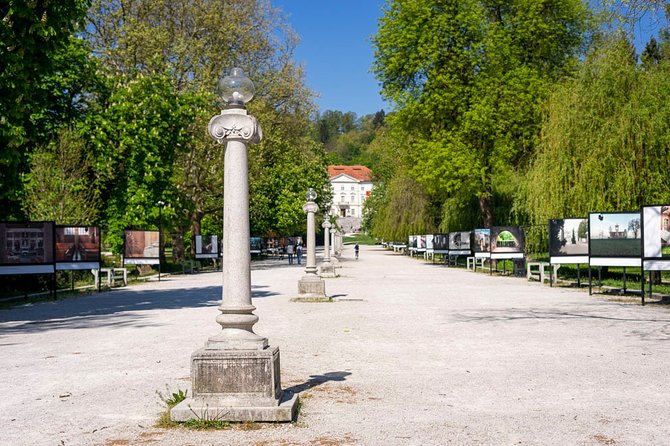
Shoemaker’s Bridge, or Cevljarski Most, is another short stop, lasting around five minutes. Its appeal lies in the relationship between the square over the river, Plečnik’s lighting, and his distinctive columns.
This is the sort of place where a guide earns the price of the tour. Without explanation, you might notice the columns and lights but not understand how they shape the space. With Tjasa or another local guide beside you, you can focus on the details and ask why they matter.
The stop is brief, so expect a visual explanation rather than a long architectural lecture. If you are interested in design, keep your attention on the proportions, repeated elements, and way the bridge creates a public square instead of functioning only as a crossing.
For photographers, the bridge offers a change of angle from the Triple Bridge. For families, the compact stop helps maintain momentum. For anyone who wants a slower study of materials and construction, the schedule may feel tight.
More history tours in the world:
- Charleston’s Best Highlights: History, Culture & Architecture
★ 5.0 · 422 reviews - Palm Springs Modernism Architecture & History Bike Tour
★ 5.0 · 359 reviews - Charleston: History and Architecture Guided Walking Tour
★ 4.8 · 349 reviews - Historic Georgetown: History, Gossip, & Architecture Walking Tour
★ 5.0 · 321 reviews
Congress Square and Ljubljana’s public life
Congress Square, or Kongresni trg, receives about ten minutes. Plečnik changed the square, which later hosted one of the biggest events ever held in Ljubljana.
That point gives the space a wider meaning. A public square is not just an open patch between buildings. It can become a place for major civic gatherings, celebrations, and shared moments. Your guide helps place Plečnik’s changes within that public role.
This is also a good pause in the route because the focus shifts from bridges and river edges to a broad urban square. You can compare how Plečnik handled open space here with the more structured movement of the bridges and market route.
The supplied details do not identify the major event, so you should expect your guide to provide the relevant context during the visit. The stop remains free, and you do not need an admission ticket.
Križanke, Plečnik’s outdoor theater
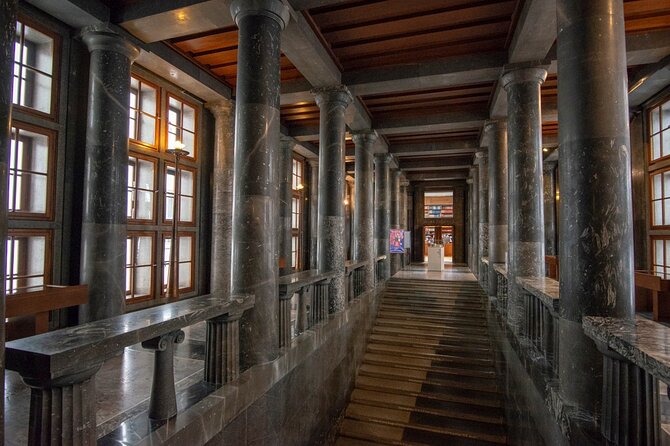
The walk continues to the Monastery of the Holy Cross Summer Theater, known as Križanke Poletno Gledališče. The tour describes it as Plečnik’s last major work in Ljubljana and as the city’s best outdoor theater.
You spend around ten minutes here. The attraction is not only the theater’s function but also its details. Former religious architecture and theatrical space give the site a different mood from the bridges and market structures earlier in the walk.
Križanke is where the route begins to feel especially personal. You are looking at a late work by the same architect whose bridges and public spaces you have already seen. That makes the stop useful for understanding the arc of Plečnik’s work across Ljubljana.
The tour ends at Križanke, at Trg francoske revolucije 1. This is practical to remember. You do not return to Krekov trg, so plan your next stop from the Križanke area. The end point also makes sense if you want to continue exploring central Ljubljana on foot.
The National and University Library, a final masterpiece
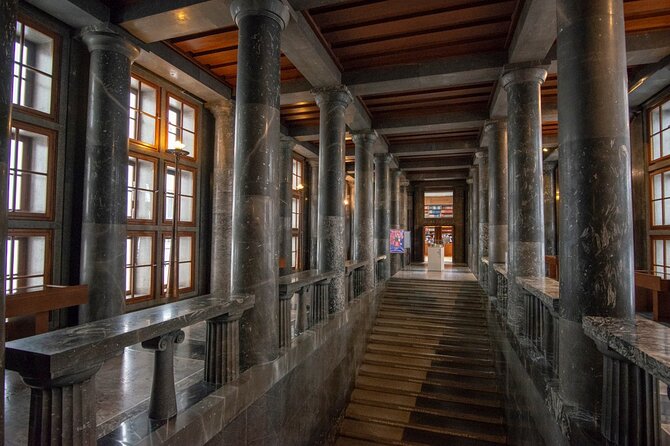
The National and University Library is another major Plečnik work and one of the tour’s final highlights. The stop lasts about five minutes, so your guide will focus on the building’s main architectural importance rather than offering an extended interior visit.
It is described as one of Plečnik’s masterpieces. That gives the tour a strong final architectural statement after the more open public spaces of the bridges, market, square, and theater.
You should not assume that a ticketed interior visit is included. All listed stops have free admission, and the experience is presented as a walking tour of the exterior sites and public spaces. If entering the library is important to you, ask the provider about current access before booking.
Ending near Križanke gives the walk a clear finish, even though the library and Križanke are both part of the final portion of the route. The route is compact enough for most people who can participate in a standard city walk, but comfortable shoes remain sensible because the experience lasts about two hours.
What the guide adds to the experience
The strongest part of this tour is the human explanation. Architecture can become dry when it is reduced to dates, names, and building labels. Here, the guide’s role is to explain how Plečnik changed Ljubljana and why those changes still shape the city.
Tjasa receives especially warm praise for going beyond the expected tour and making the visit memorable. One family included someone with an architecture degree and another person considering a change of major. The experience engaged both, which suggests that the commentary can work for serious architecture fans and curious beginners alike.
That does not mean every minute will be a technical design seminar. The route includes snacks, city advice, and practical sightseeing context. I see that as a strength for most people. You get a focused introduction to Plečnik without spending an entire day on specialist architectural theory.
The guide also helps with questions that a printed map cannot answer. Why does a bridge have this arrangement? Why are columns and lights important? How does a market structure affect the feel of a neighborhood? Those answers are what turn the walk into more than a photo stop.
Snacks, group size, and the pace
The tastings are included, described as little snacks that tell you more about the city and its residents. They are best viewed as a bonus, not as lunch. If you arrive hungry, eat beforehand or plan a meal after the walk.
The private format is one of the clearest advantages. Your group can include up to six people, and no other participants join you. A couple will pay more per person than a full group, but they will also receive a more personal experience. A group of six pays about $36.74 per person, which makes the price easier to justify.
At $220.41 per group, the tour is not the cheapest way to see Ljubljana’s bridges and squares. You can view all of the public sites without paying admission. You are paying for the guide’s time, a planned route, architectural context, private attention, snacks, and advice about the rest of Slovenia.
I think the value is strongest for families, friends, or architecture-minded groups who can share the cost. For a solo visitor or couple on a tight budget, a standard group walk or self-guided route may be more economical. The private setting is the reason to choose this option, not the free entry to the sights.
Who should book this Plečnik walking tour
I would recommend it if you want a clear introduction to Ljubljana’s architecture and prefer conversation over a large group. It suits first-time visitors who want to get oriented, returning visitors who missed Plečnik’s details, and students or design fans who enjoy looking closely at public spaces.
Families are a good match too. The route is short, the stops are varied, and the guide can adjust the conversation to different interests. The positive experience of the family that included an architecture student and someone considering a different major suggests that the tour can reach people with very different levels of interest.
You should think twice if you want long visits inside buildings, a full food experience, or a slow photography walk. The listed duration is about two hours, and several stops last only five or ten minutes. That is enough for a well-shaped overview, not an exhaustive study.
Pickup is offered, though the listed start is Krekov trg. The activity is near public transportation, service animals are allowed, and most people can participate. Because the experience depends on good weather, poor conditions can lead to a different date or a full refund.
Free cancellation is available if you cancel at least 24 hours before the start time. Changes or cancellations made less than 24 hours ahead are not refunded, and the cut-off follows Ljubljana’s local time.
Is Plečnik’s Ljubljana worth booking?
Book this tour if you want to understand why Ljubljana looks the way it does, not just photograph its most famous bridges. The route is compact, the guide adds the real value, and the private group size keeps the experience personal.
I would especially choose it for a group of four to six, since the $220.41 price becomes more reasonable when shared. If you are traveling alone, watching every euro, or hoping to tour interiors at length, you may prefer a less expensive alternative.
For most visitors with two free hours and an interest in how cities are shaped, this is a smart introduction to Ljubljana. The bridges and squares are free to see, but Plečnik’s ideas are much easier to notice when someone points them out.
FAQ
How long does the Plečnik’s Ljubljana tour last?
The tour lasts approximately two hours.
How much does the experience cost?
The listed price is $220.41 per group, with up to six people participating.
Is this a private tour?
Yes. Only your group participates, and the group can include up to six people.
Where does the tour start?
The meeting point is Krekov trg, 1000 Ljubljana, Slovenia.
Where does the tour finish?
The tour ends at Križanke, Trg francoske revolucije 1, 1000 Ljubljana, Slovenia.
Is the tour offered in English?
Yes. The experience is offered in English.
What happens if the weather is poor?
The experience requires good weather. If it is canceled because of poor weather, you will be offered another date or a full refund.
Just added in the world
- Wilmington History and Architecture Tour★ 4.8 · 18 reviews
- Washington, DC: Georgetown Architecture Walking Tour★ 5.0 · 8 reviews
- New Orleans : Garden District Architecture Walking tour★ 4.8 · 5 reviews
- Washington DC: Dupont Circle & Embassy Row Architecture Tour★ 5.0 · 6 reviews
- Vicenza: Palladian Architecture Private Walking Tour★ 3.3 · 3 reviews
- Walk & Discover KL’s Architectural and Heritage Gems★ 5.0 · 7 reviews
- Private Colonial Williamsburg Architectural Tour★ 5.0 · 5 reviews
- Unveiling Brno: History, Culture & Architectural Delights★ 5.0 · 2 reviews
Walking Tours, compared.
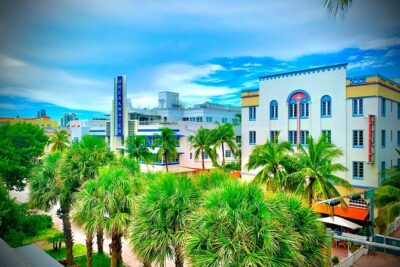
The Official Art Deco Walking Tour by The Miami Design Preservation League
Read our review →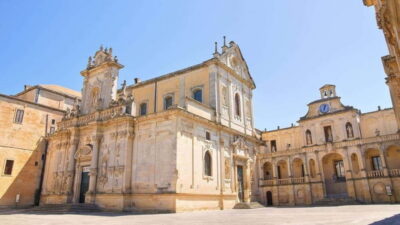
Baroque Architecture and Underground Walking Tour
Read our review →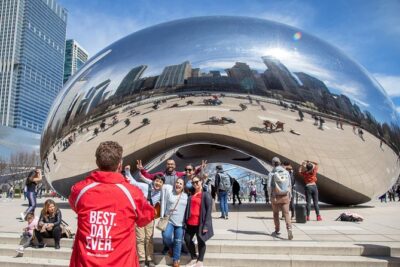
Chicago in a Day: Food, History & Architecture Walking Tour
Read our review →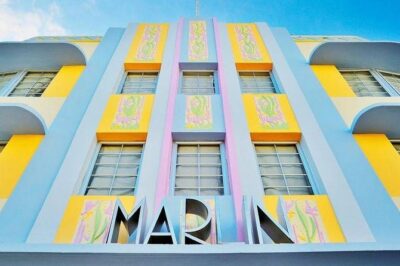
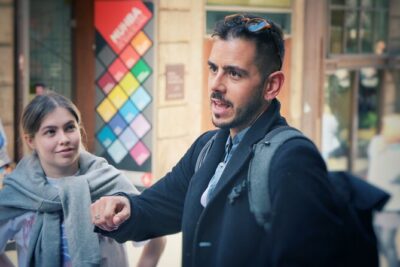
Ramblas, Old Town, Gothic and Gaudi Architecture Walking Tour
Read our review →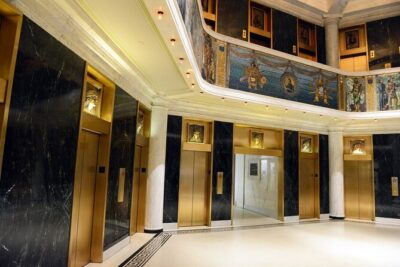
Chicago’s Secret Interiors Architectural Walking Tour
Read our review →
Browse the lists this tour appears in