
REVIEW · NEW ORLEANS ARCHITECTURE TOURS
New Orleans French Quarter Architecture Walking Tour
Look up, and New Orleans starts talking. This two-hour walk turns the French Quarter into an open-air lesson in design, culture, and power. I like the small maximum of 14 people, which leaves room for questions, and I like how the route links French and Spanish influences to actual buildings rather than treating architecture as a dry list of terms. The main drawback is that the tour may feel more like a neighborhood history walk than a technical architecture course if you want detailed analysis of every feature.
The strongest guides bring the city to life through personal stories. Caroline, also known as Phant, has a family connection to New Orleans stretching back more than two centuries, while Janet, Angela, Doug, and Guy have each earned praise for their warmth, storytelling, and care with the group. I also appreciate that guides adjust to conditions, finding shade in hot weather or sunny stretches on a cold day.
At $40 per person, this is a fair buy if you want a useful introduction before exploring alone. You will walk, but the pace is described as relaxed and not overly demanding. Bring comfortable shoes, sunscreen, and an umbrella, and remember that the tour depends on good weather.
Key things to know before you book
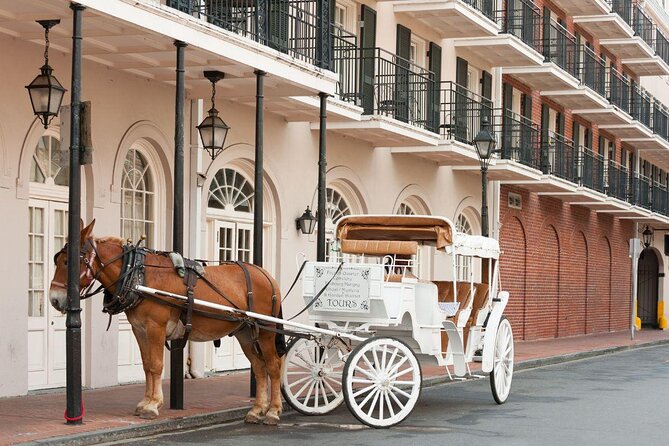
- A 14-person limit keeps the walk personal: You should have a better chance to hear the guide and ask questions than on a large street tour.
- Jackson Square anchors the route: St. Louis Cathedral, the Cabildo, the Presbytere, and the Pontalba Buildings provide a concentrated lesson in New Orleans design and civic life.
- The route moves through French and Spanish eras: Chartres and Royal Streets help you compare building materials, periods, and outside influences.
- The people stories matter as much as the façades: Caroline is especially praised for her stories about strong Creole women and their role in shaping the city.
- The tour ends where it begins: Meet at 523 St Ann Street and plan your day around a return to that same spot.
- It works best early in your visit: The guide’s suggestions for later sightseeing can help you see the French Quarter with sharper eyes.
Why this two-hour walk is worth your time
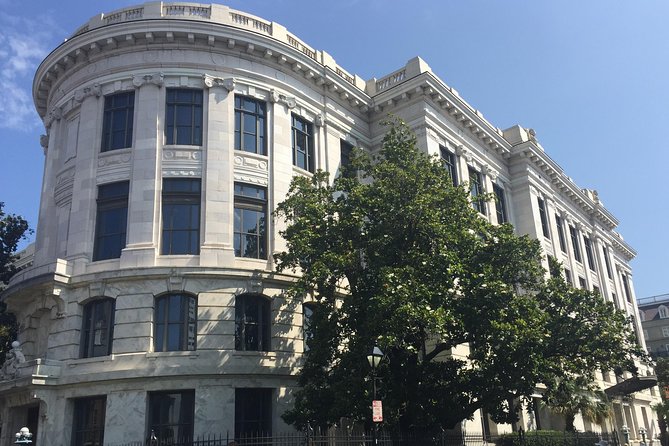
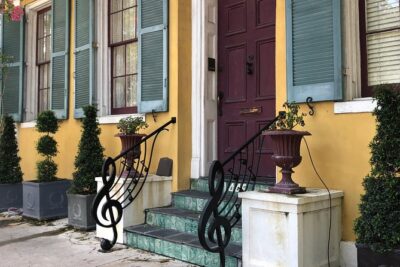
New Orleans can look effortless at first. Bright shutters, iron balconies, tall town houses, courtyards, and weathered walls seem to blend into one photogenic scene. The trouble is that the Quarter rewards a second look. You need someone to explain why one building looks French, another Spanish, and another shaped by later American tastes.
That is the purpose of this tour. It gives you a basic visual vocabulary, then puts that vocabulary to work on real streets. You may learn to notice construction materials, balconies, proportions, shutters, and other signs of a building’s period and purpose. The goal is not simply to memorize names. It is to understand how climate, colonial rule, social class, and local culture shaped what you see.
I especially like the way the walk connects architecture with people. Several of the most praised guides bring attention to women who helped shape New Orleans society and its buildings. That approach keeps the tour from becoming a parade of famous male officials and grand public structures.
The group limit matters here. With no more than 14 people, the guide can pause for questions and point out small features without losing half the group at a crowded corner. The tradeoff is that a small group does not guarantee a highly technical lecture. Your experience will depend partly on the guide’s style and on how much detail you want to pursue.
More walking tours in the USA:
- The Official Art Deco Walking Tour by The Miami Design Preservation League
★ 5.0 · 1,580 reviews - Chicago in a Day: Food, History & Architecture Walking Tour
★ 5.0 · 1,153 reviews - Miami South Beach Art Deco Walking Tour
★ 5.0 · 1,039 reviews
Starting in the French Quarter at 523 St Ann Street
The meeting point is at 523 St Ann Street, and the tour returns there at the end. The opening five minutes provide a short introduction to New Orleans and the French Quarter, giving you a framework for the streets ahead.
This beginning is brief, but useful. If you are new to New Orleans, you will want that first orientation before reaching the major landmarks. If you already know the Quarter, the value will come from the guide’s way of connecting familiar scenes to historical periods and building styles.
I would book this near the start of your stay. Several guides offer suggestions for places to see and things to do afterward, and one guide is praised for sharing notes and book recommendations after the walk. That kind of follow-up can turn a short tour into a starting point for the rest of your visit.
The Quarter is a busy place, and the guide may need to speak over street noise and nearby activity. One person found it sometimes difficult to hear, so stay close to the guide and ask for repetition when needed. The small group helps, but it cannot silence the city.
Jackson Square, where architecture becomes civic history
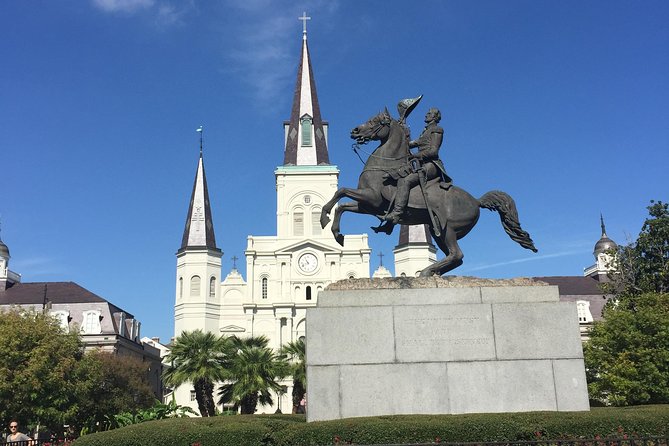
The ten-minute stop at Jackson Square is one of the most useful parts of the route. The guide discusses the buildings around the park, including St. Louis Cathedral, the Cabildo, and the Presbytere. You also hear about the Pontalba Buildings, an important part of the square’s architectural setting.
This is where the tour’s method becomes clear. Instead of treating each structure as an isolated sight, the guide explains how the buildings work together around a public space. You can look from one façade to another and begin comparing their shapes, materials, and roles.
Jackson Square also gives the guide room to explain how public buildings reflect authority. Religious power, government, law, and civic identity all appear around this one park. I find that more helpful than a simple list of construction dates because it tells you why these buildings mattered.
The stop lasts about ten minutes, so expect an overview rather than a full interior visit. The tour information does not promise entry into the buildings. You are paying for interpretation from the street, not admissions or an indoor museum program.
St. Louis Cathedral and the city’s changing identity
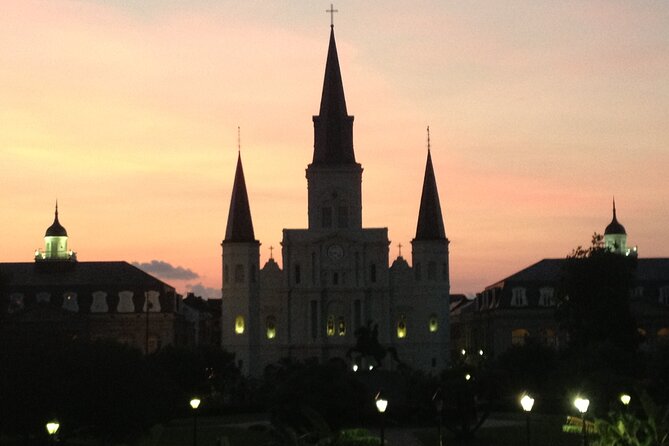
At St. Louis Cathedral, the guide traces the building from its early days as a wooden parish church to the cathedral you see today. The five-minute stop is short, but the story gives you an important lesson: New Orleans architecture changed as the city grew, burned, rebuilt, and adapted.
The cathedral is also a clear example of how a building can carry several chapters of local identity. It is not just a handsome façade beside Jackson Square. Its development reflects the changing scale and importance of the community.
You will not get a long architectural lecture here, and that may disappoint someone expecting a specialist’s close reading of every design element. But for most visitors, the stop works well as part of a larger explanation of how New Orleans grew from a colonial settlement into a major American city.
A few more architecture tours in the USA worth a look
- Chicago Architecture River Cruise
★ 5.0 · 15,756 reviews - Chicago River 90-Minute Architecture Tour
★ 4.5 · 9,629 reviews - Chicago River: 1.5-Hour Guided Architecture Cruise
★ 4.8 · 8,046 reviews - Chicago Architecture Center River Cruise aboard First Lady
★ 5.0 · 5,536 reviews
The Cabildo and Presbytere: two façades, two stories
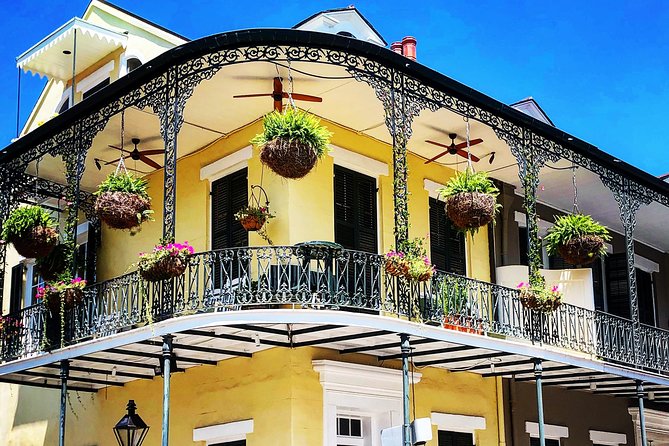
The Cabildo receives its own five-minute stop. The guide explains its historical period, public importance, and building style. This is a good place to listen for the connection between government and architecture, since the building’s role is part of what makes its design meaningful.
The Presbytere follows, also for about five minutes. You learn about its past and its present status. Together, these two stops show how the buildings around Jackson Square changed use and meaning over time.
The short timing is both a strength and a limit. It keeps the walk moving, but it means you should not expect a room-by-room explanation or a long museum visit. If you want an indoor look at either building, you will need to arrange that separately. The tour itself focuses on exterior interpretation and historical context.
Chartres Street and the Spanish period
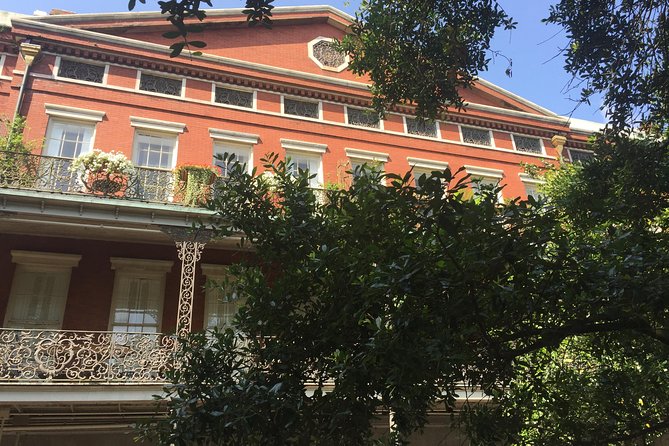
The route then spends about 20 minutes on Chartres Street, where the buildings span the Spanish era into the American period. This is one of the better sections for comparing styles because the street gives you several periods in close reach.
Here, the guide can explain how outside influences became local rather than simply imported. French and Spanish ideas mixed with practical responses to New Orleans weather, local materials, and the needs of the people who lived and worked in these buildings.
This is also where the architecture begins to feel less like decoration and more like evidence. A balcony, shutter, wall, or roofline can point toward a period, a building method, or a social purpose. You may not leave able to date every building with confidence, but you should have a better sense of what clues to look for.
The 20-minute stretch is long enough to settle into the subject. Ask questions here, especially if you want the guide to explain the difference between styles or clarify why a feature matters. Several people found the guides especially good at linking design with local culture and the stories of residents.
Royal Street and a better way to look around
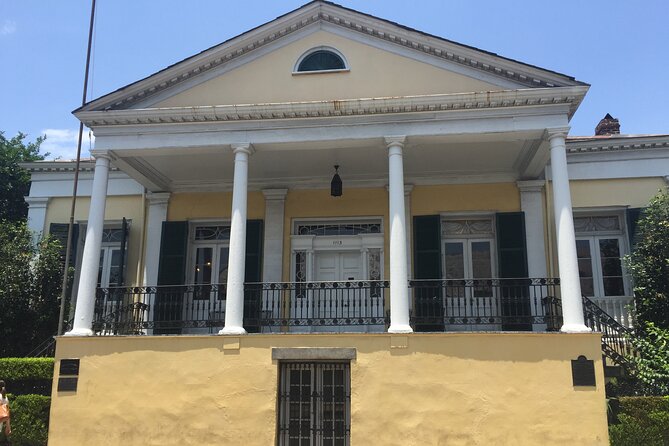
The final main stop is Royal Street, scheduled for about 25 minutes. It is known for shops and restaurants, but the tour uses it as a lesson in identification. You learn how to recognize different building types and how historical periods influence what you see.
This section may be the most useful after the tour ends. Once you know what to look for, you can continue walking the Quarter on your own and notice details that previously blended together. One guide also pointed out an antique store and gallery that a participant later visited, showing how useful a local recommendation can be when it comes at the right moment.
The stop is not only about architecture. Royal Street connects the built environment to present-day street life, shopping, food, and local character. That makes it a practical ending rather than a final lecture.
Some people will want more detail about the why and the how of each style. If that is your priority, make your expectations clear at the start and ask specific questions. The route gives you a solid foundation, but it is still a two-hour public walking tour, not an architecture school seminar.
The guides make the difference
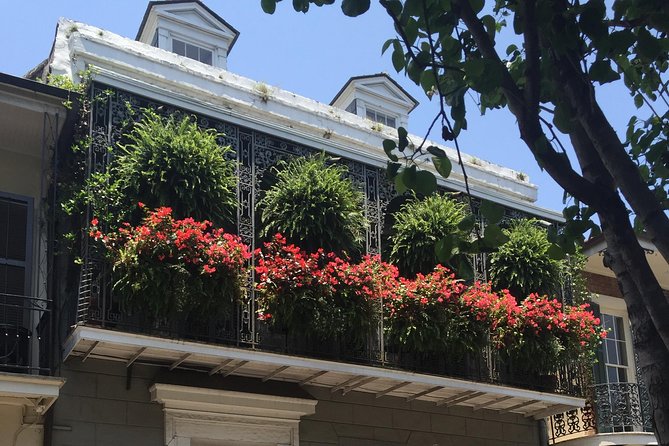
The most consistent strength is the quality of the guiding. Caroline is repeatedly praised for her energy, personal connection to New Orleans, and stories about influential women. Her family’s long local history gives her material that feels personal, though you should expect an engaging city tour rather than a private family archive.
Janet is described as warm, calm, and especially good at sharing lesser-known details. Her tour may suit you if you prefer a peaceful walk with room to absorb information. She also provides notes and book suggestions, which is a helpful bonus for anyone who wants to keep reading.
Angela is praised for combining serious historical detail with humor. Her relaxed manner and dad jokes helped make the two-hour walk feel easy. Doug is noted for both his command of local history and his attention to weather, keeping people in the shade during hot conditions. Guy used a binder with photographs and historical material to connect past events to the buildings in front of the group.
Because several guides lead the experience, the tone may vary. The shared pattern is clear: expect a guide who cares about New Orleans and wants you to see more than pretty façades. Still, if you want a narrow focus on technical design, ask questions early so the tour can match your interests.
Weather, walking, and practical comfort
The tour lasts about two hours and ends back at the starting point. Transportation to and from the French Quarter is not included, and there is no hotel pickup or drop-off, so plan your own way to 523 St Ann Street.
Comfortable walking shoes are essential. The walk is not described as especially strenuous, and one person called it not that much walking, but you will still spend roughly two hours on city streets. Wear sunscreen and bring an umbrella, especially because the experience can be canceled in poor weather.
The guide may adjust the route or stopping positions to find shade or sunshine. That flexibility is welcome in New Orleans, where heat and cold can both affect a walking tour. Service animals are allowed, the meeting point is near public transportation, and most people can take part. The minimum age is one year.
The mobile ticket makes arrival simple, but you still need to watch the meeting time. Free cancellation is available up to 24 hours before the start. Cancellations or changes inside that window are not refunded or accepted, and a weather cancellation brings the choice of another date or a full refund.
Is $40 a fair price?
At $40, the tour is priced above a casual free walk, but it offers a smaller group, a licensed and insured local guide, and a focused route through some of the Quarter’s most important buildings. The price makes the most sense if you value interpretation and want to ask questions.
You are not paying for transportation, entry tickets, food, or a long museum visit. Every listed stop is free to view from the route. The real purchase is the guide’s explanation, historical connections, and ability to help you read the city.
I would consider it good value for a first visit or for anyone who has walked the Quarter before but still sees it as a blur of balconies and shutters. If you already have strong architectural training and want technical detail at every stop, the tour may feel basic in places.
Who should book this French Quarter walk?
I would recommend it to first-time visitors, families, couples, solo sightseers, and locals who want a fresh way to read familiar streets. Teenagers can enjoy it too, especially with a lively guide. One family found that even a 16-year-old who expected not to enjoy the experience had a good time.
It is also a good choice for anyone interested in social history, not just buildings. The stories of Creole women, settlers, local families, and changing communities give the route more human weight.
I would hesitate only if you want a highly specialized architecture course, extensive indoor access, or a tour focused on one narrow period. For everyone else, the balance of buildings, people, history, and practical suggestions is the point.
Should you book it?
Book this tour if you want the French Quarter to make more sense. The small group, central route, and strong guides offer a useful introduction to how French, Spanish, and American influences shaped New Orleans buildings.
Choose it early in your visit so you can use the guide’s advice afterward. Stay close enough to hear, wear shoes suited to two hours on city streets, and ask for the level of architectural detail you want. If you do that, the $40 fee buys more than a stroll. It gives you a way to keep exploring with sharper eyes.
FAQ
How long does the New Orleans French Quarter Architecture Walking Tour last?
The tour lasts approximately two hours.
Where does the tour meet?
The meeting point is 523 St Ann Street, New Orleans, Louisiana 70116.
Where does the tour end?
The tour ends back at the meeting point on St Ann Street.
How many people can join the tour?
The maximum group size is 14 people.
What language is the tour offered in?
The tour is offered in English.
Is transportation included?
No. Transportation to and from the attractions, as well as hotel pickup and drop-off, is not included.
What should I bring?
Comfortable walking shoes, sunscreen, and an umbrella are recommended.
What happens if bad weather cancels the tour?
If poor weather causes a cancellation, you will be offered another date or a full refund. You can also cancel at least 24 hours before the start time for a full refund.
Just added in the USA
- Wilmington History and Architecture Tour★ 4.8 · 18 reviews
- New Orleans : Garden District Architecture Walking tour★ 4.8 · 5 reviews
- Washington DC: Dupont Circle & Embassy Row Architecture Tour★ 5.0 · 6 reviews
- Washington, DC: Georgetown Architecture Walking Tour★ 5.0 · 8 reviews
- Private Colonial Williamsburg Architectural Tour★ 5.0 · 5 reviews
- Tulsa: Art Deco Walking Tour of Tulsa★ 5.0 · 8 reviews
- Castle to Capitol: Museums of the National Mall Architecture Tour★ 4.5 · 9 reviews
- Monuments and Memorials Architectural Walking Tour★ 5.0 · 17 reviews
New Orleans Architecture Tours, compared.


Garden District Architecture Walking Tour in New Orleans
Read our review →Browse the lists this tour appears in