
REVIEW · WALKING TOURS
Bilbao: Historical and Architectural Walking Tour
Bilbao’s grand avenue tells a surprising story. This two-hour walk connects the city’s industrial rise with its elegant Gran Vía architecture, and I like the way it takes you inside notable buildings instead of leaving you to admire locked doors. I also like the small-group format and the pintxo-pote finish, a useful taste of local food and drink rather than a simple goodbye.
The route begins at Plaza Moyúa and covers the modern Ensanche, banks, gardens, palaces, the train station, and part of the metro. The main consideration is reliability: two bookings in the supplied feedback describe a guide who did not appear, while other participants praised Javier, also called Javi, for his clear and engaging explanations.
Key points at a glance
- The Ensanche explains modern Bilbao: You see how industrial wealth pushed the city across the river and created a planned district inspired by Paris and London.
- Chavarri Palace and other interiors add real value: Entry to emblematic buildings gives you more than a facade-by-facade stroll.
- Javier receives the strongest praise: Several people describe Javi as friendly, well informed, and good at connecting Bilbao’s buildings to Basque history.
- The route includes unusual stops: The inner beach, the Bilbao metro interior, and the old Alhóndiga give the walk more range than a standard historic center tour.
- Pintxo-pote is built into the experience: You finish with local snacks and a drink, making the tour feel like a social introduction to Bilbao.
- The rating is mixed: The overall score is 3.6 from 17 reviews, with high praise for the content but serious complaints about guide attendance and communication.
Why Bilbao’s Gran Vía is the heart of this walk
Bilbao was founded in 1300 by Don Diego Lopez de Haro, Lord of Bizkaia. For much of its early life, the old town was the main focus. Then industrial growth changed the city’s needs and its ambitions.
At the beginning of the 19th century, Bilbao’s bourgeois families wanted a brighter, more modern district. They looked toward Paris and London for ideas and began developing the first Ensanche, the planned expansion across the river. This is the part of Bilbao you explore on the tour.
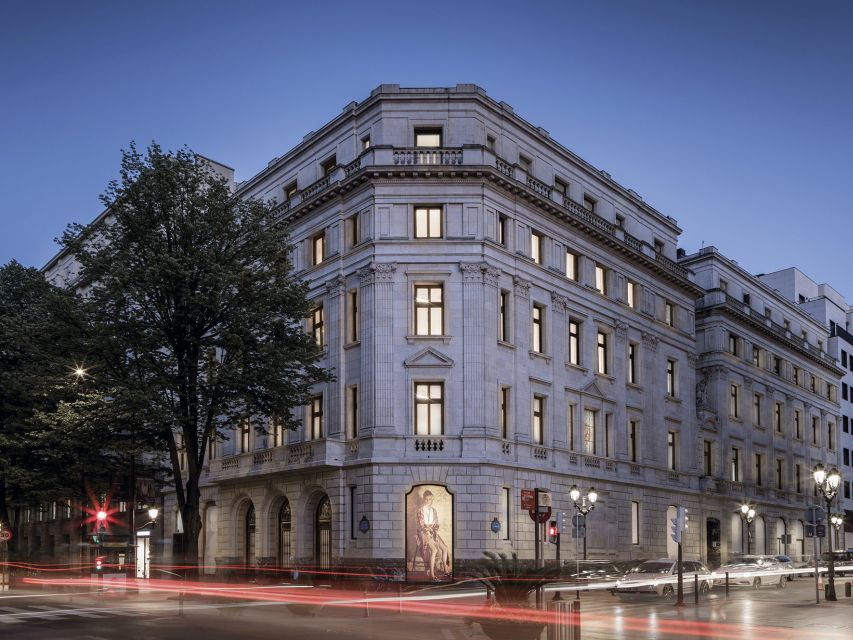
I find this setting especially useful for understanding the city. The buildings are not just pretty backdrops. They reflect the money, confidence, and social order created by industry. As you walk along Gran Vía, the lime trees shade the pavement and soften the formal stone facades. You get shops, offices, banks, gardens, and grand homes in one compact area.
The tour focuses on the families who lived in these palaces and on the institutions that shaped Bilbao. That gives the walk a human angle. Instead of hearing only dates and architectural labels, you connect the buildings with the people who financed and occupied them.
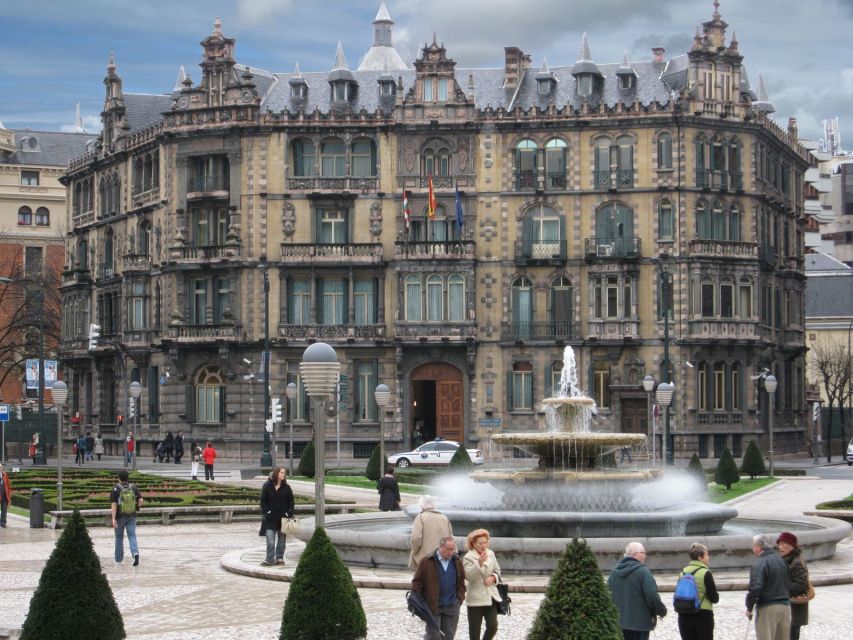
The meeting point is Plaza Moyúa, next to the fountain. This is a practical starting place in central Bilbao, and the route finishes either near Calle Esperanza 22A or back at Plaza Moyúa, depending on the day’s arrangement.
More walking tours in Spain:
- Ramblas, Old Town, Gothic and Gaudi Architecture Walking Tour
★ 5.0 · 723 reviews - Barcelona 1.5h Private Old Town, Gothic & Ramblas Walking Tour
★ 5.0 · 318 reviews - Barcelona: Ramblas, Old Town & Gaudí Houses Walking Tour
★ 4.9 · 239 reviews
Plaza Moyúa and the first look at the Ensanche
Plaza Moyúa gives you an immediate sense of the newer Bilbao. From here, the guide introduces the planned district and explains why the city needed room to grow.
I would pay close attention during this opening. The main value of the tour is not simply seeing a palace or station. It is learning how the district fits together. Bilbao’s modern growth created a city of broad avenues, formal squares, commercial buildings, and large residences for wealthy families.
The guide also places Bilbao within the wider story of the Basque Country. In the strongest feedback, Javier explained three main periods of Bilbao’s history and connected them to the region as a whole. That kind of structure helps you keep the details straight, especially if this is your first visit.
You may want to arrive a few minutes early. Plaza Moyúa is the stated meeting point, and the fountain provides a clear landmark. Comfortable shoes are important, since the experience is entirely on foot.
The inner beach and Bilbao’s changing relationship with water
One unusual stop is Bilbao’s inner beach. The name alone makes this a memorable part of the route, since it adds a less formal note to a walk centered on grand buildings and financial power.
The information provided does not give a long description of the stop, so you should think of it as a brief point of interest rather than a beach visit with swimming time. Its place in the route helps show how the city relates to the river and its public spaces.
Bilbao’s waterway is also part of the city’s origin and its industrial development. Seeing an inner beach alongside palaces and banks gives you a quick reminder that this was not only a business district. The city has also tried to make room for leisure, greenery, and daily life.
Since the tour lasts only two hours, stops are likely focused and time controlled. If you prefer long visits inside museums, this is not that kind of outing. It is a moving introduction, with the guide doing much of the interpretation as you walk.
The founder’s statue and the story of medieval Bilbao
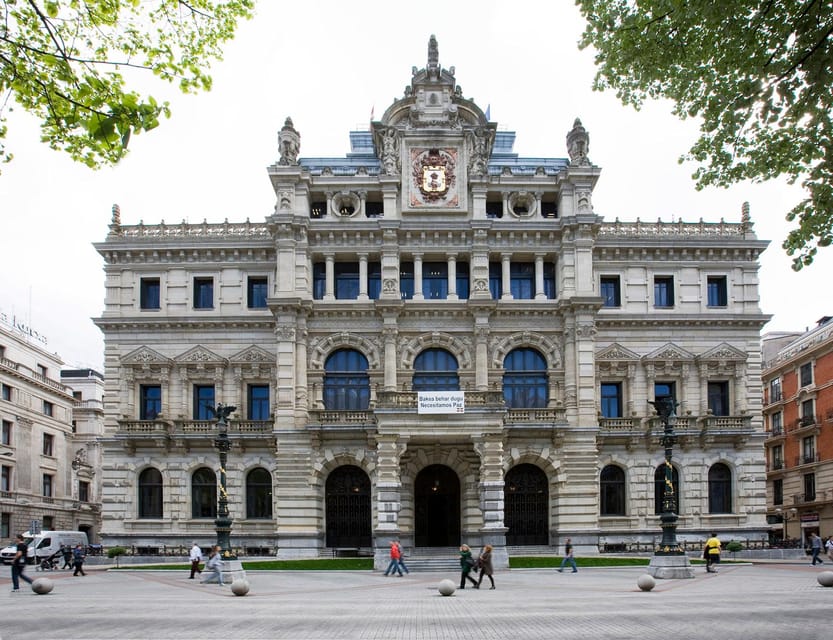
The statue of Don Diego Lopez de Haro brings the story back to 1300, when he founded the town. This stop links the modern Ensanche to the older city that came before it.
That contrast is one of the walk’s best teaching tools. Bilbao did not begin as a grand 19th-century avenue. The palaces and banks came much later, after commercial and industrial growth changed the city.
I like tours that make this sort of time shift clear. You can look at the newer district with better questions: Who paid for these buildings? Why were they built here? What did the expansion mean for the old town across the river?
The guide’s role matters greatly at this point. Javier was praised for explaining the stories behind the buildings and for offering advice about other activities in and around Bilbao. If your guide is equally strong, the founder’s statue becomes more than a photo stop.
More history tours in Spain:
- Historical and Modernist Bike Tour Barcelona
★ 5.0 · 262 reviews - Bike Tour in Barcelona: History, Architecture and Culture
★ 3.5 · 29 reviews - Madrid Historic with an architect : Arabs, Austrias and Bourbons
★ 5.0 · 21 reviews - Alhambra Surroundings: History, Architecture and Legends
★ 4.5 · 10 reviews
Bilbao-Abando station and its detailed history
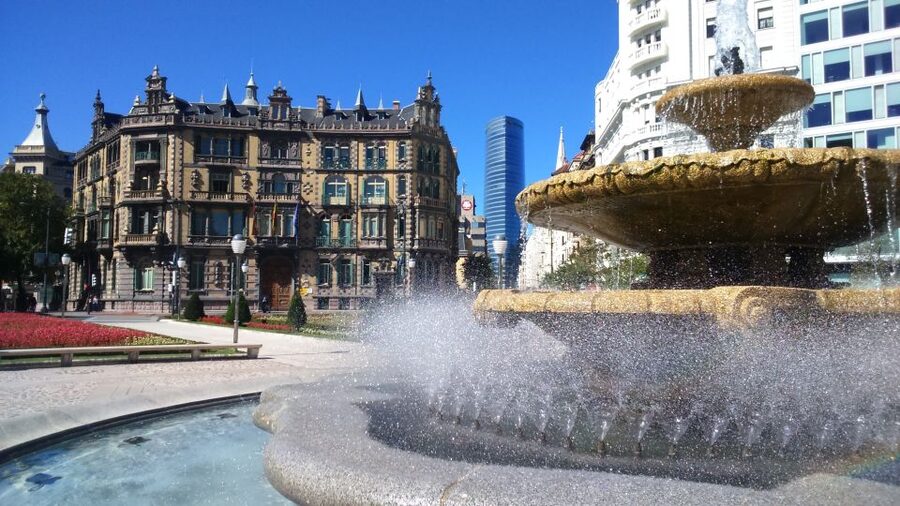
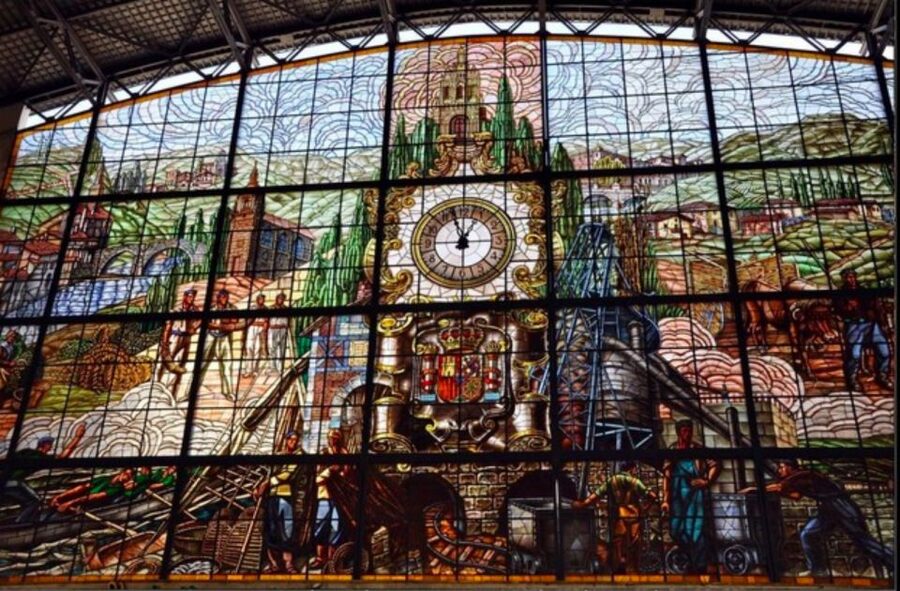
The train station is another key stop. Its representation of Bilbao’s history gives the guide a useful visual aid and links the city’s rise to transport and commerce.
A station is a fitting place to discuss an industrial city. Railways helped connect Bilbao with the wider economy, while the city’s businesses and banks supported further expansion. You are not simply looking at a place where trains arrive. You are seeing an institution tied to the growth of the modern city.
The tour includes entry to the station, so you can examine more than its outside facade. That matters on a short walk, since indoor access breaks up the steady rhythm of street viewing.
The stop is also practical for understanding scale. Bilbao’s grand avenues and commercial buildings make more sense when you see them as part of a city designed for trade, finance, and movement. The station adds that missing piece.
Banks, gardens, and the families behind the palaces
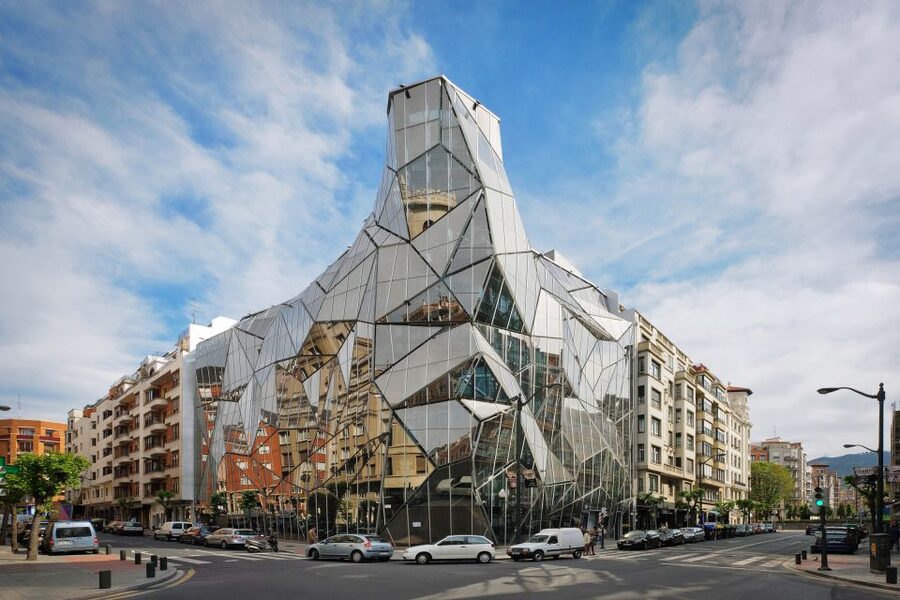
The route passes the most important banks in the city, along with gardens and grand residential buildings. This is where the tour’s social story comes into focus.
The families who lived along Gran Vía were part of Bilbao’s prosperous bourgeoisie. Their palaces expressed status, but they also helped shape the visual identity of the new district. The guide explains who lived in these buildings and how the city’s industrial fortune affected its architecture.
I would not expect a detailed visit to every bank or palace. Two hours is enough for a well-paced introduction, not a full architectural survey. Still, the combination of short explanations and close views can be more useful than racing through a large museum.
The gardens provide a welcome pause. Bilbao’s lime trees shade the avenue and add scent to the walk, while the formal buildings give you plenty to inspect overhead. Look up often. A walking tour of this type rewards attention to facades, windows, entrances, and decorative details.
The tour is strongest when the guide explains the buildings as part of a family and business network. That approach turns a pleasant avenue into a readable chapter of Bilbao’s social history.
Chavarri Palace and the value of going inside
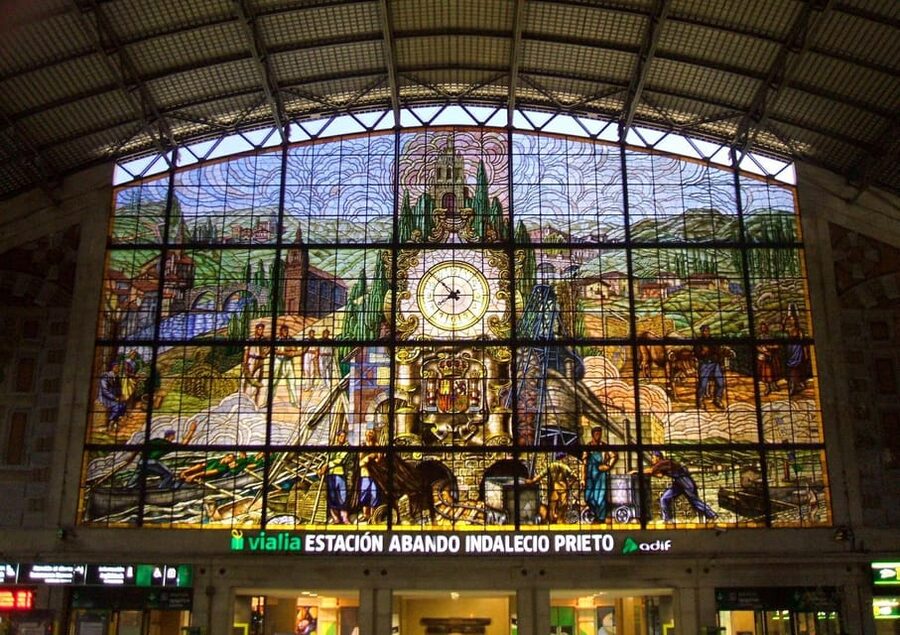
Chavarri Palace is one of the named interior visits. Entry into the building is a major reason to consider paying for a guided walk rather than following a free route on your own.
From the street, you can admire architecture. Inside, the building’s spaces and details can give you a better sense of how the city’s wealthy residents and institutions presented themselves. The supplied information does not promise access to every room or a specific length of time inside, so keep your expectations sensible.
Still, this is one of the tour’s strongest practical features. You are not paying only for a person to point at facades. The price includes entry to Chavarri Palace, the train station, and the old Alhóndiga.
The guide also helps you notice details you might otherwise walk past. Several high-scoring comments praised Javier for showing many buildings and explaining the architecture behind them. That is exactly where a local guide can earn the fee.
The Provincial Council of Bizkaia
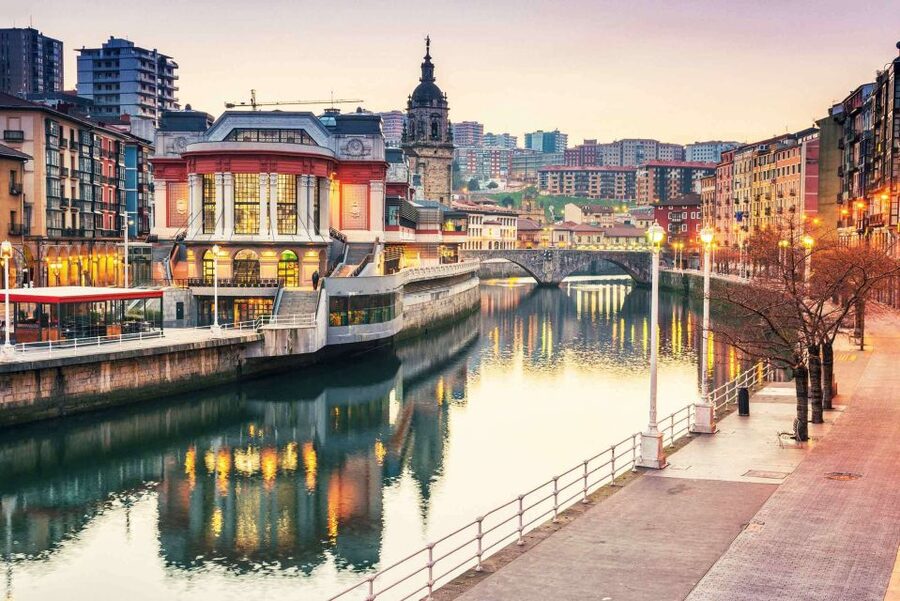
The Provincial Council of Bizkaia adds another important civic building to the route. Its presence broadens the tour beyond private palaces and commercial banks.
The building represents the public side of Bilbao’s development. After seeing the residences of wealthy families and the institutions that supported business, you get a look at regional government and civic authority.
This stop also helps place Bizkaia within the Basque Country. The guide can connect local government, Bilbao’s growth, and the wider regional story. The tour is offered in English, Spanish, and French, so you can choose the language that gives you the best chance of following the historical details.
Because the experience is short, you may spend more time hearing the explanation than entering every part of the building. That is normal for this format. The value comes from the sequence of stops and the way they fit together.
A look inside Bilbao’s metro
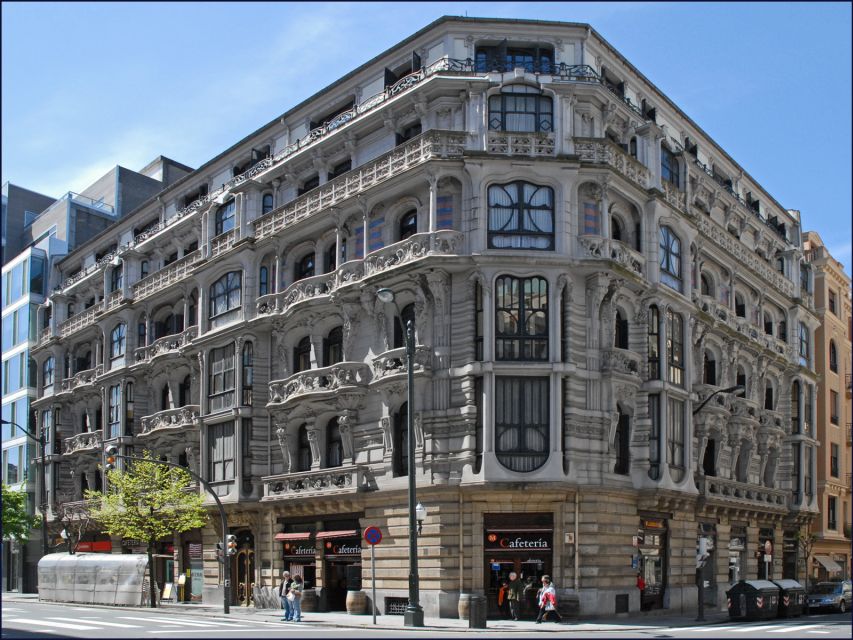
The interior of the Bilbao metro is an unexpected part of the walk. It adds a modern public-transport detail to a route otherwise focused on historic buildings and bourgeois architecture.
This stop helps show that Bilbao is not frozen in its industrial past. The city has continued to invest in new infrastructure while preserving older civic and commercial spaces. The contrast can make the tour feel less like a single-period history lesson.
The tour description does not specify which metro station you enter or how long you stay. Treat it as a brief architectural and urban-design stop, not a full metro journey. Transportation to and from attractions is not included, although the listed route itself includes the metro interior.
For me, this kind of unexpected inclusion makes a walking tour more memorable. You get a wider view of the city, from medieval foundation to industrial expansion to modern transit.
Old Alhóndiga and the final building visit
The old Alhóndiga is the third named interior. Its inclusion gives the tour a chance to discuss commerce, storage, and the working side of urban life, rather than only elegant homes and official buildings.
The information provided does not specify exactly which areas you enter or the current use of the building. The key point is that the visit is included as an emblematic Bilbao interior. Your guide should explain why the building matters and how it fits the city’s development.
This stop helps balance the route. The palaces show wealth and private life. The banks show finance. The Provincial Council shows public authority. The Alhóndiga points toward the practical systems that kept a growing city supplied.
If architectural interiors are a major reason you book, this is a valuable part of the itinerary. If you want extensive time at each site, the two-hour limit may feel tight.
Pintxo-pote turns the ending into local time
The tour ends with pintxo-pote, which includes local snacks and a drink. Depending on the arrangement, that drink may be beer, coffee, or tea, and the food includes regional snacks and tapas.
Pintxo-pote is a useful introduction to Bilbao’s eating culture. You are not being sent away with a list of restaurants. You get a small taste at the end, after hearing how the city grew and seeing the district where much of its wealth was displayed.
I like this ending because it creates room for questions. You can ask the guide for suggestions about other places to eat or activities around Bilbao. Javier was specifically praised for giving advice beyond the tour.
Do not treat the pintxo-pote as a full meal. It is a snack and drink included in the experience. If you are hungry, plan another meal afterward.
Is $94 fair for two hours?
At $94 per person, this is not a cheap orientation walk. The price needs to earn its keep through the small group, professional guide, building entries, and pintxo-pote.
The value is strongest if you care about architecture and want access to interiors. Chavarri Palace, the train station, and the old Alhóndiga give the tour more substance than a simple street walk. The guide’s explanations also matter. Strong feedback singled out Javier for being friendly, clear, and able to explain both Bilbao and the wider Basque Country.
The value is weaker if you only want basic directions or a quick list of sights. You can see Gran Vía and Plaza Moyúa without paying for a tour. The fee makes more sense when you want the stories behind the buildings and the ease of a planned route.
I would compare it with the cost of separate admissions and a private guide before booking. The group format keeps it from being a fully private experience, but it can offer a more personal feel than a large coach tour.
Guide quality and the serious reliability warning
The guide is the make-or-break part of this experience. Javier, also called Javi, received repeated praise for his explanations, friendly manner, and advice about Bilbao. One Dutch-language comment also praised him from beginning to end, while another described the newer part of the city as especially interesting because of his explanations.
There is also a clear warning. One booking in September 2023 reported that the guide did not appear, leaving the participant to spend the morning trying to resolve the problem. Another booking in December 2025 described a date affected by special city events. The provider reportedly asked to move the tour, then did not complete the cancellation or respond to repeated messages.
That is a serious concern, especially at $94. I would confirm the meeting details shortly before the tour and keep all provider messages. The activity information gives two different payment and cancellation signals: it says you can cancel up to 24 hours ahead for a full refund, but it also says the tour is nonrefundable. Check the terms shown at checkout, and do not assume the more favorable policy applies.
The overall score of 3.6 from 17 ratings reflects this split. The content can be excellent when the guide appears, but service reliability deserves attention.
Who should book this Bilbao walk?
I would recommend it to you if:
- You are interested in architecture, urban growth, and local families.
- You want a short introduction to Bilbao’s Ensanche.
- You value entry into historic or emblematic buildings.
- You like small groups and direct access to a guide.
- You want a snack and drink included at the end.
- You are comfortable walking for two hours in comfortable shoes.
It may not suit you if you need a guaranteed full morning schedule, dislike walking, or want long visits inside each building. It is also not the best choice if your main goal is Bilbao’s old town, since the focus is the newer district around Gran Vía and Plaza Moyúa.
Should you book it?
Book this tour if architecture and city planning interest you, and if you want Bilbao explained through its palaces, banks, civic buildings, transport, and industrial growth. The strongest guide feedback, especially about Javier, suggests that the experience can be lively and useful rather than a dry list of dates.
I would book with one practical safeguard: confirm the meeting point and operating status close to the date. If the provider gives clear confirmation, the building entries and pintxo-pote help justify the price. If communication is vague, choose a more dependable option, because an excellent route is no help if nobody arrives.
FAQ
Where does the tour start?
It starts at Plaza Moyúa, next to the fountain, at Federico Moyúa Plaza 1 in central Bilbao.
How long does the walking tour last?
The tour lasts two hours.
What languages are available?
The live guide is available in English, Spanish, and French.
What buildings can I enter?
The tour includes entry to Chavarri Palace, the train station, and the old Alhóndiga.
Is pintxo-pote included?
Yes. Pintxo-pote, including local snacks and a drink, is included.
Does the tour include transportation to attractions?
No. Transportation to and from attractions is not included.
Is the tour wheelchair accessible?
Yes, the activity information states that it is wheelchair accessible.
What should I bring?
Bring comfortable shoes, since the experience is a walking tour.
Just added in Spain
- Gaudí and Modernist Art: Guided Tour in Palma de Mallorca★ 4.5 · 3 reviews
- Self-Guided Audio Tour-The Surrealist Barcelona of Dalí and Gaudí★ 3.5 · 8 reviews
- Visit to the Modernist houses of the Americans★ 5.0 · 2 reviews
- Roman & Gotic & Gaudi in Barcelona: private walking tour★ 4.5 · 2 reviews
- Barcelona Gaudi Tour: Sagrada Familia, Casa Batllo & Casa Mila★ 5.0 · 4 reviews
- Barcelona Street Escape: Gaudi and the Hidden Treasure★ 5.0 · 17 reviews
- Gaudi’s Casa Batlló and La Pedrera with Chocolate Tasting★ 5.0 · 5 reviews
- Gaudí & Catalan Modernism Private Walking Tour★ 5.0 · 11 reviews
Walking Tours, compared.

The Official Art Deco Walking Tour by The Miami Design Preservation League
Read our review →
Baroque Architecture and Underground Walking Tour
Read our review →
Chicago in a Day: Food, History & Architecture Walking Tour
Read our review →

Ramblas, Old Town, Gothic and Gaudi Architecture Walking Tour
Read our review →
Chicago’s Secret Interiors Architectural Walking Tour
Read our review →
Browse the lists this tour appears in