

REVIEW · WALKING TOURS
Helsinki Walking Tour at Helsinki Architecture
Helsinki rewards people who look up. This three-hour walk links grand civic buildings, Finnish design, modern libraries, churches, cafés, and public spaces in central Helsinki. I especially like the small maximum of six people, which should make questions and conversation easier, and the way the route mixes famous sights with less obvious interiors such as Jugendsali and the Academic Bookstore. The main drawback is simple: you cover a lot of ground, and several stops have limited hours or are closed on weekends.
I also like the strong contrast between old and new. You move from Senate Square and Helsinki Cathedral to the futuristic Central Library Oodi, with Alvar Aalto’s work, Finnish folklore, contemporary art, and everyday city life along the way. Bring comfortable shoes, and check the day carefully if you want to enter the National Library, Rautatalo, or Kamppi Chapel.
Key points before you book
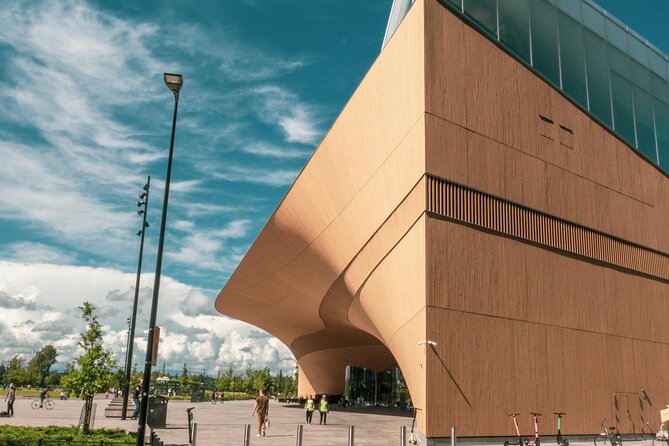
- A compact group of up to six: This is a better setup for questions than a large city tour.
- Three hours on foot: The route covers central Helsinki at a steady pace, so comfortable shoes matter.
- Oodi is the headline stop: The Central Library gives you a fresh idea of what a public library can be.
- Old and new Helsinki meet: Senate Square, the railway station, Aalto buildings, Amos Rex, and Oodi show several eras in one walk.
- Some interiors depend on the day: The National Library and Rautatalo are closed Saturday and Sunday, while Kamppi Chapel also closes on weekends.
- A guide adds the value: The tour is less about merely spotting buildings and more about understanding their design, purpose, and place in Finnish life.
Why this walk is a useful first look at Helsinki

The meeting point is on Kluuvikatu, right in central Helsinki. From there, you spend about three hours walking between major landmarks, public buildings, cafés, cultural venues, and streets that are easy to revisit on your own later.
The route works well as an introduction because it gives you a physical map of the city center. You pass Senate Square, Esplanadi, the central railway station, Kamppi, and the cultural district near Oodi. By the end, you should have a clearer sense of where Helsinki’s main sights sit in relation to one another.
The architectural theme gives the walk a useful focus. Instead of hearing a list of dates and names, you look at how Helsinki expresses power, religion, national identity, commerce, folklore, modern design, and public services through buildings.
The guides Zana and Zara have been praised for explaining both architecture and Finnish culture, with special attention to questions and individual interests. That matters here. Architecture tours can become a parade of façades, but the best moments come when a guide explains why a building looks the way it does and how local life fits inside it.
More walking tours in the world:
- Lecce: Baroque Architecture and Underground Walking Tour
★ 4.6 · 1,248 reviews - Chicago in a Day: Food, History & Architecture Walking Tour
★ 5.0 · 1,153 reviews - Ramblas, Old Town, Gothic and Gaudi Architecture Walking Tour
★ 5.0 · 723 reviews
Senate Square and Helsinki Cathedral: Helsinki’s formal beginning
Senate Square is the natural starting point for Helsinki’s central story. The square is framed by three important buildings, and the first 15 minutes here are used to explain them and their role in the city.
You get a strong sense of Helsinki’s formal side here. The square is orderly and grand, making it a good place to begin a discussion of how modern Helsinki took shape. Admission is free, so you can return later if you want to take photographs in different light or spend more time looking at the surrounding façades.
The next stop is Helsinki Cathedral, the city’s best-known landmark. The planned visit inside lasts only about five minutes, and admission is not included in the tour price. That short visit means you should not expect a lengthy religious or architectural lecture inside, but the guide introduces the building and offers context about religion in Finland.
This is one place where expectations matter. If you want a full cathedral visit, set aside extra time before or after the walk. The tour gives you a useful introduction, not an extended examination of every interior detail.
The National Library and Jugendsali: quiet rooms with character
The National Library of Finland receives about 15 minutes. It is presented as one of Helsinki’s most beautiful buildings, and the interior is an important part of its appeal.
The library is closed on Saturdays and Sundays. If this building is a priority, book a weekday. The free admission is helpful, but the limited opening schedule is one of the tour’s practical weaknesses. You may still see the exterior on a weekend, but the indoor experience depends on access.
Jugendsali follows with a shorter 10-minute stop. Its decorations, ornaments, painted details, stone sculptures, and original furniture were designed by Valter Jung. This stop gives the walk a more intimate scale after the formal grandeur of Senate Square and the library.
I like this part of the route because it shows how architectural interest is not limited to famous monuments. A room with its original decorative scheme can tell you as much about a period’s taste as a major public building.
Esplanadi, Rautatalo, and the Academic Bookstore
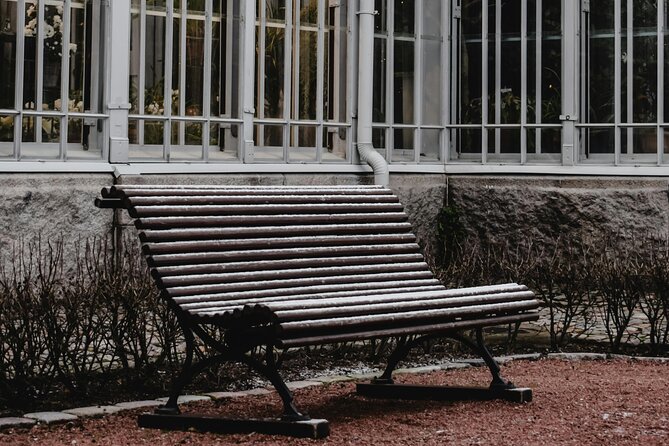
Esplanadi is Helsinki’s main boulevard and one of the clearest places to observe ordinary city life. The tour spends about 10 minutes here, treating the park as part of the city’s social center rather than simply a green pause between buildings.
That is a useful distinction. You are not only looking at architecture as a finished object. You are seeing how streets, parks, shops, cafés, and public buildings work together throughout the year.
Rautatalo is a short five-minute stop. It has been regarded as a milestone in Finnish architecture, but the building is closed on Saturdays and Sundays. Again, the day of your tour affects how much you can see.
The Academic Bookstore receives 15 minutes and adds one of the strongest design moments on the route. Here, the focus is on literature, culture, and the architecture of Alvar Aalto. The stop also shows how design can shape a commercial interior, not just a museum or government building.
For readers interested in Finnish design, this is a particularly useful part of the walk. Aalto’s work becomes easier to appreciate when you encounter it in a place connected to daily use, books, and city life.
A few more architecture tours in the world worth a look
- Chicago Architecture River Cruise
★ 5.0 · 15,756 reviews - Chicago River 90-Minute Architecture Tour
★ 4.5 · 9,629 reviews - Chicago River: 1.5-Hour Guided Architecture Cruise
★ 4.8 · 8,046 reviews - Chicago Architecture Center River Cruise aboard First Lady
★ 5.0 · 5,536 reviews
Sanomatalo and Helsinki Central Railway Station

The stop at Fazer Café Sanomatalo is brief, about five minutes. Sanoma House is recognized by its glass façade and its position near Finlandia Park, north of the railway station. It sits close to Kiasma, Oodi, and the Music Centre, creating a concentrated cultural area in central Helsinki.
Because the visit is short, think of it as an architectural and orientation stop rather than a scheduled café break. Food and drinks are not included, so you pay separately if you want something from the café.
The Helsinki Central Railway Station gets about 10 minutes. Its four massive statues are among the building’s most memorable details, and the station is both a working transport hub and a city landmark.
This is a practical stop as well as a visual one. If you arrive in Helsinki by train, the station may be your first major impression of the city. Seeing it during the tour helps you understand how close the main cultural sights are to the transport center.
Oodi: the tour’s strongest modern stop
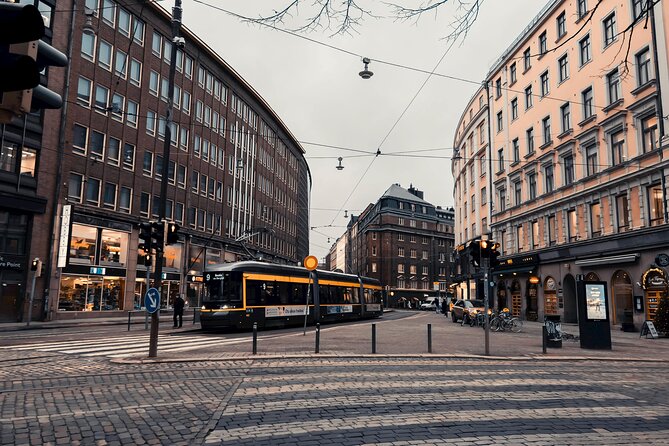
Central Library Oodi is the highlight for many people on this route, and the 20-minute visit gives it more time than most individual stops. The point is not simply that Oodi is a handsome modern building. It challenges the usual idea of what a library should be.
That makes Oodi valuable even if you are not especially interested in architecture. It connects design with public life, learning, culture, and shared space. The tour presents it as a place that can change your definition of a library, which is a strong reason to keep this experience on your shortlist.
The guide’s explanation is especially useful here because modern buildings can be hard to read without context. You get help seeing how the form, public purpose, and interior experience relate to one another.
The nearby Music Centre adds another cultural stop. It is home to Finnish orchestras, concerts, and performances connected with Helsinki’s musical life. The tour description does not give a separate duration for this stop, so expect it to be part of the wider cultural district rather than a long standalone visit.
Kamppi Chapel and Amos Rex

Kamppi Chapel of Silence is a small but meaningful change of pace. The tour allows about five minutes for a quiet moment, regardless of your religious beliefs. The chapel welcomes people seeking peace and spiritual connection.
Admission is not included, and the chapel is closed on Saturdays and Sundays. The short timing means you should not expect a long meditation session, but it can provide a calm break after several busy streets and public buildings.
Amos Rex follows with around 10 minutes. Opened in 2018, this contemporary art museum is known for exhibitions that combine art, technology, and architecture. Admission is not included, so entering the museum itself would require extra time and payment.
The tour can still give you a useful architectural introduction from outside. If you want to see an exhibition, plan a separate visit. Amos Rex is one of the places where the walking tour gives you a preview rather than a complete museum experience.
The National Theatre, Kiasma, and Ateneum
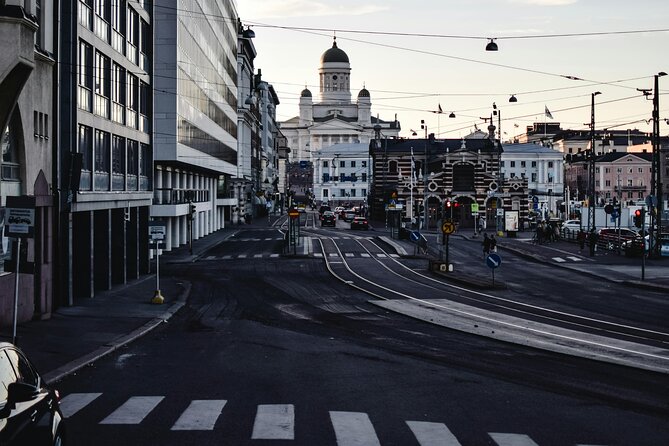
The Finnish National Theatre is another cultural landmark along the route. Founded in 1872, it is the oldest Finnish-language professional theatre in the country. The stop adds performing arts to a walk already covering books, music, visual art, and public design.
Kiasma represents Finland’s contemporary art scene and is described as the country’s leading modern art museum. Like Amos Rex, it works best as a possible follow-up visit if you want to spend time inside. The walking tour provides the setting and context, but the duration does not allow a full museum visit.
Ateneum focuses on Finnish art from the 19th century to the modern age. Its collection includes works that are deeply familiar to Finnish people, making it a useful place to return after the tour if you want to connect architecture with national art and culture.
These stops broaden the experience. You are not walking through a city of buildings alone. You are seeing the institutions that support Finnish theatre, art, music, reading, and public life.
Pohjola Insurance Building and Finlandia Hall
The Pohjola Insurance Building offers one of the route’s most distinctive details. Its exterior is covered with gargoyles and grotesques drawn from Finnish folklore and legend.
This is exactly the kind of detail that can disappear if you walk quickly through the city on your own. The building turns folklore into decoration, giving you a visual clue to stories and symbols that may not be obvious at first glance.
Finlandia Hall is presented as another important work by Alvar Aalto. The tour highlights its unusual architecture and design, though the supplied schedule does not give a separate visit length or confirm interior access.
That is worth noting if Finlandia Hall is your main reason for booking. You will receive architectural context, but you should not assume the tour includes a full building visit.
Price, pace, and what you receive for $57.61
At $57.61 per person, the tour is not the cheapest way to see Helsinki’s center. The price makes more sense if you value a guide who can connect buildings, history, design, and Finnish culture while keeping the group small.
Admission is free at several stops, including Senate Square, the National Library, Jugendsali, Esplanadi Park, Rautatalo, the Academic Bookstore, Sanomatalo, Helsinki Central Railway Station, and Oodi. You still need to pay for admission at Helsinki Cathedral, Kamppi Chapel, and Amos Rex, and food and drinks are not included.
The included service is a local guide. Private transport is not included, but that should not be a major concern because the route is designed for walking in central Helsinki. The group maximum of six is one of the strongest reasons to choose this experience over a large bus or group walk.
The 4.6 rating from 21 ratings and the 90 percent recommendation rate point to a well-liked experience, though the sample is not large. The most consistent praise goes to the guides’ explanations, their ability to answer questions, and the mix of architecture with history and culture.
Who should book this Helsinki walk?
I would recommend it most strongly if you:
- Want a broad introduction to central Helsinki on your first day
- Enjoy architecture, design, libraries, churches, theatres, or public spaces
- Prefer a small group and the chance to ask questions
- Want both famous landmarks and less obvious interiors
- Can walk for three hours at a steady pace
- Like learning how buildings connect with Finnish society
You may want a different plan if you dislike long walks, want extended museum visits, or are visiting Helsinki on a weekend and hoped to enter every building. Several stops are shorter than 15 minutes, and some buildings close Saturday and Sunday.
The tour requires good weather. If poor weather cancels it, you are offered another date or a full refund. You can cancel for a full refund up to 24 hours before the start time, but changes or cancellations inside that window are not accepted.
Should you book it?
Book this walk if you want Helsinki to make more sense, not simply to collect photographs of its major buildings. The best parts are the small group, the guide-led explanations, Oodi, Aalto’s designs, and the contrast between grand old buildings and practical modern public spaces.
Choose a weekday if the National Library, Rautatalo, or Kamppi Chapel matter to you. Wear comfortable shoes, bring questions, and save extra time for any museum or cathedral interior you want to explore properly. For an architecture-minded introduction to Helsinki, this is a good-value starting point.
FAQ
How long does the Helsinki architecture tour last?
The tour lasts approximately three hours.
How much does the tour cost?
The listed price is $57.61 per person.
Where does the tour start?
The meeting point is on Kluuvikatu in Helsinki, Finland.
Where does the tour end?
The activity ends back at the meeting point.
What language is the tour offered in?
The tour is offered in English.
How many people can join the tour?
The group has a maximum of six travelers.
Is food or drink included?
No. Food and drinks are not included in the tour price.
Is private transportation included?
No. Private transportation is not included.
Are admission tickets included?
Admission is free at several stops, but tickets are not included for Helsinki Cathedral, Kamppi Chapel of Silence, or Amos Rex.
Can I cancel for a full refund?
Yes. You can cancel at least 24 hours before the experience start time for a full refund. If poor weather cancels the tour, you are offered another date or a full refund.
Just added in the world
- Wilmington History and Architecture Tour★ 4.8 · 18 reviews
- New Orleans : Garden District Architecture Walking tour★ 4.8 · 5 reviews
- Washington DC: Dupont Circle & Embassy Row Architecture Tour★ 5.0 · 6 reviews
- Washington, DC: Georgetown Architecture Walking Tour★ 5.0 · 8 reviews
- Vicenza: Palladian Architecture Private Walking Tour★ 3.3 · 3 reviews
- Walk & Discover KL’s Architectural and Heritage Gems★ 5.0 · 7 reviews
- Private Colonial Williamsburg Architectural Tour★ 5.0 · 5 reviews
- Unveiling Brno: History, Culture & Architectural Delights★ 5.0 · 2 reviews
Walking Tours, compared.

The Official Art Deco Walking Tour by The Miami Design Preservation League
Read our review →
Baroque Architecture and Underground Walking Tour
Read our review →
Chicago in a Day: Food, History & Architecture Walking Tour
Read our review →

Ramblas, Old Town, Gothic and Gaudi Architecture Walking Tour
Read our review →
Chicago’s Secret Interiors Architectural Walking Tour
Read our review →
Browse the lists this tour appears in