
REVIEW · WALKING TOURS
The rise of Haarlem: Culture, History, Art and Architecture Walking Tour
Haarlem rewards a closer look. This 2.5-hour walk turns cobbled streets into a readable story, linking the Grote Markt, medieval buildings, Golden Age art, wartime memories, and quiet almshouse gardens. I especially like the small maximum of six people and the focus on architecture, not just famous photo stops.
I also like the practical advice from guide James, including places to eat, drink, and continue exploring. The main catch is timing: hofjes close at 5pm, and they are closed to public viewing on Sundays, so some departures will miss one of the tour’s most distinctive spaces.
Key points to know before booking
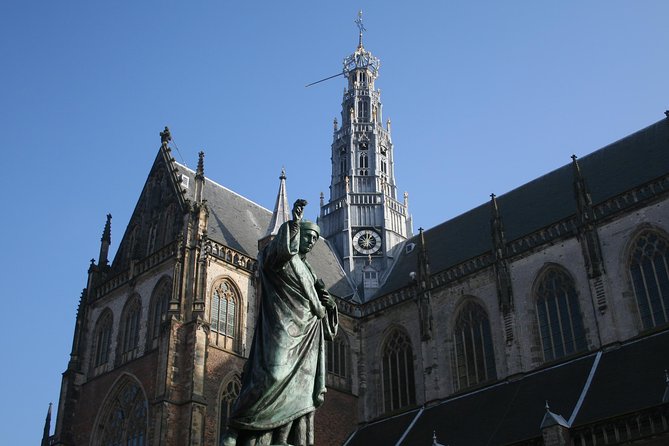
- Haarlem’s Grote Markt is the starting point, with the Grote Kerk of Sint Bavo and historic civic buildings close at hand.
- James Johnson is the guide most often singled out for his clear, engaging explanations of art, architecture, politics, and wartime Haarlem.
- The group is limited to six people, giving you room to ask questions and making a private-style tour possible during quieter periods.
- The walk covers about 4 kilometers, on a mostly flat route through central Haarlem.
- Hofje access depends on the day and time, with Sunday closures and no interior visits on summer tours beginning at 5pm.
- The tour costs $55, a fair price if you want a strong introduction before exploring Haarlem’s museums and historic houses independently.
Starting at Haarlem’s Grote Markt
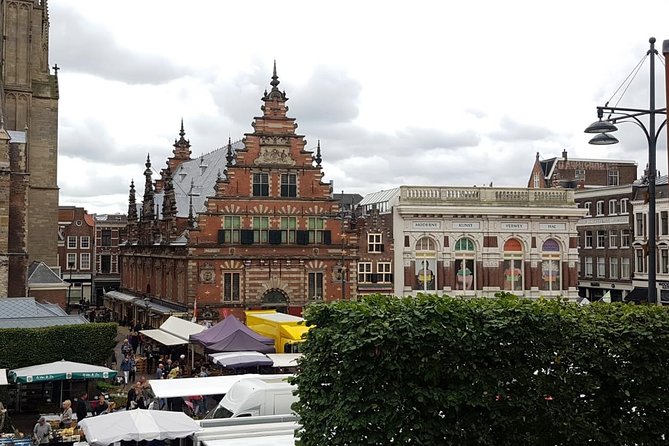
The tour begins at Grote Markt 17, in the center of Haarlem. This is a useful meeting point because the square gathers several of the city’s main sights in one compact view. You are not starting at an anonymous bus stop or on the edge of town. You begin in the middle of Haarlem’s public life.
The square is framed by the Grote Kerk of Sint Bavo, the Town Hall and its Gravenzaal, and a range of old buildings that help explain how Haarlem grew as a North Sea trading port. James uses this opening to set out the city’s story, from its medieval beginnings through the Dutch Golden Age, the Second World War, and the lives of notable residents and visitors.
I like this approach because Haarlem can initially seem easy to grasp. The center is compact, the streets are pleasant, and the architecture looks polished. A good guide shows you that the city is not simply a smaller, quieter alternative to Amsterdam. Its buildings reveal changes in trade, religion, wealth, taste, and civic power.
The Grote Markt also gives you your first lesson in Dutch architectural styles. Instead of treating every old façade as one general category, the tour connects details to different periods and uses. You begin to notice how a church, town hall, merchant house, and almshouse served different parts of city life.
More walking tours in Netherlands:
- Rotterdam: Architectural Highlights Guided Walking Tour
★ 4.8 · 215 reviews - Rotterdam: Highlights, Gems, Architecture & History Walk
★ 5.0 · 191 reviews - Rotterdam Walk: Hilights, Gems, Architecture & WWII | 2 or 3hrs
★ 5.0 · 149 reviews
Reading Haarlem through art and architecture
Architecture is the strongest thread running through this experience. James is praised for explaining styles clearly and for bringing a tablet with historical photographs and images of objects. That is a valuable touch when a building has been altered, when a historic view is difficult to picture, or when an important detail is easy to miss from street level.
The tour also brings art into the walk. Haarlem’s artistic identity is not treated as a separate museum topic. It is linked to the city’s prosperity, its patrons, its churches, and its public buildings. You hear about painting, local culture, and the people who shaped the city’s reputation.
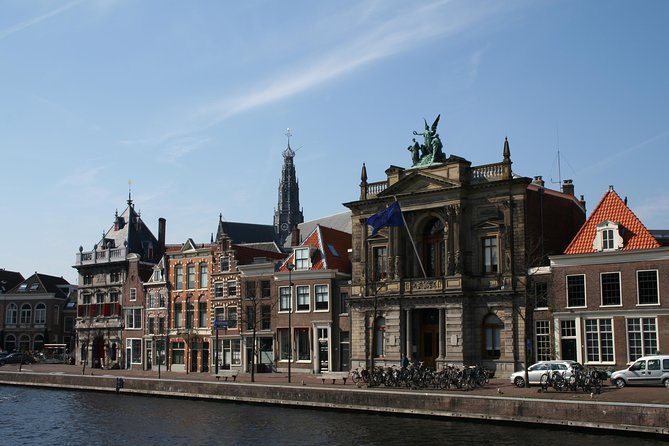
The Teylers Museum is included among the important landmarks discussed along the route. The museum is a major point of interest for art, science, and old collections, but the walking tour does not include an interior visit. That distinction matters. You get context and a reason to return, not a museum admission or a guided gallery tour.
The same applies to the Frans Hals Museum. One of the most useful things James does is help you understand where the museum fits into Haarlem’s artistic story. You should plan a separate visit if you want to see its collection. The walking tour gives you a framework, then lets you decide which interiors deserve your time and admission fee.
This makes the experience a good first activity in Haarlem. I would take it early in a stay, then use the rest of the day or the following day to revisit the places that caught my attention.
The hidden view and Haarlem’s quieter corners
One highlight is a secret spot with broad views over Haarlem. The exact location is not specified in the tour details, which is probably part of the appeal. You should expect a viewpoint reached during the walk rather than a formal observation platform with a ticket booth.
For photographers, this can be one of the most useful parts of the route. Haarlem’s beauty is easy to photograph at street level, but a higher or less obvious angle helps you understand the city’s shape. It also gives the walk a change of pace after the denser buildings around the main square.
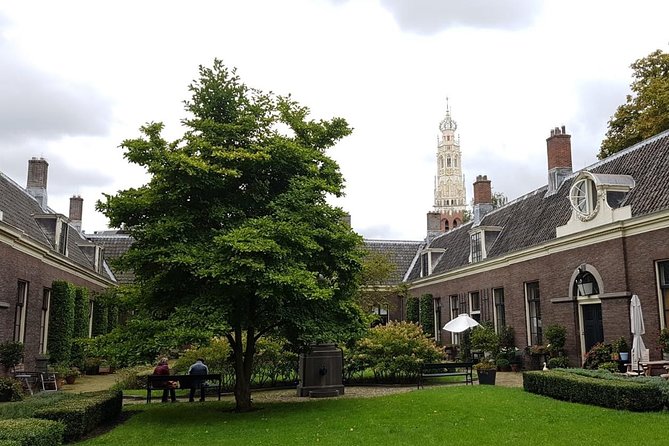
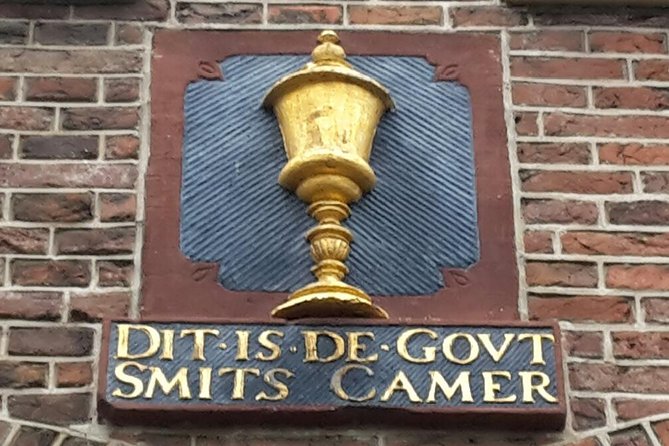
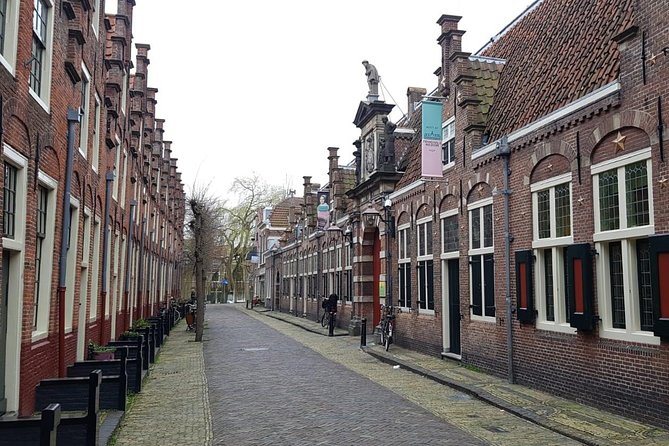
The tour also takes you toward less obvious places, including a beautiful hofje with a walled garden. These almshouse courtyards are among Haarlem’s most distinctive features. They offer a glimpse of private charity and everyday social history, often tucked behind an unassuming entrance.
A hofje visit is not just a pretty pause. It shows how older communities cared for residents and organized space within a busy town. The contrast is striking: a narrow street can open into a calm, enclosed garden, with a completely different mood from the public square outside.
There is an important timing rule. Hofjes close at 5pm each day, and public viewing is not available on Sundays. Summer tours starting at 5pm do not go inside them. If the hofje is a priority, choose a morning or afternoon departure on a weekday or Saturday.
Windmills, museums, and the city’s wider story
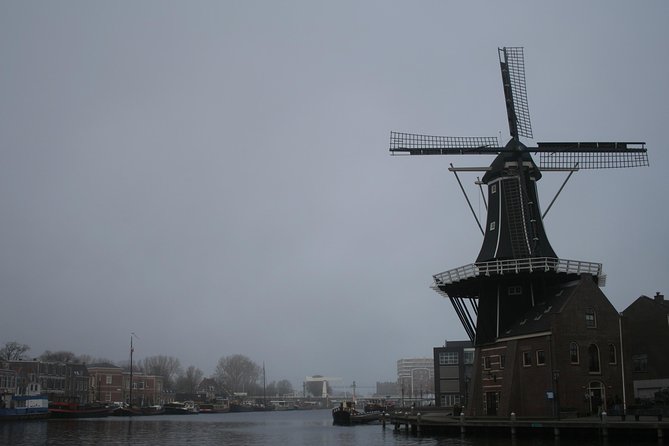
Molen Adriaan is another key landmark connected with the walk. The windmill helps place Haarlem within the working world of the Netherlands, where wind power supported industry and urban life. It is also one of the city’s most recognizable sights and a strong subject for photographs.
The value here is not simply stopping for a picture. James connects individual sights to a larger account of how Haarlem functioned. A windmill, a church, a museum, and a civic building each tell a different part of the story. Taken together, they make the city easier to understand.
The route also brings in Haarlem during the Second World War. This is one of the most praised parts of the experience. James discusses the effects of Nazism on local people and uses historical images to make the period more concrete.
The story of Corrie ten Boom is part of this wartime focus. Her home and the Dutch resistance are treated as important pieces of Haarlem’s past. You should not assume that the walking tour includes entry to every related museum or house. Instead, expect historical discussion and pointers to places you can visit separately.
The women’s resistance museum is also singled out as a memorable subject. If this part of Haarlem’s story matters to you, ask James about it during the walk and note the location for a later visit. The small group makes that sort of conversation much easier than it would be on a large coach tour.
More history tours in Netherlands:
- Rotterdam Must Do Tour: Highlights, History, WW2 and Architecture
★ 5.0 · 20 reviews - Gouda Private Walking Tour: History, Architecture & Cheese
★ 4.5 · 8 reviews - Maastricht Highlights, Architecture & Heritage Tour
★ 5.0 · 7 reviews - Amsterdam Walking Tour. All about History, Architecture, Traditions & Anecdotes.
★ 5.0 · 2 reviews
What the guide adds to the experience
A city walk lives or dies by its guide, and James Johnson receives unusually strong praise for his delivery. His strengths are clear explanations, wide knowledge of art and history, patience with questions, and a friendly manner.
I would value the way he links political, religious, artistic, and architectural subjects rather than presenting a string of disconnected dates. Haarlem’s story works best when those subjects are tied together. The town’s buildings become evidence, not just decoration.
James also seems comfortable adapting to the group. A couple may want architectural detail, while another person may be more interested in wartime stories, museums, or local food. With a maximum of six people, the guide can respond to those interests without losing the group.
Several bookings have effectively become private tours when only two people attended. That is not guaranteed, but the small cap gives you a better chance of a personal conversation. It also means you can ask why a building matters, where to go next, or which museum deserves your limited time.
The practical recommendations are another plus. James has pointed people toward good beer and suggested Huis Barnaart, a 19th-century canal home in Empire style. Advance reservations are needed for Huis Barnaart, and the same applies to Huis Bartolotti in Amsterdam. These are useful tips because they turn a general orientation walk into a starting point for further exploration.
Walking conditions, timing, and group size
The tour lasts about two and a half hours and covers approximately 4 kilometers, or 2.5 miles. The route is described as easy and flat, but the distance still matters. You will be on foot for the full experience, with cobblestones and regular stops at buildings and public spaces.
This is not the right choice if you have serious difficulty walking. Even a flat route can feel tiring when it lasts several hours. Wear shoes that handle old streets well, and keep enough space in your schedule for the walk to finish at a different location from the starting point.
There are several departure times, which helps if you are fitting Haarlem into a busy day. Still, do not choose solely by convenience. A late summer departure at 5pm may save time on your schedule but will not include the interior of the hofjes.
The maximum group size is six. That is a major advantage for anyone who likes to ask questions, take photographs, or hear the guide without straining. It also avoids the stop-and-start feel common on large city tours.
The tour operates in English with a certified English-speaking guide. Confirmation is provided at booking, the meeting point is near public transportation, and service animals are allowed. The activity is suitable for most participants, provided they can manage the walking distance.
Weather is worth considering. The walk continues in rain, so bring suitable clothing and protect your phone if you plan to use it for photographs or notes. The buildings and stories remain worthwhile in poor weather, but the secret viewpoint and outdoor courtyards will be more enjoyable on a dry day.
Is $55 a fair price?
At $55, this is not the cheapest way to see Haarlem. You are paying for a guided experience rather than simply walking through the center with a map. The price includes the walk, the certified English-speaking guide, and all tour fees, but not tips or admission to museums and interiors.
The value depends on how you like to travel. If you enjoy finding every place alone, reading signs, and using a guidebook, you may prefer to explore independently. If you want the city’s art, architecture, and wartime events connected by one person who can answer questions, the cost is easier to justify.
I see the strongest value in the small group. A six-person maximum gives you a level of access that a cheaper large-group tour may not provide. When attendance is low, the experience can feel close to a private walk without the full cost of booking one.
The tour also helps prevent a common mistake: spending all your time around the most obvious square and canal views. James points out places you might not find on your own, then gives suggestions for museums, historic houses, food, and drinks. That can save time and make the rest of your visit more purposeful.
Who should take this Haarlem walk?
I would recommend it most strongly to first-time visitors who want an introduction before exploring on their own. It suits people who care about historic buildings, painting, civic history, photography, and local stories rather than only checking off famous sights.
It is also a good fit if you are staying in Amsterdam and want to spend part of a day in Haarlem. The tour gives you structure during a short visit and helps you decide if you want to return for a museum or historic house.
Art and architecture students, photographers, and curious independent travelers should get plenty from it. The tablet images, building details, and discussion of styles add more than a basic stroll around the center.
You may want a different experience if you prefer museum interiors, a food-focused tour, or a very short walk. The cathedral, Frans Hals Museum, Teylers Museum, and other interiors are not covered as full visits. You will need separate tickets and time for those.
The tour is rated 5 out of 5 from 59 reviews, with 100 percent recommending it. The strongest pattern is clear: James’s explanations, the small group, the architecture, and the wartime stories are the reasons to book.
My verdict on the Haarlem walking tour
Book this tour if you want Haarlem to make sense, not just look attractive. The city’s best qualities are spread across its churches, civic buildings, museums, windmill, courtyards, and personal stories. A strong guide helps you connect them.
Choose an earlier departure if you want to enter a hofje, and avoid Sunday if that courtyard experience is important. Give yourself enough time for 4 kilometers, then use James’s suggestions to plan a museum, historic house, meal, or drink afterward.
For $55, I consider this a good-value introduction for history, art, architecture, and photography fans. It is especially appealing when James leads the walk and the group stays small. If that sounds like your kind of Haarlem, this is a smart first step.
FAQ
How long does the Haarlem walking tour last?
The tour lasts approximately 2 hours and 30 minutes.
How far do you walk?
The route covers about 4 kilometers, or 2.5 miles.
Where does the tour begin?
It begins at Grote Markt 17, 2011 RG Haarlem, Netherlands.
Does the tour end at the same place?
No. The activity ends at a different location, with the exact details provided when booking.
How many people can join?
The tour has a maximum of six participants.
Is the tour conducted in English?
Yes. It includes a certified English-speaking guide.
Does the tour enter the hofjes?
Hofje access depends on timing. The hofjes are closed on Sundays and close daily at 5pm. Summer tours starting at 5pm do not go inside them.
Are museum admissions included?
No. The walking tour includes the guide and tour fees, but interior admission to places such as the cathedral or museums is not included.
What is the cancellation policy?
You can cancel at least 24 hours before the start time for a full refund. Cancellations or changes made within 24 hours are not refunded or accepted.
Just added in Netherlands
- Rotterdam Must Do Tour: Highlights, History, WW2 and Architecture★ 5.0 · 20 reviews
- Escape Room – l’Architecte★ 4.5 · 13 reviews
- Private Rotterdam Walking Tour – guided by Architects★ 5.0 · 2 reviews
- Rotterdam Architecture and Highlights Walking Tour (TOP RATED)★ 4.5 · 14 reviews
- Maastricht Highlights, Architecture & Heritage Tour★ 5.0 · 7 reviews
- Gouda Private Walking Tour: History, Architecture & Cheese★ 4.5 · 8 reviews
- Amsterdam Architecture Tour★ 5.0 · 4 reviews
- Walking Tour about Golden Age Architecture, private local guide★ 5.0 · 15 reviews
Walking Tours, compared.

The Official Art Deco Walking Tour by The Miami Design Preservation League
Read our review →
Baroque Architecture and Underground Walking Tour
Read our review →
Chicago in a Day: Food, History & Architecture Walking Tour
Read our review →

Ramblas, Old Town, Gothic and Gaudi Architecture Walking Tour
Read our review →
Chicago’s Secret Interiors Architectural Walking Tour
Read our review →
Browse the lists this tour appears in