

REVIEW · CHICAGO ARCHITECTURE TOURS
Chicago Walking Tour: Modern Architecture
Chicago’s newer buildings tell a different city story. I like the small group of no more than 15 and the chance to hear about overlooked buildings from a certified guide, especially the stories tied to Mies van der Rohe and Bertrand Goldberg. The main drawback is simple: if modern architecture is not your thing, the walk may feel a bit repetitive.
This 90-minute tour costs $35 per person and begins at the Chicago Architecture Center on East Wacker Drive. I also like that your ticket includes the CAC galleries, but you should expect a brisk urban walk with outdoor viewing, so cold weather, comfortable shoes, and a willingness to look up often matter.
Key points to know before you go
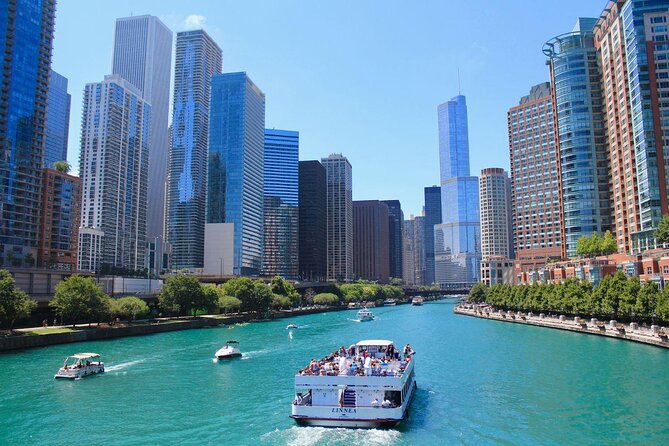
- The Chicago Architecture Center begins the experience with a 4,000-building scale model, galleries, and an award-winning shop.
- The route focuses on modern and postmodern Chicago, including the Prudential Building, Aon Center, Inland Steel Building, Daley Center, AMA Plaza, Marina City, and the Michigan Avenue Apple Store.
- The group is capped at 15 people, giving you a better chance to hear the guide and ask questions.
- Marina City provides the tour’s clearest social story, showing how architecture was used to draw middle-class residents back into the city.
- The pace can be brisk, and one guide, Kathleen, was noted for walking fast, so wear shoes suited to city sidewalks.
- The tour offers solid value at $35, especially when you use the included CAC galleries before or after the walk.
Why Chicago’s modern architecture deserves a closer look
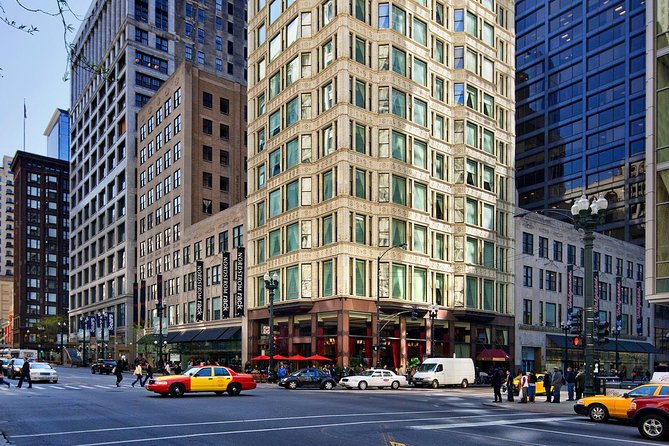
Chicago is famous for early skyscrapers, but this walk shifts your attention to the decades that followed. You will look at buildings from the modern and postmodern eras, then hear how they fit into Chicago’s changing plans for work, housing, art, and public space.
That focus gives the tour a clear purpose. It is not a general city walk with a few tall buildings added for decoration. The guide concentrates on newer structures, many of which you could pass without noticing if you were heading from one major attraction to another.
I especially like the way this subject connects architecture to daily city life. You are not only looking at shapes, materials, and engineering. You are hearing why certain buildings were built, what problems their designers hoped to solve, and how the Loop changed over time.
The experience is led by a professional certified guide, and past departures have featured guides such as Marcia, Donna, Ollie, and Kathleen. Their styles may differ, but strong guide narration is central to the value here. Without it, several of these exterior views would be easy to admire briefly and then forget.
More walking tours in Chicago:
- Chicago in a Day: Food, History & Architecture Walking Tour
★ 5.0 · 1,153 reviews - Chicago’s Secret Interiors Architectural Walking Tour
★ 5.0 · 635 reviews - Chicago: Secret Interiors Architecture Walking Tour
★ 4.9 · 498 reviews
Starting at the Chicago Architecture Center
The tour begins at the Chicago Architecture Center, 111 E Wacker Dr. This is more than a meeting point. The center gives you a useful visual introduction before you head outdoors.
The biggest attraction is a scale model showing 4,000 Chicago buildings. Ten minutes is not enough to study every block, but it helps you see the city as a connected whole. You can get a sense of how the Loop, river, and surrounding districts fit together before the guide begins pointing out individual buildings.
Admission to the CAC galleries is included. That makes the starting point more valuable than a standard sidewalk meeting spot, particularly if you arrive early or want to return after the walk. The center also has an award-winning store, which may appeal to anyone interested in architectural books, models, or design items.
One practical point: the tour does not include luggage or stroller storage, and there is no coat check. Plan to arrive ready to walk. If you have bulky bags, you will need to handle them yourself during the route.
Prudential, Aon, and Inland Steel: a trio of changing ideas
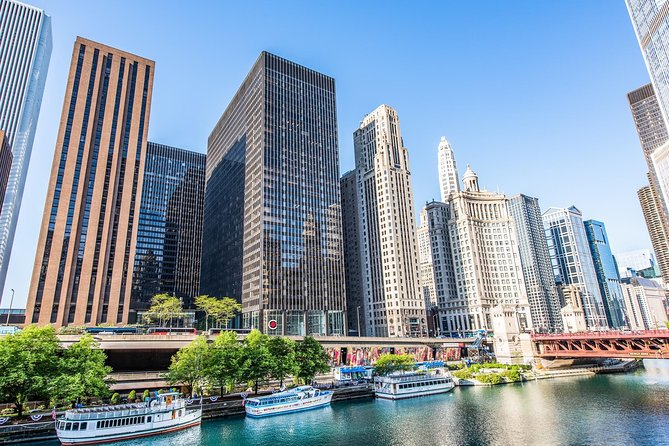
After leaving the center, the walk takes in the Prudential Building, Aon Center, and Inland Steel Building. The supplied schedule does not assign long formal stops to each one, so you should think of these as guided exterior views rather than extended visits inside.
That format works well for architecture. You can cover more ground while the guide explains how the buildings differ. Look for changes in height, surface treatment, structure, and the way each building meets the street.
The Prudential Building receives particular attention in the tour experience and may be the building that stays with you longest. It offers a useful bridge between older corporate skyscraper traditions and the newer forms that follow.
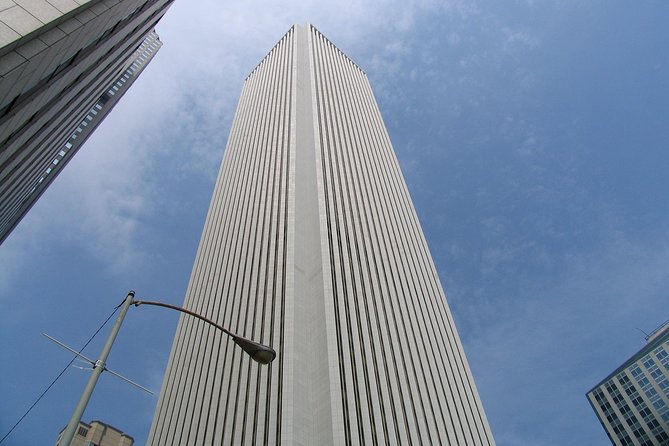
The Aon Center gives you another chance to consider how a tall office building presents itself in the Loop. Its scale is easier to appreciate from the street, where you can compare it with nearby towers and see how much of the city is shaped by vertical office space.
The Inland Steel Building adds another chapter to the modern story. Your guide can help you notice details that a quick photograph misses. This is where the walk earns its keep: you are given a way to read the buildings rather than simply collect their names.
Daley Center and the Chicago Picasso
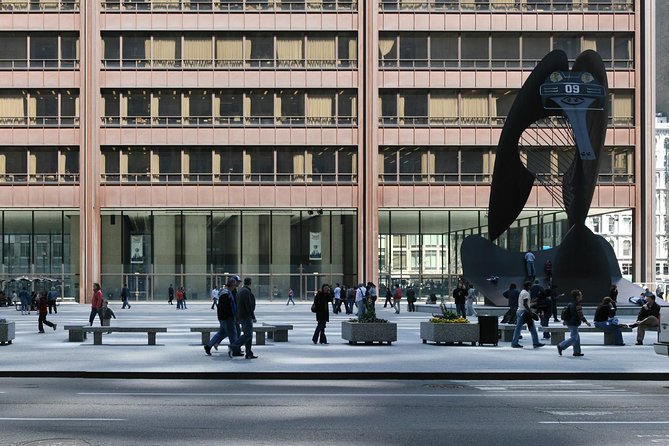
The tour then reaches the Richard J. Daley Center, one of the route’s most interesting public spaces. The building is known for its use of unpainted Cor-Ten steel, a material that changes in appearance as it weathers.
That detail gives your guide an easy way to explain how modern architecture moved beyond polished stone and conventional painted surfaces. The building’s exterior is not meant to look pristine in the usual corporate sense. Its material is part of the design.
The plaza also includes the famous Chicago Picasso artwork. The tour discusses the sculpture rather than treating it as a random object in front of a government building. That connection between public art, civic space, and architecture makes this a stronger stop than a simple building photo opportunity.
You will spend about 15 minutes here. That is enough time for an explanation and a look around, but not enough for a long pause or a separate museum visit. Keep your attention on the guide, since the plaza can offer plenty of visual distractions.
A few more architecture tours in Chicago worth a look
- Chicago Architecture River Cruise
★ 5.0 · 15,756 reviews - Chicago River 90-Minute Architecture Tour
★ 4.5 · 9,629 reviews - Chicago River: 1.5-Hour Guided Architecture Cruise
★ 4.8 · 8,046 reviews - Chicago Architecture Center River Cruise aboard First Lady
★ 5.0 · 5,536 reviews
AMA Plaza and the Mies van der Rohe connection
The route includes a discussion of AMA Plaza, formerly home to the office of Mies van der Rohe. This is an important stop for anyone drawn to the clean lines and restrained forms associated with modern architecture.
Mies is one of the names that gives this tour its focus. Rather than presenting him as an isolated master, the guide can place his work within Chicago’s wider building culture. You will hear how his approach influenced the look and feel of office architecture, then compare those ideas with other buildings along the walk.
The stop is mainly about interpretation and exterior viewing. You are not promised entry into private offices or a behind-the-scenes look inside the former office. That is worth knowing if you expect interior access.
Still, the site works well in a walking tour because the surrounding streets let you compare different approaches within a short distance. A good guide will help you see why one building feels spare, another feels experimental, and another aims to make a stronger public statement.
Marina City, Bertrand Goldberg’s urban experiment
Marina City receives about 15 minutes and is likely to be the most memorable stop for many people. Designed by Bertrand Goldberg, the complex was planned as a mixed-use residential and commercial project.
Its purpose was larger than creating an unusual pair of towers. Marina City was envisioned as an urban experiment, designed to bring middle-class Chicagoans back into the city after more than a decade of suburban migration.
That social goal gives the architecture real weight. You are not only looking at a striking residential design. You are considering a response to a major change in American city life: people moving away from central neighborhoods and toward suburbs.
The guide’s explanation helps connect the building’s form to its intended use. Mixed-use planning meant housing and commercial activity could exist in one complex, offering an alternative to a city made only of offices by day and empty streets after work.
This is also a good place to ask questions. The group size is limited, and the subject naturally leads to practical topics such as city living, apartment design, and the challenge of keeping downtown neighborhoods active.
The main limitation is time. Fifteen minutes goes quickly, especially if you want photos and a full explanation. Listen first, then take your pictures. You can always return to the area later if Marina City catches your interest.
The Michigan Avenue Apple Store and newer design
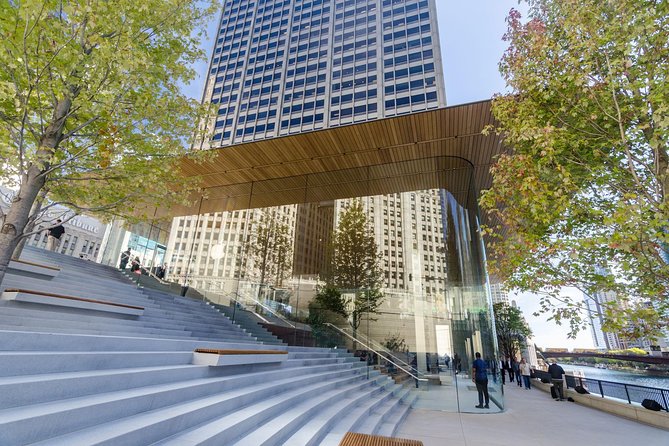
The route also includes a view of the Apple Store on Michigan Avenue. This stop brings the tour closer to current retail architecture and shows how a major brand uses a prominent urban site.
Compared with the older modernist buildings, the store gives you a chance to think about transparency, branding, and the relationship between a building and a busy shopping street. The tour does not promise an extended interior visit or shopping time, so treat it as an architectural viewing stop.
I like this final contrast. The route does not end with one fixed version of modern architecture. Instead, it shows how ideas keep changing. Corporate towers, public buildings, residential experiments, civic art, and retail design all appear within one short walk.
That variety may appeal to you if you want architecture connected to real city functions. If you prefer a detailed tour of one famous building, this format may feel too broad.
What the $35 price includes
At $35, the tour is reasonably priced for a 90-minute guided walk, especially because admission to the CAC galleries is included. You are paying for the guide’s explanation, not for entry to a collection of buildings.
That distinction matters. Most of the route involves exterior views, public plazas, and discussion from the sidewalk. If you want interior access, this is not the right product to book.
The strongest value comes from the context. You could walk past the Prudential Building, Aon Center, Daley Center, AMA Plaza, and Marina City on your own, but you would miss the connections between them. A good guide turns separate structures into a story about materials, city planning, migration, and changing ideas about urban life.
The small group also helps. With a maximum of 15 people, you should be able to hear the narration more easily than on a large coach-style outing. It also makes questions more practical. The group is not private, but it is small enough to feel personal.
Pace, weather, and practical comfort
This is a walking tour, not a slow architectural seminar. One departure was praised for its content but noted as fast-paced, so plan for steady movement between stops.
Wear comfortable walking shoes. The route is only about 90 minutes, but city sidewalks and frequent stops can be tiring if your footwear is poor. Bring weather protection suited to the day. A previous cold-weather tour remained enjoyable because the guide kept the information lively, but cold can still affect your comfort.
The tour can operate with a small group, and most people can participate. Service animals are allowed, while pets are not. The tour is near public transportation, which makes the East Wacker meeting point fairly practical for reaching from elsewhere in Chicago.
The itinerary can change without notice. That is normal for an outdoor city walk, where access, events, weather, or local conditions can affect the route. Keep this in mind if you need every stop to happen in a fixed order.
Who will enjoy this most
I would choose this tour if you like architecture, city planning, or the way design reflects social change. It is especially useful if you already know Chicago’s famous early skyscrapers and want to understand the city’s later building traditions.
History lovers should also find plenty to enjoy, since the guide connects structures to the postwar city and suburban migration. The discussion of Marina City, in particular, gives the route a human purpose beyond style and engineering.
You may be less satisfied if modern buildings all look alike to you. One departure found the subject monotonous, which is a fair warning. The tour stays close to its theme, so it does not provide a broad introduction to Chicago food, neighborhoods, politics, or major landmarks outside modern architecture.
The guide makes a big difference. Marcia was praised for being friendly and well informed, while Donna was praised for presenting material in architectural order and answering questions. You cannot select a particular guide from the information provided, but the quality of the narration is a major part of the experience.
Cancellation and booking details
The tour is often booked about five days ahead, so reserving early is sensible if your Chicago schedule is tight. Confirmation is provided when you book.
Free cancellation is available up to 24 hours before the start time for a full refund. Cancellations or changes made within 24 hours are not refunded or accepted, and the cut-off uses Chicago local time.
If the operator cancels, contact the booking company you used as soon as possible. One past issue involved a cancellation discovered at the meeting point, with difficulty securing a refund through a third-party booking channel. That is a useful reason to keep your confirmation details handy and check for updates before heading out.
FAQ
How long is the Chicago modern architecture tour?
The walking tour lasts approximately 1 hour and 30 minutes.
Where does the tour begin?
The meeting point is the Chicago Architecture Center at 111 E Wacker Dr, Chicago, IL 60601, USA.
What buildings are included on the route?
The route includes views of the Prudential Building, Aon Center, Inland Steel Building, Daley Center, AMA Plaza, Marina City, and the Apple Store on Michigan Avenue.
Is admission to the Chicago Architecture Center included?
Yes. Admission to the Chicago Architecture Center galleries is included. The center also has a 4,000-building scale model and an award-winning store.
How large is the tour group?
The tour has a maximum of 15 travelers.
What is the cancellation policy?
You can cancel at least 24 hours before the start time for a full refund. Cancellations or changes made less than 24 hours before the start time are not refunded or accepted.
Should you book this architecture walk?
Book it if you want a focused look at Chicago’s modern and postmodern buildings, with clear explanations about the people and city plans behind them. The combination of the CAC model, public art, Mies van der Rohe’s connection, and Bertrand Goldberg’s Marina City makes the route more thoughtful than a basic skyscraper stroll.
Skip it if you want interior access, a relaxed pace, or a general tour of Chicago’s best-known sights. At $35, it offers good value for architecture buffs and history lovers, but its appeal depends heavily on your interest in modern design.
For the best experience, arrive ready to walk, allow time for the CAC galleries, and wear clothing suited to the weather. If those simple conditions fit your plans, this is a smart way to see the city’s later architectural chapters without spending half a day on a formal museum visit.
Just added in Chicago
- Private Frank Lloyd Wright Architectural Tour by Luxury Vehicle★ 3.5 · 7 reviews
- Private Chicago Architecture Tour★ 5.0 · 5 reviews
- Chicago Luxury Minibus City Tour and Architecture River Cruise★ 4.5 · 8 reviews
- Chicago History and Architecture Walking Tour with Boat Cruise★ 4.5 · 10 reviews
- Private Chicago Architecture Walking Tour★ 5.0 · 6 reviews
- Small Group History And Architecture Walking Tour of Chicago★ 4.5 · 8 reviews
- Chicago Walking Tour: See Inside Art Deco Masterpieces★ 4.9 · 8 reviews
- Chicago: Icons Guided Architecture Walking Tour★ 4.4 · 4 reviews
Chicago Architecture Tours, compared.
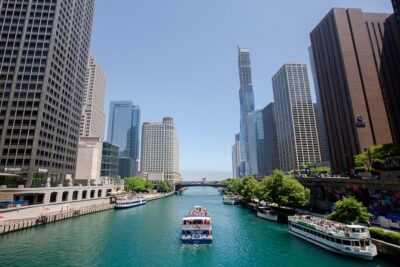
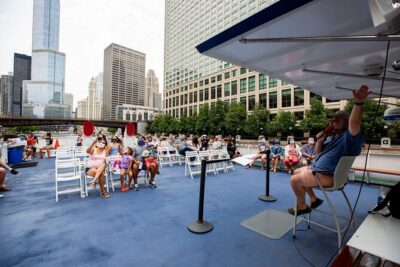

Chicago River: 1.5-Hour Guided Architecture Cruise
Read our review →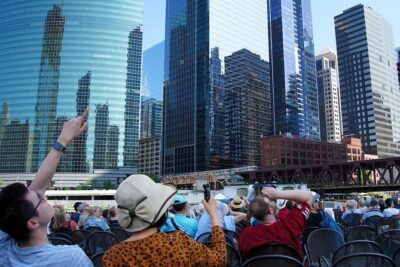
Chicago Architecture Center River Cruise aboard First Lady
Read our review →
Architecture River Cruise Skip-the-Ticket Line
Read our review →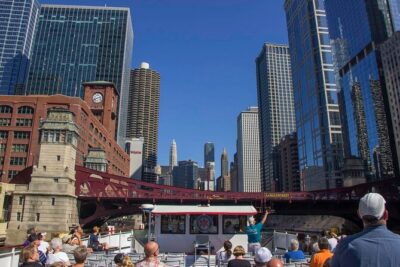
Chicago River 45-Minute Architecture Tour from Magnificent Mile
Read our review →

45-Minute Family-Friendly Architecture River Cruise
Read our review →Browse the lists this tour appears in