
REVIEW · ARCHITECTURE RIVER CRUISES
Chicago Architecture Center River Cruise aboard First Lady
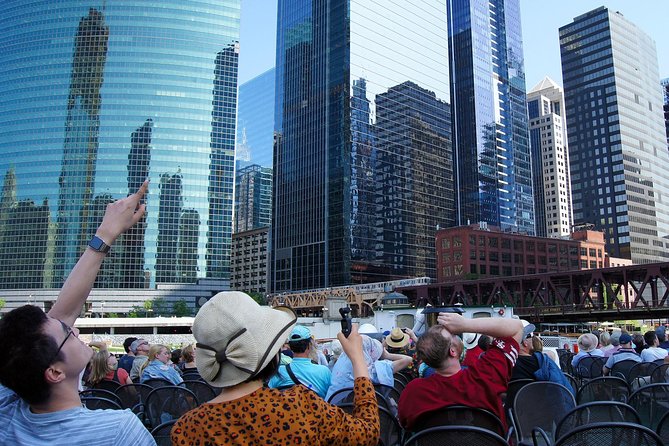
Chicago’s best building tour floats. The Chicago Architecture Center River Cruise aboard First Lady gives you a front-row view of the riverfront skyline, while a trained docent explains why the buildings look the way they do. I like the excellent guides, including Cynthia, Laura, Amy, Russell, Nick, and Mark, and I like how the cruise connects architecture with Chicago’s past. The main drawback is that the boat runs rain or shine, and the open deck can feel cold in shade or wind.
I also like the easy 90-minute format. You see a wide sweep of central Chicago without walking miles or craning your neck from a sidewalk. At $57 per person, it is not a bargain sightseeing boat, but the live architectural commentary makes it much better value than a simple skyline ride. Arrive early, though, because seating is general admission and the dock has no elevator.
Key points to know before you go
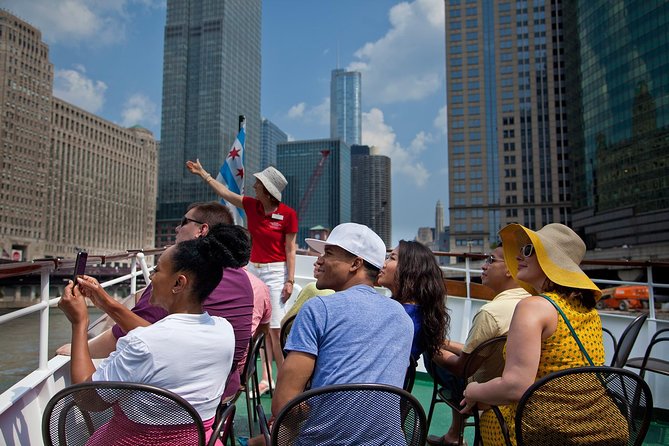
- The Chicago River is the real star: The cruise shows how industry, shipping, transport, and recreation reshaped the river and the city around it.
- Docent-led storytelling makes the difference: Guides explain the buildings, architects, engineering, and urban history instead of simply pointing at towers.
- You get a broad skyline survey in 90 minutes: Look for Marina City, Willis Tower, Navy Pier, 150 North Riverside, and the former Marshall Field warehouse.
- Seating is first come, first served: Printed seat numbers are not assigned seats, so arrive about 30 minutes early, or earlier in summer.
- There is shelter for poor weather: The upper deck is open air, while the lower salon is enclosed, climate controlled, and lined with large windows.
- Plan around a few restrictions: Luggage storage is unavailable, tickets cannot be changed or transferred, and the dock is reached without elevator access.
Why this river cruise is such a good Chicago introduction
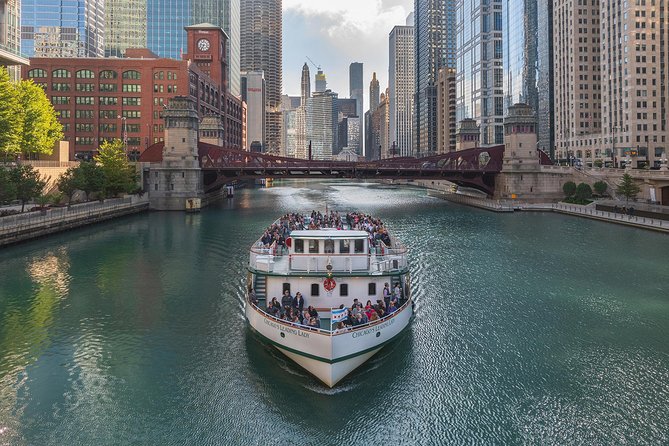
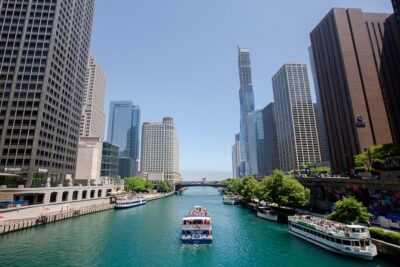
Chicago can feel like an outdoor architecture museum, but its buildings are hard to understand from street level. Tall towers block one another, busy roads get in the way, and you often see only the front of a building. From the Chicago River, you get the full height and shape of the structures, plus a clear sense of how they sit together.
The boat leaves from 112 East Wacker Drive, right along the Riverwalk. The dock is three blocks north of Millennium Park and close to the Magnificent Mile. That makes this a handy first-day activity. You can use the cruise to get your bearings, then recognize buildings and river bends as you explore on foot later.
The strongest part is the commentary. The Chicago Architecture Center docents explain design choices, construction, architects, and the city’s growth in plain language. Some guides bring extra energy to the presentation. Cynthia was praised for her engaging delivery, while Laura earned special notice for her command of architecture, engineering, and Chicago history. Russell, Nick, and Mark were also singled out for lively and clear presentations.
This is not a silent sightseeing ride where you are left to identify towers with a phone app. The guide keeps your attention moving from one side of the river to the other. The best explanations also show how buildings respond to their neighbors, which gives the skyline more meaning than a simple list of names.
More architecture river cruises in Chicago:
- Chicago Architecture River Cruise
★ 5.0 · 15,756 reviews - Chicago River: 1.5-Hour Guided Architecture Cruise
★ 4.8 · 8,046 reviews - Chicago: Architecture River Cruise Skip-the-Ticket Line
★ 4.8 · 4,325 reviews
What the 90-minute route shows you
The cruise follows the Chicago River through the central city, though the exact route, boat, and schedule can change. The river itself provides the connecting story. It has served industry, transportation, shipping, and recreation, and the buildings along its banks reflect those changing roles.
You will see major buildings from the water, but the route is not a stop-and-walk tour. You remain aboard for the full experience and return to the same meeting point. That makes the cruise efficient, but it also means you cannot step off for a closer look at a particular building.
Navy Pier and Chicago’s changing waterfront
Navy Pier appears as an example of adaptive reuse. Its past includes use as a naval base, university campus, shipping center, and entertainment destination. From the boat, you see it as part of the larger river and lakefront story rather than as a separate attraction.
The view is useful because it adds context to a place many people visit only for rides, food, and lake views. You see how Chicago has repeatedly found new purposes for major waterfront structures.
Marina City’s unmistakable concrete towers
Marina City is one of the cruise’s most memorable sights. Bertrand Goldberg designed the twin cylindrical towers as an urban experiment intended to draw middle-class residents back toward the city during a period of suburban migration.
From the river, the towers make immediate visual sense. Their rounded forms contrast sharply with the glass and rectangular steel buildings around them. The docent explains the social goal behind the design, so you are not just admiring an unusual shape. You learn why the towers were built and what problem they were meant to address.
A few more architecture tours in Chicago worth a look
- Chicago River 90-Minute Architecture Tour
★ 4.5 · 9,629 reviews - Chicago River 45-Minute Architecture Tour from Magnificent Mile
★ 4.5 · 2,924 reviews - Chicago Lake and River Architecture Tour
★ 4.5 · 2,308 reviews - Chicago: 45-Minute Family-Friendly Architecture River Cruise
★ 4.7 · 2,304 reviews
Trump International Hotel & Tower and the idea of context
The Trump International Hotel & Tower becomes a lesson in how a building relates to its surroundings. The guide discusses more than its reflective glass and steel exterior, showing how the structure interacts visually with the river and neighboring buildings.
This is one of the more useful themes on the cruise: architecture is not isolated. A tower changes the view around it, reflects nearby structures, and alters the way the river corridor feels. That kind of explanation helps you look at the rest of Chicago with sharper eyes.
Mies van der Rohe’s Modernist statement
One of the last American projects designed by Ludwig Mies van der Rohe occupies a prominent position along the river. Its spare Modernist form gives the docent a chance to explain a very different architectural language from the rounded Marina City towers or the expressive engineering of newer buildings.
You may appreciate this stop most if you like clean lines, structural clarity, and buildings that make an impact through restraint. The river view is especially helpful because you can see the building’s full relationship to the water and the surrounding high rises.
150 North Riverside and engineering on display
150 North Riverside looks as if its upper floors are balanced above a narrow base. The building gives the cruise a strong engineering moment, not just an architectural one. Its unusual form is easy to understand from the water, where the dramatic cantilevered shape is unobstructed.
The guide places the building among Chicago’s major engineering achievements. This is a good reminder that the city’s architecture is not only about historic styles. Newer towers continue to test what a tall building can look like and how it can stand.
Boeing International Headquarters at 100 North Riverside Plaza
The cruise also provides a view of the Boeing International Headquarters at 100 North Riverside Plaza. It is part of the river corridor’s modern office development and helps fill in the connections between the more famous landmarks.
This is a secondary sight rather than the main reason to book, but it contributes to the broad survey. You are seeing a working central business district, not a collection of isolated monuments.
Willis Tower, once the world’s tallest
Willis Tower, still often called the Sears Tower, held the title of the world’s tallest building for nearly 25 years after its completion. From the river, its scale is easier to grasp than from a nearby sidewalk.
The docent explains the tower’s place in Chicago’s skyscraper story. You may have seen its observation deck advertised, but this cruise gives you a different perspective. Instead of looking out from the tower, you look up at the building as part of the city’s architectural record.
The former Marshall Field wholesale warehouse
Size mattered in Chicago long before the newest towers. A building completed in 1930 was then the largest in the world and served as Marshall Field’s wholesale warehouse, where retailers bought stock.
This stop adds commercial history to the tour. The river was not simply a scenic channel. It supported trade, distribution, and the movement of goods, and buildings like this one were shaped by that role. The explanation helps you picture the city as a place of business as well as a center of design.
The Chicago Mercantile Exchange Building
The Chicago Mercantile Exchange Building at 20 South Wacker Drive appears near the end of the route. It reinforces the connection between Chicago’s architecture and its financial identity.
You will not get a long walking visit inside, of course. The value here comes from seeing the building in sequence with the other riverfront towers and hearing how the city’s commercial strength helped shape its skyline.
Chicago Tribune Freedom Center
The Chicago Tribune Freedom Center rounds out the route. It adds another working institution to the view and keeps the tour from focusing only on record-breaking skyscrapers.
Taken together, the stops give you architecture from several periods: early commercial development, Modernism, expressive engineering, corporate construction, and adaptive reuse. The exact order and buildings visible can change, but the overall lesson remains clear: Chicago’s skyline grew in layers.
The boat, seating, and weather reality
First Lady has an open upper deck and an enclosed lower salon. The lower level is climate controlled and surrounded by large windows, so you can continue seeing the buildings if rain begins or temperatures drop.
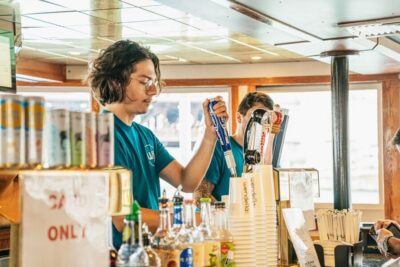
You should still dress for the forecast. Several people found the shaded areas chilly even on otherwise pleasant days. Sunglasses, a cap, or a visor are useful because bright sun can make it harder to look up at the buildings. A warm drink, including hot chocolate, is available along with other purchases from the onboard bar.
Seating is general admission. Ignore any seat number printed on your ticket. Boarding is first come, first served, and the boat can carry up to 250 people. If you care about where you sit, arrive 30 minutes before departure, with extra time during summer.
The boat has restrooms, though they close 15 minutes before the tour ends. There is no WiFi, and drinks and light snacks are not included in the ticket price. A full bar is available, which makes the evening departures appealing if you want a drink while watching the buildings change in the fading light.
Is $57 a fair price?
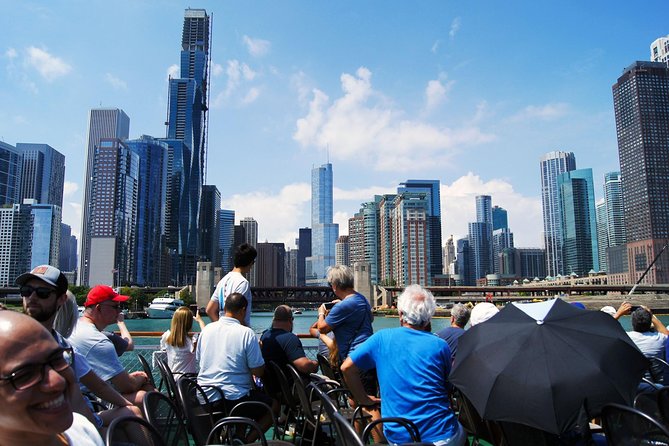
At $57, this is more expensive than a basic boat ride, but the price includes a 90-minute cruise and live commentary from a Chicago Architecture Center docent. I consider that a fair deal if you care about buildings, city history, or getting a useful orientation in a short amount of time.
You are paying for interpretation, not just transportation. A simple skyline cruise can show you the same general river corridor, but it may not explain why Marina City was built, how the river shaped commerce, or why 150 North Riverside looks so unusual. The docent is the main value.
The experience also saves your feet. You cover a large section of central Chicago without crossing busy streets or walking between distant towers. If you are in town for only a few days, that efficiency matters.
The value drops if you want a long architectural walk, interior access, or a small private group. You will see many buildings from the water, but only at a distance, and the group can be large. You also need to accept the strict ticket terms: tickets are non-refundable and cannot be transferred to another departure.
Who will enjoy this most?
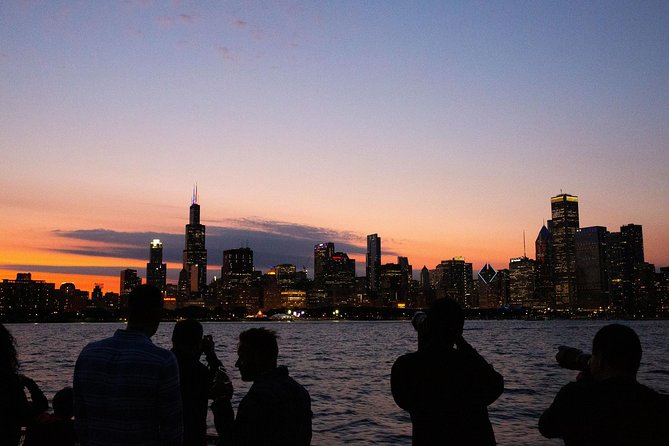
I would put this near the top of the list for a first visit to Chicago. It gives you useful orientation, and the stories help you recognize places during the rest of your trip. Several guides also make the material lively enough for people who do not normally seek out architecture tours.
It suits:
- Adults who want city history without a long walking tour
- Couples looking for an evening activity with skyline views
- Families with older children who can follow a 90-minute presentation
- Architecture, engineering, design, and urban history fans
- Anyone visiting Chicago on a short schedule
Children must be accompanied by an adult, and the activity is not recommended for children younger than 12. Younger kids may enjoy the boat itself, but the steady architectural commentary may be too much for them.
The dock has no elevator access. Service animals are allowed, but pets are not. Strollers can come aboard, but children must be removed before boarding, and the stroller is folded and stored in the salon. Leave luggage at your hotel because there is no dockside storage and luggage cannot be brought aboard.
How to make the most of your departure
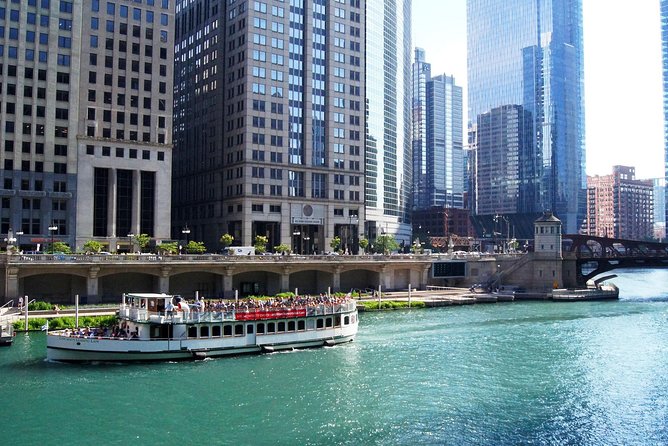
Book a time that matches what you want from the light. Daytime departures make it easier to study details on the buildings, while evening sailings can give the skyline a more dramatic appearance. The route and schedule can change, so treat a specific building list as a guide rather than a guarantee.
Arrive at least 30 minutes early. The ticketing office is at Riverwalk level, and you need time to find the entrance, collect the proper boarding material if required, and choose a seat. The Riverwalk entrance is at street level near the northeast corner of Michigan Avenue and Wacker Drive.
If you drive, the nearest listed garage is LAZ Parking at 111 East Wacker Drive, next to the Chicago Architecture Center and across from the stairway to the dock. Parking costs extra, so public transportation is likely simpler if it fits your plans.
After the cruise, consider visiting the Chicago Architecture Center across Wacker Drive. Showing your cruise ticket provides discounted admission of $5 per person. That pairing works well because the boat gives you the city in three dimensions, while the center can add models and exhibits.
Should you book the First Lady architecture cruise?
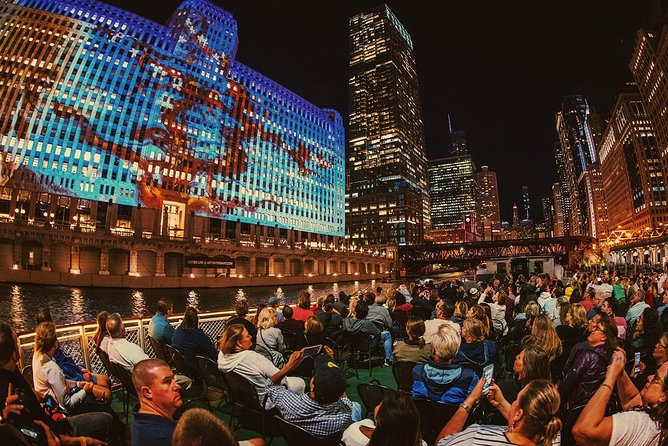
Yes, if you want one polished Chicago activity that combines skyline views, city history, and clear architectural explanation. The guides are the strongest feature, the route covers a lot of ground, and the 90-minute length is easy to fit into a busy day.
I would skip it only if you dislike group tours, need a fully flexible ticket, or want to explore buildings from inside. Otherwise, book it early enough to get the departure you want, arrive before boarding, dress for wind and shade, and treat the cruise as your Chicago orientation lesson. At $57, it earns its price through the quality of the storytelling rather than the boat ride alone.
FAQ
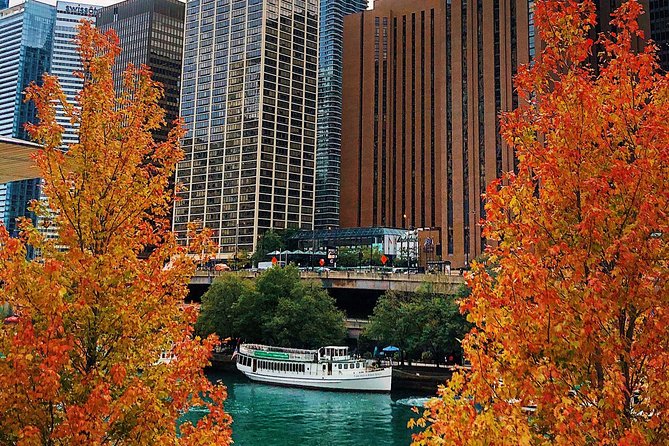
Where does the Chicago Architecture Center River Cruise depart?
It departs from 112 East Wacker Drive along the Chicago Riverwalk. The Riverwalk entrance is at street level near the northeast corner of Michigan Avenue and Wacker Drive.
How long does the cruise last?
The cruise lasts approximately 1 hour and 30 minutes. It returns to the original meeting point.
How early should I arrive?
Arrive 30 minutes before departure. Allow extra time during summer, when the boarding area may be busier.
Is seating assigned?
No. Seating is general admission and boarding is first come, first served. Any seat numbers printed on tickets are not valid.
Does the cruise operate in bad weather?
Yes. Sailings operate in all weather conditions. The upper deck is open air, while the lower salon is enclosed and climate controlled with large windows.
Can I bring luggage or a pet?
No luggage storage is available at the dock, and luggage cannot be brought aboard. Pets are not allowed, though service animals are permitted.
Can I buy food or drinks on the boat?
Yes. Drinks and light snacks are available for purchase, and the boat has a full bar. Hot chocolate is also available.
Just added in Chicago
- Private Chicago Architecture Tour★ 5.0 · 5 reviews
- Private Frank Lloyd Wright Architectural Tour by Luxury Vehicle★ 3.5 · 7 reviews
- Private Chicago Architecture Walking Tour★ 5.0 · 6 reviews
- Chicago Luxury Minibus City Tour and Architecture River Cruise★ 4.5 · 8 reviews
- Chicago History and Architecture Walking Tour with Boat Cruise★ 4.5 · 10 reviews
- Small Group History And Architecture Walking Tour of Chicago★ 4.5 · 8 reviews
- Chicago: Icons Guided Architecture Walking Tour★ 4.4 · 4 reviews
- Chicago: Private Architecture Tour – 3 or 6 Hours★ 4.0 · 6 reviews
Architecture River Cruises, compared.
Chicago River: 1.5-Hour Guided Architecture Cruise
Read our review →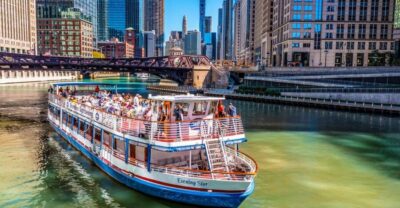
Architecture River Cruise Skip-the-Ticket Line
Read our review →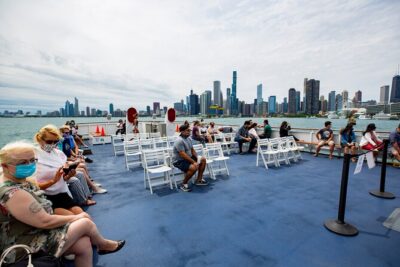
45-Minute Family-Friendly Architecture River Cruise
Read our review →
Chicago River 90-Minute Architecture Boat Tour
Read our review →
Chicago River Architecture Tour with Small Boat Upgrade Option
Read our review →Browse the lists this tour appears in