
REVIEW · CHICAGO ARCHITECTURE TOURS
Chicago Architecture Walking Tour: What’s New
New Chicago is still taking shape. This 90-minute walk shows you how the city’s newest towers, apartments, renovations, and public spaces fit into the older city around them. I like the small-group format and the way guides such as Paul S., Paula, Mary Jo, and Mary Ann connect design choices with history and daily city life.
I also like the compact route near the Chicago Architecture Center, since you get a focused lesson instead of an exhausting march across downtown. The tradeoff is that building interiors can change because of weekend schedules, holidays, or unexpected closures, and Chicago weather can make an outdoor tour less pleasant.
Key points to know before you book
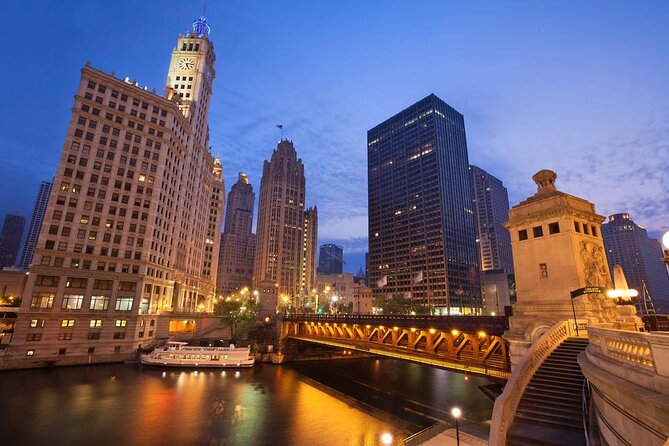
- New buildings take center stage: See recent work around Pioneer Court, 465 N Park Drive, St. Regis Chicago, and Apple Michigan Avenue.
- The old city remains part of the story: The tour discusses additions and renovations to the historic Tribune Tower.
- A guide makes the difference: Paul S., Paula, Mary Jo, and Mary Ann have led tours praised for clear explanations, good stories, and thoughtful answers.
- The group is capped at 15 people: That gives you a better chance to hear the guide and ask questions.
- CAC gallery admission is included: Arrive early or stay afterward to explore the Chicago Architecture Center galleries.
- The $35 price is fair for a short specialist tour: You are paying for a certified guide, a tightly planned route, and access to the CAC galleries.
Why this short walk works for Chicago architecture
Chicago can make architecture feel like homework. Every block seems to contain a famous building, a new tower, or a bit of urban planning that deserves explanation. If you walk alone, you may admire the view without understanding why a building looks the way it does.
This tour solves that problem by keeping the focus close to the Chicago Architecture Center at 111 E Wacker Drive. You are not asked to cover the entire Loop, the West Loop, and the lakefront in one rushed outing. Instead, you spend about an hour and a half looking at a manageable group of recent projects beside and near the Chicago River.
I like this approach because the subject is specific. The tour is not a general introduction to all of Chicago architecture. It asks a narrower question: What is new, and how does new construction respond to the city that was already here?
That makes the walk useful for architects and designers, but you do not need technical training. Anyone curious about buildings, city planning, renovation, housing, or public space can follow along. A good guide turns glass, steel, stone, setbacks, and entrances into understandable choices.
The listed price is $35 per person. That is a sensible rate for a 90-minute tour led by a professional certified guide, especially since admission to the Chicago Architecture Center galleries is included. If you already plan to visit the CAC, the tour adds a guided outdoor lesson at a modest extra cost. If you only want to snap photos of tall buildings, you can see plenty for free, but you will miss the explanations that give those buildings meaning.
More walking tours in Chicago:
- Chicago in a Day: Food, History & Architecture Walking Tour
★ 5.0 · 1,153 reviews - Chicago’s Secret Interiors Architectural Walking Tour
★ 5.0 · 635 reviews - Chicago: Secret Interiors Architecture Walking Tour
★ 4.9 · 498 reviews
Starting inside the Chicago Architecture Center
The tour begins at the Chicago Architecture Center with roughly 10 minutes of introductory remarks. This is a useful start, not wasted time. You can get oriented, understand the theme, and meet the guide before stepping outside.
The CAC itself gives the tour a strong home base. Its galleries are included with your booking, so you can make time for them before or after the walk. The gallery visit is especially valuable if you want more than a quick street-level look at Chicago. The tour gives you buildings in their urban setting, while the galleries can help you think about the city through models, exhibits, and broader design ideas.
The order matters. Starting indoors gives you a chance to settle in and ask early questions. It also means you are not trying to find an unfamiliar street corner or join a guide in the middle of a crowded sidewalk.
The meeting point is easy to identify: the Chicago Architecture Center, 111 E Wacker Drive, Chicago, Illinois 60601. It is near public transportation, and most people can participate. Service animals are allowed, but pets are not. Coat check, luggage storage, and stroller storage are not included, so arrive prepared to carry your belongings for the full walk.
Pioneer Court and the city’s older framework
The next main part of the walk moves to Pioneer Court, where the guide discusses buildings around the area. The stop is estimated at about 15 minutes, though the full conversation continues through several nearby sites.
This is where the tour’s past-and-present idea becomes clear. New architecture is easier to understand when you can compare it with the older buildings around it. Chicago’s central streets contain different eras side by side, and the guide helps you read that contrast instead of treating every tower as an isolated object.
Pioneer Court is also a practical place to discuss how buildings shape public space. You may look at more than a facade. Pay attention to how entrances meet the sidewalk, how open areas are used, and how a large building affects the pedestrian experience around it.
The guide’s storytelling is an important part of this stop. Paul S. has been praised for giving both broad context and detailed stories about architects, buildings, and community spaces. Paula has also been praised for explaining architecture, history, and sustainability in a way that connects the pieces.
That balance is valuable. A tour can become dry if it only lists architects and completion dates. It can also become shallow if it only points out attractive surfaces. The best moments here are likely to come when the guide explains why a decision was made and who uses the resulting space.
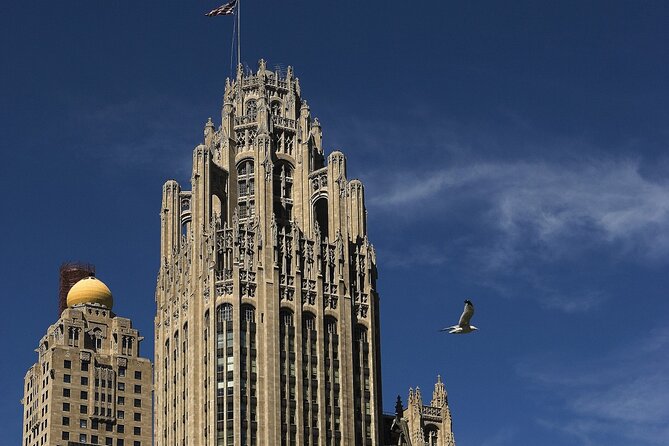
Tribune Tower: old bones, new purpose
One of the most interesting discussions concerns recent renovations and additions to the historic Tribune Tower. This is a good example of Chicago’s current architectural problem: How do you keep a famous older building useful without turning it into a museum piece?
The tour does not treat old and new as separate subjects. Instead, it looks at how additions and renovations affect a building that already carries a strong visual identity. You can expect the guide to frame the Tribune Tower as a meeting point between preservation and present-day use.
That conversation matters even if you are not an architecture specialist. Many major city buildings face the same question. Should an older structure remain untouched? Should it be adapted for new uses? How can a new addition respect an existing design without simply copying it?
The tour’s emphasis on recent work keeps the discussion current. You are not only learning what the Tribune Tower was. You are looking at what it has become and how its next chapter fits into the surrounding district.
A few more architecture tours in Chicago worth a look
- Chicago Architecture River Cruise
★ 5.0 · 15,756 reviews - Chicago River 90-Minute Architecture Tour
★ 4.5 · 9,629 reviews - Chicago River: 1.5-Hour Guided Architecture Cruise
★ 4.8 · 8,046 reviews - Chicago Architecture Center River Cruise aboard First Lady
★ 5.0 · 5,536 reviews
Small urban apartments and changing city needs
Another stop examines recent design trends in small urban rental apartments. This may be less flashy than a supertall tower, but I would not skip it. Housing design tells you a great deal about how a city is changing.
The guide discusses the practical pressures behind smaller rental units and how developers and architects respond to limited urban space. The subject also moves architecture away from the postcard view. A building is not only an object to photograph. It is a place where people live, work, enter, exit, and share common areas.
This part should interest you if you care about housing affordability, density, or the daily experience of city residents. It also gives architects and designers a chance to think about how much design quality can be packed into a constrained footprint.
The tour does not promise a full policy discussion, so do not book it expecting a detailed housing seminar. Its value is more direct. You see examples on the street, then hear how recent design trends relate to urban living.
465 N Park Drive and the rise of the new tower
The route includes a discussion of 465 N Park Drive, giving you another chance to study recent high-rise design. A guide can point out choices that are easy to miss when you are looking up from sidewalk level.
This is where personal attention helps. The group has a maximum of 15 people, which is small enough for the guide to respond to questions without turning every exchange into a public speech. You may want to ask about the building’s shape, its relation to neighboring structures, or how it contributes to the area around the river.
A good architecture walk teaches you how to look. Instead of asking only if you like a building, you begin asking what it does. Does it open toward the street? Does it create useful public space? Does it respond to its neighbors? Does its design signal a new phase of Chicago development?
Those questions stay useful after the tour ends. You can apply them to other parts of the city, even when no guide is there to explain what you are seeing.
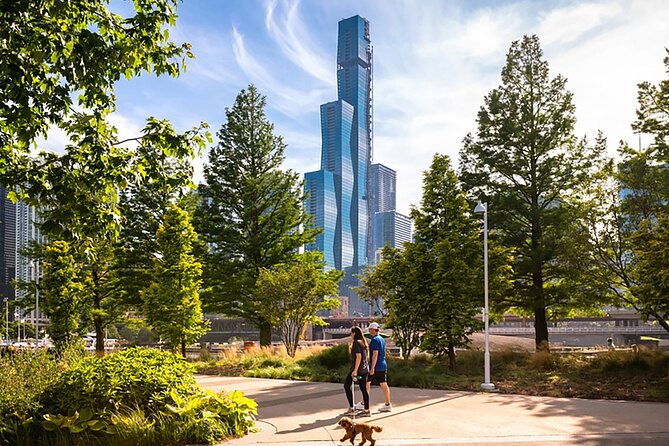
St. Regis Chicago from street level
The walk also includes a view of the St. Regis Chicago building. This is one of the newer and more visually distinctive additions to the downtown skyline, so it fits the tour’s focus on contemporary design.
From the street, you can consider how a tall residential or mixed-use building presents itself to people below. The skyline view is one part of the experience, but the lower levels matter just as much. Look at the base, the sidewalk relationship, the openings, and the way the building meets the city.
The tour is not simply a series of skyline photo stops. Its strongest purpose is interpretation. Your guide can help you notice the choices that separate one new tower from another, even when both use glass, concrete, and steel.
Chicago’s newest buildings also raise questions about scale. A tall structure may look graceful from a distance but feel imposing at street level. That contrast is worth considering as you walk.
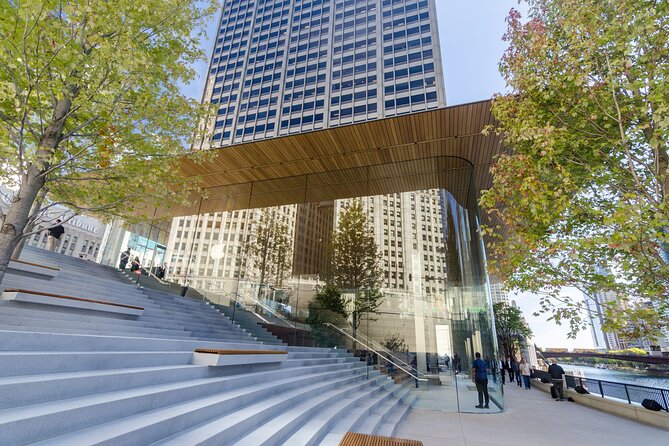
Apple Michigan Avenue and architecture for public life
The walk reaches Apple Michigan Avenue, where the group views the store for about 10 minutes. Its architecture is a useful change of pace after the residential towers and Tribune Tower discussion.
Apple’s Michigan Avenue building is not just a retail box. It is designed as part of a major public street and the riverfront setting around it. The guide can use the stop to discuss how a commercial building tries to draw people in, frame views, and become part of the pedestrian experience.
This is also a good place to think about branding and architecture. Some new buildings want to be quiet neighbors. Others are designed to announce themselves. A store with a powerful global identity has a different design challenge from an apartment building or a renovated historic tower.
The 10-minute stop keeps the visit focused. You get enough time to look, listen, and ask a question, but the tour does not linger so long that the final stretch feels repetitive.
What the guides add to the experience
The guide is the main reason to choose this walk over a self-guided route. Chicago has no shortage of impressive buildings, but a good explanation can turn a quick glance into a useful lesson.
Several guides associated with the tour have different strengths. Paul S. has been praised for answering questions and keeping a positive attitude even during rainy weather. Paula has been praised for her command of architecture, history, building stories, and sustainability. Mary Jo has led an engaging walk that links current design trends with earlier ideas, showing where modern work draws from the past and where it breaks away.
Mary Ann has also been praised for her enthusiasm when explaining Chicago. That energy matters, especially on a walking tour where weather, traffic, and sidewalk distractions can compete for your attention.
You should feel free to ask questions. The small group is designed for personal attention, and the guides are expected to provide professional narration rather than simply lead you from one address to another.
Timing, weather, and practical comfort
The advertised duration is about 1 hour and 30 minutes. That is long enough to cover several important sites without taking over your day. I would schedule it early in a Chicago visit, since the route can help you understand the city before you explore farther on your own.
The tour operates outdoors for much of its route, so check the weather before you go. A rainy day does not automatically ruin it, but comfortable shoes and suitable clothing will make a real difference. There is no coat check, and you cannot count on luggage or stroller storage, so travel light.
The itinerary can change without notice. Access to building interiors may also change because of weekend and holiday schedules or unexpected closures. The walk remains worthwhile even when an interior is unavailable, since much of the experience concerns exterior design, public space, and the relationship between buildings.
The meeting point is near public transportation, which makes it practical if you are staying elsewhere in Chicago. Confirmation is received when you book, and the group maximum of 15 helps keep the pace manageable.
You can cancel for a full refund up to 24 hours before the start time. Cancellations or changes made less than 24 hours before the start time are not accepted for a refund.
Who should book this Chicago walk?
I would recommend it to anyone who wants structure and context without committing to a half-day tour. It is particularly well suited to:
- Architects, students, and designers
- People interested in sustainable design and urban housing
- Chicago residents who want fresh context for familiar streets
- First-time visitors who enjoy buildings and city planning
- Photographers who want to understand what they are seeing
- Anyone who prefers a small group to a large coach tour
You may want something else if your main goal is to visit many interiors, cover the whole city, or focus only on famous historic buildings. This walk is about recent architecture and the changes happening around the Chicago River and nearby downtown streets.
Should you book the What’s New tour?
Yes, if you want to look at Chicago’s newest buildings with a clear explanation of how they fit into the city. The $35 fee is good value when you count the certified guide, small group, 90-minute route, and included CAC gallery admission.
I especially like the mix of subjects: a renovated historic tower, small urban apartments, high-rise design, a major new building at 465 N Park Drive, St. Regis Chicago, and Apple Michigan Avenue. That range keeps the tour from becoming a parade of glass towers.
Book it if you enjoy asking why a building looks and works the way it does. Skip it if you want an entirely indoor activity or need guaranteed access to every featured interior. For most architecture-minded visitors, this is a focused and useful introduction to the Chicago that is still being built.
FAQ
How long is the Chicago Architecture Walking Tour: What’s New?
The tour lasts approximately 1 hour and 30 minutes.
How much does the tour cost?
The price is $35 per person.
Where does the tour begin?
It begins at the Chicago Architecture Center, 111 E Wacker Drive, Chicago, Illinois 60601.
Is admission to the Chicago Architecture Center included?
Yes. Admission to the Chicago Architecture Center galleries is included.
How large is the tour group?
The tour has a maximum of 15 people.
Are building interiors guaranteed to be open?
No. Access to featured interiors may change because of weekend and holiday schedules or unexpected closures.
Can I cancel for a refund?
Yes. You can cancel at least 24 hours before the start time for a full refund. Changes or cancellations made less than 24 hours before the start time are not accepted.
Just added in Chicago
- Private Chicago Architecture Tour★ 5.0 · 5 reviews
- Private Frank Lloyd Wright Architectural Tour by Luxury Vehicle★ 3.5 · 7 reviews
- Chicago History and Architecture Walking Tour with Boat Cruise★ 4.5 · 10 reviews
- Private Chicago Architecture Walking Tour★ 5.0 · 6 reviews
- Chicago Luxury Minibus City Tour and Architecture River Cruise★ 4.5 · 8 reviews
- Small Group History And Architecture Walking Tour of Chicago★ 4.5 · 8 reviews
- Chicago: Icons Guided Architecture Walking Tour★ 4.4 · 4 reviews
- Chicago: Private Architecture Tour – 3 or 6 Hours★ 4.0 · 6 reviews
Chicago Architecture Tours, compared.

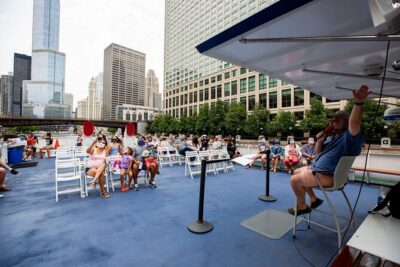

Chicago River: 1.5-Hour Guided Architecture Cruise
Read our review →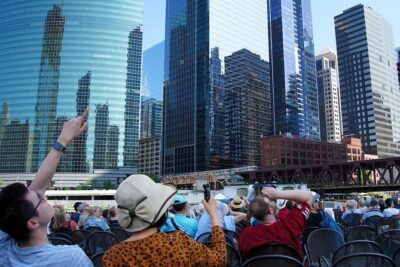
Chicago Architecture Center River Cruise aboard First Lady
Read our review →
Architecture River Cruise Skip-the-Ticket Line
Read our review →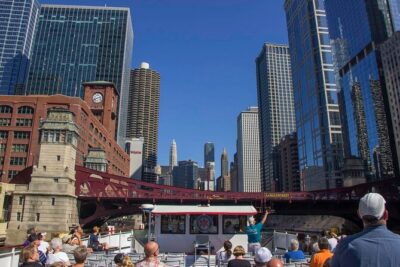
Chicago River 45-Minute Architecture Tour from Magnificent Mile
Read our review →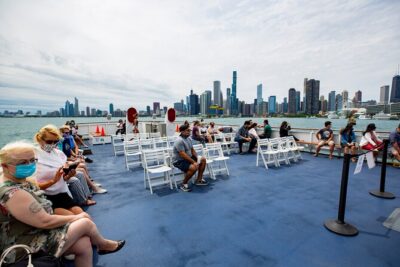

45-Minute Family-Friendly Architecture River Cruise
Read our review →Browse the lists this tour appears in