
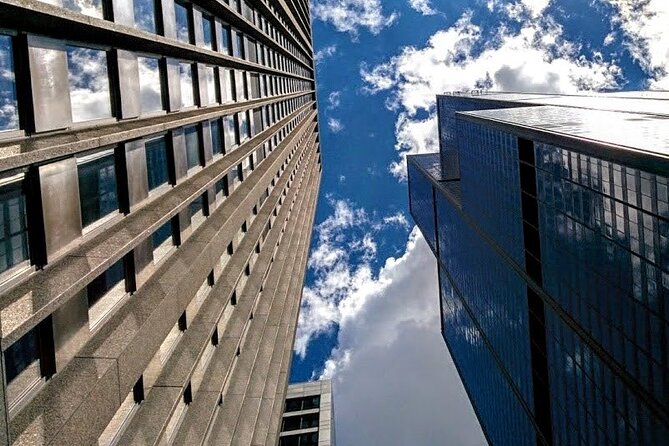
REVIEW · CHICAGO ARCHITECTURE TOURS
Marvels & Feats: An Engineer’s Tour of Chicago Architecture
Chicago’s buildings have stories hidden in plain sight. This two-hour walking tour brings those stories to life through engineering, from the city’s early skyscrapers to newer structures along the Chicago River. I like the clear focus: you are not simply looking at handsome façades, and you are not being buried under architectural jargon.
I also like that the tour enters a few buildings rather than keeping you on the sidewalk. The guide is a real engineer, and the approach aims to make difficult ideas understandable without talking down to you. The main consideration is physical: you will walk for two hours in all weather, and the route requires a moderate level of fitness.
Key points at a glance
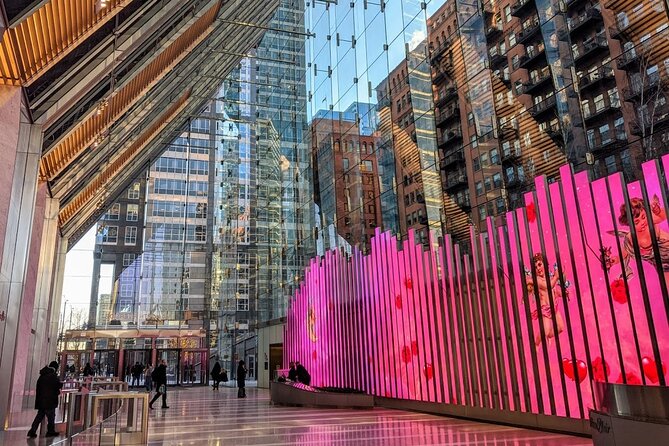
- Chicago’s only engineering-themed walking tour: The route concentrates on how buildings deal with gravity, wind, foundations, and changing construction methods.
- A real engineer leads the discussion: Technical subjects are explained for ordinary curious people, not just architects or engineers.
- You go inside several buildings: Interior visits add scale and help you understand how Chicago’s structures work beyond their street façades.
- The Loop takes up 75 minutes: Most of the tour covers downtown landmarks and early developments in skyscraper design.
- The final 45 minutes follow the Chicago River: You finish at Riverpoint Park with broad views of the river and newer engineering projects.
- Small-group format: The maximum group size is 20 people, which should make it easier to hear the guide and ask questions.
Why Chicago is the right place for an engineering tour
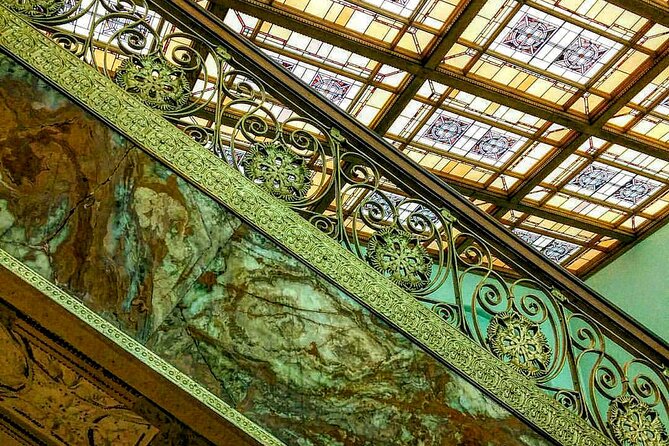
Chicago is closely tied to the birth of the skyscraper. The city’s early builders had a practical problem: how do you put tall, heavy buildings on soft ground while keeping them upright?
That question gives this tour a stronger purpose than a simple walk past famous buildings. You are looking at solutions. You will hear how structures handle gravity and wind, why foundations matter, and how engineering methods changed across more than 150 years.
I like this subject because it gives you a new way to read the city. Instead of seeing a tall building as a single object, you start asking what holds it up, how it moves, and why its shape makes sense.
The guide’s job is especially important here. Engineering can quickly become a swamp of terms and measurements. This experience promises a real engineer who can explain the ideas in a clear, engaging way. That balance is useful if you enjoy architecture but have never studied structural design.
A few more architecture tours in Chicago worth a look
- Chicago Architecture River Cruise
★ 5.0 · 15,756 reviews - Chicago River 90-Minute Architecture Tour
★ 4.5 · 9,629 reviews - Chicago River: 1.5-Hour Guided Architecture Cruise
★ 4.8 · 8,046 reviews
Starting at 430 South Michigan Avenue
The meeting point is 430 South Michigan Avenue, in the southern part of the Loop. The tour starts at 2:30 pm, so plan to arrive with enough time to find the address and settle in.
This is a sensible starting area for the subject. Chicago’s downtown core gives the guide a compact setting with plenty of architectural material, and the route can move from early skyscraper ideas to later construction methods without requiring a long ride between stops.
The tour is mobile-ticket based, so you should have your ticket ready on your phone. Public transportation is nearby, but hotel pickup and drop-off are not included. You are responsible for getting to the start and making your own way home from the end.
Because the tour operates in all weather, check the forecast before leaving. Comfortable shoes are more important than stylish ones. Bring clothing that can handle wind, rain, or sun, since much of the experience takes place outdoors.
Seventy-five minutes in the Loop
The first section lasts about 1 hour and 15 minutes. Most of your time is spent in the Loop, Chicago’s best-known downtown district.
You will examine buildings connected with the city’s rise as a center of tall-building design. The tour includes a building associated with the father of the skyscraper, an engineer who was also a classmate of Gustav Eiffel. That detail alone helps place Chicago’s building story in a wider international setting.
The focus is not simply on who designed a building. You will look at the practical problems behind the design. Early tall buildings needed ways to carry great weight without relying on old construction methods. Later structures had to cope with wind and the changing demands of taller, lighter frames.
This is where the engineer-led format earns its fee. A standard architecture walk might tell you a building’s date, style, and architect. This route tries to explain why the building works. You may come away understanding why one structure has a certain frame, why another uses a different foundation, or why a tall building can sway without being unsafe.
Going inside instead of only looking up
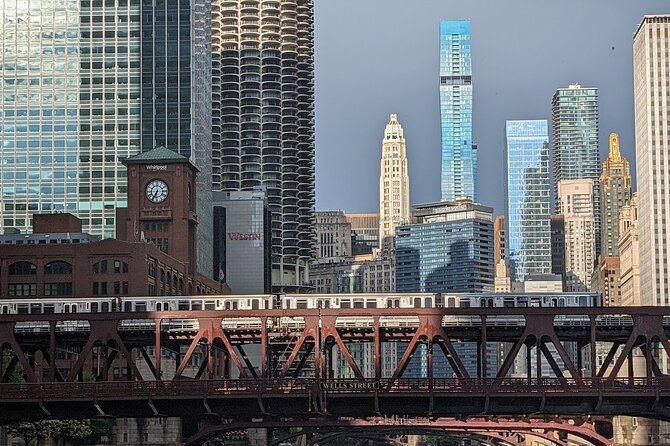
A major advantage is the chance to enter a few buildings. Admission to the tour stops is listed as free, so the interior visits are part of the experience rather than a string of separate ticketed attractions.
That matters because sidewalks can only tell you so much. From the outside, a building’s structure may be hidden behind stone, glass, or decorative elements. Inside, scale becomes easier to judge. Columns, open spaces, floor heights, and the relationship between public areas and structural systems can make the engineering ideas more concrete.
I especially like this part for people who find architecture walks too visual or too abstract. Seeing the inside gives the guide something real to point toward. It also breaks up the outdoor walking and gives you a chance to experience Chicago’s buildings as working spaces, not just monuments.
The exact buildings are not identified in the available details, so you should not book this expecting a fixed list of famous interiors. The strength of the visit is the access and explanation, not a promise of one particular landmark.
Same city, a different building to stand in front of:
- Chicago Architecture Center River Cruise aboard First Lady
★ 5.0 · 5,536 reviews - Chicago: Architecture River Cruise Skip-the-Ticket Line
★ 4.8 · 4,325 reviews - Chicago River 45-Minute Architecture Tour from Magnificent Mile
★ 4.5 · 2,924 reviews - Chicago Lake and River Architecture Tour
★ 4.5 · 2,308 reviews
The building with the haunted reputation
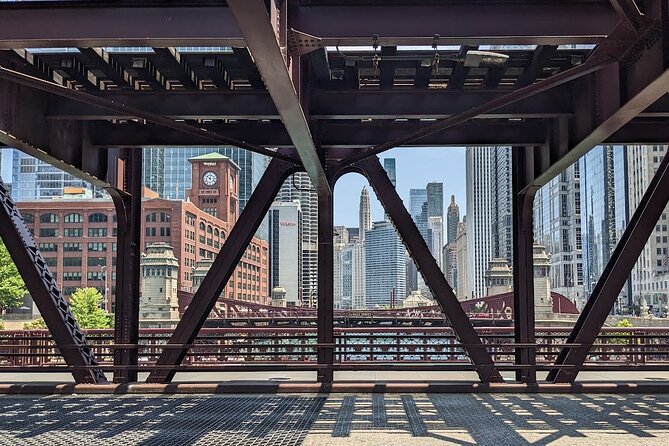
One of the tour’s more memorable subjects is a building known for a haunted reputation. The explanation is much more practical than supernatural: the building settled unevenly on its floating foundation.
That is a fine example of the tour’s style. A strange story draws you in, then engineering provides the answer. Uneven settlement can cause visible changes, discomfort, or unsettling sensations inside a building. You do not need to accept a ghost story to understand why people might have found the structure eerie.
This is also a useful reminder that foundations are not a hidden footnote. They are central to Chicago’s building story. The city’s ground conditions forced engineers to think carefully about how weight would be distributed, and those choices could affect a building long after construction ended.
If you enjoy architecture with a little mystery, this should be one of the livelier parts of the route. If you prefer only famous names and postcard views, the technical explanation may feel less dramatic, but it gives the tour more substance.
Gravity, wind, and the logic of tall buildings
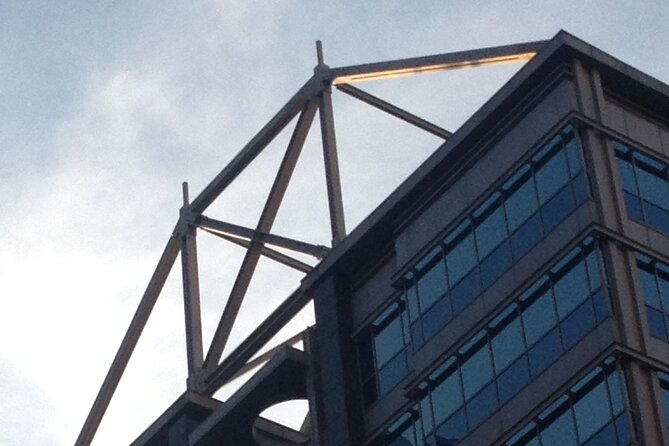
Tall buildings must deal with forces you cannot see. Gravity pulls downward, while wind can push and sway a building from side to side. The tour explains how Chicago’s structures respond to both.
You will not simply hear that engineers solved these problems. You will learn how buildings are shaped and supported to manage them. The promise is to make the ideas graspable without stripping away the real engineering.
That is an important distinction. A tour can become too technical, leaving you lost after the first few terms. It can also become too simple, turning serious design into a handful of catchy facts. This experience aims for the middle ground.
I would choose this tour if you want to understand why skyscrapers look and behave as they do. It is also a good fit if you have already taken a basic Chicago architecture cruise or walking tour and want to ask more practical questions about structure.
Forty-five minutes beside the Chicago River
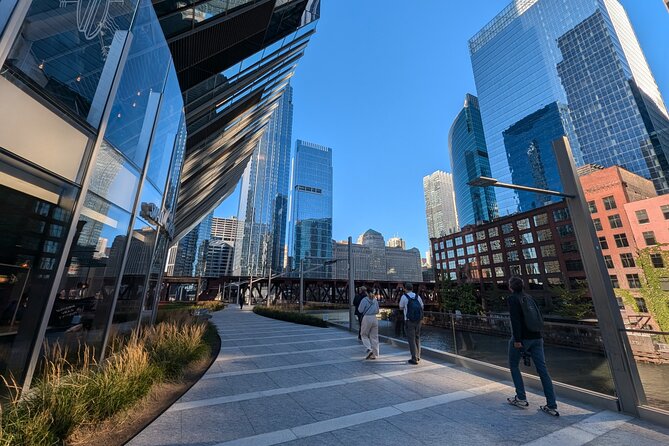
The final section lasts about 45 minutes along the Chicago River. The setting changes from the dense downtown streets to an open waterfront route with views of more recent engineering work.
This part helps connect Chicago’s early building experiments with its newer structures. You can compare older approaches with modern projects while enjoying a more spacious setting. The river also gives you useful sightlines. From the water’s edge, you can see how buildings relate to one another and how the city’s vertical development has spread along the downtown core.
The river section is not just a scenic finish. It gives the guide room to discuss newer engineering feats and lets you view the city from a different angle. The broad views should be especially welcome after more than an hour in the Loop.
The tour ends at Riverpoint Park, at 150 North Riverside Plaza. You finish with a sweeping view of the Chicago River. Since the start and end points differ, do not assume you will return to Michigan Avenue. The ending is near public transportation, but you should plan your onward route before the tour begins.
How much value do you get for $35?
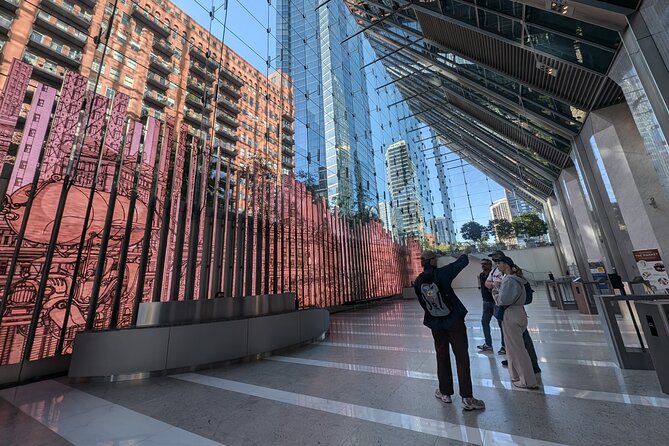
At $35 per person, the tour costs $17.50 per hour. That is reasonable for a small-group experience led by a specialist, particularly because it includes access to several building interiors and covers two distinct downtown areas.
The group maximum is 20 people. That is not a private tour, but it is small enough to feel more focused than a large street walk. A smaller group also matters when the guide is explaining technical points outdoors, where traffic and city noise can compete for your attention.
There are no separate admission fees listed for the stops. You will still need to pay for transportation to the meeting point and from the end point, and there is no hotel pickup or drop-off.
The value depends on your interests. If you only want a quick introduction to famous Chicago façades, a general architecture tour may be a better match. If you want to understand foundations, structural forces, and the mechanics of tall buildings, the specialist focus makes the price easier to justify.
What the guide style adds
The tour is built around explanation, not performance. The guide is a real engineer, and the stated aim is to make the subject accessible without dumbing it down.
A guide named Hillary has been praised for opening up Chicago’s early architecture and pointing out less obvious parts of the city. That suggests the experience can work well for someone who wants context rather than a rapid list of dates and names.
You should feel free to ask questions. Engineering tours are most useful when the guide can connect a general idea to the building directly in front of you. A question about why a foundation was chosen, how a tower handles wind, or why a building settled unevenly can turn a passing observation into something you remember.
The exact guide may vary, so the experience will depend partly on who leads your departure. Still, the tour’s subject and teaching method are clear enough to make it different from a standard architectural overview.
Who should book this walking tour?
I would recommend it to:
- Anyone curious about how skyscrapers actually work
- Architecture fans who want more structure and engineering than a basic city walk provides
- Families with older children or teenagers who enjoy practical science
- Visitors who have already seen Chicago’s main sights and want a fresh angle
- People who prefer a small walking group to a large vehicle-based tour
- Anyone interested in both historic construction and newer riverfront projects
It may not suit you if you have difficulty walking for two hours, need frequent seated breaks, or strongly dislike being outdoors in poor weather. The route requires moderate physical fitness, and the tour runs in all weather conditions.
It may also disappoint if you expect a museum-style presentation or a guaranteed list of specific landmark interiors. The appeal is the moving conversation between buildings, streets, and river views.
Practical ways to enjoy the route
Wear supportive shoes and dress for changing conditions. The tour is outdoors for much of its two hours, and Chicago weather can make the same route feel very different from one day to the next.
Arrive at the Michigan Avenue meeting point before 2:30 pm. Since the tour ends elsewhere, keep your phone charged for the mobile ticket and for checking your route home.
I would also leave room in your schedule after the tour. The end at Riverpoint Park offers a useful final view, and you may want a few minutes to take in the river before heading on.
Free cancellation is available if you cancel at least 24 hours before the start time. Changes or cancellations made inside that window are not accepted for a refund, so watch the local Chicago cut-off time.
Should you book Marvels & Feats?
Book this tour if you want Chicago explained from the inside out. The best reasons are the engineer guide, the practical look at gravity and wind, the building interiors, and the unusual foundation story behind a supposedly haunted building.
Skip it if you want a short, purely visual architecture walk or if two hours of outdoor walking sounds tiring. For curious minds, though, $35 buys a focused lesson in why Chicago became a skyscraper city, ending beside the river with a view that puts the whole subject into perspective.
FAQ
How long is the tour?
The experience lasts approximately two hours.
What time does the tour start?
The tour starts at 2:30 pm.
Where does the tour begin?
It begins at 430 South Michigan Avenue, Chicago, Illinois 60605.
Where does the tour end?
It ends at Riverpoint Park, 150 North Riverside Plaza, Chicago, Illinois 60606.
Is hotel pickup included?
No. Hotel pickup and drop-off are not included.
What areas does the tour cover?
The route covers Chicago’s Loop and the Chicago Riverwalk area.
Does the tour enter any buildings?
Yes. The tour includes visits inside a few buildings that are notable for their structural design.
Is the tour offered in bad weather?
Yes. It operates in all weather conditions, so you should dress appropriately.
How large is the group?
The maximum group size is 20 people.
What is the cancellation policy?
You can cancel for a full refund up to 24 hours before the experience begins. Cancellations or changes made less than 24 hours before the start time are not accepted for a refund.
Just added in Chicago
- Private Chicago Architecture Tour★ 5.0 · 5 reviews
- Private Frank Lloyd Wright Architectural Tour by Luxury Vehicle★ 3.5 · 7 reviews
- Private Chicago Architecture Walking Tour★ 5.0 · 6 reviews
- Chicago Luxury Minibus City Tour and Architecture River Cruise★ 4.5 · 8 reviews
- Chicago History and Architecture Walking Tour with Boat Cruise★ 4.5 · 10 reviews
- Small Group History And Architecture Walking Tour of Chicago★ 4.5 · 8 reviews
- Chicago: Icons Guided Architecture Walking Tour★ 4.4 · 4 reviews
- Chicago: Private Architecture Tour – 3 or 6 Hours★ 4.0 · 6 reviews
Chicago Architecture Tours, compared.
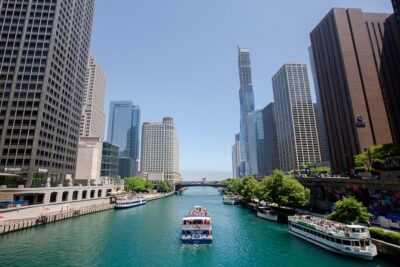
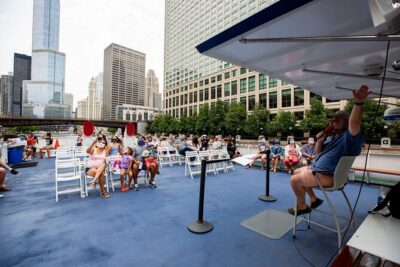

Chicago River: 1.5-Hour Guided Architecture Cruise
Read our review →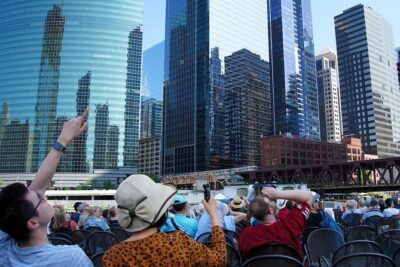
Chicago Architecture Center River Cruise aboard First Lady
Read our review →
Architecture River Cruise Skip-the-Ticket Line
Read our review →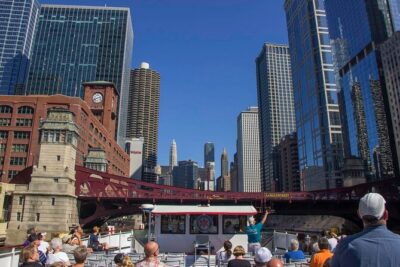
Chicago River 45-Minute Architecture Tour from Magnificent Mile
Read our review →

45-Minute Family-Friendly Architecture River Cruise
Read our review →Browse the lists this tour appears in