
REVIEW · WALKING TOURS
Beijing Hutong Walking Tour History, Architecture and Local Life
Beijing reveals itself on foot. This three-hour walk links old hutongs, temples, a church, a Yuan Dynasty pagoda, and the modern Financial Street area in one compact route. I like the way it shows Beijing as a city of contrasts, not just a collection of famous monuments.
I especially like the small maximum group of 10 and the practical guidance from guides such as Lori and Dee. The tour also includes bottled water and a traditional Beijing drink, plus help with restaurant choices and city travel. The main consideration is pace: several stops are short, and private transportation is not included, so you need to be comfortable walking between sites.
Key things to know before booking
- Six very different stops in three hours: The route covers a church, Buddhist temple, courtyard home, hutong, imperial temple, and stupa.
- A look at real neighborhood life: Beijing Zhuanta Lane offers a chance to see the scale and character of an old hutong rather than only visiting major tourist sights.
- Small groups make questions easier: The tour accepts a maximum of 10 people, useful when you want to ask about doors, courtyards, customs, or food.
- The route begins and ends at subway stations: Start near Xisi Station and finish at Fuchengmen Station’s Exit C on Line 2.
- Local advice is part of the value: You receive restaurant suggestions, travel tips, water, and a traditional Beijing drink.
- One stop depends on opening hours: The Temple of Previous Dynasties is visited if it is open, so the exact experience can vary.
Why this three-hour walk works well in Beijing
Beijing’s hutongs can be confusing at first. Narrow lanes twist behind broad avenues, and an ordinary doorway may lead to a courtyard with centuries of cultural meaning. A good walking guide helps you notice the details that you might otherwise pass without a second glance.
This route is useful early in a Beijing stay because it gives you a quick sense of how the city fits together. You see older residential streets, religious buildings, historical architecture, and the newer financial district within one outing. That contrast gives the walk more purpose than a simple stroll through picturesque lanes.
I also like the modest group size. With no more than 10 people, it should be easier to hear explanations and ask follow-up questions. The supplied comments specifically praise Lori for explaining hutong layouts and the significance of doors. Dee is described as personable, helpful, and willing to answer many questions, with useful suggestions for lunch and other places to visit.
The walk is not a private tour, and the guide may be leading a different group on your date. Still, the group limit gives this experience a more personal feel than a large coach excursion. It also means you should expect a walking lesson rather than a formal sightseeing show.
More walking tours in the world:
- Lecce: Baroque Architecture and Underground Walking Tour
★ 4.6 · 1,248 reviews - Chicago in a Day: Food, History & Architecture Walking Tour
★ 5.0 · 1,153 reviews - Ramblas, Old Town, Gothic and Gaudi Architecture Walking Tour
★ 5.0 · 723 reviews
Starting at Xisi and entering old Beijing
The meeting point is in Xisi, near Xisi Subway Station in Xicheng District. This is a practical place to begin because the tour starts close to public transportation, and you can reach it without arranging a private car.
The route then moves through a part of central Beijing where older structures sit close to modern commercial areas. That setting matters. You are not being taken to an isolated historical park built only for sightseeing. You are walking through a living city, where old lanes and newer offices exist side by side.
The tour lasts about three hours, and the stated duration includes the time spent moving from one location to the next. That means the scheduled stop times do not represent three full hours of standing inside monuments. You will need comfortable shoes and a willingness to keep moving.
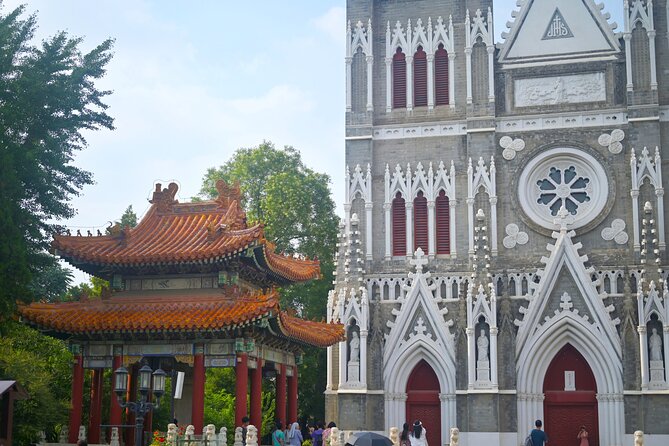
Xishiku Church and Beijing’s Chinese Catholic story
The first stop is Xishiku Church, described as Beijing’s earliest church. You spend about 10 minutes here, hearing the story of the building and its distinctive Chinese character.
This is a smart opening stop because it immediately complicates the usual picture of Beijing as only imperial and Buddhist. A church in the old city raises questions about foreign influence, local adaptation, and the way religious buildings take on local architectural meaning.
The short visit is enough for an introduction, not a full church study. If church architecture is your main interest, 10 minutes may feel brief. For most people, though, it serves as a useful first piece of the city’s cultural puzzle.
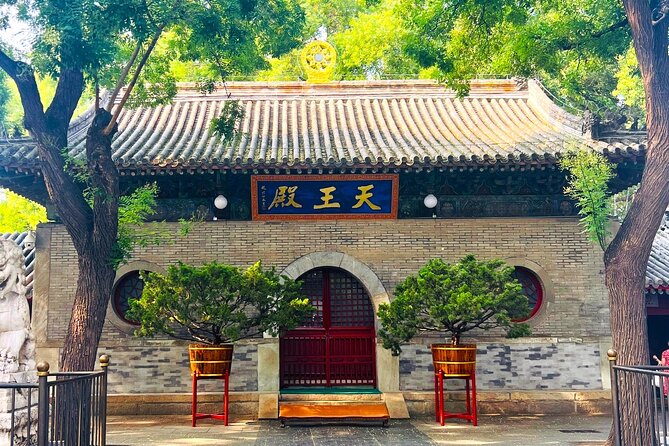
Guangji Temple and traditional religious architecture
The walk continues to Beijing Guangji Temple, where you spend about 20 minutes. Here you can see traditional Chinese temple architecture and ancient finger paintings.
This is one of the stronger stops for understanding how Chinese religious spaces are organized and decorated. The guide can help you read the building forms and explain why the temple matters, rather than leaving you to take a few photographs and move on.
Twenty minutes gives you more room than the opening church stop, though it is still a compact visit. The value depends heavily on the guide’s explanation, especially if you do not already know the difference between a temple, a pagoda, a stupa, and a palace-style complex.
Because this is an active religious site, the visit is best approached with quiet attention. The supplied information does not promise a ceremony or a private access area, so expect a guided look at the architecture and artwork rather than a special religious event.
More history tours in the world:
- Charleston’s Best Highlights: History, Culture & Architecture
★ 5.0 · 422 reviews - Palm Springs Modernism Architecture & History Bike Tour
★ 5.0 · 359 reviews - Charleston: History and Architecture Guided Walking Tour
★ 4.8 · 349 reviews - Historic Georgetown: History, Gossip, & Architecture Walking Tour
★ 5.0 · 321 reviews
Zhengyang Shuju and the Wansong Brick Pagoda
At Zhengyang Shuju, the focus changes from temple architecture to a Yuan Dynasty relic and old Beijing imagery. The highlight is the Wansong Brick Pagoda, along with a collection of historic Beijing images housed in a siheyuan.
A siheyuan is a traditional courtyard residence. The form is central to understanding hutong life because the building is arranged around an interior courtyard rather than facing the street like a modern apartment block. The courtyard structure helps explain why doors, entrances, and lane layouts matter so much in old Beijing.
The Wansong Brick Pagoda gives this stop an extra layer. You are not seeing only a residential form or a preserved room. You are also looking at an older monument from the Yuan period, when Beijing was already a major capital with a long architectural record.
The visit lasts about 20 minutes. That should be enough to see the pagoda and examine some old images, but anyone hoping for a museum-length visit should keep expectations modest. The benefit is the combination of objects, building form, and explanation in one small stop.
Zhuanta Lane, where the hutong becomes personal
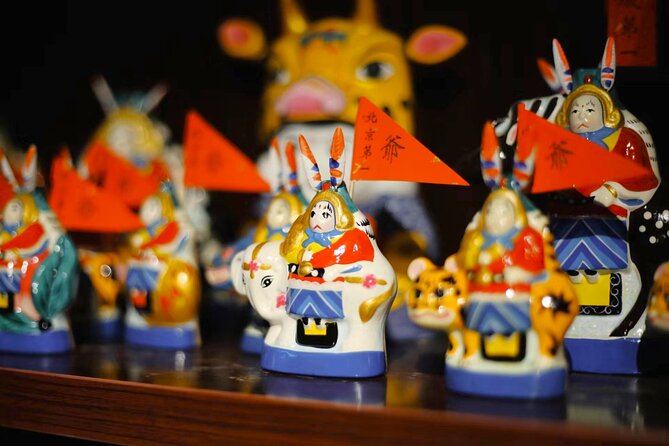
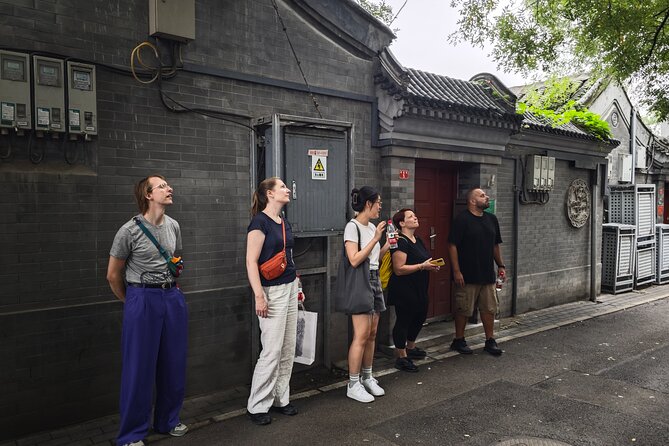
Beijing Zhuanta Lane is the most direct look at everyday hutong character on the route. It is described as one of Beijing’s oldest hutongs, and you spend about 15 minutes walking through it.
This is where the tour’s theme becomes most practical. A hutong is not simply an old street made attractive for visitors. It is a neighborhood pattern, shaped by narrow lanes, courtyard homes, entrances, shared space, and daily routines. The supplied comments praise the explanation of how hutongs are laid out and what the doors signify. That kind of detail can change how you see the entire district.
Fifteen minutes is short, but it may be enough to notice the lane’s scale and get a feel for how different it is from Beijing’s large avenues. You should not expect a long, unhurried neighborhood walk. Instead, treat this as a focused introduction to old residential Beijing.
This stop is also a reminder to be respectful. People live in hutongs. Keep the group together, listen to the guide’s instructions, and avoid treating private doorways as photo props.
The Temple of Previous Dynasties and imperial memory
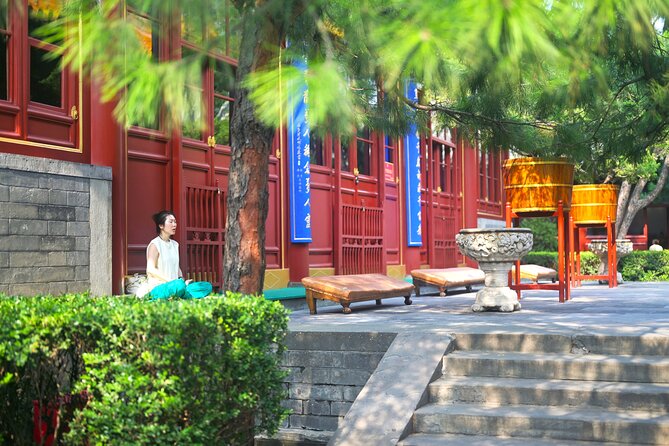
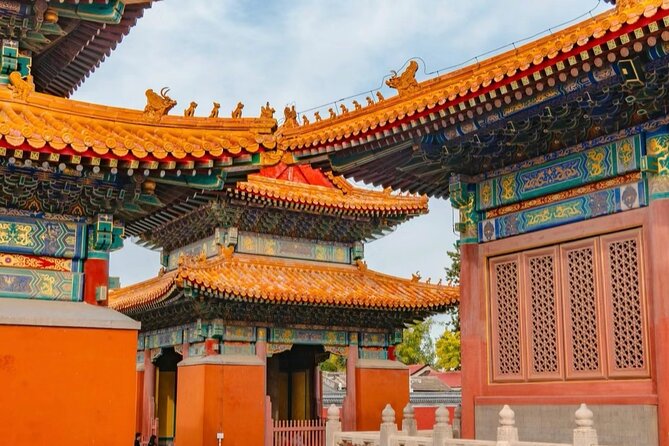
The Temple of Previous Dynasties, also called Lidai Diwang Miao, brings imperial tradition into the route. The tour allows about 20 minutes here and explains how Chinese people honor earlier rulers and ancestors.
The architecture is described as grand and palatial, so this stop gives you a different visual experience from the narrower hutongs and smaller courtyard setting. It helps show how Chinese ideas of memory and authority were expressed through formal buildings, large courtyards, and ceremonial design.
There is one important condition: the site is visited if it is open. That makes this part less certain than the other listed stops. If the temple is closed, the guide may need to adjust the route or explanation, so you should not book this tour solely for guaranteed interior access.
Still, the site adds useful context. The route moves from ordinary residential lanes to spaces connected with rulers and ancestors, showing how social life and official history occupied nearby parts of the same city.
White Stupa Temple from a cafe balcony
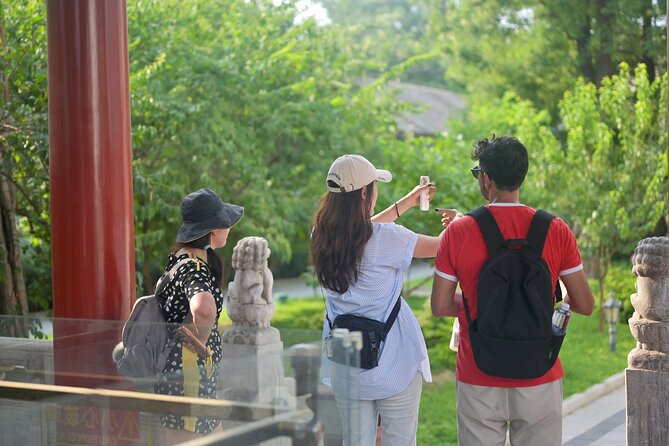
The final major sightseeing stop is Miaoying, also called White Stupa Temple or Baita Si. Rather than promising an interior visit, the guide shows the exterior design of the White Stupa from a nearby cafe balcony and explains different types of Chinese pagodas.
This is an unusual way to view a monument. A slightly raised outlook can make the stupa’s shape easier to understand than a close approach at street level. It also gives the guide a chance to compare pagoda forms, which can otherwise blur together when you are visiting several religious sites in one trip.
The stop lasts about 15 minutes. The cafe setting may also provide a welcome pause near the end of the walk, though the supplied information only confirms the balcony viewpoint and the explanation, not a purchased cafe drink or a required cafe stop.
If you want to enter the White Stupa Temple itself, confirm the current arrangements before booking. The stated experience centers on viewing the exterior from the nearby balcony.
Finishing near Financial Street and Fuchengmen
The tour ends at Fuchengmen Subway Station, Exit C, near Financial Street in Xicheng District. This finish reinforces the route’s old and new city contrast. You begin near historic Xisi and end beside a modern business district.
That location is useful for your next plans. You can continue by subway on Line 2, meet someone in the Financial Street area, or use the station to return toward other parts of Beijing. Since private transportation is not included, the subway connection is an important practical feature.
The route’s endpoint also means the tour is not a loop. Plan your day around the final location rather than assuming you will finish back where you started.
What the $49 price includes
At $49 per person, the value comes from the range of places covered and the guide’s interpretation. You are not paying only for admission, since most stops list free entry. You are paying for a small-group route that connects buildings and neighborhoods that can be hard to understand on your own.
The included bottled water and traditional Beijing drink are modest extras, but useful on a three-hour walk. The restaurant suggestions and general travel advice add value, especially at the beginning of a Beijing visit. Dee’s practical help with lunch recommendations is exactly the sort of advice that can save you time after the tour.
The price is less compelling if you want long visits at every site, private transport, or a highly specialized architecture lecture. The route covers a lot in a short period. I see it as a city orientation walk with historical depth, not a full museum tour or private architectural study.
Who will enjoy this walk most
I would recommend it to first-time visitors who want context before tackling Beijing’s larger imperial attractions. It is also suitable for people who have already seen the major sights but want to understand local streets, courtyards, and religious buildings in a more connected way.
The tour should suit most people who can participate in a walking activity. Service animals are allowed, and the route is near public transportation. The available information does not describe step-free access, restroom arrangements, or the exact walking distance, so contact the provider if those details matter to you.
This experience is a good fit if you enjoy asking questions. The best parts depend on explanations about doors, courtyard homes, temple forms, ancestor worship, and local customs. If you prefer to explore at your own speed or spend a full hour inside each building, the short schedule may feel rushed.
Practical planning for the day
Wear comfortable shoes and allow time to reach the Xisi meeting point. A mobile ticket is provided, and booking confirmation is received at the time of booking.
The tour requires walking between locations, and private transportation is not included. Since the total duration includes travel time, do not schedule an important appointment immediately afterward.
The group is limited to 10 people, but the tour also requires a minimum number of participants. Poor weather can cause cancellation, with the choice of another date or a full refund. You can cancel for a full refund up to 24 hours before the start time, but cancellations or changes made later are not refunded or accepted.
Should you book the Beijing Hutong Walking Tour?
Book it if you want a compact, well-connected introduction to old Beijing, with useful local advice and a small group. The combination of Zhuanta Lane, siheyuan architecture, Guangji Temple, the Wansong Brick Pagoda, and the White Stupa gives you far more variety than a simple hutong photo walk.
Skip it if your priority is private transport, long monument visits, or guaranteed access to every interior. The Temple of Previous Dynasties is dependent on opening hours, and the three-hour schedule keeps each stop fairly brief.
For most first visits, I like the balance. You get historical buildings, ordinary lanes, religious art, architecture lessons, and a practical subway finish. The guides’ personal approach, especially the attention to hutong doors and useful food suggestions, is what can turn this from a walk into a helpful first orientation to Beijing.
FAQ
How long does the Beijing Hutong Walking Tour last?
The tour lasts approximately three hours, including the time spent moving between locations.
Where does the tour begin?
It begins in the Xisi area of Xicheng District, near Xisi Subway Station.
Where does the tour finish?
It finishes at Fuchengmen Station, Exit C, near Financial Street in Xicheng District.
Is private transportation included?
No. Private transportation is not included, and the tour involves moving between stops on foot.
How many people can join the tour?
The maximum group size is 10 travelers.
What is included in the price?
The price includes all fees and taxes, bottled water, and a complimentary traditional Beijing drink.
Is the Temple of Previous Dynasties always visited?
The tour visits the Temple of Previous Dynasties if it is open, so access is not guaranteed.
Is the tour suitable for most participants?
The experience states that most travelers can participate. Service animals are allowed, and the route is near public transportation.
What happens if weather cancels the tour?
If poor weather causes cancellation, you can choose another date or receive a full refund.
Just added in the world
- Wilmington History and Architecture Tour★ 4.8 · 18 reviews
- New Orleans : Garden District Architecture Walking tour★ 4.8 · 5 reviews
- Washington DC: Dupont Circle & Embassy Row Architecture Tour★ 5.0 · 6 reviews
- Washington, DC: Georgetown Architecture Walking Tour★ 5.0 · 8 reviews
- Vicenza: Palladian Architecture Private Walking Tour★ 3.3 · 3 reviews
- Walk & Discover KL’s Architectural and Heritage Gems★ 5.0 · 7 reviews
- Private Colonial Williamsburg Architectural Tour★ 5.0 · 5 reviews
- Unveiling Brno: History, Culture & Architectural Delights★ 5.0 · 2 reviews
Walking Tours, compared.

The Official Art Deco Walking Tour by The Miami Design Preservation League
Read our review →
Baroque Architecture and Underground Walking Tour
Read our review →
Chicago in a Day: Food, History & Architecture Walking Tour
Read our review →

Ramblas, Old Town, Gothic and Gaudi Architecture Walking Tour
Read our review →
Chicago’s Secret Interiors Architectural Walking Tour
Read our review →
Browse the lists this tour appears in