
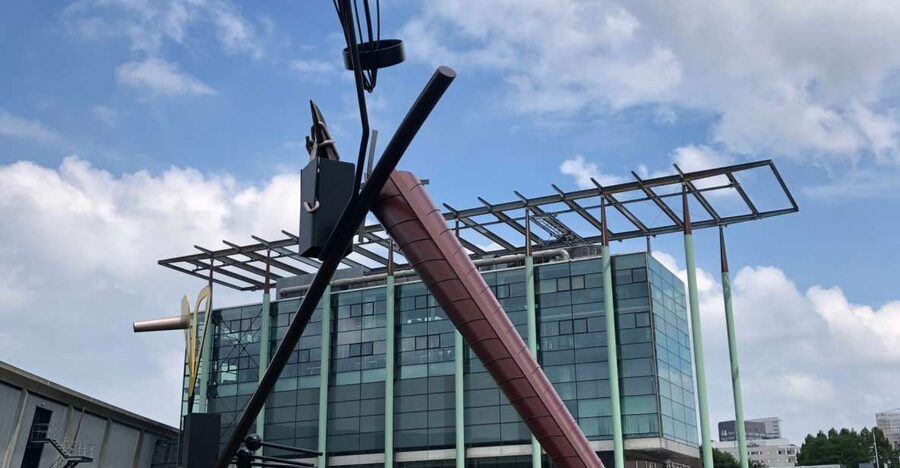
REVIEW · ROTTERDAM ARCHITECTURE TOURS
Rotterdam: Art and Architecture Highlights Walking Tour
Rotterdam rewards curious walkers. This 2.5-hour tour links the city’s postwar rebuilding, daring architecture, and open-air art into one useful introduction. I like the way it begins at Rotterdam Central Station, then moves through the Museum Quarter, Witte de Wit street, the Cube Houses, and the Markthal. I also like that the guide explains why the city looks so different from Amsterdam. The main drawback is simple: you will spend the entire tour on foot, outdoors, in rain or shine.
The $65 price feels fair if you want context rather than a quick list of photo stops. You get a live English-speaking guide, a route through several major sights, and a clear story about Rotterdam’s modern identity. You do not get museum entry, food, drinks, transport, or hotel pickup, so plan to explore the interiors separately.
Key points to know before you go
- Central Station sets the tone: The tour starts beneath the station clock, where Rotterdam’s modern architecture is already on full display.
- The route connects art with wartime memory: Outdoor works by artists including Henry Moore, Rodin, Picasso, and Joep van Lieshout help explain the city’s response to destruction.
- Witte de Wit street adds a lively change of pace: This arts-focused street brings galleries, public art, and an energetic city feel into the walk.
- The Museum Quarter packs in major architecture: You see the Kunsthal, the New Institute, and the Boijmans Depot from the outside.
- The Cube Houses and Markthal provide the finale: The tour ends where Rotterdam’s experimental design becomes especially easy to see and photograph.
- Good shoes matter: The walk takes 2.5 hours, includes no transportation, and runs in all weather.
Why Rotterdam makes a good walking tour city
Rotterdam is not a city you understand from one grand medieval square. Its character is scattered across stations, towers, plazas, museums, housing experiments, and public artworks. That can make a first visit confusing. It can also make a guided walk unusually useful.
This route gives you a framework for reading the city. You move from the rebuilt Central Station toward Theater Square, through the Museum Quarter, along Witte de Wit street, and into the Cube Houses and Markthal area. The stops are not isolated attractions. Together, they show how Rotterdam rebuilt itself after wartime destruction and then kept experimenting with form, color, and public space.
I would choose this tour early in a Rotterdam stay. Afterward, you can return to the places that caught your eye. The Markthal may deserve a longer look, the Kunsthal may tempt you inside, and the Cube Houses may make you curious about how people actually live in such unusual buildings.
More walking tours in Netherlands:
- Rotterdam: Architectural Highlights Guided Walking Tour
★ 4.8 · 215 reviews - Rotterdam: Highlights, Gems, Architecture & History Walk
★ 5.0 · 191 reviews - Rotterdam Walk: Hilights, Gems, Architecture & WWII | 2 or 3hrs
★ 5.0 · 149 reviews
Starting beneath Rotterdam Central Station
The meeting point is next to the main entrance of Rotterdam Central Station, under the station’s clock. That is an easy place to find, especially if you arrive by train. You should still allow enough time to locate the main entrance and gather before the walk begins.
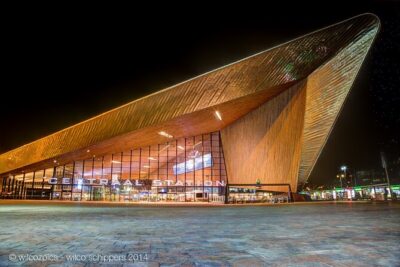
Central Station is more than a practical starting point. It introduces the city’s preference for bold, contemporary design. The tour uses the station as a starting point for discussing Rotterdam’s postwar development, so you are not simply taking a photo and moving on.
One of the strongest parts of the experience is its focus on the city’s planning and architectural change. A guide can point out how the station fits into the surrounding streets and how Rotterdam developed a new visual identity after the old center was heavily damaged.
If you prefer historic churches, old canal houses, and preserved medieval streets, this opening may feel unfamiliar. Rotterdam offers a different reward: a city that openly shows its rebuilding and keeps adding new ideas.
Calypso, Theater Square, and the city’s modern center
From the station, the route follows architectural highlights including the Calypso building and Theater Square. These stops help you see how Rotterdam uses striking shapes and large-scale construction in ordinary city life.
The Calypso building is part of the central city’s modern architecture, while Theater Square gives the walk a broader civic setting. The point is not only to admire unusual buildings. You learn how architecture affects movement, public gathering, and the way a city presents itself.
The tour’s historical thread is important here. Rotterdam’s modern center grew from a period of major loss and reconstruction. The guide connects the physical buildings with the decisions that shaped the rebuilt city. That context turns a collection of bold facades into a more understandable story.
This is also where a live guide adds value that a self-guided stroll may miss. You can photograph a building on your own, but you may not know why it was built in that location, how it fits into the wider plan, or what it says about Rotterdam’s ambitions.
The Museum Quarter and three very different institutions
The route then reaches Rotterdam’s Museum Quarter, with the Kunsthal, the New Institute, and the Boijmans Depot. You should check your expectations here. The tour highlights these buildings from the route, but entry tickets are not included.
The Kunsthal is known for its changing exhibitions, and its architecture fits the city’s forward-looking style. The New Institute adds another layer, focusing on design and creative culture. Together, the two venues show that Rotterdam’s artistic identity is not limited to traditional painting galleries.
The Boijmans Depot is perhaps the most eye-catching stop in this group. It is described as the first publicly accessible museum depot in the world, and its mirrored exterior gives it a strong presence. The building changes with the sky and surrounding city, making it easy to remember.
You may want to return to the Depot on your own if you have time. Since admission is not part of the walking tour, treat this stop as an architectural introduction rather than a museum visit. That keeps the tour moving while giving you a reason to come back.
A few more architecture tours in Netherlands worth a look
- Rotterdam Architecture Highlights Walking Tour
★ 5.0 · 66 reviews - The rise of Haarlem: Culture, History, Art and Architecture Walking Tour
★ 5.0 · 59 reviews - Rotterdam Must Do Tour: Highlights, History, WW2 and Architecture
★ 5.0 · 20 reviews - Rotterdam: Architecture Highlights Tour including the Depot
★ 4.6 · 17 reviews
Public art and Rotterdam’s response to destruction
One of the tour’s most useful themes is the connection between public art and the drama of Rotterdam’s bombarded city. Along the route, you see works linked to wartime memory as well as newer street art.
The outdoor collection includes names such as Henry Moore, Rodin, Picasso, and Joep van Lieshout. That is a serious group of artists to encounter in city streets rather than behind museum walls. The experience gives you a chance to see how art can shape public places and help a city remember difficult events.
I like this part because it avoids treating Rotterdam as only a playground for unusual buildings. The city’s architecture can look cheerful, sharp, and futuristic, but the route also points toward the painful events that made the modern city possible.
The guide’s role matters a lot here. A sculpture can be easy to pass without noticing. With explanation, its location, scale, and subject may become part of the city’s larger story. If you enjoy art but do not want to spend half a day inside a museum, this section gives you a compact introduction.
Witte de Wit street brings a more local rhythm
Witte de Wit street is presented as Rotterdam’s most arts-focused street, and it changes the feel of the walk. After large stations, civic spaces, and museum buildings, the route moves into a street known for its creative energy and popular art venues.
This is a good place to pause and notice how Rotterdam’s culture works at street level. The architecture is no longer only about large public projects. Galleries, bars, restaurants, street art, and small cultural spaces give the area a more informal character.
The street is also useful for planning the rest of your visit. If you want an evening with art and city life, this is an area to remember. The tour does not include food or drinks, so you can return later and make your own choices instead of being tied to a group schedule.
The possible weakness is that a short stop cannot cover every venue. You will get an overview, not an extended neighborhood visit. Think of Witte de Wit street as a sampler that helps you decide where to spend more time.
Cube Houses: a short lesson in living differently
The Cube Houses complex is one of Rotterdam’s best-known architectural surprises. The angled homes make you question basic assumptions about floors, walls, windows, and usable space.
A guide can make this stop more rewarding by explaining the idea behind the design rather than treating the buildings as oversized sculptures. You begin to consider how a bold architectural concept works for daily life. The tour does not promise an interior visit, so you should not expect to see how the rooms are arranged inside.
This is a strong stop for photographs, but it is more than a photo opportunity. The Cube Houses show Rotterdam’s willingness to test ideas in a real neighborhood. They also help balance the larger institutional buildings earlier in the tour with a project focused on housing.
If you have mobility concerns, the activity is listed as wheelchair accessible, but you should still expect an outdoor walking route lasting 2.5 hours. The provider specifically advises comfortable shoes and weather-appropriate clothing. Oversize luggage is not allowed, so travel light.
Finishing at the Markthal
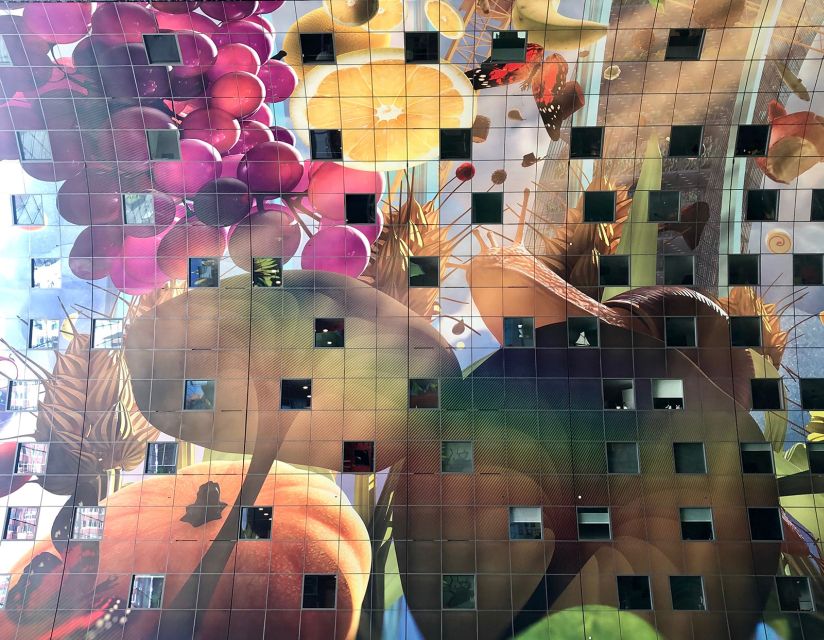
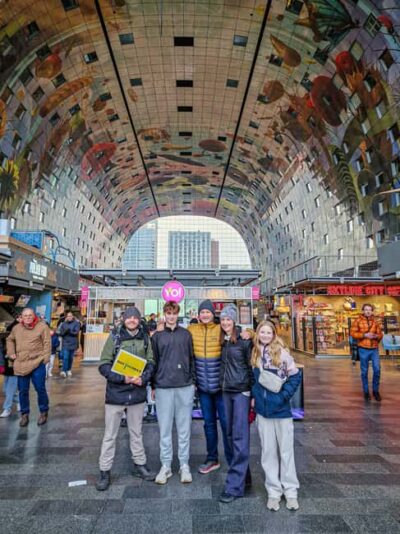
The tour ends at the Markthal, where architecture and art come together in a particularly dramatic way. The building’s great interior artwork gives the final stop a strong visual payoff, even though food and drinks are not included.
Ending here is practical. You can look around after the guide finishes, choose something to eat, or use the area as a base for further sightseeing. The Markthal is not just a final landmark on the route. It is a place where the city’s design choices become part of everyday shopping and dining.
I also like the progression. The walk begins with a major transport building and ends in a public food hall. In between, you see museums, public art, a creative street, and experimental housing. That sequence makes the city feel connected rather than like a checklist of unrelated attractions.
Because the tour ends here, you should plan your onward route before booking. There is no included transportation or hotel drop-off. That is not a serious problem in central Rotterdam, but it matters if you are carrying luggage or have a tight schedule.
What $65 buys you
At $65 per person, this is not the cheapest way to walk around Rotterdam. You can see many of the exterior sights without paying for a guide. The question is whether the explanations and route design are worth the extra cost.
For me, the value is strongest if you are visiting for the first time and want to understand Rotterdam’s modern architecture, public art, and postwar planning in one session. The tour covers several parts of the center without asking you to organize the route yourself.
The price is less convincing if you mainly want photographs or already know the city well. You will not receive entry tickets, transport, meals, or hotel pickup. Museum admission must be handled separately, and the experience remains an outdoor walking tour.
The rating of 4.9 from 10 reviews points to a very positive response, with praise focused on clear information and a strong overview. One review specifically credits Diana with explaining Rotterdam’s historical, planning, and architectural development from the new Central Station. If she is your guide, expect a particularly useful focus on how the city was rebuilt and organized.
Other feedback describes the walk as informative, pleasant, and helpful for getting an initial feel for Rotterdam. That is the right way to judge it. This is an orientation tour with substance, not a specialist architecture seminar.
Who should book this walk?
I would recommend it to first-time visitors, architecture fans, museum-minded travelers, and anyone who wants a quick grasp of Rotterdam’s modern identity. It also suits you if you prefer learning about a city while moving through its streets rather than sitting in a lecture.
The tour may work well for a private group because a private option is available. That can be useful if you want the pace or focus adjusted, though the provided information does not specify how much customization is offered.
You should think twice if you dislike long walks, outdoor sightseeing, or changeable weather. The tour runs rain or shine, and the provider advises seasonal clothing. It is not suitable for visually impaired or hearing-impaired people, and unaccompanied minors are not permitted.
The language is English, and the tour is listed as wheelchair accessible. Still, a 2.5-hour walking experience requires you to be comfortable spending substantial time outside and moving between sights.
Should you book the Rotterdam architecture tour?
Book it if you want Rotterdam explained, not merely photographed. The route gives you a useful story that joins Central Station, the city’s rebuilding, public art, the Museum Quarter, Witte de Wit street, the Cube Houses, and the Markthal.
Skip it if you want museum interiors, a food tour, or a relaxed ride through town. Those are not part of the experience. For most first visits, though, $65 is a reasonable price for a guided introduction, especially when the city’s bold buildings can otherwise feel disconnected.
Bring comfortable shoes, dress for the forecast, and arrive at the main entrance of Central Station under the clock. If you do that, you will be ready to see Rotterdam with better context and a much sharper eye.
FAQ
Where does the tour meet?
The meeting point is next to the main entrance of Rotterdam Central Station, under the station’s clock.
How long does the walking tour last?
The tour lasts 2.5 hours.
What language is the tour offered in?
The live tour guide speaks English.
Is the tour available as a private experience?
Yes. A private group option is available.
Are museum entry tickets included?
No. Entry tickets are not included in the tour price.
Is food or drink included?
No. Food and drinks are not included.
What should I bring?
Bring comfortable shoes and weather-appropriate, seasonal clothing. The tour operates rain or shine.
Just added in Netherlands
- Rotterdam Must Do Tour: Highlights, History, WW2 and Architecture★ 5.0 · 20 reviews
- Escape Room – l’Architecte★ 4.5 · 13 reviews
- Private Rotterdam Walking Tour – guided by Architects★ 5.0 · 2 reviews
- Rotterdam Architecture and Highlights Walking Tour (TOP RATED)★ 4.5 · 14 reviews
- Maastricht Highlights, Architecture & Heritage Tour★ 5.0 · 7 reviews
- Gouda Private Walking Tour: History, Architecture & Cheese★ 4.5 · 8 reviews
- Amsterdam Architecture Tour★ 5.0 · 4 reviews
- Walking Tour about Golden Age Architecture, private local guide★ 5.0 · 15 reviews
Rotterdam Architecture Tours, compared.
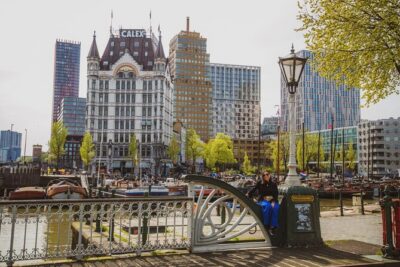
Rotterdam Walk: Hilights, Gems, Architecture & WWII | 2 or 3hrs
Read our review →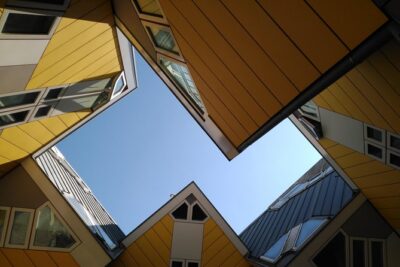
Rotterdam Must Do Tour: Highlights, History, WW2 and Architecture
Read our review →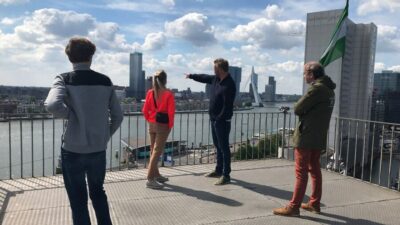
Rotterdam Architecture and Highlights Walking Tour (TOP RATED)
Read our review →
Browse the lists this tour appears in