
REVIEW · NEW ORLEANS ARCHITECTURE TOURS
New Orleans: History, Culture & Architecture Guided Tour
New Orleans reveals itself in layers. This three-hour tour gives you a useful first look at the city’s French Quarter, Treme, Garden District, City Park, cemeteries, and major cultural landmarks from an air-conditioned minibus. I like the wide range of neighborhoods covered, especially the chance to see more than the usual French Quarter streets. I also like the strong historical focus, including the city’s African American past, above-ground burial customs, and the effects of Hurricane Katrina. The main trade-off is time: three hours is enough for an overview, but not enough for long visits at every stop.
The $55 price is fair if you want orientation, hotel pickup, and live commentary in one package. You will not get a full meal or drinks, and pickup is limited to selected hotels in downtown New Orleans and the French Quarter. Guides Joseph and Bob have earned especially warm praise for their humor, clear explanations, and broad understanding of the city.
Key things to know before booking
- A wide city tour in three hours: You see the French Quarter, Esplanade Avenue, City Park, Treme, the Warehouse District, the Garden District, and Metairie Cemetery.
- City Park gives you a choice: Visit the Besthoff Sculpture Garden or stop for coffee and beignets at Morning Call Cafe.
- Treme receives real attention: The route includes one of the oldest African American neighborhoods in the United States, dating to the 1700s.
- The minibus matters in New Orleans weather: Air conditioning offers welcome relief, especially when the heat and humidity rise.
- Joseph and Bob have made strong impressions: Their humor, historical detail, and practical explanations are among the tour’s most praised features.
- Expect an overview, not a slow walking tour: Some places are viewed from the vehicle, while the cemetery and City Park receive brief stops.
Why this tour works as a first look at New Orleans
New Orleans can be confusing on a first visit. The neighborhoods sit close together, but each has a different character and story. The French Quarter is the part most people know, yet the city’s identity also comes from Treme, the Garden District, the Mississippi River, above-ground tombs, music, food, art, and the long effects of storms and rebuilding.
This tour connects those pieces. You ride between districts while an English-speaking guide explains what you are seeing, then step off for selected stops. That format saves you from arranging several separate taxi rides or tours, and it gives you a useful sense of how the city fits together.
I would treat the experience as an introduction. Afterward, you can decide where to return on foot. You may want more time in Treme, a slower visit to the French Quarter, or a separate look at the World War II Museum and the Contemporary Arts Center.
The 4.6 rating from 38 reviews reflects a fairly consistent experience. Joseph is praised for covering history, architecture, and culture with detail, while Bob is remembered for being funny and engaging. One particularly useful account describes discussion of a Hurricane Katrina site, along with explanations of how burial practices developed in swampy New Orleans.
More history tours in the USA:
- Chicago in a Day: Food, History & Architecture Walking Tour
★ 5.0 · 1,153 reviews - Charleston’s Best Highlights: History, Culture & Architecture
★ 5.0 · 422 reviews - Palm Springs Modernism Architecture & History Bike Tour
★ 5.0 · 359 reviews
Hotel pickup keeps the morning simple
Your tour begins with pickup from a selected hotel in downtown New Orleans or the French Quarter. That is helpful if you are staying in one of those areas and do not want to arrange transportation to a meeting point.
There is one practical catch. Pickup times change according to the number and location of stops, so you need to be ready at the curb 30 minutes before the scheduled time. That early wait may feel excessive, but city traffic and multiple hotel pickups can make a fixed arrival time difficult.
The vehicle is an air-conditioned mini-coach. I see this as more than a small comfort. New Orleans can be hot, humid, and tiring, and the vehicle lets you cover several districts without spending the whole morning walking in the sun. The trade-off is that you get a vehicle-based view of some places rather than a long, quiet look from street level.
The French Quarter opens the story
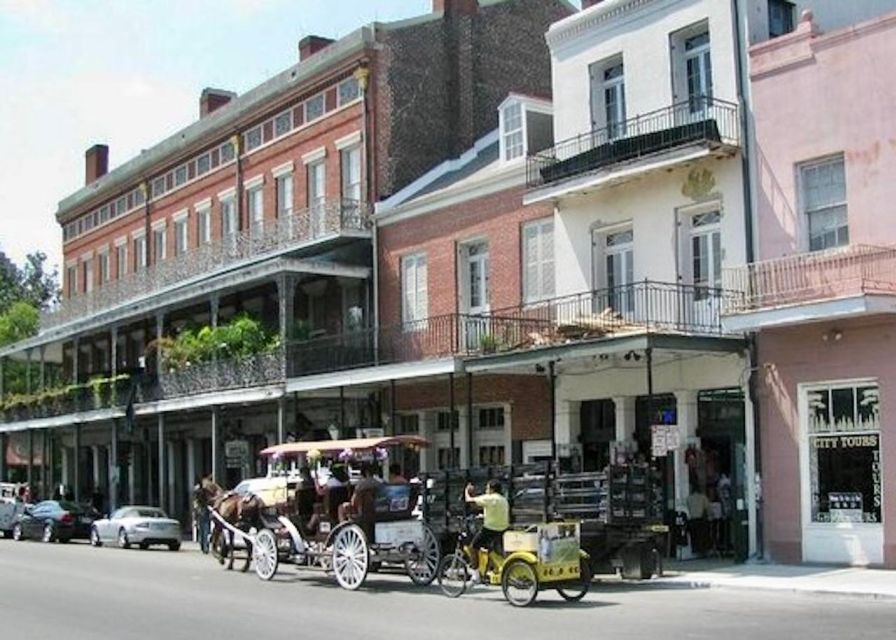
The French Quarter is an obvious starting point, but it is not a shallow one. The district brings together old buildings, narrow streets, the Mississippi River, music, restaurants, and some of the city’s most recognizable public spaces.
You will also pass Saint Louis Cathedral, whose roots date to 1720. It is described as North America’s oldest cathedral and sits beside the Mississippi River. The tour does not promise a lengthy interior visit, so plan to see this part as a guided drive-by or brief look rather than a formal cathedral tour.
This section is useful because your guide can point out architectural details that are easy to miss when you wander alone. The value depends heavily on the guide’s commentary. Joseph, in particular, has been praised for explaining the city beyond the familiar French, English, and jazz shorthand.
That wider view matters. New Orleans is not one story, and the tour tries to show how several traditions have shaped the city. You will hear about architecture and famous landmarks, but also about the people and events that give those buildings meaning.
Esplanade Avenue and the city’s grand homes
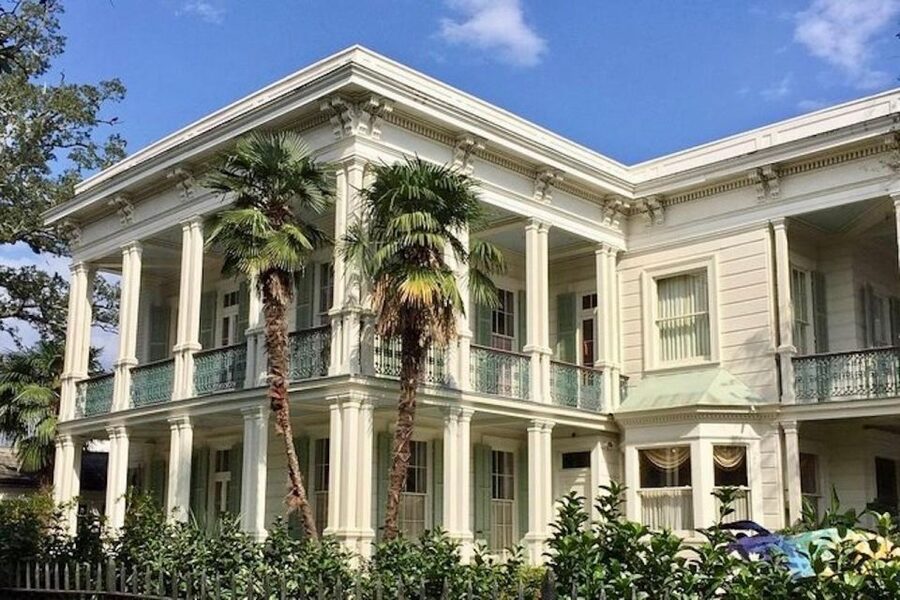
From the French Quarter, the route continues along Esplanade Avenue. Oak-lined streets and large mansions give this part of the trip a different feel from the tighter streets of the Quarter.
This is a good stretch for looking from the window. The guide explains the homes and architectural details while the minibus moves through the area. You get the benefit of seeing a long run of the avenue without needing to cover it on foot.
The limitation is clear: you will not have time to inspect every porch, fence, or facade. If grand homes are your main interest, you may want to return later for a slower walk. Still, as part of a citywide tour, Esplanade helps show the range of New Orleans architecture in a short period.
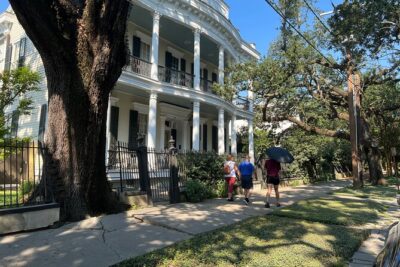
The route also connects naturally with the Garden District, where Victorian homes, gardens, and tree-lined avenues offer another view of the city’s residential character. The tour gives you the broad picture rather than a detailed architectural survey.
A few more architecture tours in the USA worth a look
- Chicago River: 1.5-Hour Guided Architecture Cruise
★ 4.8 · 8,046 reviews - Charleston: History and Architecture Guided Walking Tour
★ 4.8 · 349 reviews - Charleston History, Homes, and Architecture Guided Walking Tour
★ 5.0 · 267 reviews - Chicago River: Guided Sunset Cocktail & Architecture Tour
★ 4.6 · 203 reviews
City Park gives you the tour’s best choice
City Park is one of the most appealing parts of the itinerary because you have a choice. You can visit the Besthoff Sculpture Garden or stop at Morning Call Cafe for coffee and beignets.
The Besthoff Sculpture Garden gives the tour an art-focused pause. It adds a modern element to a day otherwise shaped by old neighborhoods, cemeteries, churches, and historic buildings. If you enjoy public art, this is likely the better use of your stop.
Morning Call Cafe offers a more classic New Orleans break. Coffee and beignets are not included, so you will need to pay for them yourself. This is a useful option if you want a snack and a relaxed taste of a local-style cafe stop rather than another cultural site.
Because the tour lasts only three hours, your time here is limited. I would choose before arriving. Art lovers should favor the sculpture garden, while anyone needing a quick bite may prefer Morning Call. The choice also means the experience can suit different interests within the same group.
Treme brings the city’s African American story forward
Faubourg Treme is one of the most important parts of the route. The neighborhood dates back to the 1700s and is described as one of the oldest African American neighborhoods in the United States.
Including Treme makes the tour more useful than a simple architecture circuit. You are not only looking at attractive buildings. You are being shown a neighborhood tied to the city’s African American history and cultural life.
The route may be especially valuable if you have limited time in New Orleans and want some historical context before exploring independently. One of the strongest aspects of the commentary is its effort to move beyond familiar tourist shorthand. You may hear about present-day events as well as earlier periods, which helps connect the old streets to the city you see today.
Do not expect a long walking visit through Treme. The tour description emphasizes passing through the area, so much of your view will be from the minibus. If Treme is your priority, use this tour as an introduction and plan a separate visit afterward.
The Warehouse District and American Sector
The Warehouse District adds a different chapter. Former industrial spaces now sit alongside art and cultural institutions, giving the area a blend of history and modern city life.
The route also passes through what was once called the American Sector. Here you will see references to the National World War II Museum and the Contemporary Arts Center, one of the nation’s first art institutions.
The tour does not include admission to either museum. That is important when planning your day. You will understand where they are and why they matter, but you should allow separate time and money if you want to go inside.
This part of the drive is useful for trip planning. If the World War II Museum interests you, the guide’s overview can help you decide whether to return for a full visit. The same applies to the Contemporary Arts Center. The tour gives you a quick introduction without using the whole three-hour route inside one attraction.
Metairie Cemetery explains a distinctive burial tradition
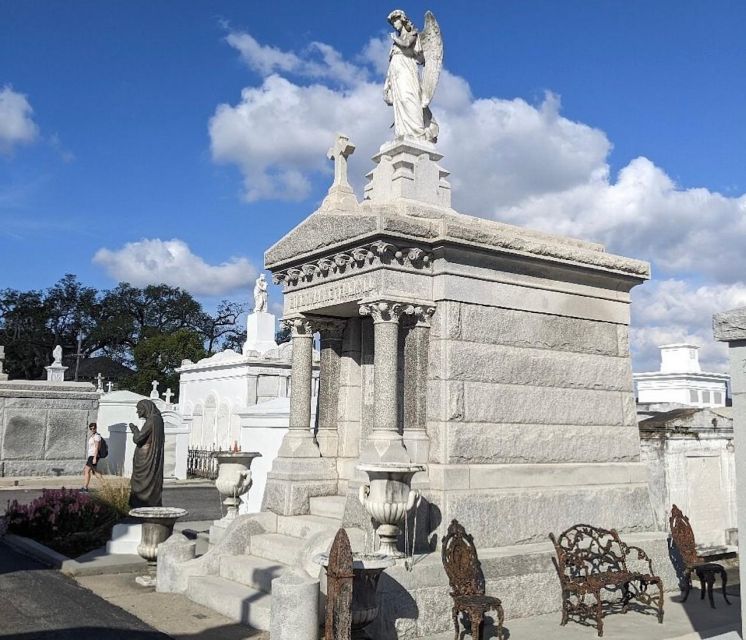
The brief stop at Metairie Cemetery is one of the tour’s most unusual features. New Orleans is famous for its above-ground tombs, a practical response to the city’s swampy ground and difficult burial conditions.
Here, the guide explains how burial customs developed from the city’s early years. This is not just a photo stop. It helps you understand why New Orleans cemeteries look so different from many burial grounds elsewhere in the United States.
The visit is brief, so you should not expect to explore every section. Still, I value this stop because it explains a feature you will encounter again in New Orleans. Without context, the tombs can look like striking pieces of architecture. With context, they become evidence of how people adapted to local conditions.
This is also one of the places where a good guide makes a major difference. The tour’s strongest praise centers on historical explanation, and the cemetery gives that skill something specific to work with.
The Garden District completes the architectural picture

The Garden District brings together Victorian mansions, gardens, and broad avenues. After the French Quarter’s compact streets and the industrial character of the Warehouse District, this neighborhood provides a calmer architectural contrast.
You will likely see much of it from the vehicle, with the guide pointing out notable homes and streets. That arrangement works well for a first orientation, especially if you are still learning the city’s layout.
But the Garden District deserves more than a quick drive if you enjoy architecture. The tour cannot replace a longer walking visit. Think of this portion as a preview that helps you identify where to return.
The same principle applies to the Esplanade. The tour gives you range, while a separate walk gives you detail. That is the central compromise of fitting so much New Orleans into three hours.
What the guides add to the experience
Live commentary is the heart of this tour. The landmarks are worthwhile, but the information between stops gives the route its purpose.
Joseph has been praised for covering history, architecture, and culture with confidence and detail. One account specifically valued his discussion of current events, a Hurricane Katrina site, cemetery customs, and small details that are easy to miss when you explore through short online videos.
Bob has been remembered for his humor and broad command of New Orleans culture and history. That matters on a three-hour drive. A dry lecture can make a vehicle tour drag, while a personable guide can keep the changing neighborhoods connected.
The guides are not interchangeable with a book or audio app. They can explain what you are seeing in sequence, answer questions, and give context as the city changes outside the window. Your exact experience will depend on who leads your departure, but the guide is clearly the part of the tour that can turn a checklist into a worthwhile introduction.
Is $55 a fair price?
At $55 per person, the tour offers hotel pickup and drop-off, air-conditioned transportation, a guide, and live English commentary. Food, drinks, and attraction admissions are not included.
I consider the price reasonable for someone who wants broad coverage without planning several separate outings. Transportation alone has value, especially if you are staying in the French Quarter and want to reach City Park, Metairie Cemetery, the Garden District, and other districts in one morning.
The value is weaker if you prefer long visits at one or two locations. A walking tour of the French Quarter, a separate Garden District visit, and a full museum admission may suit you better. This experience is designed for range, not depth.
The included hotel pickup also has limits. Only selected hotels in downtown New Orleans and the French Quarter qualify, so check your accommodation before booking. Since food is extra, budget for coffee and beignets if you choose Morning Call Cafe.
Who should book this three-hour tour?
I would recommend it to first-time visitors who want to understand New Orleans geographically and historically before exploring on their own. It also suits anyone with limited time, older travelers who prefer an air-conditioned vehicle, and families or groups with different interests.
It is a particularly good fit if you want more than the standard French Quarter story. Treme, the cemetery, Katrina-related discussion, the Warehouse District, and the American Sector give the tour a wider scope.
You may want another plan if your priority is a slow walk, a full museum visit, or extended time in one neighborhood. The route moves quickly, and several places are viewed from the minibus.
Good weather is required. If poor weather causes cancellation, you can reschedule or receive a full refund. The same applies if the minimum number of participants is not reached and the experience cannot operate. You can also cancel up to 24 hours in advance for a full refund, and the reserve-now, pay-later option keeps your plans flexible.
Should you book it?
Book this tour if you want a clear, well-rounded introduction to New Orleans in three hours, with transportation handled and a guide explaining the city as you go. The strongest reasons are its broad route, attention to Treme and burial customs, and the chance to choose between sculpture and beignets at City Park.
Skip it if you want a slow walking experience or already know exactly which neighborhood you want to study. For most first visits, though, $55 is a sensible price for seeing the city’s major districts quickly and learning where to spend your own time next.
FAQ
How long is the New Orleans history and architecture tour?
The tour lasts three hours.
What language is the tour conducted in?
The live tour guide speaks English.
Is hotel pickup included?
Yes. Hotel pickup and drop-off are included, but only selected hotels in downtown New Orleans and the French Quarter qualify.
How early should I be ready for pickup?
You should be ready and curbside 30 minutes before the scheduled tour time. Pickup times vary according to the number and location of stops.
What transportation is provided?
You travel in an air-conditioned mini-coach or minibus.
Does the price include food and drinks?
No. Food and drinks are not included. If you choose coffee and beignets at Morning Call Cafe, you pay separately.
What places does the tour visit or pass?
The route includes the French Quarter, Esplanade Avenue, City Park, the Besthoff Sculpture Garden or Morning Call Cafe, the Warehouse District, Faubourg Treme, the former American Sector, the Garden District, Metairie Cemetery, and Saint Louis Cathedral.
Can I cancel for a refund?
Yes. You can cancel up to 24 hours in advance for a full refund. If bad weather or an insufficient number of participants causes cancellation, you can choose another date or receive a full refund.
Just added in the USA
- Wilmington History and Architecture Tour★ 4.8 · 18 reviews
- New Orleans : Garden District Architecture Walking tour★ 4.8 · 5 reviews
- Washington DC: Dupont Circle & Embassy Row Architecture Tour★ 5.0 · 6 reviews
- Washington, DC: Georgetown Architecture Walking Tour★ 5.0 · 8 reviews
- Tulsa: Art Deco Walking Tour of Tulsa★ 5.0 · 8 reviews
- Private Colonial Williamsburg Architectural Tour★ 5.0 · 5 reviews
- Monuments and Memorials Architectural Walking Tour★ 5.0 · 17 reviews
- Castle to Capitol: Museums of the National Mall Architecture Tour★ 4.5 · 9 reviews
New Orleans Architecture Tours, compared.

New Orleans French Quarter Architecture Walking Tour
Read our review →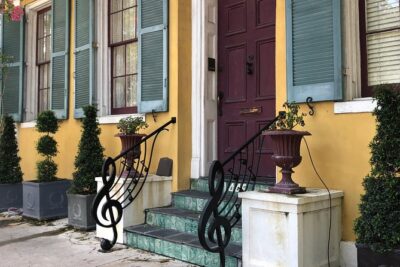

Garden District Architecture Walking Tour in New Orleans
Read our review →Browse the lists this tour appears in