
REVIEW · LONDON ARCHITECTURE TOURS
London: Official Natural History Museum Tour – Architecture
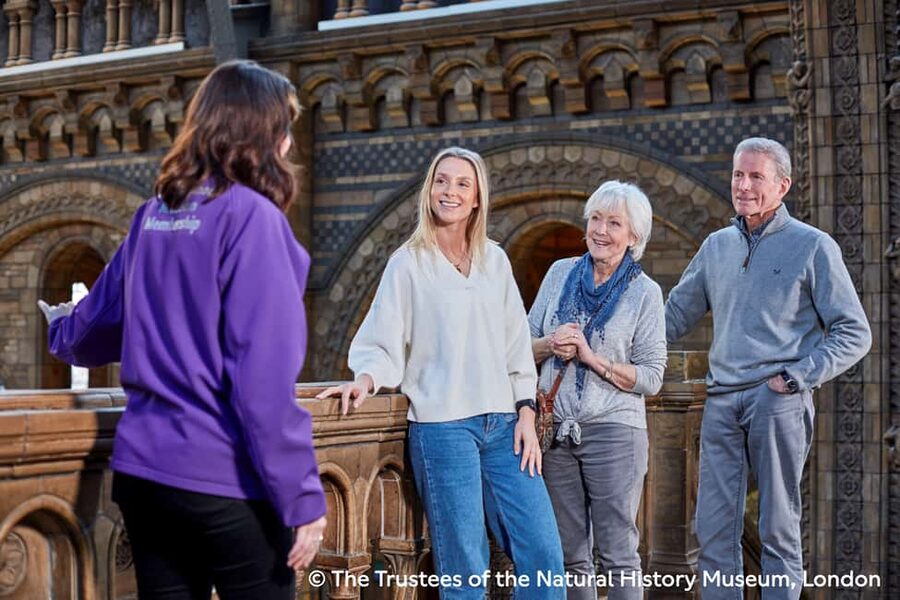
The building tells its own story. I like the nature-themed carvings and the chance to spot details most museum visitors miss, and I like the small-group format, which keeps the guide close at hand. The main consideration is time: one hour gives you a focused look at the architecture, not a full museum visit.
This tour also earns praise for clear, lively guiding. Glenn Harper is especially good at making small details matter, while the meeting point can cause confusion because this tour begins at the Exhibition Road staff entrance, not the grand Cromwell Road entrance.
Key things to know
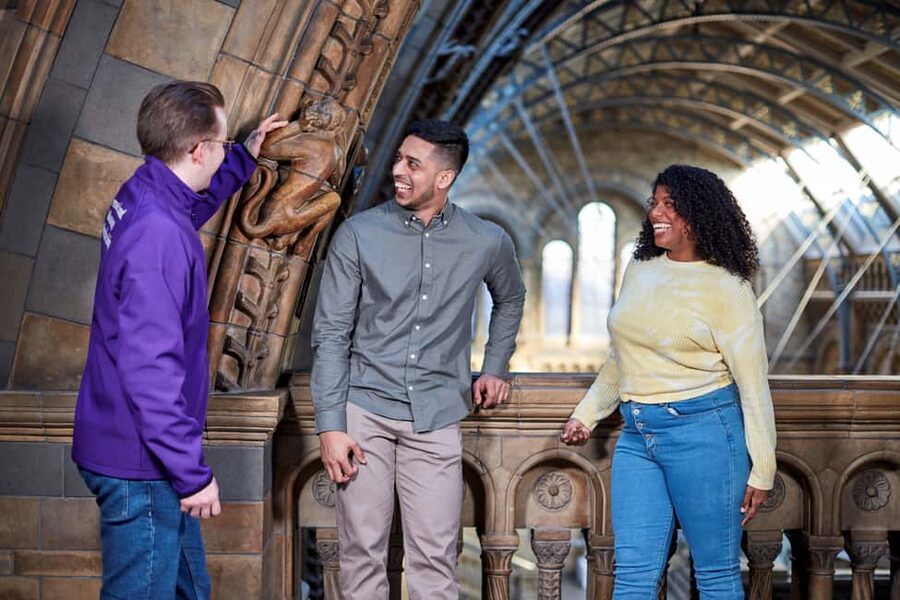
- Look for Charles Darwin in the stonework: A terracotta monkey with a human face is said to resemble the famous naturalist.
- The tour begins outside the usual entrance: Meet on Exhibition Road, opposite the Victoria and Albert Museum.
- You see both old and new museum design: The route connects the late nineteenth-century building with the modern Darwin Centre.
- The group is small: The activity details list a maximum of seven people, while the highlights describe groups of up to ten, so check the final number when booking.
- The price is modest for a guided visit: At $20 per person, you are paying for interpretation as much as entry.
- The tour suits repeat museum visitors: It reveals carvings, plans, and design details that are easy to overlook on a normal visit.
Why the Natural History Museum building deserves its own tour
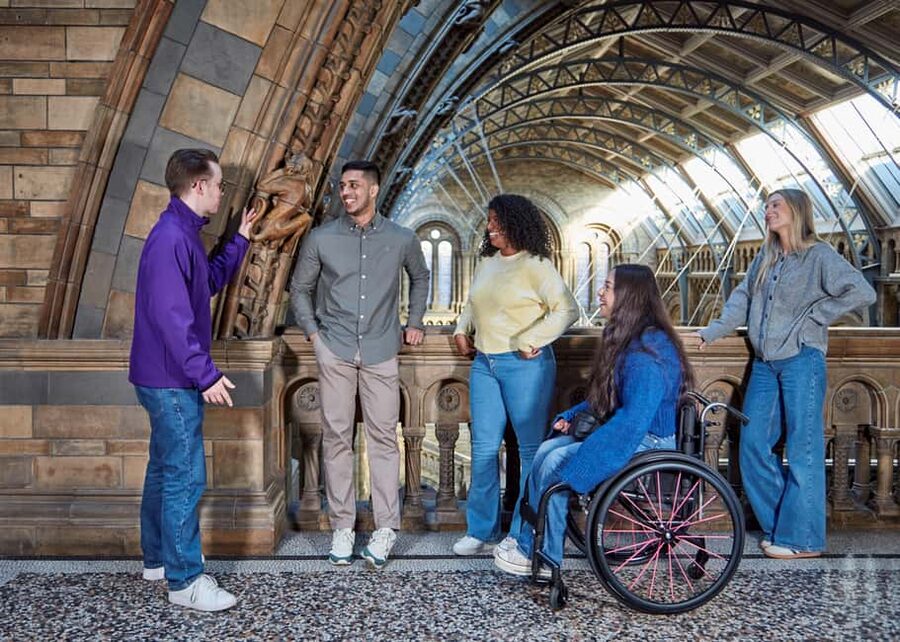
Most people enter the Natural History Museum thinking about dinosaurs, whales, fossils, or minerals. The building itself often becomes background scenery. That is a shame. Its high ceilings, carved stone, terracotta decoration, and animal figures make it one of London’s most memorable museum interiors.
This one-hour tour changes your focus. Instead of rushing toward the exhibits, you pay attention to the walls, arches, ceilings, and small sculpted creatures around you. I like this approach because it gives the building a clear purpose. You are not simply admiring decoration. You are learning how the museum’s design reflects the natural world it was built to explain.
The museum was constructed in the late 1800s in a Romanesque style. Its design is packed with references to nature, including animals carved into the fabric of the building. The result is an interior that feels part cathedral, part Victorian scientific institution, and part stone zoo.
You do not need to be an architecture expert to enjoy this. A good guide gives you a way to read the building. You may notice a creature, pattern, or face that would otherwise pass unnoticed, then understand why it was placed there.
More museum visits in the world:
- Private Edo-Tokyo Open Air Architectural Museum Tour
★ 4.8 · 15 reviews - Chelsea Galleries and High Line; Art, Architecture and History
★ 5.0 · 14 reviews - Castle to Capitol: Museums of the National Mall Architecture Tour
★ 4.5 · 9 reviews
Meeting on Exhibition Road, not Cromwell Road
Your meeting point matters here. The tour begins outside the museum’s staff and Flett Theatre entrance on Exhibition Road, opposite the Victoria and Albert Museum. It is next to the public entrance on Exhibition Road, but it is not the main Cromwell Road entrance, which is reached through the gardens.
That distinction is worth taking seriously. The Natural History Museum has more than one prominent approach, and arriving at the wrong side could leave you hurrying around the building before the tour starts. The location is also identified by the what3words reference ///bunny.moment.seated.
I would arrive with enough time to identify the correct doorway. Look for the Exhibition Road side and the entrance connected with the staff and Flett Theatre area. Do not simply follow signs for the main entrance on Cromwell Road.
The location opposite the Victoria and Albert Museum is useful if you are planning a museum day. You can visit both institutions in the same part of South Kensington, although this architectural tour only includes general entry to the Natural History Museum. It does not include paid temporary exhibitions.
The opening story: original plans from the late 1800s
The tour begins by setting up the building’s original idea. You get to see digital copies of early sketches, detailed drawings, and plans. These materials help you understand that the museum was designed as more than a plain container for scientific objects.
This part should appeal to anyone who enjoys seeing how a grand public building takes shape. Plans show intention. They help you connect the finished arches and decorations with the people who imagined them before construction began.
I find this particularly useful because ornate Victorian architecture can seem overwhelming at first. You see hundreds of visual details at once. Original drawings offer a calmer starting point, showing how the structure and decorative scheme were planned.
The guide then helps connect those plans with the building around you. You are not only viewing historical documents on a screen. You are comparing them with the real ceiling, walls, carvings, and decorative features in front of you.
The activity description does not promise a fixed list of rooms or stops, so the exact route may vary. Still, the purpose is clear: the guide uses the museum’s original design to explain its character and its connection to natural history.
Terracotta animals and the Darwin connection
The most playful detail is the building’s collection of terracotta animals. These are not specimens in glass cases. They are part of the architecture, worked into the museum’s decorative program.
One especially memorable figure is a carved monkey with a human face. It bears a striking resemblance to Charles Darwin, the naturalist whose ideas changed the way people understood evolution. The detail gives the building a little humor, but it also links the decoration to the scientific world inside.
This is the sort of feature I would probably miss without a guide. Museum visitors tend to look straight ahead or down at display cases. A guide can direct your eyes upward or sideways and point out the small faces and animals built into the structure.
The tour’s strongest value lies in details like this. You are not just told that the museum celebrates nature. You are shown how that idea appears in the stone and terracotta.
The references to Darwin also give the building a human connection. Scientific institutions can feel formal and imposing. A mischievous sculpted face softens that mood and reminds you that the people behind the museum had a sense of fun.
More history tours in the world:
- Chicago in a Day: Food, History & Architecture Walking Tour
★ 5.0 · 1,153 reviews - Charleston’s Best Highlights: History, Culture & Architecture
★ 5.0 · 422 reviews - Palm Springs Modernism Architecture & History Bike Tour
★ 5.0 · 359 reviews - Charleston: History and Architecture Guided Walking Tour
★ 4.8 · 349 reviews
The museum’s high ceilings, gargoyles, and carved surfaces
The tour also draws attention to the features that give the building its grand mood. Expect to look at imposing gargoyles, intricate carvings, and high decorative ceilings.
These elements are easy to admire without knowing their names. The guide’s job is to explain what you are seeing and why it matters. One confirmed strength of the experience is clear delivery. Tal, who took the tour in a busy setting, found the guide easy to hear despite background noise, even with people from several countries in the group.
That practical point matters. A tour can have good content and still fail if you cannot hear the person speaking. Headsets are provided during peak visitor hours, which should help when the museum is crowded.
The group size should also help. The activity information lists a maximum of seven people, while the highlights describe a group of up to ten. That is still a small format, but the difference is worth noting. If the exact group size matters to you, confirm it when you book.
A smaller group gives you a better chance to stay close to the guide and ask a quick question. It also makes it easier to follow visual cues, especially when the guide points to a small carving high above your head.
From Victorian design to the twenty-first-century Darwin Centre
The tour does not stop with the original building. It continues to the museum’s newer additions, finishing inside the Darwin Centre.
This creates a useful contrast. You begin with a late nineteenth-century Romanesque building, full of carved references to animals and nature, then move toward a modern part of the museum. The route shows how the institution has changed while keeping its scientific purpose.
The Darwin Centre is an important final stop because it represents the museum’s twenty-first-century side. The tour description does not provide a detailed list of rooms or activities there, so you should not expect a full behind-the-scenes research visit based on the information available.
Instead, think of the Darwin Centre as the end point of the architectural story. The old museum was designed to make science public through grand architecture and collections. The newer addition shows how the museum has continued adapting its buildings for modern needs.
That old-to-new comparison gives the hour a clean shape. You start with plans and historic design, examine decoration and scientific references, then finish with contemporary architecture. It is more satisfying than a tour that simply points at attractive features without showing how the building developed.
What the guide adds to the experience
The guide is the heart of this tour. Without live interpretation, you could still admire the building, but you would probably miss the meaning behind many of its small features.
The feedback is especially strong on this point. Patricia found the guide informative, and a Turkish-speaking participant praised the tour guide’s success in making the experience work through explanation. Tal appreciated the clear speech, while Fernando specifically praised Glenn Harper’s passion and his ability to point out things that would have been difficult to find alone.
Glenn Harper is the only guide named in the available information, so he is worth mentioning if you happen to see his name when choosing a time. The praise for him centers on enthusiasm and close observation rather than theatrical performance. That is a good fit for this subject.
You should expect the guide to keep you looking at details around the museum, not simply recite dates. The best parts of this experience appear to come from being shown something small and then hearing the story that gives it meaning.
The guide-led format is also helpful for international groups. The comments about clear speech and background noise suggest that communication is taken seriously. Headsets during busy periods add another layer of practical support.
Is $20 good value for one hour?
At $20 per person, this is not the cheapest way to enter a museum, since general museum entry is included separately in the package. But the tour is priced as a guided architectural experience, not merely as admission.
I think the value is strongest if you care about buildings, design, museums, or hidden details. You are paying for a concentrated hour with a guide who can direct your attention and supply context. That can make a familiar museum feel new.
The value is less clear if your only goal is to see the museum’s major scientific displays. The tour focuses on architecture and history, and one hour is a short slice of a large institution. You will still need separate time to explore the collections at your own pace.
The included general entry is useful because you can continue visiting afterward, subject to the museum’s entry arrangements. Paid temporary exhibitions are not included, so budget separately if one of those is part of your plan.
The tour also includes skip-the-queue access. That can matter on a busy day, especially when you have a tight schedule. It does not turn one hour into a full museum visit, but it reduces one common source of delay.
Who should book this architecture tour?
I would recommend it most strongly to first-time visitors who want an organized introduction to the building, and to returning visitors who have already seen the main displays. Repeat visitors are likely to gain the most from the small carvings and design clues that are easy to miss on an ordinary visit.
It also suits adults and older children who can follow a focused architecture story. Children under four are not suitable for the activity. The tour is wheelchair accessible, which is useful for visitors who need an accessible route, although the supplied information does not describe every surface or room on the route.
Art and architecture fans will appreciate the Romanesque design and decorative program. Science fans may enjoy seeing how the building itself reflects the museum’s subject. History-minded visitors will like the early plans and the link to figures such as Darwin.
You may want to skip it if you prefer wandering alone, want a long visit with the dinosaur galleries, or dislike guided pacing. The one-hour format keeps the tour tidy, but it also means the guide decides the focus and timing.
Practical details before you reserve
The tour lasts one hour and is conducted in English. Starting times vary, so you need to check availability for your chosen date.
Small-group numbers are described in two ways: one part of the activity information gives a limit of seven participants, while the highlights say ten. I would treat this as a booking detail worth confirming rather than assume a guaranteed number.
You can cancel up to 24 hours before the activity for a full refund. Reserve-now, pay-later booking is also available, which helps if you are still arranging a London schedule.
General museum entry is included, as is skip-the-queue access. An audio guide is not included, but this is a live tour with an English-speaking guide. Headsets are provided during peak visitor hours.
Because the meeting point is on Exhibition Road, plan around that entrance rather than the main Cromwell Road approach. The tour finishes inside the Darwin Centre, so you end in a useful place for continuing your museum visit.
Should you book it?
Book this tour if you want the Natural History Museum to become more than a backdrop for dinosaur photographs. The carved monkey, nature-themed decorations, original plans, and contrast with the Darwin Centre give you a fresh way to understand the institution.
I especially recommend it for repeat visitors and anyone who likes architecture but does not want a long specialist lecture. The guide’s clear delivery and the small-group setting are major strengths, with Glenn Harper receiving particular praise for noticing details others might miss.
Skip it if your London schedule allows only one short museum visit and your priority is the collections themselves. For everyone else, $20 is a fair price for a focused hour that helps you see the building with sharper eyes.
FAQ
How long does the Natural History Museum architecture tour last?
The tour lasts one hour.
What language is the tour conducted in?
The live tour is conducted in English.
Where does the tour meet?
It meets outside the Natural History Museum staff and Flett Theatre entrance on Exhibition Road, opposite the Victoria and Albert Museum. This is next to the public Exhibition Road entrance, not the main Cromwell Road entrance.
Where does the tour finish?
The tour finishes inside the Darwin Centre, the museum’s newest part mentioned in the activity details.
Is general museum entry included?
Yes, general entry to the Natural History Museum is included. Entry to paid temporary exhibitions is not included.
Is the tour wheelchair accessible?
Yes, the activity is listed as wheelchair accessible.
Can children under four join the tour?
No. The activity is not suitable for children under four.
Just added in the world
- Wilmington History and Architecture Tour★ 4.8 · 18 reviews
- New Orleans : Garden District Architecture Walking tour★ 4.8 · 5 reviews
- Washington DC: Dupont Circle & Embassy Row Architecture Tour★ 5.0 · 6 reviews
- Washington, DC: Georgetown Architecture Walking Tour★ 5.0 · 8 reviews
- Vicenza: Palladian Architecture Private Walking Tour★ 3.3 · 3 reviews
- Walk & Discover KL’s Architectural and Heritage Gems★ 5.0 · 7 reviews
- Private Colonial Williamsburg Architectural Tour★ 5.0 · 5 reviews
- Unveiling Brno: History, Culture & Architectural Delights★ 5.0 · 2 reviews
London Architecture Tours, compared.
Private Tour of Hampton Court Palace with Award-Winning Architectural Historian
Read our review →
Modern Architecture & Building Guided Walking Tour
Read our review →
Browse the lists this tour appears in