
REVIEW · CHICAGO ARCHITECTURE TOURS
Chicago: Prohibition-Era Culture & Architectural Treasures
Chicago tells its best stories outdoors. This 2.5-hour walk ties Prohibition-era crime and city growth to the buildings around the Loop, rather than treating architecture as a list of dates and names. I like the route’s mix of famous sights and fine interior spaces, especially the Chicago Cultural Center, and I like the small-group format, capped at 16 people and often closer to 12.
The tour also has a friendly local flavor, with Chicago-style popcorn and guide recommendations for lunch and further sightseeing. The main drawback is the distance: you cover about 4.8 kilometers, or 3 miles, and one recent guest found the full session a little long when tired. Plan for weather too, since the tour runs in rain, snow, or shine.
Key points at a glance
- Chicago history with a clear theme: Prohibition, organized crime, journalism, architecture, and urban growth are linked into one walking route.
- A strong central Chicago route: Begin beneath the Chicago Theatre marquee and finish at Millennium Park and the Bean.
- Architecture at street level: See Marina Towers, Willis Tower, the Jewelers Building, London House, DuSable Bridge, the Wrigley Building, and Tribune Tower.
- A small-group feel: The usual small group has up to 12 participants, with a stated maximum of 16. Private groups are also available.
- A simple local treat: Chicago-style popcorn is included, with vegetarian options available if requested ahead of time.
- Good for first-time visitors: The tour covers major downtown sights while adding context that can make a later architecture cruise more meaningful.
Why this Chicago walking tour works
Chicago can be hard to understand from a quick look. One block gives you a grand theatre, the next gives you a steel office tower, and the next opens onto the river. This tour gives those pieces a thread: the city’s growth, its Prohibition-era past, its newspapers, and the bold design that followed.
I like that the experience is not sold as a pure mob tour. Crime and Prohibition are part of the story, but they do not swallow the architecture. You get a broader picture of how Chicago developed into a city of tall buildings, busy commerce, public art, and strong civic pride.
The route is also practical for a first visit. You start in the heart of the Loop and finish at Millennium Park, close to major sights, restaurants, and transport connections. You can use the tour as an introduction on your first day, then return to the places that caught your eye.
The overall rating is 4.8 from 93 reviews, and the most consistent praise goes to the guides. Dash receives especially strong approval for his smooth storytelling, attention to breaks, and love of Chicago. Kevin, Rich, Bash, Wallach, and other guides are also described as warm, patient, enthusiastic, and well informed. Since the experience is live and guide-led, the personality of your guide will shape the day, but the repeated praise suggests a strong guiding team.
A few more architecture tours in Chicago worth a look
- Chicago Architecture River Cruise
★ 5.0 · 15,756 reviews - Chicago River 90-Minute Architecture Tour
★ 4.5 · 9,629 reviews - Chicago River: 1.5-Hour Guided Architecture Cruise
★ 4.8 · 8,046 reviews
Starting beneath the Chicago Theatre marquee
Meet beneath the marquee of the Chicago Theatre at 175 North State Street. This is a simple meeting point to find, but allow time to reach it because downtown streets can be busy and the theatre sits in a lively part of the Loop.
The Chicago Theatre is an apt place to begin. It brings together entertainment, city history, and the grand visual style that Chicago does so well. Your guide uses the opening stop to set the scene for the walk, then leads you into a story about how the city became a center of business, culture, and nightlife.
This first section matters because it gives the rest of the tour a frame. Instead of looking at buildings as isolated objects, you start to see downtown as a place shaped by ambition, money, public taste, and changing ideas about city life.
The Riverwalk and Chicago’s vertical city
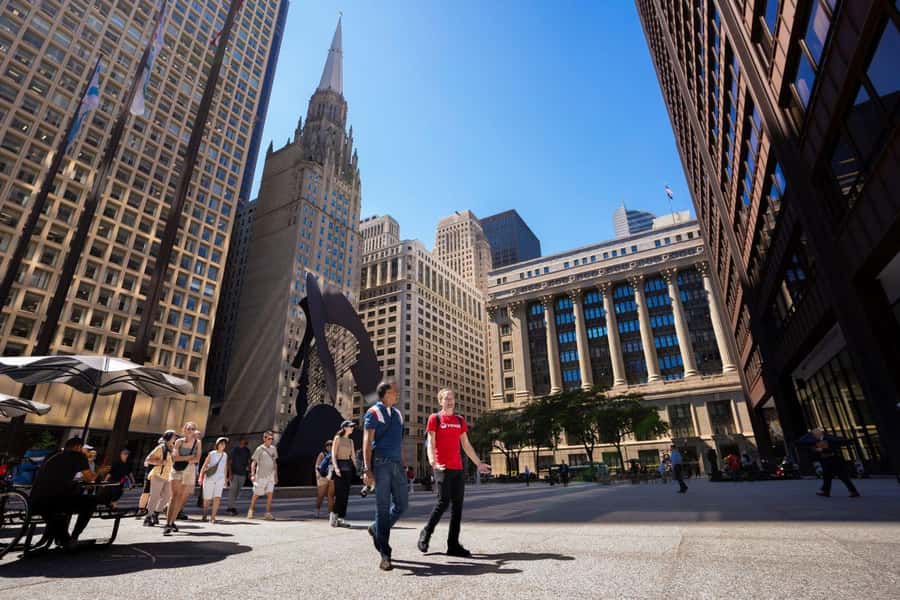
The route heads toward the Chicago Riverwalk, where the city’s architecture becomes easier to read. Along the water, you can see how Chicago’s river is tied to both its working past and its modern identity.
The guide points out Marina Towers, Willis Tower, and the Jewelers Building. These stops show different answers to the same urban problem: how to build upward while making a crowded city useful, impressive, and profitable.
Willis Tower is the most instantly familiar name on this section, but the value of the walk is the comparison between buildings. Your guide can help you notice changes in shape, materials, scale, and purpose. You are not simply told that a building is famous. You learn why it matters to Chicago’s growth.
The Riverwalk also gives you a change of pace from the busy streets. Still, this is an urban walk, not a quiet stroll through a park. You should expect traffic, crowds, crossings, and city noise. Comfortable shoes are not optional if you want to enjoy the full 3 miles.
Art Deco details at London House and DuSable Bridge
The London House and DuSable Bridge bring the focus closer to design. Art Deco is known for strong lines, geometric decoration, and a sense of modern confidence. In Chicago, those details make more sense when you see them as part of a city eager to present itself as forward-looking.
The bridge is also a useful viewing point. From here, buildings can be read in relation to one another, rather than as separate facades. Look up, but also look across the river and along the street. A good guide will help you spot features you could easily miss while hurrying between attractions.
This is one of the tour’s strongest qualities: it trains your eye. After a few hours, you may find yourself noticing entrances, upper stories, decorative panels, and the way older structures sit beside newer ones. That kind of attention costs nothing and can improve the rest of your time in Chicago.
Same city, a different building to stand in front of:
- Chicago Architecture Center River Cruise aboard First Lady
★ 5.0 · 5,536 reviews - Chicago: Architecture River Cruise Skip-the-Ticket Line
★ 4.8 · 4,325 reviews - Chicago River 45-Minute Architecture Tour from Magnificent Mile
★ 4.5 · 2,924 reviews - Chicago Lake and River Architecture Tour
★ 4.5 · 2,308 reviews
Inside the Chicago Cultural Center
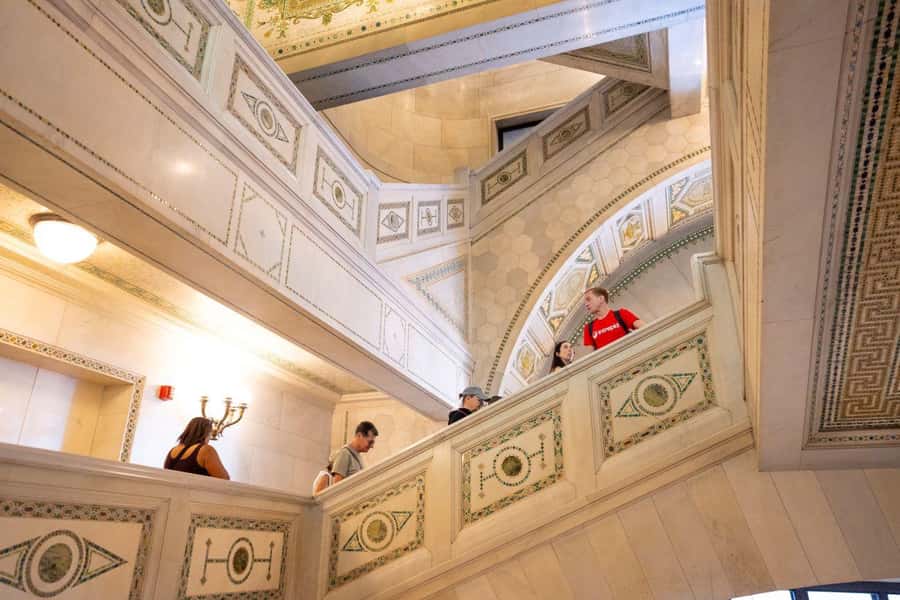
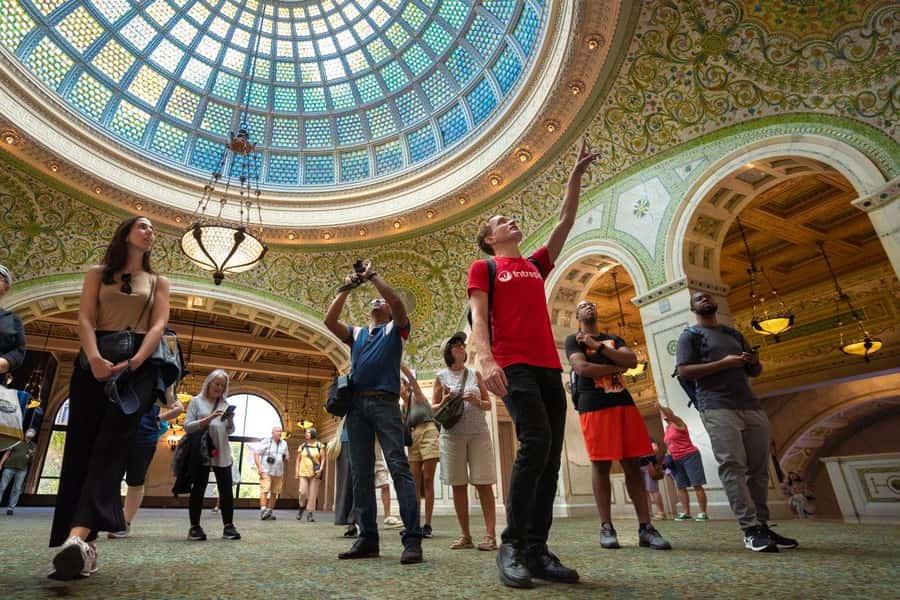
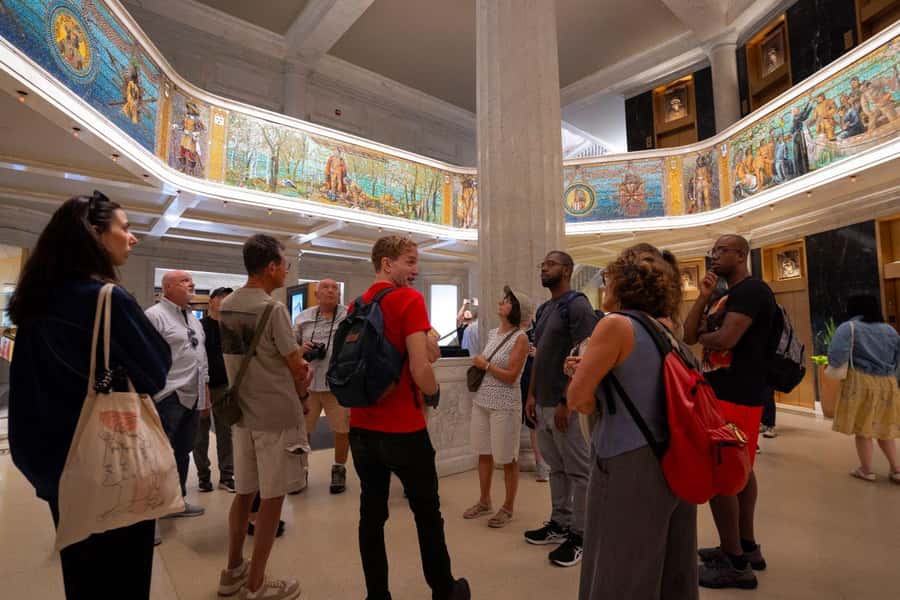
The Chicago Cultural Center is a major stop, not just a quick photo opportunity. Its interior architecture gives you a chance to step out of the street and see the city’s public design at a more human scale.
The building is especially useful for visitors who think of Chicago architecture only as skyscrapers. Inside, you can appreciate decorative work and civic spaces that are easy to miss when your attention is fixed on tall towers. One guide has been praised for showing visitors interior architectural details, and that focus adds real value to the route.
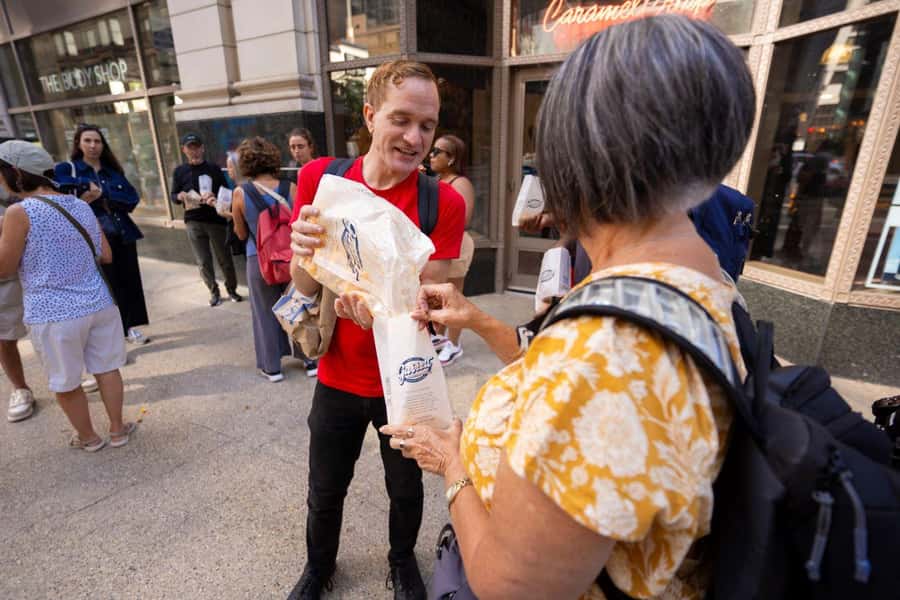
You also receive a Chicago-style popcorn tasting here or along the route. It is a small touch, but a good one. Food gives the tour a local pause and keeps the experience from feeling like a nonstop lecture. Vegetarian needs can be accommodated if you notify the operator in advance, but other allergies and dietary preferences cannot be handled.
Do not expect the popcorn to replace lunch. It is a tasting, not a meal. The guide can suggest places for lunch at the end, which is useful because the tour finishes in an area packed with options.
Journalism, the Wrigley Building, and Tribune Tower
The Wrigley Building and Tribune Tower shift the story toward Chicago’s newspaper culture and civic identity. Journalism played a major role in how the city saw itself and how it presented itself to the rest of the country.
These buildings make a strong pair. Their presence helps explain why architecture in Chicago often feels theatrical. Major companies and newspapers were not only seeking office space. They were also shaping public image through towers that could be recognized from a distance.
Your guide connects those design choices to the city’s historical roots in journalism. That makes this part more useful than a quick exterior photograph. You begin to understand how newspapers, commerce, and architecture reinforced one another.
I also like this section because it broadens the Prohibition theme. The tour is not only about criminals and secret bars. It is also about the newspapers that reported on the era, the businesses that grew during it, and the buildings that reflected Chicago’s changing power.
Finishing at Millennium Park and the Bean
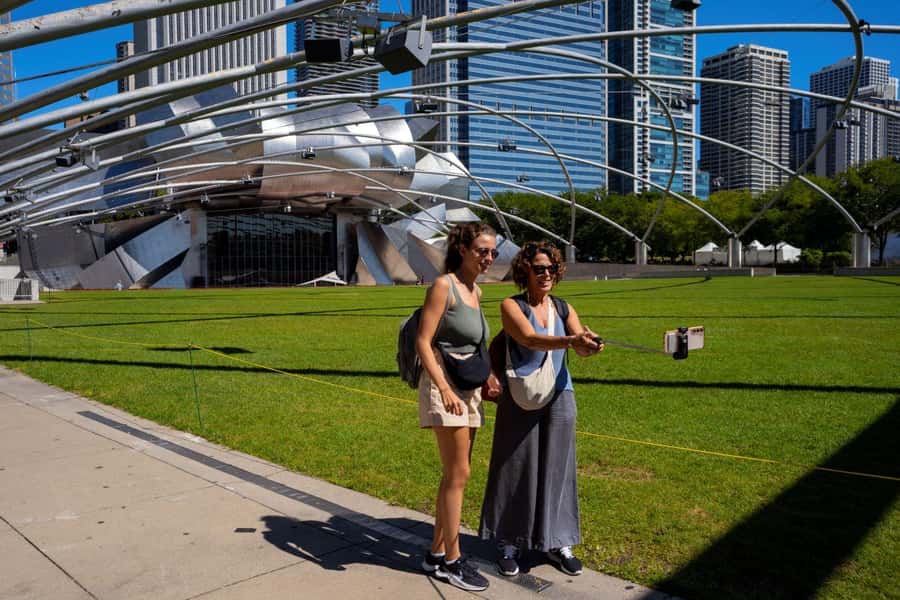
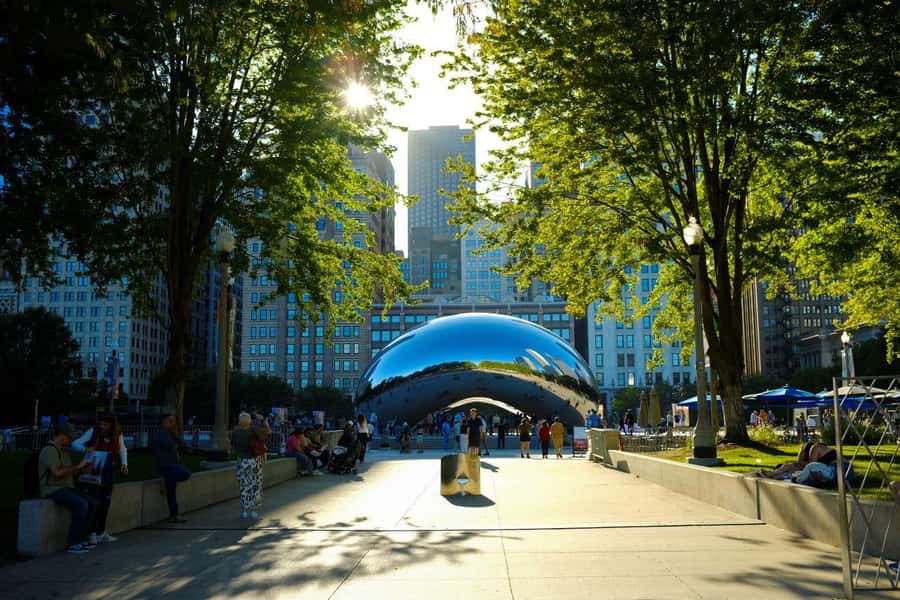
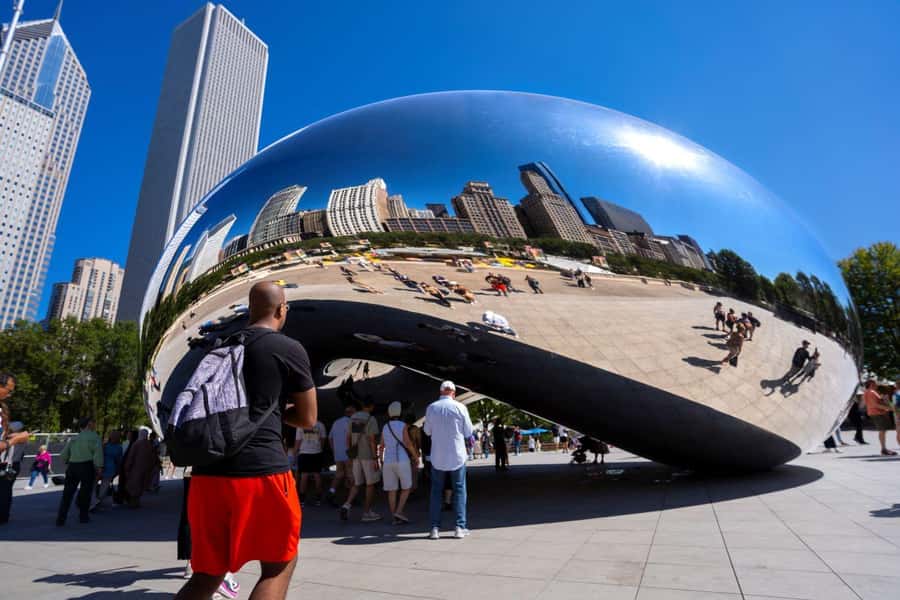
The final stop is Millennium Park, home of the Bean sculpture. The ending feels well chosen: you move from Chicago’s older theatres, offices, bridges, and newspaper towers to one of the city’s most recognizable modern public artworks.
The Bean is popular for good reason, but it can be crowded. Your guide can help you make sense of the park and point you toward further sights, though the precise amount of free time at the sculpture may depend on the group and the day.
Finishing here gives you flexibility. You can stay in the park, walk toward the lake, find lunch, or continue exploring the Loop. The guide’s recommendations are one of the practical benefits of taking a local-led tour instead of following a fixed audio guide.
If you have an afternoon museum visit or a timed attraction booked, leave a little space in your schedule. The listed duration is 2.5 hours, but group pace, crossings, questions, and short breaks can affect the finish time.
What the small group changes
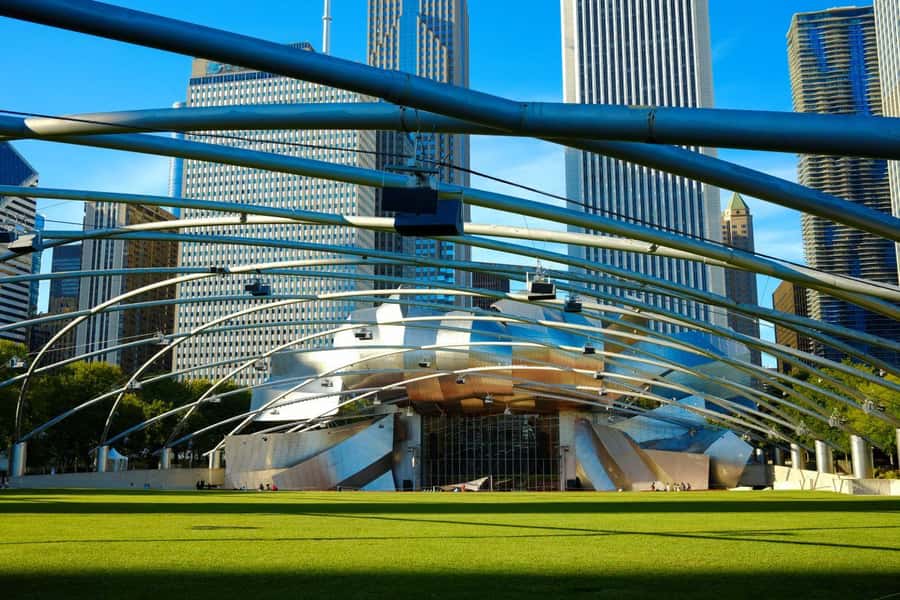
The advertised small group has a maximum of 16 people, with the experience often described as a group of 12. That is a useful size for a city walk. You can hear the guide more easily, ask questions, and move between stops without the slow shuffle of a large coach group.
A small group also makes it easier for the guide to respond to different needs. Dash has been praised for noticing when people need a restroom, snack, or break. That matters on a 3-mile route, especially when children, older adults, or mixed fitness levels are involved.
The tour is described as suitable for all ages and fitness levels, and children under six can join free. Still, do not confuse that with a short walk. You will be on your feet for much of the 2.5 hours, so supportive shoes and weather-ready clothing will make a real difference.
A private group option is available if you want more control over the pace or prefer to keep the outing within your own party. The standard small group should be enough for most visitors, especially at this price.
Is $49 a fair price?
At $49 per person, this is a reasonable price for a live 2.5-hour walking tour in central Chicago. You are paying for a guide, a planned route, interpretation at several major buildings, and a popcorn tasting. You are not paying entrance fees to a tower, museum, or paid attraction, so the value comes from the explanation and the way the stops fit together.
I would consider it good value if you are visiting Chicago for the first time, care about architecture, or want a useful orientation before exploring alone. It is also a sensible complement to an architecture boat cruise. A boat gives you broad views from the river, while this walk lets you examine streets, interiors, bridges, and building details at close range.
The value is weaker if you already know downtown Chicago well and want a specialist lecture on one narrow subject. The Prohibition material is woven into a wider history of design and city growth. If you want only mob stories, a dedicated crime or gangster tour may suit you better.
The free cancellation period of 24 hours and the reserve-now, pay-later option reduce the risk of booking. Still, weather can shape the experience, so check the forecast and dress for conditions rather than hoping for a dry morning.
Who should book this experience?
I would recommend it to first-time Chicago visitors who want a clear introduction without spending half a day on a bus. It works especially well for people who enjoy buildings but want more than a list of architects and dates.
Families can also make good use of it, provided children are ready for a long city walk. The popcorn tasting and Bean finish add lighter moments, while the guide can adjust the pace within reason.
This is a good pick for repeat visitors too. One local couple who lives downtown was surprised by how many city facts they had not known, which says something about the route’s ability to reveal familiar places in a new way.
You should think twice if walking 3 miles is difficult, if you dislike outdoor tours in poor weather, or if you need food accommodations beyond vegetarian options. The route is accessible in spirit, but the distance and city conditions still matter.
FAQ
Where does the Chicago Prohibition and architecture tour meet?
The meeting point is beneath the marquee of the Chicago Theatre at 175 N. State Street, Chicago, Illinois 60601.
How long is the walking tour?
The tour lasts 2.5 hours and covers about 4.8 kilometers, or 3 miles, on foot.
Where does the tour finish?
The tour ends at Millennium Park, near the Bean sculpture.
What languages are available?
The tour is conducted in English with a live English-speaking guide.
Is the tour suitable for children?
Yes. It is described as child-friendly, and children under six may join free of charge. Keep in mind that the route covers about 3 miles of walking.
Is food included?
A Chicago-style popcorn tasting is included. Vegetarian options can be arranged with advance notice, but other food allergies and dietary preferences cannot be accommodated.
Should you book it?
Book this tour if you want Chicago’s major downtown sights explained as part of one connected story. The route is well balanced: Prohibition and crime provide the hook, while architecture, journalism, public spaces, and city growth give the experience lasting value.
At $49, the strongest reason to go is the guide. Dash, Kevin, Rich, Bash, Wallach, and the other guides are praised for warmth, patience, clear storytelling, and real affection for Chicago. If you wear good shoes, bring suitable clothing, and allow enough time for the full walk, this is a smart first-day introduction and a useful partner to an architecture cruise.
Just added in Chicago
- Private Frank Lloyd Wright Architectural Tour by Luxury Vehicle★ 3.5 · 7 reviews
- Private Chicago Architecture Tour★ 5.0 · 5 reviews
- Chicago Luxury Minibus City Tour and Architecture River Cruise★ 4.5 · 8 reviews
- Chicago History and Architecture Walking Tour with Boat Cruise★ 4.5 · 10 reviews
- Private Chicago Architecture Walking Tour★ 5.0 · 6 reviews
- Small Group History And Architecture Walking Tour of Chicago★ 4.5 · 8 reviews
- Chicago: Private Architecture Tour – 3 or 6 Hours★ 4.0 · 6 reviews
- Chicago Walking Tour: See Inside Art Deco Masterpieces★ 4.9 · 8 reviews
Chicago Architecture Tours, compared.

Chicago River: 1.5-Hour Guided Architecture Cruise
Read our review →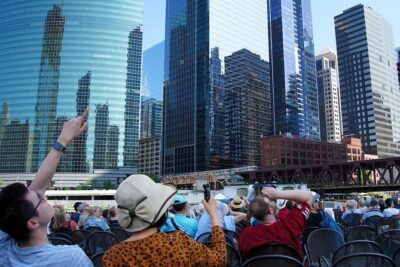
Chicago Architecture Center River Cruise aboard First Lady
Read our review →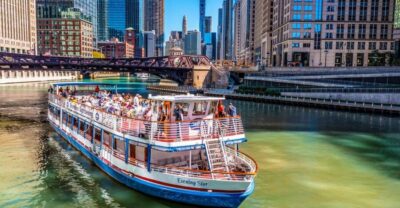
Architecture River Cruise Skip-the-Ticket Line
Read our review →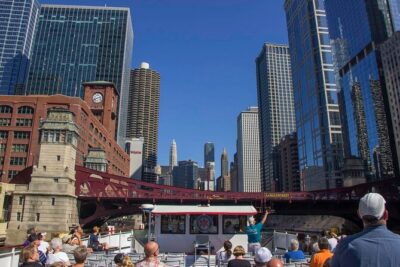
Chicago River 45-Minute Architecture Tour from Magnificent Mile
Read our review →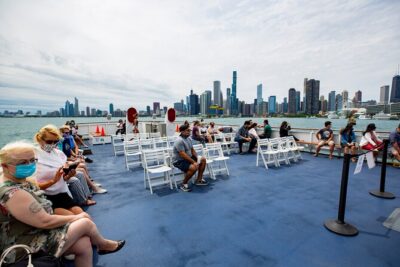
45-Minute Family-Friendly Architecture River Cruise
Read our review →Browse the lists this tour appears in