
REVIEW · CHICAGO ARCHITECTURE TOURS
Chicago: Icons Guided Architecture Walking Tour
Chicago tells its story in stone. This 90-minute walk makes the city’s downtown architecture easier to read, linking 1890s commercial buildings with bold designs by Frank Gehry, Renzo Piano, and Adrian Smith. I like the clear seven-stop format, and I like that the tour ends in Millennium Park, where art and buildings share the same public space. The main drawback is simple: it takes place rain or shine, and there is no place to store luggage or strollers.
You meet at the Chicago Architecture Center on East Wacker Drive, then walk through a compact stretch of downtown with an English-speaking guide. Guides Teresa and Ron have earned especially strong praise for their pacing, historical explanations, answers to questions, and helpful notes. If your Chicago schedule is tight, this is a useful way to see a wide range of design without giving up half a day.
Key points to know before you book
- Seven downtown stops: The route compares buildings from the 1890s to the present rather than focusing on one era.
- A wide style range: Expect 19th-Century Commercial, Beaux-Arts, Mid-Century Modern, and Postmodern architecture.
- Modern names included: Frank Gehry, Renzo Piano, and Adrian Smith are part of the discussion.
- Millennium Park finale: The tour finishes where public art and architecture meet in one of Chicago’s best-known civic spaces.
- A nonprofit purchase: Your ticket supports Chicago Architecture Center education and community programs.
- Easy but weather-dependent: The tour lasts 90 minutes, is wheelchair accessible, and runs rain or shine.
Why this short walk works in Chicago
Chicago can feel like an open-air architecture textbook, but only if you know what to look for. A guided walk gives you a way to sort the skyline into ideas: business, civic pride, new technology, changing tastes, and the city’s constant effort to build higher and bolder.
I like that this experience does not ask you to admire one famous building in isolation. Instead, you compare old and new structures as you move through downtown. A commercial building from the late 19th century can be understood beside a modern tower, making the changes in materials, scale, and design much easier to see.
The 90-minute length is another plus. You get a focused introduction without committing to a long walking day. That makes it a good first activity in Chicago, especially if you want a framework for later exploring on your own.
Still, this is not a private architectural consultation or a full citywide survey. Seven stops can introduce a lot, but each subject receives limited time. If you already know Chicago’s major buildings well, the value will depend heavily on your guide’s ability to add context and answer questions.
More walking tours in Chicago:
- Chicago in a Day: Food, History & Architecture Walking Tour
★ 5.0 · 1,153 reviews - Chicago’s Secret Interiors Architectural Walking Tour
★ 5.0 · 635 reviews - Chicago: Secret Interiors Architecture Walking Tour
★ 4.9 · 498 reviews
Starting at the Chicago Architecture Center
The meeting point is the Chicago Architecture Center at 111 E Wacker Drive. Have your mobile or printed ticket ready when you arrive. Admission to the center’s galleries is included, so you can take a look before or after the walk if time allows.
The center gives the tour a useful home base. You are not simply meeting on a random sidewalk and hoping to spot the guide. The setting connects the walking route with the wider work of the organization, including design education and community programs.
The center supports initiatives such as Girls Build!, Teen Fellows, and the Newhouse Architecture + Design Competition. It also helps keep Open House Chicago free for participants. That does not change the walk itself, but it gives your ticket a purpose beyond the 90 minutes under discussion.
The start is in downtown Chicago, so plan for an outdoor walk from the first minute. The activity is wheelchair accessible, but a mobility device can still make crowded sidewalks, crossings, or changes in pavement more noticeable. Since there is no storage for luggage or strollers, arrive with only what you can comfortably keep with you.
Seven stops across Chicago’s changing design eras
The central idea is comparison. You will pass buildings dating from the 1890s through the present, with the guide explaining how each period responded to its own needs and ideals.
19th-Century Commercial architecture
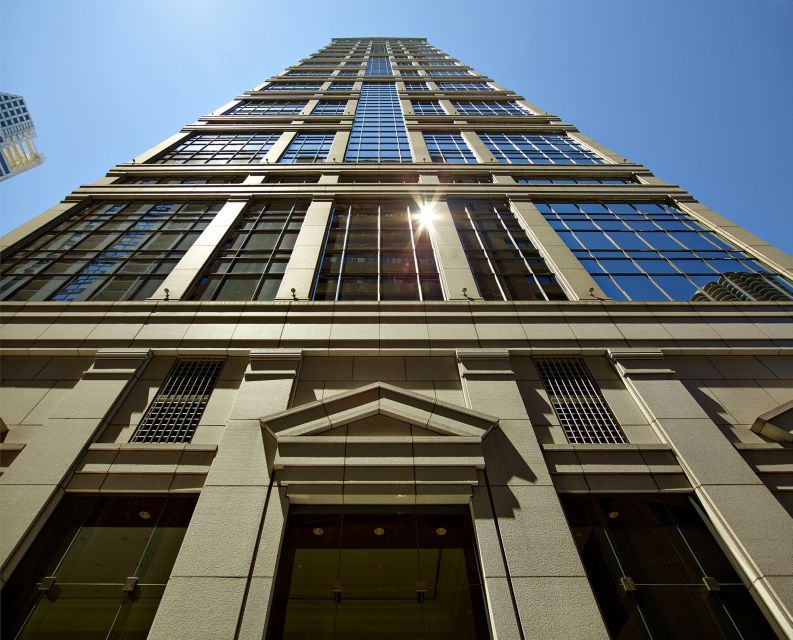
The older commercial buildings give you a starting point for Chicago’s growth as a major business center. This style is one of the tour’s anchors, and it helps explain how downtown buildings began to combine practical office space with a recognizable public face.
Look for the relationship between the building’s overall shape and its street-level presence. Your guide can point out facts and design choices that are easy to miss when you are rushing through the Loop. The value here is not only seeing an old facade, but learning why it looks the way it does.
This stop should suit anyone who likes city history but does not want a lecture detached from the street. You get the building in its actual setting, with newer structures nearby to sharpen the comparison.
A few more architecture tours in Chicago worth a look
- Chicago River: 1.5-Hour Guided Architecture Cruise
★ 4.8 · 8,046 reviews - Chicago River: Guided Sunset Cocktail & Architecture Tour
★ 4.6 · 203 reviews - Chicago River: 1.5-Hour Guided Architecture Riverboat Tour
★ 4.7 · 93 reviews - Chicago: Guided Tour with Architecture River Cruise
★ 4.5 · 20 reviews
Beaux-Arts detail and civic ambition
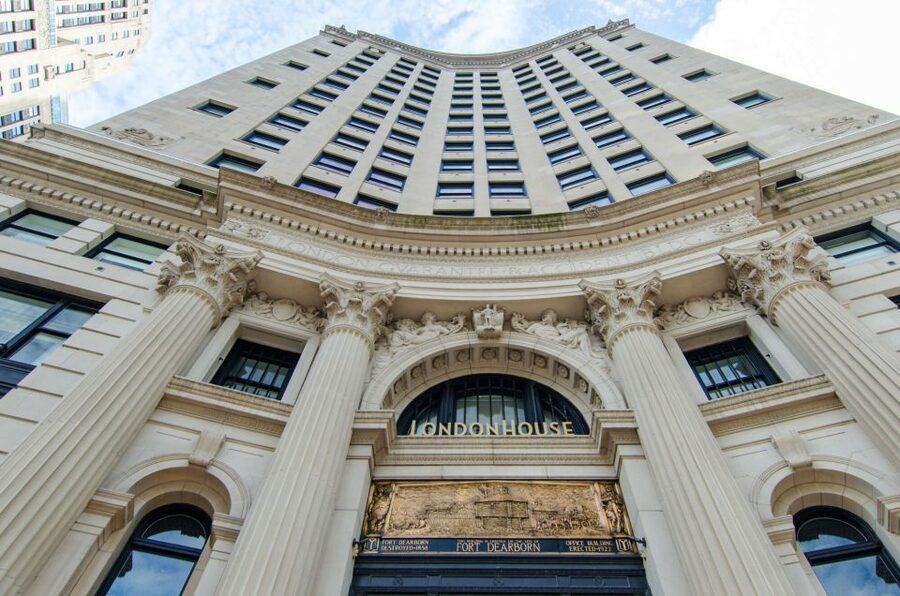
The Beaux-Arts portion brings a different mood. This style is associated with formal composition, ornament, and a strong sense of public ceremony. In Chicago, that provides a useful contrast with the more practical commercial forms from the earlier part of the walk.
I would pay attention to how the guide explains the building’s message. Architecture can tell you how a city or institution wanted to be seen. Grand scale and decorative detail were not random decoration, they were part of the public language of power and confidence.
The possible limitation is that Beaux-Arts buildings can reward close looking, and a 90-minute tour moves at a steady pace. If you want to study every carving or entrance, you may need to return later on your own.
Mid-Century Modern restraint
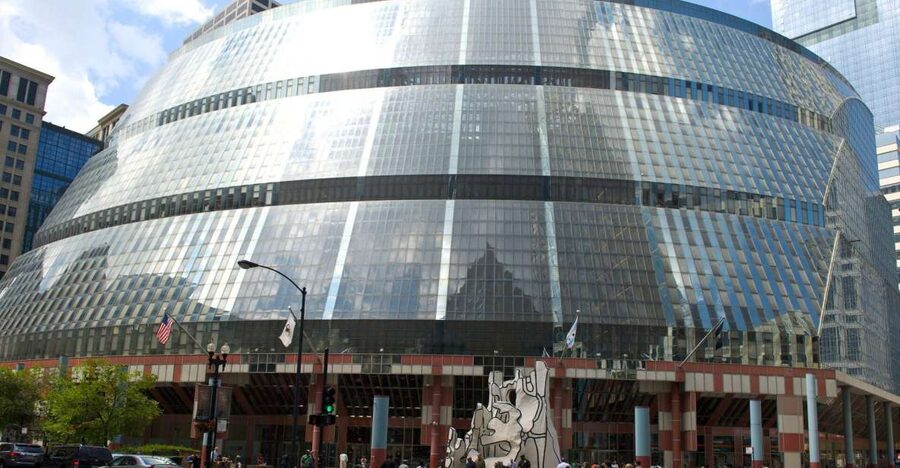
Mid-Century Modern design changes the conversation again. Compared with older ornament, this approach can feel cleaner, more direct, and more focused on structure, function, and modern materials.
This is where the connection between past and present becomes especially useful. The guide helps you see that newer buildings did not simply appear out of nowhere. They reacted to earlier design ideas, sometimes rejecting them and sometimes refining them.
I appreciate this part because it can correct a common assumption: modern architecture is not just about unusual shapes. It also concerns how a building handles space, purpose, materials, and the city around it. You may find that a relatively restrained building requires more explanation than a flashy one.
Postmodern buildings and the return of visual wit
Postmodern architecture adds another turn. Here, historical references, unusual combinations, and visual jokes can return after the restraint of modernism.
A good guide can make this period approachable by explaining what the designers were reacting against. That context matters. Without it, a Postmodern building may simply look odd. With it, you begin to see how architects used familiar forms in fresh or deliberately playful ways.
This is also one of the places where questions are useful. Ron was praised for answering questions and carrying a notebook of extra facts, while Teresa was praised for her pacing and willingness to respond. The guide’s ability to add a little more when you are curious can make this short tour feel much fuller.
Seeing the work of Gehry, Piano, and Smith
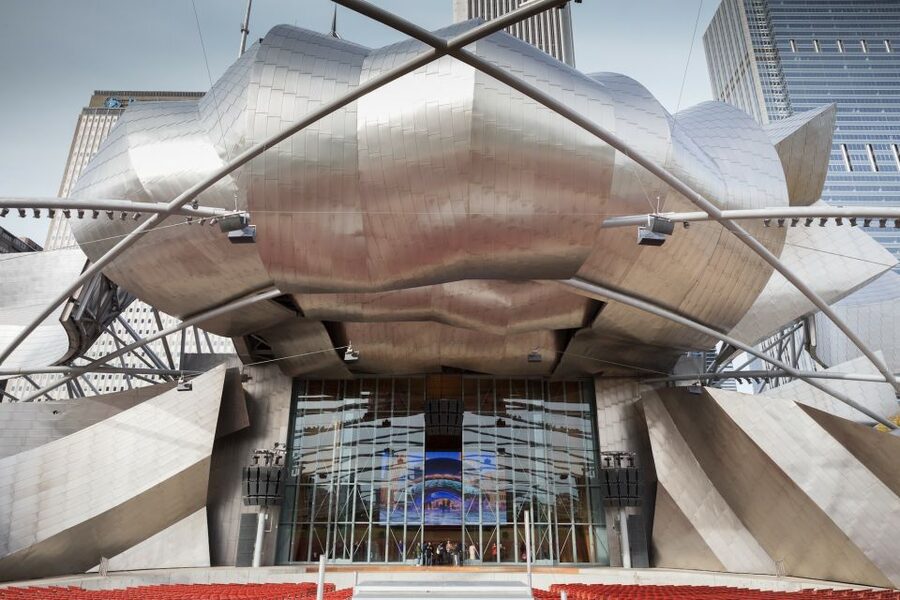
The walk also brings the discussion into the present through designs connected with Frank Gehry, Renzo Piano, and Adrian Smith. These names represent different approaches to modern city building, and their inclusion keeps the tour from treating architecture as something that ended in the early 20th century.
You will hear about what inspires design today and how contemporary structures connect with older parts of downtown. That is one of the strongest reasons to choose this walk instead of simply photographing historic facades.
Modern buildings often look best when you understand the problem they are addressing. Your guide may discuss how a new addition relates to its surroundings, how its form changes the skyline, or how a designer draws from ideas that came before. The supplied details do not identify every exact building or explain each stop in full, so you should think of this as a guided survey rather than a complete study of these architects.
Still, the range is impressive for 90 minutes. Chicago gives you a rare chance to compare late 19th-century commercial design, Beaux-Arts formality, Mid-Century Modern restraint, Postmodern playfulness, and current work within one walk.
Finishing among the art of Millennium Park
The final stop is Millennium Park, where world-class art and architecture share a public setting. The ending feels well chosen because it shifts the focus from individual buildings to the way design shapes daily city life.
Millennium Park also gives the tour a change of pace. After looking up at offices, towers, and facades, you finish in a place built for gathering, public art, and shared experience. The guide can help you see the park not only as a photo stop, but as part of Chicago’s continuing conversation about architecture.
I like this finish because it leaves you with a modern example of urban design rather than ending on a historical building. It shows that architecture is not only about preserving the past. It is also about deciding what kind of public places a city wants now.
Keep in mind that the tour description does not promise extended free time in the park or a detailed survey of every artwork. You should treat Millennium Park as the final guided setting, then return later if you want more time to explore.
What the guide adds to the buildings
The most important variable is the guide. A city full of notable buildings can still make for a dull walk if the explanations are flat or too technical. Here, the strongest available feedback highlights two guides by name.
Teresa was praised for giving long-time Chicago residents a memorable look at architecture and its meaning. That is a useful sign for repeat visitors: the walk is not aimed only at first-time tourists. Her pacing and answers to questions were also singled out, which matters when the group includes people with different levels of interest.
Ron was praised for his historical explanations and a notebook filled with extra facts. That suggests a guide who brings prepared material but can still add small details that make the route more engaging.
One booking problem did occur, with a scheduled tour not taking place and staff at the center working to arrange another date. That was clearly frustrating for a visitor with only a few days in Chicago. The center staff did try to find a solution, but you should still confirm your meeting details and leave a little flexibility if your schedule is packed.
Price, timing, and practical value
The listed price is $35 per group up to one person. Because the wording is unusual, check the booking screen carefully to see how the final charge applies to your party before paying. At that rate, the experience offers a professional guide, a 90-minute walk, and admission to the Chicago Architecture Center galleries.
I see the value in the interpretation rather than in the number of sites alone. You can walk past buildings for free, but you may not understand what links a Beaux-Arts structure to a modern tower. The guide turns a downtown stroll into a lesson in how Chicago developed its visual identity.
The value is strongest for first-time visitors, architecture fans, students, and anyone who wants a concise introduction before exploring more independently. It also suits Chicago residents who want fresh context, as Teresa’s experience with long-time locals suggests.
The value is weaker if you want to go inside many buildings, stop for food, or move at a very slow pace for photography. Food and drinks are not included, and the experience is conducted in English. You should also dress for the forecast, since the tour runs in all weather.
Is the Chicago Icons walking tour right for you?
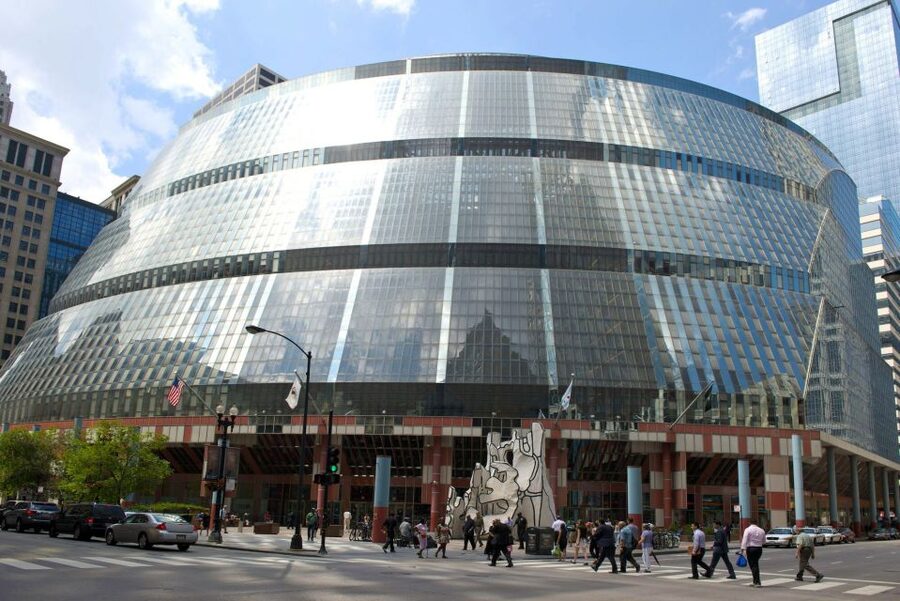
Book this tour if you want a short, structured way to understand Chicago’s architecture from the 1890s to today. The seven-stop format, broad range of styles, Millennium Park ending, and strong guide feedback make it a sensible choice for a first visit or a quick return to downtown.
I would skip it if you need a fully indoor activity, cannot walk comfortably for 90 minutes, or want a precise building-by-building itinerary before booking. For most people interested in how cities change, though, this is a practical introduction with a clear payoff: you leave seeing more in the buildings already around you.
FAQ
Where does the tour begin?
The tour begins at the Chicago Architecture Center, 111 E Wacker Drive, Chicago, Illinois 60601.
How long does the walking tour last?
The tour lasts 90 minutes.
How many stops are included?
The walk includes seven stops in downtown Chicago.
What architectural styles are covered?
The tour includes 19th-Century Commercial, Beaux-Arts, Mid-Century Modern, and Postmodern buildings.
Does the tour cover modern architects?
Yes. The experience includes discussion of contemporary architecture connected with Frank Gehry, Renzo Piano, and Adrian Smith.
Where does the tour finish?
The tour finishes at Millennium Park.
Is admission to the Chicago Architecture Center included?
Yes. Admission to the center’s galleries is included.
Is the tour wheelchair accessible?
Yes, the activity is wheelchair accessible.
What language is the tour conducted in?
The live tour guide speaks English.
Can I bring a pet or store luggage during the tour?
Pets are not allowed, although assistance dogs are permitted. Storage for luggage or strollers is not available.
Just added in Chicago
- Private Frank Lloyd Wright Architectural Tour by Luxury Vehicle★ 3.5 · 7 reviews
- Private Chicago Architecture Tour★ 5.0 · 5 reviews
- Private Chicago Architecture Walking Tour★ 5.0 · 6 reviews
- Chicago Luxury Minibus City Tour and Architecture River Cruise★ 4.5 · 8 reviews
- Chicago History and Architecture Walking Tour with Boat Cruise★ 4.5 · 10 reviews
- Small Group History And Architecture Walking Tour of Chicago★ 4.5 · 8 reviews
- Chicago: Private Architecture Tour – 3 or 6 Hours★ 4.0 · 6 reviews
- Chicago Walking Tour: See Inside Art Deco Masterpieces★ 4.9 · 8 reviews
Chicago Architecture Tours, compared.
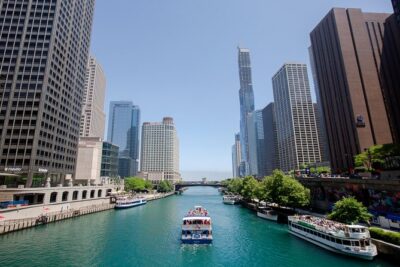

Chicago River: 1.5-Hour Guided Architecture Cruise
Read our review →
Chicago Architecture Center River Cruise aboard First Lady
Read our review →
Architecture River Cruise Skip-the-Ticket Line
Read our review →
Chicago River 45-Minute Architecture Tour from Magnificent Mile
Read our review →

45-Minute Family-Friendly Architecture River Cruise
Read our review →Browse the lists this tour appears in