
REVIEW · CHICAGO ARCHITECTURE TOURS
Chicago’s Original Dazzling Architectural Interiors Tour
Chicago hides its best architecture indoors. This two-hour walk takes you from Roaring Twenties Art Deco to an 1880s downtown landmark, then on to Moorish details and the world’s largest Tiffany stained-glass dome. I like the variety, and I like that the tour points out spaces you could easily pass without noticing. The one drawback is that the pace is fairly focused, so you will not have much time to linger at every stop.
I also like the way the tour connects decoration with Chicago’s past. Guides such as Spencer, Henry, and Kaylee have been praised for making the buildings feel understandable rather than simply pretty. The price is $35, a fair deal when entrance fees are included, though you should add a gratuity if your guide gives you a strong two hours.
The meeting point is easy to identify: the plaza in front of 425 South Financial Place, beside the metal horse sculpture. Wear comfortable shoes, bring clothing for the weather, and carry a face covering as requested. The tour is wheelchair accessible, but the amount of walking and the time spent looking upward may still matter when planning your day.
Key things to know before you go
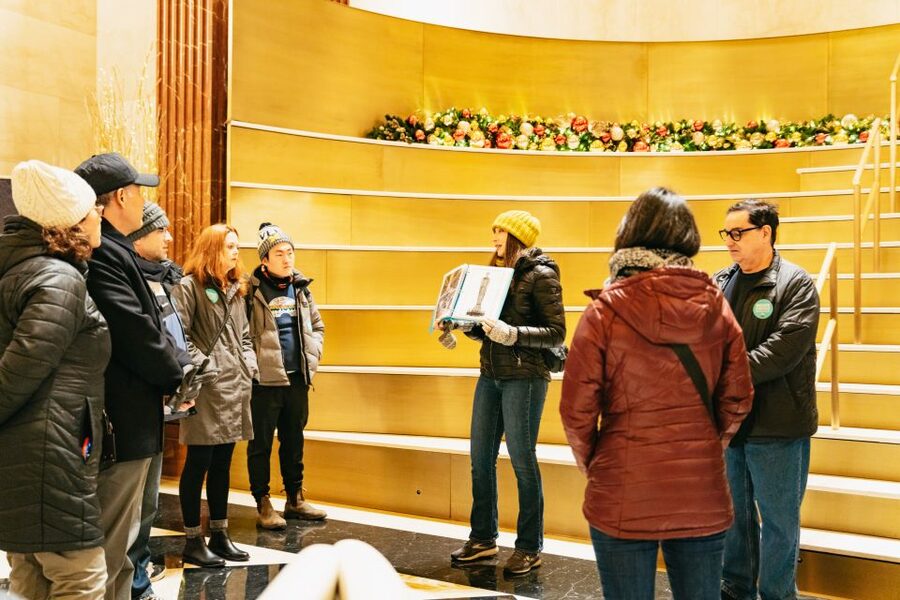
- The Tiffany finale is the star moment: You finish beneath the world’s largest Tiffany stained-glass dome.
- Four architectural periods fit into two hours: Expect Art Deco, 1880s Chicago, Frank Lloyd Wright-related interiors, and Postmodern Moorish decoration.
- The route begins downtown: Meet at 425 S. Financial Place, next to the metal horse sculpture.
- Your guide shapes the experience: Spencer, Henry, and Kaylee have each been praised for clear explanations, enthusiasm, and a friendly manner.
- The $35 price includes entrance fees: That makes the tour easier to budget than a walk that adds paid admissions along the way.
- Millennium Park is close by: The finish puts you near the Bean, useful if you want to continue sightseeing afterward.
Why Chicago’s interiors deserve two hours

Chicago is famous for its skyline, but the city’s indoor spaces often tell a more intimate story. Outside, you see height and structure. Inside, you notice the materials, the craftsmanship, and the ambitions of the people who built the city.
This tour focuses on those details. You move through several eras rather than spending two hours on one building or one architect. That range helps you see how Chicago’s taste changed from the late nineteenth century through the Jazz Age and into the Postmodern period.
I especially like this approach for a first visit. You get enough context to make later sightseeing more rewarding. Once you know to look at ceilings, elevator surrounds, arches, glass, and decorative patterns, ordinary walks through downtown become much more interesting.
The tour is also useful for returning visitors. You may already know the Loop’s major attractions, but the interiors can remain easy to miss. A polished lobby or public room may be open to the public yet receive little attention from people rushing toward Millennium Park or an office tower.
A few more architecture tours in Chicago worth a look
- Chicago Architecture River Cruise
★ 5.0 · 15,756 reviews - Chicago River 90-Minute Architecture Tour
★ 4.5 · 9,629 reviews - Chicago River: 1.5-Hour Guided Architecture Cruise
★ 4.8 · 8,046 reviews
Meeting at 425 South Financial Place
The tour begins in the plaza in front of 425 South Financial Place. Look for the metal horse sculpture, which serves as the meeting-point marker.
Arrive ready to walk and pay attention from the start. The route includes several interiors, and the appeal comes from seeing the buildings in person rather than only hearing about them. Comfortable shoes are important, especially if you plan to continue around downtown after the tour.
The activity is conducted in English. Its two-hour length works well as a morning or afternoon addition to a Chicago itinerary. It is long enough to cover several major stops but short enough to leave room for lunch, a museum, or a visit to Millennium Park.
Because the tour operates through indoor and outdoor spaces, wear clothing suited to the weather. A face covering or protective covering is also listed among the recommended items.
First stop: the elegance of the Roaring Twenties
The tour begins with the polished look of a classic Art Deco interior. This is the kind of setting where geometry, ornament, and polished surfaces work together to create a sense of order and confidence.
Art Deco can seem easy to recognize, but a guide helps you notice the choices that define it. Look for the strong lines, repeated shapes, and decorative treatment that turn useful parts of a building into design features. The point is not just that the room is beautiful. It is that the room reflects a time when American cities presented modern life as glamorous, efficient, and exciting.
This first section gives the tour a strong visual opening. You are not easing into a long architectural lecture. You are looking at a finished interior with the kind of elegance associated with Chicago during the 1920s.
The drawback is simple: decorative interiors can be difficult to photograph well, especially when you are moving with a group. I would focus on listening and looking instead of trying to capture every ceiling detail with your phone.
Stepping back to 1880s Chicago
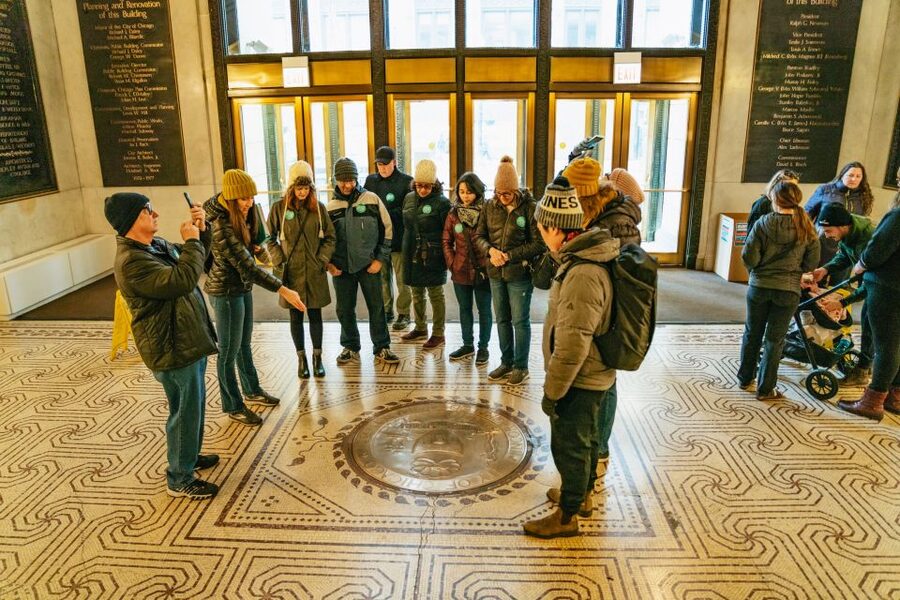
The next major change in mood takes you about fifty years earlier, to the 1880s. You explore one of downtown Chicago’s most famous and oldest buildings, with attention to its structure and style.
That shift is valuable because it shows that Chicago architecture did not spring fully formed into the modern skyline. The city’s design developed through experimentation with materials, construction, and decoration. An 1880s building can feel more weighty and formal than the Art Deco spaces that follow.
This stop also helps put the city’s rebuilding and growth into context without turning the tour into a dry history class. Chicago’s downtown was changing quickly in the late nineteenth century, and buildings had to express both permanence and progress.
The exact appeal here depends on what catches your eye. You might find that the structure itself is more impressive than the decoration. You may also notice how much the building’s public spaces tell you about the expectations of its original users.
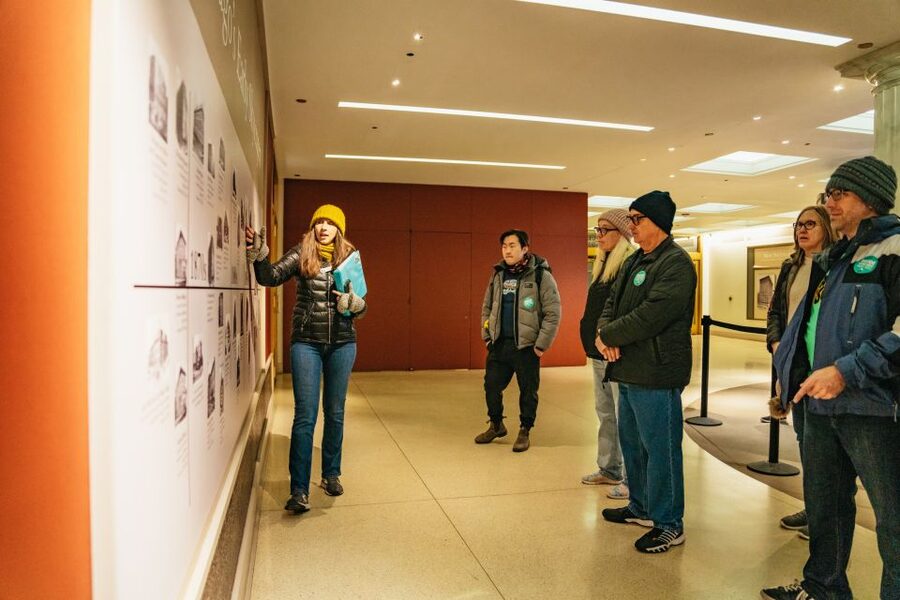
The guide’s role matters at this point. A good explanation helps you understand why the building is important, not simply that it is old. Spencer has been praised for combining local knowledge with enthusiasm, while Henry, who is trained as an architect, has been described as especially passionate when explaining design and history.
Same city, a different building to stand in front of:
- Chicago Architecture Center River Cruise aboard First Lady
★ 5.0 · 5,536 reviews - Chicago: Architecture River Cruise Skip-the-Ticket Line
★ 4.8 · 4,325 reviews - Chicago River 45-Minute Architecture Tour from Magnificent Mile
★ 4.5 · 2,924 reviews - Chicago Lake and River Architecture Tour
★ 4.5 · 2,308 reviews
Frank Lloyd Wright’s mark on older interiors
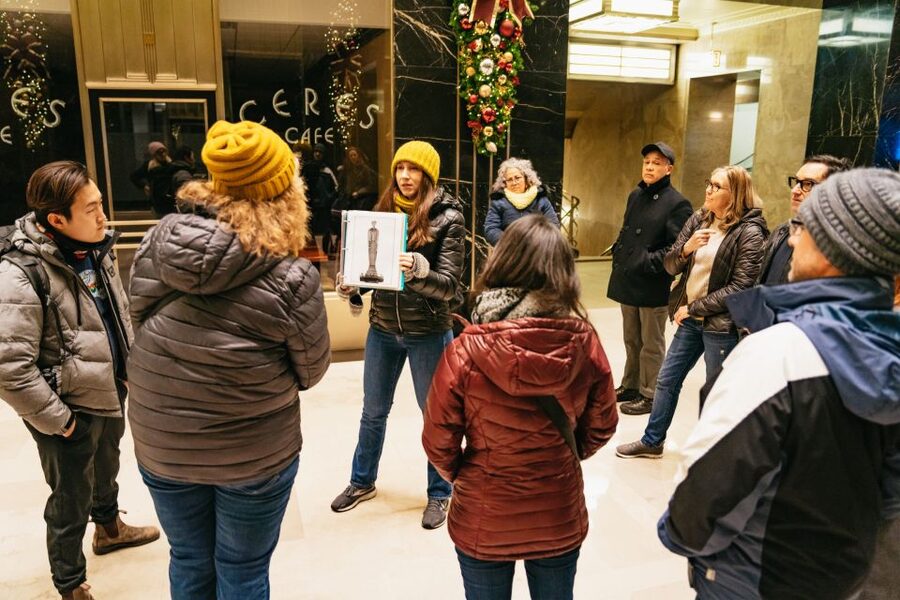
One highlight is seeing turn-of-the-century interiors renovated by Frank Lloyd Wright. The appeal here is not only the name. It is the chance to see how a major designer approached an existing space.
Renovation raises practical questions. How do you change an older interior without erasing its character? How do you make a room feel unified when parts of it belong to different periods? These are the kinds of questions that make this stop useful, even if you are not an architecture specialist.
Pay attention to how the interior feels as a whole. Wright’s work is often associated with strong visual unity, carefully controlled lines, and a close relationship between decoration and structure. The tour gives you a chance to consider those ideas in a real downtown setting rather than through a photograph or a museum display.
You should not expect a long, separate Wright-focused tour. His work is one part of a broader route. That is good for anyone who wants variety, but less ideal if your main goal is an extended study of Wright alone.
A Postmodern turn with Moorish details
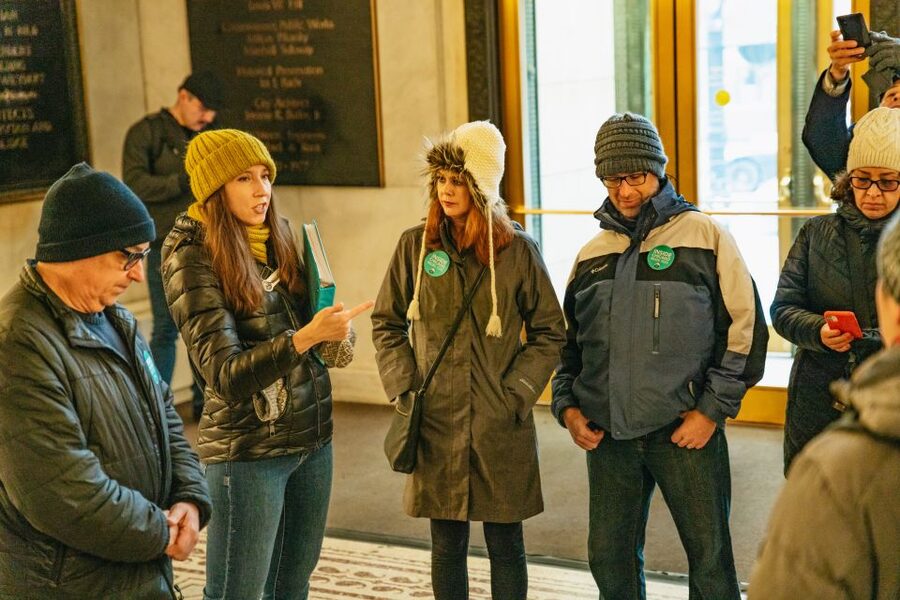
Later, the route changes direction again with a vaulted ceiling from the Postmodern era and surrounding Moorish details. This is likely to feel very different from both the 1880s building and the Art Deco interior.
The value of this stop is contrast. Postmodern design often plays with references, borrowed forms, and unexpected combinations. Moorish-inspired details add another layer through arches, patterns, and decorative rhythm. You see how later designers looked backward while creating something that did not belong neatly to one historic period.
This kind of space rewards patience. At first glance, you may simply see a dramatic ceiling. A guide can help you separate the vault, the ornament, and the references around it. That makes the room easier to remember and gives you a better vocabulary for noticing similar design elsewhere.
This is also where the tour feels most like a visual surprise. The route does not stick to one approved version of Chicago architecture. It includes a later interior that many visitors would not think to seek out.
Ending beneath the Tiffany stained-glass dome
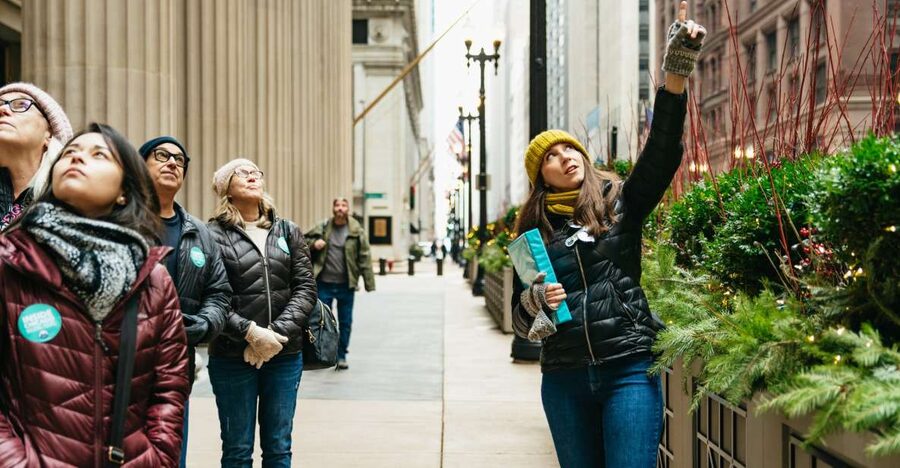
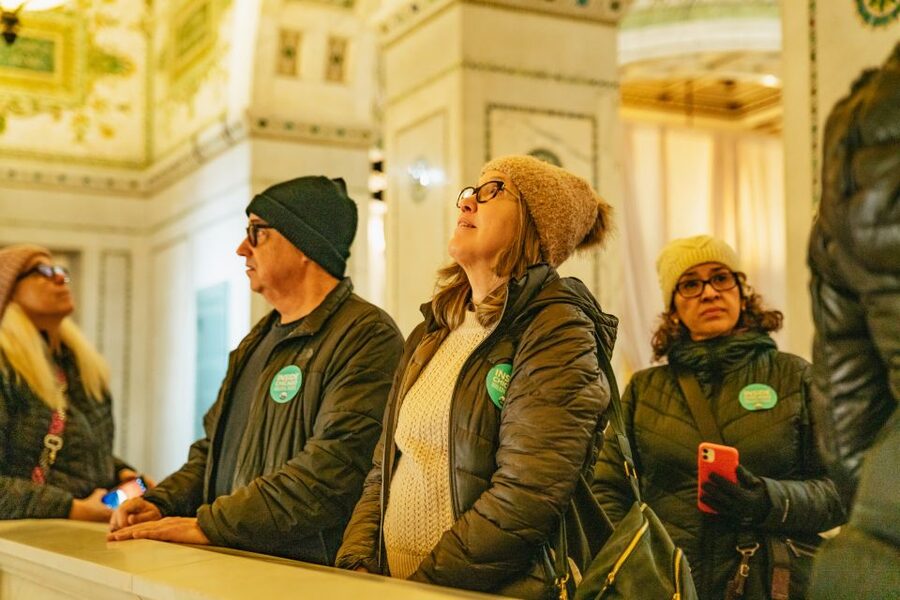
The grand finish is the world’s largest Tiffany stained-glass dome. You end the tour looking upward, surrounded by colored glass and the scale of a room designed to make people pause.
This is more than a final photo opportunity. A dome changes how you experience a room. It draws your eyes above the level of walls and floors, making the ceiling the main event. Stained glass also changes with the available light, so the effect can feel different depending on the day.
The Tiffany name adds historical and artistic interest, but the scale is what makes this stop memorable. The dome gives the tour a clear ending after the varied rooms and periods that come before it.
Since the tour finishes close to Millennium Park, you can easily continue to the Bean afterward. That makes the route practical for visitors trying to combine architecture with Chicago’s best-known public attractions. I would plan extra time after the tour rather than rushing away immediately. The dome is the kind of interior that deserves a final look before you step outside.
What the guides add to the architecture
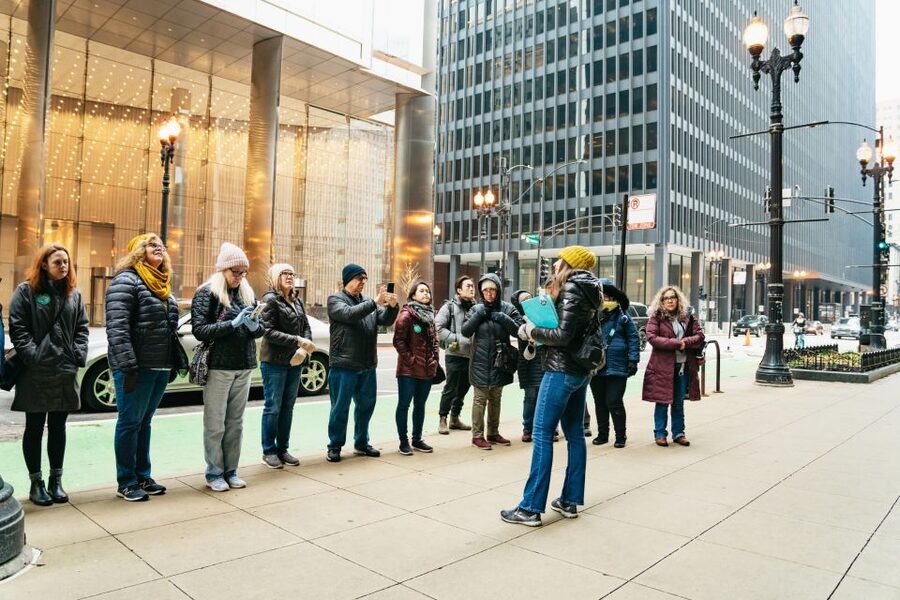
Architecture tours succeed or fail on explanation. Beautiful rooms can still feel empty if the guide only lists dates and names.
This tour has received strong praise for its guides. Spencer is described as a true Chicago local with an impressive command of the city. Henry is an architect by training and has been praised for sharing his knowledge with enthusiasm. Kaylee has been described as professional, friendly, and reassuring, even when rain interrupted the day.
Those details matter because the tour covers several styles in a short time. You need someone who can shift from local history to design terms without losing the thread. You also need a guide who notices when the group needs a clearer explanation rather than more facts.
The experience is conducted in English, so you should be comfortable following spoken explanations while walking. The guide is central to the value of the $35 price. You are paying for access, but also for the connections between buildings that you would probably miss on your own.
Is $35 a fair price?
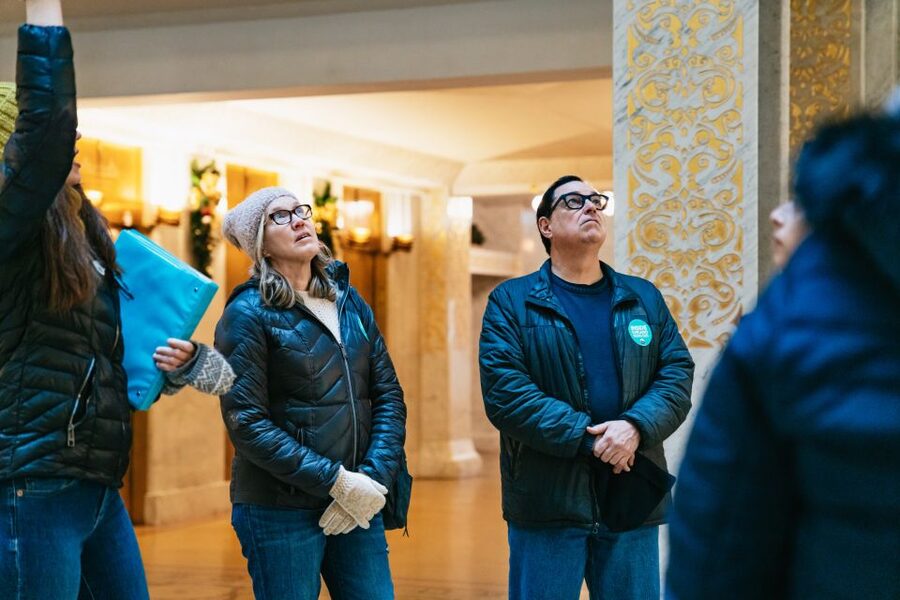
At $35 per person, this is a reasonable cost for a two-hour downtown tour, especially since all necessary entrance fees are included. You do not need to build a separate admission budget for the interiors on the route.
The value is strongest if you care about architecture, design, local history, or places that are easy to overlook. A self-guided walk might cost less, but it would not give you the same access to the route’s specific interiors or the same explanation of how the spaces relate to one another.
The tour also saves planning time. You do not have to research which buildings permit entry, identify the best details, or decide how to connect different architectural periods. Someone else has shaped the route for you.
Still, $35 may feel high if you only want to see Chicago’s famous exterior buildings. You would get more from the tour if you enjoy looking closely at ceilings and decorative details. Gratuities are not included, so plan for an additional tip if the guide provides a strong experience.
Who will enjoy this tour most?
I would recommend this walk to first-time Chicago visitors who want more than skyline photographs. It gives you a useful introduction to the city’s interior architecture and leaves you near one of its most famous public attractions.
It also suits repeat visitors. If you have already seen the Bean, walked along the river, and admired the Loop’s exterior buildings, this route gives you something less obvious to do.
Architecture students and design-minded visitors should appreciate the range of periods. So should anyone who likes learning through visual comparison. You can see how Art Deco, nineteenth-century construction, Wright-related renovation, Postmodern design, and Tiffany glass create very different moods.
Families and mixed-interest groups may also find the two-hour length manageable. The variety keeps the route from depending on one style for too long. But very young children may not enjoy extended explanations about ornament and architectural history, and anyone with limited stamina should consider the walking involved.
The tour is wheelchair accessible, which broadens its usefulness. You should still contact the operator if you have specific mobility needs, since the route includes several buildings and indoor spaces.
Practical advice for a smoother walk
Book a starting time that fits your downtown plans. The tour ends near Millennium Park, so it works well before a visit to the Bean or as an introduction to the Loop.
Wear comfortable shoes. The route lasts two hours, and you will spend time moving between interiors as well as looking upward and standing in rooms.
Bring weather-appropriate clothing even though many highlights are indoors. The walk includes outdoor movement between locations, and Chicago weather can change quickly.
Leave your camera ready, but do not let photographs replace the experience. Some of the best details are above eye level, and a guide may point out features you would otherwise overlook.
If you need to cancel, you can receive a full refund when you cancel at least 24 hours in advance. You can also reserve now and pay later, which helps if your schedule is still changing.
Should you book Chicago’s Original Dazzling Architectural Interiors Tour?
Book it if you want to see the Chicago that exists behind the famous facades. The Art Deco rooms, 1880s architecture, Wright-related interiors, Moorish details, and Tiffany dome give you a varied two-hour lesson in design and city history.
I would skip it only if your priority is outdoor architecture, a private tour, or a slow visit focused on one building. For most visitors interested in Chicago’s character, the combination of included entrance fees, a downtown route, strong guides, and a finish near Millennium Park makes $35 a sensible purchase.
FAQ
How long does the architectural interiors tour last?
The tour lasts two hours.
How much does the tour cost?
The price is $35 per person.
Where does the tour meet?
Meet in the plaza in front of 425 South Financial Place, next to the metal horse sculpture.
Is the Tiffany stained-glass dome included?
Yes. The route ends beneath the world’s largest Tiffany stained-glass dome, and necessary entrance fees are included.
What language is the tour conducted in?
The live tour is conducted in English.
Can I cancel for a refund?
Yes. You can cancel up to 24 hours in advance for a full refund.
Just added in Chicago
- Private Frank Lloyd Wright Architectural Tour by Luxury Vehicle★ 3.5 · 7 reviews
- Private Chicago Architecture Tour★ 5.0 · 5 reviews
- Chicago Luxury Minibus City Tour and Architecture River Cruise★ 4.5 · 8 reviews
- Chicago History and Architecture Walking Tour with Boat Cruise★ 4.5 · 10 reviews
- Private Chicago Architecture Walking Tour★ 5.0 · 6 reviews
- Small Group History And Architecture Walking Tour of Chicago★ 4.5 · 8 reviews
- Chicago Walking Tour: See Inside Art Deco Masterpieces★ 4.9 · 8 reviews
- Chicago: Icons Guided Architecture Walking Tour★ 4.4 · 4 reviews
Chicago Architecture Tours, compared.
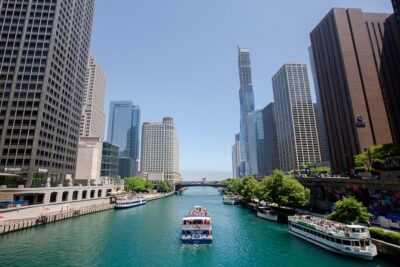
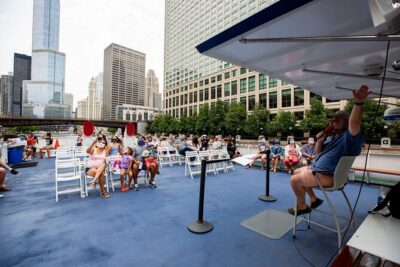

Chicago River: 1.5-Hour Guided Architecture Cruise
Read our review →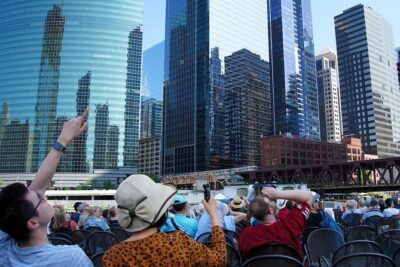
Chicago Architecture Center River Cruise aboard First Lady
Read our review →
Architecture River Cruise Skip-the-Ticket Line
Read our review →
Chicago River 45-Minute Architecture Tour from Magnificent Mile
Read our review →

45-Minute Family-Friendly Architecture River Cruise
Read our review →Browse the lists this tour appears in